Tag Archives: Mark Robson

Citizen Kane-1941

Citizen Kane-1941

Director Orson Welles

Starring Orson Welles

Top 250 Films #24

Scott’s Review #296

60000605

Reviewed December 12, 2015

Grade: A

Regarded as one of the greatest films ever made, Citizen Kane (1941) is a technically brilliant film that introduces fantastic new elements into a film that has not been seen before and has not been replicated for decades. It is a timeless masterpiece that continues to be enjoyed and marveled at in modern times.

One can forget what the story is about, as they can sit back, having no idea of what the story means (it can be a bit difficult to follow), and view the film from a cinematic perspective.

The various camera angles, shadows, and use of an actual ceiling (never seen in film before) are impossible not to appreciate for any film lover.

My favorite scenes occur when director (and star) Orson Welles uses snow falling outside as the cameras look through a window to observe the winter wonderland. This quality is simply astonishing in creative technicality.

I can view this scene over and over again.

The plot is a hybrid of drama and mystery. It examines the life and legacy of newspaper legend Charles Foster Kane.

The character, played by Welles himself, is loosely based on the real-life figure of William Randolph Hearst.

The film is told mainly through narrated flashbacks, as a newsreel reporter attempts to solve the big mystery centered around the deceased celebrity- his dying word, uttered from his lavish Florida mansion, was “rosebud,” and nobody seems to know who “rosebud” is or what the word represents.

As the story progresses, we learn more about the famous Kane. The reporter, Jerry Thompson, learns that Kane’s childhood in Colorado was one of poverty.

His mother, discovering a gold mine on her property, sent Kane away to be educated by a famous banker, thus securing his future. Thompson also interviews Kane’s business manager and Kane’s ex-wife, who is now a drunk and owns a nightclub, but neither can shed light on the mystery.

The mystery- never solved by Thompson nor anyone else- is revealed at the end of the film, to the viewer only, in fantastic form, and Kane’s childhood is key to the entire puzzle. This angle is creative, imaginative, and brilliant for the whole film.

Technically, one of the best, most creative film creations, Citizen Kane, has lost none of its marvels over the years and can be watched, studied, and introduced to new generations of film lovers eager to learn what a true movie gem is all about.

Oscar Nominations: 1 win-Outstanding Motion Picture, Best Director-Orson Welles, Best Actor-Orson Welles, Best Original Screenplay (won), Best Scoring of a Dramatic Picture, Best Sound Recording, Best Art Direction-Interior Decoration, Black-and-White, Best Cinematography, Black-and-White, Best Film Editing
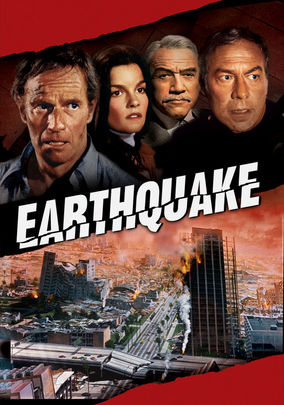
Earthquake-1974

Earthquake-1974

Director Mark Robson

Starring Charlton Heston, Ava Gardner

Top 250 Films #144

Scott’s Review #407

60030175

Reviewed June 2, 2016

Grade: B+

One of the several disaster films to populate film screens in the early to mid-1970s, Earthquake is one of the “main four” blockbusters (The Poseidon Adventure, The Towering Inferno, and Airport being the others), that still resonate with viewers in modern times and are nostalgic to watch.

One might argue that the aforementioned few largely influenced Earthquake since it was the last of the group to be filmed.

Certainly, the influence is apparent.

Earthquake is a classic, traditional, disaster film containing many stock characters (or types) and is an ensemble piece- as disaster films always are- frequently containing stars of yesteryear attempting exposure in the modern cinema.

The gender roles in Earthquake are quite mainstream for the day as the females are all clearly  “damsels in distress” types and the men are portrayed as the heroes.

The action begins as we witness a Los Angeles-based middle-aged couple (the central couple if you will) engaging in a dispute.

Charlton Heston and Ava Gardner play Stewart and Remy Graff, an affluent couple, a former football star, she a boozy socialite. Her father is the wealthy Sam Royce, played by Lorne Greene. Stewart is carrying on an affair with a young actress, Denise Marshall, creating a soap opera-style romantic triangle, adding drama to the film.

We meet other characters who round out the character’s stories- LAPD Sgt. Slade (George Kennedy) shares a flirtation with Rosa (Victoria Principal), while drunkard Walter Matthau and evil kineval character Richard Roundtree provide comic relief.

These stories are merely filler until the inevitable earthquake arrives to ‘shake’ things up.

The earthquake is the main character in the film just like the tidal wave, the fire, and the airline peril are in the other same genre films.

The character’s trivial relationships soon take a back seat to the action as the earthquake shatters the city in subsequent onsets and aftershocks, destroying buildings and resulting in many deaths.

The very lengthy main earthquake sequence is second to none and hovers around the twenty-minute mark. We see many characters in peril. The scene goes on and on but is hardly redundant.

The scene is masterful and well done. The effects, cinematography, and visuals alone hold up well today and must have been breathtaking circa 1974.

In one particularly thrilling scene, a group of office workers on the thirtieth floor of a skyscraper desperately try to scramble to the elevator as the building shakes and shimmies. One businessman shoves a secretary out of the way and selfishly immerses himself in the crowded elevator as others desperately pound on the elevator door to escape.

Things do not end well for the folks on the elevator as bolts loosen and the car crashes to the ground. An animated blood splat fills the screen in a lighthearted, comical way.

The film wisely does not take itself too seriously.

As fantastic as the destruction sequence is, Earthquake is not a film without a few flaws, mostly from a character standpoint.

Unbelievable is Heston playing Greene’s son-in-law and Gardner are assumed to be young enough to be his daughter- they appear to be around the same age.

A strange character, Jody, a store clerk, suddenly dresses as a soldier, wearing a wig, following the destruction and, assumed to be gay by thugs, is teased, which prompts him to shoot them with a machine gun. He subsequently becomes obsessed with and nearly rapes Rosa.

The sub-plot seems uneven and very unnecessary.

With spectacular special effects, Earthquake is a must-see disaster film with a slightly downcast, hopeless tone. It does its job well- it entertains, thrills, and features an all-star cast of former Hollywood elite and a few rising stars.

A fun time will be had.

Oscar Nominations: 1 win-Best Sound (won), Best Art Direction, Best Cinematography, Best Film Editing

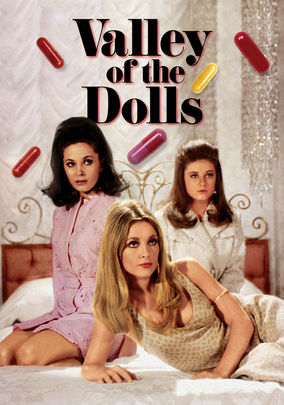
Valley of the Dolls-1967

Valley of the Dolls-1967

Director Mark Robson

Starring Barbara Parkins, Patty Duke, Sharon Tate

Top 250 Films #191

Scott’s Review #657

Reviewed July 3, 2017

Grade: A-

Based on the best-selling novel written by Jacqueline Susann a year earlier, the film version of Valley of the Dolls (1967) has become a cult classic in the years following release- it has earned the dubious description of “it’s so bad it’s good”.

The film dives headfirst into the soapy, dramatic world of Hollywood and Broadway, and the trials and tribulations three young women encounter as they try to “make it” in the backstabbing business.

The film teeters on camp, but it is a favorite of mine, as I love the theme of aspiring stars in La La Land. The set design and groovy styles of the late 1960s are also noteworthy.

Bored with her life in sleepy New England, Anne Welles decides to move to the bright lights of Manhattan, seeking fame, fortune, and excitement.

After she lands a secretarial job for an entertainment lawyer, who handles temperamental Broadway star Helen Lawson (Susan Hayward), Anne meets and befriends two other struggling young actresses.

Neely O’Hara (Patty Duke) is a vivacious, gifted singer, and Jennifer North (Sharon Tate) is a gorgeous blonde with limited talent but looks to die for.

The three women wrestle with the ups and downs of show business as they each achieve various levels of success and failure.

The film centers on both the love and the losses of each woman, and at times it’s rather soap-opera-like, especially the bitchy feud between Neely and Helen, but it’s a fun, entertaining experience.

Various men come in and out of the trio’s lives. The “dolls” referenced in the title are a nickname for pills that the girls readily pop, and alcohol is also used in the film.

One interesting aspect of the film I like is that the three women are very different from one another.

Anne is the most sensible of the three and arguably the most intelligent. Neely is wild, reckless, and constantly battles drugs and alcohol, yet she is both the most successful and the most talented. Jennifer is gorgeous but lacks the talent or the vigor to succeed in Hollywood.

Two of the three women do not have happy endings in their stories.

Some are admittedly a bit uneven, especially the performance of Duke as Neely. She plays the role wildly over the top, especially during her shrieking, drug-saddled tirades, but rather than find the performance irritating (some indeed might), I find the role loud, bombastic, yet sympathetic.

We root for Neely because she has talent despite her shortcomings, and she is a likable character to me, as I want her to find happiness.

Also playing up the camp is Hayward, as she fills Helen with fire, spite, and gusto, doing everything to make the audience view her as a queen bitch. Helen was scheduled to be played by the illustrious star Judy Garland (she would have been perfect!), but was reportedly fired for showing up for work drunk.

An enjoyable aspect of Valley of the Dolls is the humor, though sadly, the laughs are not always intentional. The finale involves a catfight between Neely and Helen in the classy ladies’ room of a famed theater.

With sheer delight, Neely yanks off Helen’s bright orange wig to reveal her natural head of hair. In campy fashion, Helen’s real hair is excellent- more shocking would have been if she were bald or had thinning hair, but her hair is bleached blonde and full.

In melodramatic fashion, Helen waltzes out of the theater sans wig.

Valley of the Dolls is a late-night treat that can be enjoyed and not taken overly seriously- the film differs vastly from the actual novel, and even the time (the 1960s versus the 1940s through the 1960s) is changed.

The film was followed by a much campier and satirical film, Beyond the Valley of the Dolls, made in 1970 and directed by Russ Meyer.

Oscar Nominations: Best Original Song Score or Adaptation Score

Peyton Place-1957

Peyton Place-1957

Director Mark Robson

Starring Lana Turner, Lee Phillips

Scott’s Review #6

60010779

Reviewed June 17, 2014

Grade: B+

Peyton Place (1957) is a scandalous soap opera but made well.

The sleepy, seemingly wholesome, quiet New England town is captured well, but secrets lie within its white picket fences (don’t they always).

Topics such as adultery, rape, murder, and suicide are tackled.

I’m not entirely sure I agree with the slew of Oscar nominations it received that year (1957), but Hope Lange was the standout actor for me.

It reminded me of the syrupy prime-time soaps of the 1980s, but better written and acted than they were.

This is not intended to demean the film, as it is interesting, engaging, and dramatic, with good characterization. However, when analyzed, it is fluff—just good fluff.

Oscar Nominations: Best Motion Picture, Best Director-Mark Robson, Best Actress-Lana Turner, Best Supporting Actor-Arthur Kennedy, Russ Tamblyn, Best Supporting Actress-Hope Lange, Diane Varsi, Best Screenplay Based on Material from Another Medium, Best Cinematography