Tag Archives: Xander Berkeley

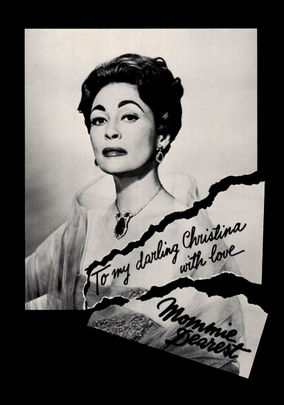
Mommie Dearest-1981

Mommie Dearest-1981

Director Frank Perry

Starring Faye Dunaway, Steve Forrest

Top 250 Films #154

Scott’s Review #195
60020629

Reviewed November 20, 2014

Grade: A

Camp, camp, camp!

By this point in film history, Mommie Dearest and this description go hand in hand, but when made in 1981, it was meant to be a much more serious film than it turned out to be.

Sadly, because of a few very over-the-top lines, it is forever inducted into the halls of cult-classic memory.

Based on the scandalous tell-all book written by Christina Crawford (Joan’s adopted daughter), Mommie Dearest tells the story of Joan Crawford, a Hollywood screen legend, from her heyday in the 1930s until her death in 1977, and mostly focuses on the tumultuous relationship with Christina, played as an adult by Diana Scarwid.

Convinced a baby was missing from her life and unable to conceive after several miscarriages with a former flame, Crawford’s beau at the time, an attorney, wrangles a way for her to adopt both Christina and, later, Christopher Crawford.

Dealing with her mother’s demands and abuse, Christina goes from a happy little girl to a rebellious teen sent to live in a convent and later struggling to find her way as an actress in New York City with no financial support from Mom.

The film also wonderfully describes the career of Crawford- from highs (winning the Academy Award for Mildred Pierce) to lows (being cut from MGM and reduced to screen tests).

The film recounts Joan Crawford’s continuing battles with booze and neuroses.

From start to finish, the film belongs to Dunaway as she becomes Crawford- the eyelashes, the mannerisms, every detail is spot on.

Unfortunately for Dunaway, due to the unintentional comedic view of this film, she was robbed of an Oscar nomination, shamefully so. The film was awarded several Razzies- a derogatory honor given to the year’s worst films.

Dunaway must have put her heart and soul into this performance.

During the infamous wire hanger scene, Dunaway looks frightening as her face, caked with cold cream, reveals a grotesque mask- reminiscent of Batman character The Joker- as she shrieks at her daughter in the middle of the night, during a drunken tirade, after finding beautiful clothes on wire hangers.

She then trashes her daughter’s bathroom, insisting it is already filthy.

One will shriek with gales of laughter as Crawford berates her maid Helga for not scrubbing beneath a potted plant, only to insist, “I’m not mad at you, Helga, I’m mad at the dirt”.

In another haunting scene, Joan throws a birthday party for Christina, complete with a merry-go-round, balloons, presents, and the paparazzi.

Joan’s attire is a little girl’s dress, matching young Christina’s- a morbid foreshadowing of the competition that is to exist between them as the years go by.

The secondary characters are merely an extension of Dunaway’s character and do their best to support her- her harried live-in assistant, Carol Ann, played by Rutanya Alda, both of her love interests, lawyer, Greg Savitt, played by Steve Forrest, and later, Pepsi-Cola mogul Alfred Steele, played by Harry Goz.

The actors do their best with the material given and are neither exceptional nor flawed. None of these supporting characters has any backstory beyond reacting to Crawford’s drama and, if written better, could have given the film a bit more depth.

The look of the film is pleasing- Crawford’s house is beautifully decorated with lavish furniture, and the colors throughout the film are both bright and vivid.

The now-legendary lines of “No wire hangers ever!”, “Christina! Bring me the ax!”, and “Don’t fuck with me fellas, this ain’t my first time at the rodeo” are hysterical in their melodrama and effect.

Crawford is portrayed as an obsessive-compulsive, demanding, control freak. One may debate the authenticity of Christina’s claims against Joan Crawford until the end of time.

Not the masterpiece it was intended to be, Mommie Dearest (1981) can be enjoyed viewing after viewing for some campy silliness, with one hell of a great performance by Dunaway mixed in.
Heat-1995

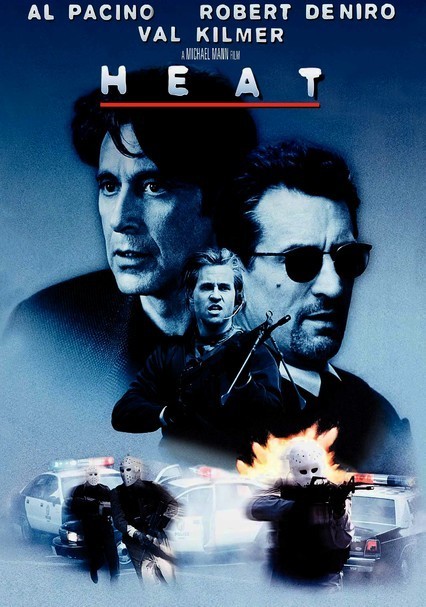
Heat-1995

Director Michael Mann

Starring Al Pacino, Robert De Niro, Val Kilmer

Scott’s Review #1,228

Reviewed February 12, 2022

Grade: A-

Fans of the popular 1980s NBC television series, Miami Vice will recall that Michael Mann was the Executive Producer of the show during its run.  He has a distinctive crime thriller style that goes perfectly well with Heat, a sizzling 1995 offering starring two film greats-Al Pacino and Rober De Niro.

The fact that the pair do not appear too often on screen together can be forgiven because when they are the stars align and the power of quiet scenes cannot be outdone. I savored over the moment when they first appeared together. Quality over quantity.

De Niro plays Neil McCauley, a lifelong criminal who is trying to handle damage control caused by one of his men, while also planning one last big heist before retiring to parts unknown. He meets a lovely young Los Angeles-based artist played by Amy Brenneman in a diner and the two plan to relocate abroad.

Meanwhile, Lieutenant Hanna (Al Pacino) is a seasoned officer attempting to track down McCauley and his cohort while dealing with the chaos in his own life, including the infidelity of his wife (Diane Venora) and the unhinged mental health of his stepdaughter (Natalie Portman).

McCauley and Hanna discover mutual respect, even as they try to thwart each other’s plans. The two characters become doppelgangers of one another. The situation comes to a cat-and-mouse-based conclusion on the tarmac of LAX airport.

To say that Heat is a by-the-numbers 1990s thriller is a fair assessment although it’s way better than that classification and it’s of that genre.

For starters, the acting is superior, and obviously, De Niro and Pacino bring a level of professionalism to the film in the lead roles. My favorite scene is not the one you’d most expect me to say but rather a quiet and powerful chit-chat in a small coffee shop. They are rivals, having lived opposite lives, and yet have troubled lives that mirror each other.

Without a doubt, Hanna wants to bring McCauley to justice, and yet he admires him and sees parts of himself in the man. The feeling is mutual and the two actors relay this revelation without actually speaking the words. Viewers immerse themselves into the characters pivoting from this powerful scene.

There are a ton of characters in Heat but each one feels like he or she has much to offer. Juicy storylines are introduced but never forgotten even if not part of the main canvas. Hanna’s wife and stepdaughter play a central part in the final act even though they mainly appear during the first chapter.

In supporting roles, Val Kilmer and Ashley Judd share beautiful chemistry and a melancholy storyline as a damaged couple trying to survive surrounded by a life of crime.

At two hours and fifty-two minutes, there is plenty of time for each character to make their mark.

I love the rich character development that Heat offers but sometimes it’s admittedly tough to keep track of the motivations of the characters and how they tie into the main action.

Mann’s style is all over the place and even the musical score brought me back to the episodic song intervals that Miami Vice created. The moody and dark atmosphere of dingy and crime-infested Los Angeles is perfectly placed against glossy and glamorous high-rise and sprawling estate scenes. The bright and luminous city skyline is a feast for the eyes.

The cop/criminal dynamic is the main draw as Heat flexes its masculine muscles scene after scene. A bloody bank heist gone wrong at the beginning of the film cements what Mann is trying to create here. A guy’s film with enough juice to hook the introspective film viewer too.

Not remembered as well as it probably should be, Heat holds up surprisingly well when put up against similar but hokey 1990s action films like Lethal Weapon and the Die Hard films.

Though there’s not a whole lot that is new in Heat (1995), rich writing and powerful acting win out every time, and of course, Pacino and De Niro are worth the price of admission.

Air Force One-1997

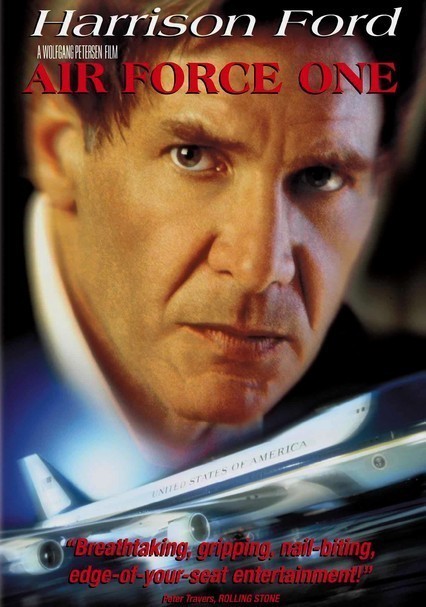
Air Force One-1997

Director Wolfgang Petersen

Starring Harrison Ford, Gary Oldman, Glenn Close

Scott’s Review #1,085

Reviewed November 21, 2020

Grade: B+

If ever a straight-ahead, summer blockbuster, popcorn flick existed, Air Force One (1997) is it. Surprisingly, this is not a bad thing. It’s not cerebral, but it’s never dull.

The film has hooks and muscle and assembles a thrill ride, edge-of-your-seat action fest. Some would say this is just what the doctor ordered, and they’d be right, provided the mood is for a mind-escaping, meat-and-potatoes affair.

Air Force One is pure Americana. With a patriotic musical score and a clear hero and villain, it’s easy to know who to root for. Suspension of disbelief is mandatory since some scenes are as implausible as Santa Claus shimmying down a chimney on Christmas Eve, but the film is entertaining.

The action is non-stop.

At the tail end of his prime action star years (the 1980s and 1990s), Harrison Ford stars as the president of the United States of America, James Marshall.

After making a bombastic speech in Moscow vowing never to negotiate with terrorists, a group of them led by the dastardly Ivan (Gary Oldman) hijacked Air Force One with the president and his family on board.

Marshall, a former soldier, hides in the cabin of the plane and races against time to save his family and those aboard the flight from the terrorists.

The plot is implausible and hokey and reeks of plot points to carry the story along, but surprisingly, the film works. There is no way a president would ever race around performing stunts aboard an airplane, conquering the villains like clockwork.

But Ford has the charisma to make us believe it could happen, and his character is a family man, a Vietnam veteran, and a Medal of Honor recipient. Can this guy be any more perfect?

Oldman, always reliable as a villain, is perfectly cast. His character’s motivations are simplistic and nationalistic. Ivan believes that the collapse of the Soviet Union has ruined his country and somehow it’s the fault of the United States.

The reasoning is silly, but it’s in keeping with the patriotic nature of Air Force One- the ‘us versus them’ mentality. The United States is good; Russia is bad. It’s what middle America wants, and the target audience of this film is clear. Back to the Cold War.

Wolfgang Petersen, who directs the film, knows his way around the action genre. After all, he crafted the memorable Das Boot (1981) and Outbreak (1995). The film has a Tom Clancy-Patriot Games meets Die Hard (1988) style.

Petersen meshes the score with the quick editing style to layer the film with more action than slowed-down conversational scenes. We know how it’s going to end but enjoy the ride.

Looking closely, the film is not just for the guys.

Glenn Close is cast as a female Vice President and a strong gender-twisting presence. Kathryn Bennett is a bold, careful woman and the implication is that she is more than capable of taking over should anything happen to the president.

Her scenes mostly take place in the White House Situation Room and provide a nice calm as she is pressured by the Defense Secretary (Dean Stockwell) to declare the president incapable.

The scenes between Stockwell and Close are very strong.

Air Force One (1997) is a cliché-riddled and mainstream Hollywood creation to the max. Both the pacing and the pulsating style make the film a guilty pleasure and quite enjoyable.

When the mood strikes to kick back and relax with a fun, action-packed affair, this one is your choice. Just don’t dissect the details too much or expect real-life to mimic art.

Oscar Nominations: Best Sound, Best Film Editing

A Few Good Men-1992

A Few Good Men-1992

Director Rob Reiner

Starring Tom Cruise, Jack Nicholson, Demi Moore

Scott’s Review #1,012

Reviewed April 15, 2020

Grade: B+

A Few Good Men (1992) is a film firmly ensconced in the mainstream Hollywood courtroom drama genre.

If all the necessary elements had not been well-weaved the results might have been trite or even cringe-worthy. Nonetheless, with big stars and excellent acting, director Rob Reiner (yes, “Meathead” from All in the Family), lucks out with a predictable screenplay that compels and is made better by the sum of its parts.

The film will never bore and is a standard edge-of-your-seat thrill ride.

The drama was rewarded with several year-end niceties including nominations for the upper-crust Academy Awards. Best Supporting Actor, Best Film Editing, Best Sound Mixing, and surprisingly the lofty Best Picture statuette.

With no shame for the embarrassment of riches, deserved or undeserved is the real question, the film walked away empty-handed on Oscar night.

When cocky and handsome military lawyer Lieutenant Daniel Kaffee (Tom Cruise) and his co-counsel, Lieutenant Commander JoAnne Galloway (Demi Moore), are assigned to a murder case, their investigation uncovers a hazing ritual that could implicate high-ranking officials.

U.S. Marines Lance Corporal Harold Dawson (Wolfgang Bodison) and Private First Class Louden Downey (James Marshall) are facing a general court-martial, accused of murdering fellow Marine William Santiago at the Guantanamo Bay Naval Base in Cuba.

Kaffee and Galloway are to determine if higher-ranking officers orchestrated and forced the lower-ranking men to carry out a “code red” order: a violent extrajudicial punishment, and their form of justice, to kill the young victim, thus silencing him forever.

The questionable part of the plot is whether Base Camp Commander Jessup (Jack Nicholson) administered the order or instead ordered Santiago’s commanding officer, Lieutenant Jonathan James Kendrick (Kiefer Sutherland), to merely “train” Santiago to become a better Marine.

This is where the courtroom drama takes center stage with gusto.

As good as Moore, Sutherland, and Marshall are in offering compelling roles, the film belongs to Cruise and Nicholson, the veterans of the group. The best scenes come at the end of the film as Cruise and Nicholson spar in the courtroom with bombast and trickery.

Nicholson as Jessup is brooding and traditional, a lifelong military man channeling honor and dedication at any cost. Cruise as Kaffee has something to prove and wants to win at any cost. So, they tangle in a fierce machismo way.

When he catches Jessup in a lie, just like a spider captures a fly, the scenes crackle and spark with grit and energy.

The unforgettable line, “You can’t handle the truth!” is uttered by Nicholson.

A Few Good Men will both satisfy and dissatisfy those with a connection or a penchant for the military. On the one hand, the military is celebrated during the film as the need for efficiency in the world and the decorated appeal are to be admired.

But the film also stands up and questions the hypocrisy of one of the oldest establishments and its male domination and bullying methods not so different from a classic college fraternity.

The courtroom trial of a patriotic group is serious business.

While not a revolutionary film, sticking to a tried and true courtroom drama script seen in television drama series since the beginning of time, A Few Good Men (1992) provides a hefty two-hour and twenty minutes worth of pure entertainment.

Powerful acting across the board makes the film a superior experience and a thought-provoking message of whether blindly following orders without thought is still a relevant approach, not just in the military, but anywhere.

Oscar Nominations: Best Picture, Best Supporting Actor-Jack Nicholson, Best Sound, Best Film Editing

The Grifters-1990

The Grifters-1990

Director Stephen Frears

Starring John Cusack, Anjelica Huston, Annette Bening

Scott’s Review #597

Reviewed January 9, 2017

Grade: B-

The Grifters (1990) is a film that has witty writing and an overall appeal. It is unique and quirky and is in the style of a charismatic film noir from one of the golden ages of film, the 1930s, and the 1940s.

Additionally, the film has a very sharp, clean look to it.

The performances, especially Anjelica Houston, are excellent. All three principles, (John Cusack and Annette Bening) give fantastic performances and feed off each other so that the chemistry works quite well.

Cusack plays a small-time crook named Roy Dillon, inept in ways, and estranged from his mother (Huston). When she returns to town, she along with his girlfriend (Bening), all attempt to con and outmaneuver each other for their gain.

The film is set in sunny Los Angeles.

As compelling as the film sounds on paper, I did not find myself completely captured by it. It took me a while to get into the film and by the time I finally did, it had ended.

Overall, well made, and respectable, and I can see how some people would love it, but for me, there remained something missing.

Oscar Nominations: Best Director-Stephen Frears, Best Actress-Anjelica Huston, Best Supporting Actress-Annette Bening, Best Screenplay Based on Material from Another Medium

Independent Spirit Award Nominations: 2 wins-Best Feature (won), Best Female Lead-Anjelica Huston (won)