Category Archives: Winter

Gorky Park-1983

Gorky Park-1983

Director Michael Apted

Starring William Hurt, Lee Marvin, Joanna Pacula

Scott’s Review #1,522

Reviewed March 8, 2026

Grade: B+

Gorky Park (1983) is an aptly named thriller set in Moscow, Russia, involving a mysterious triple murder of three young adults while ice skating at the titled central park. In addition to being murdered, their faces have been skinned and their fingerprints removed.

Russian detective Arkady Renko (William Hurt) uncovers a network of deceit and intrigue when he investigates the murders.

As he tries to make progress on the case, it becomes apparent that the KGB doesn’t want the homicide to be solved, and Renko needs to know why. He eventually meets an American businessman, Jack Osborne (Lee Marvin), who offers some clues, but Renko soon realizes that Osborne may be involved in the plot.

He also meets and falls in love with a mysterious young woman, Irina Asanova (Joanna Pacula), who owned the ice skates found on one of the victims.

The film succeeds in outlining a compelling story that doesn’t lag and in providing a cold, wintry atmosphere, just what one would expect from the drab Russian environment. The audience knows deadly shananigans have occurred, and the film is fun to watch as it tries to connect the dots.

Even though the action is palpable, the ensuing mystery can feel overly complicated at times and hard to follow, leading to an overwhelming feeling.

Accepting Hurt, an American actor, as a Russian police investigator takes some time. For the first thirty minutes, I thought he was an American character.  He sometimes shows hints of an English accent and no Russian at all.

Once I accepted this, Hurt does a very good job at leading the film, which is a tough ask given the complexities of the story. He is handsome and a good guy wanting to do the right thing, so he’s easy to root for.

The film is adapted from the 1981 novel written by Martin Cruz Smith.

While most of the film is set in Moscow, the action later shifts to Stockholm, Sweden, a city I adore. Due to the Cold War conflicts between the Soviet Union and the United States, the film was obviously not shot in Moscow.

Finland and Sweden were the chosen filming locations.

As hard as I tried to follow the main plot, my mind occasionally wandered because there are KGB elements, Jack Osborne, Irina, and an American detective, William Kurwill, in the mix, as well as various colleagues and connections to Renko.

Any or all of these characters or organizations could be involved in the murders, and minor red herrings like the creepy Professor who recreates the victim’s heads and Irina, who comes off as a cold and unfeeling, emerge as the story goes along.

Despite the story’s complexities, Gorky Park is filmed very well and rises above the ranks of mediocrity it could have fallen into, since countless other political and crime thrillers have used the tired Russia/United States rivalry.

The elements are the best part because numerous snowy and bleak sequences enhance the overall story and atmosphere. A scene in woodsy Sweden is wonderfully cold and white, with the woods and a shack coming into play.

The romantic storyline between Renko and Irina is more plot-driven than anything fresh. It’s predictable from the moment the characters meet as they delve into a strong dislike that becomes a love formula.

While there are some cliches to endure, like menacing ‘type’ characters and the overuse of the word ‘comrade’, the film surprisingly feels crisp, and the big reveal and the hows and whys of a sable fur smuggling organization, though years later, feel dated, are interesting.

I’m not sure I need to see Gorky Park (1983) again, but considering it’s a political/crime thriller amid hundreds of similar films, it stands a bit above the rest.

Dead of Winter-2025

Dead of Winter-2025

Director Brian Kirk

Starring Emma Thompson

Scott’s Review #1,513

Reviewed January 20, 2026

Grade: A-

The brilliant Emma Thompson, known for Howard’s End (1992) and a bevy of other quality films, stars in and executive produces Dead of Winter (2025), a perfect movie to watch in January. If one is fortunate enough to watch on a blustery, cold, or snowy night, all the better for an ideal atmosphere.

The thriller is unpredictable and downright touching, largely thanks to Thompson, who leads the charge emotionally. To see the actor shoot, stab, and catfight her way to a beautifully shot ending is icing on the cake.

Plus, trading her sophisticated British accent in for a folksy midwestern drawl is quite pleasing.

The elements are a huge win and the main attraction of the film, other than Thompson and the eerie timeliness of the United States’ Minnesota, the setting of the film, being in the top U.S. news in late 2025/early 2026.

The stark, empty vastness of the cold land is made even more potent by the endless whiteness of the snow-covered, curving roads, the tundra of the lake, and the lake house, where most of the action takes place.

While the story can be argued to be implausible and the ending fragile, bordering on silly, requiring suspension of disbelief, Thompson’s performance more than makes up for any weak fragments.

Hit by a blizzard, a grief-stricken loner named Barb (Thompson) gets lost among backroads near a Minnesota lake and stops for help at a remote cabin in the woods where she discovers drops of blood and a startled middle-aged man (Marc Menchaca) who can’t get rid of her fast enough.

She then discovers a young woman (Laurel Marsden) kidnapped by a desperate couple intent on murder. Isolated and without cell service, Barb realizes she is the woman’s only hope of survival.

Director Brian Kirk carefully places tender flashbacks of a young Barb and her husband Kirk from smitten youngsters to tragic seniors battling Kirk’s failing health and the in-between trials and tribulations of the couple over the years.

These scenes not only create an emotional investment in the audience, but also fill in the blanks about why Barb would be possessed to go ice fishing in the middle of nowhere, all alone.

Sprinkling bits of humor that make Barb appear a kindly woman rather than an incompetent bafoon, she is a salt-of-the-earth type who opposes violence. Thompson was undoubtedly influenced by Frances McDormand’s sheriff character Marge Gunderson in 1996’s Fargo.

In fact, there are multiple Fargo comparisons to explore for fans of the Coen Brothers’ film, covering plot, atmosphere, and characters.

Judy Greer and Menchaca provide solid support as the mismatched couple with deadly intentions, whose motives become clearer as the plot unfolds. Greer’s character is pretty unlikable despite softening towards the end, but her actions are peculiar from a logistical perspective, and her acting is of high quality.

Menchaca has the more sympathetic role, and not only because the actor performs his nude scene in freezing temperatures.

The finale is set underwater, and it is a teary yet satisfying sendoff for Barb and Kirk, who make the hardest-hearted viewer believe in true love and a testament to commitment.

Likely superceding any expectations set by filmmakers, Thompson gives a bravura performance through facial expressions alone, telling much of the sentimental part of the story through her bright blue, emotion-filled eyes, pulling the audience in.

I didn’t expect to enjoy Dead of Winter (2025), a film given little notice, nearly as much as I did.

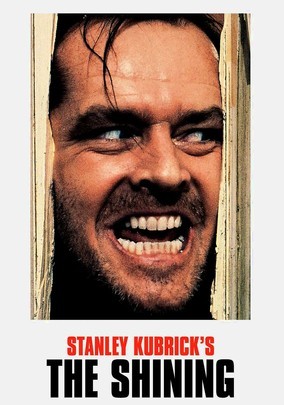
The Shining-1980

The Shining-1980

Director Stanley Kubrick

Starring Jack Nicholson, Shelley Duvall

Top 250 Films #21

Top 40 Horror Films #6

Scott’s Review #313

959008

Reviewed December 31, 2015

Grade: A

The Shining is one of the great horror masterpieces of all time.

Released in 1980, and atypical of the slasher craze that was rampant at that time, the film is a psychological ghost story with frightening elements, including a musical score, long camera shots, and a haunting, grandiose hotel set in a deserted locale.

Without the brilliant direction of Stanley Kubrick, The Shining would not be the masterpiece it is, to say nothing of Nicholson and Duvall’s talents in the lead roles.

Based on the popular horror novel by Stephen King.

Nicholson plays Jack Torrance, an author and alcoholic, who takes his wife Wendy (Duvall) and son Danny to serve as caretakers at the vast Overlook hotel, for the winter in snowy Colorado.

The lavish hotel will be deserted for the season, and Jack looks forward to months of peace that will enable him to complete his novel.

Unfortunately, the hotel is haunted by spirits of the past, and the added burden of the previous caretaker going mad and chopping his family to bits with an ax.

The real success of The Shining is that the hotel itself is a character with its own nuances. The hotel is deathly quiet as the Torrances take over for the season-long hallways are featured, and the forbidden Room 237 takes on a life of its own.

Creepy images of two young girls and red blood gushing from the elevators take over. Young Danny can communicate with the chef without speaking to each other. Jack imagines a gorgeous nude woman in the bathtub, only to discover she is a shriveled old hag.

The film’s cinematography, coupled with the looming, morose musical score, goes hand in hand and, in my opinion, is the reason for the film’s success.

Throughout the film, there is a sense of dread and a forbidden presence that works beautifully.

The first scene is an aerial shot of the Torrances driving along a mountainous road as they are interviewed for the caretaker position. The vast land and mountains, as we eventually see the Overlook, immediately convey a sense of isolation, which is really what the film is about.

These exterior scenes are also gorgeous to marvel at.

The crisp, gloomy winter scenes and the endless maze of animal shrubbery come into play in the film’s final act as Jack, now completely mad, chases Danny along snowy paths that seem to lead nowhere.

The catchphrase, “Here’s Johnny!”, that is uttered from an ax-wielding Nicholson, is permanently ensconced in the relics of pop culture.

Nicholson and Duvall have such dynamic and palpable on-screen chemistry that makes the film work from a character perspective. There is something slightly off about each character, readily apparent from the outset, but it has more to do with each actor’s rather non-traditional appearance.

I can imagine no other actors in these roles.

Author Stephen King, who reportedly despised the film version of his novel, has since grown to respect the film and Kubrick’s direction a great deal.

The Shining (1980) is one of my favorite horror films and one of my favorite films of all time.

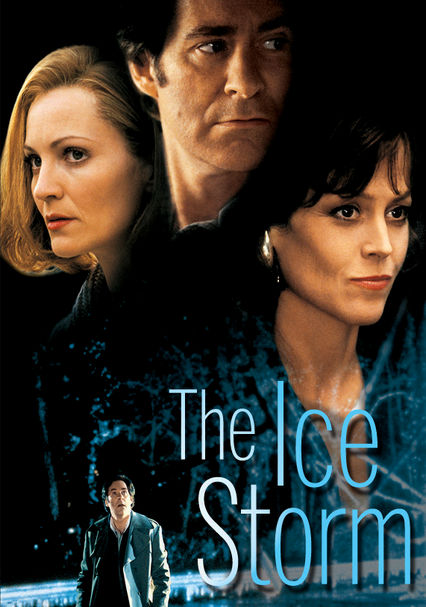
The Ice Storm-1997

The Ice Storm-1997

Director Ang Lee

Starring Kevin Kline, Joan Allen, Sigourney Weaver

Top 250 Films #60

Scott’s Review #850

Reviewed January 1, 2019

Grade: A

The Ice Storm (1997) is a brilliant film directed by Ang Lee of Crouching Tiger, Hidden Dragon (2000) and Brokeback Mountain (2005) fame.

The film is based on a 1994 novel of the same name, written by Rick Moody.

The brilliance lies in the rich way the characters are written, with coldness, repression, and loneliness being central themes.

The film is astonishingly genuine and fresh with an authenticity rarely felt so wholly in adult family dramas.

The period is 1973, and the events take place in New Canaan, Connecticut, a wealthy suburban town.

Two dysfunctional families, the Hoods and the Carvers, co-exist during the Thanksgiving weekend as each deals with repression and escapism amid alcohol and sexual experimentation.

Both the adults’ and the children’s lives are prominently featured in the story. Ben and Elena Hood (Kevin Kline and Joan Allen) and Jim and Janey Carver (Jamey Sheridan and Sigourney Weaver) head the families.

While Ben and Janey carry on a secret affair, Elena lives an unfulfilled existence, craving more from life but not knowing how to get more and reduced to consulting self-help books for support.

Wendy Hood (Christina Ricci) enjoys sexual escapades with multiple boys. At the same time,e Paul Hood (Tobey Maguire), home from boarding school, takes the train into New York City to see a rich classmate, Libbets Casey (Katie Holmes).

The most wonderful aspect of the film is that the story is a slice of life, but with clever nuances. Since the families are rich, why should the viewer feel sympathy for any of the characters, let alone root for them?

Ben and Janey lounge in bed after sex; he is chatty about nonsense, and she is bored and depressed.

During a holiday neighborhood gathering, a kinky “key party” develops, where participants swap spouses for the night, resulting in titillation and excitement.

The bold and controversial writing is exactly why The Ice Storm scores so many points. The characters are cold and frozen, unlikable and selfish, but might that be the point?

All seem unhappy and tired of their dull, small-town existence, craving whatever little excitement they can muster.

Written similarly to American Beauty (1999) the films could be watched in tandem for evenings of Gothic and macabre story-telling.

My favorite character is Elena, as she has the most sensibility. She is lonely and ignored by her husband, dutifully going about her day with little emotion.

She feels temporarily excited when she develops a romantic crush on a neighbor, only to quickly realize the most she can ever hope for with this man is a fling.

Her character is fleshed out as she yearns for more than she has. The other characters are largely selfish and pampered.

The film’s conclusion, however, is monumental as it changes the perceptions of some characters and softens them. A tragic death brings characters together in a powerful way.

Again, the writing in The Ice Storm is the most interesting and compelling appeal.

The acting among the entire cast is professional, heartfelt, and brazen, but the written dialogue and interesting situations make this film rise above others of a similar genre.

Lee’s direction is brilliant, as the blustery winter atmosphere is central to the story in more ways than we might initially think. The frozen power lines and slick, windy country roads evoke a cozy feeling, as if harboring family secrets and scandals.

The bitter yet beautiful ambiance is a soothing and compelling aspect of the film, and Lee portrays it with precision.

As an independent drama, The Ice Storm has a low budget and features big-name stars. The film could easily be performed as a play, but its cinematic elements and fantastic writing make it a memorable, storied piece of filmmaking.

Ang Lee frequently incorporates astounding character development in his works, and The Ice Storm (1997) has all the qualities of a masterpiece.

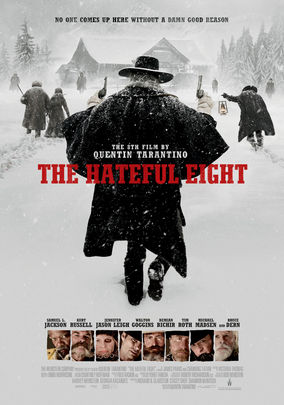
The Hateful Eight-2015

The Hateful Eight-2015

Director Quentin Tarantino

Starring Kurt Russell, Samuel L. Jackson

Top 250 Films #172

Scott’s Review #319

80064515

Reviewed January 3, 2016

Grade: A

Quentin Tarantino does it again!

The modern equivalent of Alfred Hitchcock, Stanley Kubrick, David Lynch, or any of the great directors, his films are an experience to be reveled in.

The viewer is taken to another world and experiences a great fantasy. This time he dives into western territory with The Hateful Eight (2015), a brutal tale of eight strangers holed up in a shelter during a Wyoming blizzard shortly after the Civil War.

The film delivers blood, unique characters, and brilliant writing.

We are introduced to Major Marquis Warren (Samuel L. Jackson) and John “The Hangman” (Kurt Russell) early on, as Marquis hitches a ride on John’s stagecoach.

They are bounty hunters heading to Red Rock to deliver their prisoners and collect a large loot. Marquis has three dead bodies, but John has captured brutal female criminal Daisy Domergue, played wonderfully by Jennifer Jason Leigh, alive and well.

The group then picks up the new Red Rock sheriff, Chris Mannix, who is headed there to accept his new position.

Everyone is in a panic to reach safety before a vicious blizzard hits and the group comes to a shelter where they meet the other film principals, Joe Gage (Michael Madsen), Oswaldo (Tim Roth), Marco the Mexican (Demian Bichir), and General Sandy Smithers (Bruce Dern).

These eight make up “The Hateful Eight” in the title.

The setting could not be better. The cold, wintry blizzard and the grand mountains of the West are authentic. However, most of the film is set inside Minnie’s Haberdashery, an inn where the eight (and some others) spend most of the film.

I found the setting tremendously effective as the howling wind,  the driving snow through the windows, mixed with the glowing warmth of the lighting and the hot, steaming, soothing stew that they ate, and the hot coffee, which is ingeniously featured throughout the film.

These hot and cold elements contrast so well.

Shot in 70 mm film to ensure a widescreen, epic look, the film succeeds in the snowy, outdoor scenes, though I am not sure I would notice this camera style without it being touted with the release.

The characters bristle with authenticity and engagement and each one is interested in his or her own right- even the secondary characters.

My favorites are John “The Hangman”, Daisy, Marquis, and Sandy Smithers. John is probably the most likable character of the bunch and Kurt Russell (almost unrecognizable under the thick beard), gives the character charm and wit.

As the story unfolds, each character is mysterious, and their motives unclear, which makes the film fun. Are some in secret cahoots with others? When someone poisons the coffee, a whodunit erupts.

This is the beauty- the character motivations slowly come into play and a slow reveal occurs.

The gore/violence is fantastic. Without revealing too much, there are many deaths and the film is non-linear, with the middle portion of the story occurring before the first section. To keep things organized, Tarantino divides into chapters, and over three hours long, the film is a monster.

I like how Tarantino features an interracial relationship (black inn owner Minnie and her white husband).

Favorite scenes include the vomiting blood sequence and the brutal scene of the severing of the arm of a character.  There is also the scene of Marquis dragging a victimized, naked soldier through the snow that is intense and shocking, involving brutal sodomy.

As with all of Tarantino’s films, the characters are cartoonish and not to be taken completely seriously and the violence will undoubtedly offend some, but that is the beauty of his films.

This is a masterful work by a masterful modern director.

Oscar Nominations: 1 win-Best Supporting Actress-Jennifer Jason Leigh, Best Original Score (won), Best Cinematography

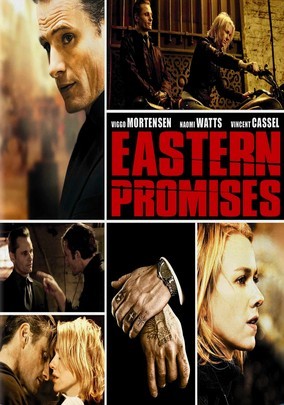
Eastern Promises-2007

Eastern Promises-2007

Director David Cronenberg

Starring Viggo Mortensen, Naomi Watts

Top 250 Films #193

Scott’s Review #205

70059994

Reviewed December 15, 2014

Grade: B+

Eastern Promises is a 2007 Russian mafia thriller directed by David Cronenberg (The Fly, A History of Violence) that stars Viggo Mortensen, Naomi Watts, and Vincent Cassel.

The film is an uneven experience, seemingly meshing two stories together- one fascinating, one unnecessary.

Watts plays a British-Russian midwife named Anna, who works at a London hospital. She attempts to find the family of Tatiana, a fourteen-year-old girl who died during childbirth, leaving a diary written in Russian along with her newborn.

Anna struggles to unravel the mystery surrounding the girl, which ultimately involves the mafia.

Mortensen plays Nikolai, the mysterious chauffeur to crime lord Semyon, and Cassel plays Kirill, the disturbed, alcoholic son of Semyon.

The plot segues into a story of a somewhat romantic relationship between Nikolai and Anna that is not quite romantic, and also a much more intriguing relationship between Nikolai and Kirill as a brotherhood of sorts develops between them.

This relationship is complex- Kirill wants Nikolai to prove he is a straight male by having sex with one of several female prisoners he and his father keep as part of a sex trafficking group.

During this scene, and a few others, the two men seem close, almost too close, given the sexual nature of what is happening during the scene, so this relationship is left vague, but intriguing nonetheless.

The latter story holds more interest to me, whereas the former seems contrived and rather uninteresting. Was the intention of the film to imply a romantic interest between Anna and Nikolai?

I found zero chemistry between the two and wondered whether the audience was supposed to root for them as a couple.

The four principal characters in Eastern Promises are interesting to unravel. I found the characters of Nikolai and Kirill complex and interesting.

Not so much with the character of Anna. Why did I not find her so compelling? Besides a skimmed-over mention of how she lost a baby, what vested interest did she have in mixing with the Russian mafia and putting her mother and uncle in harm’s way?

Sure, anyone would want to find an orphaned baby’s family, but why not just call the police? This seems like a large plot hole. Conversely, Nikolai is a fascinating, layered character, wonderfully played by Mortensen.

What are his true motivations? Is he a good guy or a bad guy? His attempts at being accepted by Semyon and the family to join the mob family make him seem dangerous, but his kindness towards one of the Ukrainian prostitutes is sweet.

Kirill is a despicable character, but what is his sexuality? Does that make him get so drunk and angry? How does one explain his conflict over the baby, which shifts his character too sympathetically?

Ultimately, Nikolai and Kirill are complicated- Anna and Semyon are more one-note.

I would have preferred the story to revolve solely around the mafia family and the Godfather-type scenes, specifically the two throat-slashing scenes, violently done, and perhaps leave out Watts’s character and story altogether.

A gritty scene set in a steam room pits Nikolai against two rival mafia men. The scene is long and intense. Mortensen performs the scene completely naked, which adds to the rawness and the brutality of the fight.

It is one of the most masculine scenes I can remember watching.

At times compelling, but riddled with plot holes and requiring some suspension of disbelief, Eastern Promises (2007) is an entertaining Russian mafia film that remains a decent watch.

Oscar Nominations: Best Actor-Viggo Mortensen

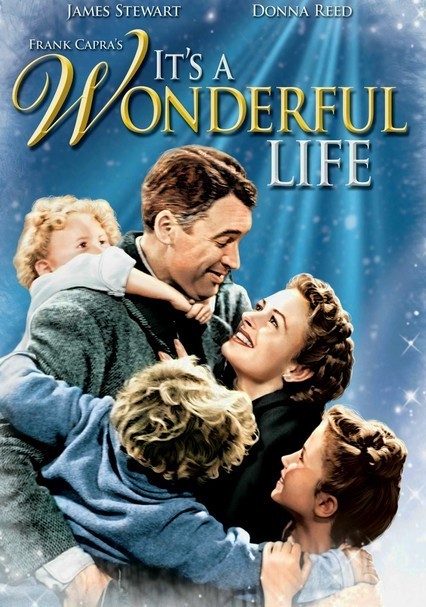
It’s a Wonderful Life-1946

It’s a Wonderful Life-1946

Director Frank Capra

Starring James Stewart

Top 250 Films #219

Scott’s Review #863

Reviewed February 5, 2019

Grade: A-

A popular holiday tradition in many households eager to cozy up in front of the fire with an enduring and entertaining classic, It’s a Wonderful Life (1946) serves an essential purpose. It is the ultimate annual festivity passed down through generations.

While not one of my standards, I recognize the influence and endearment the film offers and cannot fault its power to bring people together through its humanistic, sweet message.

James Stewart is perfectly cast as the wholesome and likable George Bailey. He strives to help everyone in his small community who needs it, often at the expense of his own well-being.

Depressed by the failure of his bank on Christmas Eve in 1945, in the snowy locale of Bedford Falls, New York, George is visited by a guardian angel named Clarence (Henry Travers), who teaches him what life will be like if he chooses the dire path of ending his own life.

Along with Stewart, Donna Reed as the wife, Mary Hatch Bailey, is cast exceptionally well and is the perfect counterpart to George.

Together, the actors immerse themselves in their roles, holding their heads high as the leaders of the sleepy little town they reside in, and set an example for the other townspeople with their kindness and thoughtfulness.

A sound “king and queen of the prom,” the duo radiates and elicits tears from audience members living vicariously through the couple.

A perfect companion piece to A Christmas Carol, perhaps the version from 1951, for similar periods, both spirited and teaching life lessons, is recommended.

Both are thematically similar in their depiction of a heavenly spirit’s visitation and in offering glimpses into the past, present, and future; the comparisons are endless, to say nothing of the Christmastime elements both possess.

Arguably, It’s a Wonderful Life is the most uplifting, both in good and bad ways. The lesson repeatedly voiced is that if one is good to others, one will be rewarded, or at least find peace of mind.

This is not a bad lesson, which is the main reason for the film’s lasting appeal. Bad luck and financial hardship will inevitably affect everyone, but kindness is forever enduring.

It’s also worth mentioning the timing of the creation and release of It’s a Wonderful Life.

As the United States, to say nothing of many European nations, struggled to pick up the pieces after the devastation of World War II, the picture was opportune to immerse itself in the lives of many people who needed a strong and uplifting message.

No wonder the film was popular when it was first released as the feel-good film of 1946.

The black-and-white cinematography does wonders to portray the film’s magical atmosphere. The high points are the cold and snowy bridge scenes.

Controversial years later was the colorization, and some would say the ruination, a decision that was met with anger by star Stewart, who went so far as to testify in court to voice his displeasure.

At the risk of being raked across the coals and deemed a “Scrooge”, portions of It’s a Wonderful Life are saccharin and manufactured in the utmost goodness, sometimes too good.

Admittedly, the characters of George, Mary, and their children come across as somewhat trite at times, as they seem to radiate only benevolent characteristics, never engaging in improper or impure actions.

In a fantasy film, the overly humanistic approach can sometimes be a tad silly.

The same can be said for the angel, Clarence.

Nonetheless, films such as It’s a Wonderful Life (1946) serve their purpose in cinema history.

With a robust and heart-warming message, the positive vibes are undeniable, and the warmth and emotion the film possesses radiate even to the coldest hearts and the harshest of critics, who are willing to accept and be enraptured by the film’s staying power.

Oscar Nominations: Best Motion Picture, Best Director-Frank Capra, Best Actor-James Stewart, Best Sound Recording, Best Film Editing

Golden Globe Nominations: 1 win-Best Director-Motion Picture-Frank Capra (won)

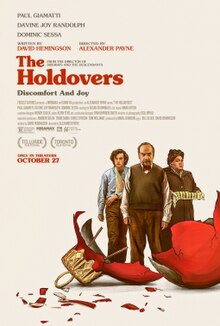
The Holdovers-2023

The Holdovers-2023

Director Alexander Payne

Starring Paul Giamatti, Dominic Sessa, Da’Vine Joy Randolph

Scott’s Review #1,410

Reviewed November 22, 2023

Grade: A

The snowy New England setting is just one of many aspects of The Holdovers (2023), director Alexander Payne’s latest release gets right. There’s a stuffy prep school, the tumultuous 1970-1971 in world politics, and teenage angst in the mix.

The early 1970s-era set pieces and Americana comfort food are brilliantly and prominently placed to offer security in a world with tragedy and loneliness The jazzy soundtrack also features hits of the time, embracing the viewer in beautiful nostalgia.

Finally, the three lead characters are well-defined and their complexities are displayed in raw form making them rich relatable flawed thanks to strong acting performances.

Paul Giamatti leads the charge as a sarcastic teacher with his great acting and meshes well with newcomers Dominic Sessa as a rival student and Da’Vine Joy Randolph as a kind but wounded cook.

Anyone who has seen Payne’s films like Election (1999), Sideways (2004), The Descendents (2011), or others knows that he sprinkles satirical depictions of contemporary American society in his works.

There is frequently sadness and morosity to the content saved from depression by warmhearted and caring characters.

I savored the quiet moments of human connection that were crafted in The Holdovers.

Events occur over about two weeks beginning at Christmas break and culminating in early January so holiday cheer and sadness are themes.

Paul Hunham (Giamatti) is a classics instructor at Barton University, a prep school outside of Boston. He is forced to remain on campus during Christmas break to babysit the handful of students with nowhere to go.

At first, despising each other he eventually forms an unlikely bond with one of them, a damaged, but witty troublemaker named Angus Tully (Sessa).

He also connects with the school’s head cook, Mary (Randolph), who has just lost her son in the Vietnam War (Da’Vine Joy Randolph) and shows romantic interest in Lydia Crane (Carrie Preston), a Barton faculty member.

Giamatti is terrific and my favorite character. As a grumpy teacher, the character could have been a one-note standard or stock.  But as events go on we learn more about his past and despite being an authority figure he has demons and insecurities of his own.

During emotional moments he calmly offers a voice of reason which is a comfort. He’s stoic and rough around the edges but he genuinely cares about people making him likable.

Sessa and Randolph, despite being supporting characters each have their own stories.

There wasn’t much awareness about mental illness in 1970 compared to current times and Angus, who takes medication is fearful of spiraling down the same rabbit hole that cost his father his sanity.

Will he follow in his Dad’s footsteps?

A teary scene occurs when Angus visits his father in a facility. Hopeful of progress, Angus is quietly shattered when his father reveals paranoia about his food being poisoned by the staff.

Sessa provides a low-key performance that envelopes the character.

Randolph as Mary is kind yet depressed. She tries to find the good in people while realizing she’s been left out of the game in many instances. Her breakdown scene at a Christmas party allows Randolph to flex her mighty acting muscles.

I relished in the retro Christmas lights, the suburban houses with 1960s and 1970s living room and kitchen set pieces, the sweaters, the hairstyles, and the coffee mugs and plates.

The set designers flawlessly depict a time long ago.

I wanted to sit down and dine on Mary’s scrambled eggs and bacon or Lydia’s Christmas cookies. I yearned to sip a Miller Lite with Paul and Angus.

Finally, I smiled pleasantly at the movie theater scene featuring Dustin Hoffman in Little Big Man, an obscure American Western film from 1970.

With precision, Alexander Payne creates another outstanding film featuring the trials and tribulations of good characters dealt losing hands.

The Holdovers (2023) proves that a quality film with terrific writing, a moderate pace, and dramatic and comic moments, draws cinema fans to theaters as much as a cliched superhero film.

Oscar Nominations: 1 win-Best Picture, Best Actor-Paul Giamatti, Best Supporting Actress-Da’Vine Joy Randolph (won), Best Original Screenplay, Best Film Editing

Independent Spirit Awards Nominations: 3 wins-Best Screenplay, Best Supporting Performance-Da’Vine Joy Randolph (won), Best Breakthrough Performance-Dominic Sessa (won), Best Cinematography (won)

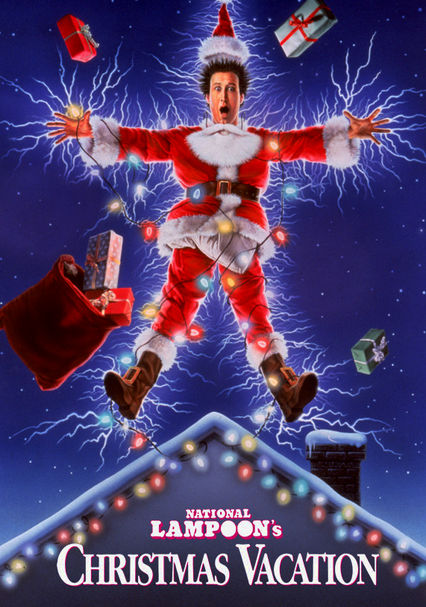
National Lampoon’s Christmas Vacation-1989

National Lampoon’s Christmas Vacation-1989

Director Jeremiah S. Chechik

Starring Chevy Chase, Beverly D’Angelo

Scott’s Review #1,248

Reviewed April 23, 2022

Grade: A-

Made several years after the first in the National Lampoon’s Vacation series (1983-2015), the inevitable production of National Lampoon’s Christmas Vacation (1989) is my personal favorite of the bunch and the most laugh-out-loud.

Silly personified, but the jokes work, and the enjoyment carries throughout the entire running time.

In retrospect, you knew they were going to do it. What better fodder for the bumbling Griswold family than to have them reunite with extended family on such a seasonal holiday?

The gags and awkward situations are ripe for the picking, as situation after setup is done exceptionally well and with grand humor.

The silliness works, and the film is a recommended watch with the family gathered around the holidays.

Viewers can either relate directly to the film or inevitably know families that resemble the incompetent yet lovable Griswolds.

As the holidays approach, Clark Griswold (Chevy Chase) is determined to have a perfect family Christmas. He motivates his wife, Ellen (Beverly D’Angelo), and their children to ensure everything is in order, including the tree and house decorations.

Naturally, things quickly go awry in the greatest of humor.

His hick cousin, Eddie (Randy Quaid), and his family show up unplanned and start living in their camper on the Griswold property.

Even worse, Clark’s employers renege on the holiday bonus he needs, causing a great deal of stress for the family patriarch.

For starters, the film has a cool holiday vibe. The setting is wisely the Midwest United States, somewhere outside of Chicago, Illinois. Snow is to be found everywhere, and Christmas decorations and lights are lit all over the place throughout the film.

This creates a suburban, homey atmosphere that is warm and friendly.

Most viewers can snuggle up by a warm fireplace with delicious hot cocoa and enjoy the film. The environment is one of the finest achievements in National Lampoon’s Christmas Vacation.

A classic moment and the film’s funniest scene occurs when Clark excitedly decorates the inside and outside of the house to the nth degree and blows the town’s electric circuit as a result, leading to uproar among his neighbors.

Proud Clark’s ego is suddenly deflated, and the man must rise above it all to somehow enjoy his family Christmas.

Watching the film decades after its release is still great fun as a nostalgia offering. The tacky Griswold Ford LTD station wagon with paneled siding is garish and unsightly (then and now), and anyone growing up in the 1980s can easily recall suburban families piling into this gas-guzzling car.

Not every aspect works perfectly in National Lampoon’s Christmas Vacation, like the unappealing yuppie neighbors Todd and Margo (played by Nicholas Guest and Julia Louis-Dreyfus) or Eddie and his redneck family.

These roles are a bit too over-the-top and secondary inclusions to be the major win the film is.

The real wins from the supporting cast are Clark’s immediate family. His parents and Ellen’s parents are perfectly cast and provide excellent comic timing and seasoned wit.

Special notice goes to John Randolph, Diane Ladd, and Doris Roberts.

And who won’t fall in love with Clark’s senile Aunt Bethany, played with hilarity by Mae Questel (the voice of animated Betty Boop and Olive Oyl)?

Predictably, and well-intentioned, all the Griswold problems quickly fade away when Clark receives his annual Christmas bonus after all, and all characters have a lovely send-off while singing ‘The Star-Spangled Banner’ just in the odd way that the Griswolds would do.

National Lampoon’s Christmas Vacation (1989) used to be a traditional Christmas viewing for me, but it has shamefully fallen out of favor over the years.

It might be time to dust off this forever gem that provides laugh after laugh, fun, and togetherness for the whole family.

Dead Snow-2009

Dead Snow-2009

Director Tommy Wirkola

Starring Vegar Hoel, Stig Frode Henriksen

Scott’s Review #1,237

Reviewed March 12, 2022

Grade: B

First off, the cover art (pictured above) of the 2009 Norwegian horror-comedy film Dead Snow is simply incredible.

The creepy Nazi head embedded in the snow with a background chainsaw is perfect marketing and genuinely artistic.

It automatically makes the tired zombie horror genre feel fresh and alive with endless possibilities.

The film itself is a decent watch, and tongue-in-cheek sensibilities are necessary to appreciate the movie.

There is a hint of art film qualities peppered throughout, and it’s not a run-of-the-mill mainstream horror film either, but a sense of humor and embracing the ridiculousness is required.

In other words, one must be a fan of the genre to watch Dead Snow. Otherwise, it will not win people over with a great storyline or character enrichment.

It’s a slice-and-dice ’em affair, and after a slow build, it goes into overdrive with the kills and thrills.

The familiar setup of a group of young people, this time intelligent medical students, heading off for a long weekend of booze and sex in a remote location gets Dead Snow off to an intriguing start.

A lonely cabin in the middle of the snowy mountains of Norway is the primary setting for the Arctic Easter bloodbath.

The eight of them plan to ski and relax during the time away. After one of their group disappears while on a solo cross-country hike, a mysterious resident (Bjørn Sundquist) provides the remaining visitors with a backstory.

In the last days of World War II, a battalion of Nazi soldiers disappeared into the nearby woods after the residents turned on them, and their zombified corpses remain on the prowl in the area looking for fresh meat.

Of course, the students hoot and snicker at the stranger’s proclamations, but the audience knows full well the Nazi soldiers will emerge eventually.

After all, in the very first scene, one of the students who never shows up to join the others is killed by an unidentifiable figure in the dark woods.

If nothing else, Dead Snow is prime-grade entertainment. I eagerly awaited who from the group would be butchered first and how it might happen.

As all fans of the slasher horror genre know, those who party or have sex are not long for this world, and Dead Snow is no different.

What is different from a straight-ahead release is the dark humor that encompasses the film. When one student who is deathly afraid of blood must remove his arm with a chainsaw after being bitten, he does so with deep seriousness and precision.

The macabre scene nearly rivals some others, like when a male member of the group is seduced for sex by a female member of the group while sitting on the toilet in the cold outhouse.

Enough splatters of blood exist to forget how silly the Nazi soldiers look. But the makeup and creative team do a superior job of making the zombies look horrific too. In particular, their leader, Colonel Herzog, is a combination of sexy and hideous.

The international quality and the Norwegian language require subtitles, but that is no problem for me. This brings sophistication and intelligence that I appreciate, raising the film above the mediocrity that it may have suffered from had it been an American release.

The foreign lands add mystique.

Dead Snow, at one hour and thirty minutes, is short enough not to wear out its welcome, which it starts to do in the final fifteen minutes or so.

A chase scene across the snowy mountains and motivation for some ancient gold coins are explained as the final character makes it to safety in an until then missing car.

Or do they?

Providing some fun without taking itself too seriously, Dead Snow (2009) contains no message nor any marquee stars.

Making Nazis the evil ones is no stretch, so there is immediately enough rooting value to forgive some of the students for their idiotic decisions.

It’s a bloody fun time but not much more.

P2-2007

P2-2007

Director Franck Khalfoun

Starring Rachel Nichols, Wes Bentley

Scott’s Review #1,106 

Reviewed January 29, 2021

Grade: B

Franck Khalfoun, a French filmmaker known for the horror genre, makes his directorial debut with P2 (2007).

As a horror buff, I thought the film had a great premise, which made me immediately want to see it. Unfortunately, while the film has its moments of intrigue and plenty of gore, the climax ultimately disappoints, and it turns run-of-the-mill.

Like many of its modern horror brethren, there is little that separates it from other similar films.

It’s fine Saturday night viewing fare, but quite predictable.

Films set during the Christmas holiday, especially in festive New York City, always enrapture me, so P2 gets a leg up.

The film doesn’t utilize the holiday very well, save for a smattering of decorations within an office building, some snow, and one creepy holiday song.

Set on Christmas Eve, the plot follows a young businesswoman named Angela (Rachel Nichols) who becomes trapped in an underground parking garage in midtown Manhattan.

She is pursued by a psychopathic, unhinged security guard (Wes Bentley), who is obsessed with her.

Bentley, known for his terrific role in American Beauty (1999), is the main reason to see this film. He plays creepy and obsessed very well and is a great villain.

His piercing blue eyes are intense and frightening, and his obsession with Elvis Presley and his dog is revealed. He is disturbed, though, for no apparent reason, which is not positive to any character development.

Why is he crazy?

When Thomas plays Elvis Presley’s “Blue Christmas” over the intercom, it’s a festive and delightfully morbid highlight.

I desired to know what makes Thomas tick and why he hunts Angela. Has he been watching her for months, or does he see an opportunity on this particular night and go for the gusto?

The plot reveals a bit of both, which is unsatisfying because there is no payoff.

Does he knock out and kidnap Angela because she rebuffs his advances, or would he have done this anyway if she had agreed to dinner?

He is in love with her, but why? It’s not that she isn’t a catch. She is pretty and a successful businesswoman with a good head on her shoulders. Does she reject him because she gets a bad vibe or because he’s a security guard?

I wanted more backstory for both main characters, but once she is chained to a table, it hardly matters. He’s gone too far off the deep, especially after it’s revealed he has killed others. Thomas’s motivations are not satisfying.

Nichols, a novice actress, is very good at her role. She carries the film and is in a state of peril most of the time. But she neither overacts nor plays the victim.

There is a nice balance between the terror and the task of figuring out what steps to take to save her life and flee the madman.

P2 has a female-empowerment vibe, but Angela does appear in skimpy clothing, thus reflecting the standard state of undress required of their female stars, a formula many horror films stick to.

Angela is smart, quick-thinking, and strong. She tries to outsmart her capturer, and more often than not, she does, and she is victorious in the end.

Surprise!

I noticed multiple nods to the Saw (2004-present) franchise since this series introduced and embraced the torture-horror genre.

Many horror films use this technique to shock and startle viewers rather than offering clever writing or stories. The use of videotape appears in P2, which borrows heavily from Saw.

P2 (2007) is a fine effort and will satisfy horror fans. It may tread into familiar territory and back itself into a corner with limited story possibilities.

Still, I did look over my shoulder a couple of times after viewing the film when I was in my building’s parking garage.

Ironically, I was on level P2.

Maybe the film did leave an impression after all?

30 Days of Night-2007

30 Days of Night-2007

Director David Slade

Starring Josh Hartnett, Melissa George

Scott’s Review #993

Reviewed February 25, 2020

Grade: B-

During the decade when 30 Days of Night (2007) was released, the trend leaned towards the vampire-horror genre, where bloodthirsty tyrants would do battle with the good folks of the land.

The film has outstanding elements: a tiny town, total darkness, and chaos.

The gritty conclusion is a predictable letdown as the film spins out of control into the silly and the formulaic.

Hartnett, at the time, was an A-list actor whose film career was dwindling, reduced to the horror circuit.

In Barrow, Alaska, which is said to be the northernmost town in the United States, the winter sunsets do not rise for 30 days and nights, providing a full month of complete blackness.

An evil force emerges from the black atmosphere and strikes terror into the town, and all hope rests on a husband-and-wife cop team, Sheriff Eben Oleson (Hartnett) and Stella Oleson (Melissa George).

The duo must protect a handful of survivors from a pack of vampires and battle the lack of communication and blizzard conditions in the frigid Arctic.

The film is based on a comic book miniseries of the same name, but 30 Days of Night is mostly influenced by two better films: 28 Days Later (2002) and 28 Weeks Later (2007), the former a groundbreaking film within the sub-genre- even the title is a copycat!

The result is nothing groundbreaking and rather run-of-the-mill story-wise. It seems too closely patterned after other films rather than having an identity of its own.

The best part of the film is the fantastic elements and trimmings created to provide an atmosphere. Highly effective, it carries the film and intrigues the compelled audience when the story lacks.

What is more frightening than a blinding whiteout, hungry vampires, or a town fraught with perilous fear? The spooky atmospheric trimmings make the lack of payoff even more jarring, leaving the film adequate, but little more.

The casting is mediocre and unrealistic.

I doubt any sheriff in a tiny, forgotten town would be as good-looking as Hartnett, nor is he believable as a powerful sheriff- he does not fit the part.

George, as estranged wife Stella, is neither good nor bad, but rather inconsistent. There is little chemistry between the couple, and both were cast for their looks, as they seem more like staged puppets than fleshed-out characters.

Regardless, any romantic entanglements between the characters are dull and insignificant.

The character development is not there.

Ben Foster, as “The Stranger”, is a great actor, but not in this film. Subsequently appearing in grand roles in Hell or High Water (2016) and Leave No Trace (2018), he is not at his best in this film.

The character is limited, whereas he could have added much more to a better-written script.

We know little about the townspeople, and it is unclear what the vampires’ motivations are beyond wreaking havoc and creating terror.

30 Days of Night (2007) is a marginally good film, mostly because of the way it looks, and the horror-flavored ingredients sprinkled throughout.

Despite some cool ways of killing off the evil vampires, the film never hits high gear, remaining neutral for most of the way and ending with a disappointing climax.

It is advisable to see the much superior and similarly produced and filmed 28 Days Later (2002).

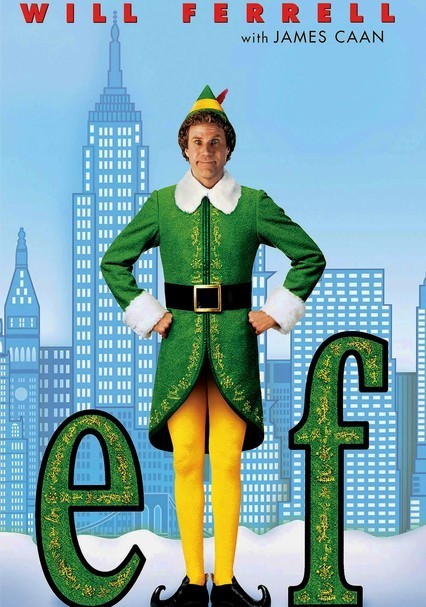
Elf-2003

Elf-2003

Director Jon Favreau

Starring Will Ferrell

Scott’s Review #846

Reviewed December 20, 2018

Grade: B-

Elf (2003) is one of the few lasting Christmas hits of recent memory, or at least one that many fans make a regular part of their holiday viewing each season.

The film is light and unarguably a safe, feel-good experience, mixing a hopeful Christmas message with comic gags and romance.

The key to its success is Will Ferrell, who possesses wonderful comic timing.

More wholesome than my tastes and lacking plausibility, the film does succeed as a family-friendly, ready-made, fun experience.

The story revolves around one of Santa’s elves (Ferrell) named Buddy, who learns he is human and was orphaned as an infant.

Revealed that his biological father Walter (James Caan) resides in New York City, Buddy embarks on a trip to find the man and spread Christmas cheer in a world filled with grizzled and cynical human beings.

In predictable comic form, Buddy has trouble adjusting to the human world and its fast-paced lifestyle, with misunderstandings recurring.

Buddy eventually wins over his father and family, finding love with downtrodden Jovie (Zooey Deschanel).

Hot on the heels of his Saturday Night Live stint ending in 2002, Ferrell was primed to embark on a successful film career. Elf is a great role for him as it capitalizes on his comic timing and energy, and the setup works.

At 6’3″, who better to play an elf for laughs than a hulking middle-aged man?

Due to his talents, Ferrell makes the role of Buddy fun, appealing, and the highlight of the film. With a lesser talent, the character would have been too annoying (as it is, there are too many hug jokes), and the overall film would have suffered.

Aside from Ferrell, the supporting roles are nothing memorable, except for Caan’s part.

The once-dashing star of films such as The Godfather (1972), Caan still has the charm and charisma to appeal, though his balding and dyed hair do nothing for him.

A small role by television star Bob Newhart as Papa Elf is fine, but Deschanel’s role and Mary Steenburgen’s role as Emily, Walter’s wife, could have been played by many actresses, and nothing is distinguishable about either part.

Lesser roles like Walter’s secretary, Walter’s boss, and Gimble’s store manager are stock parts with no character development.

A major highlight is the New York City setting, and the exterior scenes are plentiful.

Filmed in 2002 and released in 2003, the location shots were completed not long after 9/11, and showcasing a city with such recent decimation adds to the film’s appeal.

Scenes in Rockefeller Center, Central Park, and the Empire State Building are prominently featured, making the film festive and merry.

What greater city is there at Christmastime than New York?

Elf remains an entertaining experience with enough shiny ornaments and fun moments in the department store and Walter’s office to hold interest. The luster wears thin at the conclusion as all the traditional elements come together.

Jovie leads a chorus of strangers in “Santa Claus Is Coming to Town”, Walter quits his job without concern for paying bills, and everyone happily rides off into a sparkling winter wonderland.

This may satisfy some, but I wanted more conflict than a troupe of Central Park Rangers chasing Santa through the park.

A film that might be paired nicely with holiday favorites of similar ilk, such as National Lampoon’s Christmas Vacation (1989) or Christmas with the Kranks (2004), Elf is an energetic affair with a charismatic lead actor.

Containing silly moments but a spirited and worthwhile message nestled nicely within, the film is worth a watch if you’re in the mood for slapstick.

More thought-provoking holiday films with deeper merriment and stronger flair exist, but for a chuckle or two, Elf (2003) works well.

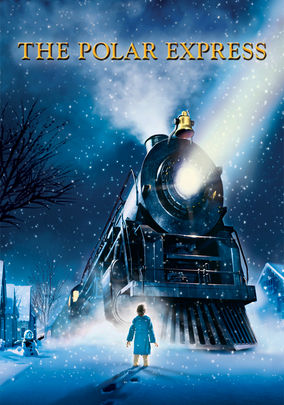
The Polar Express-2004

The Polar Express-2004

Director Robert Zemeckis

Starring Tom Hanks

Scott’s Review #800

Reviewed August 8, 2018

Grade: B+

The Polar Express (2004) is a modern entry into the annals of holiday film history. Along with treasures like Rudolph, Frosty, the Grinch, and all the other standards, this film has become a popular one to watch throughout the season.

The film is not exactly like the others, since it is the first of its kind to incorporate live human characters animated using live-action motion capture animation.

The mood of the film is mysterious, edgy, and with a dark tint, so jolly it isn’t, but compelling it is, and visually it is a marvel.

The story is as follows: on a snowy Christmas Eve, a young boy living in Grand Rapids, Michigan, doubts the existence of Santa Claus.

When a steam locomotive suddenly appears outside his house, he curiously boards the train and finds a mysterious conductor (Tom Hanks) manning it.

As the train rolls away, the boy meets two other children on board and stops for another one who is also reluctant to get on.

They begin a dazzling, frozen adventure to the North Pole with the promise of receiving the first gift of Christmas from Santa Claus himself.

The main reason to recommend The Polar Express is simply the gorgeous visual treats it offers. In 2004, the film was a unique experience, and I fondly recall sitting in a dark movie theater, watching it for the first time.

There was a magical element to the surroundings, combining intrigue and fantasy that still holds up well.

For adults, I do not think the film is at all scary, but I have heard some reviewers complain that the moody ingredients are a bit frightening for children, so there is that concern. 

A major component is the mixture of human beings and animated tools. The familiar actor that everybody knows is Tom Hanks as the conductor.

Therefore, to sit back and observe the character is a wonderful thing- is it really Tom Hanks or is it an animation?

It is ultimately both, but the fun is in the observation and wondering how the filmmakers created this experience.

And listen for Hanks in other voice performances throughout the film. 

The story (or fable) itself is warm and fairly predictable. But, of course, being largely made with kids in mind, this is to be expected.

There is never a doubt that the boy (interestingly, never given a name) will ultimately believe in Santa after all and live happily ever after.

The magic is in the details, though- the boy’s journey to this realization is peppered with fun and creative richness- the little girl’s floating ticket and an ornament falling off a Christmas tree are good particulars. 

Director Robert Zemeckis and Hanks worked closely together in Forrest Gump (1994), so the pair are familiar with each other, creatively speaking. Hanks undoubtedly had much input into the decision-making, and it shows. 

I do not personally rank The Polar Express (2004) among the best of the best holiday film offerings, but I support an occasional dusting off of this work for viewing pleasure.

Perhaps over time, the animations may become dated or seem less dazzling, but the film is still worth appreciating for its creative elements.

The story is nothing spectacular (in a way, Scrooge for kids), but it makes for a pleasant family viewing experience. 

Oscar Nominations: Best Song-“Believe”, Best Sound Editing, Best Sound Mixing

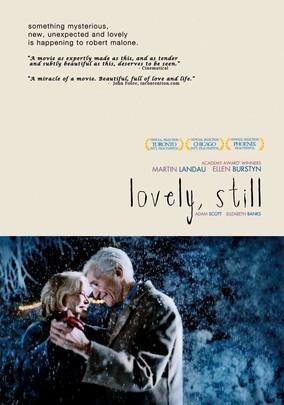
Lovely, Still-2008

Lovely, Still-2008

Director Nik Fackler

Starring Ellen Burstyn, Martin Landau

Scott’s Review #543

Reviewed December 11, 2016

Grade: B+

Oh, how I wish this movie had gotten more attention!

Lovely, Still (2008) is a small, independent venture that is Christmas-themed and set in Omaha, Nebraska.

It stars Martin Landau and Ellen Burstyn as an older couple who fall in love.

Landau is Robert, a lonely older man interested in dating again, who meets and falls in love with Mary, the mother of his next-door neighbor.

Before you start thinking Lifetime television movie, the last thirty minutes of the film will shock and fascinate you.

A guttural reveal takes this film to a completely different place during the climax, making it a heart-wrenching and powerful experience.

Landau and Burstyn are wonderful actors who mesmerize scenes together. They have a sweet innocence and are in glee, like teenagers experiencing first love.

My only criticism is that the first half of Lovely, Still is a bit slow, but this can be forgotten as the film kicks into high gear.

Also, some wonderful camera shots from novice director Nik Fackler.