Category Archives: Black & White

Psycho-1960

Psycho-1960

Director Alfred Hitchcock

Starring Janet Leigh, Anthony Perkins

Top 250 Films #5

Top 40 Horror Films #1

Scott’s Review #165

Reviewed September 6, 2015

Grade: A

Psycho (1960) is the film to end all films, and not just within the horror genre.

At the time of its release, it transcended the art of cinema to a new level and has influenced generations of films since, still holding up incredibly well today.

It is undoubtedly one of the greatest Alfred Hitchcock films and one of the greatest films ever made.

Hitchcock took considerable risks and dove from the thriller to the horror genre with Psycho.

The story revolves around a young woman named Marion Crane, superbly portrayed by Janet Leigh. Marion lives in Phoenix, Arizona, and sees her boyfriend (the dashing John Gavin) for frequent afternoon rendezvous at cheap motels when he is in town because they are both struggling financially.

She is presented with an opportunity, via her job, to steal $40,000 and flee the state to start a new life with her beau. She seizes the opportunity.

On the run, she stops at a run-down Bates motel where she meets owner Norman Bates, hauntingly played by Anthony Perkins.

Perkins and Leigh have fantastic chemistry together, and the audience picks up on it—is it romantic? Is there a mysteriousness to it?

Something is odd about Norman. They bond over a quiet meal of sandwiches at the motel while discussing life and his ailing mother.

The famous shower scene and the shocking twist that follows are now almost taken for granted, as most people are already familiar with them.

However, I can only imagine the shock viewers felt when they first saw these two delights.

To this day, both are still suspenseful.

Fortunately, when I saw this film for the first time, I didn’t know the ending, and I am glad I didn’t, because it took my breath away.

Killing off the leading actor at the start of the film, halfway through, was a novel idea and mind-blowing at the time of its release (1960).

This act left the audience’s mouths agape in disbelief, prompting them to ask, “What now?” “How can this be followed?” This act later influenced the original Scream (1996) film and surprised audiences again.

According to Hitchcock, no one could enter the film after it had started, and viewers were persuaded not to reveal the ending – oh, how I wish that occurred these days.

An aspect of the success and longevity of Psycho is the chemistry between Perkins and Leigh, who got along famously while shooting Psycho, and more importantly, the likability of Norman Bates. There is a rooting value for him, even though he is the villain.

When Marion’s car is only half-submerged in a lake containing her dead body, we root for it to sink entirely because of Norman. The concerned look on Norman’s face has a sense that affects the audio at this point in the story.

Norman is troubled and woeful, undead, and the audience does not have history.

Let’s not forget Janet Leigh. The audience sympathizes with her predicament. She is hopelessly in love with her man, steals money, is conflicted, and, at her core, is a friendly, decent, kind woman.

Halfway through the film, Marion’s sister, Lila, played by Vera Miles, is introduced as a detective, and the suspense and mystery intensify as they search for Marion and investigate the Bates Hotel and Norman Bates himself.

Miles then takes center stage as the lead in the film, which is intriguing.

The film then returns to horror at the terrific and terrifying conclusion, which will shock first-time viewers.

The musical score (especially the shrill strings) is incredibly effective and influenced other horror films to come (Friday the 13th immediately comes to mind).

Psycho is a film that can be enjoyed and studied over again.

Oscar Nominations: Best Director, Alfred Hitchcock, Best Supporting Actress-Janet Leigh, Best Art Direction, Black-and-White, Best Cinematography, Black-and-White

Golden Globe Nominations: 1 win-Best Performance by an Actress in a Supporting Role in any Motion Picture-Janet Leigh (won)
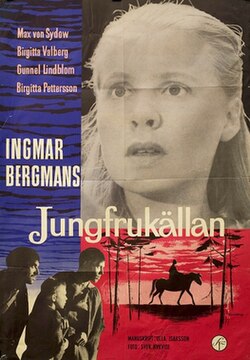
The Virgin Spring-1960

The Virgin Spring-1960

Director Ingmar Bergman

Starring Max von Sydow, Birgitta Valberg

Top 250 Films #72

Scott’s Review #243

Reviewed May 15, 2015

Grade: A

The Virgin Spring is a quiet masterpiece by director Ingmar Bergman.

A Swedish film, it won the Best Foreign Language Oscar in 1960, which is surprising for such a dark film.

I have heard about this film for years, but it has eluded me until now. I am finally glad I viewed it. It is breathtaking and mesmerizing.

A unique film for many reasons, it inspired “revenge” films to follow, specifically The Last House on the Left and I Spit on Your Grave, which is a horror film, while The Virgin Spring is an interestingly artful film.

The film also explores morals, the main character’s religious beliefs, and the theme of guilt.

The film is shot in black and white, and the first thing that struck me about it was its gorgeous cinematography and lighting.

The brilliant, deep contrast of black and white, with the illumination of a character’s face against a deathly black background, is bold and reminiscent of Citizen Kane (1941).

It gives the film warmth and glow that contrasts perfectly with the bleak subject matter.

The story of The Virgin Spring is a tragedy, yet the filming is so magnificent that it was not until the film concluded and I pondered the actual story that I realized just how horrific it truly is.

And that is what Bergman was going for-provoking a thought.

This is not a film to watch while munching on a tub of popcorn. It is a film designed to prompt thought.

An affluent Swedish couple owns a farm and lives a peaceful, quiet existence. They are stellar members of their community and church. Although they are humble, they can afford to have servants.

They have a beautiful and pampered young daughter named Karin, who is sent to deliver candles to their church one sunny day. Karin is a trusting, virginal, and proper girl. She meets a trio of males- two adults and a young boy.

At first, she gleefully shares food with them and enjoys her newfound friends, but they soon turn on her, and she is viciously raped, robbed, beaten, and murdered.

The look of surprise, pain, and horror on Karin’s face is monumental.

As this occurs, a pregnant and spiteful servant, Ingeri, watches in horror from a hiding place. A rival of Karin’s, Ingeri, wanted misfortune to be thrust upon Karin, but as she sees in horror, her expression portrays regret.

As the family hopes and prays that they can find the missing Karin, the men and boy show up at the farmhouse in need of food and shelter.

Unbeknownst to the family, they are Karin’s rapists and killers, and once the truth is known, the once-sweet parents are out for brutal revenge. The young boy of the trio is guilt-ridden and physically sick from the circumstances.

Is the family’s revenge justified, or should they (as good Christians) forgive? This is the moral point of the story.

The conclusion is powerful as the father begs God for forgiveness. He questions his actions. But is he a changed man?

Bergman uniquely and intelligently shoots these scenes with only the father’s back in view as he throws his hands to leave. In these moments, we, the viewers, become one with the father, which makes for powerful storytelling.

Influential to many subsequent films, The Virgin Spring (1960) is a powerful tale reminiscent of a fairy tale that prompts viewers to reflect on its ending.

Subdued yet horrifying, it is meant to be viewed and analyzed.

Oscar Nominations: 1 win-Best Foreign Language Film (won), Best Costume Design, Black-and-White

Golden Globe Nominations: 1 win- Best Foreign Film-Foreign Language (won)

Some Like It Hot-1959

Some Like It Hot-1959

Director Billy Wilder

Starring Marilyn Monroe, Jack Lemmon, Tony Curtis

Top 250 Films #88

Scott’s Review #388

Reviewed March 26, 2016

Grade: A

Considered one of the best comedies ever made, Some Like It Hot (1959) is a funny, outlandish, yet controlled film that never goes too over the top or dives into outrageous camp. Instead, it is well-written, well-acted, and contains excellent chemistry between the stars.

In summary, it is a film in which all the elements come together just right. In film comedy, this is an infrequent occurrence. Instead, we are typically treated to formulas or retreads of past successes.

Some Like It Hot feels refreshing and brilliant.

The film was also monumental in paving the way to the eventual elimination of the hated Hays Code, which imposed many restrictions on American cinema from 1930 to 1968.

Some Like It Hot pushed the envelope in essential ways, leading to a spike in creativity and art within the film industry that lasted mainly throughout the 1960s and 1970s.

For that, it is a masterpiece.

Down on their luck, broke, and needing work, Jerry and Joe (Jack Lemmon and Tony Curtis) are struggling jazz musicians seeking a meager existence in snowy Chicago.

Having witnessed the St. Valentine’s Day massacre, they go on the run from the assailants, who have seen them, and pose as Josephine and Daphne, dressed in drag.

This leads to one humorous situation after another as they take the bus from Chicago to Miami with an all-girl musical band, a sort of slumber party led by boozy starlet Sugar Kane (played by Marilyn Monroe), who serves as the band’s vocalist and ukulele player.

Once arriving in sunny Miami, “the girls” find themselves entangled in romantic relationships with Sugar and the wealthy millionaire Osgood Fielding III, which leads to some blatant comic antics.

Josephine poses as a male Shell Oil Junior, attempting to woo Sugar with his assumed riches in the oil business.

What makes Some Like It Hot work so well is that it does not go too far over the edge to seem campy, nor does it play it too straight. This perfect balance makes the film rich with natural, fresh comedy.

Director Billy Wilder chose to film in black and white, avoiding Lemmon and Curtis looking ridiculous with colorful, bright makeup. This was toned down and muted to allow for greater believability.

Additionally, the film’s subtle edginess impresses me with each passing watch. Some Like It Hot got away with a lot in 1959, considering the restrictions, and that knowledge gives it a groundbreaking quality.

There is an air of homosexuality throughout, and the final line is my favorite, allowing for a thought-provoking interpretation.

When Daphne reaches her breaking point with Osgood’s romance and yanks off his wig, she professes exasperation, “I am a man!! Only to hear Osgood’s startling reply, ‘Well, nobody’s perfect,’ is clever dialogue.

Did Osgood know all along that Daphne was male? Will he marry ‘her’ anyway?

Who wouldn’t have blushed gazing at Monroe’s skin-colored and quite revealing outfit? It gave the impression that she was nude and showed how funny Lemmon and Curtis’s physical comic timing together is.

Bumbling around in stockings, heels, and dresses, attempting to be feminine but never quite succeeding, makes all the other characters think they are women, which is excellent.

Curtis was reportedly quite uncomfortable in drag, which shows on camera, but this works out well, giving Josephine a natural awkwardness.

Lemmon went all out in his costumes, and his energy came across.

In my opinion, although not looking her best, slightly plump and tired, Marilyn Monroe still gives the film added life and charm, and who is not mesmerized by her on stage singing “You Wanna Love Me”?

To think that Monroe died only three short years later is sad, and it highlights the appreciation for her career in its final stages.

A risqué, laugh-out-loud, funny treat, Some Like It Hot resonates with me and did so with audiences upon release in 1959.

Comical, thoughtful, and highly influential, the film is a must-see for fans of honest and cliché-free film comedy.

It is a blueprint for all witty comedies to follow.

Oscar Nominations: 1 win-Best Director-Billy Wilder, Best Actor-Jack Lemmon, Best Screenplay Based on Material from Another Medium, Best Art Direction, Black-and-White, Best Cinematography, Black-and-White, Best Costume Design, Black-and-White (won)

Golden Globe Nominations: 3 wins-Best Picture-Comedy (won), Best Performance by an Actor in a Motion Picture-Musical or Comedy-Jack Lemmon (won), Best Actress in a Leading Role-Musical or Comedy-Marilyn Monroe (won)

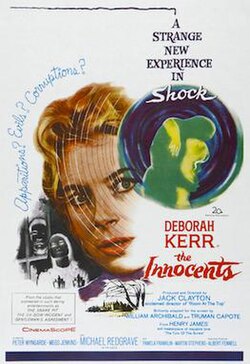
The Innocents-1961

The Innocents-1961

Director Jack Clayton

Starring Deborah Kerr

Top 250 Films #94

Top 40 Horror Films #17

Scott’s Review #639

Reviewed April 29, 2017

Grade: A

The Innocents is a 1961 British psychological horror film that tells a ghost story, based on the novella “The Turn of the Screw” by Henry James.

Although it is a horror film, it contains few traditional elements, such as contrived frights, jumps, and blood.

Instead, the film succeeds by using lighting and magnificent cinematography by Freddie Francis.

And, of course, fantastic storytelling and direction from Jack Clayton.

Deborah Kerr gives an excellent turn as a beleaguered governess hired by a wealthy bachelor (Michael Redgrave) to tend to his young niece and nephew, Flora and Miles.

The setting is a lavish yet creepy mansion located outside London. As the Uncle goes away to India on business, Miss Giddens, with no previous experience, is left to tend to Flora and Miles, who both begin acting strangely.

To complicate matters, Miss Giddens sees sinister ghosts lurking around the property. The ghosts are former household servants who have passed away, of whom Miss Giddens has never met.

Miss Giddens is assisted only by the kindly housekeeper, Mrs. Grose (Megs Jenkins), who tells her about the servants’ tragic deaths.

The Innocents, shot in black and white, uses sound to its advantage. This, combined with the interesting camera angles and focus shots—mainly of the ghosts Miss Giddens sees—makes the film unique and scary.

When Miss Giddens hears strange voices, she becomes convinced that Miles and Flora are playing tricks on her, engaging in games. The whispers’ sounds are haunting and do wonders for the effects, chilling the viewer as the film progresses.

Is Miss Giddens imagining the voices and visions, or is this an actual reality? Could the children be sinister and playing a vicious prank on her? Could Mrs. Grose be evil?

Nobody else within the household sees or hears anything amiss- or admits to it.

Kerr, a treasured actress, plays the part with emotional facial expressions and genuine fear, so much so that she wins the audience over as we side with and empathize with her character.

Still, is she a woman on the verge of a mental breakdown? Does she have past mental problems?

Like the uncle, we know nothing of her past, only that she claims to be the daughter of a minister. How, then, does she have stylish, expensive clothes? Could she only be pretending to be a governess? Has she run away from her past?

The Turn of the Screw is a true ghost story, but The Innocents is a bit different —it relies, successfully, on being more of a character-driven story.

As Miss Giddens becomes convinced that the servants’ spirits have possessed both children, she makes it her mission to rescue them from the spirits. We have an ominous feeling that events will not end well, and they do not.

Several scenes will frighten the viewer, as Miss Giddens sees a haggard ghost (the female servant) standing quietly in the distance by a lake while Flora dances chirpily; the image of the distant ghost is eerie and well shot.

The film draws comparisons to the classic Hitchcock film Rebecca (1940). Each is set in a large mansion and features complex villains portrayed as deceased.

Also, the main character’s sanity is in question.

With a compelling story and the nuts and bolts that deliver clever effects and a chilling conclusion, the film succeeds as an excellent, intelligent horror film.

With great acting all around, including fantastic performances by child actors, The Innocents (1961) scares the daylights out of any horror fan and uses exterior and interior scenes to make the film an all-around marvel.

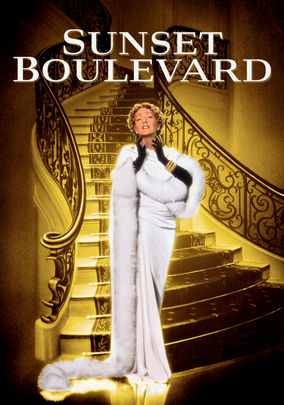
Sunset Boulevard-1950

Sunset Boulevard-1950

Director Billy Wilder

Starring Gloria Swanson, William Holden

Top 250 Films #101

Scott’s Review #330

60010956

Reviewed January 8, 2016

Grade: A

I adore films about Hollywood (good ones), and Sunset Boulevard (1950) is an absolute treasure.

Directed by classic film director Billy Wilder, the film is a film noir about a legendary silent film star, Norma Desmond, who struggles to cope with the advent of sound movies and the instability of her life, plagued by mental illness as her career has long since ended.

Handsome Joe innocently stumbles upon her mansion, forming an eerie relationship that ends in tragedy.

Sunset Boulevard is a famous street in Los Angeles and Beverly Hills, California. It is immediately featured in the film as Joe Gillis, played by William Holden, drives down the street, an unsuccessful screenwriter whose car is about to be repossessed.

Joe narrates the film, and we see a man lying dead in a vast swimming pool. Ironically, this is the film’s ending, and Wilder works backward in an interesting way, so the audience knows tragedy will eventually ensue.

To avoid being chased by men, Joe pulls into a driveway and hides his car in a garage near a vast yet run-down mansion. He is mistaken for a coffin salesman and meets the infamous and creepy Norma and her servant, Max.

The coffin is for Norma’s deceased pet chimpanzee. Intrigued and broke, Joe hatches a plot to rewrite Norma’s terrible screenplay- and make some money from the aging Hollywood star.

Norma needs companionship. The two, along with Max, embark on a complicated relationship marked by jealousy, passion, and rage.

The black-and-white style works exceptionally well in the film, and the lighting creates a sense of intrigue and film noir mystique.

Sunset Boulevard combines noir with a rich character study of Norma, and we feel her pain and isolation as she is cast aside due to the times.

I love how Wilder focuses on the gloomy nature of Norma’s vast mansion—especially when she throws a New Year’s Eve party, isolated with just her, Joe, and a hired band—and intersperses it with a lively Hollywood party filled with young, energetic, up-and-coming talent.

The scenes blend seamlessly and effectively showcase the two different worlds and perspectives.

Sunset Boulevard is a brilliant depiction of old Hollywood at its best (and worst). A study in ambition, struggle, high hopes (Joe), and faded success and dreams shattered in reality, where delusion is the only defense (Norma).

Oscar Nominations: 3 wins-Best Motion Picture, Best Director-Billy Wilder, Best Actor-William Holden, Best Actress-Gloria Swanson, Best Supporting Actor-Erich von Stroheim, Best Supporting Actress-Nancy Olson, Best Story and Screenplay (won), Best Scoring of a Dramatic or Comedy Picture (won), Best Art Direction-Set Decoration, Black-and-White (won), Best Cinematography, Black-and-White, Best Film Editing

Golden Globe Nominations: 4 wins-Best Picture (won), Best Director-Motion Picture-Billy Wilder (won), Best Performance by an Actress in a Motion Picture-Drama-Gloria Swanson (won), Best Performance by a Supporting Actor in any Motion Picture-Erich von Stroheim, Best Screenplay-Motion Picture, Best Original Score-Motion Picture (won), Best Cinematography-Black and White

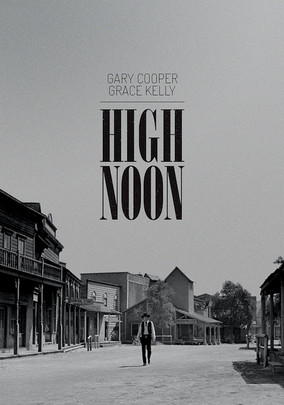
High Noon-1952

High Noon-1952

Director Fred Zinneman

Starring Gary Cooper, Grace Kelly

Top 250 Films #150

Scott’s Review #638

Reviewed April 28, 2017

Grade: A

Billed as a standard Western but much more complex than a traditional, basic Western, High Noon accomplished what no other Western did in 1952- adding complexities from different genres, such as suspense and drama, to a film form.

Additionally, High Noon challenged typical Western themes, such as male-driven fights and chases, in favor of a moral and emotional approach, and oh, is the film ever character-driven.

The results are astounding, and to understand and appreciate all its elements, the film should be studied in film school.

High Noon heartily breaks the mold. It was released when mainstream Western was quite popular in the film, adding enormous risk, and the results paid off in spades.

Marshal Will Kane (Gary Cooper) has just wed his beloved bride, Amy (Grace Kelly), in a small ceremony in a tiny New Mexican town. He plans to turn over his badge and retire to the prairie land with his new wife.

Suddenly, the town receives word that a dastardly villain, Frank Miller, whom Kane once sent away, has been released from a Texas prison and plans to exact revenge on Kane.

Miller is to arrive on the noon train as his three accomplices await his arrival, much to the chagrin of the rest of the town, who become panicked with each passing moment.

The film begins at approximately ten-thirty in the morning and ends shortly after Noon.

High Noon has subtle political themes and clear examples of McCarthyism. However, some dispute that McCarthyism was a campaign launched by Senator Joseph McCarthy, which ended up blacklisting many artists suspected of communism.

The central theme is how people become frightened and blame one another for the attack out of that fear.

Our main protagonist (Kane) faces the daunting task of confronting four angry gunmen, with revenge on their minds, alone, as an entire town chooses not to get involved.

It’s brilliant that High Noon more or less takes place in real-time.

The inclusion of clocks in the film, specifically pendulums swaying back and forth, creates a distinct sense of tension as character after character nervously glances at the time.

They know full well that with each passing minute, they inch closer and closer to a fantastic and deadly showdown- much blood will be shed.

Cooper, old enough to be Kelly’s grandfather, is noticeable if one chooses to be nitpicky, but the couple works well together, and I bought the happily wedded couple as genuine.

I adore the character of Helen Ramirez, played by actress Katy Jurado. A Mexican character, Ramirez, is a prominent businesswoman in the small town who owns a saloon.

She is empowered and confident, a character to admire regardless of gender.

A strong female character of Mexican heritage in a 1952 film was relatively uncommon, considering the film is set in the Wild West.

Equally impressive and completely backward for the time, the events of Amy coming to the rescue of Kane, instead of the standard, gender-specific “man rescues woman,” challenge the norm.

Further, Amy is groundbreaking: she is written as a Quaker woman, not a traditional Christian woman, nor is she skittish or silly.

Western stereotypes are entirely turned upside down, which is arguably way ahead of its time.

Eerie yet highly effective is the use of a “theme song” either sung or in another form (musical score or background music) throughout the film—the song is “Do Not Forsake Me, My Darling,” which became a hit for Texas Ritter.

It is worth noting that the success of this added “theme song” encouraged subsequent Westerners to include similar songs in their films.

Challenging the standard in many ways, High Noon sets a very high bar for its thoughtfulness, message, and conflict.

The film exemplifies people who take the world and turn it upside down with fantastic and inspiring results.

Oscar Nominations: 4 wins-Best Motion Picture, Best Director-Fred Zinnemann, Best Actor-Gary Cooper (won), Best Screenplay, Best Scoring of a Dramatic or Comedy Picture (won), Best Song-“The Ballad of High Noon (“Do Not Forsake Me, O My Darlin”)” (won), Best Film Editing (won)

Golden Globe Nominations: 4 wins-Best Motion Picture-Drama, Best Performance by an Actor in a Motion Picture-Drama-Gary Cooper (won), Best Performance by an Actress in a Supporting Role in any Motion Picture-Katy Jurado (won), New Star of the Year-Actress-Katy Jurado, Best Screenplay-Motion Picture, Cinematography-Black and White (won), Best Original Score-Motion Picture (won)

From Here to Eternity-1953

From Here to Eternity-1953

Director Fred Zinnemann

Starring Burt Lancaster, Deborah Kerr

Top 250 Films #156

Scott’s Review #875

Reviewed March 7, 2019

Grade: A

Based on a popular 1952 novel of the same name by James Jones, From Here to Eternity (1953) tells a powerful story of romance and drama set against the gorgeous backdrop of Hawaii.

The film is poignant and sentimental for its build-up to the World War II Pearl Harbor attacks, further enhancing the storytelling.

With great acting and a compelling story, the film is a bombastic Hollywood creation that has endured and remains timeless.

A trio of United States Army personnel is stationed on the sunny island of Oahu. The primary principals are First Sergeant Milton Warden (Burt Lancaster), Private Robert E. Lee Prewitt (Montgomery Clift), and Private Angelo Maggio (Frank Sinatra). Their lives in the Schofield Army Barracks are chronicled.

Their respective love interests, Alma Lorene (Donna Reed) and Karen Holmes (Deborah Kerr), join them, and the triumphs and sorrows of each are explored dramatically before the devastating incident.

The film’s perspective is centered on the male characters, which risks it being classified as a “guy’s movie.”

Enough melodrama and romance offset the testosterone and masculinity, and as the characters weave in and out of each other’s lives, a broader canvas emerges.

This point is to the film’s credit, as each character is rich with development, sympathy, or sometimes pure anger.

Many films have been told, and continue to be told, about the terrors and after-effects of World War II, but From Here to Eternity remains at the top of the heap.

While not going full throttle with excessive violence or grit, the film tells of the trials and tribulations of people affected by, and soon to be affected by, the war.

The characters co-exist peacefully in their little slice of the world. Though there is the occasional bullying or insubordination among the ranks, the romance soon takes center stage, followed by the dire attacks.

The smoldering beach scene featuring Burt Lancaster and Deborah Kerr on the ravaging shores of Halona Cove is as iconic as any cinematic moment.

Rumors of the star’s torrid love affair and the need to run off to make love after shooting the scene could be myths, but they have never been disproven.

The camera crew reportedly shot the scene quickly, leaving the duo to their desires. Regardless, the scene may cause the iciest of hearts to turn into a torrent of heart-pounding flutters.

The film suddenly turns dark, as if realizing it is about a devastating war.

A central character dies, and another character hunts for revenge. Despite these deaths not being at the hands of an enemy or a battle, they are powerful and dim.

Finally, the attack on Pearl Harbor is upon us, just as the audience will no doubt sense it coming. The film ends sadly with a simple dialogue between the two main female characters.

Thanks to the fine direction of novice director Fred Zinnemann, From Here to Eternity (1953) elicits a wide range of emotions and subject matter.

At its core, it is a cynical film, but it is also rich in courage, integrity, and love of one’s country, without succumbing to phony patriotism.

With a dash of romance and sexuality, the film is utterly memorable and deserving of the hefty Academy Awards it achieved.

Oscar Nominations: 8 wins– Best Motion Picture (won), Best Director-Fred Zinnemann (won), Best Actor-Montgomery Clift, Burt Lancaster, Best Actress-Deborah Kerr, Best Supporting Actor-Frank Sinatra (won), Best Supporting Actress-Donna Reed (won), Best Screenplay (won), Best Musical Score of a Dramatic or Comedy Picture, Best Sound Recording (won), Best Cinematography, Black-and-White (won), Best Costume Design, Black-and-White, Best Film Editing (won)

Golden Globe Nominations: 2 wins-Best Director-Motion Picture-Fred Zinnemann (won), Best Performance by an Actor in a Supporting Role in any Motion Picture-Frank Sinatra (won)

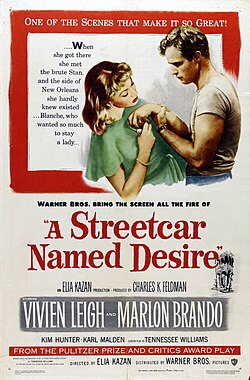
A Streetcar Named Desire-1951

A Streetcar Named Desire-1951

Director Elia Kazan

Starring Marlon Brando, Vivien Leigh

Top 250 Films #231

Scott’s Review #872

Reviewed March 2, 2019

Grade: A

A Streetcar Named Desire (1951) is an adaptation of Tennessee Williams’s dark and dreary Broadway play.

The stellar cast includes three of the four original members of the stage version who brought the film to the big screen.

Tremendous acting and a morbid southern setting will leave the viewer transfixed and wondering what chaos and drama will next unfold.

The story is sad, pitiful, and quite heavy as each character suffers guilt, resentment, rage, or regret, but these elements make the film a pure classic.

Aging southern belle Blanche DuBois (Vivien Leigh) has lost her valuable southern plantation and flees her aristocratic livelihood to New Orleans to live with her working-class sister Stella (Kim Hunter) and brother-in-law Stanley Kowalski (Marlon Brando).

Unhappy, Blanche immediately becomes snobbish toward ordinary people and offends many with her prim and proper manners.

Stanley feels slighted by Blanche, who is convinced she is keeping Stella’s inheritance. This leads to conflict. Stanley meets Mitch (Karl Malden) and may have a shot at happiness.

Blanche is the most painful and well-dissected character. A fun fact is that Leigh is the only Actor among the four principals who did not appear in the original stage version, in which Jessica Tandy played the role.

Leigh was undoubtedly cast because of her star power at the time. She dives full steam ahead into the role, delivering the perfect blend of pathos and courage while adding the most complexity.

Reduced to a life among the poor and struggling, the reality is harsh for the once-wealthy heiress who has lost all her money through no fault of her own, her estate taken by creditors after her husband’s tragic death, assumed to be suicide.

Almost as complicated is Stanley, played stunningly by Brando, an actor who, with this film, was beginning to embark on Hollywood success that would surround him throughout most of the 1950s.

The most prominent film cover art features a tee-shirt-clad Brando, his muscular arms and torso on display, and his smoldering bad-boy pose.

The sexual tension between Stanley and Blanche is undeniable, as their love/hate relationship is filled with unbridled passion.

Their carnal attraction is mainly due to the brutish masculinity that Brando exudes on camera.

The combined supporting performances by Kim Hunter and Malden are almost as complex as the leads’ and just as important to recognize.

Hunter portrays Stella as wounded and put-upon, yet not weak. She has strength but is unsure who to trust or whether to leave her husband.

Malden plays Mitch as benevolent and trusting, enamored with Blanche until her secrets are finally revealed.

Heartbroken, even he, the kindest character in the group, is left unhappy. Malden excels at imbuing Mitch with an everyman and graceful quality.

Who can ever forget the poignant, melancholy wails of “Stella! Stella! Stella!” from the tragic Stanley, a moment forever etched in cinematic history? He longingly begs for Stella’s forgiveness as he looks towards the sky.

The suggested rape, although not shown, is a powerful tidbit and controversial in the film for 1951. The audience not seeing the action is arguably just as intense as seeing it, as imagination can often be more prominent.

The black-and-white cinematography adds emotional treasures. It captures the bleak life in New Orleans, and the characters’ struggles and hardships are wonderfully portrayed.

The run-down tenement where most of the film takes place is dour, suffocating, and dingy, perfectly enveloping the characters’ lives.

Hopelessness and depression are commonalities as director Elia Kazan creates a film that grasps his audience and never lets go.

A Streetcar Named Desire is about conflict, pain, and the human desire for love, thwarted by realism and dire circumstances.

Each of the four characters can be dissected, sympathized with, and is worthy of discussion. This only proves the complexities of each.

I challenge anyone a make a good comparison to Who’s Afraid of Virginia Woolf? (1966) and A Streetcar Named Desire have similar qualities.

The film set an Oscar record when it became the first film to win in three acting categories (a feat only since matched by Network in 1976).

It won awards for Actress in a Leading Role (Leigh), Actor in a Supporting Role (Malden), Actress in a Supporting Role (Hunter), and Art Direction.

A Streetcar Named Desire (1951) is not an easy watch, but it is assuredly a feast of excellent acting and heartbreaking, wounded characters.

Oscar Nominations: 4 wins-Best Motion Picture, Best Director-Elia Kazan, Best Actor-Marlon Brando, Best Actress-Vivien Leigh (won), Best Supporting Actor-Karl Malden (won), Best Supporting Actress-Kim Hunter (won), Best Screenplay, Best Scoring of a Dramatic or Comedy Picture, Best Sound Recording, Best Art Direction, Black-and-White (won), Best Cinematography, Black-and-White, Best Costume Design, Black-and-White

Golden Globe Nominations: 1 win-Best Motion Picture-Drama, Best Performance by an Actress in a Motion Picture-Drama-Vivien Leigh, Best Performance by an Actress in a Supporting Role in any Motion Picture-Kim Hunter (won)

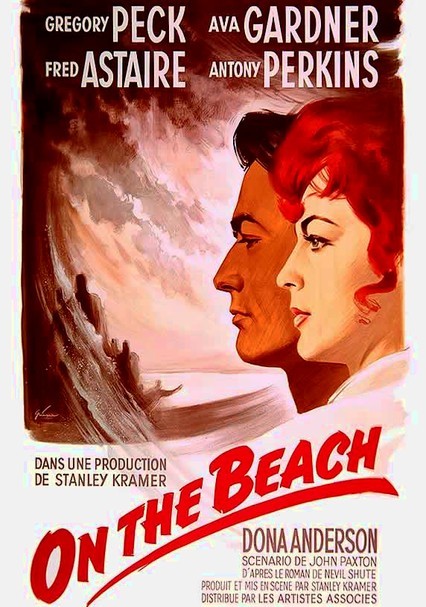
On the Beach-1959

On the Beach-1959

Director Stanley Kramer

Starring Gregory Peck, Ava Gardner

Scott’s Review #1,179

Reviewed September 19, 2021

Grade: A-

On the Beach (1959) is a film that showcases a grim subject matter but remains relevant considering the period in which it was made.

The Cold War era kept most people on edge with the threat of nuclear war as it rolled into the 1960s.

The lavishness of the 1950s turned into a more distrustful time as countries gained modern technological advances, making nuclear weapons a real possibility.

The film was not met with much praise or popularity at the time.

Indeed, people were content in the cinematic bubbles of nice, comforting films that largely emerged during the 1950s, but On the Beach was a fantastic discovery decades later.

I suppose people expected a sweeping epic romantic adventure, but they received a harsher tale. It’s not nearly as dark as it could have been.

The black-and-white cinematography is highly effective at conveying a cold, stark world that is left for the film’s characters. Another success is that the film is set in the future, 1964 to be exact, while the film was made in 1959.

The film is hardly a downer.

While the subject matter of nuclear disaster and devastation sounds heavy, there is as much romance as social storytelling. The romance between Peck and Gardner is compelling and the best part of the film experience.

As the story begins, we learn that World War III has already occurred, leaving Australia the only remaining safe place for survivors.

However, wind currents carrying lingering radiation are headed their way, condemning those on the continent to certain death.

When the survivors receive a strange signal from San Diego, California, Commander Dwight Towers (Peck) must embark on a mission with Lieutenant Peter Holmes (Anthony Perkins) to see if humanity still has hope.

They leave behind Moira (Gardner) and Mary (Donna Anderson), the women they love.

Director Stanley Kramer knows his way around a message movie. In 1967, he directed the racially significant Guess Who’s Coming to Dinner, starring Spencer Tracy and Katharine Hepburn.

The romance between Dwight, Moira, Peter, and Mary is my favorite aspect of the film. Dwight has lost his wife and two children, so out of loneliness, he falls for Moira, who has never married and has no one.

Their soon-to-be doomed romance is fraught with complications as they tenderly cling to each other, knowing their time is limited.

Peter and Mary, on the other hand, are married with an infant young daughter. A significant conflict the couple deals with is whether to take suicide pills rather than get sick and die a slow and painful death.

There is enough chemistry between Peck and Gardner to keep the viewer engaged, but it’s tough to watch Perkins, a known gay man, play a macho father figure with a newborn.

For some reason, it’s also hard not to see Norman Bates from Psycho (1960). I half-expected Peter to attack Mary in the shower with a butcher knife.

Still, the acting is good.

On the Beach states a powerful message in its conclusion. Ultimately, within just a few days of the shifting winds bringing the toxins to Australia, the last pockets of humanity are dead.

Melbourne’s empty, windblown streets are filled with dramatic music over a single powerful image of a previously seen Salvation Army street banner that reads, “There is still time… Brother”.

Indeed, there is.

This leaves the viewer pondering their fate and the terrible dangers of nuclear war. Decades later, On the Beach (1959) still frightens and teaches about the ravages of world conflict and the plea for a peaceful society.

Oscar Nominations: Best Scoring of a Dramatic or Comedy Picture, Best Film Editing

Golden Globe Nominations: 1 win-Best Motion Picture-Drama, Best Director-Motion Picture-Stanley Kramer, Best Performance by an Actor in a Supporting Role in any Motion Picture-Fred Astaire, Best Original Score-Motion Picture (won), Promoting International Understanding

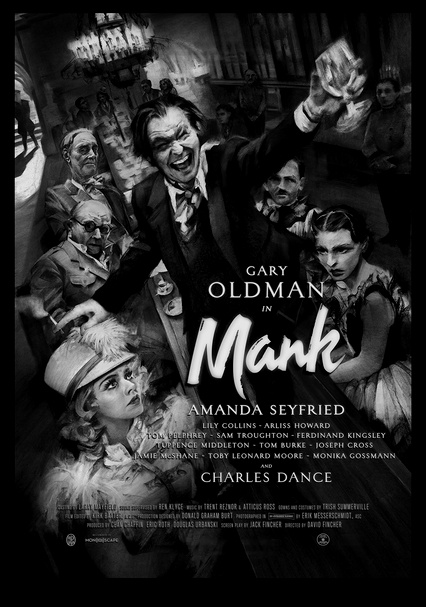
Mank-2020

Mank-2020

Director David Fincher

Starring Gary Oldman, Amanda Seyfried, Tom Pelphrey

Scott’s Review #1,110

Reviewed February 9, 2021

Grade: A

Everyone knows that Citizen Kane (1941) is one of the greatest films ever made. Well, I hope so anyway. Almost always appearing at the top of ‘best of’ lists, its merits are justified, and its creativity astounding. In a word, it’s groundbreaking.

The visual beauty, tone, and lighting are exceptional, to say the least. But this review is not meant to kiss the ass of that treasured masterpiece.

Mank (2020) is a film that is a love letter to the Golden Age of Hollywood. For those unfamiliar with Citizen Kane, please see the movie immediately, or the beauty of Mank will be missed.

The film celebrates the brilliance of Citizen Kane by offering new fans a glimpse into the creation of the movie while breathing life into the 1930s and 1940s film for new and younger fans to experience.

It also gives classic film fans something to sink their teeth into and a reaffirmation of their passion for the cinema. Film lovers will adore Mank.

The project stems back to the 1990s when director David Fincher’s father, Jack, began work on the film. It never came to fruition, and Jack Fincher died in 2003.

Eventually, the project was officially announced, and filming took place around Los Angeles from November 2019 to February 2020.

The film is about Citizen Kane specifically, but is so much more than that.

It’s part biography about alcoholic screenwriter Herman J. Mankiewicz (Gary Oldman) as he scrambles to finish writing Citizen Kane, given a tight deadline while also trying to recover from a broken leg. He is hired by the famous Orson Welles (director and star of Citizen Kane) to pen the script without any credit.

As terrific as Oldman is, as he always is, Mank also explores and dissects the politics of California of that time, the impending Nazi regime that soon led to World War II, and the rich and powerful producers.

It harkens back to the 1930s so genuinely that I felt I was living this important decade through my cinematic eyes. How different Hollywood was then!

Oldman is the star of a large cast with many actors being given small yet important roles. Nearly unrecognizable with a bloated beer belly and stringy hair, Herman is a lifelong boozer.

Mank spans ten years, from 1930 to 1940, and goes back and forth between the years. Mankiewicz dictated dialogue to his secretary, Rita (Lily Collins), in one scene while visiting the set of films made in the early 1930s.

Fun fact- Collins is the daughter of British pop artist Phil Collins and is on the cusp of a big career.

With his wit and humor, never afraid to call a spade a spade, or insult billionaire American businessman William Randolph Hearst (Charles Dance), he offends glamorous starlets over an extravagant dinner, forcing them to depart one by one as he gets drunker and drunker.

Never a big fan of Amanda Seyfried, the actress impresses with a fabulous performance, the best of her career. Playing Marion Davies, the inspiration for a character in Citizen Kane, she befriends Mankiewicz platonically, and the pair become close.

Seyfried nails it with a giving performance.

Tom Pelphrey plays Herman’s handsome brother, Joseph, on the cusp of becoming a famous writer and director, and the actor is terrific.

The look of Mank is delicious. The black and white cinematography pays homage to Citizen Kane, employing a stark contrast of dark and light in a gorgeous form.

Two great scenes come to mind- In 1933, Herman and Marion go for a stroll in a lavish courtyard, where they bond over discussions on politics and the film industry. It’s a benevolent and sweet scene where many topics are explored and embraced, and it is a definite ode to Hollywood.

The other takes place within the Hearst Mansion, directly before the scene as mentioned above, where a drunken Herman lets loose on some of the Hollywood elite. He insults Louis B. Mayer, founder of the famous MGM studios, the most famous and influential of all studios.

A gem is the addition of so many historic Hollywood figures, a treasure chest for fans of old cinema. Joan Crawford, Great Garbo, and Bette Davis are featured, although if you blink, you’ll miss them.

A terrific suggestion is to work double-time and follow up a viewing of Mank with Citizen Kane (I did!) for further appreciation of the film. A gift is realizing how the characters who appear in the classic film are based on real-life characters in Mankiewicz’s world.

Mank (2020) should be appreciated and revered for its lovely hybrid of crisp dialogue and wry comedy based on a real-life Hollywood director, and its cinematography and visual appreciation of a long-ago era of cinema.

I hope this inspires some to appreciate and salivate over films created almost a hundred years ago.

Oscar Nominations: 2 wins-Best Picture, Best Director-David Fincher, Best Actor-Gary Oldman, Best Supporting Actress-Amanda Seyfried, Best Production Design (won), Best Cinematography (won), Best Costume Design, Best Makeup and Hairstyling, Best Original Score, Best Sound

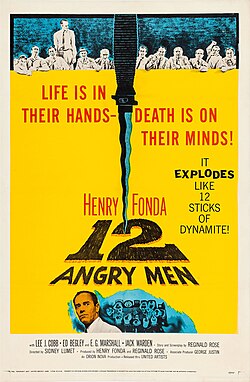
12 Angry Men-1957

12 Angry Men-1957

Director Sidney Lumet

Starring Henry Fonda

Scott’s Review #910

Reviewed June 14, 2019

Grade: A

A fond memory of Junior High School was reading the play and then being treated to a viewing of the film version of 12 Angry Men (1957), a bristling and suffocating film that infuses progressive thought and thinking for oneself in animosity.

A valuable lesson for a teenager to learn, or anyone else, the film is essential, providing life lessons and tremendous drama, holding up well, and still brimming with texture.

The film begins by introducing the audience to twelve men deliberating on a defendant’s conviction or acquittal based on reasonable doubt.

The defendant is an eighteen-year-old Puerto Rican male living in a poor neighborhood, accused of fatally stabbing his father.

The witnesses are an older man and a lady who lives across the street. The jurors’ instructions are clear: if there is any reasonable doubt, they must return a verdict of not guilty. If found guilty, the accused will receive a death sentence.

Henry Fonda plays Juror # Eight, who initially is the only juror to vote “not guilty” when the others assuredly vote “guilty.”

He adamantly questions how reliable the two witnesses are and disagrees with the argument that the knife used in the death is an obscure brand, as he produces an identical knife of his own.

Juror # Eight can convince one juror to change his vote, allowing discussions and analysis to reconvene, much to the chagrin of a few men, especially Juror # 3 (Lee J. Cobb), the main antagonist.

Director Sidney Lumet provides a dynamic atmosphere in his debut film with astounding results.

The black-and-white cinematography is brilliantly mixed with the humidity of a scorching New York summer day, as the one set used is claustrophobic, drawing the audience into the action and suffocating along with the men.

As tensions mount and one juror attempts to kill another juror out of rage, a thunderstorm erupts outside, breaking the heat and changing the momentum in the jury room as the tide slowly turns in a different direction.

The story is wonderfully written, as each juror’s backstory is slowly revealed, providing insight into why each man may think the way he does or may have preconceived notions about the accused, rather than giving him a fair shake.

Juror #3 is a bully estranged from his son, while Juror # 7 mistrusts “foreigners.” Some of the others “go with the flow,” intimidated by conflicts, and afraid to ruffle feathers.

12 Angry Men teaches the utmost importance of the power of change against all odds. By standing by his convictions, Juror #8 influenced the other jurors to see what they were either unable or unwilling to see.

He forces them to question their morals and values.

By the time the film concludes, the audience is smacked across the face with tremendous impact, perhaps prompting them to question their views.

This is an example of the power of cinema.

Like the stage version, the plot requires the audience to think and determine, along with the characters, the power of reason and the intensity of the dialogue.

The fact that all the jurors are white males is never lost on me, but neither does it detract from my enjoyment. This is how things were done decades ago.

Fonda is charismatic and brilliant in the lead role.

12 Angry Men (1957) is a timeless story, wonderfully told and retold on the live stage. Lumet powerfully and effectively brings the production to the big screen by using cinematic elements to elicit the proper emotions in his audience.

The film holds up very well, as sadly, many of the stereotypes and beliefs the jurors hold are still shared by many Americans.

On the more positive side, people with strong, empathetic wills, like Juror #8, also exist and unquestionably influence more than they lose.

Oscar Nominations: Best Motion Picture, Best Director-Sidney Lumet, Best Screenplay Based on Material from Another Medium

Golden Globe Nominations: Best Motion Picture-Drama, Best Director-Motion Picture-Sidney Lumet, Best Performance by an Actor in a Motion Picture-Actor-Henry Fonda, Best Performance by an Actor in a Supporting Role in any Motion Picture-Lee J. Cobb

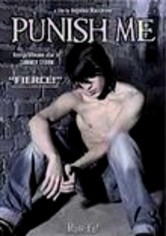
Punish Me-2005

Punish Me-2005

Director Angelina Maccarone

Starring Maron Kroymann, Kostja Ullman

Scott’s Review #670

Reviewed August 9, 2017

Grade: A-

Punish Me (sometimes titled Hounded) is a provocative 2005 German-language film that pushes boundaries and titillates the viewer with its racy themes of masochism and pedophilia that will be way too much for your average viewer to marinate and digest.

Some may be completely turned off (rather than on) by this film. However, for the edgy thinker, the film is quite the find.

Unique, extreme, and thoughtful, Punish Me is an experience to remember.

Shot entirely in black and white (rare for twenty-first-century cinema), the film appears bleak and harsh, cold almost- and that is no doubt an intentional measure.

The grizzled German landscape (the city is unidentified) gives the film interesting and effective cinematography, transforming the black-and-white imagery exceptionally well, whether the scene is set in daylight or at night.

Something about the black-and-white decision is genius.

Elsa Seifert (Maren Kroymann) is a fifty-year-old probation officer. Married and raising a teenage daughter, she appears to live a stable, middle-class existence.

When one of her charges, Jan (Kostja Ullman), a handsome sixteen-year-old, gives pursuit, their relationship becomes an obsessive, lustful situation for both.

Jan, you see, likes to be sexually beaten, and, at first, hesitant, Elsa slowly gets immersed in Jan’s world.   When other characters begin to catch wind of the situation between Jan and Elsa, the film becomes intense.

Astounding to me is the fact that Punish Me is directed by a woman, Angelina Maccarone. This both surprises and impresses me. Thought-provoking is the female perspective in the film.

Elsa is not an unhappy woman- though she nervously chain-smokes in almost every scene.

She initially has no intention of being sucked into Jan’s eccentricities. As she awkwardly spanks him in their first steamy, sexual encounter, she is gentle, yet she quickly intensifies.

Is she insecure with her middle-aged body? She gets carried away by Jan’s charms, putting both her career and her husband at risk.

Can she stop herself before it’s too late?

One wonders a few things- How would this film feel if a man directed it?

Maccarone centers the perspective on Elsa more than she does Jan- or are we to assume that Jan, at sixteen, is merely experimenting with his sexuality and therefore not the more interesting character?

This was my determination. Elsa has way more to lose than Jan does. We are not sure why Jan is so troubled, to begin with, or why he likes to be beaten- was he abused by his parents? sexually or otherwise? What deep-rooted issues does Elsa have?

I imagined the complexities that would have been offered had the film gone something like this- Elsa is a male character. Would the man-on-boy be too much? Is a female safer than a boy?

One wonders, but if Elsa were a male and Jan a female, I do not think the film would be half as controversial or daring. It would seem more exploitative or, dare I say, conventional.

Instead, Maccarone turns the film into a psychoanalytical feast as we wonder what makes both Elsa and Jan tick and why they enjoy the discipline scene.

Perhaps there is no clearly defined answer.

The supporting characters are not explored very well, other than a fellow troubled girl that Jan beds, commenting that she is too fat (she is not), or Elsa’s husband is revealed to have once had an affair with another woman, pronouncing “it was only sex, not love”.

From this, one concludes that Elsa and her husband will reunite and resume their middle-class life together, but what will become of Jan?

Thanks to effortless direction and good choices by Maccarone, she makes Punish Me (2005) an examine-worthy look at sexuality, desire, and emotions.

Many will loathe the film or not bother to give it the time of day because of the subject matter, but it is a treat for creative cinematic lovers and lovers of analysis.

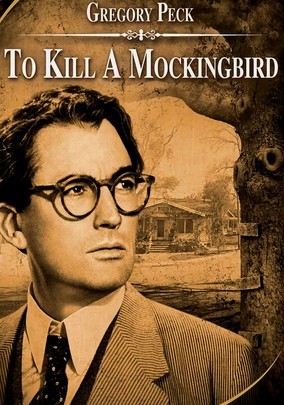
To Kill a Mockingbird-1962

To Kill a Mockingbird-1962

Director Robert Mulligan

Starring Gregory Peck

Scott’s Review #468

1051852

Reviewed August 25, 2016

Grade: A

To Kill a Mockingbird is a 1962 film based on Harper Lee’s renowned novel. It was released only two years earlier, in 1960.

The novel was groundbreaking, and the film is equally so. Race and racism are front and center in the storyline.

The film is still a marvel because it tells the story through the eyes of a child, in present-day terms, and as an adult, as she reflects on her experience.

The film is set in the 1930s in a small Alabama town.

We follow the lives of Atticus Finch, a respected lawyer and father, and his two young children- Scout and Jem.

Gregory Peck, as Atticus, is the moral center of the film.

Scout (Mary Badham) narrates, and her innocence makes the story much more compelling and less like a preachy vehicle for a social topic.

The Finches are a tight family unit as Atticus is widowed, leaving Jem and Scout motherless. A poor black man, Tom, is accused of raping and beating a white woman, coached into the accusations by her racist father.

We accept that the woman had designs on Tom and, when caught by her horrified father, was beaten, with Tom left to take the blame.

Much of the film, but not too much, takes place in the courtroom, as we hear testimony by the poor woman, her father, and Tom.

Not to be missed is that every juror is a white man, a sad reminder of the racism that existed and one argues still exists, though not as blatant in today’s modern world.

One cringes when the black attendees are forced to sit in the upper portion of the courthouse, an obvious way to demean and lessen them, and which speaks volumes for the town.

We realize Tom does not have a chance, yet we hope against hope for his acquittal.

Wisely, I do not feel the point is the trial’s outcome—we know what will result. But the film teaches us a lesson about reality: life is often unfair and painful.

The after-effects of the trial are the most exciting part of To Kill a Mockingbird.

Gregory Peck was awarded the Best Actor Oscar in 1962 for his role as a liberal, progressive, and honorable man who can do no wrong and is an excellent example for his children.

A black maid, Calpurnia, works for him, and he treats her like family. I could not help but think she is the mother figure in Jem and Scout’s lives.

Atticus does the right thing, treating everyone fairly and living a moral life. He is an excellent example, and it is no wonder Peck won the trophy.

A subplot involves a mysterious neighbor, Boo Radley, feared by the town kids but turning out to be a protector and companion to Scout and Jem.

This role was the first for acclaimed actor Robert Duvall; the actor has a tiny yet important role and does a great deal of expressive acting without uttering a line.

The title of the film is poignant and essential to the ending.

The film is really about Jem and Scout and their quick journey into the pains and unfairness endured by adults. Once innocently enjoying the summer, playing games, and making friends with a visiting young boy, they are exposed to evil and a hate-filled racist town, which they slowly come to realize exists.

Filmed in black and white, this quality enhances the picture. The blowing leaves and dark shadows add much to the impressive cinematography and give the film a dark quality that color would have ruined.

The 1930s time period is very authentic.

To Kill a Mockingbird (1962) is a timeless film with an important message about the world. Children and adults of every generation should view it as a lesson in empathy and compassion.

The film is not ugly or raw but is truthful and still feels fresh. It will resonate with all audiences patient enough to give it a good watch.

Oscar Nominations: 3 wins-Best Picture, Best Director-Robert Mulligan, Best Actor-Gregory Peck (won), Best Supporting Actress-Mary Badham, Best Screenplay Based on Material from Another Medium (won), Best Music Score-Substantially Original, Best Art Direction, Black-and-White (won), Best Cinematography, Black-and-White

Golden Globe Nominations: 3 wins-Best Motion Picture-Drama, Best Director-Motion Picture-Robert Mulligan, Best Performance by an Actor in a Motion Picture-Drama-Gregory Peck (won), Best Original Score (won), Promoting International Understanding (won)

Anatomy of a Murder-1959

Anatomy of a Murder-1959

Director Otto Preminger

Starring James Stewart

Scott’s Review #61

Reviewed June 24, 2014

Grade: B+

Anatomy of a Murder (1959) is a thought-provoking courtroom/legal thriller that is not a black-and-white, good-and-bad story.

It is more profound and more complex than that.

Starring James Stewart as an everyman defense attorney, the film, shot effectively in black and white, pushed barriers for its time by using certain words such as “rape” and “panties” that were never spoken in films before this time.

Much of the action takes place inside the courtroom.

The film pushed the envelope and is still enjoyable today.

Throughout the film, which is admittedly slow at times, the audience is unsure of the defendant’s guilt and wary and suspicious of him from the start, which creates great drama.

The rooting value is with Stewart, the hero, and the interesting supporting cast provides deeper layers than similar-type films that risk being wordy or preachy.

As each new fact or twist and turn arrives throughout the film, it becomes more and more engaging until it reaches a satisfying climax.

Oscar Nominations: Best Motion Picture, Best Actor-James Stewart, Best Supporting Actor-Arthur O’Connell, George C. Scott, Best Screenplay Based on Material from Another Medium, Best Cinematography, Black-and-White, Best Film Editing

Golden Globe Nominations: Best Motion Picture-Drama, Best Director-Motion Picture-Otto Preminger, Best Performance by an Actress in a Motion Picture-Drama-Lee Remick, Best Performance by an Actor in a Supporting Role in any Motion Picture-Joseph Welch