Tag Archives: Clu Gulager

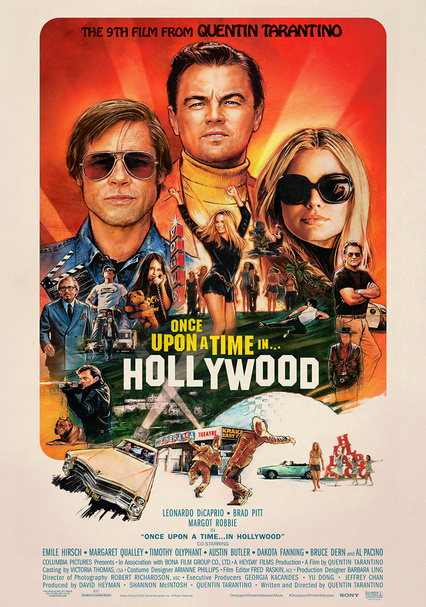
Once Upon a Time in Hollywood-2019

Once Upon a Time in Hollywood-2019

Director Quentin Tarantino

Starring Leonardo DiCaprio, Brad Pitt, Margot Robbie

Top 250 Films #84

Scott’s Review #926
Reviewed August 1, 2019

Grade: A

Once Upon a Time in Hollywood (2019) is another brilliant offering by one of the most (deservedly) respected directors of the modern film era.

This film may be his most personal, as it includes many cinematic references and immerses itself in Hollywood life. Toned down considerably from the violence standard in his other films, the first half lays the groundwork for a startlingly good second half, with every detail of utmost importance.

A bevy of riches awaits any viewer enthusiastically feasting their eyes on this film.

The time is 1969, as actor Rick Dalton (Leonardo DiCaprio) struggles to reinvent himself and revitalize his career in Hollywood amid a changing cinematic landscape.

Famous for a popular western television series from the 1950s, Bounty Law, a pursued film career has not taken off, and he is reduced to guest appearances as the villain, then considered throwaway roles, in other episodic series.

His stunt double and best friend, Cliff Booth (Brad Pitt), accompanies him almost everywhere, serving as both sidekick and errand boy.

Meanwhile, famous director Roman Polanski and his wife, actress Sharon Tate (played by Argot Robbie), have moved into the house next door, which Dalton hopes will help him revitalize his career aspirations.

As Tate goes about her daily life of running errands and watching her movies in the theater, she is visited by Charles Manson one day, looking for the former resident of her house.

Historical viewers are familiar with the subsequent events that unfolded in real life, while Tarantino presents a fictional, tantalizing version of them.

The film’s length is two hours and thirty-nine minutes, quite robust but typical for a Tarantino production. Some may complain about the bloated running time, but the film never drags; instead, the director lays out all the pieces carefully like a fine chess game.

By the mid-point, all hell breaks loose with one of the most suspenseful and edge-of-your-seat scenes in film history. When Cliff drives a flirtatious young hippy hitchhiker, Pussycat (Margaret Qualley), to a range populated by Manson followers, he is in for the adventure of his life…..if he survives.

Once Upon a Time in Hollywood is an orgy of cinematic tidbits, featuring a myriad of clips from forgotten films of the late 1960s and popular songs from that era.

This is just the tip of the iceberg in greatness as Tarantino perfectly immerses the viewer into the time with fury and zest. Every set piece, costume, hairstyle, or car is flawlessly placed. Kraft macaroni and cheese, Velveeta cheese, and popular dog food from the period are featured.

Tarantino is a fan of cinema and makes cinema lovers fall in love with cinema all over again.

The cast is humongous, but each character is necessary and perfectly represented in both large and small roles.

The haunting troupe of Manson followers, specifically Tex Watson (Austin Butler), Squeaky Fromme (Dakota Fanning), and Susan Atkins (Mikey Madison), are all real-life figures. They are foreboding, dangerous, and crucial to the story.

Al Pacino shines in the small but pivotal role of Schwarz (not Schwartz), Dalton’s agent, while Steve McQueen’s look-alike, Damian Lewis, is memorable on-screen for merely seconds.

The list of cameo performances goes on and on and on, and the fun is wondering who may appear next.

Despite the incorporation of big-name stars in important minor roles, the best performances belong to DiCaprio and Pitt. DiCaprio’s best scene takes place alone in his trailer as the washed-up star botches his lines thanks to a hangover, causing a delay in filming.

He abuses himself into nailing the scene, receiving kudos all around, while becoming teary-eyed after a compliment from a young actress.

Pitt has never given a better performance than he does as Cliff, sharing his best scenes with his adorable dog Brandi and with DiCaprio.

Who can ever forget his chest-baring rooftop scene?

Quentin Tarantino scores again with a bombastic and flawless picture, his ninth release. Rumored to retire after his tenth film, one can hardly fathom the reality of that statement. Hismovis can be watched and watched again, continuously absorbing new and noteworthy details of rich texture.

Once Upon a Time in Hollywood (2019) easily joins the ranks of great works, not just of the director’s catalog, but of all time.

Oscar Nominations: 2 wins-Best Picture, Best Director-Quentin Tarantino, Best Actor-Leonardo DiCaprio, Best Supporting Actor-Brad Pitt (won), Best Original Screenplay, Best Sound Editing, Best Sound Mixing, Best Production Design (won), Best Cinematography, Best Costume Design
The Last Picture Show-1971

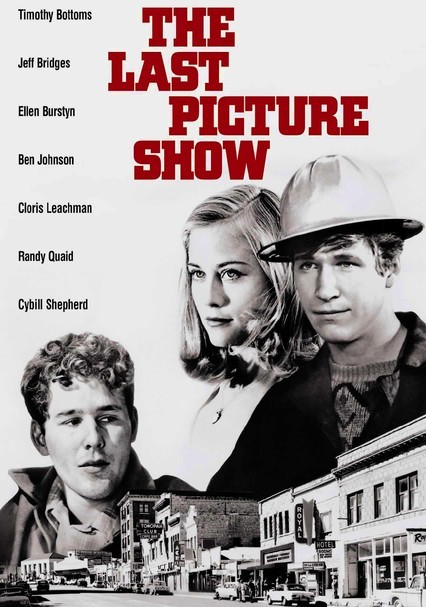
The Last Picture Show-1971

Director Peter Bogdanovich

Starring Timothy Bottoms, Jeff Bridges, Cybill Shepherd

Top 250 Films #121

Scott’s Review #1,349

Reviewed March 9, 2023

Grade: A

1971 was a great year in American cinema, from The French Connection to Willy Wonka and the Chocolate Factory to Fiddler on the Roof to Dirty Harry.

The list goes on and on.

The brilliantly filmed and directed The Last Picture Show is easily ensconced in the year’s top ten, featuring an embarrassment of riches across the board. An important thing to promote is the successful use of the dusty setting and time, which is the film’s secret sauce.

Peter Bogdanovich crafts a dreary coming-of-age tale set in landlocked Texas. The film is loosely based on a 1966 novel of the same name written by Larry McMurtry.

The film includes many songs by Hank Williams Sr. and other country & Western and 1950s popular music recording artists to reflect the era.

Most of the townsfolk are bored to tears in the windswept hamlet of Anarene, Texas. Their saving grace is a local cinema (the picture show) run by the popular Sam the Lion (Ben Johnson), which is about to close its doors forever.

Others frequent the café run by sultry waitress Genevieve (Eileen Brennan), who knows everyone’s business.

The gossip and scandals run wild throughout town, following several principal characters and their trials and tribulations. High school students Sonny (Timothy Bottoms) and Duane (Jeff Bridges) lust after flirty Jacy Farrow (Cybill Shepherd) while trying to figure out their futures.

Sonny also finds time for an affair with depressed housewife Ruth Popper (Cloris Leachman), twenty years his senior, who is married to the school gym teacher, Coach Popper (Bill Thurman), who may be gay.

The year is 1951, when the Korean War is raging, and the once-prosperous oil town is in significant decline.

Bogdanovich’s apt camerawork, shot in black and white, is central to the film and the winning recipe (well, one of them). If The Last Picture Show were shot in color or worse yet, colorized, it would detract from the proper mood of sadness.

The exterior scenes involve swirling dust and wide-angle shots of the main street, often enough to relay a comparison to a ghost town, especially as events go along. There are also some sequences featuring vehicles or highway scenes, evoking thoughts of escape or departure.

The other key ingredient is the ensemble of characters led by exceptional acting. Sonny is the handsome lead character with a lifetime ahead of him and the kindest of all the players. His all-American good looks infuse a vulnerability into the character with vulnerability, especially in scenes with his mentor, Sam, and his friend, Billy.

Other quiet scenes reveal much about the supporting characters. Ruth sadly hangs the wash on her clothesline, looking worn and weary, while Genevieve grills a cheeseburger in the café, cigarette dangling and her once youthful aspirations slipping away.

Leachman and Johnson, both Academy Award winners in the supporting categories, deserve their awards. They successfully portray their anger in quiet ways, and both have dignity and self-worth, making their characters complex and revered.

The heartiest scenes belong to the younger set as they deal with simmering sexuality and hopes for college. Jacy experiments with sex, even sleeping with the man who her mother Lois (Burstyn) is having an affair with.

Shepherd also presents Jacy as vulnerable as she awkwardly strips off her clothes during a pool party, encouraged by a handsome boy she hopes to impress. At times, she is childish, other times a selfish bitch. It’s mentioned that her family is wealthy, so it’s assumed she is spoiled.

The 1950s usually provide a level of nostalgia and good, old-fashioned, carefree Americana.

The Last Picture Show (1971), thanks to the flawless direction and screenwriting of Bogdanovich and McMurtry, instead paints a perfect portrait of misspent youth and shattered dreams.

Oscar Nominations: 2 wins-Best Picture, Best Director-Peter Bogdanovich, Best Supporting Actor-Ben Johnson (won), Jeff Bridges, Best Supporting Actress-Cloris Leachman (won), Ellen Burstyn, Best Screenplay-Based on Material from Another Medium, Best Cinematography

A Nightmare on Elm Street 2: Freddy’s Revenge-1985

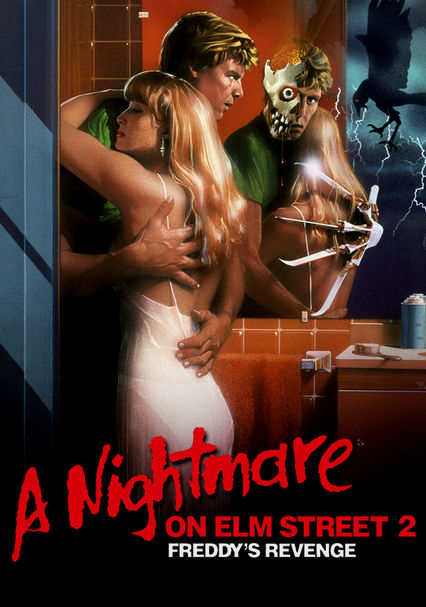
A Nightmare on Elm Street 2: Freddy’s Revenge-1985

Director Jack Sholder

Starring Mark Patton, Robert Englund

Scott’s Review #1,024

Reviewed May 18, 2020

Grade: B

While it adds a surprising and tantalizing sexual subtext to a standard story and features a male protagonist instead of the generic female, A Nightmare on Elm Street 2: Freddy’s Revenge (1985) sometimes feels overwrought.

With stock characters and not enough scary moments to satisfy bloodthirsty appetites, the effort and aching for something a bit different is apparent if viewers are sharp enough to take a curious peek.

The glossy 1980s cinematic look is cringeworthy and very “of the time,” which usurps the creative tidbits nestled beneath the surface, as deserving of their merits as they are.

Nonetheless, the film is not at all bad, almost feeling fresh by today’s standards, and the familiar villain is worth the price of admission.

Once again, Freddy baits and taunts his victims, who never stand a chance, with his trademark sneer and razor-sharp nails.

Five years following the events of the first A Nightmare on Elm Street (1984), a new family arrives on the cursed block, happily anticipating a new life filled with baked cookies and warm fires.

Parents Ken and Cheryl Walsh (film legend Hope Lange) raise two kids, Angela and Jesse (Mark Patton). The latter is haunted in his dreams by a killer driving a school bus.

Jesse is joined by his friend and romantic interest, Lisa (Kim Meyers), school chum Grady (Robert Rusler), and Coach Schneider (Marshall Bell), who may or may not be gay.

An obvious comparison to the similarly themed Friday the 13th franchise, a hot ticket during the 1980s, is its return to a familiar setting.

Elm Street is to A Nightmare on Elm Street what Camp Crystal Lake is to Friday the 13th. The locale is a character in itself, and knowing that bad things will happen there is pleasing to the viewer.

Elm Street is supposed to be a quiet and safe place for families to snuggle in their beds with pets, dreaming the nights away, not worrying about an evil force turning their pleasant dreams into nightmares come to life.

A clever homoerotic tidbit that is lost on most viewers nonetheless emerges, especially in hindsight.

Let’s remind ourselves that 1985 was not a hotbed of LGBTQ cinematic activity, especially as the horrific A.I.D.S epidemic was front-page news.

Gay-themed films were not the norm, not even in the independent film circuit yet, so any mention of a gay character was a win for the community.

A riveting scene has Jesse dreaming of indulging in a drink at a gay bar and is caught by Schneider, who sends him to the showers.

The sexual overtones, obvious now, were not then, but sadly, this is as far as the film goes with this subject.

The remainder of the story is mostly standard fare, featuring a lively teenage pool party, aqua-net-infused hairstyles, up-tempo pop music, and familiar written characters, most of whom turned up with different faces in the droves of horror films that peppered suburban movie theaters in those days.

Not daring to make Jesse a gay character, though someone humorously made the character’s name androgynous, Jesse and Lisa share a tender kiss in her cabana.

Most sequels pale in comparison to their originals.

A Nightmare on Elm Street 2: Freddy’s Revenge (1985) is an adequate follow-up that dares to incorporate as much diversity and inclusiveness as could be mustered in a mainstream film during the mid-1980s.

Let’s not kid ourselves that the studios did not have profit on the mind over credibility and creativity, but the stakes are not exactly played safe, which is to its credit.

There were far worse sequels in this franchise yet to come!

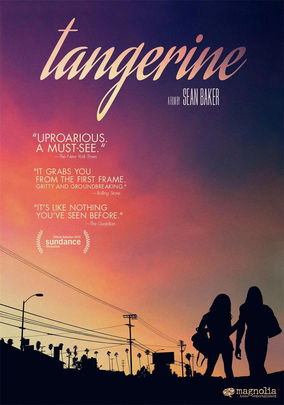
Tangerine-2015

Tangerine-2015

Director Sean Baker

Starring Mya Taylor, Kitana Kiki Rodriguez, James Ransone

Scott’s Review #301

80037676

Reviewed December 17, 2015

Grade: A

On the rare occasion that I am lucky and privileged enough to stumble upon a gem like Tangerine (2015), it reaffirms my faith in film and creative filmmakers in general.

Here is a universal lesson- it does not require oodles of money to make a great film. This film was shot with three smartphones!!

It takes talent and creativity.

Tangerine is a groundbreaking film- the first (that I am aware of anyway) to feature transgender actresses at the forefront of the feature.

The film has been honored with multiple Independent Spirit Award nominations.

Shot documentary style, with grittiness and a frenetic pace, while mixing in unique styles of music (hip hop to classic) as the musical score (a child-like tune begins the film), Tangerine is unique from both a story perspective and a visual style.

The film’s first scene begins with two transgender sex workers- Sin-Dee Rella and Alexandra, having a conversation in a coffee shop. Sin-Dee has just been released from jail and learns that her boyfriend, and pimp, Chester (James Ransone), has been cheating on her.

It is Christmas Eve.

The film explores Sin-Dee’s rage and subsequent search all over Los Angeles for Chester, and the girl he has been with. She vows revenge on them both.

However, beyond this story point, the heart of the film is of loneliness and isolation that most of the characters (trans and otherwise), share, in one form or another.

Interspersed with the Sin-Dee story, are stories involving Alexandra’s feud with a “john”, and her pursuit of a singing career.

Another interesting story is that of a straight male, Razmik, an Armenian cab driver who is enamored with transgender sex workers.

This may sound bizarre or too out there for some, but Razmik’s story is quite tender and compelling. He has a wife, child, and other relatives and is the breadwinner. He is also very conflicted. He does not “use” the sex workers, but rather cares for them and admires them.

I found all three principal characters interesting in different ways- Sin-Dee and Alex are over-the-top, yet sensitive. While Sin-Dee is aggressive and vengeful, Alex is the kinder of the two and the more sensible and rational.

She is a sex worker but aspires for more out of life. Razmik is even more interesting- does he have a fetish? Is he shameful for spending money on prostitutes while supporting a wife and child?

All of the characters are victimized in one form or another and all are dysfunctional- at the same time, they are all weirdly likable.

I witnessed moments of Quentin Tarantino’s film style coming across the screen- most notably in the coffee-shop scenes (the beginning and final scenes) as all hell breaks loose, and the characters delve into all sorts of crazy behavior.

Tangerine is a sweet tale about friendship too.

It is a memorable and powerful film experience.

In the end, all the characters are hurting, living such sad lives, especially since the time is present-day Christmas Eve, which might make this film sound depressing, but it is not.

I found it almost uplifting in a way.

Tangerine (2015) is a completely original, groundbreaking film that I hope will be remembered and appreciated fifty years from now.

Independent Spirit Award Nominations: 1 win-Best Feature, Best Director-Sean Baker, Best Female Lead-Kitana Kiki Rodriguez, Best Supporting Female-Mya Taylor (won), Piaget Producers Award