Category Archives: Screwball Comedy

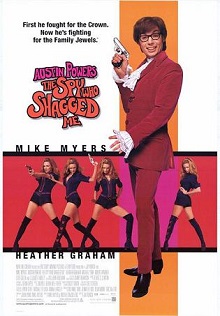
Austin Powers: The Spy Who Shagged Me-1999

Austin Powers: The Spy Who Shagged Me-1999

Director Jay Roach

Starring Mike Meyers

Scott’s Review #1,454

Reviewed December 7, 2024

Grade: C

The silly comedy franchise Austin Powers, which gripped the nation in the late 1990s, never tickled me pink like it did so many others.

International Man of Mystery debuted in 1997 and provided a smirk or two, but the follow-up ran out of gas by using more or less the same schtick as the first in the series.

I’ll never forget people mimicking taglines like ‘Yeah, baby’ to delightful laughter during this time, which I found more irritating than humorous.

Mike Meyers is talented and gives his all in the title role and two others. He infuses his natural comic talents into ridiculous, over-the-top, loud characters. He also does triple duty, portraying the main villain and a henchman.

He deserves props for solid performances with mediocre writing.

Poor Heather Graham, excellent as ‘roller girl’ in Paul Thomas Anderson’s brilliant Boogie Nights (1997), is reduced to a scantily clad love interest.

Besides being eye candy, her character has little of value to offer, undoubtedly frustrating the then-rising star.

The film isn’t a total failure, as the visuals and makeup are admirable. Colorful sets and groovy designs evoke the 1960s in a zany way, making watching the film better than listening to it.

It also serves as a modest treat for James Bond fans since the satire and parodies give credence.

Jay Roach, the director, must have advised his actors to perform as outrageously as possible, especially Robert Wagner, Rob Lowe, and Mindy Sterling, and Meyers does so on his own.

Blessedly, the running time is one hour and thirty-five minutes.

In the second installment, British super spy Austin Powers (Meyers) must return to 1969, as arch-nemesis Dr. Evil (Meyers) has ventured back to that year and successfully stolen Austin’s “mojo,” set up a powerful laser, and aimed it at Earth.

With the help of gorgeous agent Felicity Shagwell (Graham), the newly single Austin must now contend not only with Dr. Evil but also Evil’s vicious, pint-size attack clone, Mini-Me (Verne Troya).

The point of the franchise is to spoof the legendary James Bond series while incorporating a Swinging London, free-love vibe, which on paper sounds good. However, the situations play more like sketch comedy or Saturday Night Live setups than a flowing screenplay.

Even the title greedily borrows from the 1977 Bond film The Spy Who Loved Me.

As with many comedy or romantic-comedy films, screenwriters Mike Myers and Michael McCullers desperately resort to bathroom humor and countless sly sex sequences for laughs.

Also, keeping with a popular theme of comedy films, celebrity cameos run rampant. Jerry Springer, Willie Nelson, Woody Harrelson, and others appear as themselves.

I like the Bond references and themes the best, but the jokes mostly don’t work.

To its credit, Austin Powers: The Spy Who Shagged Me (1999) is not as bad as its follow-up, Goldmember (2002), but the gags fall flat most of the way.

Oscar Nominations: Best Makeup

There’s Something About Mary-1998

There’s Something About Mary-1998

Director Peter Farrelly, Bobby Farrelly

Starring Ben Stiller, Cameron Diaz, Matt Dillon

Scott’s Review #1,428

Reviewed June 16, 2024

Grade: B+

Since many films are released within the romantic comedy genre, most are disposable and forgettable. Very few stand out initially, let alone stand the test of time.

Decades later, There’s Something About Mary (1998) holds up well mostly because of its chemistry and laugh-out-loud memorable moments. It also has a heart and is not mean-spirited, showcasing a brewing romance people can relate to.

Watching in 2024, particularly interesting is the appeal of Cameron Diaz since she retired from acting, and a young Ben Stiller, who was then in his heyday and a box-office gem.

Brett Favre, who then was a superstar NFL quarterback, makes a cameo appearance.

It’s a pleasure to watch a hit film from decades ago that still holds appeal.

Ted’s (Ben Stiller) unexpected dream prom date with Mary (Cameron Diaz) in 1985 is disastrous when an embarrassing injury at her home prevents them from getting to the prom. Mary leaves town shortly after.

Thirteen years later, pre-social media in 1998, Ted hires shady investigator Pat Healy (Matt Dillon) to track down Mary so he can reconnect with her. Pat becomes obsessed with her and lies to Ted about Mary, learning everything she can about her to trick her into dating him.

Ted realizes the truth and travels to Miami, Florida, to meet Mary, a successful orthopedic surgeon, and reconnect with her.

Instantaneous hilarity comes to mind at the mention of two legendary scenes involving Ben Stiller’s Ted that most people have heard of.

While using the bathroom at Mary’s house before leaving for the prom, Ted gets his private parts, or ‘frank and beans’, caught in his zipper.

Every male viewer will squirm in imagined discomfort, but the hijinks with Mary’s parents and neighborhood firefighters who get involved make the sequence legendary.

This pairs well with a later scene when Ted masturbates just before his date with Mary to relax. Mary mistakes some ‘residue’ on Ted’s ear for hair gel and hilariously applies it to her hair, causing it to stick straight up in the air during dinner.

Both scenes still feel fresh and natural years later and are now historical.

The introduction of Tucker (Lee Evans), a third admirer of Mary, doesn’t work so well in hindsight. The revelation that he is not a British architect but merely a pizza deliverer who injured his back to get close to Mary feels forced and unnecessary.

The triangle between Ted/Mary/Pat is just enough.

The inclusion factors are impressive. In 1985, Mary had a black stepfather and a mentally disabled brother, both of whom she adores.

When Ted drives from Rhode Island to Florida, he stops at a rest area and is assumed to be gay. This is preceded by a session with a psychiatrist who suspects Ted may be gay.

These additions go a long way to showcase normalcy in these individual areas.

It’s also impressive that the Farrelly brothers (Peter and Bobby), who direct the film, make Mary a surgeon, paving the way for female viewers to aspire to the same.

There’s Something About Mary gets a slight knock for exploiting female breasts. Mary is seen at least twice through a window putting on a bra while a male spies on her from a distance.

The characters are benevolent, especially Ted and Mary, making it easy for the audience to root for them.

Thanks to the tremendous chemistry between Diaz, Stiller, and Dillon, There’s Something About Mary (1998) feels fresh and romantic without a forced feeling.

Private Resort-1985

Private Resort-1985

Director George Bowers

Starring Rob Morrow, Johnny Depp

Scott’s Review #1,382

.

Reviewed July 26, 2023

Grade: B

Depending on what type of film you are looking for, Private Resort (1985) may be just what the doctor ordered.

A version of Animal House (1978) or Porky’s (1981) shifted to a sunny beach resort is the perfect summer setting for a sex romp with enough g-strings, boobs, and bare butts to make even non-prudish viewers blush a little.

Suffice it to say, director George Bowers, mostly known as a film editor, and screenwriter Alan Wenkus weren’t seeking any Academy Award nominations.

Though silly, thoughtless, and caked with terrible acting, Private Resort is a fun flick.

Shamelessly, since its 1985 release, the distributors have callously billed mega Hollywood star Johnny Depp as the ‘star’ of this film. Someone even dared to add his photo to the film’s cover art, which I nearly used when creating my film review.

In reality, Depp plays second fiddle to Rob Morrow, who is the film’s real star and proudly displays more bare flesh than Depp does.

Morrow also proudly dons a dress and wig for a lengthy drag performance.

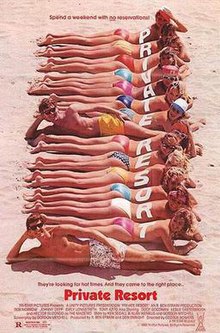
Thankfully, another source cleverly depicts a lineup of bronzed, toned beach bodies, each donning the letters that spell ‘Private Resort’ (see above), across different cover art.

Horny teenage buddies, Ben and Jack (Morrow and Depp), decide to spend a weekend in a swanky Miami beach resort chasing the flock of equally horny and scantily clad women they encounter.

How they have the money to afford a room is never explained.

Their fun is parlayed when they cross paths with a shifty jewel thief played by Hector Elizondo and his leggy girlfriend Bobbie Sue (Leslie Easterbrook). Throw in a romance with all-American-looking waitress Patti (Emily Longstreth) and sultry Dana (Karyn O’Bryan), and you’ve got a plot.

Bowers throws in enough physical comedy and antics to keep the action moving along in a speedy one-hour and twenty-two-minute running time.

The gags follow films like Caddyshack (1980) or any of the other countless 1980s slapstick comedies, and you can pretty much bank on what you’ll be served up.

Why, the opening scene follows a parade of sexy female sunbathers slathering suntan lotion on or suggestively bending over for all to see.

Many were uncredited, so my hunch is that adult film stars were used.

Morrow is the standout, and his boyish charisma lights up the screen, especially when he becomes smitten with Patti. The fresh-faced pair make a perfect match and exude young love, becoming the heart of the film.

Elizondo and Easterbrook dutifully perform their parts as one-dimensional foils and MILF roles, respectively. Decent actors are worlds above any of the other supporting actors in terms of talent.

Even comic actress Dody Goodman (Grease, 1978) goes way over the top in her role as Dana’s wealthy grandmother.

Andrew Dice Clay, then known as Andrew Clay, also appears.

Private Resort gets a severe wrist-slapping for two crass fat-shaming scenes not worth giving time to other than to mention it’s not kind to plump girls.

I first saw Private Resort (1985) as a teenager when it was first released and loved it. This was before I blossomed into a snobby film critic.

Seeing the film a million years later with more sophisticated tastes, I still find it fun, especially on a scorching summer night.

That’s got to count for something, right?

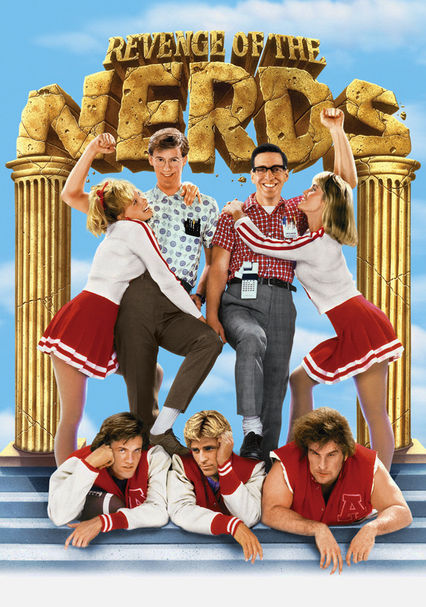
Revenge of the Nerds-1984

Revenge of the Nerds-1984

Director Jeff Kanew

Starring Robert Carradine, Anthony Edwards

Scott’s Review #1,354

Reviewed April 8, 2023

Grade: B+

Released in 1984, Revenge of the Nerds is in a similar vein to other raunchy comedies like Police Academy (1984), Animal House (1978), or Porky’s (1981).

Goofy slapstick elements and the portrayal of unpopular or marginalized groups rising above are the thematic commonalities these genre films share.

To say the film is dumb fun is quite apt, and watching it again, almost forty years past the release date, the stereotypes and gags are ever so noticeable. The term ‘date rape’ was not known then, but it is known presently, leaving a slightly uncomfortable feeling during one scene.

Also dated is the classification of what a nerd is. In 1984, the last name one would like to be called was a nerd.” Today, it’s a term of endearment or even something to aspire to be!

Anyone under the age of forty will not appreciate Revenge of the Nerds or even get it. It was made at a very different time, but it will be appreciated by the older folks and provide a burst of uproarious nostalgia.

Revenge of the Nerds is one of my favorite selections when I think of the 1980s and yearn for a slice of mind-numbing entertainment.

Geeky college students Gilbert (Anthony Edwards) and Lewis (Robert Carradine) are excited to leave their repressed small town and venture off to the mind-opening University where, in their minds, they are bound to score with countless women.

Once there, they are ridiculed mercilessly by the jocks and evicted from their dormitory when the Alpha Betas, who recently burned down their own fraternity house by accident, confiscate the building.

When the college forces first-year students to live in the gym, Gilbert, Lewis, and their fellow dorks relocate to a run-down house. When the Alpha Betas, led by jock Stan (Ted McGinley), repeatedly humiliate them, the nerds plot revenge.

Naturally, in an attempt at gender parity, there is a nerd sorority named Omega Mu featuring Judy (Michelle Meyrink), who becomes Gilbert’s girlfriend.

And as a fabulous addition, there is one equivalent to Alpha Beta, consisting of cheerleader types who are bitchy and mean to the nerds, led by Betty Childs (Julie Montgomery), the object of Lewis’s affections.

Revenge of the Nerds succeeds well because it’s easy to root for the Nerds to exact their revenge on the jocks. But this would not be the case without the characters of Gilbert and Lewis.

Edwards and Carradine infuse them with likability and a flavor of fairness. More than just horny nerds, they choose their brethren from all walks of life.

There is a gay nerd, a black nerd, an Asian nerd, and even a nerd who picks his nose and is effectively named Booger (Curtis Armstrong).

Despite the subject matter, it’s easy to see that the producers were attempting some early diversity and inclusion. They exist within the confines of stereotypes, but at least the representation was visible.

McGinley as Stan is the perfect foil. The actor is a blonde and a surfer dude, so he is the perfect ‘big man on campus’ type. The secondary jocks are all loud and obnoxious, but are happy to be second bananas to Stan.

Adorable is how the distinction bubbles up to the school dean, played by David Wohl, who is at first intimidated by but finally gets the better of loud Coach Harris (John Goodman). And Lewis’s father, Mr. Skolnick (James Cromwell), is his doppelganger.

Revenge of the Nerds is successful at bringing out the thirteen-year-old boy in all of us with its incorporation of mooning scenes, belching, and a hilarious Peeping Tom scene in the hated popular girls’ sorority.

It’s not film art or anything in the way of classy, cinematic camerawork or visual effects, but Revenge of the Nerds (1984) does provide some good-humored laughs.

It’s well-intentioned and holds up surprisingly well on its own merits, while some 1980s ‘quality’ films do not.

I Love You, Man-2009

I Love You, Man-2009

Director John Hamburg

Starring Paul Rudd, Jason Segal

Scott’s Review #1,311

Reviewed October 24, 2022

Grade: B

I Love You, Man (2009) is another one of these ‘feel-good’ types of ‘bromance’ comedies to grace the silver screen in the 2000s.

It takes a familiar storyline of two male friends bonding, usually involving a female in the mix to complicate matters, with hilariously awkward moments thrown in.

It’s nothing groundbreaking or overly severe, but rather a mildly satisfying ‘guy film’ that a female audience can also enjoy because there exists a romance and a happily ever after.

I’m simplifying the specific gender tastes quite a bit, but what I mean is the film is light, and there can be something for everyone to enjoy.

While there are some innocent homoerotic playful moments between the men, for laughs, of course, the genre avoids anything LGBTQ+ related other than a gay supporting character who cleverly teaches the straight male how to ‘meet’ men.

Director John Hamburg is involved in similarly themed projects like Meet the Parents (2000) and Along Came Polly (2004), so he knows the common premise required for a film like I Love You, Man, as well as what the audience wants.

As his wedding day approaches, nerdy Peter Klaven (Paul Rudd) realizes he has no one to serve as his best man.

Through a series of “man-dates,” he finds abrasive Sydney Fife (Jason Segel), and the pair become instant friends.

But as Peter’s “bromance” with Sydney grows stronger, it threatens his relationship with his intended, Zooey (Rashida Jones), forcing Peter to make a choice.

It’s not a bad effort and Rudd and Segal have good chemistry as polar opposite characters. The differences are a big part of the laughs, but Jones is somewhat unnecessary to the plot other than the required female component to satisfy the formula.

She dutifully plays her role as the straight woman immersed between two goofballs but has very little to do other than get in the way and be a roadblock to the guys’ fun.

It’s not a great role for her and the chemistry is lacking between her and Rudd, but maybe that’s just the point. I’m not too sure, but I found the humorous moments entirely left to the boys to provide.

My favorite section of the film is one that many may dismiss or deem secondary. The legendary progressive rock band Rush makes an appearance as a way that Peter and Sydney ultimately bond.

Any fan of music, especially a thinking man’s band like Rush, can attest to the genuine bond that can be created between followers of a specific group.

Rush is legendary for just that, and it makes I Love You, Man feel fresher than it otherwise would have. Besides, other than Led Zeppelin, is there a better example of a ‘guy’s band’?

Otherwise, the film is particularly run-of-the-mill. There are familiar arguments, misunderstandings, breakups, and makeups to be endured.

Events start with a marriage proposal and unsurprisingly end with a wedding ceremony, so anything in between is rather superfluous since we can see the outcome a mile away.

Naturally, as much as Zooey wants Peter to have more male friends, she becomes suspicious and otherwise threatened by the new blood, feeling left out.

There is a hint that Sydney may be trying to manipulate and pull the wool over Peter’s eyes over a financial loan, but things work themselves out just fine.

As predictable as I Love You, Man (2009) is, there is a sentimental, even heartwarming sensation to be left with, and a few good chuckles along the way.

The Pacifier-2005

The Pacifier-2005

Director Adam Shankman

Starring Vin Diesel

Scott’s Review #1,251

Reviewed May 1, 2022

Grade: C

The Pacifier (2005) is the kind of film that has been made for decades in one form or another.

The setup is familiar and puts its macho movie star in situations that go against type or are deemed a bit feminine, and lightweight, all for the sake of a laugh.

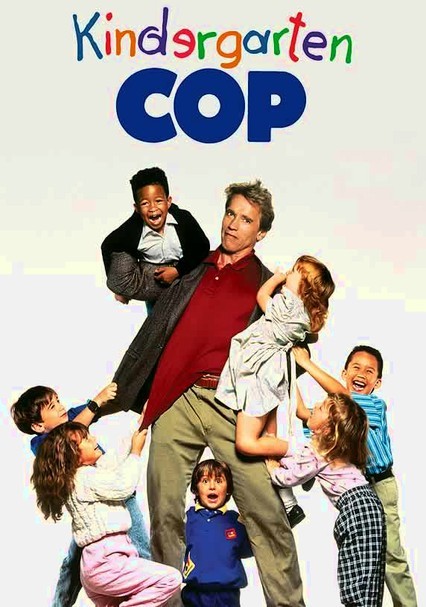
From Jack Lemmon and Tony Curtis donning women’s clothing in Some Like It Hot (1959) to Michael Keaton in Mr. Mom (1983) to Arnold Schwarzenegger in Kindergarten Cop (1995), there is a pattern to follow.

And those are just the decent films.

In 2005, the sexy Vin Diesel was one of Hollywood’s highest-grossing leading men, churning out hits like Boiler Room (2000) and The Fast and the Furious (2001) to rabid audiences.

Known primarily for his action films, the muscular star had the bright idea to domesticate himself and put himself in a situation where he would comically change baby diapers or vacuum a living room.

Unfortunately, The Pacifier is juvenile in nearly every way, with canned gags and predictability for miles. Diesel is terrific to look at, but he isn’t the best actor in the world, which undermines the film’s credibility.

Despite cliché after cliché and ridiculous situations, the film will occasionally elicit a chuckle or two from anyone brave enough to watch it.

That’s mostly because Diesel is willing to emerge in one scene covered in shit. But don’t expect much more from The Pacifier.

Shane Wolfe (Diesel) is an elite Navy SEAL with muscles and charisma for miles. He is the type of man who would run into a fire and save a baby or swim out to sea to save a drowning child.

One day, he makes a grave error in judgment when he fails to keep scientist Howard Plummer (Tate Donovan) safe from assassination, and the man is killed.

Riddled with guilt, he is assigned to protect Plummer’s five children when the mother, played by Faith Ford, needs to leave the country temporarily. The kids include rebellious Zoe (Brittany Snow), Seth (Max Thieriot), and clingy Lulu (Morgan York).

The kid’s pet duck is along for the ride, pushing the seasoned veteran to his breaking point.

Predictably, when Shane is not busy tending to the kids, there is a secret project contained somewhere in the household that he must uncover.

Of course, a film like The Pacifier requires some romance, so the inclusion of Principal Claire Fletcher (Lauren Graham) is for the sole purpose of having someone for Shane to fall in love with.

There is not great chemistry between Diesel and Graham, so I wasn’t invested in them. The casting of the children is so one-dimensional with standard characteristics that it would be easy to laugh at.

I chose not to do this but rather strove to find something enjoyable in The Pacifier.

It’s a cute film, but it’s so mainstream, dull, and generic that it deserves the bland grade of C I am awarding it.

Diesel is the only appealing factor to The Pacifier.

Why make the bad guys as stereotypical as possible? They are North Korean, and the ‘twist’ that Shane’s boss is in cahoots with them is as surprising as realizing the two-week-old Chinese leftovers in the fridge have gone bad.

The film makes a small comparison to the superior The Sound of Music (1965), which the filmmakers must have realized, as they incorporate it into the story. The kids that Shane is in charge of are behaving badly and attempting to play a practical joke on him.

In the end, there is a chase sequence, a reveal, peril, and a happy ending in more or less that order.

The Pacifier (2005) is a Disney film, so there is a safe, family-friendly vibe throughout. It marginally entertains largely on the strength of Diesel.

He is sexy and macho, and has enough charisma to make you forget the bevy of standard gags and silly situations he and the audience must endure.

The 40-Year-Old Virgin-2005

The 40-Year-Old Virgin-2005

Director Judd Apatow

Starring Steve Carell

Scott’s Review #1,214

Reviewed December 31, 2021

Grade: B-

I am not a fan of director/producer Judd Apatow.

His brand of silly comedy that includes objectification of women, homophobic language, and plain old unfunny attempts at slapstick comedy doesn’t go very far or sit particularly well with me.

His directorial debut is The 40-Year-Old Virgin (2005), which has a fresh feel and would ultimately lead to less worthy efforts like Knocked Up (2007) and This Is 40 (2012).

Admittedly, the title alone had me and many others brimming with curiosity.

The freshness is mostly due to the leading actor, Steve Carell, in a role that would propel him to film stardom and to much better roles in the future.

So, I guess The 40-Year-Old Virgin deserves credit for that.

Typically, in Apatow’s films, the female characters are written as uptight, shrewish, and bitchy, whereas the male characters are goofy and fun-loving. The audience is supposed to root for the men and dislike the women.

The 40-Year-Old Virgin is no exception.

Still, the film does have a sweet-natured and innocent feeling amid the stereotypes, potty jokes, and obscenity that lie within. We root for the underdog to succeed in life and champion his plight despite it being a carnal and sexual one.

Andy Stitzer (Carell) is a tender yet socially inept man who works a lowly job at a big-box store. Single and living alone, 40-year-old Andy whiles away the days playing video games and admiring his action-figure collection. He is your classic, lovable nerd.

He harbors an embarrassing secret.

Despite his age, Andy has never engaged in sex, so his friends, including his closest friend David (Paul Rudd), encourage Andy to lose his virginity.

While trying to overcome his awkwardness around female customers, Andy meets a local shop owner, Trish (Catherine Keener), and they begin an early romance.

With any Apatow film, the rest is highly predictable, and the blueprint is formulaic and easy to figure out.

Andy will face humiliation due to his predicament and the bumbling yet well-intentioned behavior of David and his other friend, Cal, played by Seth Rogen.

He will inevitably have awkward encounters with a few other female characters, in this case, the aggressive Beth, played by Elizabeth Banks, before finding love with the ‘good girl’ Trish.

They will ride off into the sunset to live happily ever after. Spoiler alert- they have sex!

The best, and arguably only good part of The 40-Year-Old Virgin is Carell’s Andy. The character brings a warmth and a vulnerability that causes the audience to sympathize with his plight.

While the majority of the viewers will not relate to being a virgin at his age, they can at least relate to having an embarrassing issue to deal with.

I am glad that this film led to meatier roles for Carell. Foxcatcher (2014) and his storied role as Michael Scott in television’s The Office (2005-2013) immediately spring to mind.

Keener, mostly known for her dramatic rather than comedic roles, is decent as the main love interest, Trish.

She, like Andy, is a rootable character, though we don’t know too much about her. She is fond of Andy, so we like her and hope she takes Andy’s cherry.

The rest of The 40-Year-Old Virgin is riddled with standard comic setups and situations.

When Andy slips and reveals his virginity, by the next day, his entire store knows his secret. From there, the insulting additions of a transvestite prostitute and a weird speed dating situation arise.

We know all along that Trish is the girl he will be with.

Apatow unwisely gives his film an interminable two-hour and thirteen-minute running time, which feels too long for a situation comedy.

One hour and thirty minutes would have been ideal. The 40-Year-Old Virgin (2005) is not the worst offender in the Apatow collection, but it offers no surprises or attempts at diversity.

It’s a perfect example of a tried and true adult sex romp with, thankfully, a likable central character.

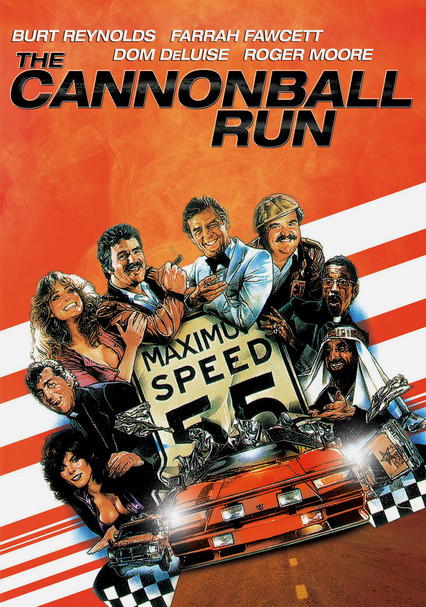
The Cannonball Run-1981

The Cannonball Run-1981

Director Hal Needham

Starring Burt Reynolds, Roger Moore, Farrah Fawcett

Scott’s Review #1,204

Reviewed December 4, 2021

Grade: B-

The Cannonball Run (1981) is someone’s idea of collecting big film and television stars of the time and throwing them into a film with a pointless plot about cross-country road racing.

Truth be told, it’s a pretty bad film.

But it’s a fun way to spend 90 minutes seeing a multitude of celebrities in both cameos and leading roles. Otherwise, The Cannonball Run should be skipped.

Taking a glance at the list of players, we have Burt Reynolds, Farrah Fawcett, Roger Moore, Sammy Davis Jr., Dom DeLuise, Peter Fonda, Dean Martin, Jamie Farr, Jackie Chan, Bert Convy, and Terry Bradshaw.

Hopefully, the actors had a good time making the film.

The acting is not stellar, and one wonders if many of the cast phoned it in or even read much of the script. The out-takes look like everyone was having one grand old time.  And whether some were even sober during the shooting is debatable.

The film is loosely based on the 1979 running of an actual cross-country outlaw road race in the United States, beginning in Connecticut and ending in California.

It was one of 1981’s most successful films at the box office, which is a scary realization. It was followed by two forgettable sequels- Cannonball Run II (1984) and Speed Zone (1989).

Feeling very thrown together, director Hal Needham is most known for collaborations with Burt Reynolds involving cars and car chases, so the plot, if one wants to call it that, is right up his alley.

Race teams gather in Connecticut to start a cross-country car race. One at a time, teams drive up to the starters’ stand, punch a time card to record their departure time, and then take off.

The reward for the winner is one million dollars. A representative of the “Safety Enforcement Unit” tries to stop the race due to its environmental impact and safety concerns.

Various teams are shown either evading law enforcement, most of which deal with talking their way out of a possible ticket, or concocting crazy schemes to outmaneuver their opponents.

The winner of the race is rather unimportant.

It’s all silly and not to be taken seriously. There are plenty of stereotypes, like Jamie Farr’s Middle-Eastern wealthy sheik driving a Rolls-Royce and the inevitable scantily clad females in tight wear.

Despite The Cannonball Run being riddled with enough negative aspects to make me hate the film, it’s kind of fun.

The bevy of different vehicles, like an ambulance, an Aston Martin DB5 (driven by Moore’s James Bond, imitating the character, of course), a Ferrari, and a Chevrolet Malibu, are all entertaining.

There is no character development, nor are there any characters with any depth, so the only reason to see the film is for the speedy cars and the competition.

And to see which celebrity will appear next.

A slapstick film that makes even the similarly penned Smokey and the Bandit (1977) seem like high art, The Cannonball Run (1981) is a must-see only for genre fans or those who are willing to watch and perhaps even be entertained by any movie.

I haven’t seen the film in eons, but I can imagine it’s a film only meant for its time and now would feel incredibly dated.

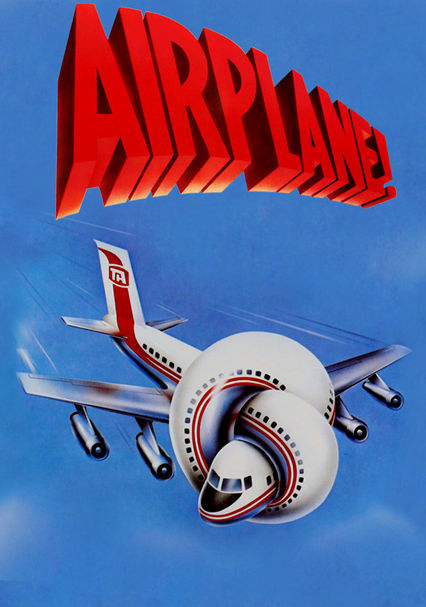
Airplane!-1980

Airplane! -1980

Director Jim Abrahams, David Zucker, Jerry Zucker

Starring Robert Hays, Julie Hagerty

Scott’s Review #1,087

Reviewed December 2, 2020

Grade: A-

Airplane! (1980) is a landmark film in the spoof genre, leading the pack in the decade of silly (the 1980s), where films of this ilk and dumb comedies, in general, became a dime a dozen, oversaturating the market.

While the film is unabashedly brainless with gags for miles, the jokes work, and the tasteless brand of humor provides plenty of belly laughs.

Better yet, Airplane! never ages, holding up incredibly well long after its initial release. It’s just perfect for a Saturday late-night watch, or when one needs cheering.

It’s in my Top 10 comedies.

When it was originally released, the timing was perfect to spoof the aging world of disaster films. I refuse to believe that Jim Abraham and the Zucker brothers had malcontent on their minds since they created a friendly and benevolent yarn that’s well-timed.

Good comedy is tough to find, but this film gets it right. The monotone dialogue said with a straight face is what makes the hysterics genuine and palpable.

Not unfairly, it is to say that Airplane! is to disaster films what Mary Hartman, Mary Hartman was to daytime soap operas. A celebration and a clever wink to each, infusing much-needed light-hearted appreciation.

It’s fun to re-watch Airport (1970) and Airport ’75 with fresh eyes and a new perspective in parallel to this film.

Ted Striker (Robert Hays) is an ex-fighter pilot traumatized by the war, now working as a taxi driver. He is terrified of flying despite his previous occupation.

His girlfriend, Elaine (Julie Haggerty), conveniently a flight attendant, dumps him just before her flight from Los Angeles to Chicago.

Naturally, Ted throws caution to the wind and boards the flight in hopes of reconciling.

When several of the passengers and flight crew succumb to food poisoning, an inflatable named Otto must steer the plane toward Chicago.

The crew convinces Ted to muster up the courage to safely land the plane because Otto cannot do it, and subsequently conquer his fear of flying. A perilous yet comical landing ensues, and Ted and Elaine happily reunite.

The plot is a direct steal from Airport ’75 when poor Karen Black’s flight attendant character is famously instructed how to land the aircraft. Until, in a sexist fashion, the men arrive to take control, sending her back to serve coffee. This is intentional and spot-on to show the ridiculous nature of that plot point.

The gags are legendary, the “Surely you can’t be serious”, “I am serious…and don’t call me Shirley” exchange is the most famous one, always providing a laugh.

The effortless dialogue, as inane as it is, somehow works exceptionally well and combines brilliantly with the pacing and delivery.

It’s like a long and wonderful episode of television’s Saturday Night Live.

The chemistry between Ted and Elaine is very strong, making the audience root for their eventual reconciliation, though it’s obvious they will ride off into the proverbial sunset together.

Actors Hays and Hagerty deserve tremendous praise for aligning the characters so well. Also of note are the efforts of Leslie Nielsen and Peter Graves as Doctor Rumack and Captain Oveur, respectively.

Nielsen would subsequently become famous for spoof films, none of them as good as Airplane!

I’ll never profess to be a slapstick person, but Airplane! (1980) is one that I embrace, undoubtedly because of my love for disaster films and fondness for airplanes.

It is advisable to sit back, relax, and enjoy the zany ride that this satirical and very funny film offers.

21 Jump Street-2012

21 Jump Street-2012

Director Phil Lord, Chris Miller

Starring Channing Tatum, Jonah Hill

Scott’s Review #992

Reviewed February 20, 2020

Grade: C+

21 Jump Street (2012) is a nostalgic ode to the general style of the 1980s, more specifically a popular television series that ran from 1987 to 1991.

The teen police drama launched the successful career of actor Johnny Depp.

He starred as the good-looking leader of a team of young police officers who can pass for high school students, and infiltrate potential drug rings, prostitution circles, or other such shenanigans.

The film is hardly high art nor cinematic genius. The gags are silly and trite, other times not funny at all. But the film contains a freshness that feels cool, sleek, and fun and a throwback to the decade of materialism, and the film never apologizes for this.

The combination of stars Jonah Hill and Channing Tatum have nice chemistry, turning a standard buddy film into something bearable to watch.

The film is formulaic, but not dull.

The filmmakers strive for an action-comedy hybrid even though the series was only conventional drama and taught a lesson with each episode. They also change course and focus on two characters instead of a group making it more of a guy movie.

Honor roll student Morton Schmidt (Jonah Hill) and popular underachieving jock Greg Jenko (Channing Tatum) reunite seven years after graduating high school at the police academy where they are studying to be cops.

Eager to leave their juvenile problems, and their dislike for each other behind, they use their youthful appearances to go undercover at a local high school as part of a Jump Street unit.

As they trade in their guns and badges for books and bagged lunches, Schmidt and Jenko risk their lives to investigate a violent and dangerous drug ring.

They slowly realize that high school is nothing like they left it just a few years earlier, and they revisit the terror and anxiety of being a teenager again and all the issues they assumed they had left behind.

The film is mediocre and while there is nothing wrong with the film, nothing is outstanding about it either. As the setup poises the audience, Morton and Greg are opposites in every way and must come together to achieve a common goal.

This is a standard cliche told countless times in films such as Stir Crazy (1983) and 48 Hours (1982), the reference being one of the 1980s.

Speaking of the decade of excess, 21 Jump Street achieves what it sets out to in this regard with a clever nod to a revived scheme from that decade.

Set in present times, the film is nonetheless a nod to teen films of the day.

Wild comedy and lavish adventures are in order in every high school situation imaginable. Dating, AP chemistry class, and the senior prom are heavily promoted so that any viewer above the age of twenty-five can reminisce.

A fun and necessary quality is the inclusion of a few of the original cast of the television series-Holly Robinson Peete, Peter DeLuise, and Johnny Depp all appear in cameo roles. This is a treat for fans of the original series and a tribute to its creation, though nothing else is utilized very well and no other history ever quite measures up.

Robinson Peete’s role is nice because she appears as a police officer.

While doing little to honor the television series it is based on, instead of churning out more of a male cop film, the incorporation of the original cast does deserve praise.

The lead actors are charismatic and clever in their roles which saves the film from being a disaster.

21 Jump Street (2012) kvetches too far into slapstick instead of sending an important message to its audience, which it could have.

The box-office hit was followed in 2014 by an unnecessary remake, aptly entitled 22 Jump Street.

Elf-2003

Elf-2003

Director Jon Favreau

Starring Will Ferrell

Scott’s Review #846

Reviewed December 20, 2018

Grade: B-

Elf (2003) is one of the few lasting Christmas hits of recent memory, or at least one that many fans make a regular part of their holiday viewing each season.

The film is light and unarguably a safe, feel-good experience, mixing a hopeful Christmas message with comic gags and romance.

The key to its success is Will Ferrell, who possesses wonderful comic timing.

More wholesome than my tastes and lacking plausibility, the film does succeed as a family-friendly, ready-made, fun experience.

The story revolves around one of Santa’s elves (Ferrell) named Buddy, who learns he is human and was orphaned as an infant.

Revealed that his biological father Walter (James Caan) resides in New York City, Buddy embarks on a trip to find the man and spread Christmas cheer in a world filled with grizzled and cynical human beings.

In predictable comic form, Buddy has trouble adjusting to the human world and its fast-paced lifestyle, with misunderstandings recurring.

Buddy eventually wins over his father and family, finding love with downtrodden Jovie (Zooey Deschanel).

Hot on the heels of his Saturday Night Live stint ending in 2002, Ferrell was primed to embark on a successful film career. Elf is a great role for him as it capitalizes on his comic timing and energy, and the setup works.

At 6’3″, who better to play an elf for laughs than a hulking middle-aged man?

Due to his talents, Ferrell makes the role of Buddy fun, appealing, and the highlight of the film. With a lesser talent, the character would have been too annoying (as it is, there are too many hug jokes), and the overall film would have suffered.

Aside from Ferrell, the supporting roles are nothing memorable, except for Caan’s part.

The once-dashing star of films such as The Godfather (1972), Caan still has the charm and charisma to appeal, though his balding and dyed hair do nothing for him.

A small role by television star Bob Newhart as Papa Elf is fine, but Deschanel’s role and Mary Steenburgen’s role as Emily, Walter’s wife, could have been played by many actresses, and nothing is distinguishable about either part.

Lesser roles like Walter’s secretary, Walter’s boss, and Gimble’s store manager are stock parts with no character development.

A major highlight is the New York City setting, and the exterior scenes are plentiful.

Filmed in 2002 and released in 2003, the location shots were completed not long after 9/11, and showcasing a city with such recent decimation adds to the film’s appeal.

Scenes in Rockefeller Center, Central Park, and the Empire State Building are prominently featured, making the film festive and merry.

What greater city is there at Christmastime than New York?

Elf remains an entertaining experience with enough shiny ornaments and fun moments in the department store and Walter’s office to hold interest. The luster wears thin at the conclusion as all the traditional elements come together.

Jovie leads a chorus of strangers in “Santa Claus Is Coming to Town”, Walter quits his job without concern for paying bills, and everyone happily rides off into a sparkling winter wonderland.

This may satisfy some, but I wanted more conflict than a troupe of Central Park Rangers chasing Santa through the park.

A film that might be paired nicely with holiday favorites of similar ilk, such as National Lampoon’s Christmas Vacation (1989) or Christmas with the Kranks (2004), Elf is an energetic affair with a charismatic lead actor.

Containing silly moments but a spirited and worthwhile message nestled nicely within, the film is worth a watch if you’re in the mood for slapstick.

More thought-provoking holiday films with deeper merriment and stronger flair exist, but for a chuckle or two, Elf (2003) works well.

It Happened One Night-1934

It Happened One Night-1934

Director Frank Capra

Starring Clark Gable, Claudette Colbert

Scott’s Review #824

Reviewed October 25, 2018

Grade: A-

Perhaps the film that best defines the early cinematic romantic comedy and certainly the one most modern genre films can learn from, It Happened One Night (1934) is a lively, fun romp.

The film carted away the Best Picture, Best Director, Best Actor, and Best Actress Academy Awards, a rare feat, and defined what romantic tension and thoughtful dialogue should be in a quality picture. All the elements sparkle into an excellent classic film watch.

Ellie Andrews (Colbert) is a pampered socialite who recently disobeyed her overbearing and wealthy father by eloping with a blue-collar pilot who is feared to be after her money.

Determined, Ellie escapes her father’s clutches and hops on a Greyhound bus headed from Florida to New York, where her husband is. When she crosses paths with an out-of-work journalist, Peter Warne (Gable), they each find an opportunity to use the other to their advantage.

The pair’s adventures along the East Coast lead to antics and schemes as they fall madly in love with one another.

It Happened One Night successfully mixes a good romance with some screwball comedy without ever becoming silly or trite.

The film also serves as a good old-fashioned adventure story as Peter and Ellie face one hurdle after another on their trek north.

Pleasing is how the duo slowly finds romance but first begins as irritants towards each other. The chemistry between the actors is superb and never seems forced or contrived.

Frank Capra, a famous director with successes throughout the 1930s, culminating with the holiday favorite It’s a Wonderful Life (1946), had several Oscar-winning films during the decade.

It Happened One Night seems to have inspired most of them, and the acting, absurd situations, dialogue, and direction all successfully come together.

Shot in black and white and the Motion Picture Production Code, which heavily restricted details deemed too violent or sexual, It Happened One Night pushed the envelope quite a bit.

This is to the film’s credit- who can forget the adorable yet provocative scene in which Ellie shows her shapely legs to enable the duo to catch a ride? The lovable scene, non-risque in today’s modern world, was anything but in 1934.

An interesting, at that time unique, point is that supporting characters are more layered than is typical in romantic comedies. Danker, whom Peter and Ellie hitch a ride with, is seemingly a decent man but ultimately attempts to steal their luggage.

Later, Ellie’s preposterous father turns out to be a decent man, so the film also contains a few character surprises.

While not quite a pure masterpiece, It Happened One Night (1934) is nonetheless an inspired legendary film that can be viewed and enjoyed for the period in which it was made.

The film stands out among the similarly themed romantic comedies of the 1930s and 1940s and is a teachable moment for all filmmakers who explore the same genre territory.

Oscar Nominations: 5 wins– Outstanding Production (won), Best Director (won), Best Actor-Clark Gable (won), Best Actress-Claudette Colbert (won), Best Adaptation (won)

American Pie-1999

American Pie-1999

Director Paul Weitz

Starring Jason Biggs, Eddie Kaye Thomas, Chris Klein

Scott’s Review #813

Reviewed September 23, 2018

Grade: B+

With each generation of film, there seems to be a gross-out comedy that speaks to a young, coming-of-age generation, mostly male and jock in persuasion.

American Pie (1999) finishes the 1990s strongly with a raunchy story that feels fresh and genuinely funny, with precarious situations facing the cast, specifically the protagonist and “everyman”, played by Jason Biggs.

The film is a teen sex comedy of the crudest nature yet engulfed with characters audiences like, not mean-spirited, but rather fun-loving and endearing.

An enormous box-office hit at the time, the film was all the rage and brought a tawdry new meaning to the Americana staples of apple pie and band camp.

Spawning several sequels over the next decade, the franchise successfully revived the teen comedy genre with strong, highly recognizable characters.

American Pie also brought back the fun to R-rated films and put a nice cherry on top of a creative decade in cinema. The film is not high art, but it does what it aims to do quite well.

Living a middle to upper-middle-class existence in the suburban USA (presumably Michigan), five high school seniors make a pact to lose their virginity by the time they graduate. Most of the group are nerdy, insecure, and sexually naive, the central character being Jim Levenstein (Biggs).

Most events are taken from his point of view, and he is continually advised by his very nerdy father, Noah (Eugene Levy).

The setup is an age-old premise with lots of room for jokes and precarious situations in hilarious form. As Jim has the hots for a sexy foreign exchange student, Nadia, she is out of his league.

In a hilarious scene, a “warm apple pie” incident leads to an attempt to set up a webcam to watch Nadia change clothes. When events go amiss, everyone gains access to the webcam link, and Nadia is sent back to Czechoslovakia in shame.

This leads to a new pursuit for Jim, a geeky band camp girl, Michelle (Alyson Hannigan). Surprisingly, they fall madly in love and have fantastic chemistry.

Some of the supporting characters add energy and sometimes hilarity. Jennifer Coolidge is great as the mother of Stifler (the jock of the group), who has eyes for younger men, specifically Finch.

As they finally consummate their relationship on a basement pool table, Stifler walks in at the worst time and faints in horror. These antics are genuine and fresh, with great acting by all principals.

Coolidge, Hannigan, and Levy are arguably the best secondary characters. Each, in a different way from the others, provides comic relief by crafting interesting nuances to the characters.

Levy, as Jim’s father, is well-meaning, yet bumbling. Every teen cringes at the thought of having a father like Noah, yet the pair share a close bond and a classic father-son relationship, making the character endearing.

American Pie was successful at coining new pop-culture phrases such as “warm apple pie, “milf” and “this one time in band camp…” that the young generation of the time (myself included) enjoyed giggling over and repeating in glee.

The film set the tone for similar genre films, but none of them matched the chemistry and charm of American Pie, and it was better than it ever should have been!

The turn-of-the-century version of Animal House, American Pie (1999), introduces a new generation of young people into the world of comedic, R-rated, raunchy fun. The numbers have churned out films like this, but rarely are any as authentic as this film feels.

The franchise sustained its popularity with well-written sequels, most notably American Pie 2 (2001), which further developed the storylines. Still, the original remains a fine blueprint for what good comedy can achieve.

White Chicks-2004

White Chicks-2004

Director Keenen Ivory Wayans

Starring Shawn Wayans, Marlon Wayans

Scott’s Review #647

Reviewed May 29, 2017

Grade: D

Anything but high art, though at the time of release (2004), it seemed like a clever yet silly slapstick farce, White Chicks was a film I found rather enjoyable.

Watching the film in 2017, however, some thirteen years later, it feels dated beyond belief and as dumb as can be.

The film also contains Paris Hilton’s gimmick characters and racial overtones that were lost on me when I first saw the film.

Influenced by the drag comedy (and classic) from 1959, Some Like It Hot, the premise sounds interesting and comical.

Kevin and Marcus Copeland (played by the comical Wayans brothers) are a pair of black,  masculine, F.B.I. agents who bungle an undercover investigation and are given one last chance to redeem themselves before being booted from the bureau for good.

They are assigned the task of protecting the mega-rich cruise-line heiresses, Brittany and Tiffany Wilson, who are in town (at the Hamptons) from a planned kidnapping plot over Labor Day weekend.

Kevin and Marcus don blonde wigs, and freakish makeup, and awkwardly pose as the Wilson sisters to save their jobs.

As the story goes on, Kevin and Marcus (as Brittany and Tiffany) develop relationships with various characters, including millionaire Latrell Spencer (Terry Crews), who takes an interest in Marcus (thinking he is Tiffany, and white).

Other antics unfold as the “girls” try their best to form friendships with the heiress’s snotty friends while attempting to foil the kidnapping plot.

Similarities to the classic Wilder hit, Some Like It Hot, are tough not to notice, and director Keenen Ivory Wayans is smart to borrow from a film considered one of the greatest comedies of all time.

Just as Joe and Jerry (Tony Curtis and Jack Lemmon) go on the lam to escape mafia figures out of desperation, Kevin and Marcus are desperate to keep their jobs, causing both sets of “impersonators” to suffer from dire circumstances.

Also worth mentioning are similar conclusions in both films: love interest Osgood Fielding III, also a millionaire, as is Spencer in White Chicks; each is not fazed by the “big reveal” as the men are de-masked as actually being men.

Clever in 2004, the incorporation of celebrity Paris Hilton in 2017 now seems dated and of the past.

In real life, being a hotel heiress, characters Brittany and Tiffany (cruise line heiresses) mirror Hilton as spoiled, self-centered, and oblivious to everyone around them.

The aspect was a good idea at the time of the release of the film, but now it is irrelevant, not even as a nostalgia gag- perhaps in the year 2037, White Chicks might be appreciated more, but I would not hold my breath.

The overall tone of White Chicks is also fraught with silliness and with one gag after another. Rather than being believable as females, the Wayans brothers look downright frightening and robotic as Brittany and Tiffany.

In comedies, suspension of disbelief is required, but the producers should have done a bit more to feminize the characters instead of playing them as goofs.

The ending of the film is no-frills and formulaic, with no real twist or surprise ending to speak of.

The ridiculous misunderstandings involving Kevin and Marcus’s real significant others, who foolishly believe the men are having affairs with other women, seem forced and amateurish.

Predictably, when the men profess their love for the girls earnestly, they fall for it hook, line, and sinker, and the film wraps in disappointing, standard fashion.

Cute and fresh at the time, White Chicks (2004) now feels stale and tired, with racial overtones that were deemed amusing back in the day but now seem mean-spirited and unnecessary.

The film is an attempt at recreating a classic comedy for a younger audience. Still, I would recommend seeing the original Some Like It Hot (1959) instead- it is much more enjoyable.

The Hangover-2009

The Hangover-2009

Director Todd Phillips

Starring Bradley Cooper, Ed Helms, Zach Galifianakis

Scott’s Review #590

Reviewed January 7, 2017

Grade: B+

It was not my idea to see this particular film- the raunchy, mindless “guy” films have always seemed lackluster and cheesy to me. Still, I confess to finding The Hangover (2009) a novel and entertaining summer blockbuster film.

I did not expect much from this film but instead found it comical and fun.

It has the “dumb frat boy/jock” shenanigans, and not much thought is needed, but it is good old boy entertainment.

Similar to the American Pie films of the 1990s, in which a group of guys finds themselves mixed up in amusing, and sometimes humiliating, situations after a night of boozing, The Hangover has a likable cast led by then-up-and-coming star Bradley Cooper.

What sets The Hangover apart is the great chemistry among the cast (Ed Helms and Zach Galifianakis, specifically) that other flaws or generic writing can be overlooked or forgotten altogether.

The group goes from one hysterical situation to another.

Set in Las Vegas (a great decision), three men awake to find the groom missing after a night of debauchery- they are there to celebrate via a wild bachelor party.

In their hotel room are a tiger and a six-month-old baby, and they have no idea how either has gotten there.

From this point, the film goes back to the arrival of the gang and the events that transpired leading up to the hotel room acquisitions.

This is fun and keeps the audience engaged in the hijinks.

The Hangover (2009) was followed by the inevitable two sequels, neither of which was as good or as successful at the box office, to the surprise of nobody except maybe movie studio executives.

That’s My Boy-2012

That’s My Boy-2012

Director Sean Anders

Starring Adam Sandler, Andy Samberg

Scott’s Review #423

70220030

Reviewed June 19, 2016

Grade: D

That’s My Boy (2012) is such an incredibly bad film yet there is something that strangely kept my attention.

With oodles of stereotypes and either sexist, homophobic, or racist jokes throughout the film, it should have made me angry, but somehow it did not.

This movie was so completely over the top that it could not possibly be taken too seriously.

One laughable aspect that I did enjoy was the, albeit odd, cameos by Vanilla Ice and Todd Bridges who seem to have no problem degrading themselves, and the references to the 1980s.

Otherwise, That’s My Boy is pretty rock bottom for filmmaking.

This is not a knock on the dumb comedy genre as other recent similar types of films are well written (like This is 40-2011).

But, alas, That’s My Boy (2012) is not one of those films and will not go down in history as such.

True to form, the ending was predictable and uninteresting.

Caddyshack-1980

Caddyshack-1980

Director Harold Ramis

Starring Chevy Chase, Rodney Dangerfield

Scott’s Review #353

343044

Reviewed January 9, 2016

Grade: A

Caddyshack is one of the funniest slapstick comedies of the 1980s, arguably the decade of “mindless comedy”.

Made in 1980, the cusp of the decade, it led the pack during a time when, one after another, comedy films were churned out in a cookie-cutter style, based largely on the success of Caddyshack.

While not every aspect of the film works, the parts that do are hysterical, and its influence on film history is unquestionable.

More than merely a “dumb comedy”, Caddyshack features funnymen of the day (Bill Murray, Chevy Chase, and Rodney Dangerfield), and the talent and timing are good.

Clean-cut teenager Danny Noonan works as a caddy at a posh resort named Bushwood Country Club. An “underachiever”, he lacks direction in life while being pressured by his parents to attend college.

While spending the summer at work pondering his future, high jinks ensue as a rivalry develops between the club co-founder, Judge Smails (Ted Knight), and the outrageous Al Czervik (Rodney Dangerfield), who is a nouveau riche real estate developer.

Meanwhile, bordering on psychotic, Bill Murray as groundskeeper Carl Spackler is engrossed in his feud with a gopher running rampant on the golf course.

Mixed in with all of this are the standard teen romance themes, bathroom gags, and sexual jokes.

Caddyshack is not high art, nor does it need to, or intend to be. It is simply pure juvenile fun. It is not even that well written, but it works. The portions that work so well do not even involve the caddies who were originally set to be the focal point of the film.

Rather, the real scene-stealers are the two oldest members of the cast- Rodney Dangerfield and Ted Knight. The bickering and barbs traded between the two characters are delicious and downright funny.

When Al mocks Smail’s hat, or dances with his snobbish wife, or crashes into his new boat, each scene is rich with goofy comic timing.

Without a doubt, my favorite scene is the “doody” scene in the resort pool. It is laugh-out-loud raucous, as a candy bar tossed into the water is mistaken for something else.

The star of this scene is Lois Kibbee, who plays Judge Smail’s wife.

Her comic mannerisms and upper-crust looks make her a perfect choice for the role, and she arguably steals the show in her limited appearances.

When Al jokes that she must have been something before electricity, her facial expressions perfectly emit comic horror.

There are points of the film that really are unnecessary and do not work well- I have never understood Bill Murray’s character, Carl. Bordering on silly, with a stuffed animal as the gopher, Murray himself is fantastic- improvising, but the role does not seem necessary to the rest of the film.

More scenes between the Judge and Al, or more from Chevy Chase’s character, Ty, and the Judge’s wife, would have been preferable.

Also, the attempted teen triangle between Danny, Maggie, and Lacey is dullsville- plain Maggie cannot compete with gorgeous and slutty Lacey.

These criticisms, however, are small gripes compared to the hilarity and perfect timing of the rest of the film, which is why it ranks among my favorites.

Caddyshack, along with Animal House, paved the way for the plethora of slapstick comedies to follow- a few good, most bad, but must be recognized as the influence that it was, and a must-see for fans of golf, sports, and good, clean fun.

The elements of Caddyshack (1980) come together and work so well.

Ace Ventura: Pet Detective-1994

Ace Ventura: Pet Detective-1994

Director Tom Shadyac

Starring Jim Carrey

Scott’s Review #106

215309

Reviewed July 12, 2014

Grade: D-

Ace Ventura: Pet Detective is a silly comedy from 1994 starring Jim Carrey as a goofy private investigator specializing in pet rescue.

He is fairly inept but is hired by the Miami Dolphins to find their stolen mascot.

The film is ridiculous on almost every level- bad clichés, bad acting, mostly by the football players, and a dumb plot.

The saving grace of the film is Jim Carrey, who defined the goofy, slapstick film star of the 1990s and, although over-the-top, is quite funny with his weird gestures and absurd mannerisms.

If the writing were only slightly better- think Dumb and Dumber (1994) or The Mask (1994), this film would have been almost enjoyable, but.

Still, it’s the definition of dumb fun, just a little too far, and sooner rather than later, it becomes convoluted and tedious.

A cameo appearance by Dan Marino, obviously a poor actor, just made this movie seem sad and desperate.

Sean Young is appealing as the villain.

Outrageous Fortune-1987

Outrageous Fortune-1987

Director Arthur Hiller

Starring Bette Midler, Shelley Long

Scott’s Review #85

836062

Reviewed July 2, 2014

Grade: D

Outrageous Fortune (1987) is one of many silly, plot-driven comedies from the late 1980s.

It stars huge comedic actresses of the time (Bette Midler and Shelley Long) as opposites, Midler-brash, Long-refined, who are acting students and in love with the same man (Peter Coyote).

Of course, they meet, hate each other, and then become friends. This sets off a series of misunderstandings and standard comedy fare.

It’s a female buddy movie. I must say that I did enjoy the chemistry between Long and Midler, as it is evident on screen.

Besides the chemistry, the only other positive is the New York City location scenes and the acting/theater workshop setting.

Whose idea was it for Midler to use a horrible, phony New York accent??

It was distracting throughout the entire film, which is not very good to begin with. Otherwise, this is a dud, completely plot-driven and predictable.

It has a pure 1980s comedy feel to it (by that I mean overdone hairstyles, bad music, and a silly plot).

Shelley Long is the highlight of this film as she is great at comedic timing, but, unfortunately, her film-starring career was short-lived.