Tag Archives: Ellen Corby

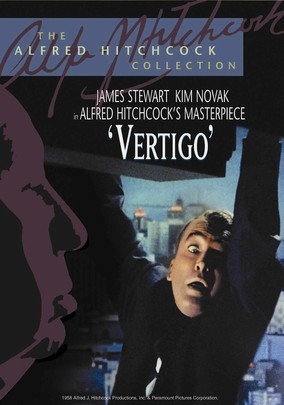
Vertigo-1958

Vertigo-1958

Director Alfred Hitchcock

Starring James Stewart, Kim Novak

Top 250 Films #1

Scott’s Review #151

1089727

Reviewed August 7, 2014

Grade: A

Over the years, Vertigo (1958) has quickly become one of my favorite Alfred Hitchcock films. With each repeated viewing, I learn, appreciate, or see something new.

It is an absolute masterpiece.

The primary appeal of Vertigo lies in its mystique and dream-like quality, which offer a beautiful cinematic experience. It is sometimes ominous, psychological, gloriously complex, and even confusing.

That is what makes it extraordinary.

Considering the time, the colorful opening visuals are dynamic, groundbreaking, and stunning.

The story involves a retired detective, Scottie, played by Hitchcock stalwart Jimmy Stewart. Scottie suffers from vertigo, which hinders his daily life.

After an incident in which a police officer is killed, and Scottie blames himself and his vertigo for causing the death, he whiles away the days brooding and keeping companionship with Midge, a college friend to whom he was once engaged.

One day, he is hired by another college friend to follow his wife, played tremendously by Kim Novak, who is acting strangely and periodically disappearing, obsessed with a painting of a woman from years past.

From this point, the plot twists and turns in a mysterious fashion, and a romantic, bizarre, and obsessive love story is intertwined.

Is Scottie in his right mind? Will his vertigo continue to haunt him? What is the secret to Madeleine and Judy? Is Midge as sweet as she appears?

The score to Vertigo is haunting and unforgettable, adding significantly to the film’s mood and ambiance.

Several location shots are featured in San Francisco, including the Golden Gate Bridge, steep streets, the Mission District, and the Redwood Forest.

As with all Hitchcock films, every set and detail is perfect, from paintbrushes, coffee mugs, curtains, and furniture to the gorgeous, bright red décor of the restaurant, which is heavily featured in the film.

How exquisite does Kim Novak look in the film??

Initially, it was critically panned upon its release, but it is now considered one of the greatest films. Its unique camera angles and slow, methodical pacing have influenced other films.

The film is not always an easy watch; it is complex, to be fair, but, like a fine wine, it improves with age.

Vertigo (1958) is a layered psychological thriller that gains more appreciation with each viewing.

Oscar Nominations: Best Sound, Best Art Direction

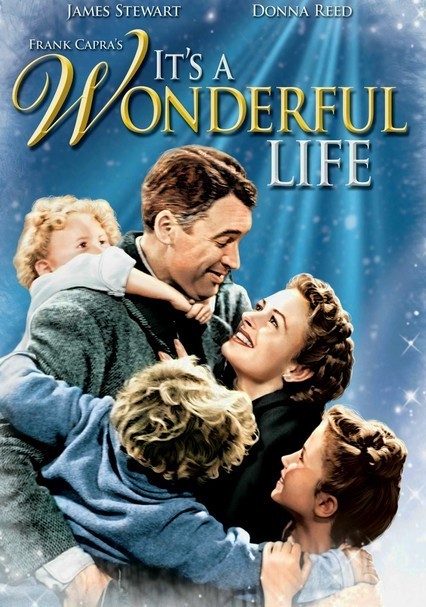
It’s a Wonderful Life-1946

It’s a Wonderful Life-1946

Director Frank Capra

Starring James Stewart, Donna Reed

Top 250 Films #219

Scott’s Review #863

Reviewed February 5, 2019

Grade: A-

A popular holiday tradition in many households eager to cozy up in front of the fire with an enduring and entertaining classic, It’s a Wonderful Life (1946) serves an essential purpose. It is the ultimate annual festivity passed down through generations.

While not one of my standards, I recognize the influence and the endearment the film offers and cannot fault its power to bring people together with its humanistic and sweet message.

James Stewart is perfectly cast as the wholesome and likable George Bailey. He strives to help all those in his small community who need help, often at the expense of his own well-being.

Depressed by the failure of his bank on Christmas Eve in 1945, in the snowy locale of Bedford Falls, New York, George is visited by a guardian angel named Clarence (Henry Travers), who teaches him what life will be like if he chooses the dire path of ending his own life.

Along with Stewart, Donna Reed as the wife, Mary Hatch Bailey, is cast exceptionally well and is the perfect counterpart to George.

Together, the actors immerse themselves in their roles, holding their heads high as the leaders of the sleepy little town they reside in, and set an example for the other townspeople with their kindness and thoughtfulness.

A sound “king and queen of the prom,” the duo radiates and elicits tears from audience members living vicariously through the couple.

A perfect companion piece to A Christmas Carol, perhaps the version from 1951, for similar periods, both spirited and teaching life lessons, is recommended.

Both are thematically similar in the visitation by a heavenly spirit and offering glimpses into the past, present, and future; the comparisons are endless, to say nothing of the Christmastime elements both possess.

Arguably, It’s a Wonderful Life is the most uplifting, both in good and bad ways. The lesson constantly voiced is that if one is good to others, one will be rewarded or at least have peace of mind.

This is not a bad lesson, which is the main reason for the film’s lasting appeal. Bad luck and financial hardship will inevitably affect everyone, but kindness is forever enduring.

It’s also worth mentioning the timing of the creation and release of It’s a Wonderful Life. As the United States, to say nothing of many European nations, struggled to pick up the pieces after the devastation of World War II, the picture was opportune to immerse itself in the lives of many people who needed a strong and uplifting message.

No wonder the film was popular when it was first released as the feel-good film of 1946.

The black-and-white cinematography does wonders to portray the film’s magical atmosphere. The high points are the cold and snowy bridge scenes.

Controversial years later was the colorization, and some would say the ruination, a decision that was met with anger by star Stewart, who went as far as testifying in court to voice his displeasure.

At the risk of being raked across the coals and deemed a “Scrooge”, portions of It’s a Wonderful Life are saccharin and manufactured in the utmost goodness, sometimes too good.

Admittedly, the characters of George, Mary, and their children come across as somewhat trite at times, as they seem to radiate only benevolent characteristics, never engaging in improper or impure actions. In a fantasy film, the overly humanistic approach can sometimes be a tad silly.

The same can be said for the angel, Clarence.

Nonetheless, films such as It’s a Wonderful Life (1946) serve their purpose in cinema history.

With a robust and heart-warming message, the positive vibes cannot be denied, and the warmth and emotion the film possesses radiate even the coldest hearts and the harshest of critics, willing to accept and be enraptured by the film’s staying power.

Oscar Nominations: Best Motion Picture, Best Director-Frank Capra, Best Actor-James Stewart, Best Sound Recording, Best Film Editing

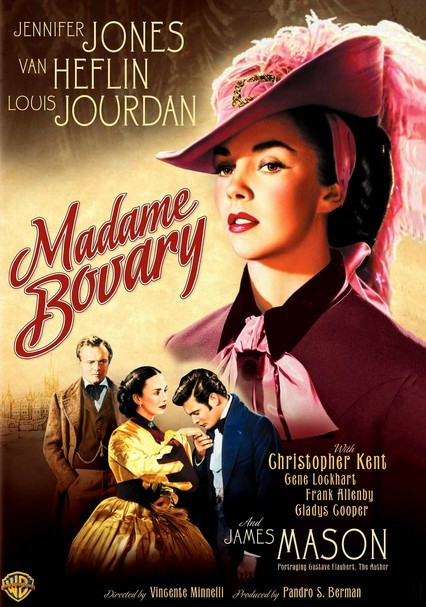
Madame Bovary-1949

Madame Bovary-1949

Director Vincente Minnelli

Starring Jennifer Jones, James Mason

Scott’s Review #930

Reviewed August 13, 2019

Grade: A-

Madame Bovary (1949) is a film adaptation of Gustave Flaubert’s famous novel. Remade a handful of times since this version, Jennifer Jones is cast in the lead role and does a fantastic job with a complicated part.

The title character is central to the controversial film, which will undoubtedly result in mixed opinions of her actions and motivations- whether she will be loved or loathed.

Director Minnelli mixes melodrama and glamour with pain and defeat in her story of one woman’s attempt at happiness.

Cleverly, the story is told within a story as the viewer is immediately amid a compelling and dramatic trial. Flaubert (James Mason) defends his novel depicting an adulterous woman (Jones) ruining the lives of men, deemed disgraceful to France and all womanhood.

He tells the story from his perspective and, through this, Madame Bovary’s perspective. She (Emma) marries a small-town country doctor, Charles Bovary (Van Heflin), and quickly grows disappointed with his lack of status.

Feeling trapped and unfulfilled, she embarks on failed romances with other men as she attempts to ascend the social ladder.

As with the novel, the theme is either understanding or abhorring Emma’s feelings and actions, or perhaps a mixture of both emotions.

Who would not forsake her for being true to her feelings and desiring her piece of the pie? Most women of her day were reduced to matronly statuses or asexual feelings, but Emma wanted satisfaction and life at the risk of her own family.

To counter these lustful feelings, she does not treat her husband very well, resenting his passivity and being disappointed at her daughter being a girl instead of her desired son.

She feels this would have allowed her better status, so her daughter is nearly shunned, preferring the affections of the housekeeper to her mother’s feeble attempts at love.

Is she Hellion or a sympathetic soul? Emma is one of the most complex of all female film characters.

Madame Bovary was written in 1949, and the novel was published earlier, so the progressive slant is rich and worthy of much admiration. The female perspective and the courage to reach for the stars and grasp life are spirited and wonderful to see, especially given the period.

A mixture of romantic drama and torrid affairs is at hand during this experience and always is the character’s center stage.

The film mixes Gone with the Wind (1939) remnants, especially the lavish dance hall sequence. The ball is the highlight, with gorgeous costumes, great cinematography, and bombastic dances.

As Emma cavorts with a dashing aristocrat, Rodolphe (Louis Jourdan), Charles gets drunk and makes a fool of himself, as her genuine disdain for her marriage becomes clear. The smashing windows with chairs moment is ahead of its time because of the effects used, and the constant dance twirls are dizzying.

So much importance occurs in this pivotal sequence.

While more than adequate, Jones would not have been my first choice for the role. Married to influential producer David O. Selznick, it was rumored that many of the actresses’ roles were given to her.

Delicious is to fantasize at what legends such as Bette Davis or Vivian Leigh might have brought to the character. Especially Leigh, given her dazzling performance as Scarlett O’Hara in Gone with the Wind, a follow-up as a similar and arguably more complex character is fun to imagine.

A film that allows for post-credits discussion is always positive, with Madame Bovary (1949) a lengthy analysis of a character begs deliberation.

Minnelli pours love and energy into a work dripping with nuances long before his famous musicals came to fruition. A strong and vital female character suffers a lonely and despairing fate, which is tragic and sad, but she lives her life with a zest that should empower us all.

Oscar Nominations: Best Art Direction-Set Decoration, Black-and-White

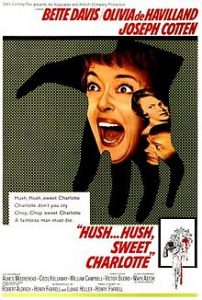
Hush…Hush, Sweet Charlotte-1964

Hush…Hush, Sweet Charlotte-1964

Director Robert Aldrich

Starring Bette Davis, Olivia de Havilland

Scott’s Review #632
Reviewed April 8, 2017

Grade: B+

The follow-up film, but not a direct sequel, to the surprise 1962 hit, What Ever Happened To Baby Jane? Hush…Hush, Sweet Charlotte (1964) is a psychological thriller directed by Robert Aldrich.

The film was intended to reunite Aldrich with stars Bette Davis and Joan Crawford. Crawford filmed several scenes, but the tension between the stars proved too much, and Crawford dropped out.

Olivia de Havilland took her place, and reportedly, the filmmakers scrambled to re-shoot the film nearly from scratch.

Shot in black and white, just like What Ever Happened To Baby Jane?, the film is very similar in style and tone, and, rather than Los Angeles as the setting, the setting is now the sprawling southern landscape of the deep south- Louisiana to be exact, a vast estate with a lavish mansion is the featured ominous setting.

The action begins in 1927 at a grand party at the well-to-do Hollis family mansion.

The night is fraught with tension, and secrets are harbored- most notably, southern belle Charlotte (Davis) and her married beau, John (Bruce Dern), plan to elope and steal away into the night together.

When John is threatened by Charlotte’s father, Sam (Victor Buono), he regrettably breaks up with Charlotte, destroying her. Later, John is decapitated and his hand severed, leaving all of the guests only to assume that Charlotte was murdered after she appears wearing a blood-soaked dress.

Due to a lack of evidence, Charlotte is set free.

The remainder of the film takes place during present times (1964) and in the same mansion, now slated to be demolished by the town in favor of a highway.

Charlotte is old and haggard, having lived a life of seclusion. Her father is long dead, and her only company is her dedicated and faithful housekeeper, Velma (Agnes Moorehead).

Frantic at the thought of leaving the safety of her estate, Charlotte asks her cousin Miriam (de Havilland) to visit. Events then become stranger and stranger as past secrets and jealousies are revealed.

Taking nothing away from the talents of Olivia de Havilland, I cannot help but imagine how much better Hush…Hush, Sweet Charlotte would have been if Joan Crawford had settled into the role of cousin Miriam.

The real-life rivalry between Crawford and Davis made What Ever Happened to Baby Jane? It is a compelling work, and the angry emotions are fresh and authentic.

Interestingly, the characters are reversed in this film—Davis plays the victimized Charlotte, while Crawford would have played the villainous Miriam, and the results would have been delicious.

The plot is decent, but nothing spectacular, and not nearly as splendid as What Ever Happened To Baby Jane? , although certain similarities abound between the two films: a giant mansion, black and white cinematography, a mentally unstable (or assumed to be) character, a character being either drugged or victimized, and two female characters who are related.

To compare the two films, which is impossible not to, What Ever Happened To Baby Jane? Wins in spades. It is the more compelling of the two films.

What sets Hush…Hush, Sweet Charlotte, well above mediocrity (with fewer actors, it may have been), is the casting of one of the greatest actresses to grace the big screen.

Bette Davis’s portrayal of the victimized Charlotte is fantastic. She encompasses vulnerability, anger, fear, and energy. Her facial expressions and those passionate eyes give so much to Charlotte.

The clever resolution to the film and the plot twist after the film is pretty well-written and surprising, given that the characters assumed to be involved in the murder are not as guilty as one might think, or at least not in the way one might think, and by the time the credits roll, the story has a satisfying, hopeful ending.

Another success of the film is its use of two gruesome scenes, which is surprising since the film predates the lifting of the film censorship rules.

When a severed head comes tumbling down the grand staircase of the mansion, it frightens and is not in the least campy or over-the-top. As John is hacked to death in the opening sequence, his hand is severed from his arm, and it dramatically tumbles to the floor.

The scenes resonate because they were rarely done in mainstream film as early as 1964.

Hush…Hush, Sweet Charlotte is a fantastic companion piece to the superior What Ever Happened To Baby Jane?

Watching back-to-back is a fantastic late-night viewing.

Successful to the film are top-notch talents such as de Havilland, Victor Buono, Bruce Dern, Agnes Moorehead, and the superior film queen, Bette Davis, which makes any film worth watching.

Oscar Nominations: Best Supporting Actress-Agnes Moorehead, Best Song-“Hush, Hush, Sweet Charlotte,” Best Music Score-Substantially Original, Best Art Direction, Black-and-White, Best Cinematography, Black-and-White, Best Costume Design, Black and White, Best Film Editing