Category Archives: World War II

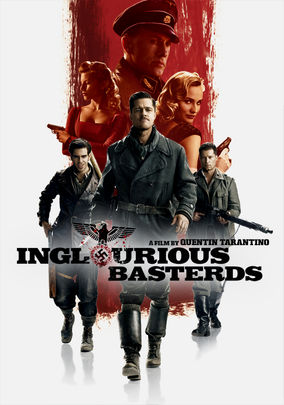
Inglourious Basterds-2009

Inglourious Basterds-2009

Director Quentin Tarantino

Starring Mélanie Laurent, Christoph Waltz, Brad Pitt

Top 250 Films #92

Scott’s Review #589
Reviewed January 7, 2017

Grade: A

Inglorious Basterds (2009) is simply a great movie.

Blending many film genres, it is hard to categorize, but that is because it is a Quentin Tarantino film, and that says it all.

The film as a whole contains excellent acting, is wonderfully shot, and is extremely detail-oriented, plus it has the familiar “Tarantino” style of music and sound, the chapter breakdown, and the heavy violence.

Set mainly in German-occupied France during the early 1940s during World War II, the action centers around two stories: Shosanna (Mélanie Laurent), a teenage girl whose entire family is killed after being discovered hidden by a dairy farmer.

He is a Jewish sympathizer, and Shosanna barely escapes with her life when an SS Colonel, brilliantly played by Christoph Waltz, interrogates the man.

Three years later, now living in Paris and owning a cinema, she plots her revenge. The other story is also of a revenge plot by a group of Jewish-American soldiers to kill as many Nazis as possible.

Both stories eventually intersect with a grand finale inside a cinema.

The story itself is richly nuanced and unlike many generic films of today. The fantastic set design and the perfection of every last set-piece are amazing.

Long scenes play out slowly but bristle with authenticity and good dialogue.

Take the first scene, for example- as the SS Colonel, aptly nicknamed the “Jew Hunter,” plays cat and mouse with the dairy farmer, politely asking for two glasses of milk, the audience knows the payoff will be huge, but the conversation crackles with good dialogue.

What strikes me most about the film is the intelligent writing.

The many scenes of conversations between characters, a chat over strudel and cream, a trivia game at a bar, and the aforementioned scene at the farmhouse crackle with unique, clever written dialogue, so the scenes are far from mere filler.

Of course, this is also a characteristic of Tarantino.

At over two and a half hours, Inglourious Basterds (2009) is long but satisfying.

My only criticism is of Brad Pitt. I didn’t buy him as a Tarantino guy and found his character the only weak point of the film. His southern drawl did not draw me in like I thought it might.

He was touted as the main character (perhaps because he was the biggest star), but he plays a supporting role.

Oscar Nominations: 1 win-Best Picture, Best Director-Quentin Tarantino, Best Supporting Actor-Christoph Waltz (won), Best Original Screenplay, Best Sound Editing, Best Sound Mixing, Best Cinematography, Best Film Editing

The Best Years of Our Lives-1946

The Best Years of Our Lives-1946

Director William Wyler

Starring Frederic March, Dana Andrews

Top 250 Films #102

Scott’s Review #858

Reviewed January 20, 2019

Grade: A

Many films emerged during the 1940s that depicted the horrific events of World War II. The Best Years of Our Lives (1946) is the first film to focus on the war’s aftermath and the lasting psychological effects on soldiers and their loved ones.

The film may teeter on the edge of soap opera territory.

Still, it is powerful, dramatic, tender, and heartfelt, allowing its audience to experience the challenges faced by those who serve their country after leaving the military.

Director William Wyler, who also created the similarly themed Mrs. Miniver (1942), again explores the family drama genre. Still, the drama occurs this time in small-town America rather than outside London.

While Mrs. Miniver focuses on the ravages of the current war, he chooses to delve into its after-effects, which offer a broader range of situations and greater complexity.

The result is a more substantial and cerebral experience.

The story centers on three U.S. service members as they attempt to readjust to civilian life upon returning home from the battlefields of World War II. Homer (Harold Russell), Al (Frederic March), and Fred (Dana Andrews) all live in the same small town, Boone City, USA.

The men were acquaintances but did not serve together in the war, as each held a different rank and had other duties.

Al has the most going for him with a loving wife, Milly (Myrna Loy), two children, and a stable household. He is promoted to Vice President of a local bank, but despite this achievement, he is a heavy drinker and prone to anger.

He is enraged at the poor treatment of veterans trying to obtain bank loans and at the United States for hindering veterans’ attempts at rebuilding their lives.

His adult daughter, Peggy (Teresa Wright), is a prominent character as she begins a flirt with Fred.

Fred is unskilled and must return to his menial job as a drugstore soda jerk, much to the chagrin of his selfish wife, Marie (Virginia Mayo).

Homer lost both hands in the war and wore mechanical prosthetic hands, which made him insecure and troubled.

His days as a respected high school football quarterback have sadly come to an end, though he has unwavering support from his fiancée, Wilma (Cathy O’Donnell).

The trials and tribulations of many characters begin to mount as one character fights another over a dispute about the meaning of the war. Another character plots to ruin a marriage and embarks on a plan to rescue a character from another.

The plots risk being too daytime-drama-like, except that the underlying point about troubled veterans is always at the forefront, and their challenges are to be taken seriously.

A poignant moment is a crucial scene when one character admits that they have “given up the best years of my life,” a frustrated testimonial and proof that war can ravage not only the lives of the veterans but also of their loved ones.

Wyler does not hold back in conveying a clear message through the film. The viewer will undoubtedly ponder the title, “The Best Years of Our Lives,” and realize that it is open to different interpretations and does not have only a positive connotation.

The most powerful aspect of The Best Years of Our Lives is that the actor who played a military veteran, Harold Russell, was a disabled veteran.

This realism of a man portraying himself and the terrible effects the war had on him makes his character my favorite and highly empathetic.

His Academy Award wins for Best Supporting Actor are emotional and deserving, as he a won Best Picture and seven other awards.

Featuring a topic that gained prominence after World War II, The Best Years of Our Lives (1946) is a grand Hollywood film that embodies all the hallmarks of a classic drama.

Under the surface, the film is dripping with relevance, social commentary, and the psychological trauma that veterans face upon returning home, and how some are damaged beyond repair.

The rich American-style film remains a worthy watch, nearly a century after production wrapped.

Oscar Nominations: 7 wins-Best Motion Picture (won), Best Director-William Wyler (won), Best Actor-Fredric March (won), Best Supporting Actor- Harold Russell (won), Best Screenplay (won), Best Scoring of a Dramatic or Comedy Picture (won), Best Sound Recording, Best Film Editing (won)

Golden Globe Nominations: 2 wins-Best Picture (won), Special Achievement Award-Harold Russell (won)

From Here to Eternity-1953

From Here to Eternity-1953

Director Fred Zinnemann

Starring Burt Lancaster, Deborah Kerr

Top 250 Films #156

Scott’s Review #875

Reviewed March 7, 2019

Grade: A

Based on a popular 1952 novel of the same name by James Jones, From Here to Eternity (1953) tells a powerful story of romance and drama set against the gorgeous backdrop of Hawaii.

The film is poignant and sentimental for its build-up to the World War II Pearl Harbor attacks, further enhancing the storytelling.

With great acting and a compelling story, the film is a bombastic Hollywood creation that has endured and remains timeless.

A trio of United States Army personnel is stationed on the sunny island of Oahu. The primary principals are First Sergeant Milton Warden (Burt Lancaster), Private Robert E. Lee Prewitt (Montgomery Clift), and Private Angelo Maggio (Frank Sinatra). Their lives in the Schofield Army Barracks are chronicled.

Their respective love interests, Alma Lorene (Donna Reed) and Karen Holmes (Deborah Kerr), join them, and the triumphs and sorrows of each are explored dramatically before the devastating incident.

The film’s perspective is centered on the male characters, which risks it being classified as a “guy’s movie.”

Enough melodrama and romance offset the testosterone and masculinity, and as the characters weave in and out of each other’s lives, a broader canvas emerges.

This point is to the film’s credit, as each character is rich with development, sympathy, or sometimes pure anger.

Many films have been told, and continue to be told, about the terrors and after-effects of World War II, but From Here to Eternity remains at the top of the heap.

While not going full throttle with excessive violence or grit, the film tells of the trials and tribulations of people affected by, and soon to be affected by, the war.

The characters co-exist peacefully in their little slice of the world. Though there is the occasional bullying or insubordination among the ranks, the romance soon takes center stage, followed by the dire attacks.

The smoldering beach scene featuring Burt Lancaster and Deborah Kerr on the ravaging shores of Halona Cove is as iconic as any cinematic moment.

Rumors of the star’s torrid love affair and the need to run off to make love after shooting the scene could be myths, but they have never been disproven.

The camera crew reportedly shot the scene quickly, leaving the duo to their desires. Regardless, the scene may cause the iciest of hearts to turn into a torrent of heart-pounding flutters.

The film suddenly turns dark, as if realizing it is about a devastating war.

A central character dies, and another character hunts for revenge. Despite these deaths not being at the hands of an enemy or a battle, they are powerful and dim.

Finally, the attack on Pearl Harbor is upon us, just as the audience will no doubt sense it coming. The film ends sadly with a simple dialogue between the two main female characters.

Thanks to the fine direction of novice director Fred Zinnemann, From Here to Eternity (1953) elicits a wide range of emotions and subject matter.

At its core, it is a cynical film, but it is also rich in courage, integrity, and love of one’s country, without succumbing to phony patriotism.

With a dash of romance and sexuality, the film is utterly memorable and deserving of the hefty Academy Awards it achieved.

Oscar Nominations: 8 wins– Best Motion Picture (won), Best Director-Fred Zinnemann (won), Best Actor-Montgomery Clift, Burt Lancaster, Best Actress-Deborah Kerr, Best Supporting Actor-Frank Sinatra (won), Best Supporting Actress-Donna Reed (won), Best Screenplay (won), Best Musical Score of a Dramatic or Comedy Picture, Best Sound Recording (won), Best Cinematography, Black-and-White (won), Best Costume Design, Black-and-White, Best Film Editing (won)

Golden Globe Nominations: 2 wins-Best Director-Motion Picture-Fred Zinnemann (won), Best Performance by an Actor in a Supporting Role in any Motion Picture-Frank Sinatra (won)

Dead Snow-2009

Dead Snow-2009

Director Tommy Wirkola

Starring Vegar Hoel, Stig Frode Henriksen

Scott’s Review #1,237

Reviewed March 12, 2022

Grade: B

First off, the cover art (pictured above) of the 2009 Norwegian horror-comedy film Dead Snow is simply incredible.

The creepy Nazi head embedded in the snow with a background chainsaw is perfect marketing and genuinely artistic.

It automatically makes the tired zombie horror genre feel fresh and alive with endless possibilities.

The film itself is a decent watch, and tongue-in-cheek sensibilities are necessary to appreciate the movie.

There is a hint of art film qualities peppered throughout, and it’s not a run-of-the-mill mainstream horror film either, but a sense of humor and embracing the ridiculousness is required.

In other words, one must be a fan of the genre to watch Dead Snow. Otherwise, it will not win people over with a great storyline or character enrichment.

It’s a slice-and-dice ’em affair, and after a slow build, it goes into overdrive with the kills and thrills.

The familiar setup of a group of young people, this time intelligent medical students, heading off for a long weekend of booze and sex in a remote location gets Dead Snow off to an intriguing start.

A lonely cabin in the middle of the snowy mountains of Norway is the primary setting for the Arctic Easter bloodbath.

The eight of them plan to ski and relax during the time away. After one of their group disappears while on a solo cross-country hike, a mysterious resident (Bjørn Sundquist) provides the remaining visitors with a backstory.

In the last days of World War II, a battalion of Nazi soldiers disappeared into the nearby woods after the residents turned on them, and their zombified corpses remain on the prowl in the area looking for fresh meat.

Of course, the students hoot and snicker at the stranger’s proclamations, but the audience knows full well the Nazi soldiers will emerge eventually.

After all, in the very first scene, one of the students who never shows up to join the others is killed by an unidentifiable figure in the dark woods.

If nothing else, Dead Snow is prime-grade entertainment. I eagerly awaited who from the group would be butchered first and how it might happen.

As all fans of the slasher horror genre know, those who party or have sex are not long for this world, and Dead Snow is no different.

What is different from a straight-ahead release is the dark humor that encompasses the film. When one student who is deathly afraid of blood must remove his arm with a chainsaw after being bitten, he does so with deep seriousness and precision.

The macabre scene nearly rivals some others, like when a male member of the group is seduced for sex by a female member of the group while sitting on the toilet in the cold outhouse.

Enough splatters of blood exist to forget how silly the Nazi soldiers look. But the makeup and creative team do a superior job of making the zombies look horrific too. In particular, their leader, Colonel Herzog, is a combination of sexy and hideous.

The international quality and the Norwegian language require subtitles, but that is no problem for me. This brings sophistication and intelligence that I appreciate, raising the film above the mediocrity that it may have suffered from had it been an American release.

The foreign lands add mystique.

Dead Snow, at one hour and thirty minutes, is short enough not to wear out its welcome, which it starts to do in the final fifteen minutes or so.

A chase scene across the snowy mountains and motivation for some ancient gold coins are explained as the final character makes it to safety in an until then missing car.

Or do they?

Providing some fun without taking itself too seriously, Dead Snow (2009) contains no message nor any marquee stars.

Making Nazis the evil ones is no stretch, so there is immediately enough rooting value to forgive some of the students for their idiotic decisions.

It’s a bloody fun time but not much more.

Pan’s Labyrinth-2006

Pan’s Labyrinth-2006

Director Guillermo del Toro

Starring Ivana Baquero, Sergi López

Scott’s Review #1,156

Reviewed June 25, 2021

Grade: A

Pan’s Labyrinth (2006) is a treasure of a film. I would classify it as a masterpiece for creativity alone.

It is not for children!

The fact that it has some fantasy trimmings and tells its story from a child’s perspective is misleading. The film deals with some heady and heavy stuff that will both frighten and be lost on the younger crowd.

A clue is that Guillermo del Toro directs the film, he is well known for creating films such as Hellboy (2004), Hellboy II: The Golden Army (2008), and The Shape of Water (2017), the latter winning the coveted Best Picture Oscar.

I adore that Pan’s Labyrinth is Spanish-Mexican. Somehow, that makes the experience a bit mysterious and exotic right off the bat.

The frightening period of 1944, directly post World War II, is also key to the good story since war and mayhem are themes.

The main character, Ofelia, meets several strange and magical creatures who become central to her story, leading her through the trials of the old labyrinth garden.

Young Ofelia (Ivana Baquero) and her pregnant and sick mother, Carmen (Ariadna Gil), arrive at the post of her mother’s new husband (Sergi López). This sadistic army officer is trying to prevent a guerrilla uprising.

Lonely and feeling lost, Ofelia explores an ancient maze, encountering the faun Pan, who tells her that she is a legendary lost princess and must complete three dangerous tasks to claim immortality.

She is completely and utterly spellbound and intrigued all at once. Finally, she can escape the ravages of real life and immerse herself in a fantasy world all her own.

She hates her stepfather, worries for her mother, and can’t wait to traverse her new world. If only life were that simple.

In a fairy tale, Princess Moanna, who Ofelia becomes, visits the human world, where the sunlight blinds her and erases her memory. She becomes mortal and eventually dies.

The king believes that eventually, her spirit will return to the underworld, so he builds labyrinths, which act as portals, around the world in preparation for her return.

Enter Ofelia.

About that creativity, I mentioned earlier. Pan’s Labyrinth is Alice in Wonderland for adults, taking some of the same themes and blending the horrors of both reality and fantasy into an extraordinary, spellbinding fable.

The forest’s darkness is the best and most memorable part.

The art direction is astonishing. Bewildering forest trimmings and haunting lighting make their appearance as Ofelia immerses herself in her new world.

The viewer sees her new world through her eyes, that is, through the eyes of a child.

So authentic are the sets and ruins that it is impossible not to be thrust full-throttle into the fantasy sequences.

The story can be downright horrifying at times. Carmen eventually dies, and Ofelia is taken under the wing of Mercedes (Maribel Verdú), Ofelia’s stepfather’s housekeeper, and also a revolutionary harboring dangerous secrets.

Ofelia and Mercedes team up to save Ofelia’s baby brother from the hands of the dastardly.

The strange fantasy world may confuse some viewers. It’s simply not the imagination of Ofelia (or is it?) because Vidal, Mercedes, and the baby all play a part in the eerie labyrinth.

Guillermo del Toro creates a world so imaginative and magnificent that we see this world through the eyes of a child, but also through the clear glasses of adults.

Scenes of torture mix with scenes of innocence so well that it is impossible not to be transported to a magical world where reality often disrupts the pleasurable fairy tale.

Pan’s Labyrinth (2008) is a visionary film and must be experienced to be believed.

Oscar Nominations: 3 wins-Best Original Screenplay, Best Foreign Language Film, Best Art Direction (won), Best Cinematography (won), Best Makeup (won), Best Original Score

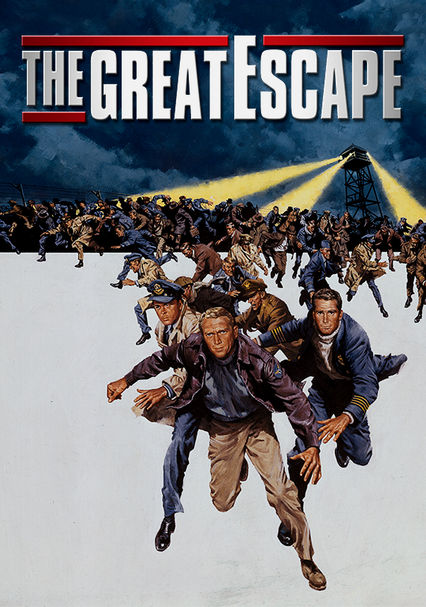
The Great Escape-1963

The Great Escape-1963

Director John Sturges

Starring Steve McQueen, James Garner, Richard Attenborough

Scott’s Review #1,053

Reviewed August 17, 2020

Grade: B

Often heralded as one of the great World War II action films of all time, there is little great about the first half of the interminable two-hour and fifty-three-minute running time.

With enough military silliness to make television’s Hogan’s Heroes seem like high drama, the first half of The Great Escape (1963) would be graded a mediocre C or a C- and that’s being generous.

The final hour is entirely different. The film kicks into high gear when the actual “great escape” is launched. Not only does the action begin, but the characters become more layered, emotional, and compelling.

Killer location shots of Germany and Switzerland occur at a zooming pace, and the comedy soon turns to tragedy.

I don’t understand why the decision was made to save all the goodies for the final act instead of dispersing them throughout the film, but I am glad it took off.

Directed by John Sturges, known for creating a similarly masculine and muscular offering from 1960, The Magnificent Seven,  he once again is lucky to cast several of Hollywood’s then hot, young stars like Steve McQueen and James Garner, and more relatable character actors like Donald Pleasence and Richard Attenborough who provide the acting grit.

While not on my list of great World War II films (Schindler’s List (1993) gets top honors), the film is recommended for the enthralling finale alone.

The film is based on Paul Brickhill’s 1950 nonfiction book of the same name, a firsthand account of the mass escape by British Commonwealth prisoners of war from German POW camp Stalag Luft III in Nazi Germany.

Unsurprisingly and shockingly, the actual events are significantly modified from the historical record, depicting a starkly fictionalized version of the escape, including Americans among the escapees.

Let’s discuss both portions, warts and all.

The changes are most irritating and done to make it more “Americanized” and, therefore, more appealing to mainstream audiences. This manipulation gnawed at me during most of the film since it’s factually incorrect.

There is a brief disclaimer at the beginning with a note saying the story is a work of fiction save for the escape portion, but this will inevitably be unnoticed or forgotten by the casual viewer.

Most of the first arc action is spent within the confinement of a massive, high-security, prisoner-of-war camp where the group of men is huddled, having escaped other camps or prisons. You would think the camp would be the equivalent of Alcatraz, but besides some barbed wire and not-so-threatening German soldiers with guns they rarely use, it’s not so intimidating.

Nonetheless, the group plots their elaborate, mostly underground escape upon arriving.

Whoever composed the musical score for the first section wanted to create a campy, situational comedy-style tone with brassy, patriotic tunes worthy of Gilligan’s Island.

This does nothing to create tension or danger, nor do the Nazi soldiers.

The men would be terrifying and rely on torture, but there is none of that to be found. Safe, but trying to be stern, this does not work as the German soldiers are played more like foils than those to be feared.

When the “great escape” is upon us, The Great Escape gets an A-plus for its thrills, action, and emotion.

A harrowing plane ride by Robert Hendley (Garner) and Colin Blythe (Pleasence) is juicy with tension and atmosphere. The plane exhibits trouble as the duo flies low across the German terrain, heading over the Swiss Alps for safety.

Meanwhile, Hilts (McQueen) steals a motorcycle and traverses the Germany/Switzerland border in a frantic chase scene while the Germans are in hot pursuit.

In a third sequence, other men flee via train in a cat-and-mouse pursuit.

Seventy-six POWs flee the camp, and a startling fifty are killed. Twenty-three are returned to the camp, and only three successfully escape.

If Sturges had built around the final hour and reduced the silly comedy style, probably attempting a contrasting theme to make the drama more imbalanced, he might have had a masterpiece.

Instead, The Great Escape (1963) is a twofold experience.

The comedy develops into a nail-biting, edge-of-your-seat thriller but suffers from too much historical inaccuracy to reach the depths of cinematic greatness.

Oscar Nominations: Best Film Editing

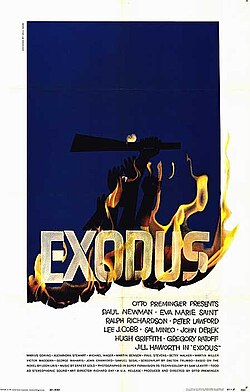
Exodus-1960

Exodus-1960

Director Otto Preminger

Starring Paul Newman, Eva Marie Saint

Scott’s Review #1,005

Reviewed March 30, 2020

Grade: A-

Creating a monumental epic about the modern state of Israel, director Otto Preminger’s vast project Exodus (1960) is a bold adaptation of the Leon Uris novel from 1958.

Starring stars of the day for added Hollywood spice and a romantic element, the result is a sprawling war drama with robust proportions and a hefty running time.

The film sometimes lags or even drags, but the message’s enormous importance and influence on stimulating Zionism should never be forgotten.

With the treacherous World War II barely in the rear-view mirror, Israeli resistance fighter, Ari Ben Canaan (Paul Newman), attempts to bring six hundred European Jewish Holocaust survivors from British-blockaded Cyprus into newly developed Palestine.

At the camp, he meets Kitty Fremont (Eva Marie Saint), an American volunteer nurse. The pair teams up with others to attempt to liberate the survivors.

The action eventually switches to Palestine, where other characters and motives come into play in a complex story. During this time, opposition to the partition of Palestine into Arab and Jewish states was heating up, leading to tension, bombs, and death among similar types of people.

Central to the main plot is a young love story involving spirited Dov Landau (Sal Mineo), a radical Zionist resistance group member, and Karen Hansen Clement (Jill Haworth), a young Danish-Jewish girl searching for the father from whom she was separated during the war.

Exodus has so much story going on and multiple plots to follow.

Besides the tense story, the main draw is the two love stories told amid the political turmoil.

Newman and Saint have marginal chemistry; he is an eye candy who electrifies the screen, and she seems too old for him and does not photograph well. Kitty, a widow, hedges on her romantic feelings for Ari, but they ultimately unite.

A gorgeous sequence occurs when the two share a delicious meal of fish and martinis amid a rooftop restaurant overlooking the dazzling landscape. She later dines with his parents and his mother, a classic Jewish mother who, in stereotypical fashion, cooks and fusses.

The fresh-faced pairing of Dov and Karen is reminiscent of Tony and Maria from West Side Story. Doomed from the start, the youngsters are opposites in many ways: hot-headed, sensible, and resilient. He is bronze and swarthy; she is blonde and blue-eyed.

I fell in love with the couple more than Ari and Kitty and rooted for their happily-ever-after moment, which sadly never occurred.

At nearly four hours, the film is best watched in segments, perhaps even four, to let the action marinate overnight. The sweeping cinematic photography and the lush exterior sequences aid the complex drama.

A drawback was not seeing the film on the big screen, which was almost a must in hindsight and limited by the DVD quality over Blu-Ray.

Nonetheless, the film is delicious in nearly every way. When tedium is about to occur, an event snaps the viewer back to immediate attention.

A notable fun fact is that Preminger boldly hired blacklisted screenwriter Dalton Trumbo, on the dreaded Hollywood blacklist for over a decade for communist leanings, to write the script.

Together with Spartacus (1960), made the same year, Exodus is credited with ending the practice of Blacklisting in the motion picture industry. The importance of what is written on the blank page is arguably surpassed by the man who wrote those pages.

Exodus (1960) nearly rivals the epic of all epics, Lawrence of Arabia (1962), in its cinematography of exotic and sacred landscapes in daring and forbidding lands.

Perhaps twenty minutes could be carved out when the action loses momentum. Still, with great direction, a top-tier cast, and a history lesson in the harshness of war and generations of conflict, the film resonates with the realism of the subject matter.

Oscar Nominations: 1 win-Best Supporting Actor-Sal Mineo, Best Music Score of a Dramatic or Comedy Picture (won), Best Cinematography, Color

Golden Globe Nominations: 1 win-Best Performance by an Actor in a Supporting Role in any Motion Picture-Sal Mineo (won), New Star of the Year-Actress-Jill Haworth, Best Original Score-Motion Picture

The Bridge on the River Kwai- 1957

The Bridge on the River Kwai- 1957

Director David Lean

Starring Alec Guinness, William Holden

Scott’s Review #908

Reviewed June 11, 2019

Grade: A

The Bridge on the River Kwai (1957) is a war film that exemplifies character-driven storytelling from each character’s perspective.

Films of this genre often do not stray too far from the straight and narrow, showcasing a war-event perspective. This often becomes larger than the humanity piece.

A key point is that the American, British, and Japanese points of view turn the grand epic experience into a more personal one.

The film received numerous Oscar nominations, culminating in a Best Picture win.

The time is early 1943, amid the powerful and destructive World War II, when a group of British prisoners of war (POW) arrives at a Japanese camp.

Colonel Saito (Sessue Hayakawa) commands all prisoners, regardless of rank, to begin work on a railway bridge that will connect Bangkok with Rangoon.

Lieutenant Colonel Nicholson (Alec Guinness), the British commanding officer, refuses manual labor, and a battle of wills erupts between the two men.

Meanwhile, Commander Shears (William Holden), an American also being held at the same camp, vows to destroy the bridge to avoid a court-martial.

The complexities of the men’s relationships are the main draw and can be discussed at length. Each possesses a firm motivation, but the emotions teeter back and forth as they face various conflicts.

Each of the three principles is an analytical juggernaut within the human spirit, ranging from the courageous to the cowardly to the evil.

We are supposed to root for Shears and not root for Saito, but why isn’t that cut and dried?

Is Shears too revenge-minded? We cheer Nicholson’s resilience, but is he too stubborn for his own good?

The film’s whistling work theme nearly became famous when it was first released in 1957. Ominous and peppered with a macabre depression, the prisoners go about their work in a near ode to Snow White and the Seven Dwarfs’ cheerier “Whistle While You Work” anthem.

As they continue to build the bridge dutifully, the audience feels a sense of dread and a foreboding atmosphere. What will ultimately happen? When two prisoners are shot dead while attempting to escape, the film takes a different turn.

Given that David Lean, responsible for such epic masterpieces as Lawrence of Arabia (1962) and A Passage to India (1984), directs The Bridge on the River Kwai, should be telling as far as the sweeping exterior landscape treats in store for the viewer.

The lavish Asian landscape, so picturesque and beautiful, is peaceful amid the chaos and vile treatment of the prisoners. This imbalance is wonderfully rich and poignant against the robust storytelling.

The climax is bombastic (literally!) and a nail-biting experience resulting in a stabbing, an explosion, and a heap of tension.

A train carrying important dignitaries and soldiers is racing towards the newly constructed bridge as one man is intent on detonating a bomb and destroying another race against time to prevent the bloodbath.

The suspense, action, and cinematic skill are front and center during the final act.

Deserving of each one of the accolades reaped on The Bridge on the River Kwai (1957), the film is the thinking man’s war film.

Layered with an underlying humanistic approach and with little violence given the subject matter, one can sink into empathy for each point of view presented instead of being force-fed a one-dimensional message.

Fine acting and gorgeous cinematography make this film one to be forever remembered.

Oscar Nominations: 7 wins-Best Motion Picture (won), Best Director-David Lean (won), Best Actor-Alec Guinness (won), Best Supporting Actor-Sessue Hayakawa, Best Screenplay Based on Material from Another Medium (won), Best Scoring (won), Best Cinematography (won), Best Film Editing (won)

Golden Globe Nominations: 3 wins-Best Motion Picture-Drama (won), Best Director-Motion Picture-David Lean (won), Best Performance by an Actor in a Motion Picture-Drama-Alec Guinness (won), Best Performance by an Actor in a Supporting Role in any Motion Picture-Sessue Hayakawa

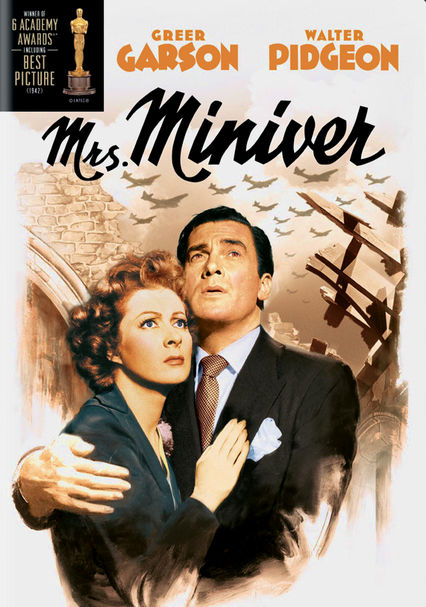
Mrs. Miniver-1942

Mrs. Miniver-1942

Director William Wyler

Starring Greer Garson, Walter Pidgeon

Scott’s Review #841

Reviewed December 13, 2018

Grade: A-

Released in 1942 amid the horrific World War II, Mrs. Miniver (1942) was a smash hit, winning over audiences concerned with the troubled and uncertain times.

Decades later, the film does not age as well as other similarly themed films, but still entertains and tells a good story with an important theme.

The film is nestled in the war drama genre with romance. The film won numerous Oscars the year of its release, including Best Picture and star Greer Garson won for Best Actress.

The story is told from the perspective of an affluent British family and the struggles they face to keep things together during growing peril. The focus primarily remains on an unassuming housewife, Kay Miniver (Garson).

The supporting players do much to flesh out the film with fantastic performances by Walter Pidgeon, Teresa Wright, and Henry Travers as Clem Miniver, Carol Beldon, and Mr. Ballard, respectively.

The direction by William Wyler is astounding and adds to the perfectly crafted ambiance and homey details.

The family lives a comfortable life in a whimsical village outside of London. Quite idealized, they own a large garden and a motorboat on the River Thames.

Along with Kay and Clem, their three children of varying ages and their housekeeper and cook reside with them. Besides the parents, the central couple is son Vin (Richard Ney) and the prominent Carol (Wright); the pair initially disagree on politics but finally fall madly in love.

As the soap opera-style family situations continue, the war grows closer and closer to their house.

As Mrs. Miniver progresses, Vin enlists in the army to assist with war efforts, a German Nazi breaks into the Miniver house, a central character dies, and bombs and planes crash.

Through it all, Kay remains stoic and takes the family through challenging situations, adding melodrama to the film. The woman’s journey and resolve to keep everything and everyone intact is at the core.

The film is mainly a family drama with the Minivers and the townspeople experiencing trials and tribulations. In this way, Mrs. Miniver risks being a one-trick pony, albeit an emotional and teary-eyed one.

The film’s rich characteristics and polished nature make it more than it ought to be, and the superlative cast, production values, and timely release undoubtedly made it what it was in 1942.

In present times, however, Mrs. Miniver seems diminished in importance and relevance with a sappy and overly sentimental feel, World War II in the distant past, and several other wars come and gone.

Wyler carefully packaged the film to hit every emotion, from the bombastic musical score to the proper English characters to the comic relief housekeeper.

The film is a giant Hollywood production, but perhaps a bit too perfect to age with any zest or reason to watch more than once.

The film might be better remembered for its strong female lead. Told from Kay’s perspective, it was unusual in 1942 for a movie (especially with a war theme) not to have the story from the male point of view. Still refreshing in 2018, this quality was downright groundbreaking at the time.

Kay stays strong and proud through the ravages of war that are closing in on her family with unbridled boldness and nary a simpering quality. Wright’s Carol is an early champion for strong, female-driven characters, and, in a more minor way, she is also a muscled female role model.

Mrs. Miniver (1942) is a well-crafted film of its time that displays lavish production values and strong characters worthy of admiration.

The film is a significant win for a glimpse of the 1940s, especially for fans of good, solid drama. There are no significant flaws to harp on, but the overall piece has not aged exceptionally well, and other similar films (Casablanca, 1942) are more memorable.

Oscar Nominations: 6 wins-Outstanding Motion Picture (won), Best Director-William Wyler (won), Best Actor-Walter Pidgeon, Best Actress-Greer Garson (won), Best Supporting Actor-Henry Travers, Best Supporting Actress-Teresa Wright (won), Dame May Whitty, Best Screenplay (won), Best Sound Recording, Best Cinematography, Black-and-White (won), Best Film Editing, Best Special Effects

Casablanca-1943

Casablanca-1943

Director Michael Curtiz

Starring Humphrey Bogart, Ingrid Bergman

Scott’s Review #838

Reviewed December 7, 2018

Grade: A

Casablanca (1943) is a classic style Hollywood film made during a decade when big studio productions were all the rage. The film may very well be in the top ten creations of its day and a movie that nearly everyone has either seen or is aware of.

A grand romantic World War II drama released at the perfect time, the film contains legendary stars Humphrey Bogart and Ingrid Bergman. It is flawless in nearly every way, as a lavish production should be.

Bogart stars as Rick Blaine, an expatriate who owns a lavish nightclub in Casablanca, Morocco. The film takes place in December 1941, before the United States entered the vicious World War II.

His clientele ranges from French and German officials to refugees attempting to flee the country, fearful of being stuck in a foreign land. Mixed in with the melee of varied characters is Ilsa (Bergman), a former flame of Rick’s, who appears with a new husband, Victor, a Czech leader.

Ilsa begs Rick for help escaping the country, and their romance begins to blossom again.

Through scenes, we see Rick and Ilsa living perfectly in pre-war Paris. They happily co-exist, sharing a happy life, unaware of the conflict and secrets that will emerge in Casablanca two years later.

Victor is initially presumed dead, which leads to Ilsa’s initial freedom and romance with Rick.

Back in Casablanca, Rick has essential letters that will allow the holder to escape the city and be bound for safety in another country. While Ilsa is desperate for these letters, she is also madly in love with Rick, and vice versa, adding a strong romantic element to the film.

Supporting characters are mixed into the plot as desperation and impending doom interplay.

Casablanca is a film with things happening simultaneously, which is a significant part of its draw. From the apparent romance of Rick and Ilsa- the focal point of the story part of the draw are the sub-plots weaved within.

The nasty Nazi Major Heinrich Strasser encompasses the future Third Reich and the devastation this group would ultimately cause. A multitude of supporting characters and extras perfectly flesh out both the cast and the look and feel of the film.

The most interesting character is Rick.

Once idealistic and moral, he has changed, becoming cynical and broken. In this way, the film nearly becomes a character study. The audience sees the change in Rick and slowly realizes he has given the war the culprit.

The final sequence reveals Rick and Ilsa’s fate. Their doomed romance is assuredly no surprise, true to the message. An “unhappily ever after” result was rare in a big studio production and is a testament to the well-written story.

The featured piano number and Casablanca’s “theme song” is the lovely yet melancholy “As Time Goes By.” Beautifully played by Sam (Dooley Wilson), the house pianist and close friend of Rick, the number is instrumental to the plot and specifically to Rick and Ilsa’s romance.

The song is a painful memory of the once-idyllic life the pair shared.

The film’s timing, made in 1941 and released in 1943, is the key to its unrelenting success. American audiences undoubtedly found it identifiable, and the uncertainties of the impending war threatened their current freedoms.

Casablanca was wonderfully marketed in this way, and its compelling nature resonated. Audiences shared Rick’s conflict and “for the greater good” perspective.

Casablanca (1943) is a film that educates, entertains, and romances without exhibiting a shred of pretension. The crisp black-and-white filming and the unique use of light and shadows to reflect the characters’ thoughts make the film lovely and has a lofty budget.

Immersed in the richness are sadness and a timely message about a changed man, a failed romance, and the ravages of war that still resonate decades later.

Oscar Nominations: 3 wins-Outstanding Motion Picture (won), Best Director-Michael Curtiz (won), Best Actor-Humphrey Bogart, Best Supporting Actor-Claude Rains, Best Screenplay (won), Best Scoring of a Dramatic or Comedy Picture, Best Cinematography, Black-and-White, Best Film Editing

Saving Private Ryan-1998

Saving Private Ryan-1998

Director Steven Spielberg

Starring Tom Hanks

Scott’s Review #778

Reviewed June 26, 2018

Grade: A

Famed director Steven Spielberg does not always get the respect he deserves. This is usually because, for better or worse, he has become synonymous with the “blockbuster” film, drawing comparisons to either lightweight fare or films of “lesser” artistic merit.

His 1980’s works- Raiders of the Lost Ark (1981), E.T. the Extra-Terrestrial (1982), and Indiana Jones and the Temple of Doom (1984)- were enormous commercial successes, though I enjoyed all of the films.

During the 1990s, Spielberg continued to direct “popcorn flicks” such as Hook (1991) and Jurassic Park (1993) with large studio budgets but somewhat less critical acclaim.

Finally, he was able to change many opinions with 1993’s Schindler’s List and the war film to end all war films, Saving Private Ryan (1998), an epic, profound experience.

Both received numerous Oscar nominations and achieved box-office success.

The film is a tremendous treat, thanks to the riveting opening sequence alone (more on that later).

If that is not enough to impress, Saving Private Ryan is known for infusing a very graphic element into the war film, with no let-up from the brutality. Spielberg does not water down this picture; instead shows the pain and angst of war.

The film is helped tremendously by the casting of Hollywood superstar Tom Hanks, who leads an enormous cast of mainly young men.

Saving Private Ryan opens with a prologue: in the present, a veteran brings his family to visit an American cemetery in Normandy.

Flashbacks then take the audience back to the Omaha Beach debacle in 1944, where American troops faced deadly German artillery attacks in France.

After the horrific three-day D-Day, it is learned that three of the four Ryan sons have died in the events. Captain Miller (Hanks) is ordered to bring a team of men to Normandy and bring the fourth Ryan son (Matt Damon) to safety.

Spielberg’s opening D-Day sequence is just astounding and propels the film to unforgettable status. With a running time of twenty-four minutes, the riveting and horrific slaughter of American soldiers is intensely brought to the screen.

Audiences undoubtedly sat open-mouthed (I know I did!) as bullets riddled the beach and left soldiers killed or with limbs torn off. The camera work is brilliant, as the use of a shaky technique, almost a documentary style, is used for effect.

This sequence successfully promotes anti-war sentiment without glorifying combat at all. The scene will stay with its audience for years to come.

Saving Private Ryan can be compared to the decades-later Dunkirk (2017) in that each film took the war genre and turned it on its head.

The similarities between the films start with the obvious: the main events in both films occur during World War II, in the same week, and in the French beach settings, making the films perfect companion pieces.

Both films feature a gray, rainy setting with many horrific moments of death and suffering. The war film is a common genre that has historically teetered on the brink of predictability and oversaturation. Still, both films do something completely different and unexpected, yet mirror each other in style.

To counter-balance the violence in the opening sequence, a quiet scene is created and remains one of my favorites. The scene contains almost no dialogue throughout the seven-minute duration and is pivotal to the entire film.

As a typist realizes that three letters of death are to be delivered to the same family, a woman on a mid-west farm quietly washes dishes and is calmly horrified when she sees a government car approaching.

What else can this mean but that one of her sons is dead? The poor Mrs. Ryan will be told that she has lost not one, but three sons.

How utterly unimaginable, and the scene is incredibly touching!

The best part of Saving Private Ryan is that Spielberg combines a deeply sentimental vision with the terrible atrocities of war. He portrays not only the violent effects of the battles on the soldiers but also on the surviving families.

This is not always done in war films, at least not to the level that Spielberg chooses to.

With a film as startling as Saving Private Ryan, Spielberg turned the war film genre inside out. Breaking barriers with a no-holds-barred gusto, Spielberg influenced war films for years to come- Black Hawk Down and Enemy at the Gates (2001) are prime examples, and received acclaim from fellow directors for his interesting techniques.

Saving Private Ryan (1998) was an enormous financial winner at the box office, proving that great films don’t have to be watered down to find an audience.

Oscar Nominations: 5 wins-Best Picture, Best Director-Steven Spielberg (won), Best Actor-Tom Hanks, Best Screenplay Written Directly for the Screen, Best Original Dramatic Score, Best Sound Effects Editing (won), Best Sound (won), Best Art Direction, Best Cinematography (won), Best Makeup, Best Film Editing (won)

Unbroken-2014

Unbroken-2014

Director Angelina Jolie

Starring Jack O’Connell, Garrett Hedlund, Domhnall Gleeson

Scott’s Review #260

70305949

Reviewed August 1, 2015

Grade: B

Unbroken (2014) tells the true story of Olympic athlete Louis Zamperini, a runner during the World War II period, who was also serving in the military during this tumultuous time in history.

His story is one of bravery, courage, and endurance, as he survives a hellish experience in a Japanese prisoner of war camp after having crashed in the Pacific Ocean, stranded for forty-seven days as if that were not enough to break a man.

Mainstream Hollywood fare to the hilt, this film is surprisingly directed by Angelina Jolie (a woman) and written by the Coen brothers, the latter usually emitting less traditional and more quirky fare than this film.

Jolie directs what is arguably a “guys movie” that contains very few women in the cast, and the ones who do appear are either loving mothers or giggling schoolgirl types, so the big names associated with Unbroken surprise me.

I would have taken this work as a Clint Eastwood film.

Unbroken, expected to receive several Oscar nominations, was shut out of the major categories.

Visually, Unbroken is slick, glossy, and shot very well- it looks perfect. The cinematography, sound effects, and costumes look great.

The cast of good-looking young men looks handsome even while battered and bruised and half-starved. While in a way this is a compliment, it is also not one. Unbroken lacks any grittiness and plays it quite safe. Even the scenes of abuse and beatings lack an edge to them.

This is not to say that the film is not good. It is good.

I found myself inspired by the lead character of Louis, played by Jack O’Connell, for his resilience during his ordeals. O’Connell gives a very good performance as his motto, “If I can take it, I can make it” is repeated throughout, and who will not cheer at his accomplishments?

Zamperini, who has traditional Italian parents having relocated to the United States, is strict but fair. Louis’s older brother, Peter, is his best friend and is the person who has the most faith in him. At first, Louis is on the verge of becoming a punk, in trouble with the law, if not for the interference of his brother, who gets him interested in the sport of running.

As the years go by and war erupts, Louis embarks on a tour of duty in the military and his plane crashes in the water providing yet another test of courage and stamina. Louis is strong and always the leader of the group he is intertwined with.

The scenes of the three survivors stranded on the raft for days become slightly tedious, but perhaps this is the intention, as they eat raw fish and raw birds to survive. Much of the remaining action is set in two Japanese war camps as Louis (and others) struggle to survive until the massive war has ended- they do not know if they will live or die.

The central antagonist- a vicious Japanese sergeant named “Bird”, perplexed me. Blatantly targeting Louis and administering cruel beatings and heaping tests of strength upon Louis, presumably out of jealousy because Louis was an Olympic athlete, why did Bird not simply kill him?

His motivations were also odd- In one scene, Bird tearfully tells Louis that he knew they would be friends from the beginning and seems to admire him. Bird’s father, going by a photo, seems a hard, mean man. Is this why Bird is so vicious? Bird’s character is not well thought out.

Also, every single Japanese character is portrayed in a very negative light, which sadly is common in war movies. Surely, despite being a war, there had to have been a few Japanese people who were not cruel.

Character development and depth are not a strong suit of this film.

Unbroken is a good, solid, war drama with an inspiring message of triumph, faith, and determination.

Indeed, it is a positive message to viewers of all ages.

The abuse/torture scenes are tough to watch, but the result is a feel-good story.

The snippets of the real Louis Zamperini are wonderful to watch.

Oscar Nominations: Best Sound Editing, Best Sound Mixing, Best Cinematography

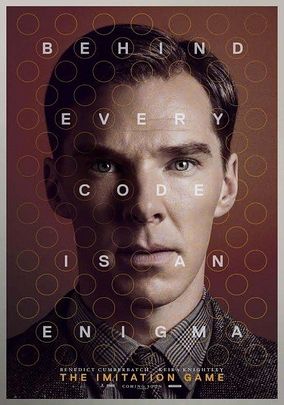
The Imitation Game-2014

The Imitation Game-2014

Director Morten Tyldum

Starring Benedict Cumberbatch, Keira Knightley

Scott’s Review #213

70295172

Reviewed January 15, 2015

Grade: A

The Imitation Game (2014) tells the story of Alan Turing, a confident and brilliant British mathematician who was responsible for cracking Nazi Germany’s Enigma code, which led to the Allied forces winning World War II.

The film also delves into Turing’s complex and sad personal life and the audience grows to know his upbringing largely told via flashbacks as a small boy at boarding school.

The film is tragic yet wonderfully made and is a powerful viewing experience in human storytelling.

The film has two aspects going on. The first is the hiring of Turing by the Government Code and Cypher School at Bletchley Park to crack the code and the numerous struggles faced in accomplishing this feat.

Turing is not easy-going. He is arrogant, quick-witted, and even smug. However, through his friendship with Joan (Keira Knightley), an intelligent woman on the team of scholars, we see a human side to him as they forge a lifelong bond.

The other is of his personal life which is a bit more mysterious and comes into play during the second half. Keeping a secret about his personal life, he is homosexual, which in the time the film is set (1940’s England), is illegal.

Alan and Joan agree to marry, in large part to appease her parents, but circumstances change these plans.

Benedict Cumberbatch, who portrays Turning, deserves praise for his impressive portrayal. He successfully gives depth and a wide range of emotions to the character.

He begins as a self-centered man but becomes layered, guarded, and protective due to his private life of which he is forced to hide a great deal.

Keira Knightley’s character supports Cumberbatch’s character of Alan as she becomes engaged to him and later in life becomes his biggest champion. Her character, besides being quite intelligent, is also kind and giving.

The ending will give the viewer many tears and cause to think of the enormity of World War II in terms of the vast amount of casualties. The facts listed just before the credits roll are awe-inspiring and gut-wrenching.

The Imitation Game is not a war movie per se since it does not deal with battle scenes. It is more of a drama dealing with the effects of war. Many figures are presented and some characters are affected.

For instance, in one scene, the group (led by Turing) must make a heartbreaking decision not to stop an impending attack, which will cause many deaths- including a character’s brother- instead of choosing to keep mum to save thousands more.

It is a powerful scene.

The Imitation Game (2014) successfully and heartbreakingly tells the story of a heroic figure who received no accolades while living, instead of being ostracized, and not until posthumously, did he receive his due.

Sadly, this was too little too late.

Oscar Nominations: 1 win-Best Picture, Best Director-Morten Tyldum, Best Actor-Benedict Cumberbatch, Best Supporting Actress-Keira Knightley, Best Adapted Screenplay (won), Best Original Score, Best Production Design, Best Film Editing

Catch-22-1970

Catch-22-1970

Director Mike Nichols

Starring Alan Arkin, Bob Balaban, Martin Balsam

Scott’s Review #41

60020883

Reviewed June 18, 2014

Grade: B

Catch-22 (1970) is a satirical film similar in subject matter to Robert Altman’s M*A*S*H, released the same year, though admittedly, I have not seen that film yet.

It does remind me of Dr. Strangelove (1964) and Slaughterhouse-Five (1972) in their anti-war theme.

This film is well-made and certainly effectively portrays the outrageousness and lunacy of war.

Most of the characters are portrayed as crazy, albeit in a darkly humorous, over-the-top way.

Alan Arkin is wonderful as the protagonist trying to find a way out of the island of Italy, where he and his fellow pilots are stationed.

At times, the film feels disjointed and hard to follow, which I understand the novel is too (I have not read the entire book), but Catch-22’s (1970) message comes across loud and clear.