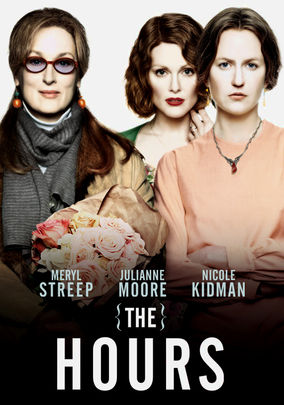
The Hours-2002
Director Stephen Daldry
Starring Nicole Kidman, Julianne Moore, Meryl Streep
Top 250 Films #169
Scott’s Review #803
Reviewed August 17, 2018
Grade: A
The Hours (2002) is a film containing the ultimate in acting riches. With names like Nicole Kidman, Meryl Streep, and Julianne Moore associated with the film, this is not surprising.
Not solely belonging to the ladies, however, Ed Harris, in particular, is dynamic in his role, as are all the other males who appear in the film.
Told in three different sections in chronological order, but going back and forth, the stories all share connections via the novel Mrs. Dalloway, written by Virginia Woolf.
One of the best films of the decade!
Each segment of the film takes place within a single day, but decades apart.
Wisely, director Stephen Daldry frequently switches between the stories, leaving a sort of cliffhanger and making the drama more compelling and spicy.
In 1923, a depressed Virginia Woolf is portrayed by an unrecognizable Nicole Kidman in a role that won her the Best Actress Oscar.
Woolf resides outside of London and struggles to complete her novel amid nervous breakdowns and the watchful eye of her husband, who is aware of her mental pain.
In 1951, Laura Brown (Julianne Moore) seemingly has it all, living the “American Dream”. Residing in a nice neighborhood with a loving husband, she is pregnant with her second child and spends her days at home raising her young son, Richie, whom she is very close to yet does not understand.
After a fleeting lesbian dalliance with a neighbor, Laura goes off to a hotel with bottles of pills, intending to kill herself. She changes her mind after reading Woolf’s novel and dozing off, deciding instead to make a different decision.
Finally, in 2001, Clarissa (Meryl Streep) is bisexual and in a same-sex relationship. She lives with Richard (Harris), whom she dated in college, and is now the best of friends.
He is gay, stricken with the AIDS virus, and close to committing suicide as he plans to jump out of a window.
This story (set in the present) is crucial to the film because it involves two characters from the 1951 story. These characters intersect with others in a touching and heart-wrenching way.
The greatest parts of The Hours are the brilliant acting and the richly written storytelling.
Arguably, Kidman, Streep, and Moore could all have won Oscars for their performances.
I must mention that, as brilliant as Kidman is (she is the sole Oscar recipient) and as universally good as Streep is, I would have given the Oscar to Moore, the standout in my opinion.
Glamorous and intelligent, warm to her son, she makes a monumental and controversial decision. The character should not be sympathetic- yet she is.
This is a testament to Moore’s infusion of the character with confidence, reasonable thought, and even some empathy. We finally understand why she does what she does.
May I boast for a moment about Harris’s performance? Richard, once known as Richie as a kid (this will give something away), has lived a difficult life.
Abandoned, wounded, and suffering much loss, he is a tragic figure, pained beyond belief. His suffering is so monumental that we almost welcome his demise, and Harris offers so much of himself in this difficult role.
He is both physically and emotionally hurt, and Harris portrays this in spades.
Uniquely, all three stories work independently of each other. Yes, characters from one appear in another, but they are like well-crafted vignettes.
Similarly, they each begin with breakfast, then involve the planning of a party or celebration of some sort, and culminate in sadness.
Yet the film does not feel like a downer or preachy in any way; rather, it is good, solid, humanistic storytelling, which I adore.
Sure, the film is considered a drama, but it also contains multiple gay or bisexual characters and therefore must be included in the chambers of LGBT filmmaking.
With an A-list cast, the film helps lead the charge (successfully so) to bring more rich LGBT films to the center stage and garner mainstream audiences.
The great aspect of The Hours is that it is a mainstream film- a good, solid drama.
Based on a Pulitzer Prize-winning novel by Michael Cunningham, The Hours (2002) does not try to draw parallels between the stories or necessarily connect them in an obvious fashion.
Rather, the film version provokes thought both with LGBT and feminist approaches. Each female central character lives in a world run by men, as Woolf argues in her novel.
The film brilliantly adapts the novel and brings it to large audiences in a fantastic, riveting fashion.
Oscar Nominations: 1 win-Best Picture, Best Director-Stephen Daldry, Best Actress-Nicole Kidman (won), Best Supporting Actor-Ed Harris, Best Supporting Actress-Julianne Moore, Best Adapted Screenplay, Best Original Score, Best Costume Design, Best Film Editing