Tag Archives: Katharine Hepburn

Guess Who’s Coming to Dinner-1967

Guess Who’s Coming to Dinner-1967

Director Stanley Kramer

Starring Spencer Tracy, Katharine Hepburn, Sidney Poitier

Scott’s Review #1,539

Reviewed June 29, 2026

Grade: A

Guess Who’s Coming to Dinner is a groundbreaking, socially themed film made in 1967, in the midst of the Civil Rights movement that was sweeping the United States.

The rights aimed to abolish legalized racial segregation, discrimination, and disenfranchisement in the country, which most commonly affected African Americans.

So, the time was perfect for a star-studded film of this caliber.

The screenplay by William and Tania Rose is rich with character motivation and development.

Both the characters themselves and audiences can understand the perspectives of each of the six prominent characters as they slowly explain their thoughts and, at times, their underlying unconscious biases.

At the time of release, the film was understandably a commercial and critical hit during a fabulous time in cinema.

On the threshold of increased creative richness in the 1970s, the late 1960s were the building blocks to expressionism and tremendous cinematic thought.

The film was one of the first to depict an interracial marriage in a positive light.

While a film like Guess Who’s Coming to Dinner would be dated if made in 2026, sadly, lots of blatant racism and discrimination still exist in the United States, though we have certainly made progress.

Joey Drayton (Katharine Houghton) is a young, free-thinking white woman from a wealthy family in San Francisco. She and a successful black doctor, John Prentice (Sidney Poitier), become engaged.

In addition to their racial differences, he is much older than she is and has been married once before.

They nervously fly to San Francisco to meet her parents and break the news, and they are to be married two weeks later in Switzerland.

Matt Drayton (Spencer Tracy) and his wife, Christina (Katharine Hepburn), are open-minded liberals who must confront the many issues and feelings the impending marriage arouses.

Also attending the Draytons’ dinner are Prentice’s parents, John Sr. and Mary (Roy E. Glenn Sr., Beah Richards), who vehemently disapprove of the relationship.

Other supporting characters, like the kindly Monsignor Mike Ryan (Cecil Kellaway), a white male, and the efficient yet unfeeling black housekeeper Tillie (Isabel Sanford), offer differing perspectives on the union.

While the interracial pairing is front and center, the set pieces and artistic design are flawless, offering a looming backdrop of San Francisco.

Frequent scenes occur on the family terrace, lush with bright flowers, images of the Pacific Ocean and the Golden Gate Bridge, and, in one sequence, a rich orange hue amid a dazzling sunset.

To say nothing of the lavish family estate with exquisite art, furniture pieces, and grand rooms all on display during the film.

Director Stanley Kramer deserves praise for these elements and many more, as the film is woven together tremendously well.

The acting is flawless all around, with the top honors going to Hepburn and Poitier.

A poignant scene in which Christina (Hepburn) remembers how happy Joey always was as a child, and how her past happiness pales in comparison to how happy she is now, will bring any viewer to a soggy mess as Hepburn slowly tears up.

Poitier shows his strong range during John’s knockdown, drag-out argument with his father, exclaiming how he owes nothing to his father, and a father’s role is to want the best for his child and to let his child make his own choices.

While Mike thinks nothing but beauty from the union, Tillie is outraged at the nerve of John to mix with white wealth. She shockingly calls him ‘boy’ and scolds him for thinking above his ‘station in life’.

With Tillie and John Sr., we see that bias and racism are not always exclusive to the white community. Black people also see color and prejudice.

This point is the film’s genius, as most of the characters undergo deep dives and learn about themselves, for better or worse.

Some fun facts are that Houghton is the niece of Hepburn, and the film is Spencer Tracy’s final role, having battled illness throughout shooting, but insisting on finishing the film.

Guess Who’s Coming to Dinner (1967) challenges the norms of the times amazingly well, and the brilliance of the acting holds up decades later.

Oscar Nominations: 2 wins-Best Picture, Best Director-Stanley Kramer, Best Actor-Spencer Tracy, Best Actress-Katharine Hepburn (won), Best Supporting Actor-Cecil Kellaway, Best Supporting Actress-Beah Richards, Best Story and Screenplay-Written Directly for the Screen (won), Best Art Direction, Best Film Editing, Best Original Song Score or Adaptation Score

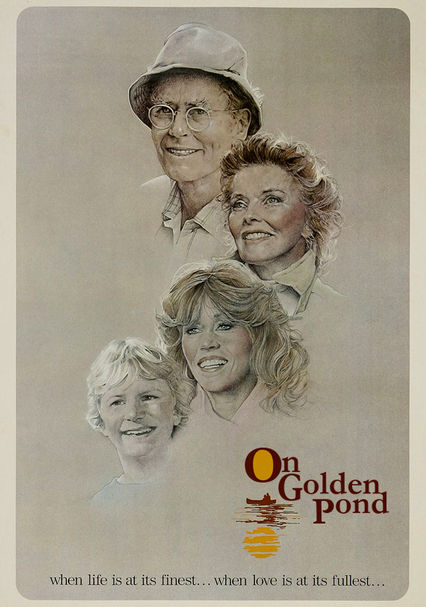
On Golden Pond-1981

On Golden Pond-1981

Director Mark Rydell

Starring Henry Fonda, Katharine Hepburn, Jane Fonda

Scott’s Review #1,297

Reviewed September 8, 2022

Grade: A

A beautiful and quiet family drama, On Golden Pond (1981) is a brilliantly acted and written story about life, specifically aging and dying. It tells one lovely story arc after another, involving the relationships between its principal characters.

With heavyweights like Katharine Hepburn, Henry Fonda, and Jane Fonda signed on to star, how could the film not be a success?

It was not only a blockbuster in the summer of 1981, but it also earned 10 Academy Award nominations and numerous other awards, showing that sometimes subdued stories about human relationships win big.

The anticipation of legendary stars Fonda and Hepburn, golden icons of Hollywood, finally appearing opposite each other in a film must have made film lovers salivate back in 1981.

Norman Thayer (Fonda) is a grumpy older man trying to enjoy his golden years. He and his nurturing wife, Ethel (Hepburn), spend summers at their New England vacation home on the shores of idyllic Golden Pond.

Norman is experiencing memory problems and frets about dying, while Ethel makes the most of it, enjoying the beautiful loons on the water and chatting with the local mailman.

One year, their adult daughter, Chelsea (Jane Fonda), visits with her new fiancée (Dabney Coleman) and his teenage son, Billy (Doug McKeon), on their way to Europe.

After leaving Billy behind to bond with Norman, Chelsea returns, attempting to repair the long-strained relationship with her aging father before it’s too late.

The greatest part of On Golden Pond is that it is believable. The tender love that Norman and Ethel share, the tensions between Norman and Chelsea, and the burgeoning friendship between Norman and Billy Jr. feel so very real and poignant.

Beautiful scenes emerge between the older man and a young man when Norman turns Billy Jr. on to literary classics like A Tale of Two Cities and Treasure Island.

 The viewers can easily see themselves in real-life situations like this or when Ethel and Chelsea discuss a strained relationship.

Years and years of memories and situations between the characters spring to life, making the dialogue rich with flavor. Moving sequences, like when Norman suffers a heart attack and is involved in a boating accident, are teary and sentimental but fresh with emotion.

They do not feel manipulated.

As if the richly acted scenes are not enough, screenwriter Ernest Thompson, who wrote the film based on his play, provides credibility. He felt the passion the story would bring to the big screen, and he was right.

As I grow older, I appreciate the characters of Norman and Ethel. They stick together through thick and thin, sometimes quarrel, but love each other with a bond that can never be severed.

We all know and love couples like them.

The cinematography bristles with sweet nature. From the loons to the other sounds of summer, the camerawork elicits the light of late summertime. I constantly had to remind myself that I wasn’t really in the countryside but was in my living room.

A tearjerker that carefully combines heavy drama with comical moments that lighten the load, On Golden Pond (1981) is a truthful and emotional extravaganza about death that never feels sad or downtrodden.

It’s much too clever for that; instead, it’s an uproarious crowd-pleaser.

Oscar Nominations: 3 wins-Best Picture, Best Director-Mark Rydell, Best Actor-Henry Fonda (won), Best Actress-Katharine Hepburn (won), Best Supporting Actress-Jane Fonda, Best Screenplay-Based on Material from Another Medium (won), Best Cinematography, Best Film Editing, Best Original Score, Best Sound

The African Queen-1951

The African Queen-1951

Director John Huston

Starring Humphrey Bogart, Katharine Hepburn

Scott’s Review #76

60011001

Reviewed June 28, 2014

Grade: B-

The African Queen (1951) is a difficult film to review.

Revered and appearing on many of the greatest films of all time lists, this film is disappointing.

Humphrey Bogart and Katharine Hepburn star as a couple who despise each other, stranded together on a tugboat in Africa on the eve of World War I.

Sure, the chemistry between Bogart and Hepburn (Hollywood royalty in their day) is there, and the opposite attraction has a definite rooting value as their passion oozes off the screen.

He is a grizzled alcoholic American. She is a repressed, puritanical British woman. The locales of Africa, as the couple traverses on a makeshift boat, are gorgeous.

That is it for me, though- nothing else about the film is spectacular.

The plot is silly and unrealistic, and the two are thrown together purely for plot purposes. The adventure seems quite secondary to the love story at hand.

How far-fetched is that an “old maid” and a sailor could build torpedoes and blow up an enormous German warship?

The film is a decent, old-fashioned romantic adventure but not much more, which disappoints me because, given its accolades, I was expecting much more.

Bogart won the 1951 Best Actor Oscar for this performance.

Oscar Nominations: 1 win-Best Director-John Huston, Best Actor-Humphrey Bogart (won), Best Actress-Katharine Hepburn, Best Screenplay