Tag Archives: William Wyler

The Best Years of Our Lives-1946

The Best Years of Our Lives-1946

Director William Wyler

Starring Frederic March, Myrna Loy, Dana Andrews

Top 250 Films #102

Scott’s Review #858
Reviewed January 20, 2019

Grade: A

Many films emerged during the 1940s that depicted the horrific events of World War II. The Best Years of Our Lives (1946) is the first film to focus on the aftermath of the war and the lasting psychological effects on soldiers and their loved ones.

The film may teeter on the edge of soap opera territory. Still, it is powerful, dramatic, tender, and heartfelt, allowing its audience to experience the challenges faced by those who serve their country after leaving the military.

Director William Wyler, who also created the similarly themed Mrs. Miniver (1942), again explores the family drama genre. Still, the drama occurs this time in small-town America rather than outside London.

While Mrs. Miniver focuses on the ravages of the current war, he chooses to delve into its after-effects, which offer a broader range of situations and greater complexity. The result is a more substantial and cerebral experience.

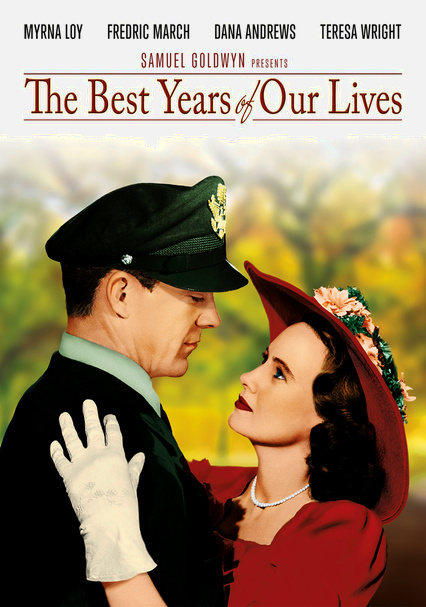
The story centers on three U.S. service members as they attempt to readjust to civilian life upon returning home from the battlefields of World War II. Homer (Harold Russell), Al (Frederic March), and Fred (Dana Andrews) all live in the same small town, Boone City, USA.

The men were acquaintances but did not serve together in the war, as each held a different rank and had other duties.

Al has the most going for him with a loving wife, Milly (Myrna Loy), two children, and a stable household. He is promoted to Vice President of a local bank, but despite this achievement, he is a heavy drinker and prone to anger.

He is enraged at the poor treatment of veterans trying to obtain bank loans and at the United States for hindering veterans’ attempts at rebuilding their lives. His adult daughter Peggy (Teresa Wright) is a prominent character as she begins a flirtation with Fred.

Fred is unskilled and must return to his menial job as a drugstore soda jerk, much to his selfish wife, Marie’s (Virginia Mayo), chagrin. Homer lost both hands in the war and wore mechanical prosthetic hands, which made him insecure and troubled.

His days as a respected high school football quarterback have sadly come to an end, though he has unwavering support from his fiancée, Wilma (Cathy O’Donnell).

The trials and tribulations of many characters begin to mount as one character fights another over a dispute about the meaning of the war. Another character plots to ruin a marriage and embarks on a plan to rescue a character from another.

The plots run the risk of being too daytime drama-like, except that the underlying point of the troubled veterans is always at the forefront, and their challenges are to be taken seriously.

A poignant moment is a crucial scene when one character admits that they have “given up the best years of my life,” a frustrated testimonial and proof that war can ravage not only the lives of the veterans but also of their loved ones.

Wyler does not hold back in conveying a clear message through the film. The viewer will undoubtedly ponder the title, “The Best Years of Our Lives,” and realize that it is open to different interpretations and does not have only a positive connotation.

The most powerful aspect of The Best Years of Our Lives is that the actor who played a military veteran, Harold Russell, was a disabled veteran. This realism of a man portraying himself and the terrible effects the war had on him makes his character my favorite and highly empathetic.

His Academy Award wins for Best Supporting Actor are emotional and deserving, as he a won Best Picture and seven other awards.

Featuring a topic that gained prominence after World War II, The Best Years of Our Lives (1946) is a grand Hollywood film that embodies all the hallmarks of a classic drama.

Under the surface, the film is dripping with relevance, social commentary, and the psychological trauma that veterans face upon returning home, and how some are damaged beyond repair. The rich American-style film remains a worthy watch, nearly a century after production wrapped.

Oscar Nominations: 7 wins-Best Motion Picture (won), Best Director-William Wyler (won), Best Actor-Fredric March (won), Best Supporting Actor- Harold Russell (won), Best Screenplay (won), Best Scoring of a Dramatic or Comedy Picture (won), Best Sound Recording, Best Film Editing (won)

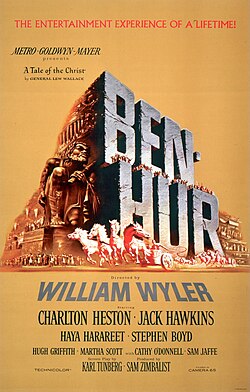
Ben-Hur-1959

Ben-Hur-1959

Director William Wyler

Starring Charlton Heston, Stephen Boyd, Haya Harareet

Scott’s Review #1,265

Reviewed June 9, 2022

Grade: A

One of the many pleasures of watching Ben-Hur (1959) is marveling at the extensive cinematic brilliance of the entire cast and crew.

Saying it’s a spectacle is not enough, and a must-see.

It had the largest budget ($15.175 million) and the most extensive sets built of any film produced at the time, allowing enormous spending to create one of cinema’s most lavish and grand films.

I shudder to think of how powerful it was to see this film on the large screen in a movie theater and the sheer mesmerizing quality it had on audiences.

I’ve anticipated viewing the film for years and finally did. Why I waited so long is beyond me. It does not disappoint, and the extravagance is immeasurable. I sat in awe at the many aspects of the film created before CGI, making it as impressive in 2022 as it was over sixty years ago.

Charlton Heston plays Judah, a Palestinian Jew who fought the Roman Empire during Christ’s time. He becomes involved in a vicious feud with his ambitious boyhood friend Messala (Stephen Boyd).

Their hatred culminates in an exciting yet vicious chariot race.

Condemned to life as an enslaved person, Judah swears vengeance against Messala. He escapes, later crossing paths with a gentle prophet named Jesus, who helps Judah save his family despite his death.

The film made a household name out of Heston and, other than its big budget, is legendary for its use of homoeroticism and an unspoken love story between two men who are at first the best of friends and who later become bitter rivals.

The film had several screenwriters, and if looking closely, some uneven storytelling is largely overlooked by the enormous spectacle of the finished product. Gore Vidal, who was openly gay, insisted on a homosexual interlude, conspicuously, of course, between Judah and Messala.

Giggle worthy to those in the know is that Boyd played his character as a spurned gay lover of Heston’s, with Heston unaware of the underlying romantic angle. This is rumored to be because Heston couldn’t handle it had he known.

This knowledge made me enjoy the subtext of the scenes between the two men even more than I should have.

To prove the above point, the written romance between Judah and Esther (Haya Harareet) lacks much chemistry, and I didn’t view them as brothers and sisters or good friends.

Other scenes of shimmering, muscular men sitting around in towels are further proof of Ben-Hur’s homoeroticism.

These juicy intrigue tidbits provide tingles, but the main draw is the famous chariot scene, which is as exciting as an action scene in a movie. The outdoor arena, packed with thousands of onlookers, provides a perfect setup for the round-and-round racetrack, as dozens of horses are whipped into a dizzying frenzy and go faster and faster.

The peril is prominent as numerous riders drop to their death, mangled into pieces from being stampeded by the horses.

Other sequences, like the leper colony and the crucifixion of Jesus, are beautiful and astounding.

Director William Wyler, a heavy hitter at the time with gems like Mrs. Miniver (1942) and The Best Years of Our Lives (1946), easily usurps those excellent films with Ben-Hur.

It won eleven of its twelve Oscar nominations and employed ten thousand extras!

Ben-Hur (1959) is the definition of an epic film. Expensive and expansive, the breathtaking chariot scene is one of the best I’ve ever seen in a film.

Not feeling dated, it’s a marvel of exquisiteness and magnificence.

Oscar Nominations: 11 wins-Best Picture (won), Best Director-William Wyler (won), Best Actor in a Leading Role-Charlton Heston (won), Best Actor in a Supporting Role-Hugh Griffith (won), Best Adapted Screenplay, Best Art Direction-Set Direction-Color (won), Best Cinematography (won), Best Costume Design-Color (won), Best Film Editing (won), Best Sound Recording (won), Best Music-Scoring of a Dramatic or Comedy Picture (won), Best Special Effects (won)

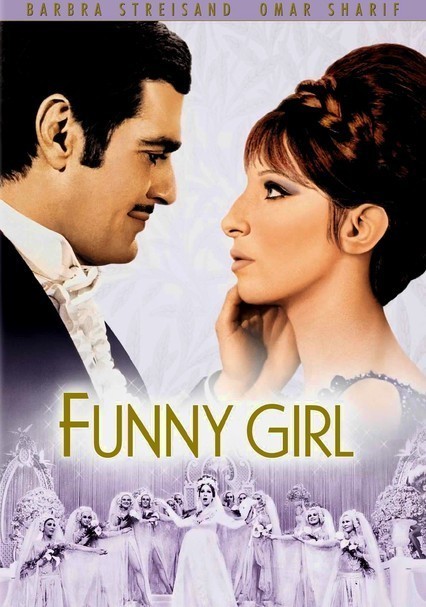
Funny Girl-1968

Funny Girl-1968

Director William Wyler

Starring Barbra Streisand, Omar Sharif

Scott’s Review #1,022

Reviewed May 11, 2020

Grade: B+

Barbra Streisand won the Academy Award for Best Actress for her outstanding portrayal of Fanny Brice in Funny Girl (1968). She reprises a role that she made famous on the Broadway stage, bringing her to the big screen.

The role is vitally important and sends a powerful message, teaching viewers that an unconventional woman with extraordinary talent can succeed in showbiz, leaving prim and proper starlets salivating with jealousy.

Features the classic tunes “People” and “Don’t Rain on My Parade” as well as the title track.

Fanny (Streisand) is an unhappy Jewish New Yorker, living in semi-poverty and dreaming of the big time. Her mother (Kay Medford) and others in the community try to persuade Fanny to live an everyday life far from the hot, judgmental glare of the stage, but she will have none of it.

Finding success on her terms in Ziegfeld Follies throughout World War I, she also finds love and passion with the suave Nick Arnstein (Sharif) following her debut performance.

The story is loosely based on the life and career of the honest Fanny and her stormy relationship with the entrepreneur and gambler, Nick.

Taking nothing away from Sharif, who is more than adequate, the film belongs to Streisand. Despite being a novice, producers wanted no one but Streisand in the role, since she had hit a home run in the stage version.

A brief consideration to have Shirley MacLaine star in hindsight seems laughable and unimaginable.

Sharif’s suave, dangerous, swarthy characterization balances perfectly with Streisand’s naivety and innocence. The Jewish woman and the Muslim man must also have raised an eyebrow or two at the time.

Streisand is a breath of fresh air in a role that could be said to mimic real life and reflects film in 1968 and beyond. Glamour girls were the height of fashion throughout the 1950s and 1960s, where looks sometimes usurped talent.

With the lifting of the Hollywood Code, grittier and dirtier roles were to be found for women. Streisand, as Fanny, proves that a self-proclaimed ugly duckling can rise to the top of the cream.

Refusing to get a nose job or otherwise alter her appearance or name, she mirrors Fanny in many ways, inspiring both women and men to be themselves to achieve truth.

Director William Wyler, no stranger to Hollywood success with pictures such as Mrs. Miniver (1942) and The Best Years of Our Lives (1946), knows how to pace and balance a film, and to present a cheery, splendid offering, careful not to make the movie too lightweight.

Comic scenes, such as when Fanny upstages everyone and prances around the stage as a pregnant newlywed, becoming the talk of the town, are the best ones.

The film succeeds when it is fun.

Sharif does his best with a small role, surprising given the character’s importance, but the dramatic moments are not the best scenes. They are okay and certainly not overacted by the stars, but do not work as well as when Streisand belts out “People” on a lonely sidewalk.

The issue is that Streisand is Funny Girl, and even prominent actors like Sharif never had a chance. The one exception is Medford, who goes toe to toe with Streisand in every scene with gusto and humor.

Funny Girl (1968) may suffer from a few overly melodramatic moments that slow it down, especially in the central romance, but its central message is to stay true to one’s colors.

Refusing to be influenced by elders or even her beau, Fanny is an inspiration to all viewers. With delightful musical numbers and zesty wardrobe pieces, the film has a cheery and fun veneer, but more lies beneath the surface.

Whether the intention is a sing-along experience or a deeper meaning, the film has something for everyone.

Oscar Nominations: 1 win-Best Picture, Best Actress-Barbra Streisand (won), Best Supporting Actress-Kay Medford, Best Score of a Musical Picture-Original or Adaptation, Best Song Original for the Picture-“Funny Girl”, Best Sound, Best Cinematography, Best Film Editing

The Little Foxes-1941

The Little Foxes-1941

Director William Wyler

Starring Bette Davis, Herbert Marshall, Teresa Wright

Scott’s Review #866

Reviewed February 14, 2019

Grade: A-

Any film starring the ravishing and dynamic Bette Davis is worth watching. Still, The Little Foxes (1941) was released during the Hollywood legend’s heyday, and the actress elicits an intense character portrayal.

The film is a complex story of Southern scheming and contains enough intrigue to keep the viewer compelled after a slow start.

Filmed in black and white and due to its age, the film quality is not the best, the story nonetheless builds in suspense, especially during the final thirty minutes. This culminates in a frantic conclusion, with Davis deservedly taking center stage.

Southern matriarch Regina Hubbard Giddens (Davis) is sophisticated and angry. The female member of an affluent family is in a time when men rule the roost and her brothers control the family money, leaving her with little power.

Living nearby, Benjamin (Charles Dingle) and Oscar (Carl Benton Reid) flaunt their wealth while Regina struggles for every crumb she can get. After the family embarks on a deal to profit from a cotton mill merger, Regina schemes to score riches by any means necessary.

The southern setting with luxurious estates and more than its share of cultural and cuisine flavors serves The Little Foxes well with a palpable atmospheric style. With an antebellum, white dress, grits, and brandy featured, the goodness and girth of a proper way of living are featured.

Prominent black characters exist, primarily serving as the household help or various service roles to white folks, for 1941 this was considered progressive for studios to feature minorities so heavily and must be praised for the inclusiveness.

Throughout the run of the film, I felt a push/pull whether I sympathized with Regina or despised the character.

Comparisons to Gone With the Wind (1939) entered my mind, many having to do with Regina herself. Flirtatious when she wants to be coquettish to fit her needs, she is a cross between Scarlett and Melanie.

I even began to champion the character at one point and the plight of a female in the early 1900s who could not be taken seriously as a businesswoman.

The Little Foxes is brazen in that it champions a strong and determined female character. Regina will not merely stand behind any man but chooses to stand on her own two feet.

Cinema in the 1940s was known for portraying female characters as independent and self-sufficient, and this film is a prime example of this movement.

In the film’s final act, there can be no denying the true colors of Regina, and any sympathy or comparisons to the characters are ultimately dismissed diabolically. The character is faced with the choice to either do the right thing and save a life or cross the line and let a beloved character die.

The scene is pivotal and emotional when she chooses the latter. She has made an important decision that she can never reverse.

Director William Wyler shoots the astounding Davis in myriad ways central to the character’s motivations. Appearing determined and driven in some scenes and downright devious in others, Davis excels at doing so much with her enormous and expressionistic eyes.

The Little Foxes portrays her as a complex and unrelenting character tailor-made for Davis’s talents.

To say that Regina gets away with murder is an unfair statement. Wyler makes it clear that despite benefiting financially, the character is forever shrouded in suspicion by her brother and her daughter (Teresa Wright), who decidedly embarks on a new life in Chicago, never to see her mother again.

This leaves Regina fearful and lonely in her grand house.

The Little Foxes (1941) succeeds as a showcase for the emerging talents of stalwart Bette Davis, and it is a good, solid drama. Schemes, conspiracy, and backstabbing are prevalent themes, but the film also contains a melancholy subtext of loneliness and fear.

Appropriately, Ms. Davis is awarded the final shot, a close-up that reveals the star power she had begun to muster as her career was in full swing.

Oscar Nominations: Outstanding Motion Picture, Best Director-William Wyler, Best Actress-Bette Davis, Best Supporting Actress-Patricia Collinge, Teresa Wright, Best Screenplay, Best Scoring of a Dramatic Picture, Best Art Direction-Interior Decoration, Black-and-White, Best Film Editing

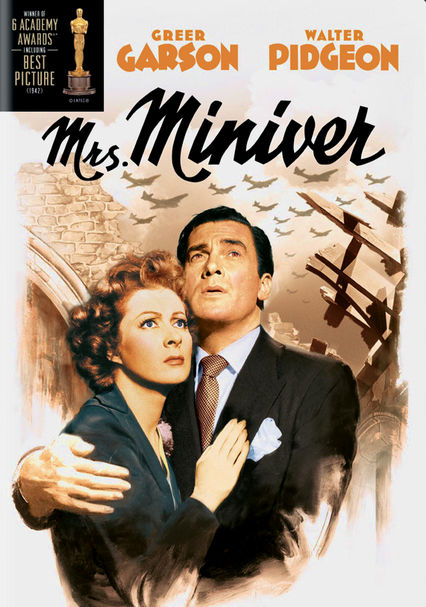
Mrs. Miniver-1942

Mrs. Miniver-1942

Director William Wyler

Starring Greer Garson, Walter Pidgeon

Scott’s Review #841

Reviewed December 13, 2018

Grade: A-

Released in 1942 amid the horrific World War II, Mrs. Miniver (1942) was a smash hit, winning over audiences concerned with the troubled and uncertain times.

Decades later, the film does not age as well as other similarly themed films, but still entertains and tells a good story with an important theme.

The film is nestled in the war drama genre with romance. The film won numerous Oscars the year of its release, including Best Picture and star Greer Garson won for Best Actress.

The story is told from the perspective of an affluent British family and the struggles they face to keep things together during growing peril. The focus primarily remains on an unassuming housewife, Kay Miniver (Garson).

The supporting players do much to flesh out the film with fantastic performances by Walter Pidgeon, Teresa Wright, and Henry Travers as Clem Miniver, Carol Beldon, and Mr. Ballard, respectively.

The direction by William Wyler is astounding and adds to the perfectly crafted ambiance and homey details.

The family lives a comfortable life in a whimsical village outside of London. Quite idealized, they own a large garden and a motorboat on the River Thames.

Along with Kay and Clem, their three children of varying ages and their housekeeper and cook reside with them. Besides the parents, the central couple is son Vin (Richard Ney) and the prominent Carol (Wright); the pair initially disagree on politics but finally fall madly in love.

As the soap opera-style family situations continue, the war grows closer and closer to their house.

As Mrs. Miniver progresses, Vin enlists in the army to assist with war efforts, a German Nazi breaks into the Miniver house, a central character dies, and bombs and planes crash.

Through it all, Kay remains stoic and takes the family through challenging situations, adding melodrama to the film. The woman’s journey and resolve to keep everything and everyone intact is at the core.

The film is mainly a family drama with the Minivers and the townspeople experiencing trials and tribulations. In this way, Mrs. Miniver risks being a one-trick pony, albeit an emotional and teary-eyed one.

The film’s rich characteristics and polished nature make it more than it ought to be, and the superlative cast, production values, and timely release undoubtedly made it what it was in 1942.

In present times, however, Mrs. Miniver seems diminished in importance and relevance with a sappy and overly sentimental feel, World War II in the distant past, and several other wars come and gone.

Wyler carefully packaged the film to hit every emotion, from the bombastic musical score to the proper English characters to the comic relief housekeeper.

The film is a giant Hollywood production, but perhaps a bit too perfect to age with any zest or reason to watch more than once.

The film might be better remembered for its strong female lead. Told from Kay’s perspective, it was unusual in 1942 for a movie (especially with a war theme) not to have the story from the male point of view. Still refreshing in 2018, this quality was downright groundbreaking at the time.

Kay stays strong and proud through the ravages of war that are closing in on her family with unbridled boldness and nary a simpering quality. Wright’s Carol is an early champion for strong, female-driven characters, and, in a more minor way, she is also a muscled female role model.

Mrs. Miniver (1942) is a well-crafted film of its time that displays lavish production values and strong characters worthy of admiration.

The film is a significant win for a glimpse of the 1940s, especially for fans of good, solid drama. There are no significant flaws to harp on, but the overall piece has not aged exceptionally well, and other similar films (Casablanca, 1942) are more memorable.

Oscar Nominations: 6 wins-Outstanding Motion Picture (won), Best Director-William Wyler (won), Best Actor-Walter Pidgeon, Best Actress-Greer Garson (won), Best Supporting Actor-Henry Travers, Best Supporting Actress-Teresa Wright (won), Dame May Whitty, Best Screenplay (won), Best Sound Recording, Best Cinematography, Black-and-White (won), Best Film Editing, Best Special Effects

Roman Holiday-1953

Roman Holiday-1953

Director William Wyler

Starring Gregory Peck, Audrey Hepburn

Scott’s Review #694

Reviewed October 26, 2017

Grade: B+

Roman Holiday, released in 1953, was a box office hit, pleasing legions of fans at the time, and a critical darling.

The film reaped Academy Award nominations, including the coveted Best Actress statuette for a young Audrey Hepburn.

A happy, uplifting story, the film is not diminished by Cinderella in the reverse storyline but rather is a charming, romantic experience immersing itself in pleasing locales of the cultural city of Rome.

Admittedly, Roman Holiday is an example of a film in which I preferred the latter half to the former, but it set the bar high in the romantic comedy genre.

Our heroine, Princess Ann (Hepburn), has it all glamorous life, gorgeous clothes, and assistants tending to her every need and want. However, she is unhappy and trapped in a rigid life that lacks freedoms or decisions, to say nothing of the fun. She catches glimpses of party-goers reveling in each night from her expansive palace window.

Simply put, she is lonely and unfulfilled.

When she sees an opportunity to escape her life for a night, she snatches it and stumbles upon an American reporter, Joe Bradley (Peck). Despite their differing backgrounds, they fall madly in love.

At first, I found something missing in the film, and the chemistry between Peck and Hepburn did not immediately embrace me. As the duo meets Ann, who is drunk from sleeping pills, and Joe is the ultimate nice guy who allows her to sleep in his apartment, the story seems lagging and lacks a good punch.

The pair drives around Rome on a scooter and acts childish and silly. Ann acts girlish because fun is an entirely new concept to her. At this point, the film is reasonable but little more than a farce.

As Roman Holiday progresses, primarily through the final act, the film sheds some of its light skin and becomes much more poignant and meaningful.

Ann and Joe, while in love, realize they will not and cannot embark on a fairy tale ending, which truthfully, would have made Roman Holiday little more than a standard romantic comedy we have all seen before- you know the type- boy meets girl, roadblocks persist, boy whisks girl away and rides off into the sunset together.

While not a dark film, it goes deeper than a transparent, predictable ending.

Related to this point is that Roman Holiday contains a realness that sets it apart from many films undoubtedly drawn from it. Still, unlike this film, it leans into contrived or predictable situations.

As Joe and Ann fall in love, the audience falls in love with them. The main plot hurdle—Joe’s temptation to profit from Ann once he realizes her true identity after a sought-after interview—is earnestly handled without pretension.

Other similar films ought to take note of this.

Indeed, the historic and culturally relevant locales of Rome are a significant selling point of the film, and if these scenes had been shot on a movie set, a lack of authenticity would undoubtedly have emerged.

Instead, we are treated to such fabulous location sequences as the Colosseum, the Tiber River, the Trevi Fountain, and Piazza Venezia. Such a delight is the long sequence of Roman escapades as Joe and Ann traverse the city in giddy bliss.

It is enjoyable to see how Roman Holiday contains no real villain.

There are no physical hurdles to the duo’s relationship—no outside forces plotting to keep Joe and Ann apart, other than their lifestyles. Ann lives in a world of royalty and pampering, but Joe is an everyman, so the chances of living happily ever after are slim.

Film lovers intent on discovering one of the early romantic comedies—one could argue that It Happened One Night (1934) was the first—should watch a feel-good Hollywood classic from 1953. It is rich in honesty, good humor, and raw emotion without being too heavy a melodrama.

After a mediocre start, the film finishes with gusto.

Oscar Nominations: 3 wins-Best Motion Picture, Best Director-William Wyler, Best Actress-Audrey Hepburn (won), Best Supporting Actor-Eddie Albert, Best Screenplay, Best Story (won), Best Art Direction, Black and White, Best Cinematography, Black and White, Best Costume Design, Black-and-White (won), Best Film Editing

The Children’s Hour-1961

The Children’s Hour-1961

Director William Wyler

Starring Audrey Hepburn, Shirley MacLaine, James Garner

Scott’s Review #620

Reviewed March 3, 2017

Grade: B+

The Children’s Hour (1961) is one of the earliest films to center around an LGBTQ+ theme and the subsequent scandals the subject would provoke in the innocent year of 1961-pre Civil Rights and pre-Sexual Revolution.

However, since the film was made in the year that it was, homosexuality was presented as something dark and evil rather than something to be accepted or even embraced.

Still, the film and its director, William Wyler, are brave enough to recognize the topic. Still, they cannot create a compelling film rich with well-written characters and some soap opera-style drama.

The Children’s Hour is based on a play from 1934 and written by Lillian Hellman.

The setting appears to be New England, perhaps Connecticut or Massachusetts, though the film never identifies the exact area.

College friends Karen (Audrey Hepburn) and Martha (Shirley MacLaine) open a private all-girls boarding school catering to their affluent community. They run the school with Martha’s Aunt Lilly, a faded Broadway actress who often hen-pecks the women.

Karen has been dating handsome obstetrician Joe (James Garner) for two years. When he proposes marriage, she hesitantly accepts, which saddens Martha.

All the while, spoiled brat child Mary, furious over being punished by her teachers, plots revenge against Martha and Karen and embellishes a heated discussion between the ladies into a scandalous lie she whispers to her grandmother (Fay Bainter).

The grandmother promptly tells the parents of the other students, who remove their children from the school en masse. The lie is that Karen and Martha are lovers, and Mary witnessed the two women kissing.

Meanwhile, Mary is blackmailing a fellow student, Rosalie (Veronica Cartwright), over a stolen bracelet.

The town ostracizes Martha and Karen.

The Children’s Hour becomes even more compelling when one of the women begins to realize that she does indeed have homosexual feelings towards the other woman and has always harbored anger and resentment as well as feeling “different” from other women.

As well-written as the film is, the fact that the audience does not get to hear what Mary whispers to her grandmother is instead telling and prevents the film from being even more powerful than it is.

Also, the downbeat conclusion to the film sends a clear message that in 1961, audiences were not ready to accept lesbianism as anything to be normalized or to be proud of.

The decision was made to make it abundantly clear that one of the central characters is not a lesbian. Any uncertainty may have risked freaking out mainstream audiences at the time.

Since the traditional opposite-sex romance between Karen and Joe is at the forefront of the film, I did not witness much chemistry between actors Hepburn and Garner. Still, I might have been at the point of achieving a subliminal sexual complexity.

The Children’s Hour and William Wyler deserve heaps of praise for going so far as to suggest that censorship in film in 1961 would allow them to offer nuggets of progressivism mixed into a brave film.

Incidentally, Wyler made another version of this film in 1936 named These Three. Because of the Hays Code, any hint of lesbianism was forbidden, causing Wyler to create a standard story of a love triangle between the three, with both Martha and Karen pining after Joe.

What a difference a couple of decades make!

MacLaine and Hepburn must be credited with carrying the film and eliciting nice chemistry between the women. However, it is too subtle to be realized if the chemistry is of a friendship level or a sexual nature.

And I adore how Wyler makes both characters rather glamorous and avoids stereotypical characteristics.

Oscar Nominations: Best Supporting Actress-Fay Bainter, Best Sound, Best Art Direction, Black-and-White, Best Cinematography, Black-and-White, Best Costume Design, Black-and-White

Carrie-1952

Carrie-1952

Director William Wyler

Starring Jennifer Jones, Laurence Olivier

Scott’s Review #240

60011689

Reviewed May 3, 2015

Grade: B

Carrie, not to be confused with the 1976 horror classic Brian DePalma, is a 1952 drama starring Laurence Olivier and Jennifer Jones—two big Hollywood stars of the time.

Shot in black and white, the film tells the story of a self-titled ingénue (Jones) from a Midwest upbringing who travels to Chicago to make her fortune.

Attempting to launch her career, Carrie becomes immersed in a love triangle with Olivier, who is unhappily married and runs a restaurant with salesman Charles Drouet, played by Eddie Albert.

Directed by William Wyler, the film has a melancholy tone as one of the characters sinks into a world of despair.

The highlight of this film is Laurence Olivier’s excellent performance as George Hurstwood, who goes from being a successful restaurant manager with an affluent existence to a poverty-stricken, lonely, and broken older man.

Olivier is so effortless and believable in his performance, as he always was.

However, I felt that Jennifer Jones was miscast. While attractive, yes, I did not think that every man would lust after her on sight alone, as was needed for the character of Carrie. Her acting, while okay, is not on the level of either Albert or especially Olivier, with whom she shares much screen time.

Perhaps Vivian Leigh, Teresa Wright, or Kim Novak might have been wiser choices.

The story itself is compelling and engaging. Here we have a woman- at the turn of the twentieth century- forging ahead to make it on her own- almost unthinkable for a woman, taking menial jobs as a sewing worker in a factory to scrape by.

Carrie resists the urge to become a rich husband-seeking gal and believes in marriage and true love. That is why she is devastated when she learns that George is married.

Will true love win out for them? This seems to be the central aspect of the film.

Behind-the-scenes issues may have contributed to the problems that appear onscreen. Wyler reportedly did not want to cast Jones, Olivier did not like Jones, Olivier was injured during much of the filming, and the film’s ending was changed to provide a “happier” ending.

Initially, George was to commit suicide, which might have successfully made the film more shocking and heartbreaking.

Containing beautiful costumes and interesting cinematography, Carrie has positives but might have been much better than the final product ended up being, but for poor casting and real-life dramas that hurt the film.

Oscar Nominations: Best Art Direction, Black-and-White, Best Costume Design, Black-and-White

Jezebel-1938

Jezebel-1938

Director William Wyler

Starring Bette Davis

Scott’s Review #236

220px-Jesebel_movieposter

Reviewed April 18, 2015

Grade: B+

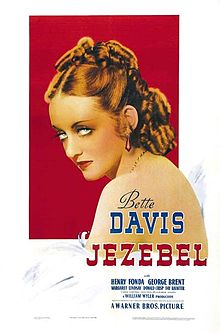
An excellent showcase for the young and lovely Bette Davis, Jezebel (1938) is a very early film role for Davis. It is similar to Gone with the Wind, a film Davis reportedly lost to Vivian Leigh.

One wonders how she would have made the character of Scarlett O’Hara her own, and Jezebel is on a journey exploring that possibility.

Acclaimed director William Wyler directed Jezebel, set in New Orleans in 1852 (pre-Civil War). Davis plays spoiled southern belle Julie Marsden, who is engaged to wealthy banker Preston Dillard, played by Henry Fonda.

After a dispute in which Julie selfishly feels her needs are unmet, she shockingly wears a red dress to a sophisticated ball where unmarried women are expected to wear white. This causes a scandal that results in Preston dumping Julie and leaving town.

Cocky Julie expects Preston to return to town and grovel for her forgiveness, but when he does return with a life-changing twist, the drama unfolds. Circumstances include a savage duel, longing for love, and atonement.

Fans of Davis will love Jezebel for the sheer excellence that she brings to the screen. Mesmerizing with those soulful, big eyes and excellent mannerisms, she exudes confidence and sophistication. Admittedly, this is my earliest Davis experience, and she shimmers on-screen.

Bette Davis is perfectly cast. Interesting to note are the innocent qualities early Davis possessed. Later afflicted with a hoarse, deep voice and ravaged beauty after years of alcohol and cigarette abuse, Davis in Jezebel is virginal and debutante-looking.

I find Julie’s wardrobe choices interesting. Her horseback riding outfit, the vixen-like red dress, the virginal white dress, and the dark raven cape at the climax of the film, as well as the various lighting techniques Wyler used to showcase Davis’s face, almost look like candlelight.

The film is similar to Gone with the Wind (preceded by a year). Julie, like Scarlett, is a rich, selfish girl who likes to manipulate men. Both films feature a love triangle prevalent in the story and broken hearts. The enslaved people in both films resemble each other, though they are a bit more glamorous in Jezebel.

The introduction of the yellow fever storyline and the sick and weak lying around in droves is similar to the wounded and dying soldier scene in Gone with the Wind, where the ill and dying lie in pain. The periods, triangle, and southern charms all heavily play in both. It is impossible not to compare the two films.

Melodrama did very well; Jezebel (1938) is to be admired as it is a film featuring a strong female character, something lacking in the film then (1938) and shamefully still lacking in cinema today! Jezebel is an actual “ambitious woman’s movie.”

Oscar Nominations: 2 wins- Outstanding Production, Best Actress-Bette Davis (won), Best Supporting Actress-Fay Bainter (won), Best Scoring, Best Cinematography