Tag Archives: Randy Quaid

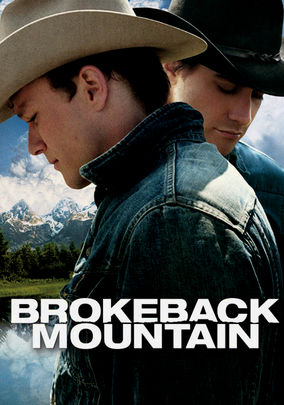
Brokeback Mountain-2005

Brokeback Mountain-2005

Director Ang Lee

Starring Heath Ledger, Jake Gyllenhaal

Top 250 Films #25

Scott’s Review #338
70023965

Reviewed January 9, 2016

Grade: A

Brokeback Mountain (2005) is a groundbreaking film and one of the most significant releases of the 2000s. Never before had an LGBT film received as much exposure and widespread viewership as this one did.

Robbed of the 2005 Best Picture Academy Award (the great, but not as great, Crash won), Brokeback Mountain received other tremendous accolades and word-of-mouth buzz that helped it achieve great success.

A treasure that must always be remembered and appreciated.

Perfectly cast, Heath Ledger and Jake Gyllenhaal play two cowboys who fall madly in love with each other. The film spans a period from 1963 to the early 1980s. Through the years, we see their unbreakable bond tested by outside factors- namely, being gay is forbidden at this time and location, Wyoming and Texas.

Jack Swift (Gyllenhaal) and Ennis Del Mar (Ledger) meet one summer in 1963 when they are both hired by grizzled Joe Aguirre (Randy Quaid) to herd sheep on Brokeback Mountain in remote Wyoming.

They immediately form a friendship that turns physical on one drunken night. From this point, the men are inseparable and share a insurmountable passion.

Due to the times, there is no possible way they can openly share life, so they arrange for periodic “fishing trips”, away from their wives and children so that they can spend time together in secret.

The chemistry is evident between Ledger and Gyllenhaal, which is extremely important to the success of the film.

The audience needs to truly buy their bond and director Ang Lee is successful at eliciting wonderful performances from each actor. This is especially crucial during the first forty-five minutes of the film as all the scenes are only the two actors together.

The famous “tent” scene, in which Jack’s and Ennis’s passion first erupts is perfectly choreographed- it is as much animalistic as it is passionate and this sets the tone for the rest of the film.

Eventually, other characters are introduced and Ennis and Jack live lives largely separate from each other. Michelle Williams plays Alma, a kind-hearted country girl, married to Ennis. She accidentally stumbles on Jack and Ennis’s secret and keeps this hidden throughout the years.

Williams is fantastic in the role- sweet, yet saddled with the pain of knowing her husband is in love with another man causes her to mistrust and eventually destroys their marriage.

Jack forges a life in Texas and marries well-to-do Lureen (Anne Hathaway), but the marriage is a sham, Lureen’s father hates Jack, and Jack cannot forget Ennis. Jack is the aggressor, the one more confident with his sexuality, and one would surmise, would be the one more likely to be “out” if circumstances were different.

He looks for other men, even going to Mexico to find some companionship.

The ending of the film is tragic and heartbreaking and we witness Ennis being a good father to his now grown-up kids. A wonderful scene is written between Ledger and Kate Mara, who plays his daughter. She asks the lonely Ennis to attend her wedding and the scene is sweet and tender.

Another scene involving Ennis meeting Jack’s parents is monumental- as important as what is said in this wonderful scene is what is left unsaid.

Brokeback Mountain (2005) is an honest, graceful, and brave film, that thanks to the talents and direction of Ang Lee, was able to be made.

The exceptional cast led by Ledger and Gyllenhaal is dynamic and enables the film to come together as one masterpiece, that will surely never be forgotten.

Oscar Nominations: 3 wins-Best Picture, Best Director-Ang Lee (won), Best Actor-Heath Ledger, Best Supporting Actor-Jake Gyllenhaal, Best Supporting Actress-Michelle Williams, Best Adapted Screenplay (won), Best Original Score (won), Best Cinematography

Independent Spirit Award Nominations: 2 wins-Best Feature (won), Best Director-Ang Lee (won), Best Male Lead-Heath Ledger, Best Supporting Female-Michelle Williams
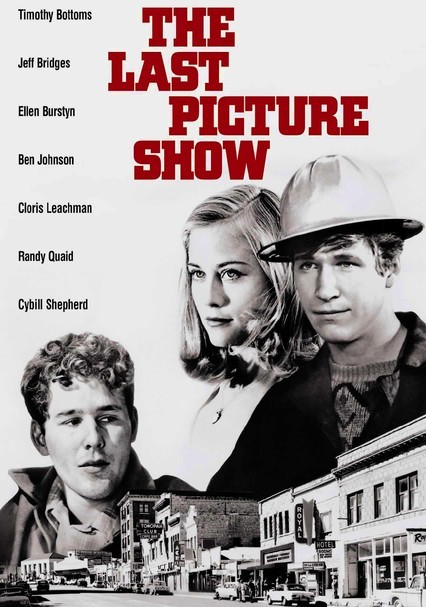
The Last Picture Show-1971

The Last Picture Show-1971

Director Peter Bogdanovich

Starring Timothy Bottoms, Jeff Bridges, Cybill Shepherd

Top 250 Films #121

Scott’s Review #1,349

Reviewed March 9, 2023

Grade: A

1971 was a great year in American cinema, from The French Connection to Willy Wonka and the Chocolate Factory to Fiddler on the Roof to Dirty Harry.

The list goes on and on.

The brilliantly filmed and directed The Last Picture Show is easily ensconced in the year’s top ten, featuring an embarrassment of riches across the board. An important thing to promote is the successful use of the dusty setting and time, which is the film’s secret sauce.

Peter Bogdanovich crafts a dreary coming-of-age tale set in landlocked Texas. The film is loosely based on a 1966 novel of the same name written by Larry McMurtry.

The film includes many songs by Hank Williams Sr. and other country & Western and 1950s popular music recording artists to reflect the era.

Most of the townsfolk are bored to tears in the windswept hamlet of Anarene, Texas. Their saving grace is a local cinema (the picture show) run by the popular Sam the Lion (Ben Johnson), which is about to close its doors forever.

Others frequent the café run by sultry waitress Genevieve (Eileen Brennan), who knows everyone’s business.

The gossip and scandals run wild throughout town, following several principal characters and their trials and tribulations. High school students Sonny (Timothy Bottoms) and Duane (Jeff Bridges) lust after flirty Jacy Farrow (Cybill Shepherd) while trying to figure out their futures.

Sonny also finds time for an affair with depressed housewife Ruth Popper (Cloris Leachman), twenty years his senior, who is married to the school gym teacher, Coach Popper (Bill Thurman), who may be gay.

The year is 1951, when the Korean War is raging, and the once-prosperous oil town is in significant decline.

Bogdanovich’s apt camerawork, shot in black and white, is central to the film and the winning recipe (well, one of them). If The Last Picture Show were shot in color or worse yet, colorized, it would detract from the proper mood of sadness.

The exterior scenes involve swirling dust and wide-angle shots of the main street, often enough to relay a comparison to a ghost town, especially as events go along. There are also some sequences featuring vehicles or highway scenes, evoking thoughts of escape or departure.

The other key ingredient is the ensemble of characters led by exceptional acting. Sonny is the handsome lead character with a lifetime ahead of him and the kindest of all the players. His all-American good looks infuse a vulnerability into the character with vulnerability, especially in scenes with his mentor, Sam, and his friend, Billy.

Other quiet scenes reveal much about the supporting characters. Ruth sadly hangs the wash on her clothesline, looking worn and weary, while Genevieve grills a cheeseburger in the café, cigarette dangling and her once youthful aspirations slipping away.

Leachman and Johnson, both Academy Award winners in the supporting categories, deserve their awards. They successfully portray their anger in quiet ways, and both have dignity and self-worth, making their characters complex and revered.

The heartiest scenes belong to the younger set as they deal with simmering sexuality and hopes for college. Jacy experiments with sex, even sleeping with the man who her mother Lois (Burstyn) is having an affair with.

Shepherd also presents Jacy as vulnerable as she awkwardly strips off her clothes during a pool party, encouraged by a handsome boy she hopes to impress. At times, she is childish, other times a selfish bitch. It’s mentioned that her family is wealthy, so it’s assumed she is spoiled.

The 1950s usually provide a level of nostalgia and good, old-fashioned, carefree Americana.

The Last Picture Show (1971), thanks to the flawless direction and screenwriting of Bogdanovich and McMurtry, instead paints a perfect portrait of misspent youth and shattered dreams.

Oscar Nominations: 2 wins-Best Picture, Best Director-Peter Bogdanovich, Best Supporting Actor-Ben Johnson (won), Jeff Bridges, Best Supporting Actress-Cloris Leachman (won), Ellen Burstyn, Best Screenplay-Based on Material from Another Medium, Best Cinematography

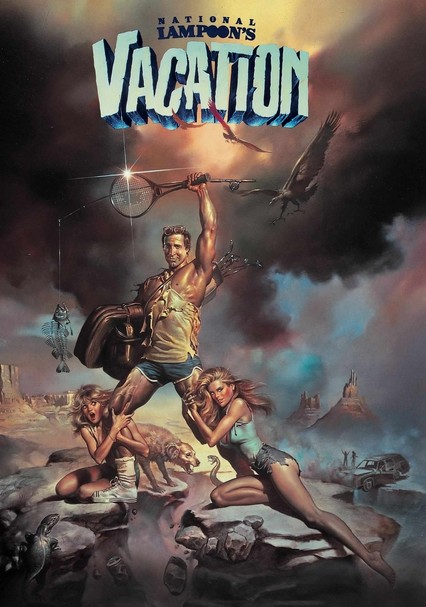
National Lampoon’s Vacation-1983

National Lampoon’s Vacation-1983

Director Harold Ramis

Starring Chevy Chase, Beverly D’Angelo

Scott’s Review #1,300

Reviewed September 19, 2022

Grade: A-

The film that spawned a slew of sequels, remakes, spoofs, and other things, National Lampoon’s Vacation (1983) had more influence on 1980s movies than it probably should have.

The slapstick road trip became overused familiar territory, a situation comedy rife with silly scenarios and possibilities.

Despite having started it all, my favorite National Lampoon will always be the Christmas Vacation installment from 1989 but for some snickers, hoots, and belly laughs, Vacation is fresh and authentic. holding up well in the nostalgia category.

So what if Chevy Chase was a douchebag in real life? His portrayal of Clark Griswold is his finest achievement and is firmly placed in the annals of slapstick comedy’s greatest characters. Endless quotes and impersonations of the bumbling dad have emerged over the years.

Great fun is looking for other comedy actors like Eugene Levy and  John Candy who later would forge their path into comedy legend.

Accompanied by their children Audrey and Rusty, played by Dana Barron and Anthony Michael Hall, Clark Griswold (Chase) and his wife, Ellen (Beverly D’Angelo), decide to drive instead of fly from Illinois to a California amusement park named Walley World to enjoy a much-needed summer break.

Clark is convinced that some togetherness is just what the family needs.

As Clark increasingly fixates on a mysterious, sexy woman (the acting debut of Christie Brinkley) driving a red sports car, the Griswolds deal with car problems and the death of a family member, Aunt Edna (Imogene Coca) as they face hi-jinks on the way to their vacation.

Exhausted, they finally reach Los Angeles, but, when Clark worries that the trip is being derailed again, he acts impulsively to get his family to the park.

National Lampoon’s Vacation is a rarity in screwball comedy where almost all of the setups and gimmicks work. Typically, the situations feel stale and tried and true but there is an authenticity brimming over its cup, and that’s largely thanks to Chase.

Don’t get me wrong. The film is hardly worthy of study in film school and the script is polished and patterned out but like other screwball comedies I love like Caddyshack (1980) and Clue (1985), it’s got something solid.

I think it’s because the characters are very relatable. Who doesn’t have a wacky Aunt Edna or a Cousin Eddie (Randy Quaid) somewhere in their family tree?

Long-suffering, suburban housewife Mom Ellen has a heart of gold and represents the classic 1970s or 1980s homemaker with a glimmer of progressiveness.

She dutifully scrambles eggs for breakfast and shops for cereal and dog food but also keeps Clark at bay before he does something ridiculous.

Chase and D’Angelo have tremendous chemistry bouncing one-liners off each other as naturally as a real-life conversation so that we buy them as husband and wife.

What kid who grew up in this period can’t relate to the horrid paneled oversized station wagon that ran rampant in suburbia? I sure remember those gas guzzlers eventually replaced by the minivan.

It’s perfection to see that style of car represented in this film as it adds to the hilarity and is a character in itself.

The fun continues because the Griswolds embark on travel across the United States. So, the film provides a slice of Americana and harkens back to a time when if you were an American you were united and bonded even if you had differences.

What National Lampoon’s Vacation (1983) does so well watching in modern times is remind us what that felt like. An adventure across the good ‘ole USA was not such a bad thing and the folks you met along the way were friendly and warm without suspicion.

The film is like a dear old friend who has emerged from the woodwork, dusty, but still full of life.

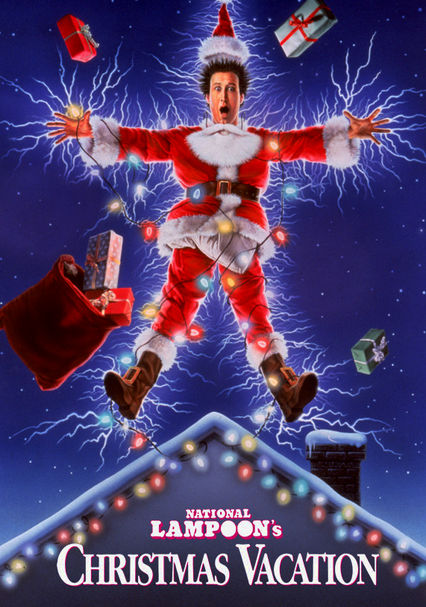
National Lampoon’s Christmas Vacation-1989

National Lampoon’s Christmas Vacation-1989

Director Jeremiah S. Chechik

Starring Chevy Chase, Beverly D’Angelo, Randy Quaid

Scott’s Review #1,248

Reviewed April 23, 2022

Grade: A-

Made several years after the first in the National Lampoon’s Vacation series (1983-2015), the inevitable production of National Lampoon’s Christmas Vacation (1989) is my personal favorite of the bunch and the most laugh-out-loud.

Silly personified but the jokes work and the enjoyment carries throughout the entire running time.

In retrospect, you knew they were going to do it. What better fodder for the bumbling Griswold family than to have them reunite with extended family on such a seasonal holiday? The gags and awkward situations are ripe for the picking as situation after setup is done exceptionally well and with grand humor.

The silliness works and the film is a recommended watch around the holidays with the family gathered around. Viewers can either relate directly to the film or inevitably know families that resemble the incompetent yet loveable Griswolds.

As the holidays approach, Clark Griswold (Chevy Chase) is determined to have a perfect family Christmas. He motivates his wife, Ellen (Beverly D’Angelo), and their children to make sure everything is in line, including the tree and house decorations.

Naturally, things quickly go awry in the greatest of humor.

His hick cousin, Eddie (Randy Quaid), and his family show up unplanned and start living in their camper on the Griswold property. Even worse, Clark’s employers renege on the holiday bonus he needs causing a great deal of stress for the family patriarch.

For starters, the film has a cool holiday vibe. The setting is wisely the midwest United States somewhere outside of Chicago, Illinois. Snow is to be found everywhere and Christmas decorations and lights are lit all over the place throughout the film. This equates to a suburban and homey atmosphere that is warming and friendly.

Most viewers can snuggle in amid a warm fireplace and delicious hot cocoa and enjoy the film. The environment is one of National Lampoon’s Christmas Vacation’s finest achievements.

A classic moment and the film’s funniest scene occurs when Clark excitedly decorates the inside and outside of the house to the nth degree and blows the town’s electric circuit as a result leading to uproar among his neighbors. Proud Clark’s ego is suddenly deflated and the man must rise above it all to somehow enjoy his family Christmas.

Watching the film decades after its release is still great fun as a nostalgia offering. The tacky Griswold Ford LTD station wagon with paneled siding is garish and unsightly (then and now) and anyone growing up in the 1980s can easily recall when suburban families would pile into this gas-guzzling car.

Not every aspect works perfectly in National Lampoon’s Christmas Vacation like the unappealing yuppie neighbors Todd and Margo (played by Nicholas Guest and Julia Louis-Dreyfus) or Eddie and his redneck family. These roles are a bit too over the top and secondary inclusions to be the major win that the film is.

The real wins from the supporting cast are Clark’s immediate family. His parents and Ellen’s parents are perfectly cast and provide excellent comic timing and seasoned wit. Special notice goes to John Randolph, Diane Ladd, and Doris Roberts.

And who won’t fall in love with Clark’s senile Aunt Bethany played with hilarity by Mae Questel (the voices for animated Betty Boop and Olive Oyl)?

Predictably, and well-intentioned, all the Griswold problems quickly fade away when Clark receives his annual Christmas bonus after all and all characters have a lovely send-off while singing ‘The Star-Spangled Banner’ just in the odd way that the Griswolds would do.

National Lampoon’s Christmas Vacation (1989) used to be a traditional Christmas viewing for me but has shamefully fallen out of favor over the years. It might be time to dust off this forever gem that provides laugh after laugh, fun, and togetherness for the whole family.

What’s Up, Doc? -1972

What’s Up, Doc? -1972

Director Peter Bogdanovich

Starring Barbra Streisand, Ryan O’Neal 

Scott’s Review #1,162

Reviewed July 20, 2021

Grade: B+

Careful trepidation is advised for filmmakers venturing into humorous or slapstick comedy waters, especially if they are better known for dramatic films.

Since we’re talking 1970s cinema here, there is only one Mel Brooks, and plenty of films with physical humor and gags fail miserably.

What’s Up, Doc? (1972) is not one of them and is a refreshing success.

Brooks’s influence can easily be seen throughout the film, and this is no surprise. Before doing any post-film research, I was immediately reminded of the popular television sitcom Get Smart, which ran from 1965 to 1970.

Buck Henry, a frequent Brooks collaborator, co-created Get Smart and wrote the screenplay for What’s Up Doc?

The antics and comedic moments scream Brooks. If one is unfamiliar, it is like watching a Mel Brooks film.

Director Peter Bogdanovich, most notably known for the 1971 masterpiece The Last Picture Show, changes course, opting for comedy with lots of screwball situations and physical comedy that are completely different from his previous work.

Speaking of Brooks, Madeline Kahn, a mainstay of his films, appears as a particularly neurotic character named Eunice Burns. It is her first film role.

I must say I was thoroughly impressed by What’s Up, Doc?, which oddly pairs two Hollywood superstars of the time, Barbra Streisand and Ryan O’Neal.

One might be surprised to think of the duo as romantic partners, and the chemistry comes and goes throughout the film, but the antics and quick dialogue are joyous and timed perfectly between the actors.

What’s Up, Doc? intends to pay homage to comedy films of the 1930s and 1940s, especially popular Warner Bros. Bugs Bunny cartoons, hence the title, but the reference doesn’t appear until the final scene.

This caused me to ponder why the specific title was used.

The premise goes something like this. Doctor Howard Bannister (O’Neal) arrives in San Francisco to compete for a research grant in music. He is accompanied by his overbearing wife, Eunice (Khan).

Already nervous and on edge because of Eunice, he meets a strange yet charming woman named Judy Maxwell, played by Streisand, at the drugstore. They are drawn to each other yet are not sure why. She both annoys and fascinates him.

In a subplot, a woman has her jewels stolen, and a government whistleblower arrives with his stolen top-secret papers. Ironically, all the players have identical red plaid bags and stay in neighboring hotel rooms, adding to the confusion and hilarity.

My favorite moments are the screwball scenes. Especially memorable are the hilarious sequences that take place in and around the hotel guest rooms as a constant in-and-out of parallel rooms unfolds. Each character has a particular motivation as they sneak around the hallways and rooms.

It is delightful fun.

When I realized that Streisand and O’Neal were the romantic leads, I was skeptical at first, but their chemistry is not bad. They are not the sort of couple that he and Ali MacGraw were in Love Story (1970), and certainly have no heavy drama to play, but they play comedy off of each other well.

The film makes a joke about the film Love Story.

Unfamiliar to me, I am glad I took the chance and watched What’s Up Doc? (1972). The film provides laughs, entertainment, and good chemistry among the cast who know how to deliver rapturous humor with perfect timing.

Rated G, the film can be enjoyed by the entire family as there is not a double entendre or otherwise offensive moment to be found—just good, old-fashioned humor. I would argue that the film influenced the 1970s as much as it paid homage to earlier comedy films.

I would see it again.