Tag Archives: Linda Cardellini

Brokeback Mountain-2005

Brokeback Mountain-2005

Director Ang Lee

Starring Heath Ledger, Jake Gyllenhaal

Top 250 Films #25

Scott’s Review #338
70023965

Reviewed January 9, 2016

Grade: A

Brokeback Mountain (2005) is a groundbreaking film and one of the most significant releases of the 2000s. Never before had an LGBT film received as much exposure and widespread viewership as this one did.

Robbed of the 2005 Best Picture Academy Award (the great, but not as great, Crash won), Brokeback Mountain received other tremendous accolades and word-of-mouth buzz that helped it achieve great success.

A treasure that must always be remembered and appreciated.

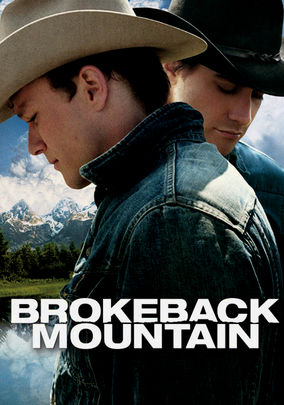
Perfectly cast, Heath Ledger and Jake Gyllenhaal play two cowboys who fall madly in love with each other. The film spans a period from 1963 to the early 1980s. Through the years, we see their unbreakable bond tested by outside factors- namely, being gay is forbidden at this time and location, Wyoming and Texas.

Jack Swift (Gyllenhaal) and Ennis Del Mar (Ledger) meet one summer in 1963 when they are both hired by grizzled Joe Aguirre (Randy Quaid) to herd sheep on Brokeback Mountain in remote Wyoming.

They immediately form a friendship that turns physical on one drunken night. From this point, the men are inseparable and share a insurmountable passion.

Due to the times, there is no possible way they can openly share life, so they arrange for periodic “fishing trips”, away from their wives and children so that they can spend time together in secret.

The chemistry is evident between Ledger and Gyllenhaal, which is extremely important to the success of the film.

The audience needs to truly buy their bond and director Ang Lee is successful at eliciting wonderful performances from each actor. This is especially crucial during the first forty-five minutes of the film as all the scenes are only the two actors together.

The famous “tent” scene, in which Jack’s and Ennis’s passion first erupts is perfectly choreographed- it is as much animalistic as it is passionate and this sets the tone for the rest of the film.

Eventually, other characters are introduced and Ennis and Jack live lives largely separate from each other. Michelle Williams plays Alma, a kind-hearted country girl, married to Ennis. She accidentally stumbles on Jack and Ennis’s secret and keeps this hidden throughout the years.

Williams is fantastic in the role- sweet, yet saddled with the pain of knowing her husband is in love with another man causes her to mistrust and eventually destroys their marriage.

Jack forges a life in Texas and marries well-to-do Lureen (Anne Hathaway), but the marriage is a sham, Lureen’s father hates Jack, and Jack cannot forget Ennis. Jack is the aggressor, the one more confident with his sexuality, and one would surmise, would be the one more likely to be “out” if circumstances were different.

He looks for other men, even going to Mexico to find some companionship.

The ending of the film is tragic and heartbreaking and we witness Ennis being a good father to his now grown-up kids. A wonderful scene is written between Ledger and Kate Mara, who plays his daughter. She asks the lonely Ennis to attend her wedding and the scene is sweet and tender.

Another scene involving Ennis meeting Jack’s parents is monumental- as important as what is said in this wonderful scene is what is left unsaid.

Brokeback Mountain (2005) is an honest, graceful, and brave film, that thanks to the talents and direction of Ang Lee, was able to be made.

The exceptional cast led by Ledger and Gyllenhaal is dynamic and enables the film to come together as one masterpiece, that will surely never be forgotten.

Oscar Nominations: 3 wins-Best Picture, Best Director-Ang Lee (won), Best Actor-Heath Ledger, Best Supporting Actor-Jake Gyllenhaal, Best Supporting Actress-Michelle Williams, Best Adapted Screenplay (won), Best Original Score (won), Best Cinematography

Independent Spirit Award Nominations: 2 wins-Best Feature (won), Best Director-Ang Lee (won), Best Male Lead-Heath Ledger, Best Supporting Female-Michelle Williams
The Curse of La Llorona-2019

The Curse of La Llorona-2019

Director Michael Chaves

Starring Linda Cardellini

Scott’s Review #937

Reviewed August 29, 2019

Grade: C+

The Curse of La Llorona (2019) is a modern-day horror flick that possesses all the standard and expected trimmings that a genre film of this ilk usually has.

The story is left undeveloped, with many possibilities unexplored in favor of a by-the-numbers experience.

Linda Cardellini, an outstanding actress, consistently exceeds the material she is given, yet she often comes up empty-handed.

It is the sixth installment in The Conjuring Universe franchise.

The film does have jumps and frights galore, and a creepy ghost/spirit character that is scary, but more was expected from this film, which left me ultimately disappointed.

First-time director Michael Chaves is a novice, so a bit of leniency should be given as he develops a limited product, but he could have a strong future ahead of him if he works on story elements rather than focuses on merely scare tactics.

In 1673, in Mexico, a family happily plays in a field when one of the boys suddenly witnesses his mother drowning his brother, and soon suffers the same fate.

This incident becomes part of Mexican folklore and is subsequently feared by many. In present times (1973), caseworker Anna (Cardellini) is sent to investigate a woman who has locked her two sons in a room. Despite the woman’s claims that she is trying to save their lives, Anna brings them into police custody.

When the boys are later found drowned, the woman curses Anna, whose two young children are now in danger.

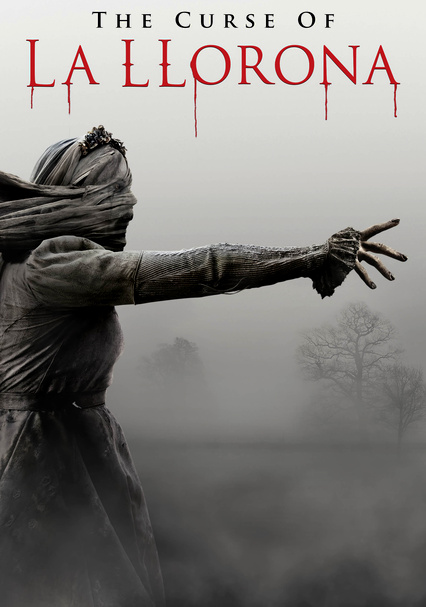
The positives are that Chaves makes a competent film. It is not bad and provides a level of familiarity, with creaking doors, cracking mirrors, and an evil spirit named “The Weeping Woman” that are effective and provide a scare or two at just the right moments.

Characters frequently see the spirit through a reflection, and since the film is set almost entirely at night, this tactic is successful.

Cardellini, garnering recent fame for her role in the Oscar-winning film Green Book (2018), undoubtedly signed on for The Curse of La Llorona before all the Oscar wins.

The actress gives it her all but can hardly save the film, though she does provide the professionalism that raises the film above a terrible experience. Not nearly enough praise will be given to the young child actors playing Anna’s kids.

Largely one-note and lacking any evident experience, ironically, they mirror Chavez’s inexperience. They react to the scenes as they are directed, but never add any depth or authenticity to their performances.

Besides Cardellini and the horror elements, The Curse of La Llorona lacks much shine or substance. The plot and characters are forgettable, and the viewer is left shrugging their shoulders once the film concludes, essentially forgetting the production thirty minutes later.

The story, based on folklore, is weak.

The audience is expected to believe the spirit killed her children and now roams the earth looking for other sacrificial pairs of children so that she may bring hers back from the dead?

In one perplexing sequence, the Weeping Woman softens when looking at Anna’s kids, her demonic face reveals how she once was a beautiful woman. She suddenly changes course and reverts to the evil spirit she had been.

Granted, the special effects are impressive, but this is one example of a missed opportunity. Why couldn’t we be given a meatier backstory of the motivations of the woman?

Other misses include the 1970s Los Angeles period, featuring a feathered hairstyle and a tight sweater worn by Anna, a clip of an old television show, and a car or two overlooking the City of Angels, which hardly appreciates the decade or the metropolis.

Especially laughable are the modern hairstyles and looks of the children, including the kid from the seventeenth century.

Any connection to The Conjuring (2013) or Annabelle (2014) is limited, as one character (Father Perez), appearing briefly holding the Annabelle doll, barely warrants mention.

The Curse of La Llorona (2019) may only be a blueprint of what director Chaves can build on in his career, and a bright future for him is not out of the question.

Building on the Conjuring franchise is a good place to start with a specific audience, who are sure to see this film. He should focus on developing his basics and creating films with more depth, character development, twists, and turns.

Green Book-2018

Green Book-2018

Director Peter Farrelly

Starring Viggo Mortensen, Mahershala Ali

Scott’s Review #839

Reviewed December 10, 2018

Grade: A

To be candid, it was not originally on my radar to see Green Book (2018) despite the high regard and the bevy of award nominations reaped upon the film.

From the trailers, and admittedly my assumptions, the production looked somewhat like a Driving Miss Daisy (1989) role reversal with the standard over-saturation and glossy view of racism.

I confess to being wrong in my initial assessment. Green Book is a wonderful film with a multitude of worthy efforts. It successfully crosses the drama and comedy barriers and delivers an astounding message of compassion and benevolence.

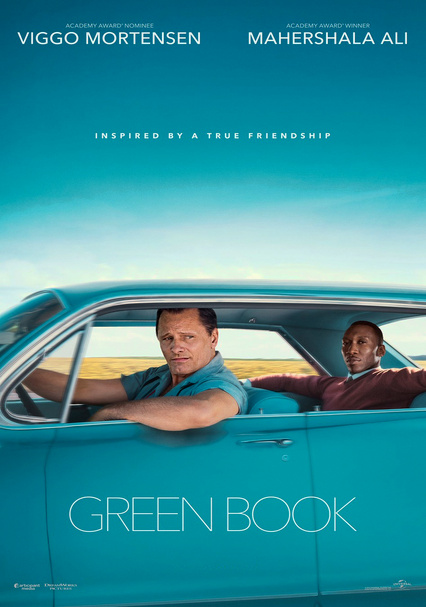
Viggo Mortensen and Mahershala Ali exhibit tremendous flair and fine chemistry as an Italian blue-collar driver and an astute African-American classical pianist.

The men travel together in the Deep South circa 1962 on a concert tour requested by the renowned musician despite the dangers of southern racism and prejudice.

Mortensen’s Tony Lip is a struggling New York City bouncer who needs any gig for two months while the club he works for is closed for renovations. Ali plays a sophisticated musician who needs a driver with a measure of toughness, and Tony comes highly recommended.

The two men initially are strangers but form a close-knit bond and a deep understanding of each other as they become better acquainted during their journey.

The first half of the film focuses on Tony.

As viewers, we experience his Italian lifestyle. He possesses a strong family unit and a dedicated wife, Dolores (Linda Cardellini). He loves to eat and won a hot dog eating contest for $50 to pay the rent. He thinks nothing of beating an unsavory character to a bloody pulp if they are out of line and have more than one link to the mafia.

Still, he is a decent man, with a salt-of-the-earth mentality, and loves his family.

“Doc” Don Shirley (Ali) is the opposite of Tony. Raised as a highly gifted musical prodigy, he surrounds himself with high culture, is well-versed in many languages, and is of affluent means. Nonetheless, he is a wounded soul and drinks himself into oblivion each night, frequently deep in thought, pondering life and its problems.

Despite being black, he knows nothing about black culture.

Don is highly uncomfortable in his skin, while Tony is happy with who he is, a significant point that the film hits home on as the men have conflict. Don feels Tony can do much better to educate himself, while Tony sees nothing wrong with being who he is. The men forge a middle ground as they come to respect each other.

Ferrelli does a fantastic job in showing Tony as Don’s protector as he is accosted by rednecks or is caught with another man at the YMCA.

In turn, Don helps Tony write warm love letters to Dolores.

Green Book is a film about friendship and how different backgrounds can result in closeness and respect.

The film is humanistic in its approach to an overall message and is the feel-good film of 2018 without the slightest thread of sappiness or contrived situations. It is best about two real-life men who remained friends until their deaths.

Director Peter Farrelly, known chiefly for silly films such as Dumb and Dumber (1994), finds breakthrough success with Green Book.

The film is mainstream material, but of a sort that can be appreciated for the good it exudes. Don exhibits racism on more than one occasion- Birmingham and Mississippi specifically- but also experiences kindness from other folks.

Worth noting is that Don experiences discrimination and abuse not only from whites but also from blacks. Farrelly avoids the usual stereotypes or elicits humor from them as in the scene where Tony teaches Don to enjoy fried chicken, a foreign food to Don.

A key point of the film occurs early on when Dolores graciously invites two black workers to repair, thinking nothing of treating the men to a refreshing lemonade.

Seeing the empty glasses in the sink, Tony throws them in the trash, not wanting to drink from the same glasses. Is Tony, along with his family, racist or uncomfortable with blacks? Regardless of the answer, they think very differently after the film, which is monumental.

The final sequence of Green Book is teary, heartfelt, and provides a feeling of incredible warmth.

In the tumultuous times of current American history, Green Book (2018) is sentimental and inspirational in a day when racism once again reared its ugly head, thanks to the chaotic political environment.

The film is a lesson in how far we have come as a society, but also in how things have not changed so much and how much further we need to go to create equality for all.

Farrelly creates a timely and wonderful film that everyone can appreciate.

Oscar Nominations: 3 wins- Best Picture (won), Best Actor- Viggo Mortensen, Best Supporting Actor- Mahershala Ali (won), Best Original Screenplay (won), Best Film Editing

Legally Blonde-2001

Legally Blonde-2001

Director Robert Luketic

Starring Reese Witherspoon, Luke Wilson

Scott’s Review #807

Reviewed August 30, 2018

Grade: B+

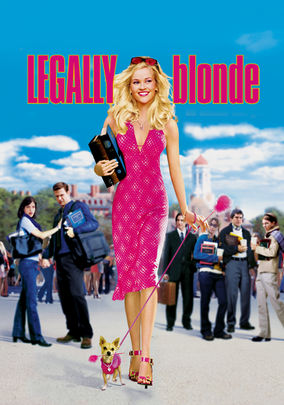
Legally Blonde (2001) is a film that by all accounts should have been a hot mess, but for some reason is a great ball of fun. High art it ain’t by any means, and the plot is implausible beyond belief, and suspension of disbelief must be securely tucked away.

Despite portraying more serious roles both before and after this film, Reese Witherspoon is largely responsible for the success and is closely associated with this role.

Quite simply, all the elements manage to align with perfection in this film.

Elle Woods (Witherspoon) is president of her sorority at a Los Angeles college. Clad in fluffy pink attire and carrying her cute dog everywhere she goes, she epitomizes the stereotypical “dumb blonde”.

However, she does carry a 4.0 grade point average in fashion.

Expecting a marriage proposal from her upper-class, snooty boyfriend, Warner, Elle instead finds herself dumped due to not being serious enough.

Determined to prove herself worthy, she manages acceptance into Harvard Law School, along with Warner, and embarks on hi-jinks and adventures.

Warner’s fiancee and a potential new love interest cause turmoil for the boisterous Elle.

Legally Blonde never takes itself too seriously and is simply a fun, silly-minded, comic adventure. Audiences will likely chuckle and smile along with Elle’s adventures as she gets into one pickle after another, always determined to prove her intelligence.

To be clear, the film itself is very formulaic and could easily have been trivial and uninspired resulting in a bomb. But Witherspoon shines in the lead role adding a likable, charming quality to the character.

The actress possesses great wit and comic timing so that her character becomes more of a champion and we root for her to overcome obstacles and succeed.

By miles, she is the standout in the film.

Suspension of disbelief is at an all-time high. In “real life” there is no way Elle would ever make her way into the elitist Ivy League school brandishing a pink resume or other silly tricks to be cute and appealing.

Nor would she ever likely be so instrumental in winning a murder case so quickly. To nobody’s surprise, Elle eventually graduates with flying colors and is honored with giving a graduation speech inspiring those around her.

But as implausible as these situations are, they are also Legally Blondes’ appeal.

The supporting characters are pure caricatures, especially the main foils (Warner and Vivian- who take Elle’s place as fiancee). Both are the villains, Vivian going so far as to embarrass Elle by inviting her to a stuffy party under the guise of it being a costume party.

In the end, one of the characters “turns good”, another common element of predictable films of this nature. But again, the film is just pure and simple fun, so these stereotypes are okay.

In more modern times (not that 2001 was so long ago), the film would have not been directed by a man, but rather by a woman.

Screenwriters Kirsten Smith and Karen McCullah Lutz prepared a female-driven film that was based on a novel by Amanda Brown.

Why a man was chosen to direct is beyond me, but, alas, this is the way things were at the time.

Interestingly, another recent film that I reviewed, My Big Fat Greek Wedding (2002) would work perfectly as a now retro romantic comedy double feature along with Legally Blonde (2001).

Both are fun and light but also celebrate strong female characters.

Legally Blonde borrows much from the 1995 brilliant similar genre Clueless but is not as great as that film. Still, the film is an inspired effort due largely to the charms of its lead star.