Tag Archives: Mario Puzo

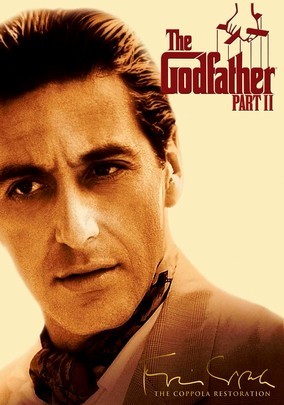
The Godfather: Part II-1974

The Godfather: Part II-1974

Director Frances Ford Coppola

Starring Al Pacino, Robert DeNiro

Top 250 Films #2

Scott’s Review #197

60011663

Reviewed: November 25, 2014

Grade: A

Frances Ford Coppola’s sequel (and technically also a prequel) to the highly regarded and successful The Godfather (1972) is one of the rare sequels to equal, if not surpass, the original in its greatness, creativity, and structure.

The Godfather Part II (1974) feels more profound, more complex, and ultimately richer than The Godfather- and that film itself is a masterpiece. Part II is much darker in tone. Francis Ford Coppola had complete freedom to write and direct as he saw fit, with no studio interference.

The results are immeasurable in creating a film masterpiece.

The film is sectioned into two parts, which is an exciting and practical decision.

The story alternates between the early twentieth century, following Don Corleone’s life, now played by Robert DeNiro, as his story is explained- left without a family and on the run from a crime lord, Don escapes to the United States as a young boy and struggles to survive in the Little Italy neighborhood of New York City.

He obtains a modest job as a grocery stockboy and finally celebrates his eventual rise to power in the mafia.

The other part of the film is set in 1958, as Michael Corleone faces a crumbling empire, with both rivals and the FBI investigating him and holding Senate committee hearings in Washington, D.C., and a failing marriage to Kay (Diane Keaton).

Betrayal is a common theme of the film, as Michael’s wife, brother, and mobster allies are revealed to be cagey enemies. Michael becomes increasingly uncertain and mistrustful of almost everyone around him. Is Kay a friend or foe? Is Fredo plotting against him? He even begins lashing out at Tom Hagen on occasion.

What makes The Godfather Part II so brilliant, and in my opinion richer than The Godfather, is that it is tougher to watch- and that is to its credit. Now, instead of being a warm, respected member of a powerful family, Michael is questioned, analyzed, and betrayed.

New, interesting characters are introduced, including Hyman Roth, played by Lee Strasberg, a former ally of Don’s, and Frankie Pentangeli, played by Michael V. Gazzo. These characters are intriguing, and their allegiances remain unknown throughout most of the film: are they loyal to the Corleones or deadly enemies?

The character of Michael evolves from conflicted to all-out revenge-minded, including seeking revenge against members of his own family. Michael is now a dark, angry character- gone is the nice, decorated war hero with his whole life ahead of him.

He is much older and has changed.

Similar to the original Godfather, the opening scene is a large celebration- this time, Anthony Corleone’s first communion celebration.

Additionally, the film’s finale involves the deaths of several significant characters one after the other.

Unique to this film are the multiple-location scenes, featuring New York, Nevada, Italy, Florida, and Cuba, which make for an enjoyable segue throughout and a more substantial budget.

The blow-up confrontation between Michael and Kay is devastating and shocking in its climax. When Michael punches Kay in a sudden rage, the audience feels punched as well.

The incredible scene at the end of the film, with the entire family gathered around for Don’s fiftieth birthday in 1942, is a special treat for viewers; familiar faces make cameo appearances.

I love these aspects of the film.

The rich history of Don is the most significant aspect of The Godfather Part II, known as “Godfather” and patriarch of the family. His life as a boy and young father is explained, so we see how he became one of the most powerful men in the crime world.

I love how he remains a decent man and helps people experiencing poverty and the victims of ruthless Don Fanucci, his predecessor. He loves his wife and children, but also loves his neighbors and helps them, believing in the principle of fairness.

Ultimately, the characters of Don and Michael are worlds apart.

The Godfather Part II (1974) is one of the most complex and well-written films in movie history- studied in film school, discussed, imitated, and championed.

It remains vital and should be viewed and analyzed repeatedly.

Oscar Nominations: 5 wins-Best Picture (won), Best Director-Francis Ford Coppola, Best Actor-Al Pacino, Best Supporting Actor-Robert De Niro (won), Michael V. Gazzo, Lee Strasberg, Best Supporting Actress-Talia Shire, Best Screenplay Adapted from Other Material (won), Best Original Dramatic Score (won), Best Costume Design, Best Art Direction (won)

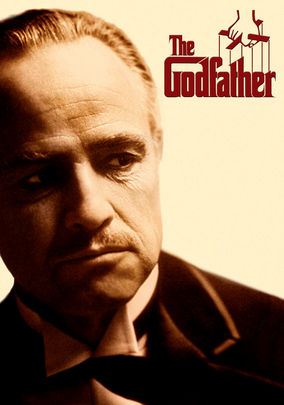
The Godfather-1972

The Godfather-1972

Director Frances Ford Coppola

Starring Marlon Brando, Al Pacino, James Caan

Top 250 Films #4

Scott’s Review #196

60011152

Reviewed November 24, 2014

Grade: A

The Godfather (1972) is one of the most identifiable and brilliant film masterpieces of all time. It is so ingrained in pop culture and film history that it was a blueprint for 1970s cinema, and its legend deserves to live on.

The film has not aged poorly nor been soured by over-exposure. It is as much a marvel today as it must have been when it was initially released in theaters.

The film revolves around the Corleone family- a mob family living in New York. They are high-powered, wealthy, and influential with politicians and law enforcement alike. They are the cream of the crop of organized crime families.

The patriarch of the family is known as “The Godfather”; his real name is Don Corleone, played by Marlon Brando.

The eldest son is hot-headed Sonny, played by James Caan. Middle son Fredo, played by John Cazale, is dim-witted and immature, serving as the family’s weak link.

Finally, the youngest son is the central character in the film. Michael, played by a very youthful Al Pacino, has just returned home from World War II, a decorated and Ivy League-educated hero.

Throughout the film, Michael wrestles with steering the Corleone family business toward the straight and narrow or continuing the death, bloodshed, and corruption that currently plague the family.

Rounding out the Corleone family is Tom Hagen, an Irish surrogate son of sorts, who serves as the family attorney. Connie, the temperamental and emotional sister, and Mama Corleone, the passive wife of Don, complete the prominent family.

The various supporting characters are numerous, ranging from family friends and relatives to corrupt mob figures and those introduced when Michael lives in Italy.

The brilliance of The Godfather lies in the richness of the numerous characters on the canvas, as well as the film’s structure and pacing.

Even minor characters are vital to the film, and every scene is essential and effortlessly paced, so that they neither seem rushed nor dragged out; the film is immeasurably character-driven.

My favorite character is Michael Corleone, as he is the most troubled and complex of all. Pacino plays him to the hilt as, initially, a nice guy trying to do the right thing, going against the grain, and non-traditional- he proposes to a WASP woman who has no Italian heritage.

When events develop in a particular way, Michael suddenly becomes the leader of the family, despite being the youngest son, and the complexities of the character deepen from this point.

Specifically, the revenge killing sequence is brilliant as the viewer is kept on the edge of their seat through a car ride, a meal in a restaurant, and a men’s room scene, until finally, all hell breaks loose, all the while Michael is conflicted, unsure, and intense.

Has he veered too far from being a nice guy? Can he salvage the family business without being ruthless? Michael faces a battle of good vs. evil.

The scenes are brilliantly structured- the grand opening scene alone is beautiful as the audience is introduced to the entire family- cheerfully dancing and frolicking during a bright and sunny outdoor wedding (Connie’s) at the Corleone estate, while inside a dark interior study, a man begs Don Corleone to help avenge his raped and beaten daughter by having her attackers killed.

Several scenes in The Godfather are my personal favorites —the aforementioned restaurant scene, where Michael is faced with a dilemma involving a corrupt policeman and a high-powered figure. One can feel the tension in this extended scene.

The scene in a Hollywood mansion where poor, innocent, horse Khartoum meets his fate in the most gruesome way imaginable.

Later, Michael’s beautiful Italian wife, Apollonia, has an explosive send-off.

Towards the end of the film, there is an improvised scene featuring a tomato garden with an elderly Don Corleone playing with his young grandson.

Finally, the brutal scene involving Corleone’s son Sonny at the toll booth is mesmerizing, murderous, and flawlessly executed.

The lack of any strong female characters and how women are treated (either beaten or passively following their husbands) is bothersome.

Still, unfortunately, circa the 1940s, this was the way things were.

One could argue that Kay Adams, played by Diane Keaton, is the strongest female character, as she questions the Corleone family’s motives and attempts to keep Michael honest and trustworthy. She has little in common with the other female characters.

Lines such as “I’m gonna make him an offer he can’t refuse” and “Don’t forget the cannolis” are unforgettable and quote-worthy.

The finale of the film is breathtaking —a combination of bloody kills mixed with a peaceful scene of Michael accepting the honor of becoming his nephew’s godfather. As he pledges his devotion to God and denounces Satan, the murders he orchestrated are simultaneously being executed.

The character, while complex, suddenly becomes a hypocrite.

Some view Michael as strictly a hero whose choices should not be questioned or analyzed; others view Michael as not a hero, but rather a complex, tortured, and flawed character.

One must watch The Godfather and The Godfather Part II (1974) as companion pieces, as Part I is slightly more straightforward and easier to follow than the more complex and layered sequel.

The Godfather (1972) is storytelling and filmmaking at its absolute best and continues to influence films to this day.

Oscar Nominations: 3 wins-Best Picture (won), Best Director-Francis Ford Coppola, Best Actor-Marlon Brando (won), Best Supporting Actor-James Caan, Robert Duvall, Al Pacino, Best Screenplay Based on Material from Another Medium (won), Best Costume Design, Best Sound, Best Film Editing

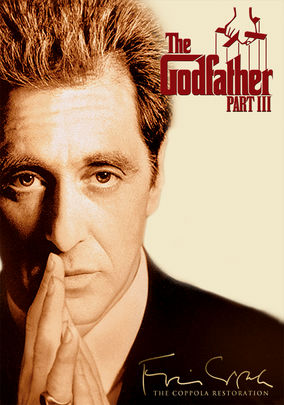
The Godfather: Part III-1990

The Godfather: Part III-1990

Director Francis Ford Coppola

Starring Al Pacino, Diane Keaton, Andy Garcia

Scott’s Review #533

60011153

Reviewed December 3, 2016

Grade: B+

The Godfather: Part III, released in 1990, has traditionally been met with unwavering criticisms for not being as great as the two preceding epics.

Sofia Coppola, who plays Mary- daughter of Michael Corleone, in particular, has bared the brunt of the attacks.

No, The Godfather: Part III is not on the level of the others, but is pretty damned good based on its own merits and is a capable mob epic to conclude the franchise satisfyingly.

The central theme is Michael’s continued desire to leave the mafia and religion, and the Catholic Church are central themes of the film.

Some backstory to the making of the film; Coppola had a non-expiring offer to create a third installment to the saga ever since 1974 when Part II was released.

Having had a financial crisis, 1990 was the time Coppola agreed to do the follow-up.

The ever-crucial role of Mary (now a coming-of-age young lady) was to be played by Julia Roberts, who dropped out. Winona Ryder was then cast and bailed at the very last minute.

Out of necessity, Coppola’s daughter Sofia was cast and had little time to prepare or much acting experience (she would later become an acclaimed director, which better suited her talents).

In a similar fashion to the other epics, a big event launches the film, as Michael (Pacino) is named Commander of the Order of Saint Sebastian in a lavish ceremony at St. Patrick’s Old Cathedral.

It is revealed that Michael is approaching age sixty and semi-retired, leaving his business dealings mainly to Joey Zasa in New York, who has ravaged what the Corleone family had once built.

Many characters- Kay, Mary, Tony, and Connie, are re-introduced, and new characters such as Vincent Mancini (Andy Garcia) and Don Altobello (Eli Wallach) are introduced, in a flurry of new storylines.

It is like a big, grand, soap opera, with wonderful, rich, writing.

I was immediately impressed by the neat cinematography- the camera captures wind-swept leaves and an artistic introduction to the film, as well as either mentioned or appearing in cameo roles, small characters from the first two films- a great touch in continuity and history.

Coppola does a fantastic job of providing little updates on these characters during a party. For example, we learn that Vincent is the deceased, illegitimate son of Sonny, his mother being Lucy Mancini, who appears in a scene. (Clever viewers will remember Sonny and Lucy’s torrent affair in the bathroom during The Godfather-it is suggested that this produced Vincent).

It is mentioned that Tom Hagen (Robert Duvall) has died, though his wife and son appear, and Coppola treats us to a myriad of flashbacks (Apollonia, a young Michael, and Kaye).

These nuances make The Godfather: Part III filled with cool little aspects that fill the loyal viewer with warmth.

The main story- Michael takes Vincent under his wing- and strives to steer the family clear of criminal ties- is interesting, if not spectacular. Connie rises from a battered mafia wife, raising kids, to a major player in the family, just as women progressed from the 1940s to the 1980s when the story takes place.

She even feeds her godfather a poisoned cannoli!

Michael, Vincent, and Connie involve themselves with the Catholic Church, bailing them out (the real-life Papal banking scandal is linked to the story) and making a deal with them for major shares of a real estate company, Immobiliare.

In-fighting between the major crime mob bosses leads to several bloody massacres throughout the film, on the streets, in Atlantic City, and finally, in the Sicilian Opera house.

The pairing of cousins and lovers, Vincent and Mary, never really works, nor does Bridget Fonda’s one-two-scene appearance as Grace Hamilton, a brief dalliance for Vincent. Also, the exclusion of the character of loyal family attorney Tom is a glaring omission.

So the film does contain a few negatives.

In a nutshell, The Godfather: Part III (1990) is a very good, epic, crime drama even without the Godfather name. To measure up to the glory of Parts I and II are impossible.

With the bonus of having the rich Corleone family history and the intricate relationships between the characters, this makes for a treat for fans.

There has not been a Part IV, nor should there ever need to be as the conclusion of the film is a satisfying wrap-up to the saga.

Oscar Nominations: Best Picture, Best Director-Francis Ford Coppola, Best Supporting Actor-Andy Garcia, Best Original Song-“Promise Me You’ll Remember”, Best Art Direction, Best Cinematography, Best Film Editing