Tag Archives: Adam Goldberg

Zodiac-2007

Zodiac-2007

Director David Fincher

Starring Jake Gyllenhaal, Mark Ruffalo, Robert Downey Jr. 

Top 250 Films #223

Scott’s Review #1,134

Reviewed April 16, 2021

Grade: A

Zodiac (2007) is an excellent film in its own right. The attention to detail circa the 1960s and 1970s is spot on and adds to the flavor of the entire experience. The locale of San Francisco is moody and lurking with the antics of the self-professed Zodiac Killer.

With excellent acting, the sum of its parts adds up to a wonderful film experience.

The film is incredibly well-paced, character-driven, and layered in rich texture. What more can be asked of a cinematic production? It simply has it all and will engage any viewer craving mystery and intrigue.

David Fincher, as the director’s chair, creates a world unto itself with carefully crafted sets, artistic nuances, and of course a superb story. A lesson learned is that sometimes evil exists and cannot be caught despite best efforts and the ramifications are endless.

Painfully, the characters in Zodiac slowly realize this.

Zodiac is based on the best-selling non-fiction book by Robert Graysmith, a pivotal character in the film. The novel is very similar to James Elroy’s 1987 novel The Black Dahlia, another unsolved case set in California.

The film tells the story of the manhunt for the Zodiac Killer, a serial killer who terrorized the foggy San Francisco Bay Area during the late 1960s and early 1970s.

Investigators (Mark Ruffalo, Anthony Edwards) and reporters (Jake Gyllenhaal, Robert Downey Jr.) become obsessed with learning the killer’s identity and bringing him to justice.

Meanwhile, Zodiac claims victim after victim and taunts the authorities with endless and specifically graphic letters, bloodstained clothing, and cryptic messages shrouded in menacing phone calls.

The case remains one of the United States’ most infamous unsolved crimes.

Much of the acclaim must go to the three actors cast in the central roles and Gyllenhaal is top of his game in the leading role. As cartoonist Robert Graysmith he is the main hero and the person who spearheads the investigation, prompting disbelievers to listen to him.

Gyllenhaal is sensitive, sympathetic, and obsessed and at first, perceived to be a laughing stock, but audiences will immediately get behind the man and this is thanks to Gyllenhaal’s powerful acting.

The character-driven approach continues as Mark Ruffalo gives a wonderful portrayal of Inspector David Toschi. The tough-as-nails and no-nonsense approach led Toschi into obsession and fudging evidence.

Finally, Robert Downey Jr. provides energetic gusto as Paul Avery, a journalist who turns to drugs and alcohol because of the intensity and emotional investment in the case.

Plenty of red herrings make the film fun and the prime suspect of Arthur Leigh Allen, played by character actor John Carroll Lynch may or may not be the assailant.

It’s breathtaking watching all the twists and turns in this ferociously complex film.

Zodiac is based on real events and reportedly is extremely historically accurate. Fincher and others spent eighteen months conducting their investigation and research into the Zodiac murders.

So, authenticity is everywhere in this film.

Watching a film beginning in 1969 and ending in 1983 is a joy for someone who grew up in that era. Fincher drizzles the film with timely automobiles, clothes, and other sets so it appears to be walking into a time capsule.

I’m sure this only will add to the viewer’s enjoyment.

For fans of films based on the Zodiac Killers, the 1971 film Dirty Harry, starring Clint Eastwood delivers an exceptional experience based on the real-life case.

But Fincher’s Zodiac is just as good.

Despite the behemoth running time- two hours and thirty-seven minutes, Zodiac (2007) is an edge-of-your-seat thriller. The pulsating yet prowling pace is worth several viewings to appreciate the juiciness of all of the elements David Fincher offers.

A hefty round of applause is deserved.
A Beautiful Mind-2001

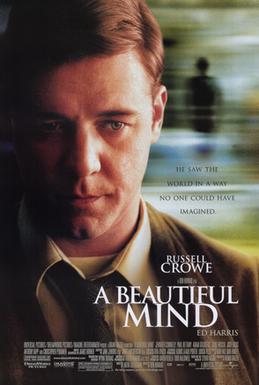
A Beautiful Mind-2001

Director Ron Howard

Starring Russell Crowe, Jennifer Connelly

Scott’s Review #1,003

Reviewed March 25, 2020

Grade: A-

A Beautiful Mind (2001) is a superior-made film based on the life and times of American mathematician John Nash, a Nobel Laureate in Economics and Abel Prize winner.

The biography explores Nash’s battles with schizophrenia and the delusions he suffered, causing tremendous stress on friends and family.

The film is well-written and brilliantly acted, but deserves a demerit for factual inaccuracies, especially related to Nash’s complex sexuality and family life.

This leaves a gnawing paint-by-the-numbers approach for mass appeal only.

The film was an enormous success, winning four Academy Awards, for Best Picture, Best Director, Best Adapted Screenplay, and Best Supporting Actress. It was also nominated for Best Actor, Best Film Editing, Best Makeup, and Best Original Score.

Arguably one of the best films of 2001, it cemented director Ron Howard’s reputation as a mainstream force to be reckoned with in the Hollywood world.

The project was inspired by the Pulitzer Prize-nominated book of the same name.

Starting in 1947, we meet Nash (Russell Crowe) as a virginal and socially awkward college scholar, studying at Princeton University. He is a whiz at science and mathematics, coming up with unique and dynamic ideas for problem-solving.

Rising the ranks in respectability, he is given an important job with the United States Department of Defense, tasked with thwarting Soviet plots. He becomes increasingly obsessive about searching for hidden patterns and believes he is being followed, sinking further into depression and secrecy.

A Beautiful Mind is an important film because it brings to light the overwhelming issue of mental health and the struggles one suffering from it is forced to endure. Nash largely lives in a fantasy world and has imaginary friends who have followed him for decades by the time the film ends.

Nash conquers his demons with little aid of medication causing a controversial viewpoint. Amazing that the man was able to rise above, but is this a realistic message for those suffering from hallucinations?

Russell Crowe carries the film, fresh off his Oscar win the year before for his stunning turn in Gladiator (2000). He would have won for portraying Nash had he not recently received the coveted prize.

Crowe, hunky at this point in his life, convincingly brings the brainy and nerdy character, rather than the stud, to life, adding layers of empathy and warmth to the role.

We root for the man because he is as much sensitive as he is a genius.

Jennifer Connelly, in what is disparagingly usually described as the wife or the girlfriend role, does her best with the material given. My hunch is her Oscar nomination and surprising win have more to do with piggybacking off the slew of other nominations the film received.

She is competent as the supportive yet strong Alicia, the wife of Nash. In her best scene, she flees the house after a confused Nash leaves their infant daughter near a full bathtub, putting her life in danger.

The most heartfelt scene occurs during the conclusion. After many years of struggle, Nash eventually triumphs over this tragedy, and finally, late in life, receives the Nobel Prize. This is a grand culmination of the man’s achievements and a sentimental send-off for the film.

The aging makeup of all principal characters, specifically Nash and Alicia is brilliantly done.

Despite the heaps of accolades reaped on A Beautiful Mind, several factual points are reduced to non-existence. Questionable is why Howard chose not to explore Nash’s rumored bisexuality, instead of passing him off as straight.

Admittedly, the film is not about sexuality, but isn’t this a misrepresentation of truth? Nash had a second family, which is also never mentioned.

These tidbits eliminated from the film leave a glossy feel like Howard picked and chose what to tell and not to tell for the sake of the mainstream audience.

Bringing needed attention to a problem of epic proportions, A Beautiful Mind (2001) recognizes the issue of mental health in the United States.

The methods may be questionable, and the film has an overall safe “Hollywood” vibe but must be credited for a job well done in a film that is not only important but displays a good biography for viewers eager to learn about a genius who faced unrelenting issues.

Oscar Nominations: 4 wins-Best Picture (won), Best Director-Ron Howard (won), Best Actor-Russell Crowe, Best Supporting Actress-Jennifer Connelly (won), Best Screenplay Based on Material Previously Produced or Published/Adapted Screenplay (won), Best Original Score, Best Makeup, Best Film Editing

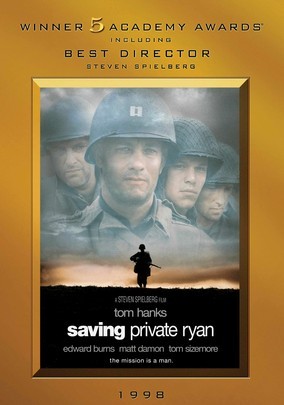
Saving Private Ryan-1998

Saving Private Ryan-1998

Director Steven Spielberg

Starring Tom Hanks

Scott’s Review #778

Reviewed June 26, 2018

Grade: A

Famed director Steven Spielberg does not always get the respect he deserves. This is usually because, for better or worse, he has become synonymous with the “blockbuster” film, drawing comparisons to either lightweight fare or films of “lesser” artistic merit.

His 1980’s works- Raiders of the Lost Ark (1981), E.T. the Extra-Terrestrial (1982), and Indiana Jones and the Temple of Doom (1984)- were enormous commercial successes, though I enjoyed all of the films.

During the 1990s, Spielberg continued to direct “popcorn flicks” such as Hook (1991) and Jurassic Park (1993) with large studio budgets but somewhat less critical acclaim.

Finally, he was able to change many opinions with 1993’s Schindler’s List and the war film to end all war films, Saving Private Ryan (1998), an epic, profound experience.

Both received numerous Oscar nominations and achieved box-office success.

The film is a tremendous treat, thanks to the riveting opening sequence alone (more on that later).

If that is not enough to impress, Saving Private Ryan is known for infusing a very graphic element into the war film, with no let-up from the brutality. Spielberg does not water down this picture; instead shows the pain and angst of war.

The film is helped tremendously by the casting of Hollywood superstar Tom Hanks, who leads an enormous cast of mainly young men.

Saving Private Ryan opens with a prologue: in the present, a veteran brings his family to visit an American cemetery in Normandy.

Flashbacks then take the audience back to the Omaha Beach debacle in 1944, where American troops faced deadly German artillery attacks in France.

After the horrific three-day D-Day, it is learned that three of the four Ryan sons have died in the events. Captain Miller (Hanks) is ordered to bring a team of men to Normandy and bring the fourth Ryan son (Matt Damon) to safety.

Spielberg’s opening D-Day sequence is just astounding and propels the film to unforgettable status. With a running time of twenty-four minutes, the riveting and horrific slaughter of American soldiers is intensely brought to the screen.

Audiences undoubtedly sat open-mouthed (I know I did!) as bullets riddled the beach and left soldiers killed or with limbs torn off. The camera work is brilliant, as the use of a shaky technique, almost a documentary style, is used for effect.

This sequence successfully promotes anti-war sentiment without glorifying combat at all. The scene will stay with its audience for years to come.

Saving Private Ryan can be compared to the decades-later Dunkirk (2017) in that each film took the war genre and turned it on its head.

The similarities between the films start with the obvious: the main events in both films occur during World War II, in the same week, and in the French beach settings, making the films perfect companion pieces.

Both films feature a gray, rainy setting with many horrific moments of death and suffering. The war film is a common genre that has historically teetered on the brink of predictability and oversaturation. Still, both films do something completely different and unexpected, yet mirror each other in style.

To counter-balance the violence in the opening sequence, a quiet scene is created and remains one of my favorites. The scene contains almost no dialogue throughout the seven-minute duration and is pivotal to the entire film.

As a typist realizes that three letters of death are to be delivered to the same family, a woman on a mid-west farm quietly washes dishes and is calmly horrified when she sees a government car approaching.

What else can this mean but that one of her sons is dead? The poor Mrs. Ryan will be told that she has lost not one, but three sons.

How utterly unimaginable, and the scene is incredibly touching!

The best part of Saving Private Ryan is that Spielberg combines a deeply sentimental vision with the terrible atrocities of war. He portrays not only the violent effects of the battles on the soldiers but also on the surviving families.

This is not always done in war films, at least not to the level that Spielberg chooses to.

With a film as startling as Saving Private Ryan, Spielberg turned the war film genre inside out. Breaking barriers with a no-holds-barred gusto, Spielberg influenced war films for years to come- Black Hawk Down and Enemy at the Gates (2001) are prime examples, and received acclaim from fellow directors for his interesting techniques.

Saving Private Ryan (1998) was an enormous financial winner at the box office, proving that great films don’t have to be watered down to find an audience.

Oscar Nominations: 5 wins-Best Picture, Best Director-Steven Spielberg (won), Best Actor-Tom Hanks, Best Screenplay Written Directly for the Screen, Best Original Dramatic Score, Best Sound Effects Editing (won), Best Sound (won), Best Art Direction, Best Cinematography (won), Best Makeup, Best Film Editing (won)