Tag Archives: Nehemiah Persoff

Some Like It Hot-1959

Some Like It Hot-1959

Director Billy Wilder

Starring Marilyn Monroe, Jack Lemmon, Tony Curtis

Top 250 Films #88

Scott’s Review #388

60010910

Reviewed March 26, 2016

Grade: A

Considered one of the best comedies ever made, Some Like It Hot (1959) is a funny, outlandish, yet controlled film that never goes too over the top or dives into outrageous camp. Instead, it is well-written, well-acted, and contains excellent chemistry between the stars.

In summary, it is a film in which all the elements come together just right. In film comedy, this is an infrequent occurrence. Instead, we are typically treated to formulas or retreads of past successes.

Some Like It Hot feels refreshing and brilliant.

The film was also monumental in paving the way to the eventual elimination of the hated Hays Code, which imposed many restrictions on American cinema from 1930 to 1968.

Some Like It Hot pushed the envelope in essential ways, leading to a spike in creativity and art within the film industry that lasted mainly throughout the 1960s and 1970s.

For that, it is a masterpiece.

Down on their luck, broke, and needing work, Jerry and Joe (Jack Lemmon and Tony Curtis) are struggling jazz musicians seeking a meager existence in snowy Chicago. Having witnessed the St. Valentine’s Day massacre, they go on the run from the assailants, who have seen them, and pose as Josephine and Daphne, dressed in drag.

This leads to one humorous situation after another as they take the bus from Chicago to Miami with an all-girl musical band, a sort of slumber party led by boozy starlet Sugar Kane (played by Marilyn Monroe), who serves as the band’s vocalist and ukulele player.

Once arriving in sunny Miami, “the girls” find themselves entangled in romantic relationships with Sugar and the wealthy millionaire Osgood Fielding III, which leads to some blatant comic antics. Josephine poses as a male Shell Oil Junior, attempting to woo Sugar with his assumed riches in the oil business.

What makes Some Like It Hot work so well is that it does not go too far over the edge to seem campy, nor does it play it too straight. This perfect balance makes the film rich with natural, fresh comedy.

Director Billy Wilder chose to film in black and white, avoiding Lemmon and Curtis looking ridiculous with colorful, bright makeup. This was toned down and muted to allow for greater believability.

Additionally, the film’s subtle edginess impresses me with each passing watch. Some Like It Hot got away with a lot in 1959, considering the restrictions, and that knowledge gives it a groundbreaking quality.

There is an air of homosexuality throughout, and the final line is my favorite, allowing for a thought-provoking interpretation.

When Daphne reaches her breaking point with Osgood’s romance and yanks off his wig, she professes exasperation, “I am a man!! ” Only to hear Osgood’s startling reply, ‘Well, nobody’s perfect,’ is clever dialogue.

Did Osgood know all along that Daphne was male? Will he marry ‘her’ anyway?

Who wouldn’t have blushed gazing at Monroe’s skin-colored and quite revealing outfit? It gave the impression that she was nude and showed how funny Lemmon and Curtis’s physical comic timing together is.

Bumbling around in stockings, heels, and dresses, attempting to be feminine but never quite succeeding, makes all the other characters think they are women, which is excellent.

Curtis was reportedly quite uncomfortable in drag, which shows on camera, but this works out well, giving Josephine a natural awkwardness.

Lemmon went all out in his costumes, and his energy came across.

In my opinion, although not looking her best, slightly plump and tired, Marilyn Monroe still gives the film added life and charm, and who is not mesmerized by her on stage singing “You Wanna love me”?

To think that Monroe died only three short years later is sad, and it highlights the appreciation for her career in its final stages.

A risqué, laugh-out-loud, funny treat, Some Like It Hot resonates with me and did so with audiences upon release in 1959.

Comical, thoughtful, and highly influential, the film is a must-see for fans of honest and cliché-free film comedy.

It is a blueprint for all witty comedies to follow.

Oscar Nominations: 1 win-Best Director-Billy Wilder, Best Actor-Jack Lemmon, Best Screenplay Based on Material from Another Medium, Best Art Direction, Black-and-White, Best Cinematography, Black-and-White, Best Costume Design, Black-and-White (won)

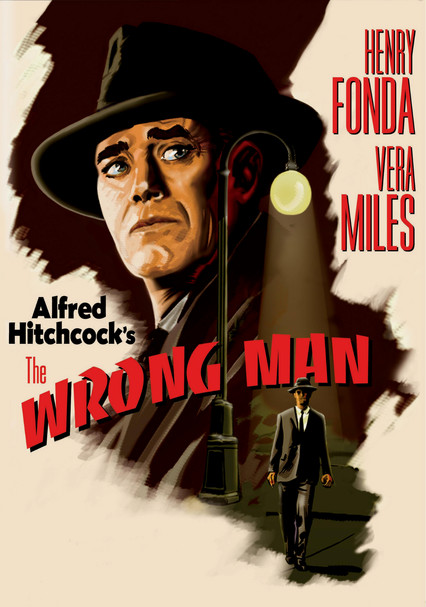
The Wrong Man-1956

The Wrong Man-1956

Director Alfred Hitchcock

Starring Henry Fonda, Vera Miles

Top 250 Films #233

Scott’s Review #902

Reviewed May 24, 2019

Grade: A-

The Wrong Man (1956) is not an Alfred Hitchcock film typically mentioned when lists of the greatest of all the director’s works are in conversation.

Although it flies completely under the radar and is absent from most “Best of” collections, the film is a lovely gem ready to be dusted off and appreciated for its worth.

It features the legendary Henry Fonda, perfectly cast in a story point frequently used in Hitchcock films: that of the wrongly accused man.

Set in New York City, Manny Balestrero (Fonda) is a struggling musician who requires three hundred dollars for dental work that his wife Rose (Vera Miles) needs. Determined not to let his wife suffer, he decides to obtain the money by borrowing against her insurance policy.

The life insurance employees mistake Manny for another man who recently held them up. He is arrested and forced to perform a test for the police, which he fails, leading them to assume he is their man.

Attorney Frank O’Connor (Anthony Quayle) sets out to prove that Manny is not guilty since he has perfect alibis for the nights of both holdups. However, complications erupt during his trial as proper witnesses either cannot be found or have died, leaving Manny in dire straits.

Meanwhile, Rose teeters towards the brink of insanity as she suffers from severe depression.

The Wrong Man differs from many Hitchcock films in that its story is based on a real-life quandary one man faced. As such, viewers can relate to the story immensely and imagine themselves in Manny’s shoes.

I often wonder, “What would I do if this were me?” as one could find the story implausible, one could just as easily find it plausible. Mistaken identity can happen, and proving one’s innocence may not be as easy as it may seem.

Mainly set on location is another tidbit unique to many Hitchcock productions as the man cringed at the thought of any scene that studio luxuries could not manipulate. The New York City locales are splendid and provide an artistic and genuine element.

Many scenes were filmed in Jackson Heights, where Manny lived when he was accused. Most of the prison scenes were filmed among the convicts in a New York City prison in Queens. The courthouse was at the corner of Catalpa Avenue and 64th Street in Ridgewood.

Careful not to be too dissimilar to standard Hitchcock fare, the use of every man being falsely accused is every day in some of his films.

Other films like North by Northwest (1958) and The 39 Steps (1935) delivered the same elements with a man being mistakenly accused of murder. While the others were more of “chase stories” involving flight, The Wrong Man stays firmly planted in one city.

The film has some jazz elements, representing Fonda’s appearance as a musician in the nightclub scenes. These elements add sophistication to the film’s overall tone, especially as we see Manny as worldly yet kind.

He is a performer but comes home to his wife and adores her, doing anything he needs to for her comfort. The music and the black-and-white cinematography exude harshness and coldness but also good style.

Fans of either the police force or the justice system may be in for a challenging ride watching The Wrong Man, as neither group is written very sympathetically. The police are the worst offenders as they go to unethical methods to accuse a man of a crime and seem not to care who is convicted, only that someone is.

The one detraction to The Wrong Man is the chemistry between Fonda and Miles. The passion is underwhelming but not terrible, either. Instead, the main point is the false accusations instead of the romance. A bit more of the latter might have made the film more unique.

With suspenseful and dramatic elements and a charismatic leading man, The Wrong Man (1956) perhaps lacks the flair of other well-known Hitchcock films. Still, it is a solid achievement that deserves more acclaim than traditionally given.

Yes, it’s sullen, but it’s also poignant, frightening, and a terrific effort. Henry Fonda carries the film and provides compassion and realism.

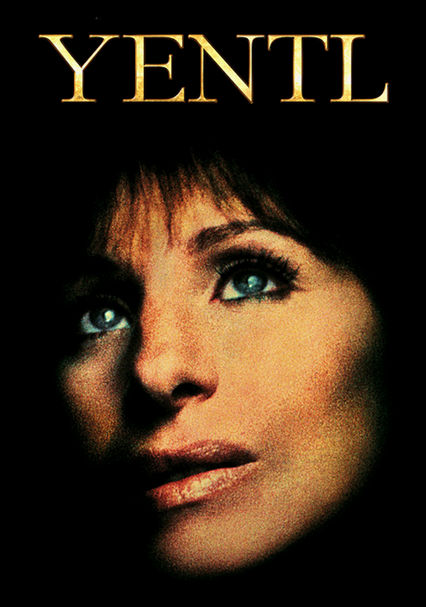
Yentl-1983

Yentl-1983

Director Barbra Streisand

Starring Barbra Streisand

Scott’s Review #1,144

Reviewed May 20, 2021

Grade: B+

Feeling slightly dated nowadays, perhaps for the year it was made, Yentl (1983) is nonetheless a very good watch, if only for Barbra’s performance alone.

Who else could I be talking about other than superstar Barbra Streisand?

It is astounding that she also directed the film, which was rare for a female to do in those days. Even in 2021, only two women had won the coveted Best Director Oscar.

Mind-blowing. Streisand was snubbed in this category and was understandably miffed.

But I’ll get down from my soapbox.

Streisand plays the title role.

Yentl is a bookish girl and the daughter of a respected Talmud teacher who instructs her, even though he is female, not male. This is forbidden in their culture.

Her father dies, leaving Yentl to her own devices and determinations.

She disguises herself as a boy to gain entry to a yeshiva and meets Avigdor (Mandy Patinkin), whom she becomes fascinated by. But he only has eyes for Hadass (Amy Irving), whom he is supposed to marry.

This results in a triangle of sorts, but not in the traditional sense. Hadass develops feelings for Anshel (really Streisand as Yentl in drag). After they marry (unconsummated), Anshel falls in love with Avigdor.

This may sound like a comedy rather than a drama, and it does contain a bit of each, but the romantic interludes, misunderstandings, and misinterpretations are not the film’s best parts.

The main themes of faith and romance are center stage. Streisand may have had feminism on her mind with the film, but I didn’t find this a major point, except for Yentl refusing to marry a man.

She pretends to be a boy because females are repressed in the religion. A real win would have been Yentl embracing faith as she is, but for 1983, the message isn’t a bad one.

Still, we are supposed to want Yentl and Avigdor to live happily ever after, but I never felt very much of a connection to the couple.

The best parts of Yentl are the musical score and the songs the audience is treated to. The highlight is the emotionally charged “Papa, Can You Hear Me?” which is a gorgeous moment for Yentl.

Yentl leaves Europe aboard a boat bound for the United States, where she hopes to lead a freer life. With a smile on her face, she rises above and into a new day.

It’s a dynamic singing performance that elevates the film beyond what it would have been without the number. It’s like the perfect culminating Streisand moment.

The romantic moments are unfulfilling and predictable, but the film is about Streisand and Streisand alone. As good as Patinkin and Irving are, they take a backseat to the illustrious star. We never even get to see Patinkin sing.

I’m okay with this. I watched Yentl (1983) for the enormous talents of its star. Her singing, acting, and directing all make the film a worthwhile and engaging experience.

It’s not a great film, and other Streisand films are better- I’m thinking of Funny Girl (1968) and Hello, Dolly (1969), but it’s way above average.

Oscar Nominations: 1 win-Best Supporting Actress-Amy Irving, Best Art Direction, Best Original Score (won), Best Original Song-“Papa, Can You Hear Me?”, “The Way He Makes Me Feel”

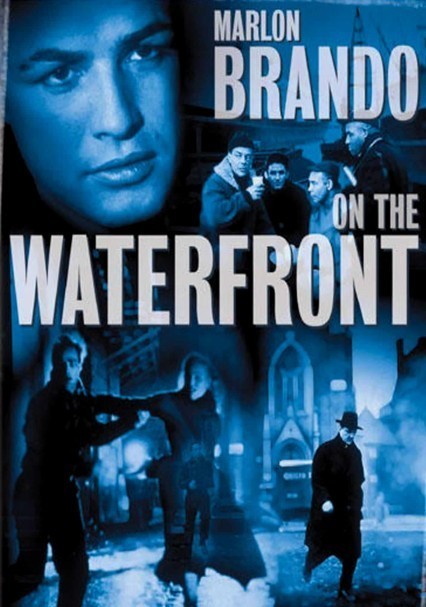
On the Waterfront-1954

On the Waterfront-1954

Director Elia Kazan

Starring Marlon Brando, Eva Marie Saint

Scott’s Review #876

Reviewed March 9, 2019

Grade: A

Led by one of the best acting performances of all time, On the Waterfront (1954) was an essential and relevant film when made and is still influential in the modern era.

Director Elia Kazan and newly minted Hollywood star Marlon Brando collaborate on a film spectacle as much a character study as a tale of morality and social injustice.

The musical soundtrack score composed by Leonard Bernstein only enhances an already astounding picture that is deservedly referenced as a masterpiece.

Terry Malloy (Brando) is a washed-up former local boxer who now spends his days slaving away as a dockworker on the dingy waterfronts of Hoboken, New Jersey. Terry’s brother Charley (Rod Steiger) works for a vicious mob boss, Johnny Friendly (Lee J. Cobb), who controls the area.

The police are aware of the ongoing corruption but are limited by the lack of evidence and witnesses to regular crimes. When a fellow dockworker is killed, Terry falls for the victim’s sister, Edie (Eva Marie Saint), leading him to rethink his priorities.

The positive aspects of On the Waterfront are enumerable. Meritful cinematography and location sequences, enshrined in the rich story and flawless acting, give the film authenticity. The film was shot almost entirely on location in New York and New Jersey, using actual docks and outdoor sequences.

The dingy, water-soaked locales are riddled with secrets and dark violence, brought to new levels through realism and grittiness.

Never looking more masculine or more handsome, though his portrayal of Stanley in A Streetcar Named Desire (1951) is a close second, Marlon Brando achieves riches in the world of stellar acting.

He is rugged yet compassionate, macho yet tender, and pours his heart into the role of Terry. One cannot help wondering if the self-professed method actor became Terry during filming.

With both vulnerability and strength, Brando embodies the character so well that he has become my favorite of all the film roles he has undertaken.

The supporting players dutifully flesh out the resounding cast with gusto. Special mentions go to Karl Malden as Father Barry and Steiger as Charley. Like Barry, Malden brings warmth, patience, and benevolence in a world of crime and deceit. He attempts to console and mentor the folks in his world and is eventually beaten for his honesty and earnestness.

Charley is a different story, selling his soul to the devil and accepting the cards he has been handed, choosing to join with Friendly. At a crucial moment, he makes another devastating choice that changes his life forever.

Few films can proudly boast a scene or dialogue that remains timeless and imprinted on cinematic history, but On the Waterfront contains a scene of this caliber.

During a tremendously important moment in the film, Terry has a conversation with Charley and makes an impassioned statement-“I coulda’ been somebody. I coulda been a contender”, laments Terry to his brother, “Instead of a bum, which is what I am – let’s face it.”

This line is a historic piece of writing and is true to the character.

The film is more powerful and truthful because it represents Elia Kazan’s real-life plight. In the early 1950s, the director famously informed a government committee about suspected Communists, while many of his colleagues chose to go to prison rather than name names.

Many Hollywood actors, directors, and screenwriters were blacklisted for decades to come. On the Waterfront is frequently deemed an allegory to the director’s plight and is a personal story.

On the Waterfront (1954) is sometimes violent and all-times realistic, painting a portrait of one man’s struggle to overcome the lousy life given to him to do the right thing.

Thanks to gorgeous direction, an explosive lead performance by Brando, and all the pieces fitting perfectly in unison, the film is one of the greats and will remain one that generations will discover.

Oscar Nominations: 8 wins-Best Motion Picture (won), Best Director-Elia Kazan (won), Best Actor-Marlon Brando (won), Best Supporting Actor-Lee J. Cobb, Karl Malden, Rod Steiger, Best Supporting Actress-Eva Marie Saint (won), Best Story and Screenplay (won), Best Music Score of a Dramatic or Comedy Picture, Best Art Direction, Black-and-White (won), Best Cinematography, Black-and-White (won), Best Film Editing (won)