Tag Archives: Josh Pais

If I Had Legs I’d Kick You-2025

If I Had Legs I’d Kick You-2025

Director Mary Bronstein

Starring Rose Byrne, Conan O’Brien, Christian Slater

Scott’s Review #1,521

Reviewed February 25, 2026

Grade: A-

Not being a parent myself, nor ever having the desire to be one, I was nonetheless enthralled by the subject of stressed parenting explored in If I Had Legs I’d Kick You (2025).

Examining our frazzled lead character, Linda’s, descent into madness after enduring day after day of adult chaos and kid problems, the role is wonderfully played by Rose Byrne.

The actor, though memorable in 2011’s classic Bridesmaids, is usually associated with one-note or throwaway roles throughout her long career.

It’s inspiring to see her finally get her due by playing a complex role with so much chops and receiving an Academy Award for Best Actress in 2025.

With her life crashing down around her, Linda, ironically a psychotherapist, attempts to navigate her child’s mysterious illness amid pressure from her therapist, her absent husband, a missing client, and an increasingly hostile relationship with her own therapist (Conan O’Brien), also a colleague.

After her living room is destroyed by water damage, she is reduced to renting a dingy motel for an extended period, where she encounters hostile motel workers.

Her saving grace is her late-night solitude, when she can peacefully indulge in wine and pot while sitting on the beach, contemplating her life.

Director Mary Bronstein, who also appears as a therapist, cleverly doesn’t show Linda’s daughter or husband for nearly the entire film, revealing them only through their grating voices. They irritate and stress Linda out to no end.

Undoubtedly, Bronstein either wanted to keep the focus on Linda and her daily peril or to leave it uncertain whether they even existed outside Linda’s mind.

The plot mostly involves a medical situation where Linda’s daughter, Delaney, has a pediatric feeding disorder that necessitates nightly supplemental feeding through a tube and participation in a day hospital program.

Her husband, a ship captain, is away, presumably at sea. This leaves Linda to handle everything.

Linda trudges through her days, arguing with a parking attendant and a contractor, while having misunderstandings with her therapist, patients, and a bitchy girl at her motel.

The supporting characters are well cast and add leverage to Linda’s peril by being completely unsympathetic and sour. O’Brien is excellent as the self-absorbed therapist, while Danielle Macdonald is good as a needy patient who ditches her baby.

But the film belongs to Byrne.

From the first scene, she wears a weary look, and her close-up facial expressions speak volumes about her peril. Linda looks washed out and exhausted while things spiral out of control. Nearly dozing off as a patient chatters away, she finally has had enough.

On the other hand, she is constantly on the brink of losing her shit.

Thanks to Byrne, we are treated to fist-pumping scenes where she lets loose on both therapists and the bitchy motel girl, instantly making Linda the only rootable character in the lot.

Still, she’s not exactly likable herself and incessantly makes poor choices. Her irritation with everything grows tiresome until the final sequence, when the film parleys into a message about mental illness.

If I should have found the film depressing, I didn’t.

Sprinkled with macabre humor, the film must have been influenced by the 1970 masterpiece Diary of a Mad Housewife, starring Carrie Snodgrass as a woman emotionally tortured by her selfish family and on the brink of a breakdown.

Bronstein, also the screenwriter, makes Linda the only character the audience should focus on, and all events are told from her perspective, which makes the film a winner.

Never knowing where events are headed, If I Had Legs I’d Kick You (2025) is a sheer delight in comedic/dramatic insanity. Though it carries a strong central theme of mental wellness, it also promotes the important message that it’s also okay not to have kids who will ruin your life.

Oscar Nominations: Best Actress-Rose Byrne

Independent Spirit Award Nominations: 1 win-Best Director-Mary Bronstein, Best Lead Performance-Rose Byrne (won)
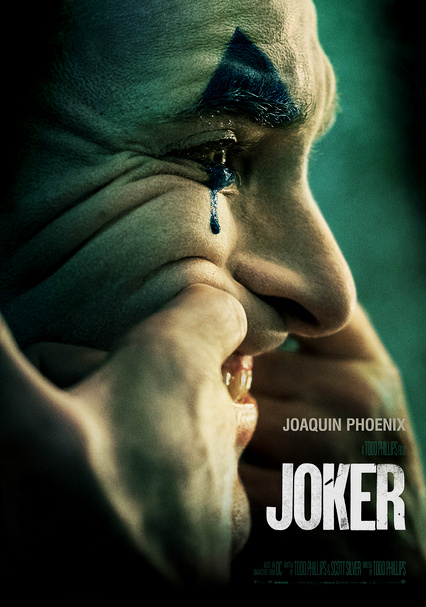
Joker-2019

Joker-2019

Director Todd Phillips

Starring Joaquin Phoenix

Top 250 Films #166

Scott’s Review #953

Reviewed November 1, 2019

Grade: A

Joker (2019) is a film that has divided audiences. Some love it, others loathe it. The experience is not your standard fun, superhero fare, with a hero’s rescue and the good triumphing over evil.

Despite the parlay into Batman territory, the film smacks the viewer across the face with its brutality, violence, and social and psychological injustices.

Joaquin Phoenix pummels the audience with an angry and bitter portrayal of the title character, easily one of the best performances of the year.

In one of the first scenes, before we even know the character, we experience a long, close-up of Phoenix laughing hysterically. We wonder what is so funny, before the revelation that he, Arthur Fleck, suffers from a nervous condition that causes inappropriate outbursts.

The year is 1981, and the fictional Gotham City, clearly a mirror image of New York City, serves as the setting. Times are tough, and crime is rampant.

Arthur lives in a dumpy apartment with his sickly mother, Penny (Frances Conroy), and visits a social worker regularly to receive his prescription medicine.

Arthur finds meager work as a party clown and aspires to be a stand-up comedian. After a gang attacks him in an alley, Arthur’s co-worker, Randall, encourages him to take a gun. Arthur invites his neighbor, single mother Sophie, to his stand-up comedy show, and they happily begin dating.

Finally, another person understands him. Segments of the population are disenfranchised and impoverished as Thomas Wayne, a billionaire philanthropist, runs for mayor of Gotham. A strange connection develops between Arthur, Penny, and Thomas, becoming central to the plot.

Can we discuss Phoenix’s bravura performance for a moment?

Suppose anyone thinks that Heath Ledger was phenomenal when he portrayed the same character in 2008’s The Dark Knight. In that case, they will be elated by Phoenix, who elevates the character to an entirely new level.

What Phoenix adds is strong sympathy for Arthur/the Joker and a care for the character. We feel sorry for him, but should we? He is a villain after all. One could easily debate whether his character can be considered the bad guy or the hero.

Regardless of the assessment, the performance is unforgettable.

A turn-off to some, which I found tremendously powerful, is the role reversal in the portrayal of the Wayne family, Bruce, and Batman characters.

Always deemed the “good guys”, in Joker, Thomas Wayne is self-centered, pompous, and embodies a sense of entitlement and snobbery.

Bruce is a young boy, but the implication is that the family is unkind, and what might the child grow up to believe?  Why is Batman/Bruce Wayne heralded as good and the Joker evil? It turns the tradition upside down into a twisted mind warp, and this is wonderfully creative and thought-provoking.

The best scene in the film, which triggers much of the subsequent violence and chaos, occurs when Arthur is invited to appear on a late-night talk show hosted by Murray Franklin (Robert De Niro). A week earlier, Franklin had played a humiliating clip of Arthur poorly performing stand-up.

Arthur decides to appear in full “Joker” attire, and the eventual discussion and words lead to tragic events. The scene is tense, intelligently written, and combative as the men spar over politics and class distinction.

Lastly, the musical score is dark, haunting, and mesmerizing without overtaking the film. Many key scenes of Arthur dancing and posturing are masterful, with the inclusion of the bombastic music.

He is a celebratory character, in his mind at least, and the music fuses into the scene with gusto and power. The combination of clowns and an incredible score adds significantly to the production.

Joker (2019) showcases a marvelous acting performance on the part of Phoenix, which combines a haunting musical score in its depth.

Providing a social commentary for people experiencing poverty and disenfranchisement, this film will divide viewers, probably based on preconceived expectations of a traditional Marvel-type superhero event.

The film offers much more than safer films like Wonder Woman (2017) or Black Panther (2018) ever could- a dark and violent character study.

Oscar Nominations: 2 wins-Best Picture, Best Director-Todd Phillips, Best Actor-Joaquin Phoenix (won), Best Adapted Screenplay, Best Original Score (won), Best Sound Editing, Best Sound Mixing, Best Cinematography, Best Makeup and Hairstyling, Best Costume Design, Best Film Editing

Spoiler Alert-2022

Spoiler Alert-2022

Director Michael Showalter

Starring Jim Parsons, Ben Aldridge, Sally Field

Scott’s Review #1,399

Reviewed September 15, 2023

Grade: A-

Spoiler Alert (2022) comes dangerously close to being classified as a Hallmark Television Movie of the Week tearjerker with standard cliches and a predictable storyline. While the ending is no surprise, the film works incredibly well and fires on all cylinders.

I laughed, cried, and felt an enormous connection to the central characters in what could become a seasonal holiday watch.

I recently reviewed another film that, on the surface, sounded saccharin and contrived but pulled me in nonetheless. The lesson learned is not to make assumptions about the quality of films.

The direction is conventional, but the story and characters are absorbing and heartwarming with spectacular acting, especially among the two lead actors, Jim Parsons and Ben Aldridge. An added gift is the appearance of Sally Field in a supporting role as an overbearing but lovable mom.

In 2001, Michael Ausiello (Parsons), a writer for TV Guide, begrudgingly goes to a gay nightclub with his best friend in Manhattan. There, he meets photographer Kit Cowan (Ben Aldridge), and the two instantly connect.

As they begin dating, Michael struggles with insecurities about not being attractive enough for Kit, since he was an overweight child. Kit is athletic and good-looking, oozing confidence. Michael was a ridiculed kid watching soap operas with his mother and creating a pretend sitcom family.

He also overindulges in the Smurfs collection.

They both admit their fears of being in a long-term relationship since neither of them has been in one before, but they decide to continue dating.

Hurdles then plague the couple as Kit must come out to his parents, Bob (Bill Irwin), and Marilyn (Field), to explain who Michael is, and ultimately they all must face Kit’s stage IV cancer diagnosis.

I recognize how Spoiler Alert doesn’t possess the most original screenplay, written by David Marshall Grant and LGBTQ+ advocate Dan Savage, and based on a story written by real-life Michael Ausiello.

The tried and true story point of a gay male character struggling to come out to his parents has been done for decades in LGBTQ+ films.

The insecure partner feels inferior to the more confident partner, and it affects their relationship. This point has also been discussed before. Michael is convinced that Kit will dump him for someone else.

Hell, we’ve seen both of these cliches as recently as 2022 in Bros., a fantastic LGBTQ+ mainstream film that used both.

In Spoiler Alert, they work because of Parsons and Aldridge and the chemistry they have together, and the nuanced delivery of the characters separately.

While they each want love and a relationship, neither is desperate. As they banter back and forth, Michael awkwardly removes his clothes during their first intimacy, and the actors playfully frolic immediately at ease with one another.

Many cute scenes follow.

Events then grow serious as we move beyond Kit’s uneven coming out to his parents (of course, they embrace Kit and Michael instantly!) and dive headfirst into Kit’s cancer battle.

The film makes no secret that Kit will die of cancer. It’s practically shown in the opening scene as he and Michael lie in a hospital bed together, and Michael narrates the story.

It’s called Spoiler Alert for a reason. But instead of ruining the film, it only enhances the love story to come. We know that Kit and Michael become soul mates, and the pleasure is watching them grow and flourish together.

Since Michael’s mother, and presumed best friend, died of cancer, it only strengthens the investment in the character.

As Kit becomes weaker, my fondness for the two men becomes stronger. The maturity and love for one another are apparent, especially when Michael selflessly invites a man whom Kit had an affair with to say goodbye to Kit.

It’s a touching scene, but not as touching as the scene where Michael and Kit’s parents sob over Kit’s hospital bed.

Yes, Spoiler Alert (2022) may have manipulated me with a conventional film, but Parsons and Aldridge have better chemistry than most opposite-sex couples.

I thoroughly enjoyed my way through the film without dry eyes.

Year of the Dog-2007

Year of the Dog-2007

Director Mike White

Starring Molly Shannon

Scott’s Review #1,131

Reviewed April 9, 2021

Grade: B-

Comedienne Molly Shannon stars in Year of the Dog (2007), a quirky independent film that can be classified as a hybrid of comedy and drama.

It’s peculiar, sometimes being very creative and nuanced while other times feeling generic and clichéd. Somehow it’s not predictable either- a plus.

It’s not the cute, sentimental film the premise might lead one to believe it is, and at times it’s downright dark and depressing.

A story centering around dogs seems pretty cool, but it usually conjures up a pitifully dreary family-style affair with a husband, wife, two cookie-cutter kids (a boy and girl, naturally), and some story and drama involving the family pet.

And, of course, a happy ending. Thankfully, Year of the Dog bears little resemblance to that type of film.

While it could have been more cohesive and less messy, the film deals with the death of a pet in interesting ways, and the effort is evident. While it’s not a downer, it’s not cheery either.

After her beloved beagle, Pencil, dies unexpectedly when she lets it stay outside all night, an administrative assistant named Peggy (Shannon) strives to find ways to fill the void in her life while blaming herself for his death.

She becomes lonely and despondent, finally bringing in treats for her co-workers and fussing over other people’s kids. An ill-advised love affair with a gun fanatic (John C. Reilly) leads to more misery, causing Peggy to go off the deep end and change her life completely.

Shannon, unsurprisingly, is the best part of the film, though she doesn’t quite cut it as the lead. She is cast perfectly as the oddball secretary with no life outside of her pet dog, but isn’t she better as the interesting sidekick?

It’s tough to imagine another actress being as believable in the part, and her comic timing is on fire. The dramatic parts are a bit of a stretch, and I like her better in comedic situations.

The supporting characters are what Year of the Dog lacks. None of them is very interesting.

Laura Dern and Regina King are reduced to caricature types as the loyal best friend, Layla, and the cold sister-in-law, Bret, respectively. Layla is only interested in finding romance for lonely Peggy, while Bret barely notices Peggy’s suffering.

Yawn!

Characters like these occur so often in stock comedies that I can hardly keep count. Talents like Dern and King deserve better than one-note characters.

Reilly, as the intended love interest, has no chemistry with Shannon, and it’s obvious from the start that Al is written as the foil to Peggy, opposite in every way.

It’s just another standard cliché screaming from a mile away. Peggy dates Newt (Peter Sarsgaard), but the romance isn’t there either.

Where the film gets both interesting and lost is when Peggy becomes an animal rights activist. It sets up Year of the Dog as a message film, which never really works.

Peggy ruins furs, attempts to show children a slaughterhouse, and spontaneously adopts fifteen dogs because another injured dog dies.

It just doesn’t flow together with the comedy stuff. Especially when the ending takes Peggy in yet another direction.

It’s like the filmmakers decided to try and roll things up in a neat little bow, but instead have a sloppily wrapped present with a nice bow on it.

Director Mike White, also a producer and writer, creates a great concept, but Year of the Dog (2007) hardly lights the world on fire.  The finale is too sentimental, and too many cliches surface as the action plays out.

Shannon is the only interesting character, and the supporting players are stock-written.

White also penned School of Rock (2003), which is a better film.

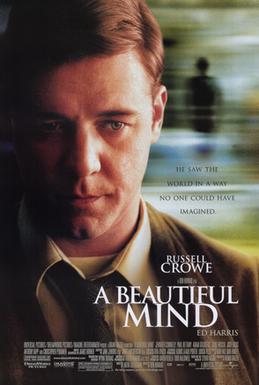
A Beautiful Mind-2001

A Beautiful Mind-2001

Director Ron Howard

Starring Russell Crowe

Scott’s Review #1,003

Reviewed March 25, 2020

Grade: A-

A Beautiful Mind (2001) is a superior-made film based on the life and times of American mathematician John Nash, a Nobel Laureate in Economics and Abel Prize winner.

The biography explores Nash’s battles with schizophrenia and the delusions he suffered, causing tremendous stress on friends and family.

The film is well-written and brilliantly acted, but it deserves a demerit for its factual inaccuracies, especially regarding Nash’s complex sexuality and family life.

This leaves a gnawing paint-by-the-numbers approach aimed only at mass appeal.

The film was an enormous success, winning four Academy Awards for Best Picture, Best Director, Best Adapted Screenplay, and Best Supporting Actress.

It was also nominated for Best Actor, Best Film Editing, Best Makeup, and Best Original Score.

Arguably one of the best films of 2001, it cemented director Ron Howard’s reputation as a mainstream force to be reckoned with in the Hollywood world.

The project was inspired by the Pulitzer Prize-nominated book of the same name.

Starting in 1947, we meet Nash (Russell Crowe) as a virginal, socially awkward college scholar at Princeton University. He is a whiz at science and mathematics, coming up with unique and dynamic ideas for problem-solving.

Rising the ranks in respectability, he is given an important job with the United States Department of Defense, tasked with thwarting Soviet plots.

He becomes increasingly obsessive about searching for hidden patterns and believes he is being followed, sinking further into depression and secrecy.

A Beautiful Mind is an important film because it brings to light the overwhelming issue of mental health and the struggles one suffering from it is forced to endure.

Nash largely lives in a fantasy world and has imaginary friends who have followed him for decades by the time the film ends.

Nash conquers his demons with little aid of medication, causing a controversial viewpoint. Amazing that the man was able to rise above, but is this a realistic message for those suffering from hallucinations?

Russell Crowe carries the film, fresh off his Oscar win the year before for his stunning turn in Gladiator (2000). He would have won for portraying Nash had he not recently received the coveted prize.

Crowe, hunky at this point in his life, convincingly brings the brainy and nerdy character, rather than the stud, to life, adding layers of empathy and warmth to the role.

We root for the man because he is as sensitive as he is a genius.

Jennifer Connelly, in what is disparagingly often described as the wife-or-girlfriend role, does her best with the material given.

My hunch is her Oscar nomination and surprising win have more to do with piggybacking off the slew of other nominations the film received.

She is competent as the supportive yet strong Alicia, Nash’s wife. In her best scene, she flees the house after a confused Nash leaves their infant daughter near a full bathtub, putting her life in danger.

The most heartfelt scene occurs during the conclusion.

After many years of struggle, Nash eventually triumphs over this tragedy and, finally, late in life, receives the Nobel Prize. This is a grand culmination of the man’s achievements and a sentimental send-off for the film.

The aging makeup of all principal characters, specifically Nash and Alicia, is brilliantly done.

Despite the heaps of accolades reaped by A Beautiful Mind, several factual points are reduced to non-existence.

It is questionable why Howard chose not to explore Nash’s rumored bisexuality, instead of passing him off as straight.

Admittedly, the film is not about sexuality, but isn’t this a misrepresentation of truth? Nash had a second family, which is also never mentioned.

These tidbits, eliminated from the film, leave a glossy feel, as if Howard picked and chose what to tell and not to tell for the sake of the mainstream audience.

Bringing needed attention to a problem of epic proportions, A Beautiful Mind (2001) addresses mental health issues in the United States.

The methods may be questionable, and the film has an overall safe “Hollywood” vibe, but it must be credited for a job well done in a film that is not only important but also displays a good biography for viewers eager to learn about a genius who faced unrelenting issues.

Oscar Nominations: 4 wins-Best Picture (won), Best Director-Ron Howard (won), Best Actor-Russell Crowe, Best Supporting Actress-Jennifer Connelly (won), Best Screenplay Based on Material Previously Produced or Published/Adapted Screenplay (won), Best Original Score, Best Makeup, Best Film Editing