Tag Archives: Josh Lucas

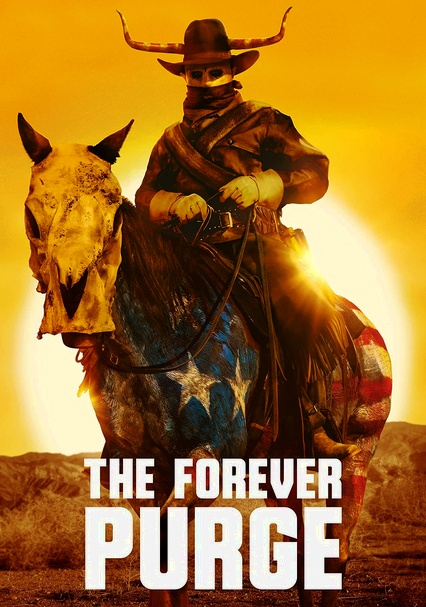
The Forever Purge-2021

The Forever Purge-2021

Director Everardo Valerio Gout

Starring Tenoch Huerta, Josh Lucas, Ana de la Reguera

Scott’s Review #1,209
Reviewed December 18, 2021

Grade: B+

To date, I’ve seen two of the four installments of The Purge film franchise.

The first one, The Purge (2013), was an edgy, creative concept that brought fresh energy to the horror genre. The sequel, The Purge: Anarchy (2014), was a decent follow-up but nothing to write home about either.

I skipped the next two: The Purge: Election Year (2016) and The First Purge (2018).

My expectations were low for the latest effort, The Forever Purge (2021). I’ve seen way too many ‘part five’ of various horror films to be tricked into thinking anything different will be offered to me.

I was pleasantly surprised.

While the film doesn’t rewrite the rulebooks and sticks to a familiar formula for this type of film, a timely political plot surrounding immigration emerges, mirroring the deadly ‘Trump era’ that the United States is still in the midst of, ever since the 2016 presidential election.

After the film ended, I first chuckled, but then felt sad at the message that perhaps at some point, citizens of the United States will flee to Mexico instead of the other way around.

It’s a somber message worth taking seriously.

In the first scene, we see Adela (Ana de la Reguera) and her husband, Juan (Tenoch Huerta), crossing the border from Mexico to live in Texas, where Juan is working as a ranch hand for the wealthy Tucker family. We presume they are illegal immigrants.

Juan impresses the Tucker patriarch, Caleb (Will Patton), but that fuels the jealous anger of Caleb’s son, Dylan (Josh Lucas). The residents of the small town prepare for the annual Purge, where all crime, including murder, is legal for one night only.

On the morning after The Purge, a masked gang of killers attacks the Tucker family including Dylan’s pregnant wife (Cassidy Freeman), and his sister (Leven Rambin), forcing both families to band together and fight back as the country spirals into chaos and the United States begins to crumble around them.

The insurrectionist movement continues committing crimes and murders nationwide after the Purge’s ending. The gang and their supporters spread throughout the United States as a Civil War eventually erupts, causing many residents of Texas to flee to neighboring Mexico.

Unusual for a horror film, the premise and screenplay are well-written. The social message is a unique one, solidifying the importance of the action being taken. Rather than feeling superfluous, I instead imagined that the events could occur in the real-life current United States.

It was an unsettling feeling that made me focus on the film even more than I would have otherwise.

I love that James DeMonaco (director of the first three and writer of all five) is so heavily involved with the franchise. This consistency brings continuity and a good flow to the series. A sixth film is already in the works.

Too often in horror films, a new regime emerges and changes everything we knew from the preceding films.

The progressive slant of DeMonaco and director Everardo Gout won me over, and I champion that the Mexican characters are the heroes of the film. Not to be forgotten, the caucasian Tucker family is written as sympathizing with and supporting their Mexican friends, becoming strong allies.

Where The Forever Purge lags a bit is with the traditionally standard action sequences. Numerous occurrences of shootouts between the Tuckers and Mexican family (they are never given a last name) and the radical movement become tired and standard after a while.

I sometimes felt like I was watching an episode of The Walking Dead.

The insurrectionists are portrayed as your basic dumb rednecks with primitive ideals and racist viewpoints, but you never hear the current government’s side of the story. It is explained that the New Founding Fathers of America (NFFA) have regained control of the U.S. government; however, the explanations provided are limited.

It is supposed to be 2048, but this point feels silly since it is present times as far as hairstyles, clothing, and automobiles go.

I credit the thoughtful and forward-thinking approach that DeMonaco provides to The Forever Purge (2021). The political commentary is a huge win in an otherwise entertaining yet standard dystopian action horror film.

The film may be dated in ten or twenty years, but in 2021, the message is pretty damned frightening.
J. Edgar-2011

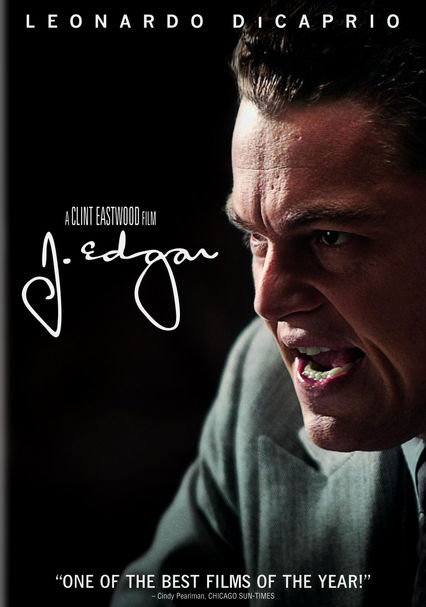
J. Edgar-2011

Director Clint Eastwood

Starring Leonardo DiCaprio, Armie Hammer, Naomi Watts

Scott’s Review #1,099

Reviewed January 12, 2021

Grade: A

When director Clint Eastwood and actor Leonardo DiCaprio align, exceptional things can happen. This is evidenced by J. Edgar (2011), a compelling and well-constructed drama with a biographical and character-driven focus.

One gets inside the head and psyche of the title character, J. Edgar Hoover, the head of the Federal Bureau of Investigations, with DiCaprio playing him flawlessly.

The film is left-of-center, surprising for the mainstream director, though his film-making style is familiar. Eastwood does what he does best by constructing a slick and “Hollywood” experience.

There are not daring camera angles or unique uses of light that Stanley Kubrick might use.  He creates a steady affair that will appeal to the American heartland, getting butts to the movie theater on his name alone.

The film opens in 1919 when a young Hoover (DiCaprio) is tasked with purging radicals from the United States and obtaining their secrets, something he’d carry with him for decades. He meets a new Secretary, Helen Gandy (Naomi Watts), whom he makes an awkward pass and an even more awkward marriage proposal.

She refuses, and they become professional and personal allies.

The story then plods along with historical stops through the decades like the Lindbergh baby kidnapping, Martin Luther King Jr., and Richard Nixon.

Hoover is always involved in these escapades.

Hoover, who served as the head of the bureau from 1924 until he died in 1972, was a powerful and ruthless man.

Eastwood carefully dissects him, professionally and personally. He never married, lived with his mother, traveled, and enjoyed dinners with one man who in death, bequeathed his estate.

You do the math.

He was a gay man when one couldn’t be an openly gay man. Thus, he is conflicted, and Eastwood does a great job of showing the demons he wrestles with.

The relationship between Hoover and lawyer, Clyde Tolson (Armie Hammer) is my favorite part of J. Edgar because it’s interesting and humanistic.

DiCaprio and Hammer give outstanding performances with flawless chemistry and charisma.

When Hoover professes his love for Tolson and quickly recants his statement then professes love for an actress, we view his turmoil. He loves Tolson but cannot bear to accept it even though it would free him from his chains.

Despite the tender nature of the sequence above or that his mother was a traditional, no-nonsense, shrew, Hoover is not portrayed as a hero. He was a complicated and damaged man and Eastwood hits this point home.

He blackmailed Martin Luther King Jr., kept sexual secrets on several Hollywood stars, and participated in various abuses of power.

The film does admit that the director also instituted fingerprinting and forensic measures that reduced crime.

Those who desire a straightforward lesson in history may be slightly perturbed by the focus on Hoover’s personal life. Eastwood could have easily made Hoover’s career the only facet of the production-enough material that exists for this.

Instead, we get to see the inner workings of the man. Kudos for this.

Dustin Lance Black, who wrote Milk (2008), a portrait of a gay man, is back at the helm serving as a screenwriter. But the two films are not modeled after one another. They are very different animals.

While Milk celebrates a man refusing to deny who he and others are, demanding their just civil rights, J. Edgar provides the narrative of a man fleeing from who he is.

Offering a rich and complex biography of a tortured man, the audience is exposed to a person wrestling with inner turmoil. Hoover was a famous man, but the film could easily represent those thousands of men who could not bring themselves to accept who they were.

The largest praise goes to DiCaprio who makes us sympathize, pity, and admire the complexities of his character.

J. Edgar (2011) hits a grand slam.

Ford v Ferrari-2019

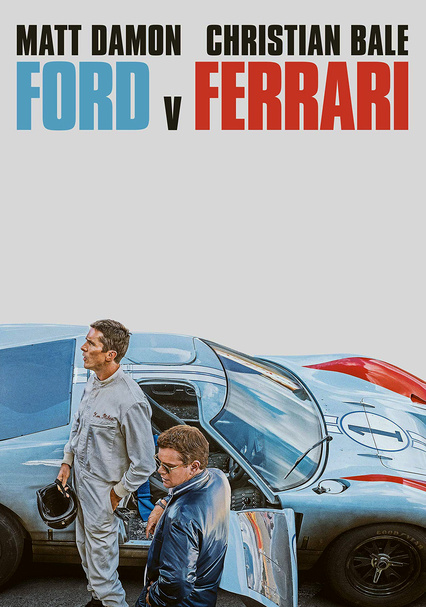
Ford v Ferrari-2019

Director James Mangold

Starring Matt Damon, Christian Bale

Scott’s Review #1,041

Reviewed July 18, 2020

Grade: B-

Ford v Ferrari (2019) is a film based on a real-life situation in the world of race car driving featuring two of Hollywood’s most recognizable leading men, Matt Damon and Christian Bale.

Co-leads share equal screen time and independent storylines that merge nicely. Bale gives the best performance and is the best part of an otherwise mediocre film.

The rest is quite formulaic and traditional in plot and filmmaking sensibilities.

Receiving several Academy Award nominations, I expected more from the experience. Granted, car racing isn’t the subject I’m most intrigued by.

Carroll Shelby (Damon) is an American car designer and entrepreneur, who the Ford Motor Company hires to build a car that will beat the Italian-owned Ferrari after a feud erupts between the two owners.

Shelby is tasked with building the car to debut at the upcoming 1966 24 Hours of Le Mans car race in France.

The rebellious race car driver, Ken Miles (Bale), who has no fear, is chosen to drive the new car. He and his wife have money troubles and need the payday.

Director James Mangold certainly adds his share of pomp and circumstance, making this a testosterone-fueled guy’s film. Traditional styles ensue as the climactic race fills the last act of the way-too-long production.

There is a story of loyalty and brotherhood between Carroll and Ken that feels forced and dated.

Ford v Ferrari is formulaic to a tee, with a clear modus operandi of providing entertainment and action.

The pieces are all in play. The Ford corporation is pissed at being tricked into a deal by a foreign country (Italy). They vow revenge with a big, American car that can defeat the foreign vehicle. There is a climactic finish, with the American car emerging as the clear victor.

However, first, there are hurdles to overcome to increase the tension and drama. Ken’s driver door malfunctions, causing him to have to gain laps to catch up to Ferrari.

Ford is written as the underdog, which is a tough sell.

Since the real-life events took place during the Cold War, Mangold spins a definitive Americana, good old boys’ creation that feels too patriotic to be genuine.

Many other films share a similar vibe, such as Apollo 13 (1995), The Martian (2015), and especially Rush (2013), which is similarly themed.

The Ford guys, though cagey and gruff, are meant to be the characters the audience roots for, and the Italian characters are not.

And is there a need to still show the cliched scene of a dedicated wife obediently watching television at home and cheering on her husband as he races?

The gripes are not to say the film is a bad experience- it’s not. It’s just that it’s on par with good Mexican takeout from your favorite restaurant.

You know precisely what you are going to get, and there is some comfort and satisfaction in that. Ford v Ferrari is an easy watch, and one can sink into their sofa and enjoy the revving engines, squealing tires, and smoking mufflers.

The film is machismo at its finest. Think of a better version of The Fast and the Furious (2001-present) franchise.

Let’s talk Oscar nominations.

There is no way Ford v Ferrari should have received a Best Picture nomination. Either Us (2019), Hustlers (2019), or A Beautiful Day in the Neighborhood (2019) could have deservedly taken its spot.

Warranted are nominations for Film Editing, Sound Editing, and Sound Mixing, for which it won the first two. More realistic is for Christian Bale to have been awarded a Best Supporting Actor nomination, which he did not receive.

Sometimes the Academy gets it right, sometimes they don’t.

Being a non-race car enthusiast might have hindered my enjoyment of the film compared to a more passionate viewer.

For those seeking a standard, rev ’em up, male-driven race car film, kick up your heels and enjoy the ride —you’ll love it. Ford v Ferrari (2019) will only marginally please those seeking a deeper meaning in film or film as an art form.

The film will undoubtedly be remembered as one of the most mainstream and Hollywood-produced films possible.

Oscar Nominations: 2 wins- Best Picture, Best Sound Editing (won), Best Sound Mixing, Best Film Editing (won)