Tag Archives: Burl Ives

East of Eden-1955

East of Eden-1955

Director Elia Kazan 

Starring James Dean, Julie Harris, Jo Van Fleet

Top 250 Films #205

Scott’s Review #1,092

Reviewed December 17, 2020

Grade: A

James Dean wasn’t with us for very long, tragically dying at the tender age of twenty-four, but he made three films: Rebel Without a Cause (1955), Giant (1956), and East of Eden (1955), all-powerful showcases and unique.

Dean gives a brilliant, humanistic, and sometimes tragic performance.

East of Eden, his first film, is the only one he got to preview. I hope he liked it because it will live forever as a gem.

Based on the John Steinbeck novel of the same name, the story is also a biblical retelling of Cain and Abel, brothers who clash and spar. Director Elia Kazan, famous for supporting and using Method actors in his films, gave a tremendous performance as Dean, which was key to the film’s empathetic nature.

The key to East of Eden is that it reflects on several characters, who are both good and bad, possessing qualities of both, detailing their struggles.

Nobody is completely good or completely bad. The story analyzes good versus evil and the multitude of layers between both extremes, making the experience juicy, truthful, and brilliant.

Set in 1917, during World War I, two sunny coastal California towns are the backdrop for the action. Cal Trask (Dean) perceives his father, farmer Adam (Raymond Massey), as favoring Cal’s brother, Aron (Richard Davalos). This leads to much resentment, jealousy, and conflict. Aron is the apple of Adam’s eye, and we wonder why.

Furthering the drama is Cal’s love for Aron’s girlfriend, Abra (Julie Harris), who doesn’t rebuff any advances. Cal and Aron’s mother, Kate (Jo Van Fleet), who they think is dead, is alive and well and running a brothel in a nearby town. Assuming a different name, she harbors secrets.

Before you get the impression this is some cheesy soap opera, East of Eden, like the novel, is heavily character-driven and nuanced with development. It ultimately draws the audience in and envelops everyone in its simmering qualities.

East of Eden is packed with powerful scenes after powerful scenes, and in more than one, the allegiances and rooting values shift from character to character.

Some of the best moments are when Cal self-destructs after his father refuses his birthday gift, or when Cal cruelly reveals the true nature of their mother’s profession to the innocent and unsuspecting Aron.

Finally, Cal and Abra’s kiss atop a Ferris wheel is filled with smoldering desire and deadly consequences.

The acting was tremendous across the board. Much of the credit must go to Kazan for pulling fabulous performances out of the players, a talent only a Method acting director can achieve.

While the cast is exceptional, the film belongs to Dean, who provides enough emotion and vulnerability to sustain his character’s topsy-turvy, tortured existence. Knowing that the actor died soon after filming gives the film an eerie and sentimental feel.

This is comparable to a more modern-day example when Heath Ledger died after giving a brilliant performance in The Dark Knight (2008).

This is hardly a war film or a guy’s film, as the ladies also get to shine with rich characters. Julie Harris and Jo Van Fleet portray flawed characters in juicy roles rife with meaty scenes filled with conflict.

As with most of Steinbeck’s works, specifically The Grapes of Wrath, the landscape is a character, and East of Eden is no exception. With dusty roads and mountainous backgrounds, events ooze with atmosphere and beauty.

The lush northern coastal California landscape portrays a grandiose magnificence that counterbalances the conflict its inhabitants are experiencing.

The central note to take away from East of Eden (1955) is that we are complex creatures with a mixture of good and evil. We sometimes want to do the right thing, but in doing so, we hurt those we love. The main characters suffer from pain, regret, good intentions, poor decisions, and loss.

The rich dialogue, adaptation, acting, and cinematography make the film near perfection.

Oscar Nominations: 1 win-Best Director-Elia Kazan, Best Actor-James Dean, Best Supporting Actress-Jo Van Fleet (won), Best Screenplay

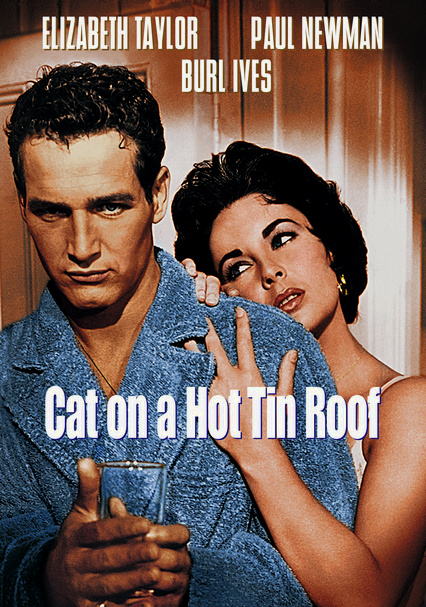
Cat on a Hot Tin Roof-1958

Cat on a Hot Tin Roof-1958

Director Richard Brooks

Starring Paul Newman, Elizabeth Taylor

Scott’s Review #1,356

Reviewed April 12, 2023

Grade: B+

If not for a drastically modified ending that completely changes the scope and message of the film version of Cat on a Hot Tin Roof (1958), it has ranked a solid ‘A.’

Instead, it is reduced to a grade of ‘B+,’ which is a shame because the film, for the most part, is fabulous-themes such as greed, jealousy, and heartbreak are explored.

Director Richard Brooks, who never shied away from controversial subject matters in later films like In Cold Blood (1967) and Looking for Mr. Goodbar (1977), created the screenplay with James Poe as a collaborator.

The film is based on Tennessee Williams’s 1955 Pulitzer Prize-winning play of the same name. It stars the titular talented actors  Elizabeth Taylor, Paul Newman, Burl Ives, Jack Carson, Madeleine Sherwood, and Judith Anderson.

After Brick Pollitt (Newman) injures himself while drunkenly revisiting his high school sports-star days, he and his tempestuous wife, Maggie (Taylor), visit his family’s Mississippi plantation for the sixty-fifth birthday of his aggressive father, Big Daddy (Ives).

In declining health, Big Daddy demands to know why Brick and Maggie haven’t given him a grandchild, unlike Brick’s brother, Gooper (Carson), and his overbearing wife, Mae (Sherwood).

The accusations result in shadowy secrets involving an unseen ‘football buddy’ and best friend of Brick’s that brim close to the surface but are never wholly unleashed.

In 1958, Newman and Taylor were each at the top of their game, and their talent, good looks, and chemistry nearly smoldered off the screen. Easy on the eyes, to say the least, one can relax with the comfort of witnessing good-looking people with tremendous acting talent hash it out.

The rest of the cast, especially Ives and Anderson, give bravura performances as fury and family drama emote most of the film’s running time.

Nearly rivaling the ferocity of the bitter scenes between Brick and Maggie is a lengthy and ultimately tender scene between Brick and his father. The sequence is for the ages and infuses some sympathy for the materialistic Big Daddy, who tearfully admits to loving his father. This drifter loved his son more than life itself.

Ives should have won the Best Supporting Actor Oscar but missed a nomination for Cat on a Hot Tin Roof entirely. Instead, the actor won the Academy Award for a film called The Big Country.

Shot like a play because it’s based on one. Cat on a Hot Tin Roof feels claustrophobic and stuffy despite the glamour of the family estate where most of the action takes place.

Servants serve and scamper after the four little rascals belonging to Gooper and Mae, nicknamed ‘Sister Woman, ‘ while cutting the cake and dealing with party favors of the rich and powerful.

Sadly, the film is nearly ruined with a piss-poor and severely botched wrap-up reuniting Brick and Maggie, cementing their sexual union and ascertaining the fact that they are a straight couple.

You see, in the original play, Brick’s sexuality is in question heavily, but the film removes almost all of the homosexual themes.

The hated Hays Code limited Brick’s portrayal of sexual desire from Skipper and diminished the original play’s critique of homophobia and sexism.

These items are the basis of the story, and their removal leaves a massive void in the film. We assume that Brick had erectile difficulties due to his injuries and drinking, but the point is weak and uneven, and also makes the continued mention of Skippy irrelevant.

Newman, in particular, was unhappy with the film.

Brooks wonderfully portrays Southern traditions and the hot summer atmosphere, making the characters feel suffocated and anxious. Doom and gloom hover over the film.

However, a stark change in the writing and Williams’s original concept is unforgivable, save for all the other elements of Cat on a Hot Tin Roof (1958).

After seeing the film twice, I yearn for the authenticity of seeing or reading the play.

Oscar Nominations: Best Picture, Best Director-Richard Brooks, Best Actor-Paul Newman, Best Actress-Elizabeth Taylor, Best Screenplay-Based on Material from Another Medium, Best Cinematography-Color