Tag Archives: Rod Steiger

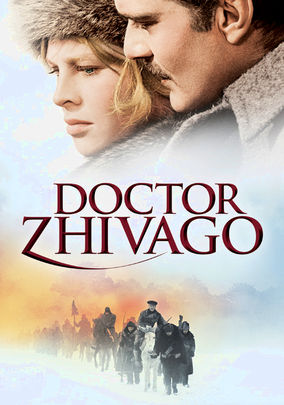
Doctor Zhivago-1965

Doctor Zhivago-1965

Director David Lean

Starring Julie Christie, Omar Sharif, Rod Steiger

Top 250 Films #31

Scott’s Review #42

449931

Reviewed June 18, 2014

Grade: A

Doctor Zhivago (1965) is a great film to watch on a cold night or throughout the crisp winter or holiday season.

The film is a classic masterpiece directed by the talented David Lean (Lawrence of Arabia, 1962, A Passage to India, 1986), whose perfectionism is evident in his epic films.

Nearly every scene could be a painting, so the cinematography alone is reason enough to become enchanted with art.

Of course, the story is also a goldmine as a sprawling decades-long love story unfolds amid the ravages of the bloody Bolshevik Revolution.

The film is set in the bitter cold of Russia (although all scenes were actually shot in Spain), and the harshness of the climate and the war combine with a doomed love story set against the backdrop of numerous battles and wartime effects.

Nearly all sequences are set in the winter, and the blustery and icy effects are nestled against numerous scenes of cozy, candlelit cabins or more extravagant, glowing surroundings.

Viewers must be surrounded by fire, flaming candles, or another form of warmth as a snowstorm or blizzard besets the outdoors for a perfect viewing experience.

A large-screen television or a cinema is simply a must to watch this film, as it is epic on the grandest scale.

Omar Sharif and Julie Christie (a gorgeous star in her day) are cast perfectly as Uri and Lara, young forbidden lovers enthralled with one another but involved with significant others.

The film dissects their initial meeting and their story over the years, experiencing marriages, births, and deaths throughout the ravages of Russia in the early twentieth century.

Despite their affairs, neither is deemed unsympathetic—quite the contrary.

Audiences will fall in love with the pair and become enchanted as they watch their love-tortured adventures unfold.

Sharif and Christie are just magnificent and utterly believable as a couple.

The set pieces are magnificent and flawless in design and detail (my favorite is the Ice Palace).

The cinematography is breathtaking, and the content is remarkably close to the superior novel by Boris Pasternak, evoking a sense of “really being there” in the viewer.

Doctor Zhivago (1965) is a brilliant film, perfect for a snowy winter evening.

Oscar Nominations: 5 wins-Best Picture, Best Director-David Lean, Best Supporting Actor-Tom Courtenay, Best Screenplay Based on Material from Another Medium (won), Best Music Score-Substantially Original (won), Best Art Direction, Color (won), Best Cinematography, Color (won), Best Costume Design, Color (won), Best Film Editing

Oklahoma!-1955

Oklahoma! -1955

Director Fred Zinneman

Starring Gordon MacRae, Shirley Jones, Rod Steiger

Top 250 Films #184

Scott’s Review #51

820796

Reviewed June 20, 2014

Grade: A-

Oklahoma! (1955) is one of a slew of memorable Rodgers and Hammerstein musicals to emerge from the 1950s and 1960s Hollywood and to be based on a popular stage version.

The film has an old-west, homespun, comfortable appeal. It is best enjoyed during the summer months.

While Oklahoma! seems a bit too hokey and is not my favorite musical compared to other more sophisticated stalwarts such as My Fair Lady (1964), An American in Paris (1951), or The Sound of Music (1965), it emits a flavor and tasteful appeal of the West.

The plot focuses on a love triangle between a good old boy, Curly, a good girl, Laurey Williams, and brooding Jud, though the real rooting couple is Curly and Laurey.

The trio is supported by many townspeople who gossip about them and help Curly and Laurey admit their true feelings and unite as a couple.

Of course, Jud is the villain, and conflicts come into play throughout the production.

A lesser couple, Will Parker and Ado Annie, also enter each other’s arms amid traditional small-town events such as a lively summer fair.

Stars Gordon MacRae (Curly) and Shirley Jones (Laurey) are very handsome and likable in the lead roles, making for a nice pairing.

Gloria Grahame is as appealing and comical as Ado Annie, especially in her rousing turn bellowing out, “I Can’t Say No,” Charlotte Greenwood is the moral voice of reason as Aunt Eller.

What works best in the film are the settings of Oklahoma, as the viewer experiences such a feel for life in the heartland long ago (though the exteriors were shot in Arizona).

It’s pure fantasy enjoyment with a magical Wizard of Oz feel, though no cyclone or munchkins are anywhere in sight. The film version closely follows the original stage version.

The musical numbers are pretty catchy (“Oh What a Beautiful Morning,” “I Can’t Say No,” and “Oklahoma” are my favorites). The controversial mid-number “Dream Ballet” is provocative, artistically enjoyable, and jarringly different from the rest of the traditional tale.

This jaw-dropping number mirrors a similar spectacle in An American in Paris.

Perhaps Oklahoma! is not entirely on par with other musicals of its day but darned close.

Oscar Nominations: 2 wins-Best Scoring of a Musical Picture (won), Best Sound Recording (won), Best Cinematography, Color, Best Film Editing

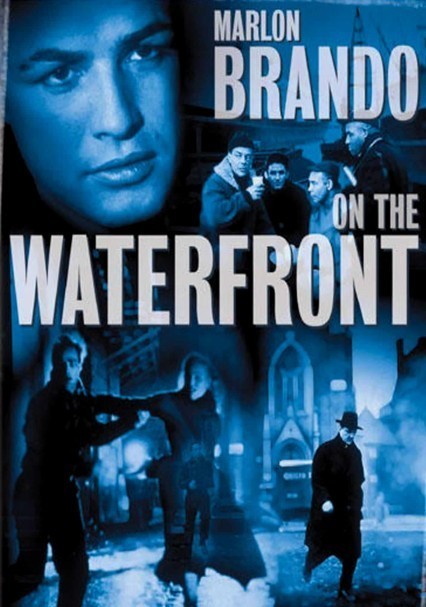
On the Waterfront-1954

On the Waterfront-1954

Director Elia Kazan

Starring Marlon Brando, Eva Marie Saint

Scott’s Review #876

Reviewed March 9, 2019

Grade: A

Led by one of the best acting performances of all time, On the Waterfront (1954) was an essential and relevant film when made and is still influential in the modern era.

Director Elia Kazan and newly minted Hollywood star Marlon Brando collaborate on a film spectacle as much a character study as a tale of morality and social injustice.

The musical soundtrack score composed by Leonard Bernstein only enhances an already astounding picture that is deservedly referenced as a masterpiece.

Terry Malloy (Brando) is a washed-up former local boxer who now spends his days slaving away as a dockworker on the dingy waterfronts of Hoboken, New Jersey. Terry’s brother Charley (Rod Steiger) works for a vicious mob boss, Johnny Friendly (Lee J. Cobb), who controls the area.

The police are aware of the ongoing corruption but are limited by the lack of evidence and witnesses to regular crimes. When a fellow dockworker is killed, Terry falls for the victim’s sister, Edie (Eva Marie Saint), leading him to rethink his priorities.

The positive aspects of On the Waterfront are enumerable. Meritful cinematography and location sequences, enshrined in the rich story and flawless acting, give the film authenticity. The film was shot almost entirely on location in New York and New Jersey, using actual docks and outdoor sequences.

The dingy, water-soaked locales are riddled with secrets and dark violence, brought to new levels through realism and grittiness.

Never looking more masculine or more handsome, though his portrayal of Stanley in A Streetcar Named Desire (1951) is a close second, Marlon Brando achieves riches in the world of stellar acting.

He is rugged yet compassionate, macho yet tender, and pours his heart into the role of Terry. One cannot help wondering if the self-professed method actor became Terry during filming.

With both vulnerability and strength, Brando embodies the character so well that he has become my favorite of all the film roles he has undertaken.

The supporting players dutifully flesh out the resounding cast with gusto. Special mentions go to Karl Malden as Father Barry and Steiger as Charley. Like Barry, Malden brings warmth, patience, and benevolence in a world of crime and deceit. He attempts to console and mentor the folks in his world and is eventually beaten for his honesty and earnestness.

Charley is a different story, selling his soul to the devil and accepting the cards he has been handed, choosing to join with Friendly. At a crucial moment, he makes another devastating choice that changes his life forever.

Few films can proudly boast a scene or dialogue that remains timeless and imprinted on cinematic history, but On the Waterfront contains a scene of this caliber.

During a tremendously important moment in the film, Terry has a conversation with Charley and makes an impassioned statement-“I coulda’ been somebody. I coulda been a contender”, laments Terry to his brother, “Instead of a bum, which is what I am – let’s face it.”

This line is a historic piece of writing and is true to the character.

The film is more powerful and truthful because it represents Elia Kazan’s real-life plight. In the early 1950s, the director famously informed a government committee about suspected Communists, while many of his colleagues chose to go to prison rather than name names.

Many Hollywood actors, directors, and screenwriters were blacklisted for decades to come. On the Waterfront is frequently deemed an allegory to the director’s plight and is a personal story.

On the Waterfront (1954) is sometimes violent and all-times realistic, painting a portrait of one man’s struggle to overcome the lousy life given to him to do the right thing.

Thanks to gorgeous direction, an explosive lead performance by Brando, and all the pieces fitting perfectly in unison, the film is one of the greats and will remain one that generations will discover.

Oscar Nominations: 8 wins-Best Motion Picture (won), Best Director-Elia Kazan (won), Best Actor-Marlon Brando (won), Best Supporting Actor-Lee J. Cobb, Karl Malden, Rod Steiger, Best Supporting Actress-Eva Marie Saint (won), Best Story and Screenplay (won), Best Music Score of a Dramatic or Comedy Picture, Best Art Direction, Black-and-White (won), Best Cinematography, Black-and-White (won), Best Film Editing (won)