Tag Archives: Adrienne Corri

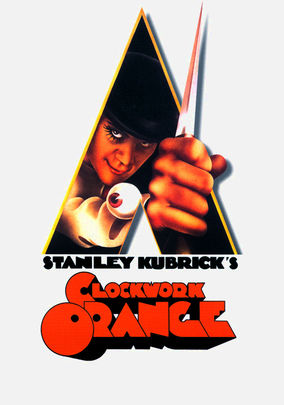
A Clockwork Orange-1971

A Clockwork Orange-1971

Director Stanley Kubrick

Starring Malcolm McDowell, Patrick Magee

Top 250 Films #11

Top 10 Most Disturbing Films #7

Scott’s Review #295
383466

Reviewed December 11, 2015

Grade: A

A Clockwork Orange (1971) is a groundbreaking Stanley Kubrick film, and my personal favorite in his collection, with his movies appearing on my Top 100 Favorite Films list.

Adapted from the 1962 Anthony Burgess novel, once thought unfilmable, it becomes a psychedelic, creative, and fascinating experience from start to finish.

Bizarre and thought-provoking, Kubrick tells the story of a London sociopath living in futuristic London, and the strange behavioral modifications performed on him after he is apprehended by the police, in an attempt to “reform” him and transition him into a valuable member of society.

The film explores profound social and psychological themes, posing thought-provoking questions about them.

Interspersed with classical music and featuring excellent, colorful sets, A Clockwork Orange is a masterpiece in bizarre cinematic artistry.

Alex DeLarge loves classical music (specifically Beethoven), violence, and hanging out with friends. He constantly skips school, beats people up, and parties with his friends. His pet snake is his best friend, and his parents seem afraid of him.

Finally arrested after murdering an odd lady with dozens of cats, Alex is sent away to prison, where he volunteers for an experimental “Ludovico” technique, which Alex assumes is a “get out of jail free” card.

What follows is a freakish, uncomfortable experience for Alex.

The film contains startling and disturbing scenes throughout- when Alex and his team of “droogs” become inebriated from a concoction of milk laced with drugs and embark on an evening of self-proclaimed ultra-violence, they drive to the country where they break into wealthy author F. Alexander’s house and beat him, crippling him for life.

They rape his wife while forcing him to watch, all the while Alex happily sings “Singin’ in the Rain,” timing the beats of the song to acts of violence.

The brutality and creativity of this scene are mesmerizing and certainly unforgettable.

We, the audience, might despise a character like Alex; however, we feel sympathy for him as his “reformation” begins. A disturbing scene, which is forever embedded in my mind, involves the attachment of a contraption forcing Alex’s eyelids wide open.

At the same time, he watches violent scenes and is administered a drug to make him sick, thereby associating the violence with illness.

He becomes psychologically screwed up.

Alex (thanks to an excellent portrayal by Malcolm McDowell) is charismatic and humorous and, in some warped way, quite likable to the audience, despite his devious ways.

A Clockwork Orange continues to disturb me after multiple viewings – who can forget the sinister grin that Alex wears and the creepy eyelash with mascara that he sports?

The film conveys an interesting message about human nature as Alex shifts from predator to prey. We ask: “Are human beings naturally prone to violence?”

The direction of the film is breathtaking – the weird colors, the (as traditional with Stanley Kubrick) long-shot camera angles, and the intense musical crescendos.

The genre of classical music is a fantastic and ominous choice, almost adding a level of sophistication to Alex and the violence.

The weird supporting characters (Alex’s parents, the probation officer, and his parents’ roommate) and the suddenly fast-forwarded sex scenes were unheard of for their time.

With immensely creative, unconventional filmmaking, a moral message, and thought-provoking questions about humanity, A Clockwork Orange (1971) is a groundbreaking, fantastic, trippy experience.

A masterpiece from top to bottom.

Oscar Nominations: Best Picture, Best Director-Stanley Kubrick, Best Screenplay Based on Material from Another Medium, Best Film Editing

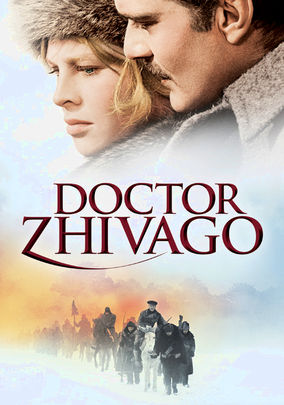
Doctor Zhivago-1965

Doctor Zhivago-1965

Director David Lean

Starring Julie Christie, Omar Sharif, Rod Steiger

Top 250 Films #31

Scott’s Review #42

449931

Reviewed June 18, 2014

Grade: A

Doctor Zhivago (1965) is a great film to watch on a cold night or throughout the crisp winter or holiday season.

The film is a classic masterpiece directed by the talented David Lean (Lawrence of Arabia, 1962, A Passage to India, 1986), whose perfectionism is evident in his epic films.

Nearly every scene could be a painting, so the cinematography alone is reason enough to become enchanted with art.

Of course, the story is also a goldmine as a sprawling decades-long love story unfolds amid the ravages of the bloody Bolshevik Revolution.

The film is set in the bitter cold of Russia (though all scenes were shot in Spain), and the harshness of the climate and the war combine with a doomed love story set against the backdrop of numerous battles and wartime conditions.

Nearly all sequences are set in winter, and the blustery, icy effects are set against numerous scenes of cozy, candlelit cabins or more extravagant, glowing surroundings.

Viewers must be surrounded by fire, flaming candles, or another form of warmth as a snowstorm or blizzard rages outside for a perfect viewing experience.

A large-screen television or a cinema is simply a must to watch this film, as it is epic on the grandest scale.

Omar Sharif and Julie Christie (a gorgeous star in her day) are cast perfectly as Uri and Lara, young forbidden lovers enthralled with one another but involved with significant others.

The film dissects their initial meeting and their story over the years, experiencing marriages, births, and deaths throughout the ravages of Russia in the early twentieth century.

Despite their affairs, neither is deemed unsympathetic—quite the contrary.

Audiences will fall in love with the pair and become enchanted as they watch their love-tortured adventures unfold.

Sharif and Christie are just magnificent and utterly believable as a couple.

The set pieces are magnificent and flawless in design and detail (my favorite is the Ice Palace).

The cinematography is breathtaking, and the content is remarkably close to the superior novel by Boris Pasternak, evoking a sense of “really being there” in the viewer.

Doctor Zhivago (1965) is a brilliant film, perfect for a snowy winter evening.

Oscar Nominations: 5 wins-Best Picture, Best Director-David Lean, Best Supporting Actor-Tom Courtenay, Best Screenplay Based on Material from Another Medium (won), Best Music Score-Substantially Original (won), Best Art Direction, Color (won), Best Cinematography, Color (won), Best Costume Design, Color (won), Best Film Editing

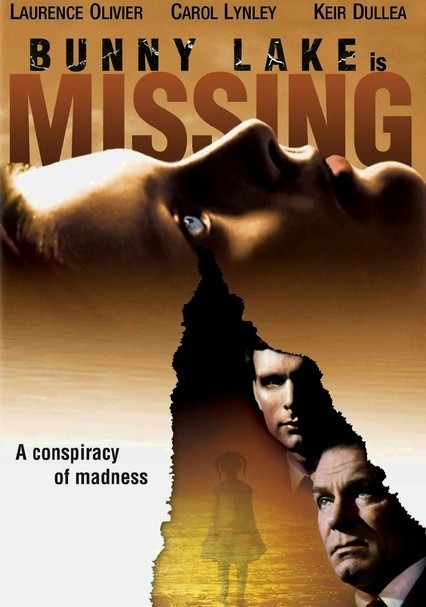
Bunny Lake Is Missing-1965

Bunny Lake Is Missing-1965

Director Otto Preminger

Starring Keir Dullea, Carol Lynley

Scott’s Review #877

Reviewed March 13, 2019

Grade: B+

Bunny Lake Is Missing (1965) is a taut psychological thriller that feels fresh and unpredictable, containing a mysterious, almost haunting quality throughout its running time.

The film focuses on one big question: Is the main character’s interpretation of events real or imagined? The uncertainty makes the film intriguing to watch. Glimpses of London locales also make for fun viewing, as the chaotic and creepy children’s school is the film’s primary location.

Though not remembered well, the film is still worthy of a watch.

Ann (Carol Lynley) is a single mother recently transplanted to London with her well-kept brother Stephen (Keir Dullea). When she hurriedly drops off her unseen daughter, Bunny, at her new preschool and instructs the school cook to watch her, the girl soon disappears.

When the police were called to investigate, they discovered nobody on staff had any eyes on the young girl. The plot thickens when it is revealed that all of Bunny’s belongings have been removed from Ann’s residence and that Ann had an imaginary childhood friend named Bunny.

Has Ann concocted the entire scheme herself for attention, or could she be harmful or psychotic?

The film offers several subtle nuances that either work or do not work. The opening credits are a lesson in cinematic creativity as the words present as slivers of paper torn down the middle.

Though the musical score during this sequence is not necessarily eerie, the complexity and ferocity present an ominous and certainly intriguing element.

This point is a wise move because it sets the tone for such a thriller as the film presents itself.

Otto Preminger’s black-and-white style is upbeat, enhancing the overall look of the picture. The muted tones evoke an effective ghost story style with an ambivalent chilling technique.

As the mystery is ultimately resolved, the introduction of new and peculiar characters offset the tangled plot as the look of the film remains constant.

As Horatio Wilson, Ann’s landlord, and Martita Hunt, the retired school headmistress, Noel Coward lives in the attic, which does wonders for adding creepy ch. Butters, but are they meant to be red herrings or keys to the big reveal?

A few gripes are that incorporating the English rock band The Zombies serves little purpose, and the addition is perplexing.  I’m not opposed to the band’s music, but the songs have nothing to do with the plot.

Seen on the television during a pub scene and later heard on a janitor’s radio during an escape scene, the odd placement seems little more than a marketing tool product placement.

Another miss is with the casting of Sir Laurence Olivier as Superintendent Newhouse. His talents are wasted mainly with little more than a throwaway role despite arguably being considered the lead.

As the straight man handling the investigation, his performance is adequate but limited, especially given his Shakespearean stage actor talents. His performance is both phoned in and beneath the historic actor.

The other roles are well-cast, especially Lindley and Dullea in key parts. For the film’s first portion, I assumed the pair were husband and wife until it was revealed otherwise, which is a lovely, unexpected nuance. Their chemistry is sweet and easy, and both perform their respective roles with poise and charisma.

1965, both were relatively novice young actors on the brink of stardom, though sadly short-lived. Their acting chops are firmly in place with this film, which is fun to witness.

For fans of psychological thrillers with an implied ghost story enveloped within its clutches, Bunny Lake Is Missing (1965) is worthy and mysterious entertainment with a surprise ending.

The film is not stellar, with some weaknesses, and is less than a pure classic, reminiscent of a good, solid Twilight Zone television episode.

Madhouse-1974

Madhouse-1974

Director Jim Clark

Starring Vincent Price, Peter Cushing, Adrienne Corri

Scott’s Review #233

220px-Madhouseposter[1]

Reviewed April 3, 2015

Grade: B-

Madhouse, a 1974 British horror film, stars horror icon Vincent Price, who portrays a sympathetic Hollywood actor who is unsure of his sanity after the grisly murder of his trophy fiancée, whom he may or may not have been responsible for murdering.

Mainly set in London, Madhouse also stars famed British actors in the latter stages of their careers, such as Peter Cushing, and is a treat for classic British horror fans.

The look of the film is stylistic and effective in the mood- the story, while silly, is also fun.

Paul Toombes (Price) is a renowned actor best known for his portrayal of Dr. Death in a successful film franchise. He seemingly has it all and is the envy of his contemporaries- wealth, notoriety, and a glamorous blonde fiancée named Ellen.

After Ellen is murdered by someone dressed as Dr. Death, Paul is unable to remember the circumstances or his whereabouts during the murder.

After spending years in a mental institution in a confused state, he is summoned to London to mount an acting comeback of sorts, reprising his Dr. Death alter-ego.

As the bodies begin to pile up, a whodunit commences- is Paul Toombes the killer, or is someone impersonating him?

The film itself is quite pleasing to a horror fan like me. The deaths, while silly, are fun and campy.

Mostly all female victims, a comical aspect is how the victims, when cornered by the killer, simply scream and stand there waiting to be sliced.

Wouldn’t they fight back in real life?

This film is certainly not realism at its finest, but it is a fun horror film. It is a bit exaggerated and over-the-top in a campy way, but it is also true to the 1970s style, with point-of-view scenes from the killer’s perspective.

A wonderful aspect of this film is the inclusion of real clips from old Vincent Price films (The Raven, The Pit and the Pendulum, and House of Usher), to name a few, featuring the deceased horror god Boris Karloff and Basil Rathbone.

Since the plot features Price as a former horror actor, this is a wonderful opportunity to showcase classic horror films from long ago, and it works perfectly.

I enjoyed the television scenes within the film plot as Paul revives his career and shoots a series for the BBC. The film chooses interesting, haunting sets, and Cushing’s character, Herbert Flay, and his zany wife reside in a spooky, vast mansion with eerie spiders that the wife is obsessed with.

The set pieces are great and very Halloween-like. And the spider-eating-flesh scene is excellent!

The tag team of Price and Cushing is fun to watch- both horror stalwarts connect well, and both actors play off of each other successfully.

They had a ball while making this film.

Towards the end of the film, the plot becomes confusing, and the big reveal of the killer’s identity and the surrounding motivations is a disappointment.

The conclusion to the film is silly and makes little sense, although that is secondary to a film of this genre that borders on camp.

Madhouse (1974) is an enjoyable midnight flick starring two of the classic horror genre’s top icons.