Tag Archives: Wes Bentley

American Beauty-1999

American Beauty-1999

Director Sam Mendes

Starring Kevin Spacey, Annette Bening

Top 250 Films #136

Scott’s Review #70

60000407

Reviewed June 25, 2014

Grade: A

American Beauty is a film that holds up magnificently well and packs the same punch as when I first saw it in 1999.

The film won the Best Picture Oscar in 1999, surprisingly so, as it is not a mainstream film and is edgy, artistic, and poetic.

The film is a thought-provoking story of the American Dream gone wrong and how most people live ordinary, humdrum, on the surface, happy lives, but ultimately are unhappy, damaged, or otherwise unfulfilled.

It is a truthful film and reminds me quite a bit of The Ice Storm, a 1997 film.

American Beauty is not a downer but rather witty, darkly humorous, and filled with dry sarcasm.

Kevin Spacey is tremendous as the central character going through a midlife crisis, and Annette Bening is frighteningly good as his neurotic, controlling wife.

Their daughter, played by Thora Birch, has her teenage angst and falls in love with a neighborhood misfit. Every character, even small and supporting, is troubled in some way.

American Beauty (1999) is a film that was loved or hated at the time of its release; some did not get it or did not want to invest the thought it requires, but to me, it’s a work of art that has achieved a timeless quality.

Oscar Nominations: 5 wins-Best Picture (won), Best Director-Sam Mendes (won), Best Actor-Kevin Spacey (won), Best Actress-Annette Bening, Best Screenplay Written Directly for the Screen (won), Best Original Score, Best Cinematography (won), Best Film Editing

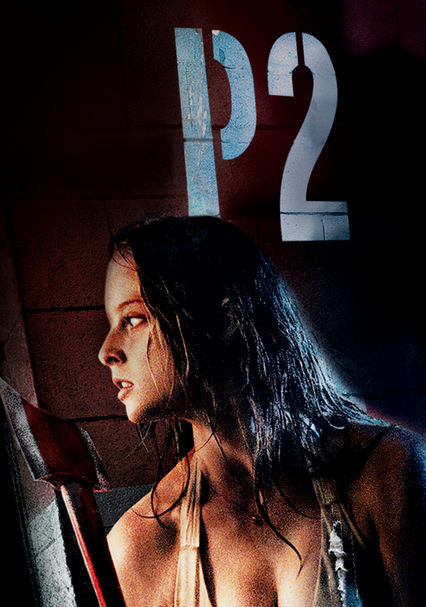
P2-2007

P2-2007

Director Franck Khalfoun

Starring Rachel Nichols, Wes Bentley

Scott’s Review #1,106 

Reviewed January 29, 2021

Grade: B

Franck Khalfoun, a French filmmaker known for the horror genre, makes his directorial debut with P2 (2007).

As a horror buff, I thought the film had a great premise, which made me immediately want to see it. Unfortunately, while the film has its moments of intrigue and plenty of gore, the climax ultimately disappoints, and it turns run-of-the-mill.

Like many of its modern horror brethren, there is little that separates it from other similar films.

It’s fine Saturday night viewing fare, but quite predictable.

Films set during the Christmas holiday, especially in festive New York City, always enrapture me, so P2 gets a leg up.

The film doesn’t utilize the holiday very well, save for a smattering of decorations within an office building, some snow, and one creepy holiday song.

Set on Christmas Eve, the plot follows a young businesswoman named Angela (Rachel Nichols) who becomes trapped in an underground parking garage in midtown Manhattan.

She is pursued by a psychopathic, unhinged security guard (Wes Bentley), who is obsessed with her.

Bentley, known for his terrific role in American Beauty (1999), is the main reason to see this film. He plays creepy and obsessed very well and is a great villain.

His piercing blue eyes are intense and frightening, and his obsession with Elvis Presley and his dog is revealed. He is disturbed, though, for no apparent reason, which is not positive to any character development.

Why is he crazy?

When Thomas plays Elvis Presley’s “Blue Christmas” over the intercom, it’s a festive and delightfully morbid highlight.

I desired to know what makes Thomas tick and why he hunts Angela. Has he been watching her for months, or does he see an opportunity on this particular night and go for the gusto?

The plot reveals a bit of both, which is unsatisfying because there is no payoff.

Does he knock out and kidnap Angela because she rebuffs his advances, or would he have done this anyway if she had agreed to dinner?

He is in love with her, but why? It’s not that she isn’t a catch. She is pretty and a successful businesswoman with a good head on her shoulders. Does she reject him because she gets a bad vibe or because he’s a security guard?

I wanted more backstory for both main characters, but once she is chained to a table, it hardly matters. He’s gone too far off the deep, especially after it’s revealed he has killed others. Thomas’s motivations are not satisfying.

Nichols, a novice actress, is very good at her role. She carries the film and is in a state of peril most of the time. But she neither overacts nor plays the victim.

There is a nice balance between the terror and the task of figuring out what steps to take to save her life and flee the madman.

P2 has a female-empowerment vibe, but Angela does appear in skimpy clothing, thus reflecting the standard state of undress required of their female stars, a formula many horror films stick to.

Angela is smart, quick-thinking, and strong. She tries to outsmart her capturer, and more often than not, she does, and she is victorious in the end.

Surprise!

I noticed multiple nods to the Saw (2004-present) franchise since this series introduced and embraced the torture-horror genre.

Many horror films use this technique to shock and startle viewers rather than offering clever writing or stories. The use of videotape appears in P2, which borrows heavily from Saw.

P2 (2007) is a fine effort and will satisfy horror fans. It may tread into familiar territory and back itself into a corner with limited story possibilities.

Still, I did look over my shoulder a couple of times after viewing the film when I was in my building’s parking garage.

Ironically, I was on level P2.

Maybe the film did leave an impression after all?

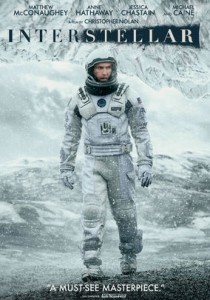
Interstellar-2014

Interstellar-2014

Director Christopher Nolan

Starring Matthew McConaughey

Scott’s Review #277
70305903

Reviewed September 25, 2015

Grade: B-

Interstellar (2014) is an interesting film to review.

It’s a science-fiction/futuristic epic with a run time of nearly three hours, and it’s complex and intricate.

It is the latest offering by director Christopher Nolan.

I cannot say I loved the film; however, I did appreciate and marvel at its visual and technical aspects, which completely overshadow the convoluted plot, which is difficult to follow because it jumps between worlds and galaxies.

The film reminds me of Inception (2010), with an obvious homage to 2001: A Space Odyssey (1968), the latter directed by Nolan, but it’s not quite as compelling from a story point of view as Inception.

The complexities of different entities, worlds, and layers of worlds are featured and, admittedly, mind-blowing, which is the weak part of the film.

Making the film arguably too intelligent, it loses the audience’s attention.

By too intelligent, I mean too complex. As I review the film, I see two halves-the story side and the visual side. In Interstellar, both are essential components, and one fails while the other marvels.

The story goes something like this.

Matthew McConaughey plays Cooper, a widowed, former space expert stuck in a small town in the Midwest, where he begrudgingly runs a farm, living out an unsatisfying existence.

The Earth’s food and crops are slowly running out, and the planet is dying. His two children, daughter Murphy and son Tom, face a bleak world.

One day, a dust pattern with coordinates leads Cooper and Murphy to a secret NASA team intent on finding other worlds and attempting to save Earth.

Dr. Brand, a college professor and science wizard, leads the team, played by Michael Caine.

Cooper, naturally, is chosen to lead the venture, which could take him away from his family for years. He accepts, much to Murphy’s chagrin.

Once in outer space- assisted by Amelia Brand (Dr. Brand’s daughter)- the team embarks on an endless mission leading them to different planets and one strange encounter with a rebel astronaut (played wastefully by Matt Damon).

Years later (on Earth, anyway), Murphy and Tom (now grown and played by Jessica Chastain and Casey Affleck) assume their father Cooper is dead.

Critically, the story is way too much to comprehend. I let go of the story instead of focusing on the visual spectacle I was treated to.

The plot eventually meanders off track as the team traverses through a space wormhole created by an alien intelligence and travels fifty years without aging.

Life has gone on on planet Earth. Some characters age, others do not.

To summarize, the story is convoluted and impossible to follow.

Speaking of the story side of Interstellar, the writing contains an irritating wholesomeness, especially in the early stages- pre-outer space.

McConaughey was given this tough, machismo side to him that screams of Hollywood traditionalism- almost like “I am a man- I save the family”. Haven’t we seen this too many times in film?

I also found the relationship between Cooper and his young daughter, Murphy, incredibly saccharine and screaming Hollywood schmaltz.

McConaughey was given and succeeded in delivering one great crying scene.

Interstellar’s visuals are a spectacle and far better than the story, especially in the final third of the film.

The sheer grandeur is astounding. When the crew lands on Miller’s planet, an ocean world, a great tidal wave topples their spaceship, killing one of the team.

The tidal wave looks monumental in size and ferocity. Later, when the crew lands on an icy planet, the immense cold and the planet’s shape work perfectly, and it feels like they are in outer space.

The scene where Cooper attempts to contact a character through a bookshelf is inventive and creative. The scene is set up like a maze with different periods, colors, and shapes; the way it blends them is impressive and artistic.

Visually, Interstellar has similarities to the 1968 epic 2001: A Space Odyssey. Its grandiose, artistic, experimental, and epic style, along with the obvious space theme, makes the two films comparable.

However, while 2001: A Space Odyssey is about life and carries a clear, powerful message, I didn’t find the same in Interstellar. Instead, I did not find a message, only a confusing story, mixed with spectacular visuals.

Oscar Nominations: 1 win-Best Original Score, Best Sound Editing, Best Sound Mixing, Best Production Design, Best Visual Effects (won)

Lovelace-2013

Lovelace-2013

Directors Rob Epstein, Jeffrey Friedman

Starring Amanda Seyfried

Scott’s Review #133

70241594

Reviewed July 24, 2014 

Grade: B

Lovelace (2013) is an account of famous 1970s porn star, Linda Lovelace, and her rise to stardom and inevitable fall from the spotlight.

Her difficult family life, abusive relationships, and her attempt to escape the porn world for good are explored.

The film tells the story from Lovelace’s point of view, based on her tell-all autobiography, and portrays her in a very sympathetic way.

Whether all of the abuse and struggles that Lovelace claimed are to be believed is up to the viewer.

Lovelace, the film, comes across as similar to Boogie Nights (1997)- even the 1970s soundtrack is eerily alike, but inferior to that masterpiece.

The only character whose past is fully explored is Linda Lovelace, the sole focal point; the others are simply extensions of her character.

One major issue I found with the film is Amanda Seyfried’s casting as Linda Lovelace.

Seyfried does not have the plain-Jane or girl-next-door characteristics that the real Lovelace had. She comes across as soft and gentle, much too much for this particular role.

Conversely, the casting of Sharon Stone and Peter Sarsgaard is excellent, as each is dynamic in their respective roles. Stone should have received much more acclaim for her role.

As Lovelace’s mother, she is gritty, steely, and unsympathetic.

The film contains a who’s who of Hollywood names involved in small roles.

Another issue is that the film seems like a made-for-television movie, and considering the subject matter is the porn industry, it seems awfully watered down and not harsh enough.

Lovelace (2013) is entertaining enough to keep one’s interest but is not riveting or in-depth enough to be a major success.