Tag Archives: Paul Bettany

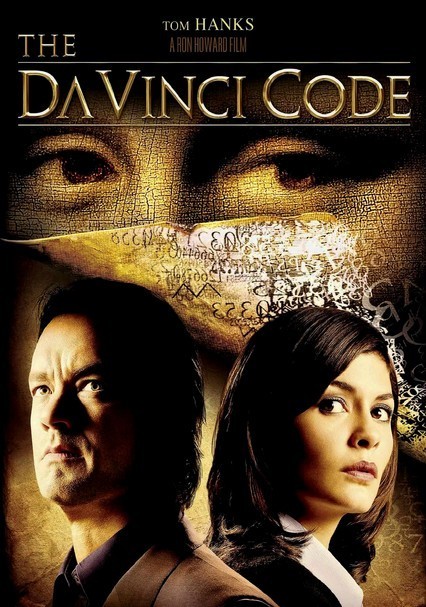
The Da Vinci Code-2006

The Da Vinci Code-2006

Director Ron Howard

Starring Tom Hanks

Scott’s Review #1,223
Reviewed January 23, 2022

Grade: B+

Based on the best-selling 2003 novel written by Dan Brown, Ron Howard directs the film version of The Da Vinci Code (2006).

Since I haven’t read the novel at this writing, I cannot give a fully fair assessment from a comparative perspective, but my hunch is that the book is superior to the film.

Isn’t it usually?

The film is entertainment personified, and Howard wisely casts a big name like Tom Hanks to draw audiences to the theaters.

It’s a slick and adventurous thrill ride, which is all well and good, but it’s also a type of film you can see once, enjoy for what it is, and never need to see again.

The most fun is the controversy the film, like the book, encountered.

It was met with especially harsh criticism by the Catholic Church for the accusation that it is behind a two-thousand-year-old cover-up concerning what the Holy Grail is, the concept that Jesus Christ and Mary Magdalene were married, and that the union produced a daughter.

So, those who are sensitive or uptight about religion may want to skip the film and the novel.

But this is Hollywood, after all, and Howard and Hanks do what they do best. They create and produce a fun, solid, blockbuster flick.

When the curator of the Louvre is found murdered in the famed museum’s hallowed halls, Harvard professor Robert Langdon (Tom Hanks) and cryptographer Sophie Neveu (Audrey Tautou) must untangle a deadly web of deceit involving the works of Leonardo da Vinci.

The most enjoyable parts are the locales and the focus on art.

The famous Louvre in Paris, France, permitted filming of relevant scenes at its premises. Still, only a replica of the Mona Lisa was used during filming, as the crew was not allowed to illuminate the original work with their lighting.

The Westminster Abbey scenes were instead filmed at Lincoln and Winchester cathedrals.

The Parisian nightlife is gorgeous and murky in its depiction, and a generous number of sequences are shot throughout the United Kingdom, with Scotland and England receiving the most representation.

So, while strict limitations were harbored, there is an international flavor to The Da Vinci Code that works wonderfully, especially for those who have traveled to those locations.

For art lovers, particularly of da Vinci himself, there is a satisfying respect for the art. I always try to improve my art knowledge, so this film is helpful for me and for novice art fans to educate themselves and learn more about the subject.

Hanks, as usual, carries the film in his steady-Freddy approach.

While not as compelling as his roles in either Philadelphia (1993) or Forrest Gump (1994), the actor can convey his suspicious plight and the need and desire to solve the complex puzzle.

Audiences will follow suit.

The Da Vinci Code (2006) was riddled with bad reviews and jests mostly at its ridiculous plot and absurd story. While there is a grain of truth to this, I found the film enjoyable entertainment, and that’s all I expected out of it.

The film pleases and satisfies if not taken too seriously.
A Beautiful Mind-2001

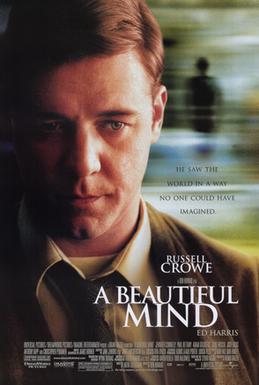
A Beautiful Mind-2001

Director Ron Howard

Starring Russell Crowe

Scott’s Review #1,003

Reviewed March 25, 2020

Grade: A-

A Beautiful Mind (2001) is a superior-made film based on the life and times of American mathematician John Nash, a Nobel Laureate in Economics and Abel Prize winner.

The biography explores Nash’s battles with schizophrenia and the delusions he suffered, causing tremendous stress on friends and family.

The film is well-written and brilliantly acted, but it deserves a demerit for its factual inaccuracies, especially regarding Nash’s complex sexuality and family life.

This leaves a gnawing paint-by-the-numbers approach aimed only at mass appeal.

The film was an enormous success, winning four Academy Awards for Best Picture, Best Director, Best Adapted Screenplay, and Best Supporting Actress.

It was also nominated for Best Actor, Best Film Editing, Best Makeup, and Best Original Score.

Arguably one of the best films of 2001, it cemented director Ron Howard’s reputation as a mainstream force to be reckoned with in the Hollywood world.

The project was inspired by the Pulitzer Prize-nominated book of the same name.

Starting in 1947, we meet Nash (Russell Crowe) as a virginal, socially awkward college scholar at Princeton University. He is a whiz at science and mathematics, coming up with unique and dynamic ideas for problem-solving.

Rising the ranks in respectability, he is given an important job with the United States Department of Defense, tasked with thwarting Soviet plots.

He becomes increasingly obsessive about searching for hidden patterns and believes he is being followed, sinking further into depression and secrecy.

A Beautiful Mind is an important film because it brings to light the overwhelming issue of mental health and the struggles one suffering from it is forced to endure.

Nash largely lives in a fantasy world and has imaginary friends who have followed him for decades by the time the film ends.

Nash conquers his demons with little aid of medication, causing a controversial viewpoint. Amazing that the man was able to rise above, but is this a realistic message for those suffering from hallucinations?

Russell Crowe carries the film, fresh off his Oscar win the year before for his stunning turn in Gladiator (2000). He would have won for portraying Nash had he not recently received the coveted prize.

Crowe, hunky at this point in his life, convincingly brings the brainy and nerdy character, rather than the stud, to life, adding layers of empathy and warmth to the role.

We root for the man because he is as sensitive as he is a genius.

Jennifer Connelly, in what is disparagingly often described as the wife-or-girlfriend role, does her best with the material given.

My hunch is her Oscar nomination and surprising win have more to do with piggybacking off the slew of other nominations the film received.

She is competent as the supportive yet strong Alicia, Nash’s wife. In her best scene, she flees the house after a confused Nash leaves their infant daughter near a full bathtub, putting her life in danger.

The most heartfelt scene occurs during the conclusion.

After many years of struggle, Nash eventually triumphs over this tragedy and, finally, late in life, receives the Nobel Prize. This is a grand culmination of the man’s achievements and a sentimental send-off for the film.

The aging makeup of all principal characters, specifically Nash and Alicia, is brilliantly done.

Despite the heaps of accolades reaped by A Beautiful Mind, several factual points are reduced to non-existence.

It is questionable why Howard chose not to explore Nash’s rumored bisexuality, instead of passing him off as straight.

Admittedly, the film is not about sexuality, but isn’t this a misrepresentation of truth? Nash had a second family, which is also never mentioned.

These tidbits, eliminated from the film, leave a glossy feel, as if Howard picked and chose what to tell and not to tell for the sake of the mainstream audience.

Bringing needed attention to a problem of epic proportions, A Beautiful Mind (2001) addresses mental health issues in the United States.

The methods may be questionable, and the film has an overall safe “Hollywood” vibe, but it must be credited for a job well done in a film that is not only important but also displays a good biography for viewers eager to learn about a genius who faced unrelenting issues.

Oscar Nominations: 4 wins-Best Picture (won), Best Director-Ron Howard (won), Best Actor-Russell Crowe, Best Supporting Actress-Jennifer Connelly (won), Best Screenplay Based on Material Previously Produced or Published/Adapted Screenplay (won), Best Original Score, Best Makeup, Best Film Editing