Tag Archives: Jane Fonda

Barbarella-1968

Barbarella-1968

Director Roger Vadim

Starring Jane Fonda 

Scott’s Review #1,553
Reviewed September 26, 2026

Grade: A

For film connoisseurs circa 1968, Barbarella must have been a breath of fresh air in cinematic creativity. It took paths not yet forged, especially in feminism and sexuality.

The groovy, psychedelic sets and costumes alone project a level of ‘cool’ and colorful inventiveness perfectly encapsulating the 1960s.

Don’t get me wrong, by the late 1960s, earlier groundbreaking treats like The Naked Kiss (1964), The Graduate (1967), and Bonnie and Clyde (1967) had already been released to thunderous appreciation.

But Barbarella is wilder and more outer-world, especially with its mix of science fiction, progressive, and campy elements.

It’s like a saucer filled with zany art materials thrown into a blender, and out comes Barbarella.

Ironically, it was released the same year as another brilliant science fiction film, Stanley Kubrick’s 2001: A Space Odyssey.

Then and now (2026), the best way to view this wacky masterpiece is late at night, alongside a strong hallucinogen or a lavish cocktail, for film sophisticates who appreciate art in film.

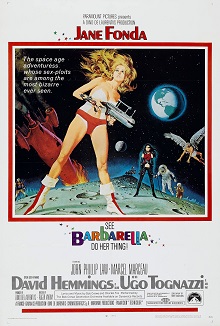
The film stars Jane Fonda as the title character, a futuristic space traveler and representative of the United Earth government sent to the Tau Ceti planetary system to find scientist Dr. Durand Durand (Milo O’Shea), who has created a weapon that could destroy humanity.

Planet Earth’s leaders fear it will cause mass destruction. Until now, they have been a peaceful, loving, non-violent community.

Barbarella roams 41st-century space with her blind and shirtless guardian angel, buff Pygar (John Phillip Law). She encounters a bevy of weird characters like sinister children, mechanical dolls with razor-sharp teeth, and other outcasts and miscreants.

On a more adult level, she meets Mark Hand (Ugo Tognazzi) and the Black Queen (Anita Pallenberg), who both fall madly in love with Barbarella and desire her instantly.

Fonda was a smoldering beauty in 1968 (and still is ravishingly elegant in 2026), so she oozes sexuality combined with a relatability from the moment she graces the screen.

As she wriggles out of an encasement, completely nude, her perfect figure is on display. But this isn’t chauvinistic or exploitative, as the character embraces her femininity.

At the time, the scene must have been shocking, though most of the time her lithe nude figure is only suggested.

Barbarella and Fonda are both strong, opinionated women who want truth and fairness for humanity. Neither is anyone’s patsy, and both control their lives.

Fonda embodies the character seamlessly, and we can’t help but think she brings her own guts to the role.

With a sweetness and sincerity, the audience instantly falls in love with Barbarella as she begins her science fiction journey.

Clearly, Fonda, Hollywood royalty, had some influence on Barbarella since she was married to French director Roger Vadim.

One can immerse themselves in the inventive visuals that Barbarella offers.

Cinematographer Claude Renoir, who also worked on 1977’s The Spy Who Loved Me, adds a cartoonish, hallucinogenic dreamscape to the set pieces.

Barbarella’s spaceship is lined entirely with shag carpet and pink faux fur, resembling a flying cosmetic case.

The underground city of Sogo features astounding production design and a trippy, throbbing look, using molten wax, oils, and colored liquids to mimic a massive, glowing lava lamp.

The costumes, especially Fonda’s, are iconic: her green-and-black caped bodysuit, high-heeled shiny silver boots, and many more shine and sparkle amid the purple/gray-hued sets.

Costume comparisons to the legendary Princess Leia from the Star Wars films are hard to miss.

The infamous ‘Pleasure Machine’ is a titillating sequence where Barbarella is placed in a contraption designed to kill by way of orgasm. As Barbarella rolls her eyes in ecstasy, the scene is deliciously naughty and groundbreaking.

The scene makes clear it celebrates sexuality and makes no apologies.

That said, the story isn’t the film’s highlight, nor should it be taken too seriously. It’s largely convoluted and nonsensical, but that’s okay since the film offers so much.

Though campy, Barbarella (1968) remains a highly influential film.

1980s new wave band Duran Duran took their name from it, and viewers will notice numerous films like the successful Austin Powers film series patterned after it.

Lesser-known campy science fiction films like Star Crash (1978), Flash Gordon (1980), and Tank Girl (1995) drew inspiration from it.
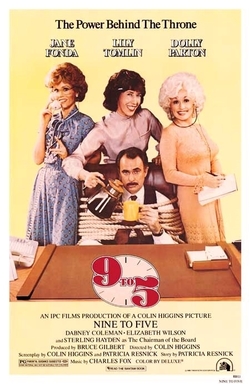
9 to 5-1980

9 to 5-1980

Director Colin Higgins

Starring Jane Fonda, Lily Tomlin, Dolly Parton

Scott’s Review #1,552

Reviewed September 22, 2026

Grade: B

Pairing two Hollywood stars and one musical icon together to create a satirical, comedic, and feminist film in 1980 was someone’s brilliant idea.

Together, Jane Fonda, Lily Tomlin, and country music star Dolly Parton electrify the screen with hijinks and physical comedy that make 9 to 5 a delightful crowd-pleaser.

Their chemistry is delicious and a highlight of the film.

9 to 5 also had an infectiously hummable title pop song that was a number-one hit and earned a Grammy win and an Oscar nomination, increasing the movie’s audience reach.

But while the trio is likable and the film entertaining, the plot is almost too preposterous and lighthearted to convey the feminist message successfully.

Women being taken seriously in the workplace is an important aspect of the world we still live in. It was more so in 1980.

Too often, the film leans toward humor instead of darker tones, which makes the overall content seem less serious than it should be.

Three female secretaries (Fonda, Tomlin, Parton), one of whom has been passed over for promotion because she’s not a man, spend a night together having marijuana-induced fantasies of killing their chauvinist boss, Franklin M. Hart Jr. (nicknamed FHart), played by Dabney Coleman.

A mishap the following day leads one of them to suspect she really has poisoned Hart, who is rushed to the hospital.

The event sets off a series of silly misunderstandings at a hospital that cause the women to abduct their boss and run the business themselves until they can get evidence that he is defrauding the company.

For a Generation X individual who, as a child, occasionally went into the office with his father around 1980, it was fun to see a corporate environment like that.

The typewriters, orange/yellow decor, grey/tan elevators, and cigarette-smoke hue felt like a time capsule.

The hustle and bustle of the workday, the corporate gossip, deals, and alliances also held appeal to what working in the corporate world was like back then.

While Tomlin and Fonda certainly delight with good comic timing and excellent delivery, Dolly Parton proves a natural movie star in her first film role.

Blonde and busty, Doralee (Parton) is initially assumed to be sleeping with Hart, but we quickly learn she is no floozy and has strong morals and feisty intelligence.

Parton was barely on the cusp of transitioning from a country superstar to a capable actor.

The rest of the cast share chemistry and seem to enjoy the preposterous gag comedy situations they play together.

Coleman and Elizabeth Wilson, as the preachy administrative assistant, perform their parts effectively, though they can be over-the-top.

Positively, 9 to 5 makes sharp points about gender roles in the workplace, which wasn’t common in film in 1980; 1988’s Working Girl also examined this.

The film takes a forward-thinking, progressive stance.

For example, Norma Rae (1979) starred Sally Field as a factory worker struggling to form a union. But that film was a heavy drama and not specific to women.

And, 1976’s Network featured a domineering corporate woman, but that was a much darker film.

I would have preferred 9 to 5 to be a bit darker, since the comedy heavily outweighs the drama and makes the gender message less powerful than it should be.

By the film’s conclusion, it teeters way too much into screwball or slapstick fare for my tastes.

Even when the women win in the end and revamp the workplace model, it still alludes to the unfairness of pay between men and women.

A good point, but no mention of the Equal Pay Act of 1963, which supposedly helped abolish the wage gap between women and men.

Nonetheless, 9 to 5 (1980) is a good romp with at least an intended point. It just plays it way too safe.

Oscar Nominations: Best Original Song-“9 to 5”

Golden Globe Nominations: Best Actress-Comedy or Musical-Dolly Parton, Best Original Song-“9 to 5”, New Star of the Year-Actress-Dolly Parton

Klute-1971

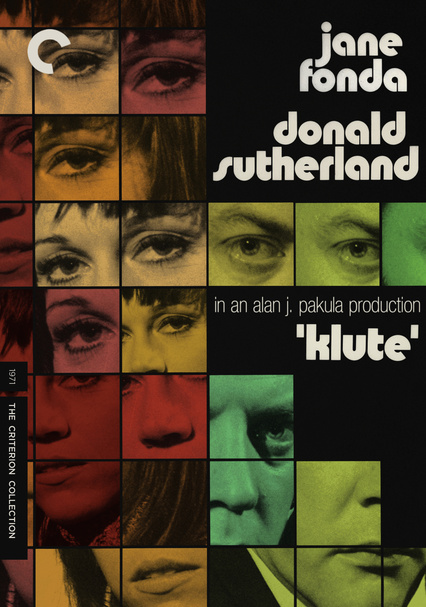
Klute-1971

Director Alan J. Pakula

Starring Jane Fonda, Donald Sutherland

Top 250 Films #234

Scott’s Review #1,351

Reviewed March 12, 2023

Grade: A-

I’ll gladly watch any film Jane Fonda appears in, especially early treats like They Shoot Horses, Don’t They (1969), Coming Home (1978), and On Golden Pond (1981), but Klute (1971) trumps them all.

Fonda plays a prostitute, one with intelligence, manipulation skills, and deep introspective thought.

Teamed with Donald Sutherland, who is quite extraordinary, the duo sink their teeth into a taut psychological thriller chasing a serial killer.

The inventive part is that the film is hardly a whodunit, yet it uses long sequences of calm dialogue and few editing breaks, making it stand out with great style and substance.

Bree Daniel (Fonda) is a New York City call girl who becomes absorbed in an investigation into the disappearance of a business executive.

Detective John Klute (Sutherland) is hired to follow Bree and eventually begins a romance with her.

Klute is not the only one on Bree’s trail. A killer is on the loose, having killed two prostitutes with whom Bree is friendly. They must figure out the deadly puzzle before it’s too late.

Fonda plays Bree wonderfully. Gorgeous and well-dressed, Bree is aching to leave the business and launch an acting or modeling career, but she keeps striking out on both fronts.

Fonda assures the audience that Bree is brilliant and uses her smarts to get the best of the men she beds.

Across several scenes where she chats with her shrink, we learn a great deal about Bree and how her mind works. While she cringes at a dull life of being married and darning socks, she also craves stability and self-worth.

She aptly embraces her lifestyle, but on her terms. When briefly jaded by a pimp played by Roy Scheider, I cringed because Bree is better than that.

I only wanted to learn a bit more about Bree’s childhood and how she wound up as a call girl, but at the same time, the mystique works well. The ambiguity only makes Bree more complex.

Preconceived notions or subpar writing might have had the character dubbed the overdone ‘hooker with the heart of gold’ title, but there are no clichés to be found.

Written by Andy and Dave Lewis and directed by Alan J. Pakula, they craft a complex film that gives equal focus to the intriguing serial-killer pursuit and the workings of its lead female character.

Surprisingly, the men achieve both goals. In later years, a woman might have written the screenplay, but it’s impressive how boldly they write Bree.

Klute is also well written. Similarly shrouded in mystery, we know that the investigator is the strong, silent type and falls for Bree hook, line, and sinker. Has he been married? Does he have kids? Why the fascination with Bree?

He only mirrors the audience as we become equally smitten with her. The fact that he knows the killer is icing on the cake, adding rich texture to the storytelling.

The other facets of Klute are strong from a technical and location perspective.

The interior sequences, mostly in Bree’s apartment building, are superior, with dull lighting and an eerie musical score that sets the proper mood. After downsizing from Park Avenue, Bree has a decent Manhattan apartment, but it has dated appliances and unflattering lighting.

The exterior New York City location shots are fun to look at and help a native tri-state area resident identify various neighborhoods.

Early 1970s New York City was not a pretty sight, and the Wall Street area and garment district, where the riveting action culminates, are terrific.

The scene with Jean Stapleton as a no-nonsense secretary is delightful. Forever remembered as Edith Bunker on the television series All in the Family, it’s great fun to see her in Klute and remember that she appeared in films before her television success.

Klute (1971) is a taut, superior thriller that sometimes is a bit too complex, but it scores a winning run with its marriage of a character study and intelligent writing.

Thanks to Fonda and Sutherland, and a screenplay that bravely goes left of center when it easily could have gone straightforward, Klute is a memorable piece of cinema.

Oscar Nominations: 1 win-Best Actress-Jane Fonda (won), Best Original Screenplay

Golden Globe Nominations: 1 win-Best Actress-Drama-Jane Fonda (won), Best Screenplay

On Golden Pond-1981

On Golden Pond-1981

Director Mark Rydell

Starring Henry Fonda, Katharine Hepburn

Scott’s Review #1,297

Reviewed September 8, 2022

Grade: A

A beautiful and quiet family drama, On Golden Pond (1981) is a brilliantly acted and written story about life, specifically aging and dying.

It tells one lovely story arc after another, exploring the relationships among its main characters.

With heavyweights like Katharine Hepburn, Henry Fonda, and Jane Fonda signed on to star, how could the film not be a success?

It was not only a blockbuster in the summer of 1981, but it also earned 10 Academy Award nominations and numerous other awards, showing that sometimes subdued stories about human relationships win big.

The anticipation of legendary stars Fonda and Hepburn, golden icons of Hollywood, finally appearing opposite each other in a film must have made film lovers salivate back in 1981.

Norman Thayer (Fonda) is a grumpy older man trying to enjoy his golden years. He and his nurturing wife, Ethel (Hepburn), spend summers at their New England vacation home on the shores of idyllic Golden Pond.

Norman is experiencing memory problems and frets about dying, while Ethel makes the most of it, enjoying the beautiful loons on the water and chatting with the local mailman.

One year, their adult daughter, Chelsea (Jane Fonda), visits with her new fiancée (Dabney Coleman) and his teenage son, Billy (Doug McKeon), on their way to Europe.

After leaving Billy behind to bond with Norman, Chelsea returns, attempting to repair the long-strained relationship with her aging father before it’s too late.

The greatest part of On Golden Pond is that it is believable. The tender love that Norman and Ethel share, the tensions between Norman and Chelsea, and the burgeoning friendship between Norman and Billy Jr. feel so very real and poignant.

Beautiful scenes emerge between the older man and a young man when Norman turns Billy Jr. on to literary classics like A Tale of Two Cities and Treasure Island.

Viewers can easily see themselves in real-life situations like this, or in moments like when Ethel and Chelsea discuss a strained relationship.

Years and years of memories and situations between the characters spring to life, making the dialogue rich with flavor.

Moving sequences, like when Norman suffers a heart attack and is involved in a boating accident, are teary and sentimental but fresh with emotion.

They do not feel manipulated.

As if the richly acted scenes are not enough, screenwriter Ernest Thompson, who wrote the film based on his play, provides credibility. He felt the passion the story would bring to the big screen, and he was right.

As I grow older, I appreciate Norman and Ethel. They stick together through thick and thin, sometimes quarrel, but love each other with a bond that can never be severed.

We all know and love couples like them.

The cinematography bristles with sweet nature. From the loons to the other sounds of summer, the camerawork elicits the light of late summertime. I constantly had to remind myself that I wasn’t really in the countryside but was in my living room.

A tearjerker that carefully combines heavy drama with comical moments that lighten the load, On Golden Pond (1981) is a truthful and emotional extravaganza about death that never feels sad or downtrodden.

It’s much too clever for that; instead, it’s an uproarious crowd-pleaser.

Oscar Nominations: 3 wins-Best Picture, Best Director-Mark Rydell, Best Actor-Henry Fonda (won), Best Actress-Katharine Hepburn (won), Best Supporting Actress-Jane Fonda, Best Screenplay-Based on Material from Another Medium (won), Best Cinematography, Best Film Editing, Best Original Score, Best Sound

Golden Globe Nominations: 3 wins-Best Picture-Drama (won), Best Director-Mark Rydell, Best Actor-Drama-Henry Fonda (won), Best Actress-Drama-Katharine Hepburn, Best Supporting Actress-Jane Fonda, Best Screenplay (won) 

Julia-1977

Julia-1977

Director Fred Zinnemann

Starring Jane Fonda, Vanessa Redgrave

Scott’s Review #1,283

Reviewed July 31, 2022

Grade: A

Jane Fonda leads the charge in a powerful, gorgeously shot drama named Julia (1977), set in pre-World War II and amid the impending Holocaust.

Based on the play by Lillian Hellman, a famous playwright, the drama depicts the relationship between two close friends and the unexpected consequences when one desperately needs help from the other.

When Lillian (Fonda), a renowned playwright, reunites with her childhood friend Julia (Vanessa Redgrave) in Russia, the writer is asked to smuggle funds into Germany to aid the anti-Nazi movement.

In the mix is Lillian’s mentor, Dashiell Hammett (Jason Robards), who is unaware of her dangerous assignment.

I immediately relish the film mainly because the message is extremely female-empowering, and a dynamic friendship between two women is examined.

This still doesn’t happen enough, successfully, in films today.

Given the World War II theme, one would naturally assume the film would center around men, not women, and plenty of female spies and the like are featured.

Added to the mix is the astounding cinematography of Germany, Poland, and Russia. In truth, the film was shot in England and France for security and restrictive reasons, but it could have fooled me since the countries look authentic and believable.

Julie looks polished, and that’s hardly a gripe. The production design and costumes are perfectly shot and colored.

It’s not a dowdy or drab film, and it depicts a little violence or torture, choosing instead to focus on relationships and intrigue.

The suspenseful train sequence is brilliant in every way, sprinkling in Hitchcockian touches and enough nail-biting to make the long scene a key takeaway.

Lillian must keep her intentions secret as she travels toward Russia, and each train scene, whether it’s the peril of being checked at the border or eating in the dining car, is captured perfectly.

A slight suspension of disbelief is the casting of the beautiful Fonda as the plain-looking playwright Lillian Hellman. In some scenes, she is made up to look haggard, tired, and homely, but the trick never works for a minute.

It’s even giggle-worthy, and it’s recommended to sit back and watch Fonda deliver a splendid performance, forgetting altogether that she is portraying the writer.

In other movies, it might have only been about Fonda from an acting perspective, but in Julia, the spoils go round and round.

At the very least, Redgrave, Robards, and Maximilian Schell, who plays a pivotal character named Johann, must be mentioned.

Each brings professionalism and believability to their characters.

But my favorites are the quieter parts by a woman passenger and a girl passenger. They go from cheery to serious, speaking in a sort of code, not stating that they are helping Lillian, but obviously using facial expressions to reveal true alliances.

A delightful point to make is that Julia is Meryl Streep’s first film role, albeit in a tiny part.

Speaking of Redgrave, when she won the Best Supporting Actress Academy Award, she made an infamous speech that marked a great controversy.

In her acceptance speech, she thanked Hollywood for having “refused to be intimidated by the threats of a small bunch of Zionist hoodlums whose behavior is an insult to the stature of Jews all over the world and to their great and heroic record of struggle against fascism and oppression”.

This was preceded by members of the Jewish Defense League picketing the ceremony and followed by some boos and retorts to her comments.

But back to the film, Julia does not end in a happily-ever-after way. A major character is killed, and a baby is lost forever. But that’s part of the truth about creating a film that harkens back to a day when non-conformity led to death.

Julia (1977) is a vital film that still holds up tremendously well, and in a world still filled with chaos and oppression, it’s a powerful reminder of cinema’s power.

Oscar Nominations: 3 wins-Best Picture, Best Director-Fred Zinnemann, Best Actress-Jane Fonda, Best Supporting Actor-Jason Robards (won), Maximilian Schell, Best Supporting Actress-Vanessa Redgrave (won), Best Screenplay-Based on Material from Another Medium (won), Best Cinematography, Best Costume Design, Best Film Editing, Best Original Score

Golden Globe Nominations: 2 wins-Best Picture-Drama, Best Director-Fred Zinnemann, Best Actress-Drama-Jane Fonda (won), Best Supporting Actor-Jason Robards, Maximilian Schell, Best Supporting Actress-Vanessa Redgrave (won), Best Screenplay

They Shoot Horses, Don’t They?-1969

They Shoot Horses, Don’t They? -1969

Director Sydney Pollack

Starring Jane Fonda

Scott’s Review #474

1038266

Reviewed September 6, 2016

Grade: A-

They Shoot Horses, Don’t They? (1969) is a tragic, riveting film, set in the Depression-era 1930s, centering on a group of contestants entering a Dance-athon for an enormous cash prize.

Most of the film is set on and around the dance floor.

Contestants push themselves to the brink of exhaustion to win the coveted money, and the characters’ desperation is horrific.

Jane Fonda leads the pack as a depressed, sarcastic, aspiring actress who desperately needs the cash prize.

The film’s dark nature is mesmerizing, though it is a difficult to watch. I found the film’s periodic parts dragged as the contestants grew wearier with each hour.

It also felt like a precursor to the reality television craze that has swept the nation since the 1990s.

A tragedy, yes, but a practical and worthwhile film about depression and the struggle to survive. And a sad reminder of brutality as a form of entertainment.

Oscar Nominations: 1 win-Best Director-Sydney Pollack, Best Actress-Jane Fonda, Best Supporting Actor-Gig Young (won), Best Supporting Actress-Susannah York, Best Screenplay Based on Material from Another Medium, Best Score of a Musical Picture-Original or Adaptation, Best Costume Design, Best Art Direction, Best Film Editing

Golden Globe Nominations: 1 win- Best Picture- Drama, Best Director-Sydney Pollack, Best Actress-Drama-Jane Fonda, Best Supporting Actor-Gig Young (won), Red Buttons, Best Supporting Actress-Susannah York

Lee Daniels’ The Butler-2013

Lee Daniels’ The Butler-2013

Director Lee Daniels

Starring Forest Whitaker

Scott’s Review #81

70266686

Reviewed June 30, 2014

Grade: A

Director Lee Daniels is a recent favorite of mine (Precious-2009, The Paperboy-2012), and his latest, The Butler (2013), is an excellent, true-story undertaking.

While the trailer looked appealing, I was concerned that the film might be overwrought or have a Hollywood sappiness.

While it’s a Hollywood film, it is also a powerful, emotional experience.

The viewer is taken on a journey from 1926 through the current president from the viewpoint of White House butler Cecil Gaines (Whitaker), who serves several presidents and is privy to the goings-on in the White House.

Forest Whitaker plays him, and Oprah Winfrey plays his boozy, troubled wife.

Both give tremendous performances.

The Butler is a political journey through time and I love the authenticity of each decade from the sets to the costumes to the hairstyles.

The casting of the Presidents is curious (Robin Williams as Eisenhower and John Cusack as Nixon), but works nonetheless.

The rivalry between Cecil Gaines and his rebellious son is interesting, as the viewer sides with each of them at different times.

The film is more emotional than I anticipated and much of the audience was teary during scenes of heartbreak and triumph.

I feel The Butler (2013) is a must-see for everyone.