Tag Archives: Stephen Dillane

The Hours-2002

The Hours-2002

Director Stephen Daldry

Starring Nicole Kidman, Julianne Moore, Meryl Streep

Top 250 Films #169

Scott’s Review #803
Reviewed August 17, 2018

Grade: A

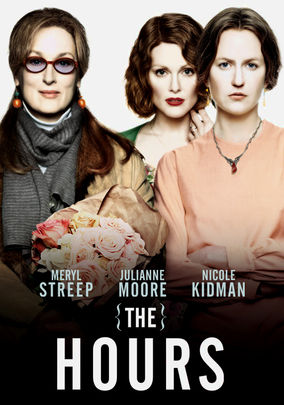
The Hours (2002) is a film containing the ultimate in acting riches. With names like Nicole Kidman, Meryl Streep, and Julianne Moore associated with the film, this is not surprising.

Not solely belonging to the ladies, however, Ed Harris, in particular, is dynamic in his role, as are all the other males who appear in the film.

Told in three different sections in chronological order, but going back and forth, the stories all share connections via the novel Mrs. Dalloway, written by Virginia Woolf.

One of the best films of the decade!

Each segment of the film takes place within a single day, but decades apart.

Wisely, director Stephen Daldry frequently switches between the stories, leaving a sort of cliffhanger and making the drama more compelling and spicy.

In 1923, a depressed Virginia Woolf is portrayed by an unrecognizable Nicole Kidman in a role that won her the Best Actress Oscar.

Woolf resides outside of London and struggles to complete her novel amid nervous breakdowns and the watchful eye of her husband, who is aware of her mental pain.

In 1951, Laura Brown (Julianne Moore) seemingly has it all, living the “American Dream”. Residing in a nice neighborhood with a loving husband, she is pregnant with her second child and spends her days at home raising her young son, Richie, whom she is very close to yet does not understand.

After a fleeting lesbian dalliance with a neighbor, Laura goes off to a hotel with bottles of pills, intending to kill herself. She changes her mind after reading Woolf’s novel and dozing off, deciding instead to make a different decision.

Finally, in 2001, Clarissa (Meryl Streep) is bisexual and in a same-sex relationship. She lives with Richard (Harris), whom she dated in college, and is now the best of friends.

He is gay, stricken with the AIDS virus, and close to committing suicide as he plans to jump out of a window.

This story (set in the present) is crucial to the film because it involves two characters from the 1951 story. These characters intersect with others in a touching and heart-wrenching way.

The greatest parts of The Hours are the brilliant acting and the richly written storytelling.

Arguably, Kidman, Streep, and Moore could all have won Oscars for their performances.

I must mention that, as brilliant as Kidman is (she is the sole Oscar recipient) and as universally good as Streep is, I would have given the Oscar to Moore, the standout in my opinion.

Glamorous and intelligent, warm to her son, she makes a monumental and controversial decision. The character should not be sympathetic- yet she is.

This is a testament to Moore’s infusion of the character with confidence, reasonable thought, and even some empathy. We finally understand why she does what she does.

May I boast for a moment about Harris’s performance? Richard, once known as Richie as a kid (this will give something away), has lived a difficult life.

Abandoned, wounded, and suffering much loss, he is a tragic figure, pained beyond belief. His suffering is so monumental that we almost welcome his demise, and Harris offers so much of himself in this difficult role.

He is both physically and emotionally hurt, and Harris portrays this in spades.

Uniquely, all three stories work independently of each other. Yes, characters from one appear in another, but they are like well-crafted vignettes.

Similarly, they each begin with breakfast, then involve the planning of a party or celebration of some sort, and culminate in sadness.

Yet the film does not feel like a downer or preachy in any way; rather, it is good, solid, humanistic storytelling, which I adore.

Sure, the film is considered a drama, but it also contains multiple gay or bisexual characters and therefore must be included in the chambers of LGBT filmmaking.

With an A-list cast, the film helps lead the charge (successfully so) to bring more rich LGBT films to the center stage and garner mainstream audiences.

The great aspect of The Hours is that it is a mainstream film- a good, solid drama.

Based on a Pulitzer Prize-winning novel by Michael Cunningham, The Hours (2002) does not try to draw parallels between the stories or necessarily connect them in an obvious fashion.

Rather, the film version provokes thought both with LGBT and feminist approaches. Each female central character lives in a world run by men, as Woolf argues in her novel.

The film brilliantly adapts the novel and brings it to large audiences in a fantastic, riveting fashion.

Oscar Nominations: 1 win-Best Picture, Best Director-Stephen Daldry, Best Actress-Nicole Kidman (won), Best Supporting Actor-Ed Harris, Best Supporting Actress-Julianne Moore, Best Adapted Screenplay, Best Original Score, Best Costume Design, Best Film Editing
Zero Dark Thirty-2012

Zero Dark Thirty-2012

Director Kathryn Bigelow

Starring Jessica Chastain

Scott’s Review #1,133

Reviewed April 14, 2021

Grade: A-

Director Kathryn Bigelow, not far removed from her Oscar win for The Hurt Locker (2008), returns with a similar style of film centering around war and more specifically about the emotional tolls and psychological effects from not just the battlefields but from dangerous missions.

The main character suffers from many conflicts and inevitably the viewer will as well.

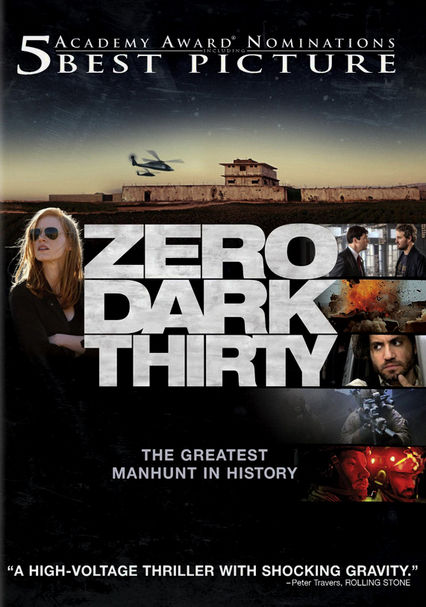
Zero Dark Thirty (2012) is unique for the genre by having a female in the lead role and star Jessica Chastain is front and center and terrific.

She is calm, restrained, and in control. She is tough to rattle and a powerful and inspirational character to be admired.

Chastain exudes cool in the face of danger.

Chastain does have a brilliant emotional scene at the end of the film. Her character, Maya, boards a military transport back to the U.S., as the sole passenger. She is asked where she wants to go and begins to cry. The emotion finally gets the better of her as it would to anyone.

The film is not all Chastain’s to brag about and there is little wrong with the film.

Beautifully directed, Bigelow layers her film with enough tension and magnificence to enshroud the moral questions viewers will ask, specifically about torture.

It’s somewhat fictionalized, and in fact, Chastain’s character is made up, but Zero Dark Thirty is a gem nonetheless.

But we also know the events happened.

The film starts incredibly well and immediately grabs the viewer’s attention with a brilliant first scene. Amidst a dark screen and soundtrack of actual calls made to the 911 operator from inside the World Trade Center Towers on 9/11, the scene is about as powerful an opening as a film can have and bravely sets the stage for what follows.

These include many scenes of Arab detainees being interrogated (that is, tortured) for information about Al Qaeda. Is this justified or unnecessary abuse?

The viewer is immediately saddened and in tears and conflicted about whether the torture is justified having just heard the 911 calls.

I know I was.

From there, the viewer also is told a summary story putting the pieces of the first scene together.

After the terrorist attacks of Sept. 11, 2001, Osama bin Laden becomes one of the most wanted men on the planet. The worldwide manhunt for the terrorist leader occupies the resources and attention of two U.S. presidential administrations.

This is the crux of the film and the story told.

Ultimately, it is the work of a dedicated female operative  (Chastain) that proves instrumental in finally locating bin Laden. In May 2011, Navy SEALs launched a nighttime strike, killing bin Laden in his compound in Abbottabad, Pakistan.

We all know this but troubling is the use of torture. I keep coming back to this point.

I think what I like most about the film besides the riveting pacing, action sequences, and psychological appeal is the controversy that surrounds it.

The fact that it ruffled feathers at the CIA and in Congress about whether the info was leaked to the filmmakers makes me think that at least some of it is based on facts, despite what other reviewers (likely with a strong political bias) might claim to the contrary.

But as a political junkie that’s just my belief.

The film’s reproduction of enhanced interrogation techniques is brutal. Some critics, in light of the interrogations being depicted as gaining reliable, useful, and accurate information, considered the scenes pro-torture propaganda.

Acting CIA director Michael Morell felt the film created the false impression that torture was key to finding bin, Laden. Others described it as an anti-torture exposure of interrogation practices.

I guess we may never know the truth. But the film compels and provokes feeling.

Bigelow is at the top of her game with Zero Dark Thirty (2012) crafting a genre film (the war one) way too often told from only a masculine “us versus them” mentality and leaving behind the fascinating nuances that can make the genre a more interesting and less one-note one.

The masterful director does just that and makes us think, ponder, and squirm uneasily.

Oscar Nominations: 1 win-Best Picture, Best Actress-Jessica Chastain, Best Original Screenplay, Best Sound Editing (won), Best Film Editing

Darkest Hour-2017

Darkest Hour-2017

Director Joe Wright

Starring Gary Oldman

Scott’s Review #718

Reviewed January 24, 2018

Grade: A-

Darkest Hour (2017) is a British historical film that showcases legendary actor Gary Oldman’s astounding portrayal of Winston Churchill.

Known for numerous other fine-acting performances in films such as the Harry Potter series (2001-2011), JFK (1991), and Batman Begins (2005), this performance easily transcends all of the others as he brings perfection to complex role-infusing humor, drama, and many idiosyncrasies of the storied historic figure.

Churchill is the best role of Oldman’s lengthy career.

Director Joe Wright, famous for classy European films such as Pride and Prejudice (2005), Atonement (2007), and Anna Karenina (2012), traditionally offers rich, intelligent experiences with an upper-crust, often British theme and fills his characters with wry humor and wit.

In Darkest Hour, a film that belongs to Oldman, by the way, Churchill is the master of gruff sarcasm and cantankerous charm.

During the tumultuous time of 1940,  with the barbaric grips of Nazi Germany settling upon both England and France (Allies in World War II), a disheveled England is frustrated with their current Prime Minister, Neville Chamberlain, for being weak.

Chamberlain begrudgingly appoints Winston Churchill as his successor, amid limited support.

The film discusses Churchill’s early days in charge as the war and the Nazi presence loomed larger and larger- especially as the historic Dunkirk situation comes into fruition.

Darkest Hour is a good quality film —it has a certain historic richness and the feeling of experiencing a worthy and relevant film. For those of us who did not live during the 1940s, the film will likely serve as an educational experience into the events of the day.

Hundreds of films have been made over time that have explored the events during World War II in fantastic detail, but this film is unique in that it not only provides a perspective of the Allied countries “back against the wall” situation but the ups and downs and pressures that Churchill, the man, faced.

Despite a few quick clips of Hitler and very old black-and-white footage and newspaper headlines of the crazed leader, the focus is not on the enemy country. No actor was used to play Hitler; rather, the focus is on Churchill and the decisions he made and the influences he was faced with.

Pressured to appease the militant German country and reach a “peaceful” deal, Churchill instead listened to the voices of the ordinary, everyday, British people to get his decision to fight the Germans and not back down.

Clever and relevant to 2017 cinema, the film spotlights the famous Dunkirk situation, when British forces were trapped on the shores of Dunkirk, with German planes looming overhead.

Many men were saved, thanks in large part to Churchill and British and French civilian boats that aided in the rescue.

The 2017 film Dunkirk would make an excellent companion piece to Darkest Hour because its subject matter is similar to that of Darkest Hour.

Not surprisingly, both films received Academy Award nominations for Best Picture.

A great lesson I carried away from the film is with Churchill himself.

Sure, I knew that he was the Prime Minister of England during the 1940s and was instrumental in the events of the bloody war, but I knew little about the man himself.

Thanks to Wright and, of course, Oldman, the viewer will learn the good and bad characteristics of this man. A heavy drinker, commonly downing champagne with lunch and brandy the rest of the day, he was initially not well-liked, nor taken very seriously by British royalty.

With Churchill’s bubbling personality, Oldman is fantastic at filling the role with humor, frustration, and just the correct amount of empathy and concern.

Despite his temper, we can tell that he loves his country and is proud of the people living there—that is why he is adamant about conquering the enemy. So, we know he is a good man despite his temper tantrums.

Oldman also successfully embodies the mannerisms that this historical figure contained.

Kristin Scott Thomas also gives a worthy performance, albeit in a small role, as the mature and graceful wife, who can both support and match wits with her husband.

Thanks to a brilliant acting performance by Gary Oldman, who takes on a difficult role that could easily be botched by lesser talent, Darkest Hour is a 2017 historical drama worth seeing.

He makes a film that could have been dull and flat into a worthy watch to both learn something and be amazed at a truly great acting performance.

Oscar Nominations: 2 wins-Best Picture, Best Actor-Gary Oldman (won), Best Production Design, Best Cinematography, Best Makeup and Hairstyling (won), Best Costume Design