Tag Archives: Anthony Rapp

Adventures in Babysitting-1987

Adventures in Babysitting-1987

Director Chris Columbus

Starring Elisabeth Shue

Scott’s Review #1,067

Reviewed October 5, 2020

Grade: B

Swimming in the myriad of teen comedies that were all the rage in the 1980s, a few good, most bad, Adventures in Babysitting (1987) is one of the “okay” ones.

It’s lightweight, yet fun.

I like the female-centered character who drives the story, likable, and personable, but also strong and bold, capable of handling tough situations without the saving hands of a man.

The antics throughout Chicago are also a major draw, as I loved seeing the city’s landscape and sights. The film is formulaic but works better than most.

The premise is quite far-fetched, bordering on the absurd, and masks no reality whatsoever.

The plot points are gimmicky, silly, predictable, and filled with urban, inner-city stereotypes, playing on the timely feeling of terror at the thought of being lost and in danger amid a major city.

The reality of this decade was of crime-ridden United States cities, and the idea is brilliant for a mostly suburban audience safely nestled in their homes away from any real trouble.

They can securely escape to the cinema where pretend danger awaits.

Elisabeth Shue, a near-novice fresh off her debut film role in The Karate Kid (1984), takes center stage as the cool, pretty girl who is everyone’s best friend, not the least bit snobby.

She plays Chris Parker, the fresh-faced, perky, seventeen-year-old high school senior, who is ditched by her boyfriend on their anniversary and is convinced by her mother to spend the evening babysitting the two Anderson kids, Brad (Keith Coogan) and Sara (Maia Brewton).

Naturally, trouble ensues, and a planned dull evening of popcorn and a movie goes awry.

The gags must not be taken seriously.

Beginning in the friendliness of Oak Park, Illinois, the action quickly spells out danger as a dirty, downtown bus station becomes the next set.

Teenagers and youngsters being left alone in a metropolis is most parents’ worst nightmare, and the film uses this angle to create one perilous situation after another.

The gang even dangles from a skyscraper!

Adventures in Babysitting is director Chris Columbus’s first film and a worthy debut. Soon to hit the big time with the Home Alone film and its sequel (1990-1992), it’s easy to see how those films are patterned after Adventures. The tone is similar, and the antics of a young adult are explored.

Columbus then moved to success with Mrs. Doubtfire (1993) before taking on the Harry Potter films. So, he adopts stories with a youthful or a young person’s point of view.

While watching Adventures in Babysitting, the viewer needs to suspend all disbelief and just go with the experience for the enjoyment.

I vividly recall seeing this film in a theater on a hot summer night with popcorn and soda in tow, eager for a nice, light-hearted experience.

This film delivered then and still does.

The best part is watching Chris and the gang drive a station wagon through downtown Chicago. Could this particular car be any more obvious a symbol of the ‘burbs? Does anyone in a city ever drive a station wagon? The image conjures up a boatload of kids, the shopping mall, and McDonald’s.

Chris is so out of place in the city and the situations so preposterous that we should be annoyed by the hijinks.

But, somehow, the film works!

Of course, the film is riddled with banalities like car thieves, gangs, a dirty blues club, and as many criminals as one can imagine.

For viewers aching for a carefree trip down memory lane, 1980s style, the typical bunch of offerings from John Hughes- the trio of Sixteen Candles (1984), The Breakfast Club (1985), and Pretty in Pink (1986) usually come to mind first.

But let’s not forget a fine and fun film, Adventures in Babysitting (1987), with a subtle message about a young woman taking charge and control, albeit with every other stereotype in the book glaringly on display.

Enjoy the ride.
A Beautiful Mind-2001

A Beautiful Mind-2001

Director Ron Howard

Starring Russell Crowe, Jennifer Connelly

Scott’s Review #1,003

Reviewed March 25, 2020

Grade: A-

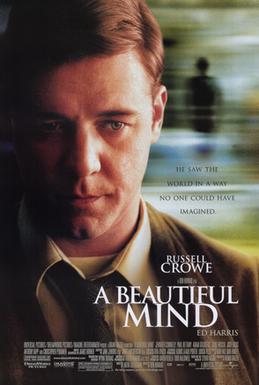
A Beautiful Mind (2001) is a superior-made film based on the life and times of American mathematician John Nash, a Nobel Laureate in Economics and Abel Prize winner.

The biography explores Nash’s battles with schizophrenia and the delusions he suffered, causing tremendous stress on friends and family.

The film is well-written and brilliantly acted, but deserves a demerit for factual inaccuracies, especially related to Nash’s complex sexuality and family life.

This leaves a gnawing paint-by-the-numbers approach for mass appeal only.

The film was an enormous success, winning four Academy Awards, for Best Picture, Best Director, Best Adapted Screenplay, and Best Supporting Actress. It was also nominated for Best Actor, Best Film Editing, Best Makeup, and Best Original Score.

Arguably one of the best films of 2001, it cemented director Ron Howard’s reputation as a mainstream force to be reckoned with in the Hollywood world.

The project was inspired by the Pulitzer Prize-nominated book of the same name.

Starting in 1947, we meet Nash (Russell Crowe) as a virginal and socially awkward college scholar, studying at Princeton University. He is a whiz at science and mathematics, coming up with unique and dynamic ideas for problem-solving.

Rising the ranks in respectability, he is given an important job with the United States Department of Defense, tasked with thwarting Soviet plots. He becomes increasingly obsessive about searching for hidden patterns and believes he is being followed, sinking further into depression and secrecy.

A Beautiful Mind is an important film because it brings to light the overwhelming issue of mental health and the struggles one suffering from it is forced to endure. Nash largely lives in a fantasy world and has imaginary friends who have followed him for decades by the time the film ends.

Nash conquers his demons with little aid of medication causing a controversial viewpoint. Amazing that the man was able to rise above, but is this a realistic message for those suffering from hallucinations?

Russell Crowe carries the film, fresh off his Oscar win the year before for his stunning turn in Gladiator (2000). He would have won for portraying Nash had he not recently received the coveted prize.

Crowe, hunky at this point in his life, convincingly brings the brainy and nerdy character, rather than the stud, to life, adding layers of empathy and warmth to the role.

We root for the man because he is as much sensitive as he is a genius.

Jennifer Connelly, in what is disparagingly usually described as the wife or the girlfriend role, does her best with the material given. My hunch is her Oscar nomination and surprising win have more to do with piggybacking off the slew of other nominations the film received.

She is competent as the supportive yet strong Alicia, the wife of Nash. In her best scene, she flees the house after a confused Nash leaves their infant daughter near a full bathtub, putting her life in danger.

The most heartfelt scene occurs during the conclusion. After many years of struggle, Nash eventually triumphs over this tragedy, and finally, late in life, receives the Nobel Prize. This is a grand culmination of the man’s achievements and a sentimental send-off for the film.

The aging makeup of all principal characters, specifically Nash and Alicia is brilliantly done.

Despite the heaps of accolades reaped on A Beautiful Mind, several factual points are reduced to non-existence. Questionable is why Howard chose not to explore Nash’s rumored bisexuality, instead of passing him off as straight.

Admittedly, the film is not about sexuality, but isn’t this a misrepresentation of truth? Nash had a second family, which is also never mentioned.

These tidbits eliminated from the film leave a glossy feel like Howard picked and chose what to tell and not to tell for the sake of the mainstream audience.

Bringing needed attention to a problem of epic proportions, A Beautiful Mind (2001) recognizes the issue of mental health in the United States.

The methods may be questionable, and the film has an overall safe “Hollywood” vibe but must be credited for a job well done in a film that is not only important but displays a good biography for viewers eager to learn about a genius who faced unrelenting issues.

Oscar Nominations: 4 wins-Best Picture (won), Best Director-Ron Howard (won), Best Actor-Russell Crowe, Best Supporting Actress-Jennifer Connelly (won), Best Screenplay Based on Material Previously Produced or Published/Adapted Screenplay (won), Best Original Score, Best Makeup, Best Film Editing

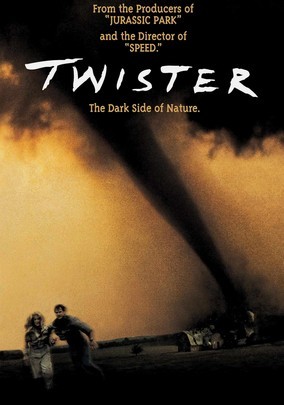
Twister-1996

Twister-1996

Director Jan de Bont

Starring Bill Pullman, Helen Hunt

Scott’s Review #763

Reviewed May 25, 2018

Grade: B+

Twister (1996) is a film that contains amazing and groundbreaking special effects- that blew people away (pun intended!) when released to the masses over twenty years ago.

Moviegoers flocked to theaters everywhere to partake in the escapist summer feel-good hit starring popular movie stars of the time.

The film spawned amusement park rides and lots of other fun things during its run.

The visuals are what truly are to be enjoyed here and not the generic, tried, and true subplots of romance, childhood trauma, and corporate greed that are mixed in.

The film does not hold up well in present times as the dazzling effects now look rather dated when lined up against modern blockbusters. This results in Twister being reduced to “one of those 1990’s films”.

Bill Paxton and Helen Hunt star as American storm chasers, Bill and Jo, obsessed with their craft of tracking tornadoes throughout the United States mid-western region. Adding drama to the plot is that Bill and Jo are an estranged married couple amid a divorce.

Bill brings his new fiancee Melissa (Jami Gertz) along as numerous meteorologists converge to track storms using newly invented devices.

Predictably, a series of vicious storms commence while Bill, Jo, and Melissa play out a love triangle.

Twister gets off to a fantastic start as a wicked storm kills the five-year-old Jo’s father, prompting her to pursue her career of choice. Jo has never gotten over her father’s death becoming fascinated by deadly storms.

The effects of this initial storm are very well done as Jo’s father’s death scene is riveting- the poor man being sucked into the deadly cyclone is memorable. Regardless, this scene sets the tone for the ample effects to follow- most notably the terrifying sound of the swirling storm as farm tools and animals fly around onscreen.

After the initial introduction, the rest of the film is mainly of the group driving around and encountering storms, with Bill and Jo taking center stage.

As a child having spent many summers in the mid-west, sans tornadoes thankfully, I felt a sense of nostalgia watching the film.

Assumptions are being made that Twister was indeed filmed on location (with studio help), but the authenticity is apparent. From the vastness of the plains to the dusty roads, cornfields, and the small-town U.S.A. I enjoyed the down-home, slice-of-life feel.

The action and effects are lightning-quick and quite realistic. As mentioned the sound effects are as strong as the visual effects and I never doubted for a second that the twisters had a realism to them.

This successfully merges into the summer blockbuster that Twister’s producers undoubtedly were going for. Making a ton of money, the result was successful and inspired by Hollywood.

Despite the superlative special effects, though, this is the only reason to watch Twister, and seeing the film once is enough excitement.

The writers (Michael Crichton and Anne-Marie Martin) attempt to incorporate a romance into the story and this does nobody any good. This negative aspect is even more apparent since the chemistry between Paxton and Hunt is non-existent and Gertz’s Melissa is meant to be the odd woman out all along.

A large amount of suspension of disbelief is necessary to “buy” various scenes. Ludicrous are countless scenes where characters either outrun the monstrous twisters or somehow the storms encircle them, but miraculously never touch them.

When Jo, Bill, and Melissa’s truck are captured inside the funnel cloud the vehicle and its passengers somehow remain unharmed.  Tornadoes do not simply come out of nowhere to attack without any indication on the radar.

But alas this is a disaster film and liberties must be taken.

The famous “cow scene”, notoriously used twice in the film seemed groundbreaking and cutting edge in 1996, but in 2018 now seems hokey and unnecessary.

Times sure do change in cinema, especially with technical effects and CGI growing each year.

Admittedly, the film does contain a good, all-American rockin’ summer tune by Van Halen named “Humans Being”, which always makes me think of summertime when I hear it. The entire Twister soundtrack was an enormous success with radio airplay given and led to further successes for the film.

Perhaps now watched as a blast from the past or a revisit to some sort of nostalgic time for folks, Twister (1996) is a great example of a once-popular popcorn movie falling into semi-obscurity. Given another twenty years, the film will undoubtedly fall all the way.

A nice film for the time it was, but not much more.

Oscar Nominations: Best Sound, Best Visual Effects