Tag Archives: M. Emmet Walsh

Ordinary People-1980

Ordinary People-1980

Director Robert Redford

Starring Mary Tyler Moore, Donald Sutherland, Timothy Hutton

Scott’s Review #1,500

Reviewed November 15, 2025

Grade: A

Ordinary People (1980) demonstrates that a quiet film with excellent writing and superb acting can pack an emotional punch, surpassing the gimmicks or action sequences that other films often employ to draw attention.

It’s character-driven and tells a story of a family tragedy and the ramifications and complications that affect the surviving members. The emotional intelligence that director Robert Redford embeds in the film is astonishing.

Deservedly winning the 1980 Best Picture Academy Award, it proves how crucial good writing and good characters are to a quality film.

Significantly, it propelled 1970s television sitcom star Mary Tyler Moore, known until then as the iconic girl-next-door type, into cinematic respectability.  Her narcissistic, uptight character was uncharted territory and a career risk for the actor who ended up exceeding expectations.

Tortured by guilt following the death of his older brother, Buck, in a sailing accident, we meet the alienated teenager Conrad Jarrett (Timothy Hutton) right off the bat, following a failed suicide attempt.

Returning home to his affluent Chicago suburban life following an extended stay in a psychiatric hospital, Conrad tries to deal with his mental anguish and also reconnect with his mother, Beth (Mary Tyler Moore), who has grown bitter after the accident.

His emotionally wounded father, Calvin (Donald Sutherland), tries to gently repair the family damage with the help of a psychiatrist, Dr. Berger (Judd Hirsch), who begins to treat Conrad.

The screenplay, written by Alvin Sargent, is based on the 1976 novel by Judith Guest.

Combined with Redford’s masterful direction, the story never shifts to a soap opera direction with Calvin or Beth having affairs, turning to booze, or other showy plot devices, intent on stirring up drama.

Instead, it’s about how they and Conrad handle their trauma. Each has an individual view of the events, who they blame, and how they cope with such trauma.

The audience can easily empathize and relate to the incidents if anyone has faced a death, loss of a job, an accident, a divorce, or any such upheaval in their lives.

The posh autumnal suburban landscape is enveloped by Redford, which enhances the experience. The Jarretts’ affluence is put to good use as they attend local theater, play golf, take European vacations, and can afford to send Conrad to a psychiatrist.

Exterior shots of large suburban homes, accompanied by luxury cars, housekeepers, well-manicured lawns, and sleek golf courses, all convey the comforts of life.

It makes their pain a bit more understandable as they, especially Beth, soak in luxury as a way of comforting herself from the loss of her son.

Can’t their money help alleviate some of the suffering?

I had mixed emotions about Beth’s character. Appearing to be a cold bitch with Conrad and the assumption that she favored the dead son, she never visits Conrad in the hospital after his suicide attempt, instead fleeing to Europe on vacation. She engages in small talk with him rather than caring for him.

What kind of mother could do that?

But I realize that she is hurting too, and when she becomes teary-eyed or crumbles in her husband’s arms, I feel genuine sympathy for her, a testament to Tyler Moore’s talents.

My favorite character, though, is Conrad (Hutton).

Via flashbacks, we see the closeness of the brothers’ relationship and the action that occurred during the drowning.

Hutton delivers on many levels. Whether staring into the distance, pondering events, exploding with rage, tenderly sharing a date with a blossoming love interest, Jeannine (Elizabeth McGovern), or struggling with a friend, Karen, his performance is always inspiring.

Ordinary People (1980) marks his directorial debut; Redford crafts a family drama rich in layers and a beautifully moving pace that draws the viewer into the lives of the primary characters.

The still taboo of mental illness and therapy is also embraced, showing that expressing feelings is better than repressing emotions.

Oscar Nominations: 4 wins-Best Picture (won), Best Director-Robert Redford (won), Best Actress-Mary Tyler Moore, Best Supporting Actor-Timothy Hutton (won), Judd Hirsch, Best Adapted Screenplay (won)
Midnight Cowboy-1969

Midnight Cowboy-1969

Director John Schlesinger

Starring Dustin Hoffman, Jon Voight

Top 250 Films #212

Scott’s Review #24

759322

Reviewed June 17, 2014

Grade: A

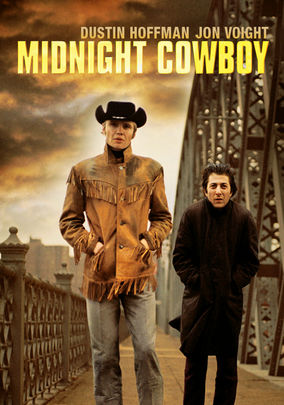
Midnight Cowboy is a masterpiece from 1969 that remains the only Best Picture Oscar winner to be rated “X” and, sadly, would probably not be made today.

It tells the tale of a friendly, trusting cowboy who moves from Texas to New York City and is challenged to survive the brutal streets any way he can.

Throughout the film, he meets several interesting, unsavory characters and experiences life in the bowels of NYC as drug use and prostitution are explored.

I did not find this to be as much of a downer as many others did, but rather a story of survival.

The grittiness of NYC is wonderfully portrayed, with many locales featured (Times Square).

Jon Voight and Dustin Hoffman are exceptionally cast and have great chemistry, though the film is by no means a “buddy movie”.

Sylvia Miles has a memorable one-scene feature.

It’s bleak, raw, and intense at times, and Midnight Cowboy (1969) is great filmmaking.

Oscar Nominations: 3 wins-Best Picture (won), Best Director-John Schlesinger (won), Best Actor-Dustin Hoffman, Jon Voight, Best Supporting Actress-Sylvia Miles, Best Screenplay Based on Material from Another Medium (won), Best Film Editing

Raising Arizona-1987

Raising Arizona-1987

Director Joel Coen

Starring Nicholas Cage, Holly Hunter

Scott’s Review #1,286

Reviewed August 5, 2022

Grade: B+

Raising Arizona (1987) is the second film to be created by the Coen brothers (Joel and Ethan) with the independent offering, Blood Simple (1984) being the first.

The siblings would later become household names and trailblazers in the world of cinema.

It’s rough around the edges storytelling with the severe desire to create something different. Maybe too different since sometimes Raising Arizona works and sometimes it doesn’t.

The film is to be championed mostly for its creativity though it’s not on par at all with the Coen brothers’ best films, Fargo (1996) and No Country for Old Men (2007). However, it does serve as a blueprint for films to come, if one is to look at it in hindsight.

I’m not the biggest Nicholas Cage fan of all time so it doesn’t help that he stars in Raising Arizona. The actor was achieving enormous recognition the same year for his appearance in Moonstruck (1987) which won Cher the Best Actress Oscar.

The film mostly gets props for its original writing and quirkiness in the sets and visual effects, but the comedy is way out in the left field and difficult to make sense of.

As with many Coen Brothers films, the plot centers on a crime and people on the run desperately trying to evade capture.

Hi McDunnough (Cage) is a convenience store robber who meets and falls in love with an ex-cop named Edwina “Ed” (Holly Hunter) during a stint in prison. After they move to a mobile home in the middle of the desert they decide to kidnap a baby since they cannot have one of their own.

While keeping their secret, friends, co-workers, and a bounty hunter look to use the child for their purposes.

The setting works quite well and is an important part of the film like other Coen offerings. The blazing hot desert is a familiar sight and pivotal to the story events with sizzling highways and roadside dives a focal point throughout. Hi and Ed’s tacky mobile home is dusty and cracked which enhances the extreme heat.

Cage and Hunter have tremendous chemistry which kept me invested in their characters. Both quirky-looking, they act well against each other and invoke sympathy from the audience- at least I did. Despite being kidnappers, they have the best of intentions of keeping their stolen baby safe and cared for.

Delightful to see is actress Frances McDormand in an early role as Dot. She would become a frequent star and collaborator in later Coen Brothers films.

Forgetting the uneven storytelling for a minute, Raising Arizona’s finest moment comes at the very end. Through a series of prophetic dreams about the future, the fates of all the characters are determined.

It’s a trippy and magnificent sequence and quite well-known to fans.

A clever offering that at times spins out of control with ridiculousness, Raising Arizona (1987) is nonetheless recommended to view and absorb the zany characters that the Coen Brothers are famous for creating.

What’s Up, Doc? -1972

What’s Up, Doc? -1972

Director Peter Bogdanovich

Starring Barbra Streisand, Ryan O’Neal 

Scott’s Review #1,162

Reviewed July 20, 2021

Grade: B+

Careful trepidation is advised for filmmakers venturing into humorous or slapstick comedy waters, especially if they are better known for dramatic films.

Since we’re talking 1970s cinema here, there is only one Mel Brooks, and plenty of films with physical humor and gags fail miserably.

What’s Up, Doc? (1972) is not one of them and is a refreshing success.

Brooks’s influence can easily be seen throughout the film, and this is no surprise. Before doing any post-film research, I was immediately reminded of the popular television sitcom Get Smart, which ran from 1965 to 1970.

Buck Henry, a frequent Brooks collaborator, co-created Get Smart and wrote the screenplay for What’s Up Doc?

The antics and comedic moments scream Brooks. If one is unfamiliar, it is like watching a Mel Brooks film.

Director Peter Bogdanovich, most notably known for the 1971 masterpiece The Last Picture Show, changes course, opting for comedy with lots of screwball situations and physical comedy that are completely different from his previous work.

Speaking of Brooks, Madeline Kahn, a mainstay of his films, appears as a particularly neurotic character named Eunice Burns. It is her first film role.

I must say I was thoroughly impressed by What’s Up, Doc?, which oddly pairs two Hollywood superstars of the time, Barbra Streisand and Ryan O’Neal.

One might be surprised to think of the duo as romantic partners, and the chemistry comes and goes throughout the film, but the antics and quick dialogue are joyous and timed perfectly between the actors.

What’s Up, Doc? intends to pay homage to comedy films of the 1930s and 1940s, especially popular Warner Bros. Bugs Bunny cartoons, hence the title, but the reference doesn’t appear until the final scene.

This caused me to ponder why the specific title was used.

The premise goes something like this. Doctor Howard Bannister (O’Neal) arrives in San Francisco to compete for a research grant in music. He is accompanied by his overbearing wife, Eunice (Khan).

Already nervous and on edge because of Eunice, he meets a strange yet charming woman named Judy Maxwell, played by Streisand, at the drugstore. They are drawn to each other yet are not sure why. She both annoys and fascinates him.

In a subplot, a woman has her jewels stolen, and a government whistleblower arrives with his stolen top-secret papers. Ironically, all the players have identical red plaid bags and stay in neighboring hotel rooms, adding to the confusion and hilarity.

My favorite moments are the screwball scenes. Especially memorable are the hilarious sequences that take place in and around the hotel guest rooms as a constant in-and-out of parallel rooms unfolds. Each character has a particular motivation as they sneak around the hallways and rooms.

It is delightful fun.

When I realized that Streisand and O’Neal were the romantic leads, I was skeptical at first, but their chemistry is not bad. They are not the sort of couple that he and Ali MacGraw were in Love Story (1970), and certainly have no heavy drama to play, but they play comedy off of each other well.

The film makes a joke about the film Love Story.

Unfamiliar to me, I am glad I took the chance and watched What’s Up Doc? (1972). The film provides laughs, entertainment, and good chemistry among the cast who know how to deliver rapturous humor with perfect timing.

Rated G, the film can be enjoyed by the entire family as there is not a double entendre or otherwise offensive moment to be found—just good, old-fashioned humor. I would argue that the film influenced the 1970s as much as it paid homage to earlier comedy films.

I would see it again.

Back to School-1986

Back to School-1986

Director Alan Metter

Starring Rodney Dangerfield, Keith Gordon, Sally Kellerman

Scott’s Review #1,089

Reviewed December 7, 2020

Grade: B

Back to School (1986) is a formulaic, mid-1980s comedy featuring obnoxiously loud funnyman, Rodney Dangerfield, the comedian you may love to hate.

On paper, this film might have been a train wreck, but some proper pacing and good casting save it from being classified as a drivel. Let’s be clear- it’s not great filmmaking, but it serves a purpose- to amuse and delight.

A vehicle for Dangerfield with a character mirroring his real personality, the film works. With a brisk one hour and thirty-six minutes, the film sticks to the script, not wasting time getting its point across, nor pretending to be some serious film with a clever message.

No, there is little special or inventive about the film, but it’s light, entertaining fun.

The premise, a middle-aged man who returns to college and tries to persevere, is a setup rife with standard situations and comedic moments.

Director, Alan Metter, known for gag films, one of his most notable, and big studios, Orion, takes full advantage of the task at hand. They provide a mainstream, summer popcorn flick approach.

Presumably, the story was conjured up by a group tasked with crafting an appropriate story for Dangerfield, and they succeeded.

The film delivers what it sets out to.

This might be a nice, nostalgic watch for parents and soon-to-be college-bound kids to watch together.

Thornton Melon (Dangerfield) is a wealthy corporate tycoon who wants his son, Jason (Keith Gordon) to get the college education that Thornton was unable to receive. While Jason is enrolled in college, he is unhappy and ready to quit. Thornton decides to enroll in the same college, determined to achieve his respect.

Jason tries to fit in with his peers while Thornton falls in love with his literature professor, the sophisticated Dr. Diane Turner (Sally Kellerman) while feuding with the college dean, David Martin (Ned Beatty).

Predictably, Thornton is hardly the college type, so he pays others to write his papers for him, which is all the fuel that the dean needs to ruin him. He also attends parties and raucous events, preferring these to study groups. Thornton is eventually found out and forced to pass an exam to prove himself.

A more straight-ahead approach would have been to make Thornton an unsuccessful man, making his need to return to school more important, and the desire for his son to obtain a college education more powerful, but this might have made Back to School too serious a film.

We can ponder why Thornton joining Jason in college will do anything but alienate the kid, and we can ask ourselves why Jason is bullied by the swim team. He is a nice, likable kid, and students aren’t typically bullied in college- this is more a junior high or high school torture.

There’s also little reason Diane would have a romantic interest in Thornton, and clichéd characters like the dean and Thornton’s bitchy ex-wife, Vanessa (Adrienne Barbeau) surface along the way.

But, Back to School isn’t a film to be overanalyzed either.

On the positive side, the chemistry between Dangerfield and Kellerman is a nice addition, not feeling as forced as it might have. They flow through their scenes with a light-hearted innocence.

The father and son relationship is a success. Gordon’s brooding counterbalances Dangerfield’s over-the-top nature, so they possess differing personalities.

I’m not sure Back to School (1986) has the legs to be remembered very well. Too similar to other successful comedies of the late 1970s and early 1980s like Porky’s (1981) or Animal House (1978) to stand out, the film is for fans of Dangerfield only.

Perhaps served up as an opening act to the better and much funnier Caddyshack (1980), one of the best genre films of the decade.

Airport ’77-1977

Airport ’77-1977

Director Jerry Jameson

Starring Jack Lemmon, James Stewart, Olivia de Havilland

Scott’s Review #1,072

Reviewed October 20, 2020

Grade: B+

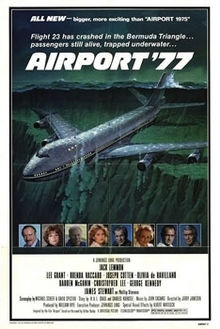
The word that springs to mind following a viewing of the disaster flick Airport ’77 (1977) is entertaining. Whether this is positive or negative depends on the viewer and what that viewer wants out of a film.

As a huge fan of the disaster genre, I was one satisfied customer though there is little to distinguish the film from other efforts. It is a more cohesive and professional-feeling effort than its predecessor, Airport ’75.

The fun is watching the cast, the grandiose list of who’s who of Hollywood heavyweights gracing the opening credits.

We wonder who will survive and who will not.

The star is the airplane. Showcased by way of both interiors and exteriors, the luxurious privately-owned Boeing 747-100 is a great highlight of the picture.

Owned by wealthy philanthropist Philip Stevens (James Stewart), the plane is packed with VIPs and priceless art traveling to his Florida estate for a party.

The wealthy travelers are drugged, and the aircraft is subsequently hijacked before crashing into the ocean in the Bermuda Triangle and sinking 100 feet, prompting the survivors to undertake a desperate struggle to live.

The airplane set is a feast for the eyes. A double-deck plane (naturally!) the plush green carpets and the spiral staircase complete with a robust bar stocked with every type of liquor imaginable are wonderful trimming.

It allows the viewer to forget all about the typical in-flight treats like their seat being kicked, a screaming baby, or a fat man snoring, and escape to the pleasures of champagne, caviar, and slippers.

Seriously, the sets are tremendous and worthy of their accolades.

Jerry Jameson, primarily a television director, sticks to a formulaic approach that makes the film look like a long television series. Think Murder, She Wrote, Dallas, or Dynasty at 30,000 feet.

I say this because the melodrama is sky-high (no pun intended) and situations arise between flight crew and passengers to create more tension than the crash itself.

The juiciest drama exists between husband and wife Martin (Christopher Lee) and Karen Wallace (Lee Grant). He flirts with women at the bar, drinks too much, and gets jealous. They squabble. You get the idea.

What a joy it is to see some of the stars on-screen together, specifically Stewart, Olivia de Havilland, and Joseph Cotten. As Nicholas, Cotten is a romantic match for de Havilland’s Emily Livingston, and they appear to be old friends.

Fans of classic cinema will undoubtedly associate him with Shadow of a Doubt (1943) and her with Gone with the Wind (1939) and to see the legendary stars side by side is darling, nearly worth the price of admission.

Stewart is perfectly cast as the rich and distinguished man eager to see the impending arrival of his estranged daughter and her son, hopeful of a happy reunion.

These delights are why I love this genre.

The actors teeter back and forth between phoning in their lines and enthusiastically having a ball with their respective roles. Sometimes it’s hard to tell which is which. I’ll bet the set was tension-free as everyone was earning a bundle of cash.

And why not? The budget is plentiful and filled with overabundance.

The plot is generally ludicrous as is to be expected. The thought that anyone, let alone nearly everyone, could survive a crash into the ocean and remain unscathed as it sinks to the depths of the water is beyond silly.

Suddenly, when all passengers conveniently emerge from their drug-induced stupor simultaneously, hysterics erupt which is quite humorous. As the water slowly begins to seep into the plane a frenzied effort to find a way out commences.

The last portion of the film involving a rescue crew coming to save the passengers is a disappointment, lacking much captivation.

Airport ’77 (1977) has all the elements its target viewer expects it to have. If the well-known cast were instead unknowns the crash peril and its following adventure were not danger personified, and the dramatic and romantic tensions left out, the film would be a disappointment.

The film is like sinking your teeth into a fattening, highly caloric Whopper from your favorite Burger King. It’s a guilty pleasure that you wouldn’t necessarily tell your health-conscious friends you get so much enjoyment from.

But, it’s fun, so why not indulge from time to time?

Oscar Nominations: Best Art Direction, Best Costume Design

Knives Out-2019

Knives Out-2019

Director Rian Johnson

Starring Ana de Armas, Daniel Craig

Scott’s Review #969

Reviewed December 17, 2019

Grade: B+

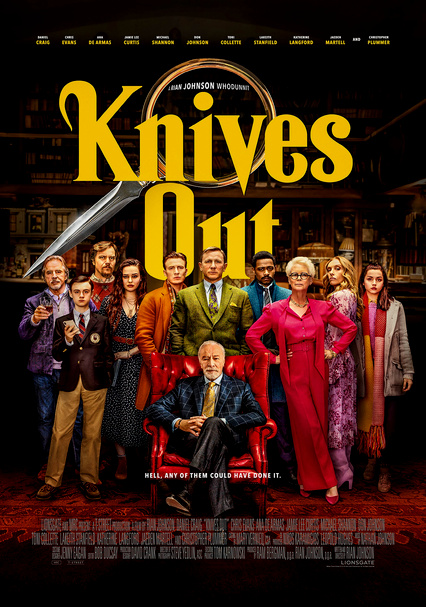
Knives Out (2019) is a cleverly constructed whodunit, crafted in a style not dissimilar from the famous board game Clue. This facet is mentioned by one character during a scene in the film.

With a sizable cast of film stars, both young and old (mostly old), the result is a good time, featuring intelligent writing, surprises, and a crowd-pleasing tone. The project is presented by a cast who undoubtedly had a ball during filming.

The point of the film is to try and figure out whodunit and why, in perfect murder mystery form.

It is explained through narration that wealthy crime novelist Harlan Thrombey (Christopher Plummer) has invited his family to flock to his mansion for his eighty-fifth birthday party. The next morning, Harlan’s housekeeper Fran finds him dead, apparently having slit his own throat.

An anonymous figure hires private detective Benoit Blanc (Daniel Craig) to investigate the situation. When Blanc arrives at the grand estate to interrogate family and friends, tidbits of scandal and intrigue slowly emerge as layers are revealed.

The sizable cast features Hollywood stalwarts like Jamie Lee Curtis (Linda, Harlan’s daughter), Don Johnson (Richard, Harlan’s son-in-law, and Linda’s husband), Chris Evans (Ransom, Harlan’s grandson), Michael Shannon (Walt, Harlan’s youngest son), and Toni Collette (Joni, widow of Harlan’s deceased son Neil).

Helpful is how the film takes the time to introduce and explain each prominent character, so that the viewer has a good sense of who’s who and how one character relates to the others before the tangled web unravels.

The delicious aspect of Knives Out is the numerous twists and turns it offers throughout its runtime.

Surprisingly, it was a key revelation exposed quite early on, so that the pacing is more left of center than classic whodunits of days past. Once the new story arc is revealed, the plot thickens further, and we know that more events will ultimately unfold, as the story cannot be this simple.

This successfully kept me engaged as a viewer throughout the entire experience.

Having witnessed the previews at length and the way the trailer presents a Hercule Poirot/Agatha Christie/Jessica Fletcher-type sleuth to solve, it was delightful to see one character snuggling on the couch, absorbed in an episode of the 1980s television series “Murder, She Wrote.”

Director Rian Johnson offers several sly homages to influential tidbits of pop culture that helped shape his film and retain its amusement.

Another momentous positive is the incorporation of a political discussion among the family as they brood and fret over how much money they stand to inherit from their dead patriarch.

Donald J. Trump, a man who catapulted the United States into controversy post-2016, is never mentioned by name. Still, immigration, children in cages, and expletives are carefully hurled about in his honor, so there is no question about the connotations.

Harlan’s caregiver is Marta (Ana de Armas), the heroine of the film and the standout, whose mother is an undocumented immigrant.

So political overtones abound.

Knives Out seamlessly blends dark humor with traditional mystery, ensuring it never loses its edge. The big reveal at the end is neither brilliant nor disappointing. It simply bubbles to the surface after numerous red herrings and lies.

The final sequence is palpable, and savvy viewers will wonder what one character will possibly do next to either please or anger the rest of the characters.

Might a sequel be at hand?

A film not meant to be high art or anything more than an entertaining good time, Knives Out (2019) achieves its intent by offering an experience reminiscent of an Agatha Christie tale that is fun for the audience.

The benefits are reaped, as the film received an enormous box office return. Thanks in large part to a talented cast, a gloomy mansion, and wealthy individuals faced with peril and comeuppance, these elements make for a wonderful recipe for a good, solid mystery.

Oscar Nominations: Best Original Screenplay