Tag Archives: Dabney Coleman

9 to 5-1980

9 to 5-1980

Director Colin Higgins

Starring Jane Fonda, Lily Tomlin, Dolly Parton

Scott’s Review #1,552
Reviewed September 22, 2026

Grade: B

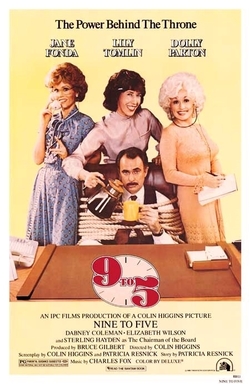
Pairing two Hollywood stars and one musical icon together to create a satirical, comedic, and feminist film in 1980 was someone’s brilliant idea.

Together, Jane Fonda, Lily Tomlin, and country music star Dolly Parton electrify the screen with hijinks and physical comedy that make 9 to 5 a delightful crowd-pleaser.

Their chemistry is delicious and a highlight of the film.

9 to 5 also had an infectiously hummable title pop song that was a number-one hit and earned a Grammy win and an Oscar nomination, increasing the movie’s audience reach.

But while the trio is likable and the film entertaining, the plot is almost too preposterous and lighthearted to convey the feminist message successfully.

Women being taken seriously in the workplace is an important aspect of the world we still live in. It was more so in 1980.

Too often, the film leans toward humor instead of darker tones, which makes the overall content seem less serious than it should be.

Three female secretaries (Fonda, Tomlin, Parton), one of whom has been passed over for promotion because she’s not a man, spend a night together having marijuana-induced fantasies of killing their chauvinist boss, Franklin M. Hart Jr. (nicknamed FHart), played by Dabney Coleman.

A mishap the following day leads one of them to suspect she really has poisoned Hart, who is rushed to the hospital.

The event sets off a series of silly misunderstandings at a hospital that cause the women to abduct their boss and run the business themselves until they can get evidence that he is defrauding the company.

For a Generation X individual who, as a child, occasionally went into the office with his father around 1980, it was fun to see a corporate environment like that.

The typewriters, orange/yellow decor, grey/tan elevators, and cigarette-smoke hue felt like a time capsule.

The hustle and bustle of the workday, the corporate gossip, deals, and alliances also held appeal to what working in the corporate world was like back then.

While Tomlin and Fonda certainly delight with good comic timing and excellent delivery, Dolly Parton proves a natural movie star in her first film role.

Blonde and busty, Doralee (Parton) is initially assumed to be sleeping with Hart, but we quickly learn she is no floozy and has strong morals and feisty intelligence.

Parton was barely on the cusp of transitioning from a country superstar to a capable actor.

The rest of the cast share chemistry and seem to enjoy the preposterous gag comedy situations they play together.

Coleman and Elizabeth Wilson, as the preachy administrative assistant, perform their parts effectively, though they can be over-the-top.

Positively, 9 to 5 makes sharp points about gender roles in the workplace, which wasn’t common in film in 1980; 1988’s Working Girl also examined this.

The film takes a forward-thinking, progressive stance.

For example, Norma Rae (1979) starred Sally Field as a factory worker struggling to form a union. But that film was a heavy drama and not specific to women.

And, 1976’s Network featured a domineering corporate woman, but that was a much darker film.

I would have preferred 9 to 5 to be a bit darker, since the comedy heavily outweighs the drama and makes the gender message less powerful than it should be.

By the film’s conclusion, it teeters way too much into screwball or slapstick fare for my tastes.

Even when the women win in the end and revamp the workplace model, it still alludes to the unfairness of pay between men and women.

A good point, but no mention of the Equal Pay Act of 1963, which supposedly helped abolish the wage gap between women and men.

Nonetheless, 9 to 5 (1980) is a good romp with at least an intended point. It just plays it way too safe.

Oscar Nominations: Best Original Song-“9 to 5”

Golden Globe Nominations: Best Actress-Comedy or Musical-Dolly Parton, Best Original Song-“9 to 5”, New Star of the Year-Actress-Dolly Parton

The Towering Inferno-1974

The Towering Inferno-1974

Director John Guillermin

Starring Paul Newman, Steve McQueen, Faye Dunaway

Top 250 Films #41

Scott’s Review #194

1059232

Reviewed November 15, 2014

Grade: A

The Towering Inferno (1974) epitomizes the disaster-film craze that swept audiences throughout the 1970s (Airport, Airport ’75 and ’77, The Poseidon Adventure (1972), and Earthquake (1974), to name a few).

I am (guilt-free) a huge fan of this 1970s movie genre, though some certainly look down on it; I am not one of them, and I think The Towering Inferno is one of the best.

The film is enormous, with a strong sense of adventure and danger.

The grand film tells of the trials and tribulations of an enormous cast of characters trapped inside a skyscraper aflame – led by Paul Newman and Steve McQueen (fun fact: the two actors reportedly despised each other).

An incredible skyscraper is erected in San Francisco with 138 floors; it is touted as the tallest building in the world and is incredibly state-of-the-art. At the ribbon-cutting ceremony, they hold an elaborate party atop the building, overlooking the gorgeous Pacific Ocean.

Due to faulty electrical wiring, the building catches fire, and the cast of characters faces one challenge after another to escape the grip of death.

The stellar cast features William Holden, Faye Dunaway, Fred Astaire, Robert Wagner, Jennifer Jones, and O.J. Simpson, in addition to Newman and McQueen.

The film is quite a soap opera style- numerous characters are introduced, many having affairs with each other or suffering some conflict.

Wagner, having a torrid office romance with his secretary, played by then up-and-coming star Susan Flannery, is deliciously sexy, and I yearned to know more about both characters.

Holden’s son-in-law is responsible for the faulty electrical system, yet he blames his father-in-law for cutting budgets.

Another subplot involves Astaire’s character attempting to swindle Jones’s character, only to fall in love with her.

The plots are so melodramatic that, given the period of the film, it has a definite primetime television soap opera style to it- think Dallas or Dynasty in a state of peril.

I enjoyed the enormous cast and trying to guess who will be killed off next, and in what elaborate way the film will burn them to death is a joy to watch- several victims fall or jump to their deaths, which eerily (and sadly) bring back morbid images of jumpers from the World Trade Center on 9/11.

The beginning of the film shows a dedication to firefighters everywhere, and the film has a definite moral and heroic quality to the firefighters sent to rescue the people in the building.

They are portrayed as heroes and are meant to be remembered amid all the drama of the story. This is admirable.

The special effects are elaborate and quite impressive- the glass elevator rescue scene is amazing!

The beautiful set designs are a treat to watch, as each lobby, apartment, or lounge in the skyscraper is exquisitely designed in peak 1970s style.

Every sofa or carpet featured is plush, colorful, and sophisticated.

The skyscraper, made of glass, is an amazing element of the film, and the aerial views of the building, especially while ablaze, are impressive, to say the least- remember, 1974 was long before CGI.

I assume they used small replicas of the building, but what an achievement from a visual perspective.

The effects certainly champion the syrupy story elements.

My only small gripe with The Towering Inferno is, assuming it is 138 stories high, the action taking place at the top of the tower- the rooftop- as well as the party scenes on the top floor- do not feel that high.

The scenic outlook overlooking the water and some land feels about 25 stories high, not 138.

Some find The Towering Inferno (1974) to be nothing more than schmaltzy drama- I say schmaltz was never done better.

Enjoy this feast of a big film.

Oscar Nominations: 3 wins-Best Picture, Best Supporting Actor-Fred Astaire, Best Original Dramatic Score, Best Song-“We May Never Love Like This Again” (won), Best Sound, Best Art Direction, Best Cinematography (won), Best Film Editing (won)

Golden Globe Nominations: 2 wins-Best Supporting Actor-Fred Astaire (won), Best Supporting Actress-Jennifer Jones, Best Screenplay, Best Original Song-“We May Never Love Like This Again”, New Star of the Year-Actress-Susan Flannery (won)

Tootsie-1982

Tootsie-1982

Director Sydney Pollack

Starring Dustin Hoffman

Scott’s Review #1,449

Reviewed November 2, 2024

Grade: A

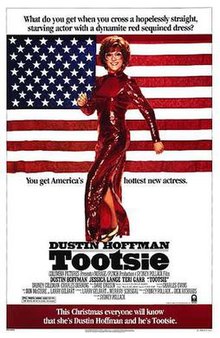
Dustin Hoffman is perfectly cast in the romantic comedy Tootsie (1982), a blockbuster hit from 1982 with much going on within its cinematic walls and a progressive-leaning slant.

Sydney Pollack directs and also has a supporting role in the film.

In addition to Hoffman, Jessica Lange, Teri Garr, Dabney Coleman, and Charles Durning give all-star performances.

Tootsie is genuinely funny and a treat for anyone who has ever auditioned or been interested in acting or theater. The popular soap opera, or daytime drama, genre features directors, producers, and actors who intertwine.

Romance, drag, wacky setups, insecurities, and social commentary on gender inequality are analyzed, making Tootsie more relevant than most romantic comedies and an unforgettable experience.

Hoffman plays New York actor Michael Dorsey (Dustin Hoffman), a talented yet opinionated perfectionist unable to find work. His flustered agent (Pollack) sends him on a soap opera audition that goes poorly.

Michael decides to reinvent himself as actress Dorothy Michaels and wins the part. What was supposed to be a short-lived role turns into a long-term contract, but when Michael falls for his castmate Julie (Jessica Lange), complications develop.

Hoffman flawlessly merges with Dorothy, a feminist,  to make her a character the audience loves and champions. This is a risky assignment and could easily make the character a goof or cause them not to be taken seriously.

Not only does Hoffman look convincing in a dress, wig, heels, and a feminine southern accent, but he also makes us forget he’s a man.

The hilarity of other characters not knowing Dorothy is Michael is there when a romantic quadrangle develops. Neurotic Sandy Lester (Garr) is in love with Michael, while he is in love with Julie, who thinks Michael is Dorothy. Finally, Julie’s father, Les (Durning), falls for Dorothy.

The New York setting works wonderfully as struggling actors, greedy agents, and temperamental directors co-exist on tense sets, over dinners, and at many schmoozy parties. This presents the grit of New York show business in the 1980s, when the city was crime-infested and dangerous.

The hustle and bustle perfectly showcases the time.

Pollack and screenwriters, Larry Gelbart and Murray Schisgal, add satire to the soap opera, or as mentioned in the film, the politically correct, daytime drama world.

The horny and inept longtime cast member, John Van Horn (George Gaynes), needs a teleprompter while the sexy ingenue April (Geena Davis) prances around in underwear. Hurried script rewrites and pages of dialogue to memorize make the cast frazzled and rushed.

Tootsie takes an important, though lighthearted, approach to sexism, and at least it’s recognized. Dorothy scolds her boss and director, Ron (Coleman), for calling her demeaning nicknames like ‘Tootsie’ and for treating Julie, whom he’s casually dating, poorly.

Michael begins to realize that he doesn’t treat Sandy well either, so he learns from his experience of being judged as a woman on beauty rather than anything else.

It forces the audience to realize this, too. Tootsie was released in the early 1980s when women’s liberation was strong, and more women were in the workplace, so the message was timely.

The producer of the fictional soap opera is female, which enhances the gender message brought across.

Still, the comedy takes center stage, and the film isn’t a message movie. The funny moments feel fresh as the characters work their magic. Julie first assumes Dorothy is a lesbian when they nearly kiss, and Sandy thinks Michael is having an affair with Dorothy, which means he is having an affair with himself.

The antics go on and on, resembling the classic Some Like It Hot (1959), especially the tender moments between Les and Dorothy.

Tootsie (1982) holds up well decades after its release. Smart dialogue, witty sequences, and strong characters make it a timeless treasure to revisit often.

Oscar Nominations: 1 win-Best Picture, Best Director-Sydney Pollack, Best Actor-Dustin Hoffman, Best Supporting Actress-Jessica Lange (won), Teri Garr, Best Screenplay-Written Directly for the Screen, Best Cinematography, Best Film Editing, Best Original Song-“It Might Be You”, Best Sound

On Golden Pond-1981

On Golden Pond-1981

Director Mark Rydell

Starring Henry Fonda, Katharine Hepburn, Jane Fonda

Scott’s Review #1,297

Reviewed September 8, 2022

Grade: A

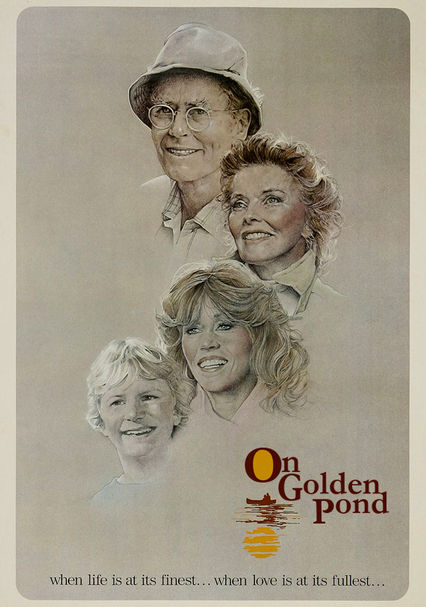
A beautiful and quiet family drama, On Golden Pond (1981) is a brilliantly acted and written story about life, specifically aging and dying. It tells one lovely story arc after another, involving the relationships between its principal characters.

With heavyweights like Katharine Hepburn, Henry Fonda, and Jane Fonda signed on to star, how could the film not be a success?

It was not only a blockbuster in the summer of 1981, but it also earned 10 Academy Award nominations and numerous other awards, showing that sometimes subdued stories about human relationships win big.

The anticipation of legendary stars Fonda and Hepburn, golden icons of Hollywood, finally appearing opposite each other in a film must have made film lovers salivate back in 1981.

Norman Thayer (Fonda) is a grumpy older man trying to enjoy his golden years. He and his nurturing wife, Ethel (Hepburn), spend summers at their New England vacation home on the shores of idyllic Golden Pond.

Norman is experiencing memory problems and frets about dying, while Ethel makes the most of it, enjoying the beautiful loons on the water and chatting with the local mailman.

One year, their adult daughter, Chelsea (Jane Fonda), visits with her new fiancée (Dabney Coleman) and his teenage son, Billy (Doug McKeon), on their way to Europe.

After leaving Billy behind to bond with Norman, Chelsea returns, attempting to repair the long-strained relationship with her aging father before it’s too late.

The greatest part of On Golden Pond is that it is believable. The tender love that Norman and Ethel share, the tensions between Norman and Chelsea, and the burgeoning friendship between Norman and Billy Jr. feel so very real and poignant.

Beautiful scenes emerge between the older man and a young man when Norman turns Billy Jr. on to literary classics like A Tale of Two Cities and Treasure Island.

 The viewers can easily see themselves in real-life situations like this or when Ethel and Chelsea discuss a strained relationship.

Years and years of memories and situations between the characters spring to life, making the dialogue rich with flavor. Moving sequences, like when Norman suffers a heart attack and is involved in a boating accident, are teary and sentimental but fresh with emotion.

They do not feel manipulated.

As if the richly acted scenes are not enough, screenwriter Ernest Thompson, who wrote the film based on his play, provides credibility. He felt the passion the story would bring to the big screen, and he was right.

As I grow older, I appreciate the characters of Norman and Ethel. They stick together through thick and thin, sometimes quarrel, but love each other with a bond that can never be severed.

We all know and love couples like them.

The cinematography bristles with sweet nature. From the loons to the other sounds of summer, the camerawork elicits the light of late summertime. I constantly had to remind myself that I wasn’t really in the countryside but was in my living room.

A tearjerker that carefully combines heavy drama with comical moments that lighten the load, On Golden Pond (1981) is a truthful and emotional extravaganza about death that never feels sad or downtrodden.

It’s much too clever for that; instead, it’s an uproarious crowd-pleaser.

Oscar Nominations: 3 wins-Best Picture, Best Director-Mark Rydell, Best Actor-Henry Fonda (won), Best Actress-Katharine Hepburn (won), Best Supporting Actress-Jane Fonda, Best Screenplay-Based on Material from Another Medium (won), Best Cinematography, Best Film Editing, Best Original Score, Best Sound