Tag Archives: Koji Yakusho

Oh Lucy!-2017

Oh, Lucy! -2017

Director Atsuko Hirayanagi

Starring Shinobu Terajima, Josh Hartnett

Scott’s Review #912

Reviewed June 20, 2019

Grade: B+

Japanese culture meets American culture, which is the underlying component of Oh Lucy! (2017), a fascinating dark comedy and feature film debut by female director Atsuko Hirayanagi.

The film was once short but progressed into a full-length project, deservedly receiving Film Independent nominations for Best Female Lead and Best First Feature.

The co-settings of Tokyo and Los Angeles and the tremendous performance by star Shinobu Terajima make this a worthy watch.

Middle-aged Setsuko (Terajima) lives an unfulfilled daily existence in Tokyo, working a drab office job and living in a cluttered one-bedroom apartment riddled with comforting junk.

She wears a protective mouth cover, which is common in her city, to avoid breathing in bad air and to avoid chain smoke. She is unpopular at work and wishes to date more but is unlucky in love.

One day, she is convinced by her niece Mika (Shiori Kutsuna) to take English lessons and falls for her handsome instructor, John (Josh Hartnett), who nicknames her “Lucy,” making her don a blonde wig and talks “American.”

A classmate, “Tom” (Koji Yakusho), seems interested in “Lucy.”

When Mika runs off with John to Los Angeles, prompting Setsuko and her bitchy sister Ayako (Kaho Minami) to follow suit, concerned for her safety, the adventure begins.

Setsuko and Mika compete for positions with John. Still, her vacation from her dreary job and growing obsession with him energize her as a rivalry between Setsuko and Ayako hits full throttle.

Setsuko begins to exhibit bizarre and unbecoming behavior.

The film delves into an interesting characteristic among Japanese females: rivalry, as the subject matter is heavily female-centered.

The trio of Setsuko, Ayako, and Mika are family and love each other unconditionally, but do they like each other?

Immediately, we learn that Setsuko stole Ayako’s boyfriend long ago, or so she claims. Eventually, Setsuko tries to steal Ayako’s man, so there is a recurring conflict between the two women.

We assume Ayako has a rebellious streak, just like Setsuko did at her age.

Despite the triangle of drama and issues, the main story and focal point belong to Setsuko and her infatuation with John. From the first moment they embrace part of a teacher-student dynamic, Setsuko is hooked. She longs to remain in his arms until he insists she let go.

This is a key moment when intrigue looms. Does she feel more comfortable and confident in her blonde wig and new persona? Does this give her the courage and the guts to flee her boring life for a chance at love in Los Angeles?

John loves Mika, but more importantly, despite her best efforts, he has no feelings for Setsuko. In a pivotal and hilarious scene, John and Setsuko smoke marijuana as he teaches her how to drive in a deserted parking lot.

As they feel the effects of the drug, Setsuko comes on to John, and before he knows it, they have sex. This only deepens her obsession with him as she decides to get the same tattoo as he has.

He realizes she may not be stable as the audience, still enamored with the character, begins to pity her.

Hirayanagi is careful not to make her film a downer, and she does a fantastic job. When Setsuko returns to her meager existence in Tokyo, she is unceremoniously fired from the job she despises but has held for decades.

Is she devastated or liberated? Perhaps a bit of each, but she has reached her breaking point and succumbs to sadness, longing for John.

Fortunately, a surprise appearance by an unexpected character uplifts her spirits and the entire film.

Oh, Lucy! (2017) is an excellent example of an independent film from an inexperienced director who is laden with good qualities. A wounded main character who is sympathetic to viewers leads a dynamic story of loneliness and melancholia, but also with witty dialogue, crackling humor, and a multicultural approach.

A hybrid Japanese and American film with location sequences in both areas, the film will satisfy those seeking an intelligent, quick-witted experience.

Independent Spirit Award Nominations: Best Female Lead-Shinobu Terajima, Best First Feature
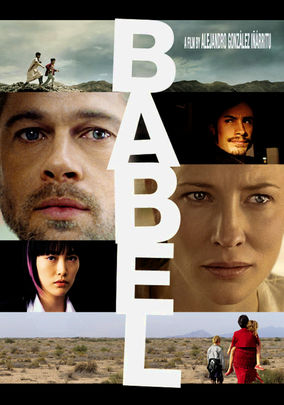
Babel-2006

Babel-2006

Director Alejandro G. Iñárritu

Starring Brad Pitt, Cate Blanchett

Scott’s Review #791

Reviewed July 19, 2018

Grade: A

Babel (2006) is part of director Alejandro G. Iñárritu’s “Death Trilogy” films- Amores Perros (2000) and 21 Grams (2001) are the others.

The director crafts a riveting drama involving intersecting stories that are a thrill ride a minute and highly compelling.

The film is at risk of being forgotten, however, largely due to Iñárritu’s subsequent successes- Birdman (2014) and The Revenant (2015). Still, Babel is a fantastic companion piece to either Traffic (2000) or Crash (2006), as those films hold a similar style.

The three stories are riveting in their own right and could each be a gripping short film.

The fact that characters within each segment are related to the others in some way takes the stories over the top.

The film switches back and forth between stories, which is a huge plus, making the tension even more palpable as we begin to connect the dots.

The spliced editing is a remarkable achievement in ensuring seamless continuity.

Each story is summarized below.

An affluent American couple, Richard and Susan (Brad Pitt and Cate Blanchett), vacation in Morocco, happily enjoying a bus tour.

When two local boys play with their father’s rifle and experiment by shooting at long range, the American woman is shot, leading to a terrorist accusation. At the same time, the couple desperately seeks medical attention in the middle of nowhere and in a foreign country.

In Japan, a wealthy businessman (and owner of the rifle) is investigated while his promiscuous teenage daughter (Rinko Kikuchi) seeks attention from young men.

The girl, who is deaf, is angry and depressed due to her mother’s recent suicide.

As she flirts with a local detective, she slips him a mysterious note. She implores him to read the note only after he leaves her father’s gorgeous high-rise apartment, leading to a mysterious revelation.

Finally, in southern California, Richard and Susan’s Mexican nanny, Amelia (Adriana Barraza), cares for the couple’s young children. Almost like a real family member, Amelia adores the kids (and they love her.)

When she is notified that the couple will be delayed returning home, she panics and foolishly takes the kids across the border to Mexico to attend her son’s wedding.

When an incident involves the police, Amelia and the kids’ lives are in peril.

The connecting stories are only part of what makes Babel so fantastic, but an enormous aspect is the direction Iñárritu gives the characters.

As the stories play out, we care deeply for the characters that play a great role in adding meat to each story.

Sometimes the characters’ connections are immediately known; other times, the audience can savor the inevitable big reveal. Not every story featured in Babel will have a happy ending, which makes the film all the more compelling and satisfying.

How incredible are the different locales and cultures featured in Babel from a geographical perspective alone?

The action traverses from the hip, modern metropolis of Tokyo, with slick nighttime sequences, dance clubs, and urban hip-hop beats.

The deserts of remote Morocco, with their vast, sweeping landscapes, blend perfectly with the hot Mexican atmosphere and the cultural nuances of a real Mexican wedding.

Another key element is the characters’ different backgrounds and the conflicts this sometimes leads to. As Richard frantically seeks medical attention for Susan, he encounters resistance from some while receiving aid from a local veterinarian.

At the Mexico-United States border, Amelia and her brother are not treated well by Border Patrol. One cannot help knowing that this is because they are Mexican and carrying American children, thus discriminated against.

Wonderful call-outs are deserved for the relatively unknown actors Kikuchi and Barraza, both of whom received tremendous accolades in 2006 for their work, even though they could easily have been overlooked in favor of bigger, high-profile stars like Blanchett and Pitt.

I love it when this happens, and gritty performances get the respect they deserve. Both actors give great performances in complex, layered characters.

Since making Babel, Iñárritu has progressed to great acclaim with Oscar winners like Birdman (2014) and The Revenant (2015), but let’s not forget that Babel received a heap of Oscar nominations, though sadly only one victory for the musical score.

Unfortunately usurped by his more high-profile works, Babel (2006) is an excellent, fast-paced, and layered film with spectacular characters, storytelling, and editing.

Oscar Nominations: 1 win-Best Picture, Best Director-Alejandro G. Iñárritu, Best Supporting Actress-Adriana Barraza, Rinko Kikuchi, Best Original Screenplay, Best Original Score (won), Best Film Editing