Category Archives: Comedy

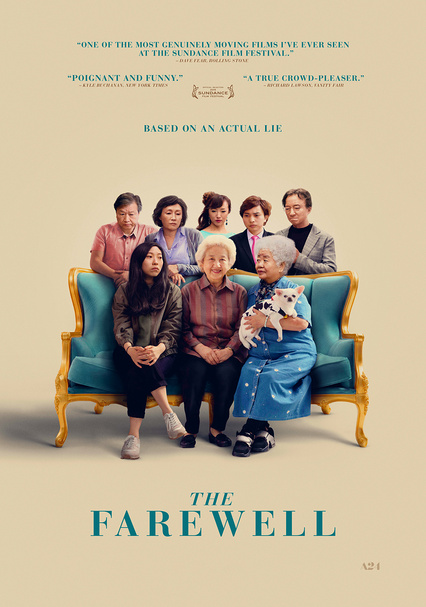
The Farewell-2019

The Farewell-2019

Director Lulu Wang

Starring  Awkwafina, Tzi Ma

Scott’s Review #927

Reviewed August 6, 2019

Grade: A-

Any film with a dark premise, such as The Farewell (2019), runs the risk of resulting in a bleak and depressing outcome, but the film is anything but a downer.

Surprisingly, to many, the film is classified as both a drama and a comedy, with snippets of humor and sadness prevalent throughout.

Met with widespread critical acclaim, the film successfully furthers the much-needed presence of quality Asian representation in modern cinema well into the twenty-first century.

Young upstart/comedienne Awkwafina, memorable for her humorous turn in Crazy Rich Asians (2018), returns to the big screen in a more subdued role, crafting a passionate and dramatic character that strongly leads the charge in an ensemble project exploring the family dynamic.

The film succeeds remarkably as a multi-generational glimpse into humanity, although it occasionally suffers from a slow pace.

A thirty-something struggling writer, Billi (Awkwafina), lives in New York City near her parents, all of whom are ex-pats from China. Billi is particularly close with her grandmother, Nai Nai (Zhao Shuzhen), who still resides in her birth land as they speak regularly via telephone.

When Billi is informed that her grandmother has terminal lung cancer and has weeks to live, the entire family reunites and decides to hold a mock wedding as an excuse to be all together.

The family makes the decision not to tell Nai Nai she is dying, preferring to let her live out her days in happiness rather than fear.

Awkwafina is the main draw of the film, and much of the action is told from her point of view.

One wonders if perhaps director Lulu Wang drew from personal experience when she wrote the screenplay. The audience is not aware of Billi’s sexuality, nor is it relevant to the film, but the vagueness was noticeable.

She does not date, nor does she look particularly interested in men. She does her laundry at her parents’ apartment and attempts, but fails, to secure a prestigious writing scholarship.

The supporting characters add tremendous depth, making the film more than just Billi’s story, and provide unique perspectives from her mother, father, and aunt, each of whom holds a distinct viewpoint about Nai Nai’s illness.

I adore this technique in rich storytelling, as it not only fleshed out secondary characters but also provides interesting ideas.  Nai Nai is not written as a doting old lady nor a victim; she is strong, witty, and full of life.

Shuzhen, unknown to me before viewing this film, brings tremendous poise to a crucial role, portraying it perfectly.

The Farewell is a quiet film that combines both comic and dramatic elements, often within the same scene, thereby providing relief from the dour subject matter.

Wang strikes the balance just right, ensuring the film does not become too heavy.

A hysterical bowing marathon ensues as the entourage decides to visit the grandfather’s grave, preparing the essentials to comfort him during the afterlife.

In stark contrast to the physical comedy, not a dry eye can be found when Billi and her parents depart China by taxi for the airport. Nai Nai tearfully waves goodbye to them, not knowing that it will undoubtedly be her final goodbye.

Any audience member with an elderly relative whom they seldom see will be deeply moved by this poignant scene. Questions such as “Would you keep a loved one unaware of a terminal disease?” will gnaw at the viewer, the central theme of the story.

Influenced by the buzz and word of mouth surrounding the film, I yearned for a single, powerful, emotional scene, but one clearly defined, bombastic moment never materialized.

Instead, the film offers small tidbits, careful not to overpower the audience or risk making the movie too sentimental or overwrought. I still think a pivotal teary scene might have been added for good measure.

A scene where Billi breaks down in front of her parents was adequate, but never catapulted the film over the top.

The Farewell (2019) is a fantastic film rich with emotion and importance.

Like Black Panther (2017), which brought Black characters to the forefront of the mainstream film genre, this film provides exposure to the Asian population, typically relegated to stereotypical roles such as doctors or Chinese takeout owners.

Wang delights with an independent film steamrolling itself across Middle America.

Independent Spirit Award Nominations: 2 wins-Best Feature (won), Best Supporting Female- Zhao Shu-zhen (won)

Gloria Bell-2019

Gloria Bell-2019

Director Sebastian Lelio

Starring Julianne Moore, John Turturro

Scott’s Review #924

Reviewed July 29, 2019

Grade: B+

An English remake of the successful 2013 Chilean film, titled Gloria, Gloria Bell (2019) stars Julianne Moore, and the setting is relocated to Los Angeles.

The film is directed by Sebastian Lelio, fresh off a Best Foreign Language Film win for A Fantastic Woman (2017), and both movies contain similar themes of oppression and loneliness.

Preferring the original by only a hair, Gloria Bell is nonetheless a worthy offering with Moore perfectly cast in the title role.

Middle-aged divorcee Gloria Bell (Moore) resides in Los Angeles, working an office job of some respectability, but is unfulfilled. She spends many nights at a nightclub, where she is considered a regular.

The club caters to middle-aged singles who dance and drink while looking for love. When she meets Arnold (John Turturro) one evening and they share a night of passion, the pair begin dating.

However, Gloria realizes that he still supports his ex-wife and grown daughters, which limits his time and commitment to her, leaving her frustrated.

Moore is honest and understated in her performance, and the highlight of the film.

With another casting choice, the character might not have worked so well. She is full of life, singing in her car, attending laughter therapy, and smoking pot in her apartment. She has a warm yet limited relationship with her millennial kids and her ex-husband and his new wife.

Moore gives the character an earnestness and likability that work and get the audience on her side during her trials and tribulations.

This is not to say that Gloria doesn’t occasionally frustrate the audience.

After inviting Arnold to meet the whole crew over dinner and wine at her son’s house, what begins as a meet-and-greet quickly turns into a reminiscing trip down memory lane and whimsical looks at Gloria and her ex’s wedding pictures.

Her disregard for Arnold’s feelings is disappointing, but there is no bad intention behind it.

Gloria has baggage and is caught up in the moment, simply reliving a happier time at the expense of the current moment.

Arnold has his demons and is both likable and unlikable to the audience. Tending to bail on Gloria when either his family requires his assistance or he feels left out, he hardly exhibits grown man behavior or anyone Gloria would want to date.

The first red flag is his confession of being enamored of Gloria over their first dinner date. From there, his on-again-off-again presence makes him the odd man out. Lelio intends to make Gloria the sympathetic one. It’s her movie after all.

Watching A Fantastic Woman sequentially is a wise idea. Numerous comparisons are apparent, beginning with the feelings shared by both central characters.

Both are searching for happiness, but are unsure of how to attain it, especially given that they once had it and it was taken away from them.

Scenes of both characters driving in their cars and singing songs are included, and the look of both films is the same.

Very few comparisons or contrasts can be made between Gloria of 2013 and Gloria Bell of 2019, as both are above average, except that the character is slightly more vivacious in the former than in the latter.

This could be attributed to the Chilean and South American free-thinking and sexual openness compared to the more reserved American way of thinking, but this is merely a suggestion.

It is interesting to note how Lelio remade his film only six years later, rather than another director putting their stamp on it.

Gloria Bell (2019) paints a vivid portrait of a modern woman dealt a bad hand who struggles to find happiness and fulfillment in any way she knows how.

Thanks in large part to Moore’s portrayal and filling the character with kindness and care, she wins over the audience. The character is written as intelligent and interesting, and not desperate in any way for a man; he needs to be the right man.

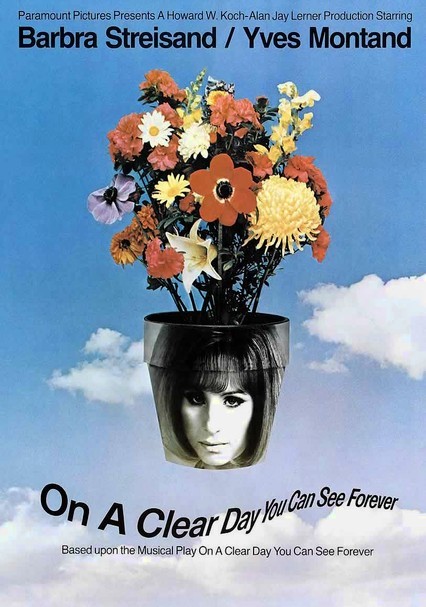
On a Clear Day You Can See Forever-1970

On a Clear Day You Can See Forever-1970

Director Vincente Minnelli

Starring Barbra Streisand, Yves Montand

Scott’s Review #921 

Reviewed July 19, 2019

Grade: B+

On a Clear Day You Can See Forever (1970) is a very obscure film that deserves better than to be relegated to the unknown.

Released during a time when the Hollywood musical had lost its luster, it feels like a last-gasp effort to keep the genre alive, serving as a star vehicle for Barbra Streisand.

The film suffers from severe editing problems with a large portion being cut, so much so that the result is a choppy and disjointed feel, tough to follow as is, but left untouched, the film could have been a creative masterpiece.

In a particularly convoluted plot that spans two time periods, chain-smoking New Yorker Daisy Gamble (Streisand) is convinced by her uptight fiancé Warren (Larry Blyden) to attend a class taught by Marc Cabot (Yves Montand), a psychiatrist.

When Cabot accidentally hypnotizes her, he realizes she speaks in the voice of an early-nineteenth-century woman named Melinda, and he becomes obsessed with her as she teeters between two existences.

The screenplay was written by Alan Jay Lerner and adapted from his book for the 1965 stage production.

Film director Vincente Minnelli fuses fantasy with a musical to create an extremely left-of-center experimental piece; this is not your standard 1950s or 1960s MGM experience with merry or clap-along tunes.

Some of the more memorable numbers include “On a Clear Day,” a reprise at the end of the film, “He Isn’t You,” and “Love with All the Trimmings.”

Casting Streisand is a monumental choice as she carries the film on her shoulders. Belting out numbers is the singer-turned-actress’s forte, and she never disappoints.

She is fascinating to watch in the neurotic role as she smokes and prances around, usually in a tizzy or a state of peril (self-induced).

The performance stands out as a different style from many of her other films, and she has never portrayed a livelier character. Streisand overcomes a few challenges of the film, winning in spades.

She shares little to no chemistry with co-star Montand, who is not only too old for her but also not the greatest actor. If the film’s intent, which I suspect, was to make the pair the main draw, then this failed.

Streisand’s chemistry with John Richardson, who plays Sir Robert Tentrees to her Melinda in the other time period, excites her. The duo smolders with passion, but sadly, most of the nineteenth-century scenes are sacrificed, leaving most of it a jumbled mess.

Much more interesting would have been to leave the entire film intact.

An oddity is Jack Nicholson’s almost nonexistent role as Tad Pringle, a mostly non-described brother of Daisy’s. Is he also her neighbor?

In 1970, Nicholson was only on the cusp of super-stardom, and it is questionable whether some of his parts were left on the cutting-room floor, but the limited character is strange and unsatisfying. In another role, there would have been some possibility of romantic entanglement.

Throughout the film, I wondered how On a Clear Day You Can See Forever might have worked with someone other than Streisand in the roles.

I kept ruminating on how good Liza Minnelli might have been in the roles, given her non-classic looks (like Streisand) and bombastic voice. Her high-drama flair and capable New York style would have made the results enjoyable, but Streisand hits it out of the park.

On a Clear Day You Can See Forever (1970) is a brave attempt at something fantastical, brimming with potential, but ultimately feels cluttered and messy.

With a delicious leading lady whom the camera adores and enough creative sets and rigorous energy to keep one guessing, the film stumbles with many problems and leaves viewers incomplete.

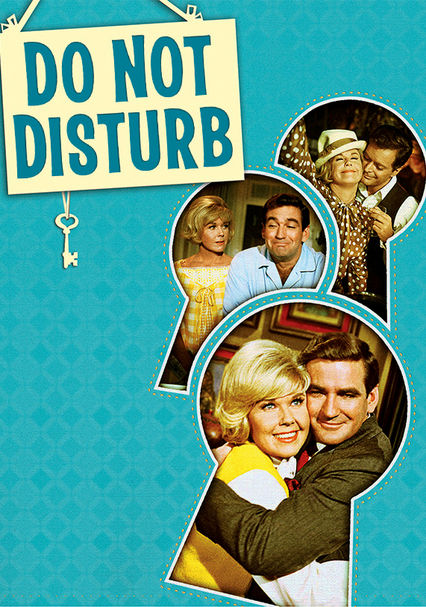
Do Not Disturb-1965

Do Not Disturb-1965

Director Ralph Levy, George Marshall

Starring Doris Day, Rod Taylor

Scott’s Review #917

Reviewed July 8, 2019

Grade: C+

Singer and actress Doris Day put her stamp on the romantic comedy genre during the 1960s, becoming synonymous with wholesome film characters. She had spunk and charm and always wore sensible shoes.

Do Not Disturb (1965) is a lightweight, forgettable work with a silly premise, a juvenile script, and a meandering plot.

The film is somewhat saved by the interesting locales of London and Kent, England, but those seeking better quality should seek out the gems The Man Who Knew Too Much (1956) and Pillow Talk (1959).

Day and Rod Taylor star as Janet and Mike Harper, an American couple who relocate to England as part of a transfer for the company he works for. They immediately disagree over where to live; Mike prefers the excitement of London, but Janet favors the rustic quality of Kent.

After she gets them a house thirty miles outside London, the plan backfires when the couple grows further apart due to Mike’s need to commute to London every day. Lonesome and isolated, Janet worries incessantly that Mike is having an affair with his new secretary, Claire Hackett (Maureen McGivney).

Prompted by her busybody landlord, Vanessa Courtwright (Hermione Baddeley), Janet meets an Italian antique dealer, Paul Bellari (Sergio Fantoni), who she hires to redecorate her house. The antics begin with Mike spending more time with Claire, Janet, and Paul in equally close quarters.

Janet and Mike may be innocent, but Paul and Claire could have designs on their potential mates, especially as the foursome faces one compromising situation after another.

The heart of an authentic romantic comedy is good, old-fashioned chemistry between the leads, and Taylor and Day exhibit adequate sparkle but hardly sizzle.

Mediocrity in the setup and writing can be forgiven if other elements, like crackling moments, exist, but those are rare in Do Not Disturb.

Some Like It Hot (1959) embodies a great comedy with romantic wrappings featuring fantastic leads Jack Lemmon and Marilyn Monroe. Still, the former does not come close to finding its footing amid cliche after cliche.

The film is plot-driven and heavy on story-dictated situations rather than character development. The ending is predictable. The jokes fall flat or feel distinctly canned and cheap, and the laughs never catch on.

During a tepid sequence, Janet and Paul visit a remote town to look at antiques. She ends up drinking too much bubbly and becomes drunk and foolhardy.

What should have been comic relief does little to further the plot or flesh out the characters.

Director Ralph Levy makes little effort to steer the film beyond a slick mainstream “affair” despite the release year being 1965 when more edgy works replaced the polished and familiar.

Rather than dare to go to a less-than-cheery place and perhaps decide to have Janet or Mike cheat on their significant others, Levy chooses not to go there, instead attempting to satisfy those seeking a happily-ever-after wrapping.

Not to be entirely negative, Do Not Disturb features remarkable and stunning locale sequences of bustling metropolitan London, quaint English cottages, and wilderness, oozing with culture and sophistication as well as down-home comforts and rich flavor.

The combination of an American couple thrust into a different setting with a new set of rules and regulations to follow makes the film fun and offers a sprinkle of good scenery.

Do Not Disturb (1965) is a mid-1960s mainstream release buried among nests of other similar-themed but better-written films. Even appealing and bankable stars of the time like Taylor and Day could not succeed in spicing up tired gimmicks and plot devices.

The film will forever be relegated to the romantic comedy shelves, teetering on the brink of obscurity.

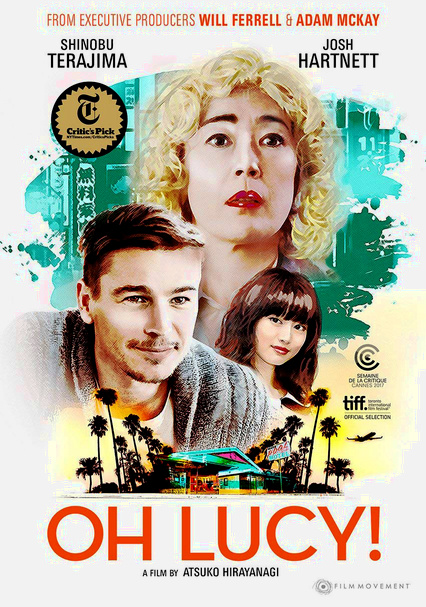
Oh Lucy!-2017

Oh, Lucy! -2017

Director Atsuko Hirayanagi

Starring Shinobu Terajima, Josh Hartnett

Scott’s Review #912

Reviewed June 20, 2019

Grade: B+

Japanese culture meets American culture, which is the underlying component of Oh Lucy! (2017), a fascinating dark comedy and feature film debut by female director Atsuko Hirayanagi.

The film was once short but progressed into a full-length project, deservedly receiving Film Independent nominations for Best Female Lead and Best First Feature.

The co-settings of Tokyo and Los Angeles and the tremendous performance by star Shinobu Terajima make this a worthy watch.

Middle-aged Setsuko (Terajima) lives an unfulfilled daily existence in Tokyo, working a drab office job and living in a cluttered one-bedroom apartment riddled with comforting junk.

She wears a protective mouth cover, which is common in her city, to avoid breathing in bad air and to avoid chain smoke. She is unpopular at work and wishes to date more but is unlucky in love.

One day, she is convinced by her niece Mika (Shiori Kutsuna) to take English lessons and falls for her handsome instructor, John (Josh Hartnett), who nicknames her “Lucy,” making her don a blonde wig and talks “American.”

A classmate, “Tom” (Koji Yakusho), seems interested in “Lucy.”

When Mika runs off with John to Los Angeles, prompting Setsuko and her bitchy sister Ayako (Kaho Minami) to follow suit, concerned for her safety, the adventure begins.

Setsuko and Mika compete for positions with John. Still, her vacation from her dreary job and growing obsession with him energize her as a rivalry between Setsuko and Ayako hits full throttle.

Setsuko begins to exhibit bizarre and unbecoming behavior.

The film delves into an interesting characteristic among Japanese females: rivalry, as the subject matter is heavily female-centered.

The trio of Setsuko, Ayako, and Mika are family and love each other unconditionally, but do they like each other?

Immediately, we learn that Setsuko stole Ayako’s boyfriend long ago, or so she claims. Eventually, Setsuko tries to steal Ayako’s man, so there is a recurring conflict between the two women.

We assume Ayako has a rebellious streak, just like Setsuko did at her age.

Despite the triangle of drama and issues, the main story and focal point belong to Setsuko and her infatuation with John. From the first moment they embrace part of a teacher-student dynamic, Setsuko is hooked. She longs to remain in his arms until he insists she let go.

This is a key moment when intrigue looms. Does she feel more comfortable and confident in her blonde wig and new persona? Does this give her the courage and the guts to flee her boring life for a chance at love in Los Angeles?

John loves Mika, but more importantly, despite her best efforts, he has no feelings for Setsuko. In a pivotal and hilarious scene, John and Setsuko smoke marijuana as he teaches her how to drive in a deserted parking lot.

As they feel the effects of the drug, Setsuko comes on to John, and before he knows it, they have sex. This only deepens her obsession with him as she decides to get the same tattoo as he has.

He realizes she may not be stable as the audience, still enamored with the character, begins to pity her.

Hirayanagi is careful not to make her film a downer, and she does a fantastic job. When Setsuko returns to her meager existence in Tokyo, she is unceremoniously fired from the job she despises but has held for decades.

Is she devastated or liberated? Perhaps a bit of each, but she has reached her breaking point and succumbs to sadness, longing for John.

Fortunately, a surprise appearance by an unexpected character uplifts her spirits and the entire film.

Oh, Lucy! (2017) is an excellent example of an independent film from an inexperienced director who is laden with good qualities. A wounded main character who is sympathetic to viewers leads a dynamic story of loneliness and melancholia, but also with witty dialogue, crackling humor, and a multicultural approach.

A hybrid Japanese and American film with location sequences in both areas, the film will satisfy those seeking an intelligent, quick-witted experience.

Independent Spirit Award Nominations: Best Female Lead-Shinobu Terajima, Best First Feature

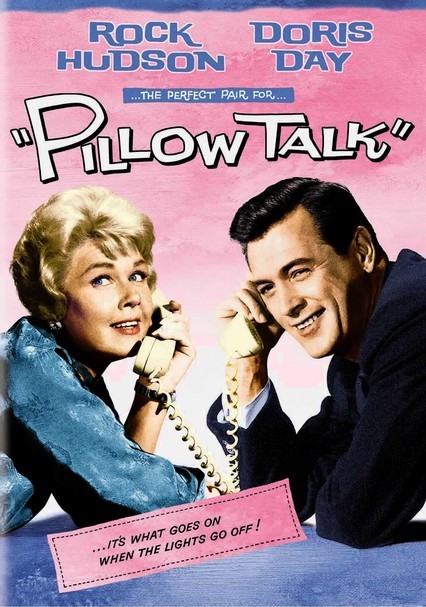
Pillow Talk-1959

Pillow Talk-1959

Director Michael Gordon

Starring Rock Hudson, Doris Day

Scott’s Review #907

Reviewed June 6, 2019

Grade: B+

Pillow Talk (1959) is the ultimate in romantic comedies from the age of innocence in cinema.

In 1959, pictures were still wholesome and safe, providing happy stories and charming characters. The film is a lovely and enchanting experience with intelligent characters and fantastic chemistry among its leads.

Combined with a good romance and comic elements, it makes for a fun watch that still feels fresh and bright decades later.

Doris Day and Rock Hudson smolder as singles living in Manhattan.

Day plays Jan Morrow, a perky, independent interior decorator who dates frequently but has not yet found love. Hudson plays Brad Allen, a talented, creative Broadway composer and playboy who lives in a nearby apartment building.

Jan is frustrated by a party line that allows her to hear Brad’s endless phone conversations with the women in his life. He is annoyed by her prim and proper, holier-than-thou attitude. They bicker on the phone but have not met.

Through their mutual yet unknown-to-them acquaintance, Jonathan Forbes (Tony Randall), Brad realizes who Jan is, which leads to hilarity as he fakes a Texan accent and invents a new persona: Rex Stetson, a wealthy Texas rancher.

He succeeds in wooing Jan, who falls madly in love with him while unaware of his identity. Events culminate in the inevitable big reveal when the couple vacations at Jonathan’s cabin in nearby Connecticut.

Rock Hudson oozes masculinity and charisma, and nearly every woman he meets falls madly in love with him. Hudson’s sexual preferences are hidden from the public but well-known within the film industry, so one wonders if a few comical situations were added as an inside joke.

One can speculate if these additions were made with or without the star’s knowledge; rumors abound that Hudson reportedly carried on an affair with actor Nick Adams (Tony) during filming.

A recurring theme involves Brad mistakenly walking into an obstetrician’s office (twice!) and the doctor and nurse assuming he may be the first man to become pregnant as they attempt to locate him when he keeps disappearing.

Later, Brad attempts to trick Jan into believing Rex might be a homosexual because of his love for effeminate things.

The supporting players bring wit to Pillow Talk and are key to the film’s enjoyment. Randall, as Jonathan, is not quite the nice guy, but not entirely the foil. As he has designs for Jan, he warns Brad to keep away.

His intention, which fails, is to woo her with money, but Jan seeks true love.

Thelma Ritter’s performance as Alma, Jan’s boozy housekeeper, is delicious. She adds necessary comic timing and sardonic humor. We crackle with delight when she ultimately finds love with the elevator operator.

The lavish set design is flawless. It brightens the film while adding the luxurious style and sophistication that only New York City apartment living can bring. The combined sets of Brad’s and Jan’s apartments are gorgeous.

With bright colors and 1950s-style furniture, one can easily imagine how beautiful it would be to live in an apartment of this brilliance—I know this viewer did!

A Doris Day film would not be complete without several songs that the singer/actress performs. “Pillow Talk” during the opening credits, “Roly Poly” in the piano bar with Blackwell and Hudson, and “Possess Me” on the drive up to Jonathan’s cabin.

Pillow Talk (1959) is an example of a rich romantic comedy with significant elements. It is a bit of a fantasy and a bit silly, but it contains style, sophistication, and humor.

The film was an enormous success and was deemed “the feel-good film of the year” in many circles. Following the film, Hudson’s career was relaunched after a snag years earlier.

Oscar Nominations: 1 win-Best Actress-Doris Day, Best Supporting Actress-Thelma Ritter, Best Story and Screenplay Written Directly for the Screen (won), Best Scoring of a Dramatic or Comedy Picture, Best Art Direction, Color

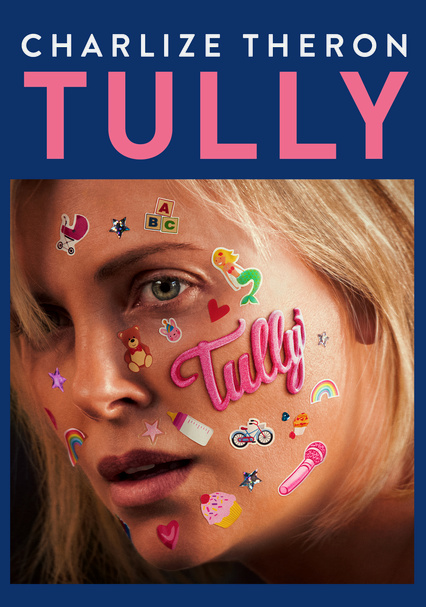
Tully-2018

Tully-2018

Director Jason Reitman

Starring Charlize Theron, Mackenzie Davis

Scott’s Review #905

Reviewed June 2, 2019

Grade: B

Tully, a 2018 film release, received wide recognition primarily due to a Golden Globe nomination for Best Actress in a Comedy, achieved by its star, Charlize Theron.

The actress carries the film and delivers an excellent performance, a great example of casting.

The film is targeted at a specific audience: females with newborn babies, mothers of children with behavioral issues, or women who have experienced something similar in their lifetime.

As such, the perspective is clearly from the female point of view, and men may not find much, if anything, to relate to. Nonetheless, the film is a worthy watch, though I’m not sure I’d classify it firmly in the comedy category. This may have more to do with who directed it.

Jason Reitman, famous for his creations Juno (2007) and Young Adult (2011), is known for coming-of-age films with dark edges. Nonetheless, I’d carefully teeter the movie more into the drama genre than straight comedy.

We meet a very pregnant Marlo (Theron) as she is about to give birth to her third child, the implication being that it is an unplanned pregnancy. She is already frazzled by her other two children, one of whom is Jonah, who has a developmental disorder, causing stress.

Her world consists of battles with Jonah’s school, her absent-minded husband Drew (Ron Livingston), and her brother Craig (Mark Duplass), who has married an affluent woman and tries to help Marlo.

Craig offers to pay for a night nanny, which would allow Marlo to be quiet, and she finally accepts. She meets the bizarre Tully (Mackenzie Davis), who slowly changes her life.

Theron reportedly gained over fifty pounds in preparation for the role and completely immersed herself in the part. Ordinarily, a gorgeous woman and an astounding actor, she is convincing as the tired and unfulfilled suburban mother.

Haggard, going through her day-to-day routines, reveals that she yearns to be young again. She finally revisits her old stomping grounds in Brooklyn, where her passion is awakened in New York.

Theron not only transforms her appearance but also portrays an enormous amount of emotion teetering between a responsible mother and a flighty middle-aged woman.

To say that Tully is a “woman’s film”, a phrase I dislike, is not entirely fair, but women will likely relate to the film the most. Men are not written exceptionally well; we see Drew meandering around the house, mostly staying in the bedroom, oblivious to his surroundings.

He is somewhat aware that a night nanny exists, but is more concerned with playing video games or traveling for work than with who is raising his child. He loves his family, yet is somewhat only half there, and his motivations and feelings are never explored very well.

The writing of this character perplexed me, or rather, I wondered why the character was written this way, to begin with.

As events progress, Tully serves up a brilliant twist ending, blurring the lines between fantasy and reality in a daring way.

The character of Tully becomes a godsend for Marlo. Suddenly, she is inspired by the younger woman who has her whole life ahead of her. Could Marlo be a bit jealous of the young and thin nanny? Tully inspires Marlo, but could she not be all that she seems? The final reveal leaves questions dangling over the viewer.

Is Tully all in Marlo’s head? Is it merely a coincidence that Marlo’s maiden name is Tully, or the reason for the nanny in the first place?

Tully (2018) plays like a female-centered coming-of-age story, ideally suited for women over 30. Others can enjoy it as the story has layers and borders on a character study, but the target audience is clear.

The surprise ending is tremendous and raises the film way above mediocrity; otherwise, it’s a traditional genre film.

Theron’s performance also adds an immeasurable amount to the film.

Thoroughbreds-2018

Thoroughbreds-2018

Director Cory Finley

Starring Olivia Cooke, Anya Taylor-Joy

Scott’s Review #880

Reviewed March 26, 2019

Grade: B

Thoroughbreds (2018) is an independent dark comedy with snippets of creative filmmaking and an intriguing premise that loses steam towards the conclusion, closely mirroring too many other similarly themed indies.

An enjoyable geographical setting, but the lackluster, monotone dialogue never allows the film to stand out on its own and is therefore deemed unmemorable.

The lead actors are fine, but the experience falls short of raising the bar, suffering from an odd title that has little to do with the story.

Lily (Anya Taylor-Joy) and Amanda (Olivia Cooke) are former childhood friends whose differing levels of popularity have strained their relationship over the years. When Amanda’s mother pays Lily to socialize with Amanda under the guise of tutoring, Amanda catches on to the plot and confronts Lily.

This event brings the girls closer and, in a macabre fashion, they begin to hatch a scheme to plan the death of Lily’s stepfather, wealthy Mark (Paul Sparks), whom she perceives as abusive.

It is revealed via flashback that Amanda euthanized her crippled horse to spare his suffering which resulted in animal cruelty charges.

The setting of affluent Fairfield County, Connecticut, and presumably wealthy Greenwich is a high point of the film and an immediate comparison to the 1997 masterpiece, The Ice Storm.

Bored rich kids who perceive themselves to shoulder all the world’s problems, while subsequently attending the best boarding school imaginable, is delicious and a perfect starting point for drama and intrigue.

Lily’s domineering stepfather and her passive and enabling mother are clever additions without making them seem like caricatures.

The dynamic between the girl characters is intelligently written and believable, especially as they crack witty dialogue with each other. Lily is academic and stoic, humorously said to suffer from an unnamed condition that prevents her from feeling or showing any emotion.

Amanda is the perfect counterbalance as she is sarcastic, witty, and serves up one analytical observation after another.

From a physical perspective, the statuesque Lily is believable as the more popular of the two and the perceived leader.

As the girls elicit the participation of local drug dealer Tim (Anton Yelchin) into their plans, at first voluntary and ultimately by blackmail, the plot takes a turn for the formulaic and the redundant.

The setup seems too much like a standard dramatic story arc and becomes clichéd as the once-willing participant is subsequently thrust into the scheme. There are no romantic entanglements between the three main characters, and subsequently, there are no characters to root for, one strike against the film.

Otherwise, the “been there, done that” monotone dialogue has become standard in dark comedies so that in 2018, the element seems dated and a ploy to develop offbeat characters.

Director Cory Finley borrows heavily from fellow director Wes Anderson (The Royal Tenenbaums, 2001, and The Moonrise Kingdom) in this regard, so that the freshness of the characters and story wears thin mid-stream.

The title of the film could be better, as a quick scene featuring Amanda and a horse at the beginning, and a brief mention of horses in a dream by one character, is all there is about the animals.

I expected more incorporation between animal and human, or at least a more poignant connection.  The privileged lives of Lily and Amanda seem a perfect correlation to bring horses into the central story in a robust way.

Finley is on the cinematic map, crafting an effort that proves he possesses some talent and an eye for a wicked and solid offering.

Thoroughbreds (2018) represents a film like many others in the same genre that rises to the top of the pack, but it is not without merits and sound vision. It will be interesting to see what this up-and-coming director chooses for his next project.

Independent Spirit Award Nominations: Best First Screenplay

Singin’ in the Rain-1952

Singin’ in the Rain-1952

Director Stanley Donen, Gene Kelly

Starring Gene Kelly, Donald O’Connor, Debbie Reynolds

Scott’s Review #874

Reviewed March 4, 2019

Grade: A-

Singin’ in the Rain (1952) is most closely associated with the entertainment industry in the oversaturated field of musicals released during the mid-twentieth century.

The transition from silent pictures to “talkies” is the basis of the story, giving the film important, as well as fun, subject matter.

Likable stars and sing-along tunes make the film memorable and decidedly All-American, though it may not be the greatest in the crowded musical field.

During the late 1920s, Don Lockwood (Gene Kelly) was a famous and well-regarded silent film star. His co-star and studio-created romantic attachment is Lina Lamont (Jean Hagen), an annoying and shallow leading lady with a harsh singing voice.

As more successful “talkies” (films with sound) are produced, Don finds himself smitten with musical chorus girl Kathy Selden (Debbie Reynolds). The plot to dub Lina’s voice with Kathy’s leads to comical chaos and the idea of creating a new musical amid a blossoming romance between Don and Kathy.

The fun and frolicking Singin’ in the Rain is lightweight but never silly or superfluous, thanks to its overriding message about the shift in Hollywood priorities.

Critically acclaimed from the get-go, this is unsurprising, as Hollywood loves stories about Hollywood, especially since the film was made just over two decades after sound-laden films overtook the world.

Furthermore, in 1952, television was making its debut to legions of fans, and its accessibility posed a serious threat to cinema, making the subject matter even more relevant.

Kelly and Reynolds make a nice enough pair, but I never thought they completely knocked it out of the park in terms a chemistry.

One slight flaw is the lack of hurdles that would prevent the couple from an inevitable union. Lina is the transparent foil and ultimately played for laughs, so she is not a serious threat.

The plot-driven conflict involving Kathy’s initial dislike of Don because she values stage over film is cute, but it ultimately proves a sham, as she has been a fan of his all along.

The musical is a comedy, but better hurdles might have made for a more interesting story.

Nonetheless, Singin’ in the Rain is a pleasure and a largely non-threatening experience. The hijinks as the characters struggle to put on their production are comical, and Lina’s New York accent and shrill singing voice threaten to steal the show from the more grounded central characters.

The musical numbers are a dream, and I especially like favorites like “Make ‘Em Laugh,” “Good Morning,” and the epic title song.

Through no fault of the film’s title, “Singin’ in the Rain” will forever be associated with the dark and cerebral A Clockwork Orange (1971) for me, not with the film. As the villain beats and rapes his victim by cheerily singing this tune, the song will forever hold a much darker association for me.

The dramatic final act is the highlight as a lavish premiere of The Dancing Cavalier is unveiled to a live theater audience hungry for something good.

When the crowd chomps at the bit for Lina to perform live, the big reveal of Kathy being the truly talented singer is displayed as the wizard in The Wizard of Oz style, as Don and Kathy kiss and ride off into the sunset together in a grand showbiz fashion.

In the crowded genre of the 1950s and 1960s musical productions that ravaged American cinema at the time, I mainly chose to watch West Side Story (1961), Gypsy (1962), The Sound of Music (1965), and Oklahoma! (1955) for pleasure, but Singin’ in the Rain (1952), an earlier gem, is worthy of value, especially for the memorable musical soundtrack it offers.

The story is light but also relevant and, most importantly, highly entertaining.

Oscar Nominations: Best Supporting Actress-Jean Hagen, Best Scoring of a Musical Picture

Golden Globe Nominations: 1 win-Best Motion Picture-Musical or Comedy, Best Performance by an Actor in a Motion Picture-Musical or Comedy-Donald O’Connor (won)

Abbott & Costello Meet Frankenstein-1948

Abbott & Costello Meet Frankenstein-1948

Director Charles Barton

Starring Bud Abbott, Lou Costello

Scott’s Review #865

Reviewed February 9, 2019

Grade: B+

Abbott & Costello Meet Frankenstein (1948) was the first film of several to capitalize on the comedy duo’s popularity and merge them with several horror characters in a hybrid of the horror and comedy genres.

The zany film was enormously popular with fans, leading to other subsequent pairings, but this is the best of the bunch. The ingenious idea works well, and the bumbling pair presents an entertaining film fresh with good ideas and a harmless comedy romp.

The villainous Dracula, the Wolf Man, and the title horror character make the riches even loftier.

Working as baggage clerks at a Florida train station, Chick Young (Bud Abbott) and Wilbur Grey (Lou Costello) border on incompetence. After damaging two crates at the station, they deliver them to a local wax museum. Little do the pair realize that the crates house Count Dracula (Bela Lugosi) and the Frankenstein monster (Glenn Strange).

Once Chick and Wilbur arrive at the wax museum, a comedy of errors occurs as the monsters reanimate and escape while the pair are arrested for supposed theft.

Ultimately, the film culminates with an exciting finale at a nearby island castle, where a devious doctor (Lenore Aubert) intends to remove Wilbur’s brain.

The film is wonderfully campy and over-the-top, which is a substantial part of its appeal. The setup is delicious, as the audience knows Chick and Wilbur will ultimately face the various creatures but does not know how this will happen.

The quick-witted comedy duo hardly needs coaching, but their banter and timing seem particularly palpable in this screen offering. This is impressive given the historical account of neither actor wanting to make the film and both being convinced the result would be a bomb teetering on career suicide.

Any accusations that their hearts were not in it can be dismissed.

A large part of the appeal is the three individual monsters with different motivations and offerings.

Dracula is the villain in cahoots with the mad scientist.

Frankenstein’s monster is the victim, while the Wolf Man is the suffering hero.

Returning to roles that made them famous was crucial to the success of the film, and Lon Chaney Jr. and Bela Lugosi (Wolf Man and Count Dracula, respectively) deliver their lines with gusto, careful not to make themselves too menacing nor too foolish, and both blur the horror and comedy lines with perfection.

The filmmakers must be credited for the progressive slant of casting the mad scientist as a female rather than the traditional male.

Actress Aubert as Dr. Sandra Mornay is delicious as she lustfully seduces Wilbur in comic form. She needs not his body but the brain of a simpleton to insert into the head of the monster.

The young man and the gorgeous woman make an odd comedic pairing because of their physical differences. However, their combination is just right for a physical, lightweight comedy.

The final scene is clever and leads to a potential follow-up for the film. As Chick and Wilbur sail away from the looming castle in relief of their adventure, coming to a satisfying conclusion, Chick ensures Wilbur that all the monsters are gone.

An uncredited voice appearance by Vincent Price and a dangling cigarette coming from no mouth introduce the next chapter of The Invisible Man.

Hardly a masterpiece or cinematic genius, Abbott & Costello Meet Frankenstein (1948) does entertain.

Each player is well-cast, resulting in a culmination of good comedy infused with atmospheric horror elements done with the perfect light touch. The comic timing of all members ensures that all the pieces come together in just the right mix of fun and frights with a tongue-in-cheek approach.

What better choice for the escapist fare on a lazy Saturday afternoon?

Crazy Rich Asians-2018

Crazy Rich Asians-2018

Director Jon M. Hu

Starring Constance Wu, Henry Golding

Scott’s Review #860

Reviewed January 26, 2019

Grade: B+

Crazy Rich Asians (2018), the romantic comedy smash of 2018, is a fun romp that is memorable because it centers on the Asian population, which is shamefully underrepresented in mainstream American cinema.

For this point alone, the film is recommended and worthy of praise, but otherwise, it is a standard genre film with gimmicks, stock characters galore, and a predictable conclusion.

The numerous cultural tidbits included must be mentioned, which raise the film above mediocrity.

Rachel Chu (Constance Wu) and Nick Young (Henry Golding) are a happily dating New York City couple; she is a New York University college professor, and he is an entrepreneur.

They fly to Singapore to attend Nick’s best friend’s wedding, which results in antics and anguish. Rachel realizes that Nick comes from an extremely wealthy family and is Chinese royalty, owning a multitude of lavish hotels and real estate.

Most of Nick’s family, especially his traditional mother Eleanor (Michelle Yeoh), disapproves of the pairing, viewing Rachel as a typical American who prioritizes passion over family.

Nick is a sought-after commodity among the single women of Singapore, and Rachel is forced to endure harassment and mockery at every turn. Her allies are Nick’s kind sister Astrid (Gemma Chan), Rachel’s outrageous college pal Peik Lin (Awkwafina), and her equally garish family.

The plot thickens when Nick’s scheming mother does a background check on Rachel and discovers a family secret.

Crazy Rich Asians is a formulaic romantic comedy with the standard situations and characters expected of a genre film. The rivalry between the good girl and her boyfriend’s domineering mother, the comic relief of the gay sidekicks as Peik Lin and another friend of Rachel’s, provides.

The caricatures of Peik Lin’s wild family, her unattractive brother fond of taking secret photos of Rachel, and Eleanor’s snooty, judgmental circle of female friends are all well cast yet one-dimensional.

It is perplexing why the filmmakers decided to make Nick only half Chinese rather than authentically Asian. Sadly, this may have been a reassurance that the film would be more marketable to mass audiences.

The film is presented as an Asian film, but it is an American film.

The storyline justification is that Nick’s father (surprisingly never seen) is British and that he and Eleanor met in college, only she being Chinese. Nick and Astrid’s English accents gnawed at me throughout the film.

Despite the myriad of cliches and manipulations, Crazy Rich Asians has a nice flow and offers a fun two hours. The film is flavorful with bright colors and visual spectacles of stylish and sophisticated Singapore and its modern and sleek nuances.

I adored the locales featuring the skyline and a rich overview of the robust and relevant city/country.

Fantastic is how the filmmakers add spices of traditional Chinese culture throughout the film’s telling, quickly becoming more of an ode to the good history. Nick’s grandmother, Su-Yi (Lisa Lu), takes pride in her excellent and artistic flowers, and Rachel is introduced to the art of dumpling making.

Crazy Rich Asians introduces a history lesson for those unfamiliar with ancient Chinese customs.

Flavorful inclusions of Mandarin Chinese language versions of American pop hits are also lovely additions, so the film has some tidbits to revel in other than the story.

Most songs reference money, such as “Money Honey” by Lady Gaga and “Rich Girl” by Hall & Oates.

The pacing of the film is nice. There is never a dull or dragging moment, and a nice balance of comedy and drama. Humorous is when Peik Lin provides Rachel with a costume makeover, ensuring she looks dynamic for the grand wedding, as she convinces her to fight Eleanor with fire.

Drama ensues when someone casts a dead fish on Rachel’s bed, and Eleanor spits that Rachel will never be enough for her son.

The film’s conclusion is predictable, resulting in a marriage proposal aboard a jet heading from Singapore to New York City. With a movie like Crazy Rich Asians, it is guaranteed that the couple lives happily ever after, riding off into the sunset in great defiance of Nick’s roots.

Due to the film’s success, a sequel is a solid bet, though I am also not betting the follow-up will be any good. Are romantic comedy sequels ever decent?

Filled with cliches, but satisfying most mainstream film-goers, Crazy Rich Asians (2018) creates a film with enough shards of Asian culture to at least get the Asian population on the map with a Hollywood production.

Although the film has a polished look and some stereotypes, it breaks no new ground other than good inclusion, and that is a start.

Vice-2018

Vice-2018

Director Adam McKay

Starring Christian Bale, Amy Adams, Steve Carell

Scott’s Review #849

Reviewed December 31, 2018

Grade: A

Following 2015’s The Big Short, Adam McKay once again creates an intelligently written, thought-provoking political film based on facts and historical accounts.

With Vice (2018) he focuses on former Vice President Dick Cheney and his rise through the political ranks to second in command.

Brilliant and wise in every way, the film is fair-minded in its approach. Predictably, in this era of “fake news,” it will be embraced by liberals but shunned by conservatives.

In the first seconds of Vice, a disclaimer appears stating that Cheney was a private man with secrets, but the filmmakers did their best to relay accurate information. The salty language in this clip will likely elicit chuckles, but McKay stays the course with his statement.

Immediately, the film flashes to the September 11 attacks with Cheney sitting in crisis mode, about to make an important decision.

Vice then retreats to 1963 Wyoming as a drunken college-aged Dick Cheney (Christian Bale) is pulled over for erratic driving after a barroom brawl. He is nearly dumped by his girlfriend and future wife Lynne Cheney (Amy Adams), who threatens to find another man if Dick does not straighten out.

He manages an internship and an admiration for Donald Rumsfeld (Steve Carell), a staunch Republican and White House Chief of Staff, and begins his political climb.

In clever form, the film is narrated by a character named Kurt (Jesse Plemons), who we do not know is connected to Cheney until the end of the film. This adds an added measure of intrigue to the overall film, as we know a secret will be revealed.

Vice is also unique in direction, with constant back-and-forth timeline scenes and quirky humor throughout. Are the Cheneys portrayed as ridiculous? No, but sardonic humor is directed at them as their ambitions and power-hungry motivations are completely exposed.

The film does a great job of taking the viewer through the political state of Cheney’s administration, roughly the early 1970s until 2008, when Obama took office. The Clinton years are completely skipped, but that is more to do with Cheney being in the private sector rather than an intentional slight.

The Nixon years and the George W. Bush years are given hefty screen time and the latter is portrayed as nearly a buffoon as Rockwell portrays him as a boozy, dumb frat boy.

Bale is startlingly good as Cheney and deservedly steals the show. In addition to the forty-pound weight gain, the actor endured the facial and hair treatments (props to the makeup department!) and became the man.

His body movements, smile, and speech patterns are daringly good. With a sneer and a calculating grin, we see the wheels spinning in Cheney’s head numerous times, and Bale is incredible at portraying these thoughts to the audience.

The film contains many well-known actors in vital supporting roles worth noting. The depictions of the following are examples of excellent casting with spot-on representations: Tyler Perry as Colin Powell, LisaGay Hamilton as Condoleezza Rice, Sam Rockwell as George W. Bush, Alison Pill as Mary Cheney, and Lily Rabe as Liz Cheney.

All portrayals are excellent to watch, especially for viewers who remember the real-life people involved.

Some will undoubtedly complain that the film has a “liberal slant” and portrays Cheney as power-hungry and self-serving. While this is a valid point, and McKay makes left-leaning choices, the director bravely carves the film into an experience that goes both ways.

More than a few scenes (including the final scene) justify Cheney’s actions, in his mind anyway. Claiming to do what is suitable for the people and be a true American, his actions and yearning for power can be understood to some degree, or perhaps by some people.

Vice (2018) is controversial and undoubtedly divisive, which is unsurprising given the current state of American politics. It tells an inspiring and rich story of an elusive politician’s life and policies, daring to be forgotten, that still resonate across the United States.

The more I ponder this film’s importance, the greater it becomes, but stay past the credits for arguably the best moment in the movie and of monumental importance in 2018.

Oscar Nominations: 1 win-Best Picture, Best Director- Adam McKay, Best Actor- Christian Bale, Best Supporting Actor- Sam Rockwell, Best Supporting Actress- Amy Adams, Best Original Screenplay, Best Makeup and Hairstyling (won), Best Film Editing

Elf-2003

Elf-2003

Director Jon Favreau

Starring Will Ferrell

Scott’s Review #846

Reviewed December 20, 2018

Grade: B-

Elf (2003) is one of the few lasting Christmas hits of recent memory, or at least one that many fans make a regular part of their holiday viewing each season.

The film is light and unarguably a safe, feel-good experience, mixing a hopeful Christmas message with comic gags and romance.

The key to its success is Will Ferrell, who possesses wonderful comic timing.

More wholesome than my tastes and lacking plausibility, the film does succeed as a family-friendly, ready-made, fun experience.

The story revolves around one of Santa’s elves (Ferrell) named Buddy, who learns he is human and was orphaned as an infant.

Revealed that his biological father Walter (James Caan) resides in New York City, Buddy embarks on a trip to find the man and spread Christmas cheer in a world filled with grizzled and cynical human beings.

In predictable comic form, Buddy has trouble adjusting to the human world and its fast-paced lifestyle, with misunderstandings recurring.

Buddy eventually wins over his father and family, finding love with downtrodden Jovie (Zooey Deschanel).

Hot on the heels of his Saturday Night Live stint ending in 2002, Ferrell was primed to embark on a successful film career. Elf is a great role for him as it capitalizes on his comic timing and energy, and the setup works.

At 6’3″, who better to play an elf for laughs than a hulking middle-aged man?

Due to his talents, Ferrell makes the role of Buddy fun, appealing, and the highlight of the film. With a lesser talent, the character would have been too annoying (as it is, there are too many hug jokes), and the overall film would have suffered.

Aside from Ferrell, the supporting roles are nothing memorable, except for Caan’s part.

The once-dashing star of films such as The Godfather (1972), Caan still has the charm and charisma to appeal, though his balding and dyed hair do nothing for him.

A small role by television star Bob Newhart as Papa Elf is fine, but Deschanel’s role and Mary Steenburgen’s role as Emily, Walter’s wife, could have been played by many actresses, and nothing is distinguishable about either part.

Lesser roles like Walter’s secretary, Walter’s boss, and Gimble’s store manager are stock parts with no character development.

A major highlight is the New York City setting, and the exterior scenes are plentiful.

Filmed in 2002 and released in 2003, the location shots were completed not long after 9/11, and showcasing a city with such recent decimation adds to the film’s appeal.

Scenes in Rockefeller Center, Central Park, and the Empire State Building are prominently featured, making the film festive and merry.

What greater city is there at Christmastime than New York?

Elf remains an entertaining experience with enough shiny ornaments and fun moments in the department store and Walter’s office to hold interest. The luster wears thin at the conclusion as all the traditional elements come together.

Jovie leads a chorus of strangers in “Santa Claus Is Coming to Town”, Walter quits his job without concern for paying bills, and everyone happily rides off into a sparkling winter wonderland.

This may satisfy some, but I wanted more conflict than a troupe of Central Park Rangers chasing Santa through the park.

A film that might be paired nicely with holiday favorites of similar ilk, such as National Lampoon’s Christmas Vacation (1989) or Christmas with the Kranks (2004), Elf is an energetic affair with a charismatic lead actor.

Containing silly moments but a spirited and worthwhile message nestled nicely within, the film is worth a watch if you’re in the mood for slapstick.

More thought-provoking holiday films with deeper merriment and stronger flair exist, but for a chuckle or two, Elf (2003) works well.

Beatriz at Dinner-2017

Beatriz at Dinner-2017

Director Miguel Arteta

Starring Salma Hayek, John Lithgow, Connie Britton

Scott’s Review #844

Reviewed December 18, 2018

Grade: B+

Thanks to a well-written screenplay and a thought-provoking idea, Beatriz at Dinner (2017) spins an interesting concept about politics and class systems discussed over dinner.

Salma Hayek and John Lithgow give tremendous performances as characters with opposing viewpoints, helping the film succeed, though a flawed ending and cookie-cutter supporting characters detract from the overall enjoyment.

Set in southern California, presumably around Los Angeles, Beatriz (Hayek) is a holistic health practitioner. Moonlighting as a massage therapist, she becomes stranded at the wealthy home of one of her clients, Kathy (Connie Britton), whom she views as a friend.

Kathy invites Beatriz to stay for dinner, where she encounters real-estate mogul Doug Strutt (Lithgow). The two gradually develop a feud based on their differing politics and viewpoints.

The setup and flow of Beatriz at Dinner are commendable and pace the film nicely. The film is sort of a day in Beatriz’s life. It begins as the character awakens to her pet dogs and goat noisily beginning their day and culminates late at night when the dinner party concludes, and the last glass of wine is consumed.

This way, the film has a nice packaged feel that keeps the story confined and structured.

Being an independent film, the budget is small, and most scenes are shot in a spacious modern house overlooking the Pacific Ocean, which works well. Gorgeous and vast, many rooms are used as conversations among the characters occur, many overlapping each other.

Beatriz at Dinner could have been a play, which helps with the good flow.

Hayek and Lithgow are the main draws as their initial guarded pleasantries progress to venom and violence, albeit primarily imagined.

Initially thinking that Beatriz is the household help, Doug is inquisitive about her entry into the United States and makes numerous insulting gestures, mispronouncing her Mexican hometown and mocking her profession.

Beatriz calmly endures his racism and begins discussions about how his business harms animals and people as emotions escalate. The actors play off each other wonderfully and share chemistry.

With each glass of wine, Beatriz becomes brazen and shares how people in her village lost their land to real estate development. She shares a humanistic viewpoint, while Doug sees life as to be lived while you can.

Despite their dislike for each other’s lifestyles, the film shows Beatriz and Doug at least listening to each other and attempting to understand the other’s opinions, which is more than can be said for the supporting players’ motivations or lack thereof.

Besides Kathy, while sympathetic to Beatriz’s calm demeanor and life-rich philosophies, she also realizes that Doug is her family’s meal ticket.

The other party attendees are written as polite yet uninteresting twits with nothing to talk about except a reality star’s nude photos, dinner, or a handful of other nothing topics.

Chloë Sevigny, Jay Duplass, Amy Landecker, and David Warshofsky have little to do other than stand around and react to the meatier written material that Hayek and Lithgow get to play.

Beatriz at Dinner had me in its corner until the film took a jarring turn during the final act. As Beatriz leaves the party and sets about on her way home, she hastily decides to grab a letter opener and bludgeon Doug to death as the dinner guests hysterically realize what is happening.

Instead of leaving things be, the film chooses to make this only Beatriz’s fantasy and then have her go to the ocean and walk into the waves. Does this mean she commits suicide, or is this another fantasy? This final sequence is unclear and unsatisfying.

I am not sure why Beatriz at Dinner is considered a comedy. Perhaps a mild dark comedy, I argue that the film is a straight-ahead drama and lacks the witty humor that made dinner party-themed films such as Who’s Afraid of Virginia Woolf? (1966) and The Boys in the Band (1970) masterpieces.

Beatriz at Dinner (2017) is a valiant attempt at offering social commentary at a time when discussions like these are needed in films, and the project largely succeeds.

Hayek’s impassioned yet subdued performance deservedly earned her a Female Lead Independent Film nomination. The film’s rich writing garnered a Best Screenplay nomination, too, but a big whiff at the end lowers the overall experience a notch.

Independent Spirit Award Nominations: Best Female Lead-Salma Hayek, Best Screenplay

The Favourite-2018

The Favourite-2018

Director Yorgos Lanthimos

Starring Olivia Colman, Emma Stone, Rachel Weisz

Scott’s Review #843 

Reviewed December 17, 2018

Grade: A

The Favourite (2018) is a deliciously wicked comedy about greed, jealousy, and rage during early eighteenth-century England.

The primary rivalry consists of two feuding cousins, each jockeying for position and “favor” with the Queen, both resorting to dire methods to achieve these goals.

With splendid acting and grand designs, director Yorgos Lanthimos adds to his growing collection of odd and compelling works with the dark comedy offering.

The film takes place during the British and French War of 1708, as a physically and mentally ill Queen Anne (Olivia Colman) rules the country through her confidante and secret lover, Sarah, Duchess of Marlborough (Rachel Weisz).

Though deals and modifications must be made with the ruling Parliament, Anne has the final say in all decisions, including doubling the state tax to pay for the war.

When Abigail (Emma Stone), a distant cousin of the Duchess, and former royalty herself, arrives seeking work as a servant, she quickly plots her way to the bedside of the Queen at all costs.

Lanthimos, known for such bizarre treats like Dogtooth (2009), The Lobster (2015), and The Killing of a Sacred Deer (2017), is not afraid to get down and dirty and wrestle with the macabre subject matter.

The Favourite is the director’s most mainstream affair yet and is quickly becoming one of my favorite modern-day films. As he now charts into royal territory, the possibilities are endless in a world of politics and scheming.

Some morose highlights include an abused bunny, naked tomato throwing, and pheasant shooting.

The film is not kind to animals.

Despite being mainstream for Lanthimos, The Favourite is a bizarre and brazen experience. The film’s numerous award nominations are remarkable, given that not all audiences will enjoy it.

Despite being categorized as a comedy (see more below), the film is not an easy watch, and none of the characters are likable. Abigail is initially sympathetic and quite humorous, but her true colors and motivations are exposed as the plot develops.

Conversely, Anne and Sarah are initially despicable, but garner support as the story evolves.

The comic elements are the best, and clever lines come at a deliciously rapid pace. The best dialogue is the sparring between Sarah and Abigail, as the women realize they are bitter enemies and each attempts to one-up the other in a chess game for Anne’s attention.

Anne, known for fits of emotion, stuffing her face with cake and vomiting, and berating the servants, offers her comic wit. The language is salty, bordering on vulgar, but that makes the experience so stellar and morosely enjoyable.

The musical score adds muscle, and the diabolical string arrangements give The Favourite a gruesome, morbid atmosphere.

The feeling of dread is prevalent and downright haunting at times, as the audience knows that some shenanigans will soon occur, but they do not know when or how.

This quality enhances the overall product and gives ambiance to a superior piece.

Finally, the acting in The Favourite is brilliant and worth the price of admission. This is unsurprising with heavyweights like Colman, Stone, and Weisz, but the gravy is in the individual moments.

The chemistry the women share is what works best, as every scene sparkles with exceptional delivery and a sly sense of humor. When the three women appear together, these are the best scenes.

Deserving of all the accolades lauded upon it, The Favourite is an experience that contains all elements of a fine film, though one that is quite an unconventional work.

With glistening art direction, authentic set pieces, and costumes that would make Scarlett O’Hara drool with envy, The Favourite (2018) takes all of its parts and spins a crafty tale that encompasses the entire film.

Oscar Nominations: 1 win-Best Picture, Best Director- Yorgos Lanthimos, Best Actress- Olivia Colman (won), Best Supporting Actress- Emma Stone, Rachel Weisz, Best Original Screenplay, Best Production Design, Best Cinematography, Best Costume Design, Best Film Editing

Independent Spirit Award Nominations: Best International Film

Green Book-2018

Green Book-2018

Director Peter Farrelly

Starring Viggo Mortensen, Mahershala Ali

Scott’s Review #839

Reviewed December 10, 2018

Grade: A

To be candid, it was not originally on my radar to see Green Book (2018) despite the high regard and the bevy of award nominations reaped upon the film.

From the trailers, and admittedly my assumptions, the production looked somewhat like a Driving Miss Daisy (1989) role reversal with the standard over-saturation and glossy view of racism.

I confess to being wrong in my initial assessment. Green Book is a wonderful film with a multitude of worthy efforts. It successfully crosses the drama and comedy barriers and delivers an astounding message of compassion and benevolence.

Viggo Mortensen and Mahershala Ali exhibit tremendous flair and fine chemistry as an Italian blue-collar driver and an astute African-American classical pianist.

The men travel together in the Deep South circa 1962 on a concert tour requested by the renowned musician despite the dangers of southern racism and prejudice.

Mortensen’s Tony Lip is a struggling New York City bouncer who needs any gig for two months while the club he works for is closed for renovations. Ali plays a sophisticated musician who needs a driver with a measure of toughness, and Tony comes highly recommended.

The two men initially are strangers but form a close-knit bond and a deep understanding of each other as they become better acquainted during their journey.

The first half of the film focuses on Tony.

As viewers, we experience his Italian lifestyle. He possesses a strong family unit and a dedicated wife, Dolores (Linda Cardellini). He loves to eat and won a hot dog eating contest for $50 to pay the rent. He thinks nothing of beating an unsavory character to a bloody pulp if they are out of line and have more than one link to the mafia.

Still, he is a decent man, with a salt-of-the-earth mentality, and loves his family.

“Doc” Don Shirley (Ali) is the opposite of Tony. Raised as a highly gifted musical prodigy, he surrounds himself with high culture, is well-versed in many languages, and is of affluent means. Nonetheless, he is a wounded soul and drinks himself into oblivion each night, frequently deep in thought, pondering life and its problems.

Despite being black, he knows nothing about black culture.

Don is highly uncomfortable in his skin, while Tony is happy with who he is, a significant point that the film hits home on as the men have conflict. Don feels Tony can do much better to educate himself, while Tony sees nothing wrong with being who he is. The men forge a middle ground as they come to respect each other.

Ferrelli does a fantastic job in showing Tony as Don’s protector as he is accosted by rednecks or is caught with another man at the YMCA.

In turn, Don helps Tony write warm love letters to Dolores.

Green Book is a film about friendship and how different backgrounds can result in closeness and respect.

The film is humanistic in its approach to an overall message and is the feel-good film of 2018 without the slightest thread of sappiness or contrived situations. It is best about two real-life men who remained friends until their deaths.

Director Peter Farrelly, known chiefly for silly films such as Dumb and Dumber (1994), finds breakthrough success with Green Book.

The film is mainstream material, but of a sort that can be appreciated for the good it exudes. Don exhibits racism on more than one occasion- Birmingham and Mississippi specifically- but also experiences kindness from other folks.

Worth noting is that Don experiences discrimination and abuse not only from whites but also from blacks. Farrelly avoids the usual stereotypes or elicits humor from them as in the scene where Tony teaches Don to enjoy fried chicken, a foreign food to Don.

A key point of the film occurs early on when Dolores graciously invites two black workers to repair, thinking nothing of treating the men to a refreshing lemonade.

Seeing the empty glasses in the sink, Tony throws them in the trash, not wanting to drink from the same glasses. Is Tony, along with his family, racist or uncomfortable with blacks? Regardless of the answer, they think very differently after the film, which is monumental.

The final sequence of Green Book is teary, heartfelt, and provides a feeling of incredible warmth.

In the tumultuous times of current American history, Green Book (2018) is sentimental and inspirational in a day when racism once again reared its ugly head, thanks to the chaotic political environment.

The film is a lesson in how far we have come as a society, but also in how things have not changed so much and how much further we need to go to create equality for all.

Farrelly creates a timely and wonderful film that everyone can appreciate.

Oscar Nominations: 3 wins- Best Picture (won), Best Actor- Viggo Mortensen, Best Supporting Actor- Mahershala Ali (won), Best Original Screenplay (won), Best Film Editing

Ingrid Goes West-2017

Ingrid Goes West-2017

Director Matt Spicer

Starring Aubrey Plaza, Elizabeth Olsen

Scott’s Review #832

Reviewed November 16, 2018

Grade: A-

Ingrid Goes West (2017) is a deliciously wicked black comedy that boldly addresses the current obsession with social media.

Combined with a dynamite performance by young actress Aubrey Plaza and witty writing, the small independent film is a summertime treasure and has received two Spirit Award nominations.

The film is a breath of fresh air and a fine achievement by new director Matt Spicer.

The film immediately catapults the audience into the action as we are treated to a closeup of a sobbing Ingrid Thorburn (Plaza).

We immediately know that she is not well when she fumes with the realization that she has not been invited to her Instagram friend’s wedding and proceeds to interrupt the reception and attack the bride with pepper spray.

Ingrid is carted off to a mental hospital for analysis and recovery.

Once released, we learn that Ingrid’s mother has recently died, leaving her a tidy sum of money as an inheritance. Ingrid suddenly becomes obsessed with Taylor Sloane (Elizabeth Olsen), a popular and narcissistic young woman whom she follows on Instagram.

Taylor becomes Ingrid’s idol as she decides to move to Los Angeles and insinuates herself into Taylor’s life. She stalks Taylor and steals her dog only to pretend she rescued it, thereby becoming her close friend.

Gradually, Ingrid’s actions become more and more psychotic as Taylor catches wind of Ingrid’s antics.

Aubrey Plaza is perfectly cast as the unstable, manipulative title character. She possesses such strong comic timing, and with her wide eyes, nervous mannerisms, and determination to get what she wants, the audience roots for and falls in love with her.

On paper, we should dislike the character as she takes advantage of nearly everyone in her path, but Plaza embodies her with empathy and smarts. It is delightful to watch how she gets out of scrape after scrape with her quick thinking.

Plaza truly excels in the role.

Bold and calculating are words to describe Olsen’s performance as the selfish Taylor, and this may very well be why it is easy to root for Ingrid.

The character is so plastic and conniving that seeing her as the foil is intensely satisfying. Olsen usually plays good girl roles and possesses a girl-next-door quality, but in this part, she nestles nicely into a bitch role.

Olsen also uses excellent timing with her characters’ dialogue delivery, so much so that Olsen and Plaza had me in stitches during their one-on-one scenes.

I adore the Los Angeles setting. It is beyond appropriate for a film about phoniness, obsession, and plastic personas.

Beneath the sunny veneer lies darkness and tomfoolery in every direction, and besides Ingrid’s landlord/somewhat boyfriend, Dan (O’Shea Jackson Jr.), there are not many likable characters.

Attending party after party and lavish clubs, restaurants, or getaways, being involved in the “scene,” and the City of Angels is the perfect backdrop.

One gripe that knocks Ingrid Goes West down a rung is how the character of Taylor’s artist husband Ezra (Wyatt Russell) is written.

In one of the more authentic scenes, Ingrid realizes as she has a poolside heart-to-heart with the depressed Ezra that his wife is not the girl he knew when she moved to L.A. He and Ingrid seem to connect, but shortly after, it is as if the conversation never happened, and he is ferociously taking his wife’s side again.

A more admirable approach, and one I was hoping for, is that Ingrid and Ezra would ride off into the sunset, but the film misses this opportunity.

The entire film is a clever piece of work. From the performances to the dark humor and the witty dialogue, Ingrid Goes West (2018) succeeds on nearly all levels.

A modern-day Single White Female (1992) with a social media slant, the film goes for the gusto and gets there. I cannot wait to see more from up-and-coming star Aubrey Plaza, as the actress has the comic and dramatic chops to go very far.

Independent Spirit Award Nominations: 1 win-Best First Screenplay, Best First Feature (won)

Isle of Dogs-2018

Isle of Dogs-2018

Director Wes Anderson

Voices: Bryan Cranston, Edward Norton

Scott’s Review #831

Reviewed November 15, 2018

Grade: B+

Anybody familiar with a Wes Anderson production knows what they are in store for, and Isle of Dogs (2018) is par for the course.

With zany narratives and fantastic art direction, the film has a familiar stamp. Most resembling his other notable stop-motion film, Fantastic Mr. Fox (2009), Isle of Dogs offers what is to be expected- an intelligent and odd project by a visionary creative mind.

Anderson provides the film with a timely, corrupt government-type message that strongly resonates in 2018. In this way, Isle of Dogs, while animated, is so much more than a cookie-cutter story or a wholesome film for kids.

The director shows bravery in focusing on the corruption prevalent in today’s world and the fight for justice by ordinary people living under authoritarian control.

Set in dystopian Japan, a recent outbreak of canine flu causes corrupt Mayor Kobayashi to banish all dogs from society to the vast wasteland of Trash Island, where they will live out their days with other ostracized canines.

A brave twelve-year-old boy named Atari, who happens to be the mayor’s nephew, steals a plane and crash-lands on the island to rescue his beloved dog, Spots.

With help from a pack of dogs led by a former stray named Chief, the group sets out to find Spots and ultimately expose the government conspiracy. Obstacles abound as the mayor has sent a robot dog to return Atari and make mincemeat of any dog in its path.

Meanwhile, a professor, Tracy Walker, is on the cusp of discovering a serum as an outspoken American exchange student investigating the conspiracy.

Isle of Dogs is incredibly original and offers bravura visuals. From the lush and bright Japanese culture to the tired and haggard look of many dogs living on the island, the film is a treat for the eyes. The shimmering richness of the city is elegant and feels alive and powerful.

What I admire most about the film is its creativity and the blast of left-of-center storytelling, which blows away most animated offerings of today.

Many contain a robust helping of “cute”, which can turn off a mature viewer. With a target audience of the tween age, what is in it for adults? To sit there with a youngster and pretend to be jovial?

Isle of Dogs is not a crowd-pleaser; it is better than that. Anderson crafts a serious and timely message that begs to be absorbed by the careful viewer.

Assuredly, Anderson cannot escape providing a subtle allegory on an evil leader stirring the pot against the most helpless in our society. This point is timely and well thought out, especially in the tumultuous United States.
Could this be why an American character (Tracy) was added?

As dynamic as Anderson’s creativity is, the story in Isle of Dogs does not always embrace the viewer, and the jarring dialogue is tough to follow.

Standard in his films, the pacing is strange, the conversations between characters are odd, and the film lacks a truly welcoming or warm quality.

Therefore, the film is not an easy watch. And the dogs all speaking English rather than Japanese, with American accents, must be overlooked.

Critics and detractors of Wes Anderson need not see Isle of Dogs (2018) as they will be in store for typical Anderson fare. In addition, those seeking a standard mainstream animated feature will be disappointed.

Those with a more open-minded approach to cinema will revel in the film’s stunning look and the powerful message bubbling under the surface.

Oscar Nominations: Best Animated Feature Film, Best Original Score

It Happened One Night-1934

It Happened One Night-1934

Director Frank Capra

Starring Clark Gable, Claudette Colbert

Scott’s Review #824

Reviewed October 25, 2018

Grade: A-

Perhaps the film that best defines the early cinematic romantic comedy and certainly the one most modern genre films can learn from, It Happened One Night (1934) is a lively, fun romp.

The film carted away the Best Picture, Best Director, Best Actor, and Best Actress Academy Awards, a rare feat, and defined what romantic tension and thoughtful dialogue should be in a quality picture. All the elements sparkle into an excellent classic film watch.

Ellie Andrews (Colbert) is a pampered socialite who recently disobeyed her overbearing and wealthy father by eloping with a blue-collar pilot who is feared to be after her money.

Determined, Ellie escapes her father’s clutches and hops on a Greyhound bus headed from Florida to New York, where her husband is. When she crosses paths with an out-of-work journalist, Peter Warne (Gable), they each find an opportunity to use the other to their advantage.

The pair’s adventures along the East Coast lead to antics and schemes as they fall madly in love with one another.

It Happened One Night successfully mixes a good romance with some screwball comedy without ever becoming silly or trite.

The film also serves as a good old-fashioned adventure story as Peter and Ellie face one hurdle after another on their trek north.

Pleasing is how the duo slowly finds romance but first begins as irritants towards each other. The chemistry between the actors is superb and never seems forced or contrived.

Frank Capra, a famous director with successes throughout the 1930s, culminating with the holiday favorite It’s a Wonderful Life (1946), had several Oscar-winning films during the decade.

It Happened One Night seems to have inspired most of them, and the acting, absurd situations, dialogue, and direction all successfully come together.

Shot in black and white and the Motion Picture Production Code, which heavily restricted details deemed too violent or sexual, It Happened One Night pushed the envelope quite a bit.

This is to the film’s credit- who can forget the adorable yet provocative scene in which Ellie shows her shapely legs to enable the duo to catch a ride? The lovable scene, non-risque in today’s modern world, was anything but in 1934.

An interesting, at that time unique, point is that supporting characters are more layered than is typical in romantic comedies. Danker, whom Peter and Ellie hitch a ride with, is seemingly a decent man but ultimately attempts to steal their luggage.

Later, Ellie’s preposterous father turns out to be a decent man, so the film also contains a few character surprises.

While not quite a pure masterpiece, It Happened One Night (1934) is nonetheless an inspired legendary film that can be viewed and enjoyed for the period in which it was made.

The film stands out among the similarly themed romantic comedies of the 1930s and 1940s and is a teachable moment for all filmmakers who explore the same genre territory.

Oscar Nominations: 5 wins– Outstanding Production (won), Best Director (won), Best Actor-Clark Gable (won), Best Actress-Claudette Colbert (won), Best Adaptation (won)

Oliver & Company-1988

Oliver & Company-1988

Director George Scribner

Voices Joey Lawrence, Natalie Gregory, Billy Joel

Scott’s Review #818

Reviewed October 8, 2018

Grade: B

Oliver & Company (1988) is a darling animated film released by Walt Disney Pictures, the 27th Disney feature film produced.

The film is based on Charles Dickens’s novel Oliver Twist, but Oliver is now a homeless kitten who joins a gang of dogs, and the setting shifts from London to the dangerous streets of New York City in the present day.

We meet Oliver (Joey Lawrence) as he huddles with other homeless kittens in a cardboard box, chilly from a driving New York rain.

As all of the other kittens are snatched up by adoring animal lovers, Oliver is inexplicably left on his own.

He eventually meets up with Dodger (Billy Joel), a mongrel with street smarts, and the duo steals hot dogs from an abrasive food vendor.

When Dodger swindles Oliver out of his share, the kitten follows the dog to a barge, which turns out to be the hideout of Fagin (Dom DeLuise), a human pickpocket. Fagin houses a gang of assorted dogs as loan shark Sykes bullies him.

As Oliver bonds with the miscreants, his life suddenly takes a positive turn when he is rescued from the streets by a kindly, wealthy little girl named Jenny and her bumbling butler, Winston.

Jenny’s parents are on holiday in Europe, leaving her and Winston running the house.

Along for the ride is Jenny’s sophisticated and spoiled pet poodle, Georgette (Bette Midler), who takes a dislike to Oliver.

By the 1980s, Disney films were hardly the hot commodity they once were, and the small budget is evidence of that. Oliver & Company is not on par with classic, lovely offerings such as Pinocchio (1940), Fantasia (1940), or Dumbo (1941).

The film has a severe and decidedly “1980s quality”, mostly due to the upbeat soundtrack, which decades later makes the film feel rather dated.

Speaking of the soundtrack, the highlight is a treat entitled “Why Should I Worry?”, a tune sung by the ensemble cast and impossible not to hum along to.

The film features an array of famous voices that are perfectly cast.

The filmmakers wisely cast plenty of native New Yorkers, which results in a huge measure of authenticity. Brazen voices like Midler’s, Joel’s, and Cheech Marin’s, as feisty chihuahua Tito give credibility to their characters.

The odd romantic pairing of Georgette and Tito, on the surface completely mismatched, gives a good dose of comic relief to the story.

The story written for Oliver & Company is the best part of the entire production.  Anyone familiar with the famous Dickens novel or Oliver! (1968), the most famous of the film incarnations, knows how the story will end.

This did not hinder my enjoyment of the animated film, though, which was a compelling and charming experience. Sykes makes a great villain, drawn with a long face and enormous chin, interesting, but not too scary to frighten young children.

One conspicuous omission is the elimination of the important character of Nancy. As fans know, Nancy played a vital role in the original story. Perplexing is the decision not to include her, but perhaps her ultimate death would have made the story too dark, so this can be overlooked.

Surely not the best in the Disney bunch, Oliver & Company (1988) is nonetheless a decent offering, sadly overlooked by fans and critics alike.

The film is nearly forgotten and suffers from a dated quality, if not for the widespread knowledge of the classic novel. The film is not one of the storied Disney treasures, nor should it be dismissed altogether.

The result is a darling, innocent experience meant for pure enjoyment.

The Square-2017

The Square-2017

Director Ruben Östlund

Starring Claes Bang, Elisabeth Moss

Scott’s Review #814

Reviewed September 28, 2018

Grade: B+

The Square (2017) is an eccentric, highly interpretive Swedish-language film that does not always make perfect sense, as a more mainstream film would.

This is both a positive and a negative, as the film’s ultimate message is admirable, though some parts are perplexing and downright bizarre.

The film was undoubtedly commended for its bravery and cutting-edge approach and received an Oscar nomination for Best Foreign Language Film—subsequently, it lost to A Fantastic Woman (2017).

The film’s primary setting is the X-Royal Art Museum in Stockholm, Sweden. The action centers mainly around the museum’s new creative director, Christian (Claes Bang), attempting to introduce a new installation called “The Square.”

A misunderstanding with a youthful public relations firm hired to make the exhibit as accessible as possible leads to controversy.

The film also interjects various subplots that are generally interesting but do not always make logical sense.

Bang is quite compelling in the lead role and the film’s best part for me. He is charismatic and a good father to his two daughters. He helps people experiencing homelessness- even going so far as to help a young woman when nobody else will, only to find his wallet stolen- an unfortunate victim of a scam.

Furthermore, Christian’s desire to create “The Square” is humane and admirable- a safe zone for trust and compassion. The character is a good guy but is also concerned with his status.

Common themes of satire and human beings’ natural hypocritical nature abound. For example, in one scene, Christian, proud to drive his flashy Tesla car and give money to the homeless, is afraid to be seen in a run-down apartment house.

Later, a man with Tourettes syndrome disrupts an interview at the museum and is looked down on by “open-minded people” as a result. The latter scene is quite amusing as the man erupts with various expletives at the most inopportune times.

My favorite sequence occurs approximately midway through the film. As bizarre as the scene, it is riveting in its momentum and bravery.

When a group of well-dressed museum members gathers for a lavish dinner to watch a human art show, a bare-chested man who only grunts emerges and slowly antagonizes guests.

He begins pulling one woman’s hair while chasing an angry man from the hall. This scene is shocking, intense, and thought-provoking.

But what the scene means is perplexing.

A treat for me was viewing the famous Stockholm museum’s frequent interior and exterior scenes- which I was privy to have visited in 2016.

This experience was so fresh that it brought back wonderful memories of not only the museum but also the gorgeous city of Stockholm itself.

The chemistry between Christian (who is Swedish) and an American reporter, Anne (Elisabeth Moss), does nothing for the film. It feels wholly disjointed and unnecessary, and there is little connection between the two characters.

Engaging in a one-night stand, the duo has a dispute about a used condom. Does Christian think that Anne is desperate enough to use his sperm and impregnate herself? The resulting spat between the two seems meaningless.

The Square (2017) is a very tough film to review.

Oftentimes disjointed and impossible to make heads or tails of, one would be wise to simply “experience” the film on its own merits. I am not sure.

I mainly need to view it again and try to figure out the plot because I am uncertain if that was the intent of director Ruben Oslund.

Having directed the wonderful Force Majeure (2014), a more straightforward and superior film, The Square is worth a watch in its own right.

Oscar Nominations: Best Foreign Language Film

American Pie-1999

American Pie-1999

Director Paul Weitz

Starring Jason Biggs, Eddie Kaye Thomas, Chris Klein

Scott’s Review #813

Reviewed September 23, 2018

Grade: B+

With each generation of film, there seems to be a gross-out comedy that speaks to a young, coming-of-age generation, mostly male and jock in persuasion.

American Pie (1999) finishes the 1990s strongly with a raunchy story that feels fresh and genuinely funny, with precarious situations facing the cast, specifically the protagonist and “everyman”, played by Jason Biggs.

The film is a teen sex comedy of the crudest nature yet engulfed with characters audiences like, not mean-spirited, but rather fun-loving and endearing.

An enormous box-office hit at the time, the film was all the rage and brought a tawdry new meaning to the Americana staples of apple pie and band camp.

Spawning several sequels over the next decade, the franchise successfully revived the teen comedy genre with strong, highly recognizable characters.

American Pie also brought back the fun to R-rated films and put a nice cherry on top of a creative decade in cinema. The film is not high art, but it does what it aims to do quite well.

Living a middle to upper-middle-class existence in the suburban USA (presumably Michigan), five high school seniors make a pact to lose their virginity by the time they graduate. Most of the group are nerdy, insecure, and sexually naive, the central character being Jim Levenstein (Biggs).

Most events are taken from his point of view, and he is continually advised by his very nerdy father, Noah (Eugene Levy).

The setup is an age-old premise with lots of room for jokes and precarious situations in hilarious form. As Jim has the hots for a sexy foreign exchange student, Nadia, she is out of his league.

In a hilarious scene, a “warm apple pie” incident leads to an attempt to set up a webcam to watch Nadia change clothes. When events go amiss, everyone gains access to the webcam link, and Nadia is sent back to Czechoslovakia in shame.

This leads to a new pursuit for Jim, a geeky band camp girl, Michelle (Alyson Hannigan). Surprisingly, they fall madly in love and have fantastic chemistry.

Some of the supporting characters add energy and sometimes hilarity. Jennifer Coolidge is great as the mother of Stifler (the jock of the group), who has eyes for younger men, specifically Finch.

As they finally consummate their relationship on a basement pool table, Stifler walks in at the worst time and faints in horror. These antics are genuine and fresh, with great acting by all principals.

Coolidge, Hannigan, and Levy are arguably the best secondary characters. Each, in a different way from the others, provides comic relief by crafting interesting nuances to the characters.

Levy, as Jim’s father, is well-meaning, yet bumbling. Every teen cringes at the thought of having a father like Noah, yet the pair share a close bond and a classic father-son relationship, making the character endearing.

American Pie was successful at coining new pop-culture phrases such as “warm apple pie, “milf” and “this one time in band camp…” that the young generation of the time (myself included) enjoyed giggling over and repeating in glee.

The film set the tone for similar genre films, but none of them matched the chemistry and charm of American Pie, and it was better than it ever should have been!

The turn-of-the-century version of Animal House, American Pie (1999), introduces a new generation of young people into the world of comedic, R-rated, raunchy fun. The numbers have churned out films like this, but rarely are any as authentic as this film feels.

The franchise sustained its popularity with well-written sequels, most notably American Pie 2 (2001), which further developed the storylines. Still, the original remains a fine blueprint for what good comedy can achieve.

Office Space-1999

Office Space-1999

Director Mike Judge

Starring Ron Livingston, Jennifer Aniston

Scott’s Review #811

Reviewed September 16, 2018

Grade: B+

Having become somewhat of a cult classic since its theatrical release in 1999, Office Space is delightful to watch for anyone who works in a corporate environment- or ever has- they will undoubtedly “get” this movie.

The dark humor and antics may be lost on those who have not, but for the rest of us, the film is quite the treat.

One may never view a stapler or the common office cake party in the same manner. Yes, the story and characters are somewhat over-the-top, but more than a few clever scenes ring with truth.

But over time, will the film become dated?

Writer and Director Mike Judge tells a story about life at a 1990s software firm.

Reportedly, the story is based on Judge’s cartoon series Milton, and his first foray into live-action filmmaking. His first film was Beavis and Butt-Head Do America (1996), which gives any indication of the type of humor that resonates.

Fraternity boy-minded, yes, but the writing is crisp and oftentimes rife with fun.

The film was not a box-office smash at the time of its release, yet it is well-regarded by critics.

Peter Gibbons (Ron Livingston) is a frustrated IT programmer at a company called Initech. Alongside two colleagues, one of whom is comically named Michael Bolton (not that Michael Bolton), they despise their sneaky boss, Lumbergh (Gary Cole).

The situation gets worse when two consultants are brought in to downsize the company, leaving everyone in panic mode.

After a failed hypnotherapy session, Peter becomes relaxed and confident, even winning praise from the consultants and scoring a promotion.

This puts him at odds with Lumbergh, especially after he begins dating a waitress, Joanna (Jennifer Aniston), and assumes she has slept with him as well.

Office Space shines most for its crackling dialogue and clever scenes set within the confines of the office. With stuffy cubicles for miles and the standard corporate jargon to make into witty lines, the subject matter is ripe for the picking.

With Cole’s sly requests that his employees work weekends, Judge creates authenticity and freshness that are incredibly appealing to corporate workers.

He successfully knocks down office politics with intelligent, wisely crafted, memorable satire.

In the supporting role of Milton Waddams, character actor Stephen Root is successful at stealing the show with his mumbling and bumbling character. Nearly invisible to all his colleagues, Milton is eventually moved to a desk in the basement and left out of the cake party.

When somebody borrows his prized red stapler, all hell breaks loose. Increasingly disgruntled, Milton’s fate is instrumental to the film’s hilarious conclusion, and he ultimately gets his revenge, satisfying everyone.

The romantic element between Peter and Joanna is okay, but not at all the highlight of the film. The romance seems unnecessary to me, but it was undoubtedly added, since comedies of this sort usually require something heartfelt to appeal to mainstream audiences.

Aniston, popular at the time for her role on the television show Friends, was on her way to becoming a marquee movie star, but not quite yet, so she must be content with the standard “girlfriend” role.

She’s cute, but hardly anything more.

Office Space is a fun ride, but the film is not a groundbreaking experience in filmmaking techniques, inventive ideas, or other technical or narrative achievements.

What it offers fans, it delivers very well, and it feels like a breath of fresh air in its genre.

The film is a comedy, but not a dumb comedy, as a myriad of similar style offerings have been released since the beginning of cinema. With witty one-liners and comic gold, Office Space (1999) is a film to be remembered.

The Happytime Murders-2018

The Happytime Murders-2018

Director Brian Henson

Starring Melissa McCarthy, Maya Rudolph

Scott’s Review #808

Reviewed September 6, 2018

Grade: B-

Some consider it the worst film of 2018, but I had no positive expectations as I walked into an empty movie theater.

In truth, The Happytime Murders is not that bad. It is more in tune with a fun, adult-humored late-night affair. The greatest assets are Melissa McCarthy’s comic talents and the neat whodunit that is the central part of the story.

The human actors acting opposite puppets are bizarre and take some getting used to, but the nice editing (not easy to do!) is to be commended.

Set in modern times, in the underbelly of Los Angeles, puppets live alongside humans and are not treated well. They are constantly bullied and taken for granted.

Sarcastic and angry puppet Phil Phillips (a nod to the American Idol winner?) works as a private investigator. An incident many years ago caused him to be booted from the LAPD police force forever.

When Phil is hired by a sexy blonde female puppet, Sandra, to find out who has been sending her blackmail letters, he stumbles upon a rash of puppet murders.

The killer is knocking off members of an 1980s television show, presumably for profit. Phil’s brother and grizzled ex-partner, Connie Edwards (McCarthy) become central to the story.

The first dynamic that works well in The Happytime Murders is the “chemistry” between Connie and Phil. The connection and good rapport are surprising, considering the human/puppet factor.

One might find it surprising that the two characters play well off each other, but their adult sparring and frequent vulgar language name-calling are oodles of fun to watch. McCarthy is always fantastic with comic timing, so her fans will not be disappointed.

As they shout vulgar “pleasantries” to each other, one cannot help but smirk.

Maya Rudolph plays an interesting role as Phil’s secretary. Named Bubbles, she is sexy, sultry, and coquettish—an unusual role for Rudolph, but she pulls it off in spades.

Otherwise, Elizabeth Banks, cast in the small role of Jenny, Phil’s blonde ex-girlfriend, is entertaining. Despite being a puppet, Phil is quite the lady’s man, and Sandra (a nymphomaniac) is his main conquest.

In one lewd scene, Phil beds her right in his office, spewing strands of white goo meant to be semen, and Sandra exposes her purple pubic hair.

The film is clearly for adults only, and hopefully, unwitting parents do not mistake the puppet characters for a kids’ movie. The film contains many scenes bordering on X-rated territory, yet the inclusion of puppets undoubtedly gives off a humorous, not-to-be-taken-too-seriously element.

The Handsome Joel McHale, as a Special Agent on the case along with a Lieutenant, Connie’s superior, makes it clear the characters are along for the comic ride, and the film never takes itself too seriously.

I admittedly had low expectations, so I was surprised to find myself enjoying the puppet characters and the rapport between them most of all. Phil, charismatic in a Dick Tracy sort of way, balances the other “over-the-top” puppets, including a drug lord, two puppet prostitutes, and a puppet bunny addicted to porn.

The creations are lively and unique.

Let’s not get carried away, though- The Happytime Murders is not the genius that Who Framed Roger Rabbit? (1988) is, but its crass nature is of some appeal.

I adored the Los Angeles setting as the sunny locale perfectly counterbalanced the murderous antics of a hooded killer. The big reveal I did not see coming added to my surprise.

To summarize, The Happytime Murders is not a work of art or anything spectacular.

Presumably, it will be forgotten, especially since McCarthy is appearing in another “more serious” film in 2018, Can You Ever Forgive Me?, which has enormous Oscar potential. Therefore, the focus will assuredly be on that film.

However, a work like The Happytime Murders (2018) does have its place as perhaps a fun late-night offering.

Legally Blonde-2001

Legally Blonde-2001

Director Robert Luketic

Starring Reese Witherspoon, Luke Wilson

Scott’s Review #807

Reviewed August 30, 2018

Grade: B+

Legally Blonde (2001) is a film that, by all accounts, should have been a hot mess, but for some reason is a great ball of fun.

High art it ain’t by any means, and the plot is implausible beyond belief, and suspension of disbelief must be securely tucked away.

Despite portraying more serious roles before and after this film, Reese Witherspoon is largely responsible for the film’s success and is closely associated with it.

Quite simply, all the elements align perfectly in this film.

Elle Woods (Witherspoon) is the president of her sorority at a Los Angeles college. Clad in fluffy pink attire and carrying her cute dog everywhere she goes, she epitomizes the stereotypical “dumb blonde”.

However, she does carry a 4.0 grade point average in fashion.

Expecting a marriage proposal from her upper-class, snooty boyfriend, Warner, Elle instead finds herself dumped due to not being serious enough.

Determined to prove herself worthy, she manages acceptance into Harvard Law School, along with Warner, and embarks on hijinks and adventures.

Warner’s fiancée and a potential new love interest cause turmoil for the boisterous Elle.

Legally Blonde never takes itself too seriously and is simply a fun, silly-minded, comic adventure.

Audiences will likely chuckle and smile along with Elle on her adventures as she gets into one pickle after another, always determined to prove her intelligence.

To be clear, the film itself is very formulaic and could easily have been trivial and uninspired, resulting in a bomb. But Witherspoon shines in the lead role, adding a likable, charming quality to the character.

The actress possesses great wit and comic timing, so that her character becomes more of a champion, and we root for her to overcome obstacles and succeed.

By miles, she is the standout in the film.

Suspension of disbelief is at an all-time high. In “real life,” there is no way Elle would ever get into the elitist Ivy League school, brandishing a pink resume or other silly tricks to be cute and appealing.

Nor would she ever likely be so instrumental in winning a murder case so quickly. To nobody’s surprise, Elle eventually graduates with flying colors and is honored to give a graduation speech, inspiring those around her.

But as implausible as these situations are, they are also Legally Blonde’s appeal.

The supporting characters are pure caricatures, especially the main foils (Warner and Vivian- who take Elle’s place as fiancée). Both are villains, Vivian going so far as to embarrass Elle by inviting her to a stuffy party under the guise that it was a costume party.

In the end, one of the characters “turns good”, another common element of predictable films of this nature. But again, the film is just pure and simple fun, so these stereotypes are okay.

In more modern times (not that 2001 was so long ago), the film would not have been directed by a man, but rather by a woman.

Screenwriters Kirsten Smith and Karen McCullah Lutz prepared a female-driven film that was based on a novel by Amanda Brown.

Why a man was chosen to direct is beyond me, but, alas, this is the way things were at the time.

Interestingly, another recent film I reviewed, My Big Fat Greek Wedding (2002), would work perfectly as a retro romantic-comedy double feature with Legally Blonde (2001).

Both are fun and light, but also celebrate strong female characters.

Legally Blonde borrows heavily from the 1995 brilliant, similar-genre film Clueless, but is not as great as that film. Still, the film is an inspired effort, largely due to the charms of its lead star.