Tag Archives: Lee Patrick

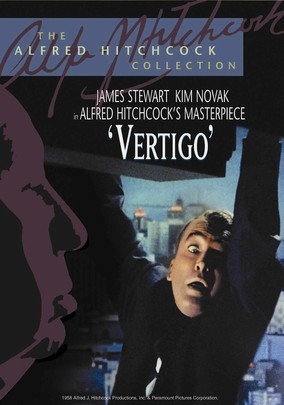
Vertigo-1958

Vertigo-1958

Director Alfred Hitchcock

Starring James Stewart, Kim Novak

Top 250 Films #1

Scott’s Review #151
1089727

Reviewed August 7, 2014

Grade: A

Over the years, Vertigo (1958) has quickly become one of my favorite Alfred Hitchcock films. With each repeated viewing, I learn, appreciate, or see something new.

It is an absolute masterpiece.

The primary appeal of Vertigo lies in its mystique and dream-like quality, which offer a beautiful cinematic experience. It is sometimes ominous, psychological, gloriously complex, and even confusing.

That is what makes it extraordinary.

Considering the time, the colorful opening visuals are dynamic, groundbreaking, and stunning.

The story involves a retired detective, Scottie, played by Hitchcock stalwart Jimmy Stewart. Scottie suffers from vertigo, which hinders his daily life.

After an incident in which a police officer is killed, and Scottie blames himself and his vertigo for causing the death, he whiles away the days brooding and keeping companionship with Midge, a college friend to whom he was once engaged.

One day, he is hired by another college friend to follow his wife, played tremendously by Kim Novak, who is acting strangely and periodically disappearing, obsessed with a painting of a woman from years past.

From this point, the plot twists and turns in a mysterious fashion, and a romantic, bizarre, and obsessive love story is intertwined.

Is Scottie in his right mind? Will his vertigo continue to haunt him? What is the secret to Madeleine and Judy? Is Midge as sweet as she appears?

The score to Vertigo is haunting and unforgettable, adding significantly to the film’s mood and ambiance.

Several location shots are featured in San Francisco, including the Golden Gate Bridge, steep streets, the Mission District, and the Redwood Forest.

As with all Hitchcock films, every set and detail is perfect, from paintbrushes, coffee mugs, curtains, and furniture to the gorgeous, bright red décor of the restaurant, which is heavily featured in the film.

How exquisite does Kim Novak look in the film??

Initially, it was critically panned upon its release, but it is now considered one of the greatest films. Its unique camera angles and slow, methodical pacing have influenced other films.

The film is not always an easy watch; it is complex, to be fair, but, like a fine wine, it improves with age.

Vertigo (1958) is a layered psychological thriller that gains more appreciation with each viewing.

Oscar Nominations: Best Sound, Best Art Direction

Now, Voyager-1942

Now, Voyager-1942

Director Irving Rapper

Starring Bette Davis, Paul Henreid

Scott’s Review #1,466

Reviewed February 16, 2025

Grade: B+

Now, Voyager (1942) showcases Bette Davis’s acting chops in a dramatic film with a feminist stance. It also promotes believing in yourself and developing confidence, which can inspire us all.

Davis, a star, is the star of the film, so all eyes are on her. It’s an early role and one of an ingenue, but she adds a flurry of wit and humor to the role.

As the famous 1981 hit by Kim Carnes says, ‘She’s got Bette Davis Eyes,’ and the star evokes so much emotion with those eyes.

Films of the 1940s are magical and take me away to a time long before I was born. My husband had a fantastic encounter with director Irving Rapper years ago, necessitating our viewing of one of his films.

Boston heiress Charlotte Vale (Bette Davis) is a neurotic mess, primarily because of her domineering mother (Gladys Cooper). Reduced to insecurities and her mother’s glorified servant, Charlotte rarely leaves home.

But after a stint in a sanatorium, where she receives the attention of wise Dr. Jasquith (Claude Rains), Charlotte comes out of her shell and elects to go on a cruise for inspiration. Aboard the ship, she meets Jerry (Paul Henreid) and falls in love despite his being unhappily married.

They enjoy a brief tryst in Rio before returning to the States, where Charlotte struggles to forget him and find happiness in ordinary life.

But will she encounter him once again in an unexpected way? Will the link to his young daughter, Tina (Janis Wilson), who is similar to Charlotte, bring them together or drive them apart?

The pleasure in Now, Voyager is watching Davis play mousy- nervous and clad in an unflattering dress and spectacles. She couldn’t be more different from the regal star that Davis was. She frets with insecurity and a lack of self-confidence.

But it’s equally pleasing to see Davis as a blooming Charlotte. Dressed in a ravishing dress with a stylish hat and jewelry, she exudes confidence when she returns home to gaping mouths.

Is this the same Charlotte, they wonder?

I yearned for one big blowup scene where Charlotte puts her mother in her place, but she treads lightly. After all, Charlotte will inherit everything if she is just patient.

Still, it would have been satisfying to see Charlotte insult the shit out of Mommie dearest.

Cooper is divine in a one-note role as the callous and cold mother. Unhappy to have had Charlotte at all after birthing three sons, she mistreats her daughter and revels in her repression.

She’s a fantastic bitch to be remembered in cinema history.

While Charlotte’s relationship with Tina is delightful, and the pair helps each other heal, the film’s ending is unsatisfying.

Tina and Charlotte live happily ever after when Jerry agrees to let Tina reside in the Vale household, but Charlotte and Jerry don’t get the Cinderella story I had hoped.

Will Charlotte end up a spinster after all?

For 1942, Now Voyager was way ahead of its time in terms of mental illness, not given much credence until the 1960s or beyond. Charlotte’s time in a sanitarium is celebrated and healing for her, and stereotypes of ‘crazy people’ are not showcased.

Her doctor is a lifesaver for her, proving that mental health treatment can be successful. It was important to delve into that so early on.

Rapper competently directs the film. My favorite set is the quiet Boston area estate. The grand house is showcased amid pouring rain through the plentiful windows. This exudes coziness and stuffiness. Charlotte is trapped inside the walls.

Later, the Rio de Janeiro sequences are grand. An exciting trip to the top of Sugarloaf Mountain is a sheer delight and the highlight of the Charlotte/Jerry dynamic.

Now, Voyager (1942) is a gift for cinephiles eager for a trip down memory lane to see Bette Davus the star and a celebration of the Golden Age of Hollywood.

Oscar Nominations: Best Actress-Bette Davis, Best Supporting Actress-Gladys Cooper, Best Scoring of a Dramatic or Comedy Picture (won)

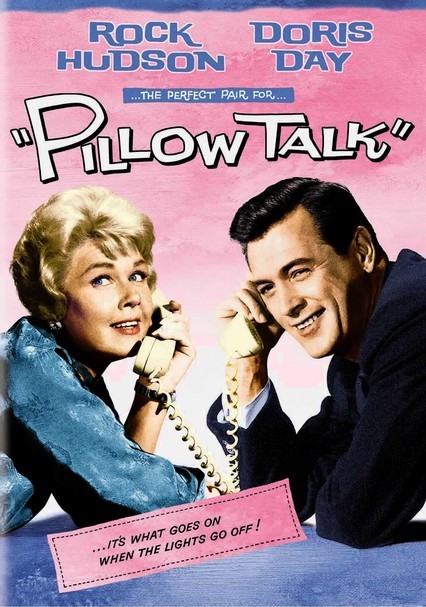
Pillow Talk-1959

Pillow Talk-1959

Director Michael Gordon

Starring Rock Hudson, Doris Day

Scott’s Review #907

Reviewed June 6, 2019

Grade: B+

Pillow Talk (1959) is the ultimate in romantic comedies from the age of innocence in cinema.

In 1959, pictures were still wholesome and safe, providing happy stories and charming characters.

The film is a lovely and enchanting experience with intelligent characters and fantastic chemistry among its leads.

Combined with a good romance and comic elements, it makes for a fun watch that still feels fresh and bright decades later.

Doris Day and Rock Hudson smolder as singles living in Manhattan.

Day plays Jan Morrow, a perky, independent interior decorator who dates frequently but has not yet found love. Hudson plays Brad Allen, a talented, creative Broadway composer and playboy who lives in a nearby apartment building.

Jan is frustrated by a party line that allows her to hear Brad’s endless phone conversations with the women in his life. He is annoyed by her prim and proper, holier-than-thou attitude. They bicker on the phone but have not met.

Through their mutual yet unknown-to-them acquaintance, Jonathan Forbes (Tony Randall), Brad realizes who Jan is, which leads to hilarity as he fakes a Texan accent and invents a new persona: Rex Stetson, a wealthy Texas rancher.

He succeeds in wooing Jan, who falls madly in love with him while unaware of his identity. Events culminate in the inevitable big reveal when the couple vacations at Jonathan’s cabin in nearby Connecticut.

Rock Hudson oozes masculinity and charisma, and nearly every woman he meets falls madly in love with him. Hudson’s sexual preferences are hidden from the public but well-known within the film industry, so one wonders if a few comical situations were added as an inside joke.

One can speculate if these additions were made with or without the star’s knowledge; rumors abound that Hudson reportedly carried on an affair with actor Nick Adams (Tony) during filming.

A recurring theme involves Brad mistakenly walking into an obstetrician’s office (twice!) and the doctor and nurse assuming he may be the first man to become pregnant as they attempt to locate him when he keeps disappearing.

Later, Brad attempts to trick Jan into believing Rex might be a homosexual because of his love for effeminate things.

The supporting players bring wit to Pillow Talk and are key to the film’s enjoyment. Randall, as Jonathan, is not quite the nice guy, but not entirely the foil. As he has designs on Jan, he warns Brad to keep away.

His intention, which fails, is to woo her with money, but Jan seeks true love.

Thelma Ritter’s performance as Alma, Jan’s boozy housekeeper, is delicious. She adds necessary comic timing and sardonic humor. We crackle with delight when she ultimately finds love with the elevator operator.

The lavish set design is flawless. It brightens the film while adding the luxurious style and sophistication that only New York City apartment living can bring. The combined sets of Brad’s and Jan’s apartments are gorgeous.

With bright colors and 1950s-style furniture, one can easily imagine how beautiful it would be to live in an apartment of this brilliance—I know this viewer did!

A Doris Day film would not be complete without several songs that the singer/actress performs. “Pillow Talk” during the opening credits, “Roly Poly” in the piano bar with Blackwell and Hudson, and “Possess Me” on the drive up to Jonathan’s cabin.

Pillow Talk (1959) is an example of a rich romantic comedy with significant elements. It is a bit of a fantasy and a bit silly, but it contains style, sophistication, and humor.

The film was an enormous success and was deemed “the feel-good film of the year” in many circles. Following the film, Hudson’s career was relaunched after a snag years earlier.

Oscar Nominations: 1 win-Best Actress-Doris Day, Best Supporting Actress-Thelma Ritter, Best Story and Screenplay Written Directly for the Screen (won), Best Scoring of a Dramatic or Comedy Picture, Best Art Direction, Color

Golden Globe Nominations: 2 wins-Best Picture-Comedy, Best Actress in a Leading Role-Musical or Comedy-Doris Day, Best Performance by an Actor in a Supporting Role in any Motion Picture-Tony Randall, World Film Favorites-Doris Day (won), Rock Hudson (won)