Tag Archives: Gladys Cooper

Rebecca-1940

Rebecca-1940

Director Alfred Hitchcock

Starring Laurence Olivier, Joan Fontaine

Top 250 Films #96

Scott’s Review #345
895272

Reviewed January 9, 2016

Grade: A

The only Alfred Hitchcock film to win the coveted Best Picture Oscar trophy, Rebecca is a very early offering in the famous director’s repertoire.

His heyday being well ahead of this film (the 1950s and 1960s saw his best works), Rebecca is a blueprint of fine things to come and, on its own merits, is a great film.

Shot in black and white, the film is a descent into mystery, intrigue, and madness with a gothic look.

Laurence Olivier stars as wealthy widower Maxim de Winter, whose first wife, the title character Rebecca, died sometime before the story begins. In a clever twist, the character of Rebecca is never seen but takes on a life of her own through the tellings of the rest of the cast.

Joan Fontaine plays a nameless, naïve young woman who meets the sophisticated Maxim and marries him, becoming the new Mrs. de Winter.

This development is met with disdain by the servants who work in the Grand de Winter mansion, Manderley, a character in its own right.

The housekeeper, Mrs. Danvers (Judith Anderson), is cold and distant from Maxim’s new wife. She begins to reveal an obsession with the deceased Rebecca, which creates jealousy and intimidation for Fontaine’s character, to the point where she starts to doubt her sanity and decision-making capabilities.

Thanks to Hitchcock’s direction, Rebecca is a fantastic, old-style film with layers of mystery and wonderment. The mansion, Manderley, is central to the story, as is Mrs. Danvers’s creepy obsession with Rebecca.

She keeps the dead woman’s bedroom neat, a sort of shrine to her memory, so much so that, despite the time the film was made, 1940, a lesbian element is crystal clear to attention-paying audiences.

This aspect may not have been noticed at the time, but it is apparent now.

The film is also a ghost story since the central character, Rebecca, is never seen.

Could she be haunting the mansion? Is she dead, or is this a red herring created to throw the audience off the track? Is the new Mrs. de Winter spiraling out of control? Is she imagining the servant’s menacing actions? Is Maxim in on the tormentor, simply seeking a replacement wife for his steadfast love?

The pertinent questions are asked not only of the character but also of the audience as they watch with bated breath.

The climax and finale of Rebecca (1940) are fantastic.

As the arguably haunted mansion is engulfed in flames and the sinister Mrs. Danvers can be seen lurking near the raging drapes, the truth comes to the surface, leaving a memorable haunting feeling to audiences watching.

Rebecca is a true classic.

Oscar Nominations: 2 wins-Outstanding Production (won), Best Director-Alfred Hitchcock, Best Actor-Laurence Olivier, Best Actress-Joan Fontaine, Best Supporting Actress-Judith Anderson, Best Screenplay, Best Original Score, Best Art Direction, Black and White, Best Cinematography, Black-and-White (won), Best Film Editing, Best Special Effects

Now, Voyager-1942

Now, Voyager-1942

Director Irving Rapper

Starring Bette Davis, Paul Henreide, Claude Raines

Scott’s Review #1,466

Reviewed February 16, 2025

Grade: B+

Now, Voyager (1942) showcases Bette Davis’s acting chops in a dramatic film with a feminist stance. It also promotes believing in yourself and developing confidence, which can inspire us all.

Davis, a star, is the star of the film, so all eyes are on her. It’s an early role and one of an ingenue, but she adds a flurry of wit and humor to the role.

As the famous 1981 hit by Kim Carnes says, ‘She’s got Bette Davis Eyes,’ and the star evokes so much emotion with those eyes.

Films of the 1940s are magical and take me away to a time long before I was born. My husband had a fantastic encounter with director Irving Rapper years ago, necessitating our viewing of one of his films.

Boston heiress Charlotte Vale (Bette Davis) is a neurotic mess, primarily because of her domineering mother (Gladys Cooper). Reduced to insecurities and her mother’s glorified servant, Charlotte rarely leaves home.

But after a stint in a sanatorium, where she receives the attention of wise Dr. Jasquith (Claude Rains), Charlotte comes out of her shell and elects to go on a cruise for inspiration. Aboard the ship, she meets Jerry (Paul Henreid) and falls in love despite his being unhappily married.

They enjoy a brief tryst in Rio before returning to the States, where Charlotte struggles to forget him and find happiness in ordinary life.

But will she encounter him once again in an unexpected way? Will the link to his young daughter, Tina (Janis Wilson), who is similar to Charlotte, bring them together or drive them apart?

The pleasure in Now, Voyager is watching Davis play mousy- nervous and clad in an unflattering dress and spectacles. She couldn’t be more different from the regal star that Davis was. She frets with insecurity and a lack of self-confidence.

But it’s equally pleasing to see Davis as a blooming Charlotte. Dressed in a ravishing dress with a stylish hat and jewelry, she exudes confidence when she returns home to gaping mouths.

Is this the same Charlotte, they wonder?

I yearned for one big blowup scene where Charlotte puts her mother in her place, but she treads lightly. After all, Charlotte will inherit everything if she is just patient.

Still, it would have been satisfying to see Charlotte insult the shit out of Mommie dearest.

Cooper is divine in a one-note role as the callous and cold mother. Unhappy to have had Charlotte at all after birthing three sons, she mistreats her daughter and revels in her repression.

She’s a fantastic bitch to be remembered in cinema history.

While Charlotte’s relationship with Tina is delightful, and the pair helps each other heal, the film’s ending is unsatisfying.

Tina and Charlotte live happily ever after when Jerry agrees to let Tina reside in the Vale household, but Charlotte and Jerry don’t get the Cinderella story I had hoped.

Will Charlotte end up a spinster after all?

For 1942, Now Voyager was way ahead of its time in terms of mental illness, not given much credence until the 1960s or beyond. Charlotte’s time in a sanitarium is celebrated and healing for her, and stereotypes of ‘crazy people’ are not showcased.

Her doctor is a lifesaver for her, proving that mental health treatment can be successful. It was important to delve into that so early on.

Rapper competently directs the film. My favorite set is the quiet Boston area estate. The grand house is showcased amid pouring rain through the plentiful windows. This exudes coziness and stuffiness. Charlotte is trapped inside the walls.

Later, the Rio de Janeiro sequences are grand. An exciting trip to the top of Sugarloaf Mountain is a sheer delight and the highlight of the Charlotte/Jerry dynamic.

Now, Voyager (1942) is a gift for cinephiles eager for a trip down memory lane to see Bette Davus the star and a celebration of the Golden Age of Hollywood.

Oscar Nominations: Best Actress-Bette Davis, Best Supporting Actress-Gladys Cooper, Best Scoring of a Dramatic or Comedy Picture (won)

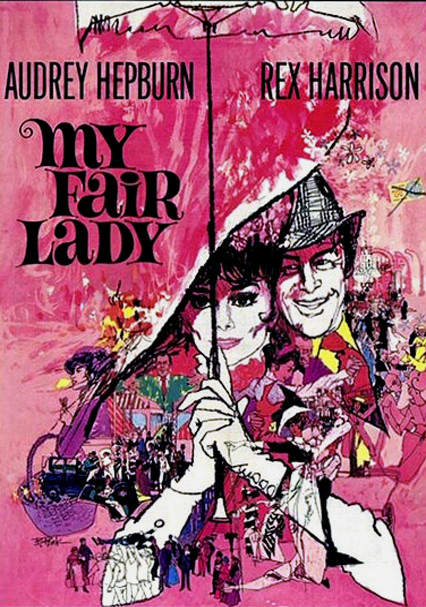
My Fair Lady-1964

My Fair Lady-1964

Director George Cukor

Starring Audrey Hepburn, Rex Harrison

Scott’s Review #938

Reviewed September 6, 2019

Grade: A-

Winner of the Best Picture Academy Award (it would not have been my choice), My Fair Lady (1964) is a good product that is based on the stage version, in turn, based on the famous 1913 stage play Pygmalion by George Bernard Shaw.

The musical’s central negative aspect is its casting choices. Hepburn and Harrison have only mediocre chemistry, and Hepburn does not sing. However, the film is enchanting and filled with lavish sets, colorful costumes, and earnest songs, making it entertaining for the whole family.

The iconic Eliza Doolittle (Hepburn) and Henry Higgins (Harrison) are household names to every fan of the musical genre.

Set in London, sophisticated and arrogant Professor Higgins, a scholar of phonetics, is intent on proving that the tone and accent of one’s voice determine one’s lot in society.

As an experiment, he chooses flower saleswoman Eliza, with her horrid Cockney accent, and is determined to crown her duchess of a ball.

Unaware of his scheme but soon to find out she has been had, romance eventually blooms as the song “I’ve Grown Accustomed to Her Face” becomes essential.

My Fair Lady is quite the epic, with a runtime of two hours and fifty-two minutes, which is lofty for a film.

The misty London setting adds layers of mystique and atmosphere, and the cinematography drizzles with color and pizzazz, making the overall content look fantastic.

Because of the length of the film and the magnificent trimmings, the production looks like a spectacle, reminiscent of the elegant extravagance of the 1950s and 1960s, when musicals made into films were grand and robust.

It’s no wonder this helped it win Best Picture, Best Director, and many other awards. Hollywood loves this film.

When dissected and analyzed, social and class systems are a large part of the film amid the cheery singing, dancing, and big-screen bombast. Social status and hints of socialism pepper the production, rising way above the fluff it could have been if just a “boy from the good side of the tracks meets girls from the wrong side.”

Eliza’s father, Alfred (Stanley Holloway), a waste collector, is also an opportunist. He sings his story during “With a Little Bit of Luck.” The differences between the “haves” and the “have nots” are evident.

Since the chemistry is limited, I never bought Harrison and Hepburn as a romantic duo. The teacher/student angle somewhat works, though always bothersome, but Henry’s self-assured behavior and superior attitude make him tough to root for.

The controversy surrounding the film includes the decision to dub nearly all of Hepburn’s singing with another singer’s voice. This devastated the actress and cost her an Academy Award nomination. Her snub is especially jarring, given the dozen other nominations it received.

The story is heartwarming and follows the like-minded theme of a hero rescuing a damsel in distress. Hints of Cinderella (1950) and even Pretty Woman (1990) glisten, with only a hint of male chauvinism that does not ruin the experience or reduce the film to a dated guy film, as with Pretty Woman.

“I’m an Ordinary Man” describes how women ruin men’s lives and are not the most progressive or female-friendly of all the numbers.

My Fair Lady (1964) is a film from the past that begs to be viewed on the big screen so that all its qualities can be enjoyed. Like Lawrence of Arabia (1963), it is best viewed in a wide-angle, enormous theater setting to ensure that all its aspects are noticed and enjoyed.

It’s a Hollywood film done tremendously well. Young viewers would be wise to be exposed to this film to delight in the cinematic treats.

Oscar Nominations: 8 wins-Best Picture (won), Best Director-George Cukor (won), Best Actor-Rex Harrison (won), Best Supporting Actor-Stanley Holloway, Best Supporting Actress-Gladys Cooper, Best Screenplay Based on Material from Another Medium, Best Scoring of Music-Adaptation or Treatment (won), Best Sound (won), Best Art Direction, Color (won), Best Cinematography, Color (won), Best Costume Design, Color (won), Best Film Editing

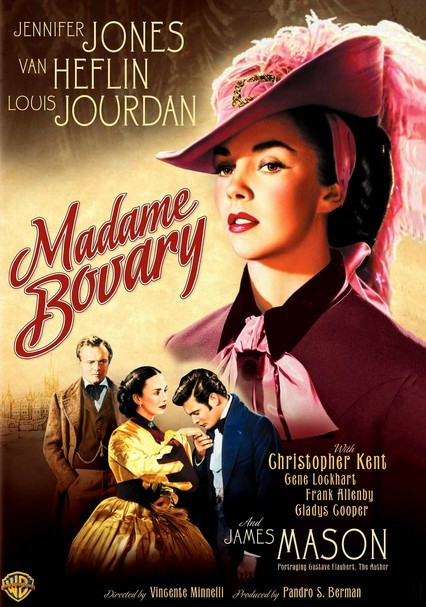
Madame Bovary-1949

Madame Bovary-1949

Director Vincente Minnelli

Starring Jennifer Jones, James Mason

Scott’s Review #930

Reviewed August 13, 2019

Grade: A-

Madame Bovary (1949) is a film adaptation of Gustave Flaubert’s famous novel. Remade a handful of times since this version, Jennifer Jones is cast in the lead role and does a fantastic job with a complicated part.

The title character is central to the controversial film, which will undoubtedly result in mixed opinions of her actions and motivations- whether she will be loved or loathed.

Director Minnelli mixes melodrama and glamour with pain and defeat in her story of one woman’s attempt at happiness.

Cleverly, the story is told within a story as the viewer is immediately amid a compelling and dramatic trial. Flaubert (James Mason) defends his novel depicting an adulterous woman (Jones) ruining the lives of men, deemed disgraceful to France and all womanhood.

He tells the story from his perspective and, through this, Madame Bovary’s perspective. She (Emma) marries a small-town country doctor, Charles Bovary (Van Heflin), and quickly grows disappointed with his lack of status.

Feeling trapped and unfulfilled, she embarks on failed romances with other men as she attempts to ascend the social ladder.

As with the novel, the theme is either understanding or abhorring Emma’s feelings and actions, or perhaps a mixture of both emotions.

Who would not forsake her for being true to her feelings and desiring her piece of the pie? Most women of her day were reduced to matronly statuses or asexual feelings, but Emma wanted satisfaction and life at the risk of her own family.

To counter these lustful feelings, she does not treat her husband very well, resenting his passivity and being disappointed at her daughter being a girl instead of her desired son.

She feels this would have allowed her better status, so her daughter is nearly shunned, preferring the affections of the housekeeper to her mother’s feeble attempts at love.

Is she Hellion or a sympathetic soul? Emma is one of the most complex of all female film characters.

Madame Bovary was written in 1949, and the novel was published earlier, so the progressive slant is rich and worthy of much admiration. The female perspective and the courage to reach for the stars and grasp life are spirited and wonderful to see, especially given the period.

A mixture of romantic drama and torrid affairs is at hand during this experience and always is the character’s center stage.

The film mixes Gone with the Wind (1939) remnants, especially the lavish dance hall sequence. The ball is the highlight, with gorgeous costumes, great cinematography, and bombastic dances.

As Emma cavorts with a dashing aristocrat, Rodolphe (Louis Jourdan), Charles gets drunk and makes a fool of himself, as her genuine disdain for her marriage becomes clear. The smashing windows with chairs moment is ahead of its time because of the effects used, and the constant dance twirls are dizzying.

So much importance occurs in this pivotal sequence.

While more than adequate, Jones would not have been my first choice for the role. Married to influential producer David O. Selznick, it was rumored that many of the actresses’ roles were given to her.

Delicious is to fantasize at what legends such as Bette Davis or Vivian Leigh might have brought to the character. Especially Leigh, given her dazzling performance as Scarlett O’Hara in Gone with the Wind, a follow-up as a similar and arguably more complex character is fun to imagine.

A film that allows for post-credits discussion is always positive, with Madame Bovary (1949) a lengthy analysis of a character begs deliberation.

Minnelli pours love and energy into a work dripping with nuances long before his famous musicals came to fruition. A strong and vital female character suffers a lonely and despairing fate, which is tragic and sad, but she lives her life with a zest that should empower us all.

Oscar Nominations: Best Art Direction-Set Decoration, Black-and-White

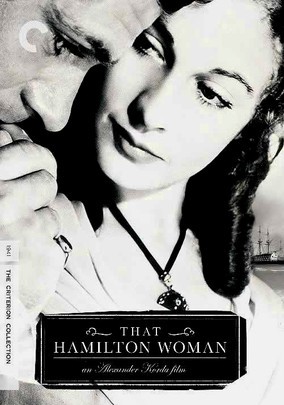
That Hamilton Woman-1941

That Hamilton Woman-1941

Director Alexander Korda

Starring Laurence Olivier, Vivien Leigh 

Scott’s Review #779

Reviewed June 27, 2018

Grade: B+

That Hamilton Woman (1941) is an obscure, black, and white gem that stars legendary actors and real-life couple Vivien Leigh and Laurence Olivier.

Providing a story of an old-fashioned style romance, war battles, and dazzling cinematography, the film succeeds as a classic film that should be better remembered than it is.

The overall theme here is a tragic love story with a sad ending.

One of the best aspects of That Hamilton Woman is witnessing the super-couple team of Leigh and Olivier act opposite one another. The actor’s talents are reason enough, but it makes a fascinating viewing experience.

The curiosity of the pairing of big stars in their heyday is a delight and highly appealing, and both actors do not disappoint. One wonders whether they were acting or otherwise enjoying the experience.

Lady Hamilton begins with a jarring scene in which the title character, Emma Lady Hamilton (Vivien Leigh), is thrown into debtor’s prison after stealing booze in France.

The rest of the story is told via flashbacks as she regales her fellow prisoners with how she ended up in her current state. Her former life starkly contrasts Emma’s appearance as a young woman with hope, promise, and riches.

It is hard to imagine how her life turned out so severely, which gives the film quality of intense intrigue.

The film then has a “riches to rags” element as the story is reversed. Full of energy, British Emma moves with her mother to the Kingdom of Naples, where she marries the affluent (and much older) Sir William Hamilton (Alan Mowbray), presumably for his money.

When handsome Admiral Horatio Nelson (Olivier) appears on the scene, the pair fall madly in love. They face tremendous hurdles, however, as the war rages on and each is unfaithful to their respective spouses.

Since the film was made scarcely two years after the epic romance Gone with the Wind (1939), one cannot help but compare Leigh’s portrayal of Emma to Scarlett O’Hara.

Emma comes across as a British version of the southern lass, especially as she is clad in gorgeous gowns or romancing men.

However, as the film develops, she becomes a much more sympathetic character and certainly less of a vixen. Still, there are plenty of similarities for viewers to draw from.

The role of Lady Frances Nelson (Gladys Cooper) is completely one-note, so the rooting value is never doubted. The film intends for the audience to be in the corner of Emma and Horatio, and that said, Cooper does a fantastic job of making her character completely unlikeable. Her icy, vengeful spirit perfectly complements the sympathetic lead characters. The fact that Horatio and Emma are adulterers, especially for the year the film was made, is not fully explored.

To be critical, the video quality is not the greatest, presumably because the film is old. If the film had been in color, the gorgeous Italian landscapes and Leigh’s lovely costumes would have appeared even more lavish and picturesque.

However, due to the film’s age, not much can be done about it unless it is decided to repackage the disc or make it a Blu-ray offering.

Still, the film frequently features southern Italy’s luminous mountains and lush oceans, which is a real treat.

Purely a showcase for newlyweds Olivier and Leigh to dish their real-life romance for mainstream audiences, That Hamilton Woman (1941) must have been a big deal at the release.

While suffering from lackluster film quality, the story is quite hearty, featuring romantic scenes, loud, bombastic battle scenes, and a bit of British and Italian history.

Sadly, this film is largely forgotten, but it is a good watch for fans of the legendary stars.

Oscar Nominations: 1 win-Best Sound Recording (won), Best Art Direction-Interior Decoration, Black-and-White, Best Cinematography, Black-and-White, Best Special Effects