Tag Archives: Alice Ghostley

The Graduate-1967

The Graduate-1967

Director Mike Nichols

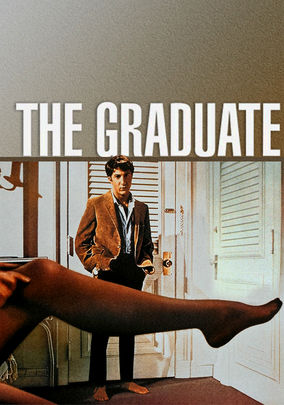
Starring Dustin Hoffman, Anne Bancroft

Top 250 Films #57

Scott’s Review #335
555221

Reviewed January 9, 2016

Grade: A

The Graduate is an immeasurable success and highly influential comedy from 1967- a time when films were gaining creative freedoms and pushing the envelope in new, edgy ideas and risqué subject matters.

Almost scandalous at the time of release, the film holds up exceptionally well after all these years and remains fresh and cutting-edge.

It is slick, sophisticated, and quite funny, though peppered with dark humor.

Thanks to Dustin Hoffman and Anne Bancroft, the film succeeds and remains among my all-time favorites.

Hoffman plays Benjamin Braddock, a nervous and insecure recent college graduate who returns home to sunny California, unsure of what his future holds.

His overbearing parents throw a lavish celebration at their home, where Benjamin is flocked by well-wishers, most of whom have a materialistic edge to them. His parents live in a very affluent community where wealth and items are of great importance.

All Benjamin wants to do is be by himself. At the party, Benjamin is pursued by the much older and glamorous Mrs. Robinson (Bancroft), who lives nearby and asks Benjamin for a ride home.

Her attempted seduction of him sets the film’s narrative in motion, as their relationship unfolds, particularly when Mrs. Robinson’s daughter, Elaine (Katharine Ross), enters the picture and captures Benjamin’s heart.

Director Mike Nichols successfully sets the right tone for the film, and we see the style and the sophistication of wealthy California in the 1960s.

Fashion, style, and glamour are prevalent, but they go against what Benjamin and Elaine stand for.

The film is also an exploration of generations. Benjamin’s parents and all their friends are into material things, such as cars, houses, and parties.

The triangle between Benjamin, Mrs. Robinson, and Elaine is the heart of the film. At first, we find ourselves rooting for Benjamin and Mrs. Robinson. There is a sweet nature to their romance. She is the aggressor- mature, in control, and confident, whereas Benjamin is insecure and shy, yet enamored with Mrs. Robinson.

Their awkward exchange in the hotel bar and their liaison in the hotel room are fantastic scenes.

Slowly, once Elaine emerges, Mrs. Robinson becomes more manipulative, taking on a villainous character, as the youngster’s love blossoms, and we begin to root for their happiness.

A fantastic aspect of The Graduate is its musical soundtrack, which was composed entirely by Simon and Garfunkel, a central musical duo of the late 1960s, from the opening chords of ‘The Sound of Silence’, to the appropriate ‘Mrs. Robinson’, the music adds much life and energy to the film and was successful at attracting young viewers at the time.

The featured soundtrack was highly influential to other films released after The Graduate.

Still fresh today, The Graduate (1967) launched the very successful career of Dustin Hoffman and emerged as an inspirational film that, though controversial in its day, seems tame now; however, the writing remains as crisp as it ever was.

A film to watch over and over again.  

Oscar Nominations: 1 win– Best Picture, Best Director-Mike Nichols (won), Best Actor-Dustin Hoffman, Best Actress-Anne Bancroft, Best Supporting Actress-Katharine Ross, Best Screenplay Based on Material from Another Medium, Best Cinematography

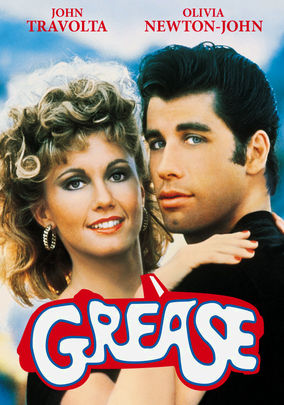
Grease-1978

Grease-1978

Director Randal Kleiser

Starring John Travolta, Olivia Newton-John

Top 250 Films #69

Scott’s Review #354

60000577

Reviewed January 9, 2016

Grade: A

Grease (1978) is the ultimate musical fantasy that comes to life and can be appreciated by anyone looking to re-live their high school days through song, or merely escape life’s stresses with a fun, bright, musical, that is very well made.

Is it realistic? Not, but sometimes escapism is just what the doctor ordered, and Grease is one of my favorite films that meet that criteria.

It is light-hearted and sweet, and above all contains wonderful legendary musical numbers.

The time is the 1950s, and we meet Danny and Sandy on a windswept beach with cascading waves and bright sunshine. It is summer break for the two high school students, who meet in California, she vacationing from Australia, and he is a local boy.

They say their goodbyes and return to normal lives, but cannot forget about each other.

Suddenly, Sandy arrives at Rydell High in Los Angeles, coincidentally where Danny goes to school. Her parents (whom we never see) decided to stay in California.

Danny is a “tough guy” in high school, much different from who he was on the beach with Sandy. He is the leader of the infamous T-birds, a group of boys who love their black leather jackets and cars.

Torn, he continues his tough image and he and Sandy find their way back to each other through classmates, songs, and dancing, intermingling fun supporting characters who encourage each of them to find true love.

Travolta and Newton-John have magical chemistry, which allows this film to work.

Grease has appeared on stage numerous times, but these actors are fine together. I bought them as teenagers in love, although both were well beyond their teen years.

The supporting cast is excellent- specifically Stockard Channing as the lead Pink Lady, Rizzo, and Sandy’s kind-hearted friend Frenchy.

Interestingly, no parents ever appear in the film as it is not about the adults.

However, Rydell’s female principal, Mrs. McGee (played by Eve Arden), and her dotty Vice Principal, Blanche (Dody Goodman), are simply marvelous as comic relief.

Rizzo is an interesting character and can be argued is the only one who threatens to steal the thunder from Danny and Sandy. Containing a tough exterior, she is also vulnerable as she fears she has become pregnant mid-way through the film.

Unwed and pregnant in the 1950s was quite the scandal and Channing gives layers of emotion during her solo number, “There Are Worse Things I Could Do”.

The wonderful high school dance scene is choreographed amazingly well. The excitement of the student body at being filmed for a special television show is apparent as dance numbers and dance contests, some raunchy, follow.

The musical numbers are intrinsically memorable from “Grease”, “Greased Lightning”, “Hopelessly Devoted To You”, and “Beauty School Dropout”, all of which are personal favorites of mine.

Grease (1978) is a film that is not meant to be analyzed but rather enjoyed for the fantastic chemistry and energy in which it has.

Sometimes in a film, all of the elements simply come together perfectly and Grease is an excellent example of this.

Oscar Nominations: Best Song-“Hopelessly Devoted to You”

With Six You Get Eggroll-1968

With Six You Get Eggroll-1968

Director Howard Morris

Starring Doris Day, Brian Keith

Scott’s Review #931

Reviewed August 15, 2019

Grade: B

A film that influenced the creation of the iconic television series, The Brady Bunch (1969-1974), or the reverse, depending on the timeline or who you ask, With Six You Get Eggroll (1968) is a cute family romantic comedy, hardly exceptional fare.

It becomes too silly during the final act.

The film follows the merging of two families into one big blended family, and its heart is the romance between two middle-aged singles looking for new love despite their baggage.

Abby McClure (Doris Day) is a widow raising three boys somewhere in northern California. She dutifully runs her deceased husband’s lumberyard while feeling unfulfilled in the romance department.

When her overzealous sister, Maxine (Pat Carroll), tricks her into inviting widower Jake Iverson (Brian Keith) to her dinner party, the pair do not connect. Still, they are drawn to one another as they become better acquainted.

Predictable obstacles come their way, including misunderstandings and backlash from their kids.

With Six You Get Eggroll is Day’s last film and certainly not one of her best offerings, but it is nonetheless moderately enjoyable.

The filmmaker intends to showcase a romance between Abby and Jake so that the elements are set up in a way that makes the characters likable, leaving a very predictable experience.

When Jake arrives at the party early and sees Abby at her disheveled worst, or after Jake makes up an excuse to leave the evening early but runs into Abby later at the supermarket, it’s the sort of film that has a happy ending.

As such, the chemistry between Day and Keith is palpable, making the film charming. If they had no chemistry, the film would be a bust, but their slow-burning fondness for each other works well for this genre.

They share a spontaneous evening of champagne and small talk at Abby’s house, and excitedly plan a date for the next day, only for Jake to make an excuse, leaving Abby perplexed.

When Abby sees him with a much younger woman, we feel her disappointment. After all, Abby is well past forty in a world where middle-aged women are not the pick of the litter anymore, as sister Maxine annoyingly reminds her.

When the young woman turns out to be Jake’s daughter, we smile with relief, along with Abby, because we like the characters and want them to be together.

The children: Flip, Jason, Mitch, and Stacey (a young Barbara Hershey) add little to the film and are merely supporting characters. They dutifully add obstacles to their parents’ happiness by squabbling over bathroom space or resenting one parent for taking the other away.

Conversely, Maxine and Abby’s housekeeper, Molly (Alice Ghostley), adds excellent comic relief, keeping the film from turning too melodramatic and providing natural humor.

The Brady Bunch comparisons are pretty apparent to any viewer who has seen the television series, and who hasn’t. The blended families and the G-rated dramatic crises are the most certain, and the period and clothes are almost identical.

Molly the maid could be Alice the housekeeper, and the actor (Allan Melvin) who plays Sam “the Butcher” from the television series appears as a Police Sergeant.

I half-expected the musical scores to mirror each other.

The film has some mild flaws aside from its predictability. The introduction of a band of hippies (though cool to see M*A*S*H alums Jamie Farr and William Christopher in early acting roles) and a speeding chicken truck resulting in arrests is way too juvenile and plot-driven.

A much better title could have been thought up for the film; With Six You Get Eggroll doesn’t exactly roll off the tongue, and it has nothing to do with the story.

Finally, Abby’s masculine profession is only shown in the opening scene and has nothing to do with the story.

For a wholesome late 1960s-themed evening, With Six You Get Eggroll (1968) is a moderate affair with cliches and a cheery tone, but also some genuine chemistry between its leads.

The sets and colors fit the times well, and Day is always top-notch. Perhaps one could skip this film and watch a sampling of The Brady Bunch reruns; the experience would be almost the same.

To Kill a Mockingbird-1962

To Kill a Mockingbird-1962

Director Robert Mulligan

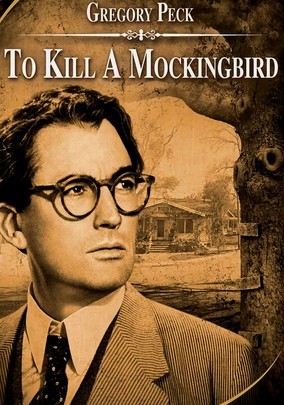
Starring Gregory Peck, Mary Badham, Robert Duvall

Scott’s Review #468

1051852

Reviewed August 25, 2016

Grade: A

To Kill a Mockingbird is a 1962 film based on Harper Lee’s renowned novel. It was released only two years earlier, in 1960.

The novel was groundbreaking, and the film is equally so. Race and racism are front and center in the storyline. The film is still a marvel because it tells the story through the eyes of a child—in present-day terms, an adult—as she reflects on her experience.

The film is set in the 1930s in a small Alabama town.

We follow the lives of Atticus Finch, a respected lawyer and father, and his two young children- Scout and Jem.

Gregory Peck, as Atticus, is the moral center of the film. Scout (Mary Badham) narrates, and her innocence makes the story much more compelling and less like a preachy vehicle for a social topic.

The Finchs are a tight family unit as Atticus is widowed, leaving Jem and Scout motherless. A poor black man-Tom- is accused of raping and beating a white woman, also poor, coached into the accusations by her racist father.

We accept that the woman had designs on Tom and, when caught by her horrified father, was beaten, with Tom left to take the blame.

Much of the film, but not too much, takes place in the courtroom, as we hear testimony by the poor woman, her father, and Tom.

Not to be missed is that every juror is a white man- a sad reminder of the racism that existed and one argues still exists, though not as blatant in today’s modern world.

One cringe when the black attendees are forced to sit in the upper portion of the courthouse, an obvious way to demean and lessen them, and which speaks volumes for the town- we realize Tom does not have a chance, yet we hope against hope for his acquittal.

Wisely, I do not feel the point is the trial’s outcome—we know what will result. But the film teaches us a lesson about reality: life is often unfair and painful.

The after-effects of the trial are the most exciting part of To Kill a Mockingbird.

Gregory Peck was awarded the Best Actor Oscar in 1962 for his role as a liberal, progressive, and honorable man who can do no wrong and is an excellent example for his children.

A black maid, Calpurnia, works for him, and he treats her like family. I could not help but think she is the mother figure in Jem and Scout’s lives.

Atticus does the right thing, treating everyone fairly and living a moral life. He is an excellent example, and it is no wonder Peck won the trophy.

A subplot involves a mysterious neighbor, Boo Radley, feared by the town kids but turning out to be a protector and companion to Scout and Jem. This role was the first for acclaimed actor Robert Duvall- the actor has a tiny yet important role and does a great deal of expressive acting without uttering a line.

The title of the film is poignant and essential to the ending.

The film is really about Jem and Scout and their quick journey into the pains and unfairness endured by adults- once innocently enjoying the summer, playing games, and making friends with a visiting young boy, they are exposed to evil and a hate-filled racist town, which they slowly come to realize exists.

Filmed in black and white, this quality enhances the picture. The blowing leaves and dark shadows add much to the impressive cinematography and give the film a dark quality that color would have ruined.

The 1930s time period is very authentic.

To Kill a Mockingbird is a timeless film with an important message about the world. Children and adults of every generation should view it as a lesson in empathy and compassion.

The film is not ugly or raw but is truthful and still feels fresh. It will resonate with all audiences patient enough to give it a good watch.

Oscar Nominations: 3 wins-Best Picture, Best Director-Robert Mulligan, Best Actor-Gregory Peck (won), Best Supporting Actress-Mary Badham, Best Screenplay Based on Material from Another Medium (won), Best Music Score-Substantially Original, Best Art Direction, Black-and-White (won), Best Cinematography, Black-and-White