Tag Archives: Marcel Dalio

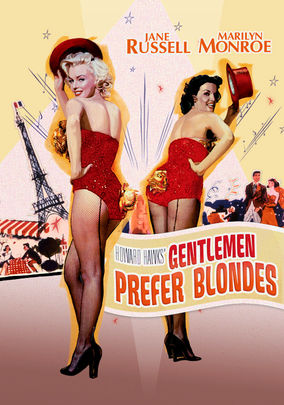
Gentlemen Prefer Blondes-1953

Gentlemen Prefer Blondes-1953

Director Howard Hawks

Starring Jane Russell, Marilyn Monroe

Top 250 Films #164

Scott’s Review #384
60004540

Reviewed March 13, 2016

Grade: B+

One of the iconic and legendary stars, Marilyn Monroe’s better-known offerings from her brief career are Gentlemen Prefer Blondes (1953), a fun musical romantic comedy.

To create this wonderful gem, she stars alongside Jane Russell, another popular Hollywood star from a golden era.

Together, they have great chemistry and an easy yin-yang relationship, which makes the film light and cheerful but not meaningless or too fluffy.

It is just a genre that it is.

As mentioned, Roma has evolved in modern cinema, and Gentlemen embodies the innocence that has since been lost. The 1950s were a perfect time for this genre of film.

Lorelei Lee (Monroe) and Dorothy Shaw (Russell) are American showgirls and best friends who perform a stage show together. Lorelei loves diamonds and rich men- she is dating Gus Esmond, an awkward yet lovable young man who is wealthy but controlled by his father.

Dorothy is less interested in being showered with wealth but prefers handsome, adventure-filled adventures. These begin when the girls board a cruise ship to Paris. A private investigator (Malone) hired by Gus’s father observes and follows Lorelei while the Olympic swim team pursues Dorothy.

The film is entertaining and a must-see for all Monroe fans, as it was at the time when she was at her best- Gentlemen Prefer Blondes and Some Like it Hot are my personal favorites, and she was in the prime of her tragically short film career- sure, she plays the “dumb blonde” character with gusto. Still, there is something innocent and fun about her portrayal of Lorelei, and we immediately fall in love with her.

Dorothy is the leader—the smart one—and complements Lorelei’s naivety. More worldly and sophisticated, she watches out for her counterpart.

The chemistry between Monroe and Russell makes the film work so well. The audience buys them as best friends, and the two actresses (who reportedly got along famously).

Monroe shines during the legendary number, Girls’ Nights Are the Best Friend,” a performance that famously inspired the 1984 Madonna video, ” Girls Night Out,” which will forever live on in music history.

My favorite scene is on the ship when Lorelei gets into trouble. She sneaks into the private investigator’s cabin to obtain incriminating evidence and gets stuck in the tight cabin window.

The shot of Monroe sticking halfway out the window is funny. She then hilariously enlists a young child to help her avoid recognition and a subpar man with subpar vision.

Vision also comes into play when Dorothy disguises herself as Lorelei in a silly fashion (looking more like a drag queen) in a courtroom scene over hi-jinks involving a stolen tiara.

Interesting is the scene in wsurroundedrothy is surrounded by dancing, which is as provocative for 1953 as it is today.

Undoubtedly unable to show any form of nudity whatsoever, the dancers are clad in nude-colored shorts, which indeed suggests elements of sexuality, an illusion of nudity, and fits the scene perfectly as Dorothy is in testosterone heaven.  It is like a big, giant fantasy for her.

Gentlemen Prefer Blondes (1953) is a triumphant offering from another cinematic era—a sorely missed time. Cute but not trivial, the film is a witty portrayal of the iconic Marilyn Monroe.
Pillow Talk-1959

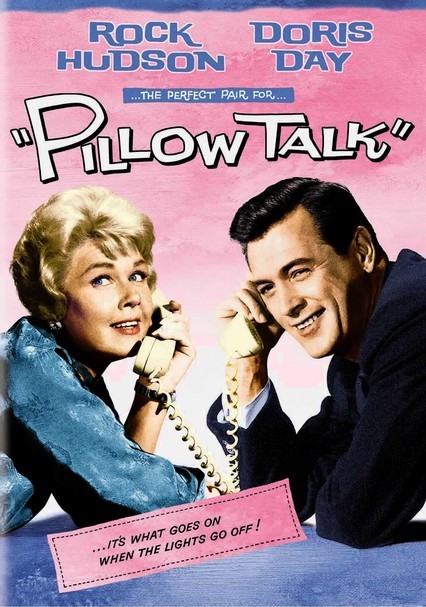
Pillow Talk-1959

Director Michael Gordon

Starring Rock Hudson, Doris Day

Scott’s Review #907

Reviewed June 6, 2019

Grade: B+

Pillow Talk (1959) is the ultimate in romantic comedies from the age of innocence in cinema.

In 1959, pictures were still wholesome and safe, providing happy stories and charming characters.

The film is a lovely and enchanting experience with intelligent characters and fantastic chemistry among its leads.

Combined with a good romance and comic elements, it makes for a fun watch that still feels fresh and bright decades later.

Doris Day and Rock Hudson smolder as singles living in Manhattan.

Day plays Jan Morrow, a perky, independent interior decorator who dates frequently but has not yet found love. Hudson plays Brad Allen, a talented, creative Broadway composer and playboy who lives in a nearby apartment building.

Jan is frustrated by a party line that allows her to hear Brad’s endless phone conversations with the women in his life. He is annoyed by her prim and proper, holier-than-thou attitude. They bicker on the phone but have not met.

Through their mutual yet unknown-to-them acquaintance, Jonathan Forbes (Tony Randall), Brad realizes who Jan is, which leads to hilarity as he fakes a Texan accent and invents a new persona: Rex Stetson, a wealthy Texas rancher.

He succeeds in wooing Jan, who falls madly in love with him while unaware of his identity. Events culminate in the inevitable big reveal when the couple vacations at Jonathan’s cabin in nearby Connecticut.

Rock Hudson oozes masculinity and charisma, and nearly every woman he meets falls madly in love with him. Hudson’s sexual preferences are hidden from the public but well-known within the film industry, so one wonders if a few comical situations were added as an inside joke.

One can speculate if these additions were made with or without the star’s knowledge; rumors abound that Hudson reportedly carried on an affair with actor Nick Adams (Tony) during filming.

A recurring theme involves Brad mistakenly walking into an obstetrician’s office (twice!) and the doctor and nurse assuming he may be the first man to become pregnant as they attempt to locate him when he keeps disappearing.

Later, Brad attempts to trick Jan into believing Rex might be a homosexual because of his love for effeminate things.

The supporting players bring wit to Pillow Talk and are key to the film’s enjoyment. Randall, as Jonathan, is not quite the nice guy, but not entirely the foil. As he has designs on Jan, he warns Brad to keep away.

His intention, which fails, is to woo her with money, but Jan seeks true love.

Thelma Ritter’s performance as Alma, Jan’s boozy housekeeper, is delicious. She adds necessary comic timing and sardonic humor. We crackle with delight when she ultimately finds love with the elevator operator.

The lavish set design is flawless. It brightens the film while adding the luxurious style and sophistication that only New York City apartment living can bring. The combined sets of Brad’s and Jan’s apartments are gorgeous.

With bright colors and 1950s-style furniture, one can easily imagine how beautiful it would be to live in an apartment of this brilliance—I know this viewer did!

A Doris Day film would not be complete without several songs that the singer/actress performs. “Pillow Talk” during the opening credits, “Roly Poly” in the piano bar with Blackwell and Hudson, and “Possess Me” on the drive up to Jonathan’s cabin.

Pillow Talk (1959) is an example of a rich romantic comedy with significant elements. It is a bit of a fantasy and a bit silly, but it contains style, sophistication, and humor.

The film was an enormous success and was deemed “the feel-good film of the year” in many circles. Following the film, Hudson’s career was relaunched after a snag years earlier.

Oscar Nominations: 1 win-Best Actress-Doris Day, Best Supporting Actress-Thelma Ritter, Best Story and Screenplay Written Directly for the Screen (won), Best Scoring of a Dramatic or Comedy Picture, Best Art Direction, Color

Golden Globe Nominations: 2 wins-Best Picture-Comedy, Best Actress in a Leading Role-Musical or Comedy-Doris Day, Best Performance by an Actor in a Supporting Role in any Motion Picture-Tony Randall, World Film Favorites-Doris Day (won), Rock Hudson (won)

Casablanca-1943

Casablanca-1943

Director Michael Curtiz

Starring Humphrey Bogart, Ingrid Bergman

Scott’s Review #838

Reviewed December 7, 2018

Grade: A

Casablanca (1943) is a classic style Hollywood film made during a decade when big studio productions were all the rage. The film may very well be in the top ten creations of its day and a movie that nearly everyone has either seen or is aware of.

A grand romantic World War II drama released at the perfect time, the film contains legendary stars Humphrey Bogart and Ingrid Bergman. It is flawless in nearly every way, as a lavish production should be.

Bogart stars as Rick Blaine, an expatriate who owns a lavish nightclub in Casablanca, Morocco. The film takes place in December 1941, before the United States entered the vicious World War II.

His clientele ranges from French and German officials to refugees attempting to flee the country, fearful of being stuck in a foreign land. Mixed in with the melee of varied characters is Ilsa (Bergman), a former flame of Rick’s, who appears with a new husband, Victor, a Czech leader.

Ilsa begs Rick for help escaping the country, and their romance begins to blossom again.

Through scenes, we see Rick and Ilsa living perfectly in pre-war Paris. They happily co-exist, sharing a happy life, unaware of the conflict and secrets that will emerge in Casablanca two years later.

Victor is initially presumed dead, which leads to Ilsa’s initial freedom and romance with Rick.

Back in Casablanca, Rick has essential letters that will allow the holder to escape the city and be bound for safety in another country. While Ilsa is desperate for these letters, she is also madly in love with Rick, and vice versa, adding a strong romantic element to the film.

Supporting characters are mixed into the plot as desperation and impending doom interplay.

Casablanca is a film with things happening simultaneously, which is a significant part of its draw. From the apparent romance of Rick and Ilsa- the focal point of the story part of the draw are the sub-plots weaved within.

The nasty Nazi Major Heinrich Strasser encompasses the future Third Reich and the devastation this group would ultimately cause. A multitude of supporting characters and extras perfectly flesh out both the cast and the look and feel of the film.

The most interesting character is Rick.

Once idealistic and moral, he has changed, becoming cynical and broken. In this way, the film nearly becomes a character study. The audience sees the change in Rick and slowly realizes he has given the war the culprit.

The final sequence reveals Rick and Ilsa’s fate. Their doomed romance is assuredly no surprise, true to the message. An “unhappily ever after” result was rare in a big studio production and is a testament to the well-written story.

The featured piano number and Casablanca’s “theme song” is the lovely yet melancholy “As Time Goes By.” Beautifully played by Sam (Dooley Wilson), the house pianist and close friend of Rick, the number is instrumental to the plot and specifically to Rick and Ilsa’s romance.

The song is a painful memory of the once-idyllic life the pair shared.

The film’s timing, made in 1941 and released in 1943, is the key to its unrelenting success. American audiences undoubtedly found it identifiable, and the uncertainties of the impending war threatened their current freedoms.

Casablanca was wonderfully marketed in this way, and its compelling nature resonated. Audiences shared Rick’s conflict and “for the greater good” perspective.

Casablanca (1943) is a film that educates, entertains, and romances without exhibiting a shred of pretension. The crisp black-and-white filming and the unique use of light and shadows to reflect the characters’ thoughts make the film lovely and has a lofty budget.

Immersed in the richness are sadness and a timely message about a changed man, a failed romance, and the ravages of war that still resonate decades later.

Oscar Nominations: 3 wins-Outstanding Motion Picture (won), Best Director-Michael Curtiz (won), Best Actor-Humphrey Bogart, Best Supporting Actor-Claude Rains, Best Screenplay (won), Best Scoring of a Dramatic or Comedy Picture, Best Cinematography, Black-and-White, Best Film Editing