Tag Archives: John Mitchum

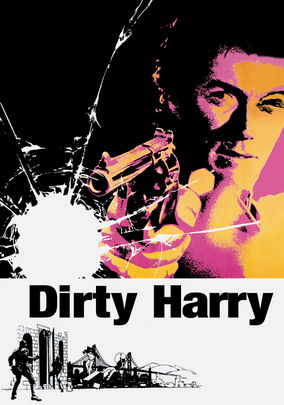
Dirty Harry-1971

Dirty Harry-1971

Director Don Siegel

Starring Clint Eastwood, Andrew Robinson, Reni Santoni

Top 250 Films #42

Scott’s Review #443
445522

Reviewed July 4, 2016

Grade: A

Dirty Harry (1971) is a classic crime drama that became a signature role for Clint Eastwood as the title character, a role he has played four more times.

Dirty Harry set the tone for the plethora of crime thrillers and police action films that filled theaters throughout the 1970s and 1980s. This film still holds up very well and is a masterpiece of the cat-and-mouse/detective genre.

Quiet and controlled, but filled with anger below the surface (we learn a drunk driver killed his wife), Harry Callahan is a tough cop in San Francisco who has seen it all. He is a red-blooded American good guy, though he is brooding and has a mind of his own, oftentimes disagreeing with his superiors and their rules.

He epitomizes good versus evil.

A vicious killer named Scorpio (based on the real-life Zodiac killer) is on the loose, having killed two people already. His motives are unclear, but that is relatively unimportant. What is important is that he threatens to kill one person per day unless his demands of $100,000 are met.

Harry is immediately assigned to the case despite his reputation for being difficult and violent. This leads to a cat-and-mouse game between Harry and Scorpio as Harry pursues the criminal.

Scorpio is played by Andy Robinson, who is a fantastic villain- perhaps one of the most frightening in film history. His dirty blonde locks and angelic face, combined with maniacal expressions, make his portrayal quite scary.

He is a sniper, so he is continually perched on rooftops seeking his next victim. As he watches a couple eating ice cream in the park or a woman swimming in a rooftop pool, we feel a sense of voyeurism and dread.

His disturbing sense of humor and sadistic personality make him quite scary.

The film succeeds in large part because of its grit and violence.  And it is a very masculine film. Harry is a take-no-prisoners kind of guy, and he is hell-bent on stopping Scorpio from killing- no matter what.

In a very effective scene, Harry chases Scorpio to a vast football field and uses torture to elicit a confession from Scorpio. It is a bloody and intense scene, but quite necessary for who Harry is.

Of course, this tactic backfires as Scorpio is released from the hospital and set free. This leads to a further feud between the two men.

A bonus of Dirty Harry, and one aspect that gives so much authenticity, is the on-location setting of San Francisco. From the Golden Gate Bridge to the illustrious mountains outside the city and the Pacific Ocean, these elements add a touch of realism to an already gritty film.

Chinatown and Dolores Park are also featured.

Highlighting all of this is a sequence where Scorpio forces Harry to go from locale to locale on foot in part of a wicked game to save a victim.

Harry’s famous lines as he points his gun at the perpetrators and mocks them by asking them if five or six bullets in his gun are now legendary, as is his “Do I feel lucky? Well, do you, punk?”

On the surface, these catchphrases are a bit silly and gimmicky, but they still work.

The school bus finale, as Harry and Scorpio once again square off, is grand. As Scorpio hijacks a bus filled with grammar school students, he tricks the students, unaware of his intentions, by engaging them in children’s song sing-alongs as the harried bus driver drives out of the city.

When one child catches wind of the situation, Scorpio turns nasty, scaring the children into a frenzy.

Dirty Harry (1971) is a classic cop film that I never tire of watching. For the genre, it is as good as it gets and holds up well. After all of these years, it is tough to disassociate Clint Eastwood from the role of “Dirty Harry”.
Magnum Force-1973

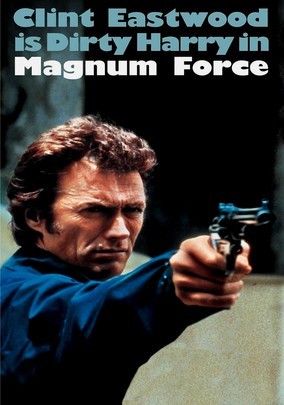
Magnum Force-1973

Director Ted Post

Starring Clint Eastwood, Hal Holbrook

Top 250 Films #148

Scott’s Review #336

60021588

Reviewed January 9, 2016

Grade: A

The follow-up to the original action thriller to end all action thrillers, Dirty Harry, 1973’s Magnum Force, is as good as the original in my opinion, but flies under the radar compared to the acclaimed Harry.

Both films are similar in style and grit, but Magnum Force holds sentimental memories for me, as I remember watching the film countless times on rainy Saturday afternoons as a kid.

The similarities abound between the two films, as the screenwriter and the score are by the same writer and composer, respectively.

Admittedly, Magnum Force is more conventional and less dirty than its predecessor.

Playing not just the same role of Harry Callahan, the grizzled, hard-nosed Inspector from Dirty Harry, but also Clint Eastwood plays him in quite the same manner.

Not one to blow anyone away with his dazzling acting talent, Eastwood is smart to keep to the status quo. The character is tough and no-nonsense, but has a take-prisoner vulnerability we love and admire.

In this chapter, a syndicate of vigilante cops is taking matters into their own hands by assassinating known criminals who have been let off the hook either by connections or some other form of loophole.

The pattern is for uniformed patrol officers to pull over a criminal for a mundane reason, only to shoot and kill them on the side of the road at point-blank range. They deserve it, but are the cops justified in their actions?

The appeal and mystery of the film is that the police officers wear dark helmets that hide their identities from the audience, adding a level of intrigue.

The film offers up a moral question: do the criminals get what they deserve, and do the police officers have the right to justify their actions?

Especially relevant is the final thirty minutes of the film, as Harry and the central “villain”, Lieutenant Briggs (Holbrook), have a standoff and discuss the topic.

Magnum Force is a shoot-’em-up action flick, so this debate is skirted over largely in favor of car chases and fight scenes. But the point can be thought about.

The best sequence of the film is the finale, as Callahan is lured to an abandoned garage and chased by three remaining cops. The big reveal is that Briggs is running the show, and as he drives around in his early 1970’s Ford LTD, soon to become battered and weathered, it is a great scene, especially for those who enjoy car chases.

Magnum Force (1973) is a no-frills “guy” film, but one done very well and with an interesting, semi-controversial premise.

The film is the 1970s action genre at its very best.

Surprisingly, and to the film’s credit, one can discuss the film after watching it instead of it being a generic, forgettable flick.

The Enforcer-1976

The Enforcer-1976

Director James Fargo

Starring Clint Eastwood, Tyne Daly, John Mitchum

Scott’s Review #1,330

Reviewed January 2, 2023

Grade: B+

The Dirty Harry film series is pure, gooey 1970s machismo entertainment.

Featuring a vigilante-type police detective who rids the world of the bad guys is pleasure personified, if not all that realistic. In these films, there is only good versus evil, and social issues, if explored, are not the most relevant part of the film, but rather provide more context for why the events occur.

Nonetheless, the films are top-notch in action, with quality gunfights and violence, creating a powerful crime thriller franchise that still holds up well.

They are much better than the similar yet uninspired and poorly acted Death Wish films featuring Charles Bronson.

The Enforcer (1976) is a third of five films from 1971 until 1988, following the 1971 masterpiece Dirty Harry and the nearly as good Magnum Force in 1973.

This one offers a slightly progressive, feminist approach that continues into 1983’s Sudden Impact and adds much-needed humor, creating a lighter touch.

Feminism is the inclusion of a female cop due to a new affirmative action initiative, who goes toe to toe with the masculinity and conservatism of our main character.

Officer “Dirty Harry” Callahan (Clint Eastwood) is reassigned from homicide to personnel after his latest use of excessive force exhausts his outranking superiors. Demoralized, he angrily assumes his duties while a new case disrupts the San Francisco Bay Area.

A new terrorist group, calling itself the People’s Revolutionary Strike Force, organizes a series of crimes in San Francisco, hoping to enrich themselves. Led by Bobby Maxwell (DeVeren Bookwalter), they wreak havoc and create fear.

When they kidnap the mayor (John Crawford) and steal rockets and rifles for their next attack, Harry and his new female partner, Inspector Kate Moore (Tyne Daly), must stop the terrorists.

To measure up to 1971’s Dirty Harry is a nearly impossible feat, but The Enforcer continues the rhythm with largely the same basic script. A main part of the fun is watching the grizzled Callahan feud with his superiors and being reduced to working with a female cop.

Naturally, he and Moore eventually become buddies, and I like the lack of sexual chemistry between them. She’s not interested in his affection, and neither is he, so their relationship is focused on serving and protecting the public.

Daly is terrific as Moore, which led to her career-defining role in the television series Cagney and Lacey. Rather than playing her as a bitch she is warm and determined to immerse herself in a man’s world.

She’s a great character, but unfortunately, she is not explored as much as she could have been.

The filmmakers also keep San Francisco’s setting intact, which is a wise move and a treat for moviegoers who love a good exterior sequence or two.

A fabulous final sequence finds the film’s events heading to a Giants game at the historic Candlestick Park, and finally a showdown at Alcatraz Island. These trimmings are essential for fans anticipating the juicy, pulsating locales of the populous city.

No, Eastwood is not the greatest actor in the film, but he is the best at playing Callahan. He carries the film seamlessly and will make conservatives smirk as he endures the irritations of liberal-minded decision-makers.

A weak explanation of the real motives of the terrorist group is unimportant. It’s the violence, the thrills, the chases, and Eastwood and Daly that make this movie pure fun.

The Enforcer (1976) doesn’t challenge or add to the creativity of cinema but offers a shoot-em-up experience with a confident, charismatic protagonist.

Forever immersed in the good tidings of 1970s cinema is enough to continue the successful string of Dirty Harry films.

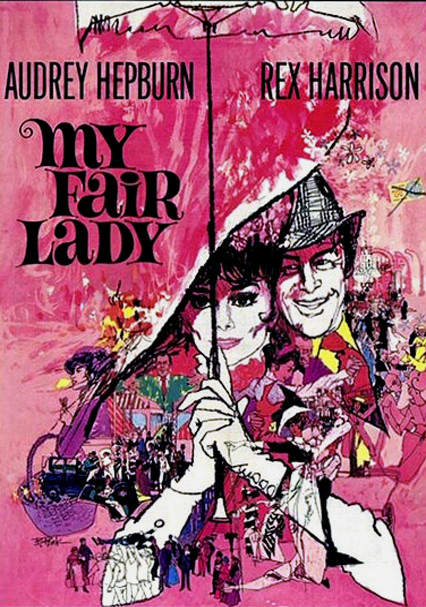
My Fair Lady-1964

My Fair Lady-1964

Director George Cukor

Starring Audrey Hepburn, Rex Harrison

Scott’s Review #938

Reviewed September 6, 2019

Grade: A-

Winner of the Best Picture Academy Award (it would not have been my choice), My Fair Lady (1964) is a good product that is based on the stage version, in turn, based on the famous 1913 stage play Pygmalion by George Bernard Shaw.

The musical’s central negative aspect is its casting choices. Hepburn and Harrison have only mediocre chemistry, and Hepburn does not sing. However, the film is enchanting and filled with lavish sets, colorful costumes, and earnest songs, making it entertaining for the whole family.

The iconic Eliza Doolittle (Hepburn) and Henry Higgins (Harrison) are household names to every fan of the musical genre.

Set in London, sophisticated and arrogant Professor Higgins, a scholar of phonetics, is intent on proving that the tone and accent of one’s voice determine one’s lot in society.

As an experiment, he chooses flower saleswoman Eliza, with her horrid Cockney accent, and is determined to crown her duchess of a ball.

Unaware of his scheme but soon to find out she has been had, romance eventually blooms as the song “I’ve Grown Accustomed to Her Face” becomes essential.

My Fair Lady is quite the epic, with a runtime of two hours and fifty-two minutes, which is lofty for a film.

The misty London setting adds layers of mystique and atmosphere, and the cinematography drizzles with color and pizzazz, making the overall content look fantastic.

Because of the length of the film and the magnificent trimmings, the production looks like a spectacle, reminiscent of the elegant extravagance of the 1950s and 1960s, when musicals made into films were grand and robust.

It’s no wonder this helped it win Best Picture, Best Director, and many other awards. Hollywood loves this film.

When dissected and analyzed, social and class systems are a large part of the film amid the cheery singing, dancing, and big-screen bombast. Social status and hints of socialism pepper the production, rising way above the fluff it could have been if just a “boy from the good side of the tracks meets girls from the wrong side.”

Eliza’s father, Alfred (Stanley Holloway), a waste collector, is also an opportunist. He sings his story during “With a Little Bit of Luck.” The differences between the “haves” and the “have nots” are evident.

Since the chemistry is limited, I never bought Harrison and Hepburn as a romantic duo. The teacher/student angle somewhat works, though always bothersome, but Henry’s self-assured behavior and superior attitude make him tough to root for.

The controversy surrounding the film includes the decision to dub nearly all of Hepburn’s singing with another singer’s voice. This devastated the actress and cost her an Academy Award nomination. Her snub is especially jarring, given the dozen other nominations it received.

The story is heartwarming and follows the like-minded theme of a hero rescuing a damsel in distress. Hints of Cinderella (1950) and even Pretty Woman (1990) glisten, with only a hint of male chauvinism that does not ruin the experience or reduce the film to a dated guy film, as with Pretty Woman.

“I’m an Ordinary Man” describes how women ruin men’s lives and are not the most progressive or female-friendly of all the numbers.

My Fair Lady (1964) is a film from the past that begs to be viewed on the big screen so that all its qualities can be enjoyed. Like Lawrence of Arabia (1963), it is best viewed in a wide-angle, enormous theater setting to ensure that all its aspects are noticed and enjoyed.

It’s a Hollywood film done tremendously well. Young viewers would be wise to be exposed to this film to delight in the cinematic treats.

Oscar Nominations: 8 wins-Best Picture (won), Best Director-George Cukor (won), Best Actor-Rex Harrison (won), Best Supporting Actor-Stanley Holloway, Best Supporting Actress-Gladys Cooper, Best Screenplay Based on Material from Another Medium, Best Scoring of Music-Adaptation or Treatment (won), Best Sound (won), Best Art Direction, Color (won), Best Cinematography, Color (won), Best Costume Design, Color (won), Best Film Editing

Stalag 17-1953

Stalag 17-1953

Director Billy Wilder

Starring William Holden, Don Taylor

Scott’s Review #5

994592

Reviewed June 16, 2014

Grade: B

Stalag 17 (1953), a film by famed director Billy Wilder, tackles the theme of POWs during World War II.

This film reminds me of the acclaimed television show M*A*S*H (1972-1983) in that the comedy elements are similar (men in drag, a light subplot of one soldier’s obsession with Betty Grable).

However, this film is heavy on the drama side and a deep cynicism that network television shows cannot match.

A group of American soldiers is held in a POW camp by Germans. Somehow, the Germans realized an escape plan. A whodunit ensues to find out who the mole is and his motivations. Liberties are taken- I doubt the real German soldiers would be as lovely as the film depicts.

William Holden stars as the cynic of the camp and the likely suspect, but is he the culprit?

This film is a hybrid of other Wilder films- the cross-dressing theme in Some Like it Hot (1959) is depicted, and shades of the darkness of Sunset Boulevard (1950) (also starring Holden) appear.

The black and white are effective in eliciting the confinement of the camp.

It’s a quality film, though a predictable “seen this all before” element nagged throughout.

Oscar Nominations: 1 win-Best Director-Billy Wilder, Best Actor-William Holden (won), Best Supporting Actor-Robert Strauss