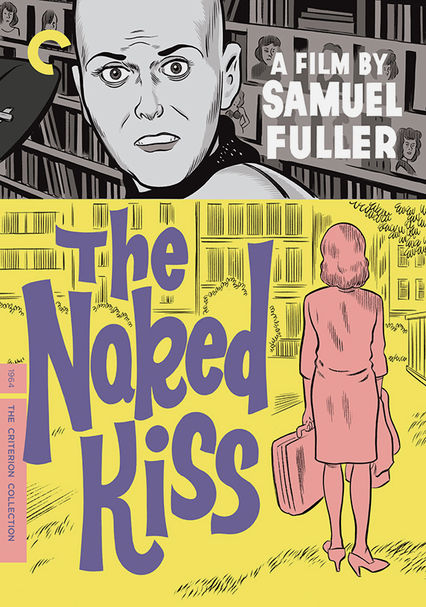
The Naked Kiss-1964
Director Samuel Fuller
Starring Constance Towers
Top 250 Films #204
Scott’s Review #1,346
Reviewed February 25, 2023
Grade: A
A pure treat for me is seeing a film, especially a classic film, that exudes creativity and a left-of-center approach.
In the 1960s, cinema films started to break away from the tried-and-true and safe, telling sinister stories of macabre and unusual human behavior.
Samuel Fuller bravely created The Naked Kiss (1964), a film that goes beyond well-meaning but straightforward offerings.
Dusting off the film noir genre, it is riddled with perfections like the tarnished glitter of small-town Americana and the secrets beneath the surface.
It also dares to delve into the lustful and perverse depths of abnormal human psychology, a feat few films achieved in the old days.
The film is a black-and-white B-movie, which heightens its power and lurid nature.
Eager to start a new life, a prostitute named Kelly (Constance Towers) arrives in a small town but finds the sunny veneer and the residents’ cheery, wholesome dispositions to be a sham.
Kelly meets the handsome town sheriff, Griff (Anthony Eisley), and her eventual fiancé, Grant (Michael Dante), but ultimately, both men have something to hide.
Hard to believe, but we do anyway, is the haughty incorporation of a secret small-town brothel with one gorgeous prostitute after another. The evil madame Candy, portrayed by Virginia Grey, leads it.
Constance Towers easily carries the film as Kelly. Towers did not make many films, but later became well known in theater circles before becoming a legendary villainess on the ABC daytime drama General Hospital.
Kelly is sultry yet highly learned and intelligent. She is not afraid to use her smarts to get ahead. She calculates and wisely pursues opportunities to stay on the straight and narrow while using a man or two to get what she wants and needs.
Despite this, she is kind and revels in caring for children of all colors and backgrounds. She also watches out for her fellow nurses.
One of them, Buff, nearly stumbles into a life of prostitution if not for Kelly daringly describing what her new glamorous life would ultimately become.
Thanks to Towers, Kelly relays every possible emotion to the audience, from comedy to love, horror, and controlled manipulation.
I don’t think I’ve seen any other projects by director, writer, and producer Fuller, but I want to. Perhaps only a coincidence since the films were made in the same year, but comparisons to Alfred Hitchcock’s Marnie (1964) are noticed.
Kelly briskly combs her blonde hair in a mirror and smirks, reminiscent of Marnie doing more or less the same in Hitchcock’s classic.
Both characters are tall, leggy blondes with a secret or two to hide and damaged psyches to protect.
They also each arrive in a new town, presumably to start over. Boldly carrying a suitcase and wearing a bright grey business suit, they proudly walk down a suburban street with possibilities ahead.
The Naked Kiss is a progressive, feminist film.
During the first scene, Fuller shows what few directors ever would- a female character with a shaved head.
Kelly has been humiliated for the last time and takes her owed $75 from her pimp. Kelly’s honest personality is revealed in this scene since she could have quickly taken $900 from him and fled.
The cagey and spiteful underbelly of suburban life is exposed. A pointed critique of small-town hypocrisy and the exploitation of women is nearly at every turn.
Another comparison to the masterpiece The Night of the Hunter (1955) is worth mentioning, since both films use child characters in haunting ways.
The theme of pedophilia is powerful and sickening, but portrayed with a warped sense of a fairy tale.
Finally, the cinematic use of harsh, glowing white light makes many characters appear angelic, which works tremendously well.
Because of Fuller’s direction and Towers’s strong acting, Kelly’s character comes through well. As a result, we get a character study to savor and a strong female character to root for.
Both aggressively champion their respective areas of expertise.
The Naked Kiss (1964) challenges the rules of early 1960s filmmaking and storytelling. It is a brave journey through humankind’s dark nature, breaking every rule along the way.