Tag Archives: Holland Taylor

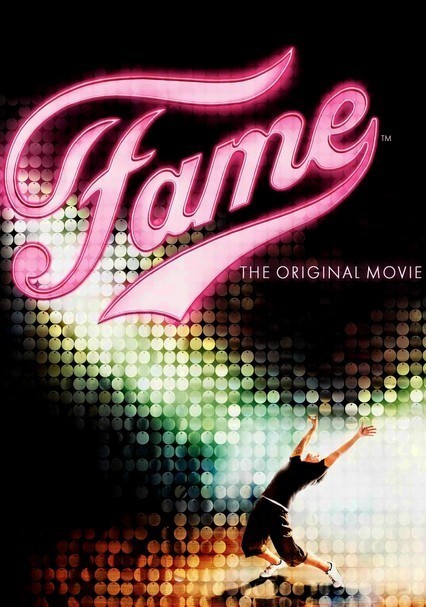
Fame-1980

Fame-1980

Director Alan Parker

Starring Irene Cara, Paul McCrane, Maureen Teefy

Scott’s Review #1,143

Reviewed May 18, 2021

Grade: A-

Fame (1980) is a teen high school musical drama centering around the trials and tribulations of gifted New York City kids. Anyone with musical, theatrical, or dance talent can relate to the film.

The rest of us can merely live vicariously through these kids and the potential careers that lie ahead of them wishing we had half of their talent and drive.

This is not your standard musical from the 1950s or 1960s and the pace is quite frenetic. Fasten your seatbelts because there is a lot packed in.

The film oozes with an upbeat musical score and the flavor of New York City, quite gritty and dangerous circa 1980. The now-legendary musical numbers where the cast dances together with faculty and strangers alike atop Manhattan taxi cabs are silly beyond belief but the title song by star Irene Cara is a danceable and hummable classic.

These scenes offset the muscular dramatic scenes with lightness and comedy, but in another way, they diminish the credibility of the serious moments.

Events get off to a chaotic start as we witness a mass of teenagers frenetically scrambling to remember audition lyrics and dance numbers as they vie for entry into the High School of Performing Arts, with free admission for only the cream of the crop.

The film chronicles the lucky lives from their auditions to their freshman, sophomore, junior, and senior years.

The main group features Montgomery MacNeil (Paul McCrane), a closeted gay male; Doris Finsecker (Maureen Teefy), a shy Jewish girl; Ralph Garci (Barry Miller), and Bruno Martelli (Lee Curreri) an aspiring keyboardist whose electronic equipment horrifies the conservative music teachers.

They align with Lisa Monroe (Laura Dean), Coco Hernandez (Irene Cara), and Leroy Johnson (Gene Anthony Ray) a gifted dancer who cannot read.

All have interesting backstories or problems to work through during their four years in school and this is the main appeal of the film. The dance numbers, of course, are fabulous too.

I immediately became enamored with sensitive Doris, whose mother’s (Tresa Hughes) emotions elicit viewer emotion simply with her own emotions. Her passion for her daughter and her talent is infectious.

Alan Parker, who directs Fame, offers extremely heavy topics that the students must face. It’s not all fun and dance. The youngsters grapple with issues such as homosexuality, abortion, interracial dating, class systems, attempted suicide, and illiteracy.

Their pain is readily offered to audiences who become entangled in their worlds.

A negative is that as much as the issues are brought to the forefront, the sheer number of them results in few resolutions.

On top of their unique struggles, the students must deal with the mundane pressures of adolescence like homework, heartbreak, and rejection. Their talent doesn’t make them any more special than anyone else in the growing-up department.

My favorite moments in Fame are the quiet ones. When Doris and Montgomery share a chat on the stairs that skirts around the talk of his absent mother I thought what a delightful couple they would make. Montgomery’s repressed sexuality slowly surfaces while Doris develops a crush on an older popular boy.

As if the heavy topics eventually subside, they don’t. As the student’s age and start to plan careers, Coco is lured by a man claiming to be a director only to realize he is a porn film “director”. He coaxes her into taking off her shirt and photographs her sobbing.

The scene is heartbreaking in its power.

The atmosphere of Fame also works well. There is a strong and suffocating feeling of heat and humidity. Anyone who has spent time in New York City during the summer months knows the stench and thickness of the stuffy weather.

I got the impression the school had no air conditioning as the running perspiration of the music teacher is evidence of.

A coming-of-age film that delivers hard-hitting messages only offset by the climactic dance-celebration numbers, Fame (1980) is a winner and gives teen angst its due.

This film ages well and stands the test of time.

Oscar Nominations: 2 wins-Best Original Screenplay, Best Original Score (won), Best Original Song-“Fame” (won), Out Here on My Own”, Best Film Editing, Best Sound

Bombshell-2019

Bombshell-2019

Director Jay Roach

Starring Charlize Theron, Margot Robbie, Nicole Kidman

Scott’s Review #972

Reviewed December 26, 2019

Grade: B+

Bombshell (2019) is the type of film that, depending on your political affiliation, you will either refuse to see or see and have a love/hate reaction to.

As a non-lover of the “news” network Fox News, I am firmly ensconced in the latter camp, so my opinion of the film is mixed.

The importance of releasing the film during a time of political turmoil in 2019 is crucial and intentional, which is why I commend the film.

Still, the subject matter of sexual harassment against women is complex to watch and a sobering reminder that this behavior continues to occur.

The performances of the principal players — Charlize Theron, Nicole Kidman, Margot Robbie, Kate McKinnon, and John Lithgow — are outstanding and key to the film’s success. Theron and Lithgow receive the lion’s share of makeup and prosthetic work, making them look identical to their real-life counterparts.

Beneficial is a myriad of Fox News political figure portrayals (Sean Hannity, Jeanine Pirro, and Bill O’Reilly) with frighteningly good accuracy, creating a surreal effect.

The film centers on female Fox News personnel in Manhattan and their sexual harassment allegations against founder Roger Ailes (Lithgow).

The central figure- Megyn Kelly (Theron) is conflicted over the risks to both her career and her financial stability if she comes forward and admits her harassment by Ailes years ago, after Gretchen Carlson sues the network.

Margot Robbie plays Kayla, a young Fox employee whom Ailes also harasses.

McKinnon plays a closeted lesbian and confidante to Kayla, who works for the network despite being liberal and a massive admirer of Hillary Clinton.

The plot is fast-paced and unfolds like a quick page-turner, with some sections narrated by Kelly. Bombshell feels timely and has a distinct “ripped from the headlines” makeup.

The fact that the real-life events occurred as recently as 2016 is a striking aspect that will captivate the viewer, especially those who follow United States politics or current events.

The story is fresh and vibrant, with a sense of familiarity, rather than a tale from an event decades ago that many viewers have forgotten or were too young to remember.

I had difficulty feeling much sympathy for most of the characters, which detracts from the film’s overall impact.

The standard definition that the term “Fox News” usually conjures is one of male chauvinism and the good old boys club, with old-fashioned machismo ruling the roost.

Why would any woman choose to work for them or align themselves with the Conservative party, which is not a fan of women or women’s rights?

With this fact in mind, it was difficult for me to watch the film.

To build on this, CEO Roger Ailes is written as the clear villain with no redeeming value. During one scene, he salivates over Kayla when she visits him in his office and instructs her to lift her skirt higher and twirl for him. The scene is sickening, and we feel Kayla’s embarrassment and humiliation.

In a cheer-out-loud moment at the end of the film, she quits, unable to remain in such a corrupt corporation.

One of the only likable characters is Jess Carr (McKinnon), probably fictitious. Hardly fitting the mold of the female staff, not perky or showing leg, she goes out for drinks with Kayla and admits to being gay; the two end up having a one-night stand.

The character is unique, and McKinnon makes wise acting choices.

Worth mentioning is Ailes’s long-time secretary Faye (Holland Taylor). Surely, she knows the antics that go on in her boss’s office, but she almost serves as an accomplice. Why?

Sad to realize that, as recently as 2016, women were still having to face discrimination in the workplace. Industries with powerful men still can be toxic and poisonous to women attempting to climb the ranks.

If the women harassed at Fox News were not top anchors, there is no way the accusations would have even been heard. What about the receptionists, cleaning staff, or administrators who are harassed?

Would anyone listen to them? This message crossed my mind while watching Bombshell.

With fantastic acting and incredible makeup, time will tell if Bombshell (2019) remains a relevant film. Leaving the viewer with an unsatisfying ending rather than a hopeful one, it isn’t easy to sympathize with most of the characters, even when they are supposed to be sympathetic.

Bombshell would make a perfect companion piece to Vice (2018), a similar political, yet superior film.

Oscar Nominations: 1 win-Best Actress-Charlize Theron, Best Supporting Actress-Margot Robbie, Best Makeup and Hairstyling (won)

Gloria Bell-2019

Gloria Bell-2019

Director Sebastian Lelio

Starring Julianne Moore, John Turturro

Scott’s Review #924

Reviewed July 29, 2019

Grade: B+

An English remake of the successful 2013 Chilean film, titled Gloria, Gloria Bell (2019) stars Julianne Moore, and the setting is relocated to Los Angeles.

The film is directed by Sebastian Lelio, fresh off a Best Foreign Language Film win for A Fantastic Woman (2017), and both movies contain similar themes of oppression and loneliness.

Preferring the original by only a hair, Gloria Bell is nonetheless a worthy offering with Moore perfectly cast in the title role.

Middle-aged divorcee Gloria Bell (Moore) resides in Los Angeles, working an office job of some respectability, but is unfulfilled. She spends many nights at a nightclub, where she is considered a regular.

The club caters to middle-aged singles who dance and drink while looking for love. When she meets Arnold (John Turturro) one evening and they share a night of passion, the pair begin dating.

However, Gloria realizes that he still supports his ex-wife and grown daughters, which limits his time and commitment to her, leaving her frustrated.

Moore is honest and understated in her performance, and the highlight of the film.

With another casting choice, the character might not have worked so well. She is full of life, singing in her car, attending laughter therapy, and smoking pot in her apartment. She has a warm yet limited relationship with her millennial kids and her ex-husband and his new wife.

Moore gives the character an earnestness and likability that work and get the audience on her side during her trials and tribulations.

This is not to say that Gloria doesn’t occasionally frustrate the audience.

After inviting Arnold to meet the whole crew over dinner and wine at her son’s house, what begins as a meet-and-greet quickly turns into a reminiscing trip down memory lane and whimsical looks at Gloria and her ex’s wedding pictures.

Her disregard for Arnold’s feelings is disappointing, but there is no bad intention behind it.

Gloria has baggage and is caught up in the moment, simply reliving a happier time at the expense of the current moment.

Arnold has his demons and is both likable and unlikable to the audience. Tending to bail on Gloria when either his family requires his assistance or he feels left out, he hardly exhibits grown man behavior or anyone Gloria would want to date.

The first red flag is his confession of being enamored of Gloria over their first dinner date. From there, his on-again-off-again presence makes him the odd man out. Lelio intends to make Gloria the sympathetic one. It’s her movie after all.

Watching A Fantastic Woman sequentially is a wise idea. Numerous comparisons are apparent, beginning with the feelings shared by both central characters.

Both are searching for happiness, but are unsure of how to attain it, especially given that they once had it and it was taken away from them.

Scenes of both characters driving in their cars and singing songs are included, and the look of both films is the same.

Very few comparisons or contrasts can be made between Gloria of 2013 and Gloria Bell of 2019, as both are above average, except that the character is slightly more vivacious in the former than in the latter.

This could be attributed to the Chilean and South American free-thinking and sexual openness compared to the more reserved American way of thinking, but this is merely a suggestion.

It is interesting to note how Lelio remade his film only six years later, rather than another director putting their stamp on it.

Gloria Bell (2019) paints a vivid portrait of a modern woman dealt a bad hand who struggles to find happiness and fulfillment in any way she knows how.

Thanks in large part to Moore’s portrayal and filling the character with kindness and care, she wins over the audience. The character is written as intelligent and interesting, and not desperate in any way for a man; he needs to be the right man.

Legally Blonde-2001

Legally Blonde-2001

Director Robert Luketic

Starring Reese Witherspoon, Luke Wilson

Scott’s Review #807

Reviewed August 30, 2018

Grade: B+

Legally Blonde (2001) is a film that by all accounts should have been a hot mess, but for some reason is a great ball of fun. High art it ain’t by any means, and the plot is implausible beyond belief, and suspension of disbelief must be securely tucked away.

Despite portraying more serious roles both before and after this film, Reese Witherspoon is largely responsible for the success and is closely associated with this role.

Quite simply, all the elements manage to align with perfection in this film.

Elle Woods (Witherspoon) is president of her sorority at a Los Angeles college. Clad in fluffy pink attire and carrying her cute dog everywhere she goes, she epitomizes the stereotypical “dumb blonde”.

However, she does carry a 4.0 grade point average in fashion.

Expecting a marriage proposal from her upper-class, snooty boyfriend, Warner, Elle instead finds herself dumped due to not being serious enough.

Determined to prove herself worthy, she manages acceptance into Harvard Law School, along with Warner, and embarks on hi-jinks and adventures.

Warner’s fiancee and a potential new love interest cause turmoil for the boisterous Elle.

Legally Blonde never takes itself too seriously and is simply a fun, silly-minded, comic adventure. Audiences will likely chuckle and smile along with Elle’s adventures as she gets into one pickle after another, always determined to prove her intelligence.

To be clear, the film itself is very formulaic and could easily have been trivial and uninspired resulting in a bomb. But Witherspoon shines in the lead role adding a likable, charming quality to the character.

The actress possesses great wit and comic timing so that her character becomes more of a champion and we root for her to overcome obstacles and succeed.

By miles, she is the standout in the film.

Suspension of disbelief is at an all-time high. In “real life” there is no way Elle would ever make her way into the elitist Ivy League school brandishing a pink resume or other silly tricks to be cute and appealing.

Nor would she ever likely be so instrumental in winning a murder case so quickly. To nobody’s surprise, Elle eventually graduates with flying colors and is honored with giving a graduation speech inspiring those around her.

But as implausible as these situations are, they are also Legally Blondes’ appeal.

The supporting characters are pure caricatures, especially the main foils (Warner and Vivian- who take Elle’s place as fiancee). Both are the villains, Vivian going so far as to embarrass Elle by inviting her to a stuffy party under the guise of it being a costume party.

In the end, one of the characters “turns good”, another common element of predictable films of this nature. But again, the film is just pure and simple fun, so these stereotypes are okay.

In more modern times (not that 2001 was so long ago), the film would have not been directed by a man, but rather by a woman.

Screenwriters Kirsten Smith and Karen McCullah Lutz prepared a female-driven film that was based on a novel by Amanda Brown.

Why a man was chosen to direct is beyond me, but, alas, this is the way things were at the time.

Interestingly, another recent film that I reviewed, My Big Fat Greek Wedding (2002) would work perfectly as a now retro romantic comedy double feature along with Legally Blonde (2001).

Both are fun and light but also celebrate strong female characters.

Legally Blonde borrows much from the 1995 brilliant similar genre Clueless but is not as great as that film. Still, the film is an inspired effort due largely to the charms of its lead star.