Tag Archives: Ann Cusack

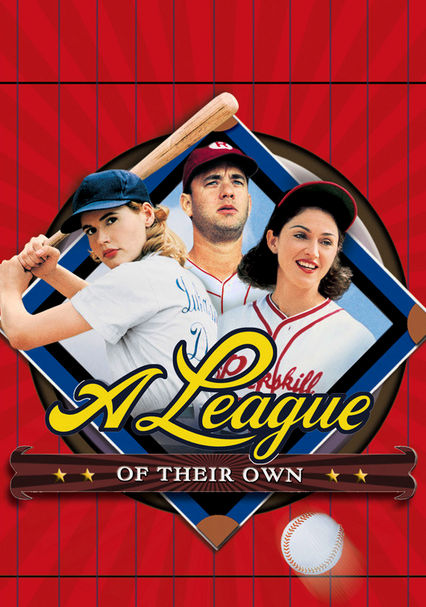
A League of Their Own-1992

A League of Their Own-1992

Director Penny Marshall

Starring Geena Davis, Tom Hanks

Scott’s Review #970
Reviewed December 18, 2019

Grade: B

Sports films are too often predictable affairs with fairy tale endings. They are also typically male-driven.

A League of Their Own (1992) is warm and sentimental, and while director Penny Marshall plays it way too sweet and safe for my tastes, there is a measure of feminism that is admirable and a bit different.

The cast is well-known and provides professionalism and energy, but the film is little more than mediocre and strikes out towards the end with a far too pretty ending, doing exactly what these genre films normally do.

It’s as if Marshall has a great idea, but then decides not to teeter too far left of center.

Beginning in 1988 (present times), elderly Dottie Hinson attends an opening of the new All-American Girls Professional Baseball League exhibit at the Baseball Hall of Fame.

She reunites with several of her former teammates and friends, prompting a flashback to 1943, when the main story takes place.

With many young men off fighting World War II, the Major League Baseball franchise is at risk. A women’s league is bankrolled, prompting the recruitment of several players and the formation of the Peaches and the Belles. They face off in the World Series to dramatic effect.

The film is nice and welcoming, providing a haven for filmgoers seeking a solid story and a heartwarming sensibility. The lead actors, Tom Hanks and Geena Davis, respectively the team manager and star player, provide strength and do the best they can with the roles given.

During the early 1990s, both were big stars, and while their characters are not romantically linked, their chemistry is zesty.

Hanks as Jimmy is a bit predictable and gruff, at first being little more than a male chauvinist, but eventually coming around to respect the women.

For fans of baseball, the film will be delightful. With enough action scenes on the outdoor diamond to please those fans, one might forget that the teams are made up of women.

The demographic sought after is female, but the sunny settings and standard hot dogs, peanuts, and popcorn result in the film projecting a wholesomeness that should also appeal to men.

The supporting characters are too one-dimensional and cliched. The biggest offenders are the characters of “All the Way” Mae Morabito (Madonna) and Doris Murphy (Rosie O’Donnell).

The pop star, a horrid actress, in my opinion, is written way too cornily, cracking gum and talking tough, while O’Donnell is intended to be her sidekick.

The duo is street-smart and grizzled New Yorkers, but the casting never really works, and the action feels very formulaic, losing its luster very early on.

While Marshall incorporates brief moments of tragedy, one minor character’s husband is killed in action during the war, and all the action is safely in the United States, the war serves as more of a backdrop than a major player.

More common are syrupy scenes between characters who, at first, miscommunicate a misunderstand each other, but then forge a close bond. And do we ever really believe Jimmy will not become the women’s biggest fan?

A League of Their Own (1992) is a decent watch and marginally enjoyable in a fluff way. It provides little edginess and could have provided darker story points than it does.

Instead, it shows a slice of Americana and Apple Pie approach that, while not all bad, is not all good either, feeling limited by its sentimentality.

The film could be much worse and features characters the viewer can root for and cheer on, whether it’s a home run or a safe slide into third base.

This is mainly a result of the stellar cast that Marshall presents.
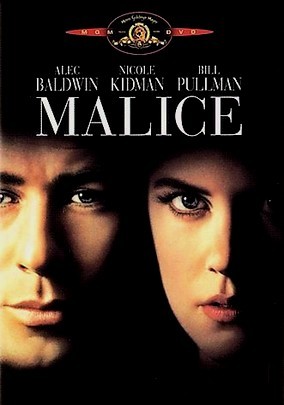
Malice-1993

Malice-1993

Director Harold Becker

Starring Alec Baldwin, Nicole Kidman, Bill Pullman

Scott’s Review #765

Reviewed May 29, 2018

Grade: B+

Malice (1993) is only one of a slew of husband and wife-themed thrillers to emerge from the early 1990’s- Unlawful Entry (1992), Sleeping with the Enemy (1991), and Deceived (1991) are other similar films that made lots of money during this time.

This slick filmmaking genre was popular as the new decade emerged and more complex storytelling graced screens.

The myriad twists and turns are both a positive and a negative for this film.

Keeping the audience guessing and on pins and needles is a key to success, eliciting a fun tone, as well as the tremendous star power of the cast (George C. Scott and Anne Bancroft are big-time heavies).

Then again, a few of the plot points become red herrings and thereby meaningless, and the overall plot and endless subplots become way more complex than they need to be.

In a plot that is dizzying to explain, Associate Dean Andy Safian (Bill Pullman) and his wife Tracy (Nicole Kidman) are embarking on a life together in Massachusetts as they purchase a grand Victorian house and plan to begin a family.

As a serial killer stalks the campus where Andy works, and implausibly results in him being the prime suspect, Tracy experiences health turmoil and is operated on by cocky yet brilliant Dr. Jed Hill (Alec Baldwin).

When dire events occur, the plot escalates, and the main characters’ motivations are called into question as truths and deceptions unravel.

When I first saw Malice in 1993 (in fact, I saw it twice the same year), I adored the multitude of plot points and devices. The film had the same effect as a speeding roller coaster ride- with endless twists and story revelations.

And to be fair, the film holds up pretty well, never seeming dated or of its time like many mainstream films.

The two startling reveals- Tracy and Jed being in cahoots and the mysterious eye witness living next door being blind- are clever bits of writing that immerse the audience on many levels.

The acting is top-notch- Kidman plays good and evil oh so well, and Bancroft’s cameo as Tracy’s mother is Oscar-worthy.

The chemistry between Pullman, Kidman, and Baldwin, and Pullman’s “nice guy” to Baldwin’s “jerk,” works quite well as the overlapping relationships play out.

Small yet meaningful roles by Bebe Neuwirth, Peter Gallagher, and Gwyneth Paltrow add layers to the wonderful casting.

And who can forget the often-parodied scene in which arrogant Dr. Jed launches into a monologue claiming to be infallible and to be God? This scene received tons of publicity and is arguably the defining moment of the film.

However, Malice’s strengths also sometimes become its weaknesses. As the events unfold, the plot becomes too confusing.

The school serial killer plot soon becomes a red herring as we realize it has little to do with the central plot- the Tracy/Jed alliance- except only to raise parenting questions.

Therefore, the big reveal of who the killer becomes is for naught. It’s the creepy janitor named Earl(Tobin Bell), hardly a surprise.

Furthermore, after the film ends and the viewer plays the events back to see if they add up, they will likely give up in frustration.

Malice is an above-average entry in a popular genre- who doesn’t like a good, solid thriller? With a talented cast and enough good medical thrills to balance with a college campus whodunit, there is plenty to please everyone who views this film.

Yes, some of the writing is preposterous and tough to believe, but Malice (1993) is a movie meant to escape with, sit back, and enjoy.

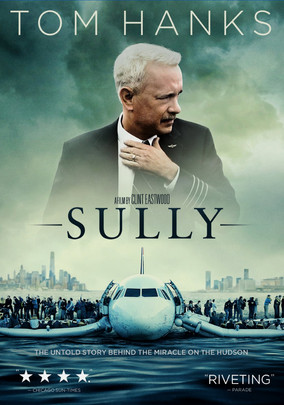
Sully-2016

Sully-2016

Director Clint Eastwood

Starring Tom Hanks

Scott’s Review #623

Reviewed March 10, 2017

Grade: B

I think most film critics would agree that each modern film directed by Clint Eastwood would accurately be described as a compelling film yet safe film, and the 2016 Eastwood offering, Sully, fits into both of these categories snugly- just as Sully feels like a snug film.

Everything seems to fit into a nice package when the credits roll.

While the film is sympathetic and has leanings of a character study, it is also shrouded in a wholesomeness that is incredibly safe and “Hollywood.”

This is not a knock or a detriment to the film, as it is very good, well-made, and has a high budget. However, edginess is not its forte, and it might have been better off with a bit more grit.

The actual film recounts the lively, perilous recent United Airways flight 1549, on which the now-famous Captain Sully successfully landed in New York’s frigid Hudson River one January morning.

Tom Hanks is the subdued and unassuming hero to perfection as his calm demeanor and grounded persona make him a likable chap, to say nothing of saving 155 lives aboard the would-be doomed flight that day.

Instead of going in a purely linear direction, building up the events (gravitating passengers, takeoff) in sequential order until the inevitable crash, Eastwood wisely decides to begin directly after the crash.

Captain Sully, clearly jarred by the events, is startled awake by nightmares. He dreams of crashing into midtown Manhattan instead of safely landing the jet.

The hero is beginning to suffer from symptoms of PTSD.

He is kept in New York City for days on both a press tour, interview after interview, as well as being questioned by The National Transportation Safety Board, who wonder why Captain Sully did not return to a nearby airport for an emergency landing as simulated computer recreations show that he could have.

This leads to both Sully and First Officer Jeff Skiles (Aaron Eckhart) being put under a microscope and questioned.

I was a bit caught off guard and got slightly bored, as the film takes about thirty minutes to focus on the actual crash or show an airplane scene rather than building up the events by concentrating on Sully and Skiles’s mental health. However, in retrospect, Eastwood made a wise decision.

The entire film is barely over ninety minutes total, so the action comes fast and furious mid-stream.

Still, the film is not quite all that it could have been. Despite the potentially horrific consequences faced by an airplane blowing both engines due to the flocks of birds, I never got many extremely perilous moments during the film.

While technically well done, the danger scenes as Sully navigates the plane into the river lack much in the way of the punch.

Sure, there are a few quick shots of passengers praying or appearing frightened, but we never get to know any of the passengers very well.

A “don’t blink or you might miss it” scene of an elderly mother and her daughter shopping for a snow globe at the airport or three men rushing to catch the plane to catch a golf game in Charlotte is not enough for the audience to become too enveloped in their characters.

They almost seem thrown at the last minute as a way of personalizing the passengers.

As I mentioned above, the film’s point surrounds Sully (and arguably it should; there is nothing wrong with that) and, to a lesser degree, Skiles. The supporting characters contain no character development, and even Skiles’s personal life is not explored well.

Scully’s wife is only seen through phone conversations (played by Laura Linney), and he is happily married with two daughters. There is a brief talk about money trouble, but the wife is underdeveloped.

Additionally, the NTSB agents are portrayed as quite antagonistic towards Sully and Skiles (rumors abound that this was embellished for movie making), which makes sense.

I enjoyed the ending of the film- in tandem with the credits rolling- of seeing not only the real-life Sully but his wife and the passengers and crew of the actual United Airlines Flight 1549 through interviews and photographs.

This offering in true-life biography films is now a standard feature to look forward to as it brings a humanistic conclusion to the story just watched.

The film’s focus centers on Captain Sully, which is fine by me- the man is a hero- but as a film, and more than a biography, it might have added depth to have richer supporting characters and a more substantial background of the man that is Sully.

A few rushed childhood aviator and battle plane scenes seemed somewhat out of place.

Still, the film is pleasant and immensely watchable. It will not set the world on fire or be remembered as much more than a decent film based on a true story.

Oscar Nominations: Best Sound Editing

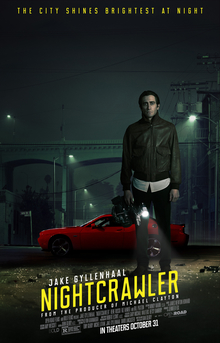
Nightcrawler-2014

Nightcrawler-2014

Director Dan Gilroy

Starring Jake Gyllenhaal

Scott’s Review #225

Reviewed March 1, 2015

Grade: B+

Nightcrawler (2014) is an intense crime thriller set in Los Angeles, featuring a wonderful performance by Jake Gyllenhaal as an unstable thief named Lou.

He cons and manipulates his way to success, videotaping accident scenes and selling them to news stations.

The film is the directorial debut of Dan Gilroy, who could become a household name.

Nightcrawler was deservedly awarded the Best Screenplay and the Best First Feature Independent Spirit awards.

The film is set mainly at night as Lou courses the city in search of accidents, crimes, and violence- the bloodier the better.

Later, Nina Romina, played by Rene Russo, tells him that violent crimes in affluent neighborhoods are best because they get the highest ratings.

Lou sells the footage to the highest bidder, and Nina becomes his main customer. Lou is eventually helped by Rick Carey, a desperate accomplice who needs money, played by Riz Ahmed.

Nightcrawler’s interesting elements are its moody setting and dim lighting. It reminds me of the 2004 film Collateral, starring Jamie Foxx and Tom Cruise, also set in Los Angeles.

Mostly set at night and heavily set on the streets of L.A., I found this mood excellent and a compelling aspect of the film.

It makes Nightcrawler look great.

Gyllenhaal deserves praise for his role as Lou and is largely responsible for the success. He was a co-producer.

As an actor, he is excellent and reminiscent of the frightening performance Robert De Niro gave in Taxi Driver (1976). With an angular face and eyes that never seem to blink, he is intense and driven on every level.

He is a sociopath.

When he quietly threatens Nina and Rick on separate occasions, one can tell he means business. Why Lou has become a thief desperate for money is never explained- does he have a family? Is he a convict?

He seems highly educated, but is he? How did he land in this predicament and resort to the life that he does?

As Lou becomes more manipulative and adjusts crime scenes to make them shocking, he seems to teeter over the edge of sanity.

In one scene, he sneaks into a victim’s home and videotapes photos of the victims from their refrigerator to promote an empathetic angle and therefore make more money from them.

This is a brilliant performance by Gyllenhaal.

Another fascinating performance I admired is Rene Russo’s, absent from films for what seems like years; Nightcrawler is a nice return for her.

Her character also has a little backstory.

We know she is a driven newswoman who struggles to maintain success at individual news stations and moves around a lot. Nina is a cutthroat news director who craves violent stories and is determined to keep her job.

She also becomes begrudgingly fascinated by Lou.

Does she like bad boys or does she admire his talent?

The third major character is Riz Ahmed’s Rick. Rick comes across as a sweet, yet gullible guy strapped for cash. Like Lou, we do not know why he is broke, but it is hinted that he may do or have done some male prostitution- he is desperate.

As the film goes along the character develops tough skin and realizes he is attracted to this new lifestyle and excitement, but will not be bullied by Lou.

On a social level, the film presents an interesting, albeit disturbing take on the relationship between the media and the viewers. What will news channels do for a good story? How bloodthirsty are news audiences? How often is a positive news story presented? It makes the audience reflect and ponder.

Nightcrawler is a dark thriller, which deservedly garnered an Oscar nomination for Best Screenplay and a slew of Independent Spirit Awards.

Intense, rich, and visually appealing, it is one of the success stories of 2014 cinema.

Oscar Nominations: Best Original Screenplay

Independent Spirit Award Nominations: 2 wins-Best Male Lead-Jake Gyllenhaal, Best Supporting Male-Riz Ahmed, Best Screenplay (won), Best First Feature (won), Best Editing