Tag Archives: Mel Brooks

High Anxiety-1977

High Anxiety-1977

Director Mel Brooks

Starring Mel Brooks, Madeline Kahn, Cloris Leachman

Top 250 Films #146

Scott’s Review #740
Reviewed April 11, 2018

Grade: A

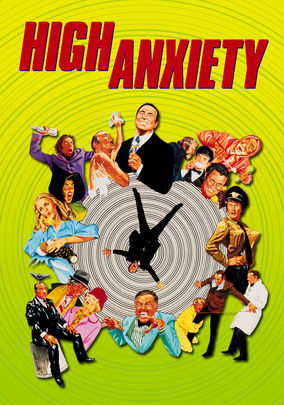
For lovers of legendary film director Alfred Hitchcock (as this reviewer is a die-hard fan), the 1977 spoof/satirical feast High Anxiety is a must-see.

The film is simply a treat for the multitude (nearly twenty!) of fun references to Hitchcock classics that fans can easily point out. Such classics as 1964’s The Birds, 1945’s Spellbound, 1958’s Vertigo, and 1960’s fan-favorite Psycho are heavily parodied.

Producer, director, and star Mel Brooks abounds all expectations with a brilliant performance and a smattering of veteran Brooks ensemble players along for the ride.

Featured stars Madeline Kahn, Harvey Korman, and Cloris Leachman deliver wonderful, lively, and memorable comic performances without ever being too zany or silly.

High Anxiety is a hilarious and clever production.

Brooks plays neurotic Doctor Richard Thorndyke, whom the Psycho-Neurotic Institute has hired for the Very Very Nervous. His role is to replace Doctor Ashley, who has died mysteriously at the facility.

Transported by his nervous driver, Brophy, he meets a bevy of peculiar characters led by Doctor Charles Montague (Korman), a man with a BDSM fetish, and Nurse Charlotte Diesel (Leachman), the grizzled head nurse.

Thorndyke immediately receives death threats amid strange shenanigans that seem to follow him wherever he goes.

Brilliantly, Thorndyke suffers from “high anxiety,” a witty reference to Hitchcock’s character of Scotty from 1958’s Vertigo.

As he meets and falls in love with Victoria Brisbane (Kahn), a woman whose father is a patient at the facility, he becomes determined to prove the fraudulence and deceit of Montague and Diesel, while subsequently clearing himself of a murder charge orchestrated by the pair.

The murder scene- occurring in a crowded lobby- with Thorndyke caught red-handed holding the murder weapon as a camera snaps the shot for evidence, is a direct spoof of 1959’s North by Northwest.

To be clear, High Anxiety is not a high-brow film, nor does it ever dare to take itself too seriously. It knows what it is and what it wants to achieve: to both entertain and please fans of Hitchcock.

The film is an ode and tribute to the general filmmaking of the director, who reportedly adored the picture and the accolades that Brooks received for making it.

There is hardly a better stamp of approval than that.

I adore the casting and the odd characters Brooks writes, specifically Leachman and Korman. The duo ham it up with a script laced with great comic moments to sink their teeth into.

Leachman, with her drill-sergeant-like stiff posture and pointed bosom (Mrs. Danvers from Rebecca in the 1940s), combined with the wimpy and snarky mannerisms of Korman’s character, is the perfect combination of female dominant and male submissive as they play off one another in a crisp style.

The sinister way that Nurse Diesel (my favorite character) utters the word “Braces”, a reference to her henchman, drizzles with dark humor and wit.

Piggybacking off these characters, Dick Van Patten (Eight Is Enough) gives a fine turn as the doomed straight man with a conscience, Dr. Wentworth, who knows something is up at the facility but is too timid to know exactly what it is.

His death scene is one of my favorites as derived from 1976’s Family Plot, the poor man is driven to ruptured eardrums and a subsequent stroke after his car is rigged to blast rock music, trapping him inside.

Brooks and Kahn make a lovable duo as the beleaguered romantic couple is forced into an adventure to prove innocence and rescue Victoria’s father from harm.

A favorite moment is Brooks’s wonderful rendition of “High Anxiety” at a hotel piano bar as he successfully woos Victoria, an entertaining romantic-comedy moment.

Predictably, he gets the girl.

High Anxiety (1977) is delicious, silly, and peppered with great classic Hitchcock moments that are fun to watch and to pick out which movie each one references.

An absolute must-see for all Hitchcock fans or those who want a humorous, lightweight introduction to the works of the Master.
Young Frankenstein-1974

Young Frankenstein-1974

Director Mel Brooks

Starring Gene Wilder, Peter Boyle, Teri Garr

Scott’s Review #1,347

Reviewed February 27, 2023

Grade: A

Young Frankenstein (1974) is one of the funniest, most authentic examples of slapstick comedy done right. The physical timing, facial expressions, and dialogue delivery are sheer perfection from the well-known cast.

Many of whom are stars of the comedy genre.

The fact that director Mel Brooks took a classic horror film as distinguished as Frankenstein (1931), and made a cross-genre sequel, is pure brilliance.

Even better is the incorporation of black-and-white filmmaking, resembling the 1930s masterpiece, so the setting feels similar. This is aided by the recreation of the lab equipment designed by the original set designer, Kenneth Strickfaden, from the 1931 film. 

Brooks co-wrote the screenplay with star Gene Wilder, a comic legend, and the writing is brilliant, crackling with wit and energy.

The 1970s film, watched decades later, has lost none of its original appeal, holding up astoundingly well even after most of the cast and the director have left this world. It can be watched over the Halloween season for the proper atmosphere or at any time.

Ideally, recommended to watch Frankenstein either before or after seeing Young Frankenstein for ideal pleasure.

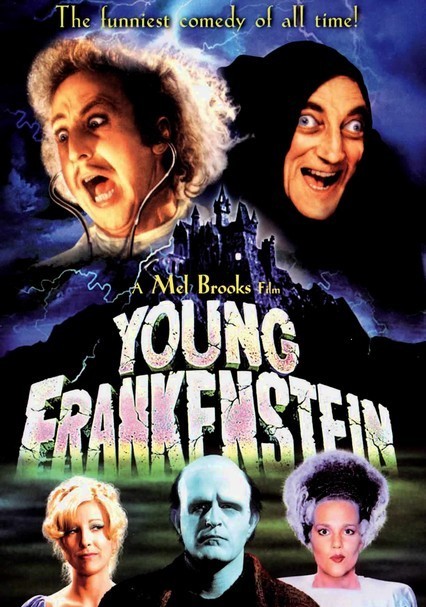
Respected medical lecturer Dr. Frederick Frankenstein (Wilder) learns, much to his chagrin, that he has inherited his infamous grandfather’s estate in Transylvania, Romania.

The original Frankenstein’s reputation is so tarnished that Frederick wants nothing to do with the name, even going so far as to change the pronunciation of his surname to “Fronkensteen”.

Begrudgingly arriving at the castle, Dr. Frankenstein soon begins to recreate his grandfather’s experiments with the help of servants Igor (Marty Feldman), Inga (Teri Garr), and the rigid Frau Blücher (Cloris Leachman).

After he creates his monster (Peter Boyle), a new set of complications ensues with the arrival of the doctor’s fiancée, Elizabeth (Madeline Kahn), and the unleashing of the frightening beast on the small town.

Comedy and horror are worlds apart, but Brooks and Wilder pay tribute to the classic horror film by not mocking it but instead embracing it and enhancing the story in Young Frankenstein.

You could say it’s a sequel in addition to a spoof made over forty years later.

The characters are the best part, and each one is brought to fine form by its actor. Wilder, as the mad scientist, is led by ug-eyed Igor (pronounced ‘Eyegor’ naturally), who is revealed to be the grandson of Igor in Frankenstein, my personal favorite, followed by Garr as Wilder’s secret romantic interest.

My favorite scenes are when Igor reveals that he took the wrong brain for Frankenstein’s experiment, belonging to ‘Abby Normal’ instead of ‘Abnormal’ as the label read.

Inga and Frederick have instant chemistry, leaving Kahn’s Elizabeth in the dust as far as a romantic triangle. Hilarity between the pair occurs in the final sequence when, after a lobotomy, she is delighted to realize that Frederick has received the monster’s “enormous Schwanzstucker”.

This is not to diminish Boyle, Leachman, or Kahn, who each do their part to make Young Frankenstein an ensemble. Apt viewers will spot Gene Hackman as Harold, the blind man.

As an aside, Brooks brilliantly pays tribute to Bride of Frankenstein (1934) by giving Elizabeth the same hairstyle.

The double entendre is fast and furious from knockers to the male anatomy.

The only scene that didn’t wow me was the sequence where Frankenstein and his creation perform “Puttin’ on the Ritz”. The monster singing and dancing was too amateurish for me, but for some, it’s a favorite scene.

A parody that works on nearly every level and is the best of all the Brooks films (even barely usurping my forever fondness for 1977’s High Anxiety), Young Frankenstein (1974) is a treasure.

Silly, devoted, and creative, it revives a classic in the best possible way and is filmmaking 101 on how to create a proper spoof.

Oscar Nominations:  Best Adapted Screenplay, Best Sound

Free to Be…You and Me-1974

Free to Be…You and Me-1974

Starring Marlo Thomas, Alan Alda, Harry Belafonte

Scott’s Review #1,262

Reviewed June 3, 2022

Grade: A

I don’t typically review television specials or television series, since, as the title suggests, my website isn’t about that.

But, because of the sheer relevance and groundbreaking nature of Free to Be…You and Me (1974), and that it is more of a ‘project’ than merely a television special, I felt compelled to give it the recognition and praise it deserved.

A record album and illustrated book first released in November 1972, featuring songs and stories sung or told by celebrities of the day, also makes it meatier than a one-and-done hour-long slot on a random Monday night.

The running time is a mere 45 minutes, but a lot happens in that time, leaving any viewer with an open mind about how everyone should see it.

To summarize, the emotions the experience elicits outweigh the limited screen time.

The project was conceived, created, and executive-produced by actress Marlo Thomas, who also serves as host. What a great human being she proves herself to be, bringing something so valuable to the small screen.

The result is so ahead of its time that the message feels powerful when watching it for the first time nearly fifty years later, in 2022.

You can’t say that about most television.

The basic concept is to celebrate and encourage gender neutrality, saluting values such as individuality, tolerance, and comfort with one’s identity. Strong messages.

These ideals began to emerge in the late 1960s, when the sexual revolution took hold.

A major theme is that anyone, regardless of whether they are a boy or a girl, can achieve anything and be whatever they want to be.

I adore early on when a scene from a hospital emerges, infant depictions of Thomas and Mel Brooks debating their genders. They say their goodbyes as they leave the hospital, but the moment is long remembered.

Later, Thomas and Alan Alda sing about a boy named William who wants a doll. And why shouldn’t he? Just as Sally, Jennifer, or Mary should be allowed to play with a dump truck if they feel like it.

Surely, the United States, the project’s main region, has slowly become more progressive in the subsequent decades. A sad reminder is that some people still have a problem with gender neutrality or even gender equality.

We’re not out of the woods yet, folks.

But those people are to be dismissed and not embraced.

Guest performers include Alda, Cicely Tyson, Tom Smothers, and Harry Belafonte, while Roberta Flack, Michael Jackson, Rita Coolidge, and Kris Kristofferson help supply the tunes.

A shockingly young Jackson also appears in a skit.

The production features uplifting sketches and songs that urge both the young and the old to welcome diversity and embrace individualism.

I ruminated throughout my viewing on how, in many ways, it is similar to PBS’s Mister Rogers Neighborhood, using puppets to appeal to youngsters and teach treasured messages. The kindness of the characters provides protection and warmth, teaching worth and value.

Free to Be…You and Me (1974) deservedly became an Emmy-winning TV special that taught many children (and adults) how to celebrate and respect diversity.

I hope that someone somewhere gives Free to Be…You and me, a boost, and it’s shown in schools all across the world.

It’s a timeless masterpiece.

Toy Story 4-2019

Toy Story 4-2019

Director Josh Cooley

Voices: Tom Hanks, Tim Allen, Annie Potts

Scott’s Review #966

Reviewed December 10, 2019

Grade: B

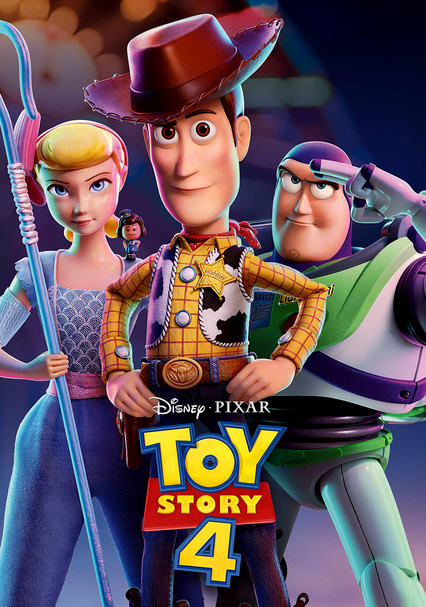
Toy Story 4 (2019) is the fourth installment in the Pixar/Disney-produced Toy Story series, now nearly twenty-five years old!

The glitter is beginning to fade on a once-endearing franchise, and hopefully, this is the last one- additional segments are not needed unless desperation develops.

After a slow start and too many retread moments, the film shows bombast and familiar heart and tenderness in the finale, presumably wrapping up the long story with a neat bow.

The animation is vivid and colorful, almost astounding, and makes up for an otherwise unnecessary story.

In a flashback sequence, nine years after Toy Story 2, Bo Peep (Annie Potts) is donated to a new owner, and Woody (Tom Hanks) begrudgingly decides to maintain his loyalty to the owner, Andy.

Years later, and now a teenager, Andy donates a forgotten Woody to a young child named Bonnie, who lacks the affection for the toy that Andy had. When Bonnie makes and bonds with Forky, a toy made of plastic, Woody struggles to convince Forky that each is more than garbage.

When Bonnie and her parents embark on a summer road trip to an amusement park, Woody and other familiar faces are along for the ride.

The group meets other forgotten toys, some benevolent and some sinister, at the park and a nearby antique store. Woody’s dear friend and comic relief, Buzz (voiced by Tim Allen), is in the mix and helps all the toys realize that they are not forgotten and that they can still bring joy to children.

The film provides an unwieldy list of celebrities in major and minor roles. The incorporation of characters like Chairol Burnett, Bitey White, and Carl Reineroceros (voiced naturally by Carol Burnett, Betty White, and Carl Reiner) may not be necessary.

Still, it’s fun to watch the credits roll and see who’s who from the cast.

The minor characters are little more than window dressing, but the creativity is admirable.

The main story of abandonment, loyalty, and discarding of one’s toys is ample and pleasant, but has occurred in every segment thus far in the series.

Do we need to see this again? Yes, it is an essential message for both children and adults, but why not simply watch the first three installments of Toy Story, each brilliant in their own right?

Toy Story 4 plays by the numbers with little surprises.

One glaring notice is how almost every single adult is either incompetent or played for laughs.

I understand that the main draw is the toys and outsmarting the adults is half the fun, but when Bonnie’s father assumes his navigation system is on the fritz, rather than catching on to the fact that one of the toys is voicing the system, one must shake one’s head.

Suspension of disbelief is increasingly required in these types of films.

Toy Story 4 picks up steam in the final twenty minutes with a thrilling adventure through the amusement park and a cute romance between Woody and Bo Peep.

When the long-forgotten toy Gabby Gabby (Christina Hendricks) emotionally rescues a lost child, she is rejuvenated and breathes new life into both the child’s life and her own.

In a darling moment, Forky meets another creation named Knifey. Knifey suffers from the same existential crisis as Forky once did, and Forky immediately becomes smitten with her, both realizing that even though they are odd-looking, they still matter.

The nice lesson learned is that even toys from the 1960s and 1970s can provide warmth and comfort to a young child and are more than “of their time”.

This is a clear and bold message that resonates with human beings and acknowledges that advanced age does not come with an expiration date.

Everyone matters and brings importance. The underlying theme is heartwarming and central to the film, bringing it above mediocrity.

What should certainly be the final chapter in a tired franchise that continues to trudge along, the bright message and strong animations remain, but the film feels like a retread.

Given that Toy Story 3 was released in 2010, Toy Story 4 (2019) needs to bring the series to a conclusion before installments 5, 6, 7, or 8 result in a dead-on-arrival sequel.

Oscar Nominations: 1 win-Best Animated Feature Film (won), Best Original Song-“I Can’t Let You Throw Yourself Away”