Tag Archives: Marni Nixon

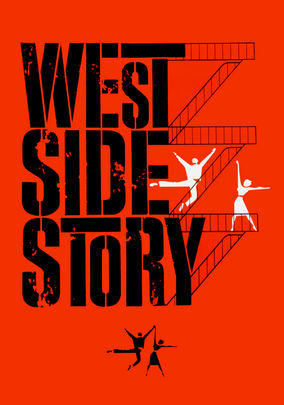
West Side Story-1961

West Side Story-1961

Director Robert Wise, Jerome Robbins

Starring Richard Beymer, Natalie Wood

Top 250 Films #12

Scott’s Review #188
1111583

Reviewed November 3, 2014

Grade: A

West Side Story is a musical from 1961 (based on the Broadway stage production from the 1950s), during a period in Hollywood where every other film released seemed to be a version of an enchanting musical.

This particular film version is much darker than most of its contemporaries within this genre. The dreary ending, fantastic and compelling in its dramatic elements, does not detract from the rest of the musical and its hum-along tunes.

West Side Story was crowned the 1961 Academy Award winner for Best Picture.

West Side Story is undoubtedly based on the Shakespearean tragedy of Romeo and Juliet- the Capulets and Montagues becoming rival teen street gangs of the Puerto Rican “Sharks” and the Polish”Jets,” with the lovesick teens Tony and Maria serving as Romeo and Juliet.

And yes, spoiler alert, the story does not end happily ever after.

Loads of suspension of disbelief must be taken- How many gangs sing and dance to each other, snapping their fingers in unison to perfectly choreographed beats?

Additionally, some gang characters do not look authentic, with clearly dyed hair, bronzed skin, or some other phony-looking get-up.

The film is a cherished friend, and these can be overlooked for my enjoyment of the film.

The story, set in 1950s New York City, pits the Sharks (a gang led by Bernardo) against the Jets (led by Riff), who have been bitter rivals for the turf of the rough streets of Manhattan’s west side for many years.

The gang’s girlfriends and one female, “Anybodys,” are in tow. She longs for the day when she can join the Jets and fight alongside the boys.

The other supporting characters primarily include various policemen (Lieutenant Schrank and Officer Krupke) who attempt to keep the gangs apart. They also include a local shopkeeper, Doc, who is the story’s moral compass. Doc encourages the gangs to get along and questions the logic of gang fights.

After a scuffle, the gangs decide to fight after an upcoming dance, and the Jets elect Tony to face Bernardo.

The story is surprisingly dark, especially in the inevitable final act. Amid all this darkness, however, lies a musical with cheery, catchy numbers (I Feel Pretty, Jet Song) and love-struck tunes (Maria and Somewhere).

A musical about diversity and rivalry, the story centers on lovesick Maria and Tony, a la Romeo and Juliet, and their struggle to be together despite adversity from their friends and family due to their significantly different backgrounds.

Throughout the film, we get to know other characters well- Anita, the girlfriend of Bernardo, for example, played by Rita Moreno, is the stubborn yet likable best friend of Maria, who thinks that Maria and Tony are wrong for each other and that things just are not supposed to be that way when you mix cultural diversity.

The film moves along quickly, featuring standoffs, fights, and plots to eliminate the other gang, a failed attempt at a dance to bring the two groups together, and Tony and Maria sneaking off to meet.

The lack of chemistry between Natalie Wood (Maria) and Richard Beymer (Tony) is noticeable, primarily upon multiple viewings. Still, decades later, it is also challenging to imagine anyone else in either role—so ingrained is the duo in film culture.

The cultural diversity of much of the cast (Rita Moreno was the only Puerto Rican) is fascinating, as is the fact that most of the singing was dubbed by other singers.

Yet, the film still manages to work very well.

Oscar Nominations: 10 wins-Best Motion Picture (won), Best Director-Robert Wise and Jerome Robbins (won), Best Supporting Actor-George Chakiris (won), Best Supporting Actress-Rita Moreno (won), Best Screenplay Based on Material from Another Medium, Best Scoring of a Musical Picture (won), Best Sound (won), Best Art Direction, Color (won), Best Cinematography, Color (won), Best Costume Design, Color (won), Best Film Editing (won)

The Sound of Music-1965

The Sound of Music-1965

Director Robert Wise

Starring Julie Andrews, Christopher Plummer

Top 250 Films #18

Scott’s Review #49

60001917

Reviewed June 20, 2014

Grade: A

The Sound of Music (1965) is a film that almost everyone has seen multiple times. It is undoubtedly ingrained in most people’s childhood memories, especially around the holiday season, and is a treasure to watch.

It is tough to be objective, as I’ve probably seen the film dozens of times and continue to appreciate and love it with each repeated viewing.

Maria (Julie Andrews) is a pretty, young, free-spirited woman living in the gorgeous hills of Austria. We first meet her on a lush hilltop where she sings with the birds and enjoys life.

While very popular with other nuns, she does not quite fit in at the Nonnberg Abbey, where she studies to become a nun. She is sent to discover herself as the governess of seven nearby children. They are the children of well-known and now-retired Georg von Trapp (played by Christopher Plummer).

Since his wife died, no life or music exists inside the house. Maria brings life and music to all, transforming everyone’s existence into a happier one. The threat of the powerful Nazis wishing to recruit a disapproving von Trapp adds tension.

Maria and the von Trapp family fall madly in love.

As a musical, it is top-notch and is the hallmark of all musicals. The songs are challenging to get out of one’s head (“The Sound of Music,” “Climb Ev’ry Mountain,” and “My Favorite Things” are personal favorites), but the list of gems goes on and on.

The political/Nazi story was lost on me as a child, but now I see the film does have a darker tone in the second half and becomes quite severe. Indeed, since it is a family film, the details are glossed over a bit, but so what? It is the wonderful music that makes The Sound of Music great and memorable.

The first half is wholesomely sugary, sweet, and safe, and, from what I’ve read, exceptionally loosely based on the real von Trapp family. However, this hardly matters, as escapism is sometimes needed.

I hate to dissect and overanalyze a film like this, a fantasy/musical extravaganza meant to be enjoyed—lighthearted and fun for everyone.

Oscar Nominations: 5 wins-Best Picture (won), Best Director-Robert Wise (won), Best Actress-Julie Andrews, Best Supporting Actress-Peggy Wood, Best Scoring of Music-Adaptation or Treatment (won), Best Sound (won), Best Art Direction, Color, Best Cinematography, Color, Best Costume Design, Color, Best Film Editing (won)

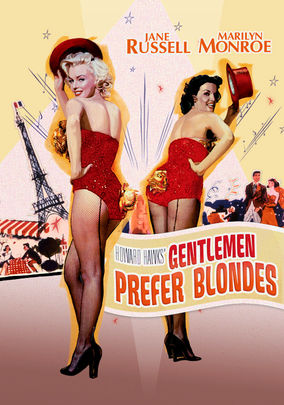
Gentlemen Prefer Blondes-1953

Gentlemen Prefer Blondes-1953

Director Howard Hawks

Starring Jane Russell, Marilyn Monroe

Top 250 Films #164

Scott’s Review #384

60004540

Reviewed March 13, 2016

Grade: B+

One of the iconic and legendary stars, Marilyn Monroe’s better-known offerings from her brief career are Gentlemen Prefer Blondes (1953), a fun musical romantic comedy.

To create this wonderful gem, she stars alongside Jane Russell, another popular Hollywood star from a golden era.

Together, they have great chemistry and an easy yin-yang relationship, which makes the film light and cheerful but not meaningless or too fluffy.

It is just a genre that it is.

As mentioned, Roma has evolved in modern cinema, and Gentlemen embodies the innocence that has since been lost. The 1950s were a perfect time for this genre of film.

Lorelei Lee (Monroe) and Dorothy Shaw (Russell) are American showgirls and best friends who perform a stage show together. Lorelei loves diamonds and rich men- she is dating Gus Esmond, an awkward yet lovable young man who is wealthy but controlled by his father.

Dorothy is less interested in being showered with wealth but prefers handsome, adventure-filled adventures. These begin when the girls board a cruise ship to Paris. A private investigator (Malone) hired by Gus’s father observes and follows Lorelei while the Olympic swim team pursues Dorothy.

The film is entertaining and a must-see for all Monroe fans, as it was at the time when she was at her best- Gentlemen Prefer Blondes and Some Like it Hot are my personal favorites, and she was in the prime of her tragically short film career- sure, she plays the “dumb blonde” character with gusto. Still, there is something innocent and fun about her portrayal of Lorelei, and we immediately fall in love with her.

Dorothy is the leader—the smart one—and complements Lorelei’s naivety. More worldly and sophisticated, she watches out for her counterpart.

The chemistry between Monroe and Russell makes the film work so well. The audience buys them as best friends, and the two actresses (who reportedly got along famously).

Monroe shines during the legendary number, Girls’ Nights Are the Best Friend,” a performance that famously inspired the 1984 Madonna video, ” Girls Night Out,” which will forever live on in music history.

My favorite scene is on the ship when Lorelei gets into trouble. She sneaks into the private investigator’s cabin to obtain incriminating evidence and gets stuck in the tight cabin window.

The shot of Monroe sticking halfway out the window is funny. She then hilariously enlists a young child to help her avoid recognition and a subpar man with subpar vision.

Vision also comes into play when Dorothy disguises herself as Lorelei in a silly fashion (looking more like a drag queen) in a courtroom scene over hi-jinks involving a stolen tiara.

Interesting is the scene in wsurroundedrothy is surrounded by dancing, which is as provocative for 1953 as it is today.

Undoubtedly unable to show any form of nudity whatsoever, the dancers are clad in nude-colored shorts, which indeed suggests elements of sexuality, an illusion of nudity, and fits the scene perfectly as Dorothy is in testosterone heaven.  It is like a big, giant fantasy for her.

Gentlemen Prefer Blondes (1953) is a triumphant offering from another cinematic era—a sorely missed time. Cute but not trivial, the film is a witty portrayal of the iconic Marilyn Monroe.

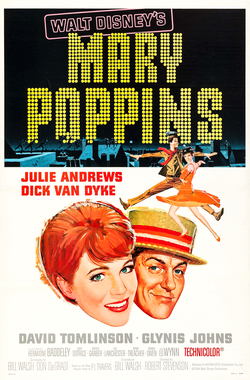
Mary Poppins-1964

Mary Poppins-1964

Director Robert Stevenson

Starring Julie Andrews, Dick Van Dyke

Scott’s Review #965

Reviewed December 9, 2019

Grade: A-

Mary Poppins (1964) is a lovely Walt Disney production that shines with zest and an ample supply of good, cheery tunes. A family affair, it will hardly disappoint, with sing-alongs and enchanting stories for miles.

It’s tough to knock a film that has it all, but it sometimes borders on sickeningly sweet wholesomeness with too much schmaltz mixed in.

This can easily be forgiven because of the robust music, dazzling visual effects, and perfect casting, which make the film enjoyable entertainment for all.

The Banks family resides in London, England. The foursome consists of George and Winifred Banks, along with children Jane and Michael. They live a comfortable and happy upper-middle-class existence.

When their nanny quits after the children run away to chase a kite, the panicked George requests a stern, no-nonsense nanny, while the children (now returned home) desire a kind, sweet one. Through magic, a young nanny (Julie Andrews) descends from the sky using her umbrella.

Mary Poppins teaches the children to enjoy chores through tunes with the help of a kindly chimney sweep, Bert (Dick Van Dyke).

Mary Poppins cheerily takes the children on several adventures, teaching them valuable lessons. The drama involves light situations such as the irritable George threatening to fire the nanny because she is too cheerful or a mini-scandal at the bank where George works.

These side stories are trivial and non-threatening since the film is really about the antics of the magically odd nanny and her relationship with the children.

The film is unique because it combines live-action with animation and is magical and inventive. This is most evident during sequences that feature animals, especially the superb scene where Mary Poppins transports Bert, Jane, and Michael into a picture where they ride a carousel and stroll the day away.

The appearance of horses and a fox makes the scene beautifully crafted and filled with joy.

The casting could be no different and is flawless across the board. Standouts are Andrews and Van Dyke, the former appearing in her very first film role.

Not to be usurped by her most iconic role as Maria in the following year’s brilliant The Sound of Music (1965), Andrews possesses a benevolent and delightful spirit that works perfectly in the role, to say nothing of her powerful voice.

Van Dyke, as the romantic interest, is equally well-cast, and together the chemistry is easy and apparent.

Mary Poppins was met with critical acclaim when it was released when Disney ruled the roost and musicals were a dime a dozen.

It received thirteen Academy Award nominations, including Best Picture—a record for any film released by Walt Disney Studios—and won five: Best Actress for Andrews, Best Film Editing, Best Original Music Score, Best Visual Effects, and Best Original Song for “Chim Chim Cher-ee.”

This was quite a feat as the film was up against My Fair Lady (1964), which won the biggest prize.

Rated G and box-office success, Mary Poppins (1964) is a legendary Walt Disney film that uses creative techniques and musical numbers to develop a finely finished product.

The song standouts are “A Spoonful of Sugar”, “Chim Chim Cher-ee”, and “Supercalifragilisticexpialidocious”, as each offers candy for the ears and immeasurable fun.

The classic songs and the cohesive sentimentality make this one easy to enjoy with repeated viewings.

Oscar Nominations: 5 wins-Best Picture, Best Director-Robert Stevenson, Best Actress-Julie Andrews (won), Best Screenplay Based on Material from Another Medium, Best Song-“Chim Chim Cher-ee” (won), Best Music Score-Substantially Original (won), Best Scoring of Music-Adaptation or Treatment, Best Sound, Best Art Direction, Color, Best Cinematography, Color, Best Costume Design, Color, Best Film Editing (won), Best Special Visual Effects (won)

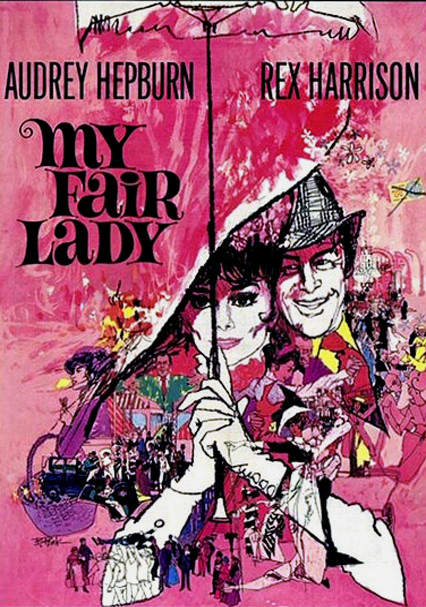
My Fair Lady-1964

My Fair Lady-1964

Director George Cukor

Starring Audrey Hepburn, Rex Harrison

Scott’s Review #938

Reviewed September 6, 2019

Grade: A-

Winner of the Best Picture Academy Award (it would not have been my choice), My Fair Lady (1964) is a good product that is based on the stage version, in turn, based on the famous 1913 stage play Pygmalion by George Bernard Shaw.

The musical’s central negative aspect is its casting choices. Hepburn and Harrison have only mediocre chemistry, and Hepburn does not sing. However, the film is enchanting and filled with lavish sets, colorful costumes, and earnest songs, making it entertaining for the whole family.

The iconic Eliza Doolittle (Hepburn) and Henry Higgins (Harrison) are household names to every fan of the musical genre.

Set in London, sophisticated and arrogant Professor Higgins, a scholar of phonetics, is intent on proving that the tone and accent of one’s voice determine one’s lot in society.

As an experiment, he chooses flower saleswoman Eliza, with her horrid Cockney accent, and is determined to crown her duchess of a ball.

Unaware of his scheme but soon to find out she has been had, romance eventually blooms as the song “I’ve Grown Accustomed to Her Face” becomes essential.

My Fair Lady is quite the epic, with a runtime of two hours and fifty-two minutes, which is lofty for a film.

The misty London setting adds layers of mystique and atmosphere, and the cinematography drizzles with color and pizzazz, making the overall content look fantastic.

Because of the length of the film and the magnificent trimmings, the production looks like a spectacle, reminiscent of the elegant extravagance of the 1950s and 1960s, when musicals made into films were grand and robust.

It’s no wonder this helped it win Best Picture, Best Director, and many other awards. Hollywood loves this film.

When dissected and analyzed, social and class systems are a large part of the film amid the cheery singing, dancing, and big-screen bombast. Social status and hints of socialism pepper the production, rising way above the fluff it could have been if just a “boy from the good side of the tracks meets girls from the wrong side.”

Eliza’s father, Alfred (Stanley Holloway), a waste collector, is also an opportunist. He sings his story during “With a Little Bit of Luck.” The differences between the “haves” and the “have nots” are evident.

Since the chemistry is limited, I never bought Harrison and Hepburn as a romantic duo. The teacher/student angle somewhat works, though always bothersome, but Henry’s self-assured behavior and superior attitude make him tough to root for.

The controversy surrounding the film includes the decision to dub nearly all of Hepburn’s singing with another singer’s voice. This devastated the actress and cost her an Academy Award nomination. Her snub is especially jarring, given the dozen other nominations it received.

The story is heartwarming and follows the like-minded theme of a hero rescuing a damsel in distress. Hints of Cinderella (1950) and even Pretty Woman (1990) glisten, with only a hint of male chauvinism that does not ruin the experience or reduce the film to a dated guy film, as with Pretty Woman.

“I’m an Ordinary Man” describes how women ruin men’s lives and are not the most progressive or female-friendly of all the numbers.

My Fair Lady (1964) is a film from the past that begs to be viewed on the big screen so that all its qualities can be enjoyed. Like Lawrence of Arabia (1963), it is best viewed in a wide-angle, enormous theater setting to ensure that all its aspects are noticed and enjoyed.

It’s a Hollywood film done tremendously well. Young viewers would be wise to be exposed to this film to delight in the cinematic treats.

Oscar Nominations: 8 wins-Best Picture (won), Best Director-George Cukor (won), Best Actor-Rex Harrison (won), Best Supporting Actor-Stanley Holloway, Best Supporting Actress-Gladys Cooper, Best Screenplay Based on Material from Another Medium, Best Scoring of Music-Adaptation or Treatment (won), Best Sound (won), Best Art Direction, Color (won), Best Cinematography, Color (won), Best Costume Design, Color (won), Best Film Editing

Cinderella-1950

Cinderella-1950

Director Clyde Geronimi, Hamilton Luske, Wilfred Jackson

Voices Ilene Woods, Eleanor Audley

Scott’s Review #731

Reviewed March 7, 2018

Grade: A-

Cinderella is a lovely 1950 Walt Disney production that rejuvenated the animated film genre after a sluggish 1940s.

The film glistens with goodness and bright colors, offering a charming fairy tale-based story based on hope and “happily ever after.”

Cinderella is enchanting on all levels.

The story is told mainly in narration, especially to explain its history. We learn that Cinderella’s parents have both died, leaving her an orphan who lives with her wicked stepmother, Lady Tremaine.

Her stepsisters, Drizella and Anastasia, are jealous of Cinderella’s natural beauty. She is regularly abused and berated, and forced to work as a servant in a rundown chateau, tending to the trio’s needs and demands.

Despite her unhappy life, Cinderella makes the most of it and befriends mice, birds, and many other animals she meets, singing and dancing merrily.

Life chugs along for our heroine until one day, the King of the royal palace decides to throw a lavish Ball for his son, the Prince, to find his soulmate and marry her finally. The King requests that all eligible unmarried women attend.

As Cinderella excitedly requests to go, Lady Tremaine cruelly grants her request, provided all of her work is done. She has no intention of making things easy on her.

In proper fairy tale form, the Prince falls madly in love with Cinderella while facing many hurdles on the pair’s way to happiness.

Given the time when Cinderella was made (1950), the timing was excellent for a lavish production, to say nothing of the fantasy that many young girls undoubtedly experienced a handsome prince rescuing them, whisking them away from a life of doldrums to undying love.

Female empowerment had not yet taken hold during the 1950s, so the male-rescuing female message was palpable and appealing to many. Dated not the least bit, a story of true love overcoming hardship can always find an audience.

The production’s colors and animations are lush and powerful, oozing perfection and dripping with fantastic elements of romance and spectacular wealth.

An example of this is the lavish ball at the palace. As Cinderella’s Fairy Godmother transforms the young girl and her transportation into a magical fantasy of horses, gowns, and carriages, the ball is pretty extravagant in its beauty.

Engaging, with a bit of humor mixed in, are the supporting characters of the three evil ladies and the bumbling Grand Duke- interestingly voiced by the same person as the King. As Drizella and Anastasia attempt to impress Prince Charming, their awkward and haphazard mannerisms and scowls perfectly counterbalance the charm and grace of Cinderella in a sometimes comical fashion.

Comparisons must be made to 1937’s masterpiece, Snow White and the Seven Dwarfs. Both could easily be companion films, watched sequentially to better study and marvel at their similarities.

Snow White and Cinderella are purely “good” characters, singing lovely tunes, embracing animal friends and various forms of wildlife- they are both more or less “saved” by men.

In the present day, instead of being offensive or “old-fashioned,” it remains enchanting and a celebration of true love.

Cinderella is a treasure to be enjoyed after all these years. It never ages or becomes dated or irrelevant, which is a true testament to the power of film. Carving a story of values, honesty, hard work, and good payoff, generations of fans can appreciate this everlasting treasure.

Oscar Nominations: Best Scoring of a Musical Picture, Best Original Song-“Bibbidi-Bobbidi-Boo,” Best Sound Recording

An Affair to Remember-1957

An Affair to Remember-1957

Director Leo McCarey

Starring Cary Grant, Deborah Kerr

Scott’s Review #105

232349

Reviewed July 12, 2014

Grade: B

An Affair to Remember (1957) is an excellent example of how romantic comedies have changed.

‘rom-com’ is not my genre of choice as typically they are clichéd and predictable. The romantic comedies in years past were vastly different, containing a glamorous innocence lacking in today’s generic rom-com.

In An Affair to Remember, the charisma of Cary Grant and Deborah Kerr makes the movie. They portray two strangers who take a luxury cruise and inexplicably fall madly in love despite having significant others at home.

The couple wine and dine with each other, revel in merriment for a week and make a pact that if they don’t forget each other in a year, they will meet at the top of the Empire State Building on a specified day and time.

It does not get much more romantic than that.

The extravagance of the gorgeous sets on the cruise ship makes the film a visually satisfying experience. In my book, any movie set in New York City, as the second half does, is a plus.

An Affair to Remember is not a cutting-edge film, though for 1957, adultery may have raised a few eyebrows, but rather a pleasant, warm romantic comedy of the past.

It’s meant to sit back and escape with a sappy, sweet, fun romance.

Oscar Nominations: Best Scoring, Best Song, “An Affair to Remember”, Best Costume Design, Best Cinematography

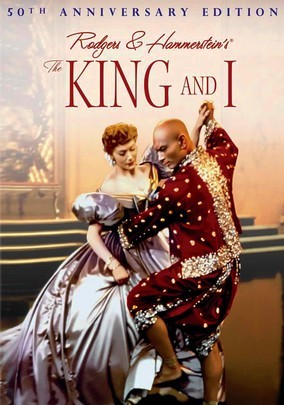
The King and I-1956

The King and I-1956

Director Walter Lang

Starring Yul Brynner, Deborah Kerr

Scott’s Review #26

671936

Reviewed June 17, 2014

Grade: B

The King and I (1956) is another of the many Rodgers and Hammerstein musicals that dominated the 1950s and 1960s film era.

Having seen the stage version, the film contained two gigantic stars of the period (Yul Brynner and Deborah Kerr), Brynner having made this role his legacy.

The story is similar to The Sound of Music, as the teacher takes on the children of the King, but it is not quite as gripping, and the chemistry among the leads is not entirely there.

The Bangkok palace set, and the costumes are stylish and fantastic in design.

As a whole, the songs are not as memorable as some other similar musicals, but that is compared to magnificence.

Much of the cast is not Asian, a characteristic of the stage version that is often overlooked and accepted. This is not a criticism, merely a notice.

It’s a lovely musical, but not as enjoyable as others, but still worth watching.

Oscar Nominations: 5 wins-Best Motion Picture, Best Director-Walter Lang, Best Actor-Yul Brynner (won), Best Actress-Deborah Kerr, Best Scoring of a Musical Picture (won), Best Sound Recording (won), Best Art Direction-Color (won), Best Cinematography, Color, Best Costume Design, Color (won)