Tag Archives: Mona Washbourne

The Brides of Dracula-1960

The Brides of Dracula-1960

Director Terence Fisher

Starring Peter Cushing, Yvonne Monlaur

Scott’s Review #1,218

Reviewed January 9, 2022

Grade: B+

It’s always impressive to me what Hammer Film Productions do with such a limited budget, mainly from a set and art direction perspective. With small funds, they can create gloomy yet beautiful set structures that are highly creative and appear lavish.

To the savvy viewer, this tidbit can make each film a treasure trove of enjoyment if only to look beyond the central activity and notice the style.

The Brides of Dracula (1960) is no exception.

The film is a sequel to the 1958 film Dracula (also known as Horror of Dracula), though the character of Count Dracula does not appear and is instead mentioned only twice. Fans of these films know that Christopher Lee portrays Dracula. Instead, the vicious vampire at the film’s center is Baron Meinster, a disciple of Dracula, played by David Peel.

The villain even bites his mother, played by Martita Hunt, making her undead and terrifying to the residents of a Spanish village.

Van Helsing (Peter Cushing) is the hero and must drive a stake through the heart of the vampire baron before he deviously makes innocent Marianne (Yvonne Monlaur) his bride.

Cushing is a familiar figure in Hammer horror film lore. He leads the charge as the film’s hero. I love the character because he is heroic and unflinching, always calm, cool, and collected in the face of sheer horror.

The sets are gothic and brilliant, especially the gloomy castle owned by the Baroness and her son. When she invites Marianne to spend the night, a threatening servant named Greta treats her to a stylish room and a ravishing dinner.

The exteriors are as good as the interiors and portray the village within Transylvania as cozy and homespun. Outside, the prominent inn run by the locals is inviting as much as it feels forbidden and haunted.

When Marianne is abandoned in the village by her terrified coach driver, we know that secrets or living creatures are waiting to be unearthed.

These atmospheric additions will compel audiences to tune in and enjoy the horrific moments.

Speaking of horror, The Brides of Dracula feels enough like camp and not scary, and comic elements exist throughout. No better example of this is the bumbling and boozy Doctor Tobler, played by character actor Miles Malleson.

While many moments are over the top, especially when a vampire character bares their fangs in the best hammy way, the film never feels foolish or amateurish.

A considerable misstep is naming the film The Brides of Dracula when no Dracula is ever found. I incorrectly assumed the Baron was Dracula until after the final credits rolled. This is a sneaky way to capitalize on the name recognition of Dracula.

There are too many fun moments in the film to harbor much resentment. Of the brides, my favorite is Gina, played by Andree Melly, who looks the most frightening.

The Brides of Dracula (1960) is an entertaining and pleasing chapter in the Hammer horror catalog. The expected elements include a crucifix and a healthy dose of holy water.

If…-1968

If…-1968

Director Lindsay Anderson

Starring Malcolm McDowell

Scott’s Review #1,178

Reviewed September 18, 2021

Grade: A

Malcolm McDowell fascinates me. The mere construction of his facial features astounds me. With his crystal blue eyes and sullen smirk, it’s tough to tell what he is thinking.

He stars in If… (1968), a satire of the student experience amid a strict upper-class English public school.

It’s McDowell’s film debut, which is worth noting.

McDowell, best known for A Clockwork Orange (1971), made several great films in just a few years.

The film follows a group of fed-up pupils, led by Mick Travis (McDowell), who ultimately stage a bloody insurrection at a boys’ boarding school. But is it real or imagined by Mick?

Mick is conflicted when he is caught between the sadistic older boys known as the Whips and the lowly first-year students, affectionately known as Scum, who are forced to do their bidding.

He and his two henchmen, Johnny (David Wood) and Wallace (Richard Warwick), rebel by exhibiting theft and defiant behavior, causing the ire of both the Whips and the school’s out-of-touch administration.

This conflict leads to an unexpected and bloody showdown.

If… was the subject of controversy in 1968 at the time of its release, receiving an X rating for its depictions of violence against school administration and grown-ups.

The specific year was a juicy one in cinema as the more edgy and creative fare was being produced in anticipation of the 1970s.

I champion the film and its director, Lindsay Anderson, for having the guts to make a film of this nature, sure to piss off and shock the education system and those who don’t get what the film is expressing.

One wonders whether the English rock band Pink Floyd drew inspiration from If… when creating their legendary 1979 song ‘Another Brick in the Wall.

The Whips are the villains, and the school administrators are portrayed as complacent or incompetent; as a result, the finale is quite satisfying for viewers.

One will never forget the image of Mick fiendishly standing on a rooftop, brandishing a gun and firing determinedly. His other cohorts join him in celebrating graduation ceremonies. For them, it’s a delightful moment since all the parents and family members are in attendance.

It’s only a film, but I can’t help but wonder how differently the film is perceived by an audience in the post-Columbine era, a vicious school shooting that occurred in the United States, an incident that led to a rash of similar events.

To clarify, since Anderson made a follow-up film to If… with O Lucky Man! in 1973, starring McDowell as the same character, we can rest easier in the knowledge that the events in If… are purely the imagination of Mick.

It’s a satire.

And what schoolboy or schoolgirl hasn’t fantasized about how delicious it would be to give bullies or other bastards their just deserts for making their lives miserable?

Another takeaway I got from If… is that it doesn’t have to be about a prep school at all. Mick and his friends question conformity and rules. Why can’t the viewer do the same in the workplace or in life itself?

I’ve seen the film twice and can never account for the inexplicable shifts from color to black-and-white in various scenes. Anderson claims this was done for budget reasons, but others have done a deeper dive and hypothesized that the color versus black-and-white choice has more to do with fantasy.

Whatever the reason, it successfully offers a surrealistic measure.

If… (1968) is a fantastic film that invites open dialogue after viewing. Isn’t that what cinema is all about? A discussion of the merits and conclusions of a particular movie?

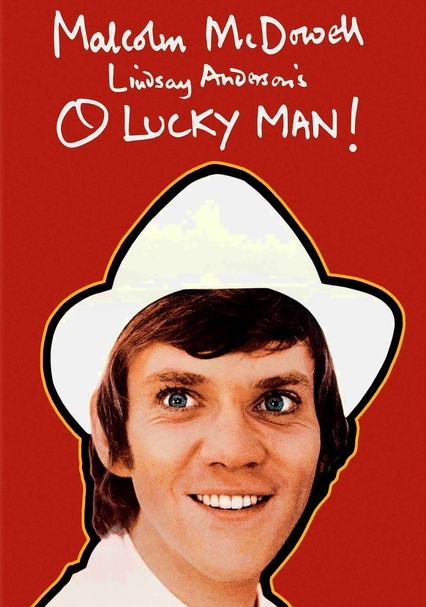
O Lucky Man!-1973

O Lucky Man! -1973

Director Lindsay Anderson

Starring Malcolm McDowell, Ralph Richardson, Helen Mirren

Scott’s Review #1,174

Reviewed September 1, 2021

Grade: A-

O Lucky Man! (1973) is a satirical black comedy that mixes musical numbers with a message about capitalism from the driven protagonist. Like a great fine wine, the film has aged well and is still relevant decades later.

The film is a slow build, but by the end of its nearly three-hour running time, I was enamored and hummed the title song repeatedly.

I’m still humming it as I write this review.

It is suggested that O Lucky Man! be watched in two or three segments for full appreciation. One sitting would be incredibly tough, since some of the events require reflection and thought.

An ambitious young British man, Mick Travis (Malcolm McDowell), is determined to be successful at all costs. Debuting as a coffee salesman, Mick is quickly promoted within his company. Events take a series of bizarre turns when a military agency abducts Mick.

Later, he becomes smitten with the gorgeous Patricia (Helen Mirren) and winds up working for her father, sinister executive Sir James Burgess (Ralph Richardson). As Mick’s tale continues, his experiences get progressively stranger.

The clever aspect is that just when you think Mick’s life is dour and drab, he rebounds more successful than ever. Hence the title of the film. So, there is an element of adventure and romance amid the capitalist plot.

Lindsay Anderson, who directed O Lucky Man!, re-casts McDowell again in the same role he first played as a disaffected public schoolboy in his first film performance in If… (1968).

I did not realize this when I watched O Lucky Man!, and I think this knowledge would have made me catch on to the events and subtext even more.

Now, I need to rewatch If…

I did, however, ruminate constantly on McDowell’s other iconic role in A Clockwork Orange (1971) as Alex. The characters are quite similar, save that Alex is a juvenile delinquent rather than a rising corporate guy like Mick.

This is in large part due to McDowell’s looks and acting style. His trademark sneer and bright blue eyes make him mesmerizing in both roles.

I even spotted an actor who played one of the infamous droogs!

A plus for the film is that several actors appear in multiple roles, some of whom are difficult to distinguish. Part of the fun is trying to figure out who’s who.

There isn’t a whole lot of chemistry between McDowell and Mirren, but it’s interesting to see the shifting characteristics of the characters.

And Patricia is fascinating. When she asks why people work so hard for things instead of just taking them, we realize she places no value on things because she’s never had to work for them. She’s a rich daddy’s girl.

There are reasons not to like her, but I still did. When she winds up in a homeless lot, it’s shocking. And I also loved the character of Mick and his epic journey. He is imprisoned and then reformed in a humanistic way, just like Alex was in A Clockwork Orange.

But the best part of O Lucky Man! is the music. Anderson takes periodic breaks from the drama to treat his audience to a musical number, performed by Alan Price.

It’s comforting to sit back and enjoy the unforgettable tunes that pepper the film. One could argue that the songs almost usurp the main action, but I found them to be great companions to the other.

As if there was any doubt, the soundtrack was widely lauded and was a huge financial success.

A surreal effort, sometimes happy or tragic but always insightful and oftentimes delightful, McDowell, Price, and Anderson are at the top of their respective games.

O Lucky Man! (1973) is a terrific watch, brimming with good juices if one has the patience to let events marinate.

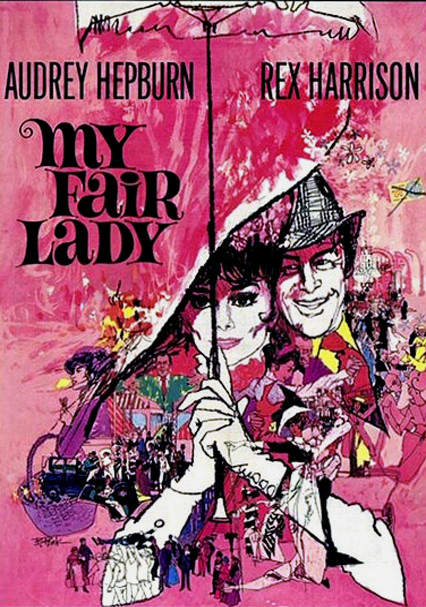
My Fair Lady-1964

My Fair Lady-1964

Director George Cukor

Starring Audrey Hepburn, Rex Harrison

Scott’s Review #938

Reviewed September 6, 2019

Grade: A-

Winner of the Best Picture Academy Award (it would not have been my choice), My Fair Lady (1964) is a good product that is based on the stage version, in turn, based on the famous 1913 stage play Pygmalion by George Bernard Shaw.

The musical’s central negative aspect is its casting choices. Hepburn and Harrison have only mediocre chemistry, and Hepburn does not sing. However, the film is enchanting and filled with lavish sets, colorful costumes, and earnest songs, making it entertaining for the whole family.

The iconic Eliza Doolittle (Hepburn) and Henry Higgins (Harrison) are household names to every fan of the musical genre.

Set in London, sophisticated and arrogant Professor Higgins, a scholar of phonetics, is intent on proving that the tone and accent of one’s voice determine one’s lot in society.

As an experiment, he chooses flower saleswoman Eliza, with her horrid Cockney accent, and is determined to crown her duchess of a ball.

Unaware of his scheme but soon to find out she has been had, romance eventually blooms as the song “I’ve Grown Accustomed to Her Face” becomes essential.

My Fair Lady is quite the epic, with a runtime of two hours and fifty-two minutes, which is lofty for a film.

The misty London setting adds layers of mystique and atmosphere, and the cinematography drizzles with color and pizzazz, making the overall content look fantastic.

Because of the length of the film and the magnificent trimmings, the production looks like a spectacle, reminiscent of the elegant extravagance of the 1950s and 1960s, when musicals made into films were grand and robust.

It’s no wonder this helped it win Best Picture, Best Director, and many other awards. Hollywood loves this film.

When dissected and analyzed, social and class systems are a large part of the film amid the cheery singing, dancing, and big-screen bombast. Social status and hints of socialism pepper the production, rising way above the fluff it could have been if just a “boy from the good side of the tracks meets girls from the wrong side.”

Eliza’s father, Alfred (Stanley Holloway), a waste collector, is also an opportunist. He sings his story during “With a Little Bit of Luck.” The differences between the “haves” and the “have nots” are evident.

Since the chemistry is limited, I never bought Harrison and Hepburn as a romantic duo. The teacher/student angle somewhat works, though always bothersome, but Henry’s self-assured behavior and superior attitude make him tough to root for.

The controversy surrounding the film includes the decision to dub nearly all of Hepburn’s singing with another singer’s voice. This devastated the actress and cost her an Academy Award nomination. Her snub is especially jarring, given the dozen other nominations it received.

The story is heartwarming and follows the like-minded theme of a hero rescuing a damsel in distress. Hints of Cinderella (1950) and even Pretty Woman (1990) glisten, with only a hint of male chauvinism that does not ruin the experience or reduce the film to a dated guy film, as with Pretty Woman.

“I’m an Ordinary Man” describes how women ruin men’s lives and are not the most progressive or female-friendly of all the numbers.

My Fair Lady (1964) is a film from the past that begs to be viewed on the big screen so that all its qualities can be enjoyed. Like Lawrence of Arabia (1963), it is best viewed in a wide-angle, enormous theater setting to ensure that all its aspects are noticed and enjoyed.

It’s a Hollywood film done tremendously well. Young viewers would be wise to be exposed to this film to delight in the cinematic treats.

Oscar Nominations: 8 wins-Best Picture (won), Best Director-George Cukor (won), Best Actor-Rex Harrison (won), Best Supporting Actor-Stanley Holloway, Best Supporting Actress-Gladys Cooper, Best Screenplay Based on Material from Another Medium, Best Scoring of Music-Adaptation or Treatment (won), Best Sound (won), Best Art Direction, Color (won), Best Cinematography, Color (won), Best Costume Design, Color (won), Best Film Editing