Tag Archives: Allen Jenkins

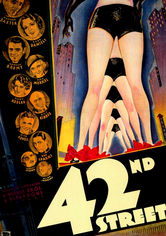
42nd Street-1933

42nd Street-1933

Director Lloyd Bacon

Starring Warner Baxter, Ruby Keeler, Bebe Daniels

Scott’s Review #1,281
Reviewed July 28, 2022

Grade: A-

Whenever I watch a film made in the 1930s, I am reminded of cinema’s vastness and blossoming.

Filmmakers could do unique things back then, having very little of what filmmakers have in the modern day for technology’s sake.

I’ve heard it said that films of the 1930s are dated and dusty, the acting style is different, and the musical scores always have a standard sound. I find them like little presents beckoning to be opened to escape to another time, long ago.

The famous musical 42nd Street (1933) has been a Broadway stalwart since its debut. However, this is a falsehood since a stage adaptation of the film debuted on Broadway in 1980, winning two Tony Awards, including Best Musical.

Director Lloyd Bacon creates a slow and steady build to set the drama properly. The final thirty-five or forty minutes culminate in a lavish and fascinating extravaganza of the gala show opening.

All in all, events transpire in a brisk one hour and twenty-nine minutes. If I’m honest, I could have done with another ten minutes of the merriment-laden conclusion.

I giggled with delight at the professionalism inhabiting unique cinematography sequences like a camera rolling through a dozen spread legs to land on a handsome young couple’s face.

The Great Depression Era is the focus in a timely fashion, and props go to all involved for emphasizing this dastardly time with an escapist show.

Revered and impatient Broadway director Julian Marsh (Warner Baxter) has fallen on hard times like the rest of the United States. His doctor warns him to care for his health, but his finances are dire.

He launches an ambitious musical as a final production before his retirement. The lead actress, bitchy Dorothy Brock (Bebe Daniels), is torn between two men, the show’s rich financer, Abner Dillon (Guy Kibbee), and struggling actor Pat Denning (George Brent).

Meanwhile, aspiring young performer Peggy Sawyer (Ruby Keeler) hopes for her big break. She is entirely green and impressionable but humorously looks similar to Dorothy, right down to their curled hairstyle.

It’s easy to see what direction the plot is going in, but instead of an All About Eve (1950) theater story of one actress scheming for the role of another actress, events happen organically.

The first portion of 42nd Street is all well and good. We get snippets of the women traversing amongst their male admirers, and Julian becomes increasingly frustrated with the incompetent talent, but I keep hoping events will finally take off.

The romantic triangles and irritated threats to fire the cast almost get repetitive until the spectacular second act.

When the company is reduced to the opening in Philadelphia, the dregs of society to them, instead of the bright lights of New York City, 42nd Street becomes a different type of film.

A magical and marvelous escapade of leggy performances, astounding costumes, and song and dance numbers emerges onto the big screen before my delighted eyes. It is startlingly like watching the production in real time.

The cherry on top was watching the petrified Peggy fill in for the injured Dorothy. Instead of the women continuing their feud, the older Dorothy gives Peggy a pep talk about how much the crowd wants to like her, and she has no reason to be nervous.

She’s got it, and Dorothy’s got her back.

The moment is filled with sweetness as the veteran passes the baton to the upstart. Dorothy’s words resonated with me as any entertainer, public speaker, or anyone else can take her advice to heart.

The musical numbers are cheery and robust, led by the toe-thumping title track, which I continue to hum along to while writing this review.

A gripe is that, according to legend, Julian is a gay character, but there is never a moment where the film implies this. A pleasant jolt would have been for him to at least flirt with a cast member.

Old-fashioned has rarely felt better because 42nd Street (1933) provides enough flash, dance, and razzle-dazzle to make its audience harken back to the good old days of classic cinema.

There are even some words of wisdom to embrace.

Oscar Nominations: Best Picture, Best Sound
Pillow Talk-1959

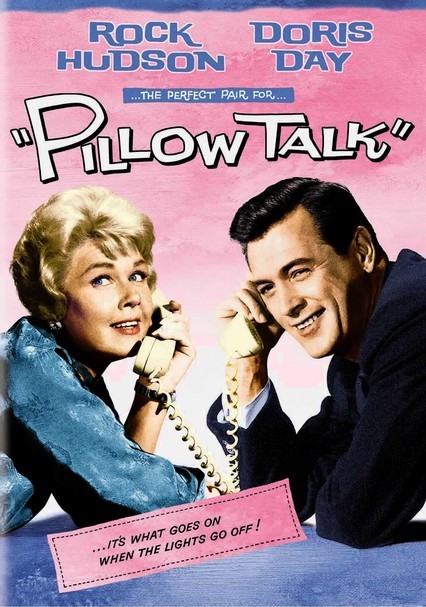
Pillow Talk-1959

Director Michael Gordon

Starring Rock Hudson, Doris Day

Scott’s Review #907

Reviewed June 6, 2019

Grade: B+

Pillow Talk (1959) is the ultimate in romantic comedies from the age of innocence in cinema.

In 1959, pictures were still wholesome and safe, providing happy stories and charming characters.

The film is a lovely and enchanting experience with intelligent characters and fantastic chemistry among its leads.

Combined with a good romance and comic elements, it makes for a fun watch that still feels fresh and bright decades later.

Doris Day and Rock Hudson smolder as singles living in Manhattan.

Day plays Jan Morrow, a perky, independent interior decorator who dates frequently but has not yet found love. Hudson plays Brad Allen, a talented, creative Broadway composer and playboy who lives in a nearby apartment building.

Jan is frustrated by a party line that allows her to hear Brad’s endless phone conversations with the women in his life. He is annoyed by her prim and proper, holier-than-thou attitude. They bicker on the phone but have not met.

Through their mutual yet unknown-to-them acquaintance, Jonathan Forbes (Tony Randall), Brad realizes who Jan is, which leads to hilarity as he fakes a Texan accent and invents a new persona: Rex Stetson, a wealthy Texas rancher.

He succeeds in wooing Jan, who falls madly in love with him while unaware of his identity. Events culminate in the inevitable big reveal when the couple vacations at Jonathan’s cabin in nearby Connecticut.

Rock Hudson oozes masculinity and charisma, and nearly every woman he meets falls madly in love with him. Hudson’s sexual preferences are hidden from the public but well-known within the film industry, so one wonders if a few comical situations were added as an inside joke.

One can speculate if these additions were made with or without the star’s knowledge; rumors abound that Hudson reportedly carried on an affair with actor Nick Adams (Tony) during filming.

A recurring theme involves Brad mistakenly walking into an obstetrician’s office (twice!) and the doctor and nurse assuming he may be the first man to become pregnant as they attempt to locate him when he keeps disappearing.

Later, Brad attempts to trick Jan into believing Rex might be a homosexual because of his love for effeminate things.

The supporting players bring wit to Pillow Talk and are key to the film’s enjoyment. Randall, as Jonathan, is not quite the nice guy, but not entirely the foil. As he has designs on Jan, he warns Brad to keep away.

His intention, which fails, is to woo her with money, but Jan seeks true love.

Thelma Ritter’s performance as Alma, Jan’s boozy housekeeper, is delicious. She adds necessary comic timing and sardonic humor. We crackle with delight when she ultimately finds love with the elevator operator.

The lavish set design is flawless. It brightens the film while adding the luxurious style and sophistication that only New York City apartment living can bring. The combined sets of Brad’s and Jan’s apartments are gorgeous.

With bright colors and 1950s-style furniture, one can easily imagine how beautiful it would be to live in an apartment of this brilliance—I know this viewer did!

A Doris Day film would not be complete without several songs that the singer/actress performs. “Pillow Talk” during the opening credits, “Roly Poly” in the piano bar with Blackwell and Hudson, and “Possess Me” on the drive up to Jonathan’s cabin.

Pillow Talk (1959) is an example of a rich romantic comedy with significant elements. It is a bit of a fantasy and a bit silly, but it contains style, sophistication, and humor.

The film was an enormous success and was deemed “the feel-good film of the year” in many circles. Following the film, Hudson’s career was relaunched after a snag years earlier.

Oscar Nominations: 1 win-Best Actress-Doris Day, Best Supporting Actress-Thelma Ritter, Best Story and Screenplay Written Directly for the Screen (won), Best Scoring of a Dramatic or Comedy Picture, Best Art Direction, Color

Golden Globe Nominations: 2 wins-Best Picture-Comedy, Best Actress in a Leading Role-Musical or Comedy-Doris Day, Best Performance by an Actor in a Supporting Role in any Motion Picture-Tony Randall, World Film Favorites-Doris Day (won), Rock Hudson (won)