Tag Archives: Vic Tayback

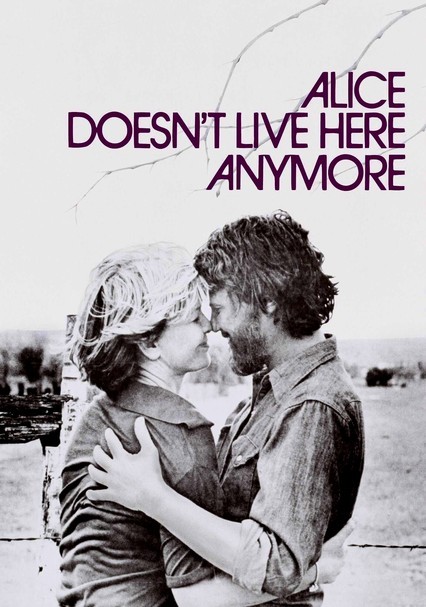
Alice Doesn’t Live Here Anymore-1974

Alice Doesn’t Live Here Anymore-1974

Director Martin Scorsese

Starring Ellen Burstyn, Kris Kristofferson, Diane Ladd

Scott’s Review #1,075

Reviewed October 27, 2020

Grade: A-

Deserving of the Best Actress statuette she won for her role, Ellen Burstyn carries the film Alice Doesn’t Live Here Anymore (1974) from start to finish with drama and comedy.

I can’t watch any performance of Burstyn’s without smarting at how she lost the same award years later, after her frighteningly good performance in Requiem for a Dream, released in 2000.

She was defeated by Julia Roberts, who delivered an adequate, though unexceptional, performance in Erin Brockovich (2000).

But, I digress.

A character study, Alice Doesn’t Live Here Anymore, tells the powerful story of a woman (Burstyn) forced to begin a new life and forge her path after her husband is killed in a car accident.

She is thirty-five years old and wary of the approaching middle age as she pursues a singing career. She is joined by her young son, Tommy (Alfred Lutter), and faces fear and loneliness as the pair embarks on a journey throughout the southwestern United States.

She dates, fights, and does a soul search, finally landing a job as a waitress at a roadside diner.

On paper, this film could have been reduced to television movie status, as the premise sounds kind of corny and sentimental.

Shocking to me is that Martin Scorsese directed it. Best known for male-driven mobster pictures like Goodfellas (1993), Gangs of New York (2002), and The Irishman (2019), Martin Scorsese’s introspective female-journey film doesn’t seem like his thing.

A fun fact is that he agreed to direct at Burstyn’s urging, since she wouldn’t have starred otherwise. The actress surmised that the script needed more darkness and grit, which it contains without losing its heart.

A strange yet lovely photographed scene kicks off the picture and seems to be an homage to The Wizard of Oz (1939). With a dusty, golden backdrop, a young Alice looks like Dorothy with an idyllic life.

Suddenly, Alice’s mother bellows her to come home for dinner. She responds with salty language. The scene feels out of place based on the rest of the film, but it looks good.

Burstyn made me care about Alice from the first scene containing adult Alice. Alice is a good person. She is hard-working and strives to please her husband, hoping he will enjoy the delicious dinner she has prepared for him. He barely grunts at the meal and has a tumultuous relationship with Tommy, whom Alice spoils.

This plot point returns later in the film.

Alice is not a doormat; however, she provides humor and comic relief during tense moments. She also shares a warm friendship with her neighbor. We do not know what the husband’s demons are (depression?).

He and Alice share an emotional moment in bed one night before he dies the next day.

With her marriage behind her and limited financial means, Alice and Tommy take to the road. I adore the relationship between the two. Tommy is not always easy to parent, exhausting his mother with typical young adult nonsense.

It’s easy to forget that he has lost his father and has no direction. Their relationship is complicated, but there is much love.

The juiciness comes when Alice finally lands a singing gig at a seedy lounge bar and meets the maniacal Ben, played flawlessly by Harvey Keitel.

At first, he is charming and attentive, wooing her like she’s never been wooed before. When she learns he is married, he turns psycho, and she is forced to leave town.

The meat of the film comes when Alice begins working at the diner and meets her new friend, Flo (Diane Ladd), and her new love, David (Kris Kristofferson). After some trials and tribulations, Alice realizes her life is not so bad.

As much as there are dramatic elements, Alice Doesn’t Live Here Anymore is not a soap opera or overwrought. The scenes and situations bristle with energy and authenticity, thanks to the great acting and fluid direction.

My favorite scenes occur at the diner. With greasy blue-plate specials and dishes piled with ham, eggs, and hash browns, the working-class extras are perfectly positioned around the diner.

In the background, they lend a feeling of rush, chaos, and family traditions. The diner scenes are where Alice bonds the most with Flo and David, and they are delicious.

Alice Doesn’t Live Here Anymore (1974), a lighter, wholesome production, was turned into a popular television sitcom in the late 1970s, titled Alice. It’s a progressive story about a woman on her own, getting it done, and mustering the courage to face whatever life throws at her.

It’s an inspiring story for both women and men.

Oscar Nominations: 1 win-Best Actress-Ellen Burstyn (won), Best Supporting Actress-Diane Ladd, Best Original Screenplay

With Six You Get Eggroll-1968

With Six You Get Eggroll-1968

Director Howard Morris

Starring Doris Day, Brian Keith

Scott’s Review #931

Reviewed August 15, 2019

Grade: B

A film that influenced the creation of the iconic television series, The Brady Bunch (1969-1974), or the reverse, depending on the timeline or who you ask, With Six You Get Eggroll (1968) is a cute family romantic comedy, hardly exceptional fare.

It becomes too silly during the final act.

The film follows the merging of two families into one big blended family, and its heart is the romance between two middle-aged singles looking for new love despite their baggage.

Abby McClure (Doris Day) is a widow raising three boys somewhere in northern California. She dutifully runs her deceased husband’s lumberyard while feeling unfulfilled in the romance department.

When her overzealous sister, Maxine (Pat Carroll), tricks her into inviting widower Jake Iverson (Brian Keith) to her dinner party, the pair do not connect. Still, they are drawn to one another as they become better acquainted.

Predictable obstacles come their way, including misunderstandings and backlash from their kids.

With Six You Get Eggroll is Day’s last film and certainly not one of her best offerings, but it is nonetheless moderately enjoyable.

The filmmaker intends to showcase a romance between Abby and Jake so that the elements are set up in a way that makes the characters likable, leaving a very predictable experience.

When Jake arrives at the party early and sees Abby at her disheveled worst, or after Jake makes up an excuse to leave the evening early but runs into Abby later at the supermarket, it’s the sort of film that has a happy ending.

As such, the chemistry between Day and Keith is palpable, making the film charming. If they had no chemistry, the film would be a bust, but their slow-burning fondness for each other works well for this genre.

They share a spontaneous evening of champagne and small talk at Abby’s house, and excitedly plan a date for the next day, only for Jake to make an excuse, leaving Abby perplexed.

When Abby sees him with a much younger woman, we feel her disappointment. After all, Abby is well past forty in a world where middle-aged women are not the pick of the litter anymore, as sister Maxine annoyingly reminds her.

When the young woman turns out to be Jake’s daughter, we smile with relief, along with Abby, because we like the characters and want them to be together.

The children: Flip, Jason, Mitch, and Stacey (a young Barbara Hershey) add little to the film and are merely supporting characters. They dutifully add obstacles to their parents’ happiness by squabbling over bathroom space or resenting one parent for taking the other away.

Conversely, Maxine and Abby’s housekeeper, Molly (Alice Ghostley), adds excellent comic relief, keeping the film from turning too melodramatic and providing natural humor.

The Brady Bunch comparisons are pretty apparent to any viewer who has seen the television series, and who hasn’t. The blended families and the G-rated dramatic crises are the most certain, and the period and clothes are almost identical.

Molly the maid could be Alice the housekeeper, and the actor (Allan Melvin) who plays Sam “the Butcher” from the television series appears as a Police Sergeant.

I half-expected the musical scores to mirror each other.

The film has some mild flaws aside from its predictability. The introduction of a band of hippies (though cool to see M*A*S*H alums Jamie Farr and William Christopher in early acting roles) and a speeding chicken truck resulting in arrests is way too juvenile and plot-driven.

A much better title could have been thought up for the film; With Six You Get Eggroll doesn’t exactly roll off the tongue, and it has nothing to do with the story.

Finally, Abby’s masculine profession is only shown in the opening scene and has nothing to do with the story.

For a wholesome late 1960s-themed evening, With Six You Get Eggroll (1968) is a moderate affair with cliches and a cheery tone, but also some genuine chemistry between its leads.

The sets and colors fit the times well, and Day is always top-notch. Perhaps one could skip this film and watch a sampling of The Brady Bunch reruns; the experience would be almost the same.

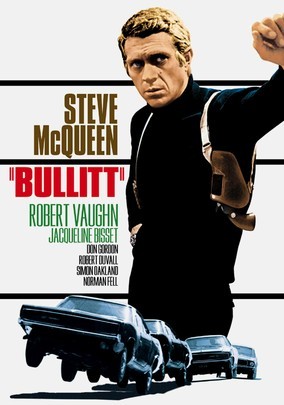
Bullitt-1968

Bullitt-1968

Director Peter Yates

Starring Steve McQueen, Robert Vaughn, Jacqueline Bisset

Scott’s Review #660

Reviewed July 7, 2017

Grade: B+

Bullitt (1968) is one of the ultimate “guy movies”, hardly a stretch considering it stars the “regular guy” hero of the time, Steve McQueen.

With his macho, tough-guy persona and his cool, confident swagger, he was a marquee hero during the late 1960s and into the 1970s.

While the film is rife with machismo stereotypes and is not precisely a women ‘s-lib film, it is also a good old-fashioned action thriller with plenty of chase and fight scenes to make most guys (and some girls) happy.

The story is not particularly thought-provoking, but the film works as escapist fare and is an example of good late-1960s cinema.

Set in San Francisco, Lieutenant Frank Bullitt (Steve McQueen) is assigned to watch a Chicago gangster, Johnny Ross, over a long weekend, before the criminal is set to testify against his brother on Monday morning.

Robert Vaughn plays ambitious politician, Walter Chalmers, who is determined to see the case go off without a hitch and see convictions in the organized crime syndicate.

Predictably, the weekend does not go as planned, and hitmen attack Ross. This, in turn,  sets off a cat-and-mouse game of deception and intrigue. As expected, the action is virtually non-stop with many action sequences lighting up the screen.

The plot of Bullitt does not matter, and one does not need to completely understand what is going on to enjoy the film for what it is. The intent of a movie like Bullitt is not good storytelling, but rather good action.

This is not meant as a put-down, but rather good, honest critiquing. One can sit back, relax, and enjoy the testosterone-laden affair.

Bullitt contains some riveting scenes that raise it above an average, middling action flick. The muscle car chase involving a then-state-of-the-art, flashy Ford Mustang and a Dodge Charger is fantastic and one of the film’s high points.

The quick, edgy camera angles as the cars zip down the windy, narrow San Francisco roads build compelling tension.

Will one of the cars careen off the side of the road or blow up? Since one of the cars holds Frank Bullitt and the other car is the bad guy, it is not tough to guess how the sequence will end.

But it’s good fun all the same, and well filmed.

The other spectacular sequence is the finale: as Frank and company overtake a busy San Francisco airport in pursuit of a baddie about to board a transcontinental flight, the chase leads them throughout the airport, onto a taxiing plane, and finally onto the runway as a plane is about to take off.

It is action at its finest and a treat for the viewer, bringing us back to airport days, pre-9/11, when airports were just different—the luxurious flight crew, the innocence, and the glamour- all a distant memory.

The scene is such that it shows all of the airport elements- the people, the employees, the airport, and the planes, giving it a slice-of-life feel, circa late 1960s airport days.

Appealing is the period in which the film is made. 1968 was an excellent year for cinema; Bullitt capitalized on the newly liberal use of blood in films, making it an influential action film.

Dozens of imitators (some admittedly with superior writing) followed, including classics Dirty Harry and The French Connection (both 1971). These contain the exact basic blueprint that Bullitt has.

A negative of Bullitt is the trite way women are portrayed. Female characters are written as dutiful nurses, gasping in fear and helplessly running away when an assailant runs rampant in the hospital, praying for a man to save the day.

Or, they are written, in the case of Bullitt’s girlfriend, as a gorgeous yet insignificant character, given a laughable scene in which she questions whether or not she knows Frank after witnessing the violence in his job- hello?

He is in the San Francisco Police Department after all.

Bullitt is a meat-and-potatoes kind of filmmaking. An early entry into what would become the raw 1970s and the slick formulaic 1980s action genre, the film deserves credit for being at the front of the pack in style and influence.

The story and character development are secondary to other aspects of the film, and Bullitt (1968) is just OK as escapism fare.

Oscar Nominations: 1 win-Best Sound, Best Film Editing (won)