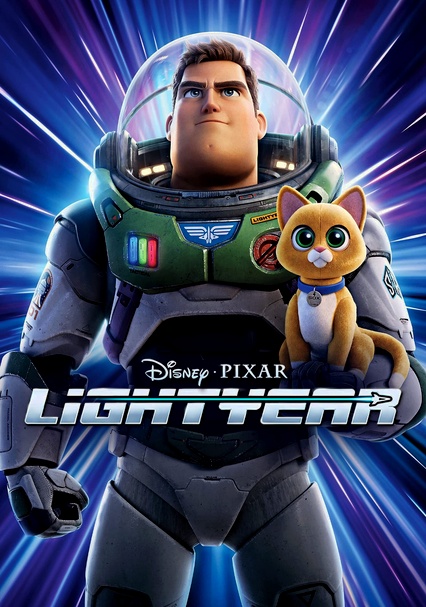
Lightyear-2022
Director Angus Maclane
Voices Chris Evans, Keke Palmer
Scott’s Review #1,322
Reviewed December 13, 2022
Grade: B
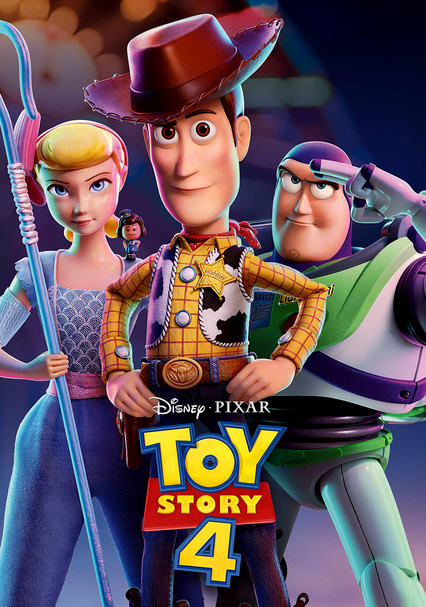
The popular Toy Story (1995-2019) franchise spawns a new child with Lightyear (2022), a spin-off prequel film within the franchise. Box office receipts will determine if Lightyear has any children of its own.
It’s a pleasant and fairly conventional offering, as it focuses solely on one ‘toy’, the masculine Buzz Lightyear, and tells his story. The visuals are delightful and colorful, and there is enough adventure to keep the whole family engaged.
Unfortunately, there isn’t much in the way of legacy or connection to the Toy Story characters, and even the voice of Buzz is replaced by Tim Allen and Chris Evans.
One’s enjoyment of the film predominantly depends on one’s preference for the franchise in general or the hero in question. Better satisfied may now be adults who were kids in 1995, harkening back to a nostalgic film featuring a favorite childhood character.
As a semi-fan, but not a diehard fan, of the Toy Story films, I found the overall result pretty good, but not astounding.
It doesn’t explain why Lightyear went from a living and thriving action hero to becoming a suburban kid’s possession, but it also doesn’t matter much, at least to me.
For fans of the series, it’s a nice trip down memory lane, more than anything groundbreaking or breathtaking.
Sometimes familiarity breeds comfort.
The film follows Buzz Lightyear (Evans), a space ranger, as he is marooned on a hostile planet with his commander and crew. He attempts to find a way back home while confronting a threat to the universe’s safety.
His ambitious recruits, Izzy, Mo, Darby, and his robot companion, Sox, serve as new characters following Lightyear’s every move. As this motley crew tackles its most challenging mission yet, they must learn to work together as a team to escape the evil Zurg and his dutiful robot army, which is never far behind.
Possibly the most interesting, and I’ll confess the primary reason why I saw Lightyear, was the notorious same-sex kiss that unceremoniously got the film banned in some Middle Eastern countries.
It also pissed off conservatives who found the kiss too much for them and the potential damnation and ruination of young children everywhere.
In truth, the kiss is timid and a non-issue. The issue is more likely a prominent female lesbian character and her wife, and best friend, Buzz. It’s like, how dare the all-American Lightyear have a black lesbian for a best friend?
Alisha (Uzo Aduba) is strong, confident, and black. She is a commanding officer and arguably the most interesting character in the film.
What an inspiration for young girls everywhere to see such representation and potential. The kicker is that she is in a relationship with a woman who has a granddaughter named Izzy (played by Keke Palmer), one of Buzz’s recruits.
Despite the addition of inclusion and diversity, Lightyear is nonetheless a by-the-numbers offering. The message is one of a robust adventure, though I appreciate the social importance of such a good character.
Once Buzz is in flight and soaring for the stars, Lightyear turns into action/adventure in a hurry. The filmmakers intend to create a popcorn summer blockbuster, with our hero saving the day, and this intention is fulfilled.
The time travel and aging of characters are interesting because we see their life cycles and the generations that follow. For example, Buzz is close to Izzy.
He cares deeply for Alisha, whom he misses terribly, because he has been far away and hasn’t aged, while she has aged like a normal human.
Lightyear (2022) offers a safe flight plan, despite being brave enough to include diverse characters. It doesn’t connect to the origin of Toy Story as much as I’d like it to, and feels somewhat like a stand-alone.
Time will tell if a sequel is made, but it would be unnecessary.