Tag Archives: Caterina Boratto

Salo-1975

Salo-1975

Director Pier Paolo Pasolini

Starring Paolo Bonacelli, Giorgio Cataldi, Caterina Boratto

Top 250 Films #56

Top 10 Most Disturbing Films #1    

Scott’s Review #183 
70099045

Reviewed October 9, 2014

Grade: A

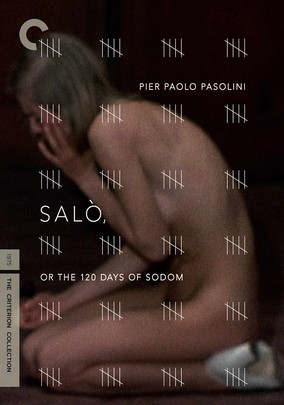
 Salo is a disconcerting, highly controversial Italian art film from 1975 that is not for the squeamish nor the prudish.

Many people will revile this film for its distastefulness and despise it entirely — that is, if they even give it a chance, which, unfortunately, many will refuse to do.

But beyond the filth, perversion, and hatefulness that are themes of Salo lies a film that is a work of art and must be experienced by the most open-minded of cinema lovers.

The film is a dreamlike experience that centers on four wealthy Fascist Italian men of great importance and power, circa 1944, who decide to kidnap eighteen teenage boys and girls- the youngsters must be the cream of the crop and flawless in appearance, only the most attractive will do- one girl missing a tooth is immediately cast aside as a reject.

Whether the girl flaunted her marred appearance is open to interpretation.

The youths are then taken to an enormous palace where they are stripped of all clothing and forced to endure four months of torture, sexual perversions, and humiliations at the whim of and for the entertainment of their captors.

Finally, at the end of their terms, most are tortured to death by way of scalping, removal of tongues, or having their sexual organs burned off.

Also living in the palace are four aging prostitutes who enthrall the men, along with the reluctant prisoners, with tales of kinky and perverted sexual encounters from their younger days, mostly involving anal sex.

The film is divided into four sections based on Dante’s Divine Comedy: the Ante Inferno, the Circle of Manias, the Circle of Shit, and the Circle of Blood.

In one sadistically disturbing scene, one of the young girls is forced to eat human excrement by one of her wealthy captors.

In another, during the Circle of Shit, everyone dines on a meal consisting of human excrement, where lewd sex occurs.

One of the female prisoners is tricked into eating food laced with nails- a contest to determine who has the best buttocks results in the winner being brutally murdered.

Everyone in the film is bisexual, and there are repeated scenes of extreme, almost pornographic, violent sex scenes.

On a side note, most of the youngsters (non-actors) reported having a ball while filming Salo and knew not what the film was really about, so the feeling on the set was light-hearted, nothing like the finished product.

While deeply disturbing, Salo is a film that some, or many, will not get or look beyond the obvious for a deeper message. It is a masterpiece in its ugliness, rawness, and political statements, and quite artistic once one gets past the film’s brutality.

Salo contains much political symbolism- the excrement serves as the filth of Nazi Germany and authoritarian figures throughout Europe such as Hitler and Mussolini, the abuse of power that was rampant during the time of the film (World War II era), and the entire film is about the abuse that powerful people (the wealthy fascists equate to powerful Germans) inflicted on the weak (the innocent boys and girls mirror the Jews and the weak).

Is Salo a disturbing, grotesque film? It is. Is it mindless torture for the sake of torture, like movies as extreme as Saw and Hostel? It is not. It is an art film, not a horror film.

Banned in many countries for decades due to the extreme content of rape, murder, and torture of individuals thought to be under the age of eighteen, it remains widely banned to this day in several countries.

Many filmmakers, actors, and historians struggle to preserve the film’s artistic merit.

To fully grasp Salo, one must delve into the filmmakers’ minds and recognize that it is a statement film, filled with symbolism that challenges and questions the politics of its time.

Director Pier Paolo Pasolini was brutally murdered by a male prostitute shortly before the film’s release.

Salo (1975) is one of the most disturbing films I have ever viewed.

Juliet Of The Spirits-1965

Juliet Of The Spirits-1965

Director Federico Fellini

Starring Giulietta Masina, Sandra Milo

Top 250 Films #188

Scott’s Review #725

Reviewed February 15, 2018

Grade: A

A true Fellini film in every sense and perhaps his most personal film, 1965’s Juliet of the Spirits, is a colorful and masterful experience with fluid art direction and stunning sets and costumes.

As with most of his films, the story and its intricacies are odd and do not always make perfect sense, but the film is meant to be absorbed and felt and exhibits more of a central plot than some of his other works.

Juliet of the Spirits is undoubtedly a must-see for fans of Fellini or any novice who wants an introduction to the great director.

In a compelling tidbit of background information, lead actress Giulietta Masina, wife and muse of director Fellini and sometimes deemed the female Charlie Chaplin, plays a true-to-life character.

In real life, the woman suffered from a philandering husband- Fellini himself!

For this reason alone, the film is fascinating as a true-to-life story, leading the audience to empathize with Giulietta and her life of doldrums and turmoil.

Giulietta Boldrini (Masina) is an affluent woman living in Italy with her successful and dashing husband, Giorgio (Mario Pisu). Despite wealth, two housekeepers, and free time to do whatever she pleases, she is dissatisfied with her life and surroundings.

This occurs mainly after she hears her husband mutter another woman’s name in his sleep. Concerned and intrigued, Giulietta hires investigators to unravel the mystery, which spawns an adventure for her.

Instead of being a cookie-cutter film with a basic plot explained above, in proper Fellini form, the character of Giulietta embarks on a journey into the dreamlike and odd experience, tapping into her repressed desires and innermost thoughts while being exposed to her larger-than-life and sexy neighbor, Suzy (Sandra Milo).

The oversexed Suzy enlightens Giulietta to the joys of her mansion, treehouse, dazzling, weird friends, and bubbling sensuality.

Juliet of the Spirits is a joy to watch and quite a bit more linear than other complex masterpieces, such as the 1960s La Dolce Vita or 1969’s Fellini Satyricon.

The plot is spelled out presently- Giulietta is depressed and anxious for something new and exciting. Her journey into this new life, marked by her wrestling with demons and resistance, makes this film so much fun.

Styles and colors are brilliant and lavishly loud. Take the gaudy and glamorous nest that Suzy calls home. Her palace is both tawdry and sophisticated, with a built-in underground swimming pool where she bathes after lovemaking and velvety red walls and furniture.

Fellini uses gorgeous reds, greens, and blues throughout the film to create dazzle and spectacles with larger-than-life characters.

To further focus on Suzy for a minute, the blonde bombshell frequently visits her very own treehouse, complete with a swing. She flirts with handsome young men who gaze up at the scantily dressed beauty as she tosses her high-heeled shoe down to them in a suggestive manner.

When they come up to the top of the treehouse by way of a mechanical basket, presumably for sex, this is too much for the overwhelmed Giulietta, who returns to the safety of her own home.

But she is excited and scared.

The film belongs to Masina, and we cannot help but wonder if Fellini created Juliet of the Spirits for the actress because of his reported years of cheating. Regardless, Masina plays a confident woman on the outside- insecure on the inside, flawlessly.

With her expressive eyes and a nice smile, Masina enthusiastically embraces the role, making her a perfect fit for a Fellini film.

Juliet of the Spirits mixes several film genres, including fantasy, drama, and light comedy, and contains interesting supporting characters.

Suzy’s seemingly clairvoyant mother is a great side character. Upon meeting Giulietta, she immediately sees that the woman is troubled. Giulietta’s father, whom we meet when she is a little girl appearing in a religious play, is boisterous and spirited.

I was fortunate enough to stay at the Grand Hotel in Rome, a lavish yet strange establishment where Fellini spent many nights as a guest. While watching Juliet of the Spirits, I fantasized that he drew inspiration for this film from the hotel.

The grand red textures, which appear in both the hotel and the Fellini film, could have created a truly inspiring facility.

Stalwart, creative, and masterful director Fellini once again crafts a stylish film that warrants thoughtful consideration after a solid viewing.

Too much analysis, however, will ruin the enchanting experience. Juliet of the Spirits (1965) is best enjoyed as a treat that will mesmerize you in glamorous fashion.

Oscar Nominations: Best Art Direction, Color, Best Costume Design, Color

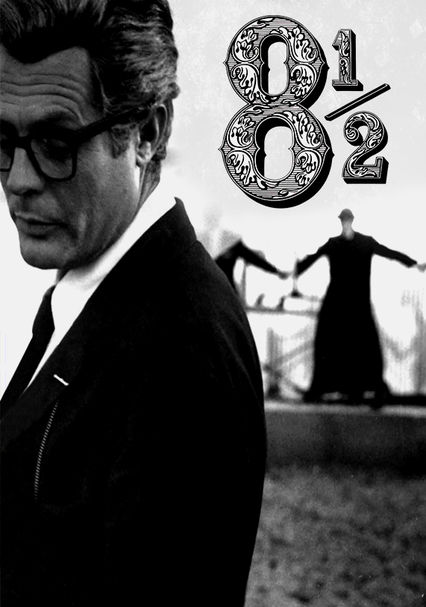
8 1/2-1963

8 1/2-1963

Director Federico Fellini

Starring Marcelo Mastroianni, Claudia Cardinale

Scott’s Review #973

Reviewed December 27, 2019

Grade: A-

For fans of acclaimed and experimental Italian film director Federico Fellini, a straightforward plot is rarely the recipe of the day with his projects.

With 8 1/2 (1963), he creates a personal and autobiographical story about a movie director who is pressured into another project but lacks the creative ideas and inspiration to fulfill the task.

We can all relate to this in one way or another.

The film is confusing, beautiful, elegant, and dreamlike, precisely what one would expect of a Fellini production. His film also hints at a more profound message and complexities.

The recommendation is to experience the film rather than analyze or over-analyze it. Let it marinate over time and relish in its offerings.

Guido Anselmi (Marcello Mastroianni) is a famous Italian film director who suffers from director’s block after he is tasked with directing an epic science fiction film and attempts to do so.

Experiencing marital difficulties, he decides to spend time at a luxurious spa where he has strange reoccurring visions of a beautiful woman (Claudia Cardinale), is visited by his mistress Carla (Sandra Milo), and is criticized by a temperamental film critic.

When Guido’s film crew arrives at his hotel to start production, he becomes overwhelmed by the mounting pressures and escapes into a world of memories. He visits his grandmother, dances with a prostitute, and relives his time at a strict Catholic school.

The film critic dismisses Guido’s attempts to incorporate these memories into his new film. The rest of the film is a mishmash of odd occurrences as Guido attempts to make his film.

Fans of Fellini’s other works will undoubtedly fall in love with 8 1/2, and since the film is about film, this scores points in my book.

His other famous works, Roma (1972) and Amarcord (1973) are similarly semi-autobiographical but differ in that they are more straightforward stories- as much as can be said about a Fellini film.

Usually lacking much plot, 8 1/2 resembles Juliet and the Spirits (1965) more than the others for comparison’s sake. Fantasy and reality are interspersed, making the film challenging to follow.

It appears to be about a man on the brink of a nervous breakdown and is a complex and personal study. As Guido spirals out of control and teetering towards insanity, he also muses about his situation. These highs and lows, told comically, make 8 1/2 even more challenging to figure out and react to.

My previous suggestion to experience 8 1/2 becomes credible as the film rolls along. Viewers may be unsure of what is happening, if not downright perplexed, but energy pulls one into its clutches with masterful sequences and potent embraces of life, love, and culture.

This must be attributed to the look and style of the film.

8 1/2 won the Academy Awards for Best Foreign Language Film and Best Costume Design (black-and-white) and is considered a highly respected and influential work of art by most film critics.

Appreciated mostly for its beautiful cinematography, it also delves into the meaning of life with a live-and-let-live approach.

Lovers of avant-garde works of interpretation and expressionism will be giddy while experiencing ruminating thoughts following 8 1/2 (1963).

Having only seen the film once and embraced it wholly as a work of art but frustrated by the lack of tangible meaning, I advise seeing it a second, a third, or even a fourth time for a deeper appreciation and understanding.

I plan to heed my suggestion.

Oscar Nominations: 2 wins-Best Director-Federico Fellini, Best Story and Screenplay Written Directly for the Screen, Best Foreign Language Film (won), Best Art Direction, Black-and-White, Best Costume Design, Black-and-White (won)