Tag Archives: Camilla Rutherford

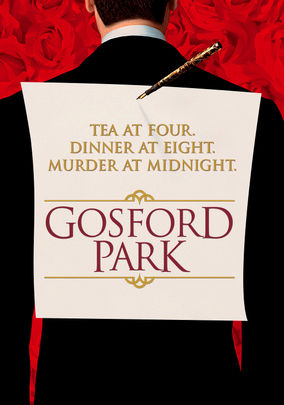
Gosford Park-2001

Gosford Park-2001

Director Robert Altman

Starring Maggie Smith, Helen Mirren, Ryan Phillippe

Top 250 Films #105

Scott’s Review #350
60021796

Reviewed January 9, 2016

Grade: A

Somewhere between the brilliant PBS series of the 1970s and the ultra-modern cool of Downton Abbey (also PBS) lies the masterpiece that is Robert Altman’s 2001 gem, Gosford Park.

Ironic is that the creator, writer, and executive producer of Downtown Abbey, Julian Fellowes, wrote the screenplay of Gosford Park.

No wonder, combined with Altman’s direction, they created genius.

The period is 1932 and the wealthy, along with their servants, flock to the magnificent estate of Gosford Park, a grand English country home. The guests include both Americans and Brits and everyone is gathered for a shooting weekend- foreshadowing if ever there was.

Following a dinner party, a murder occurs and the remainder of the film follows the subsequent police investigation, and the perspectives of the guests and the servants as a whodunit ensues.

Many of the character’s lives unravel as secrets are exposed.

Sir William, the murder victim, is a powerful industrialist. After he announces he will withdraw an investment, the ramifications affect many of the guests so that the set-up is spelled out for the audience.

At the risk of seemingly nothing more than a plot device- it is so much more than that.

During a pheasant shoot, Sir William receives a minor wound thanks to a stray birdshot- is this intentional or merely an accident? When Sir William meets his fate that evening, the potential suspects pile up.

If there are two compelling aspects to a great film, they are a good old-fashioned whodunit and an enormous cast, all potential suspects.

What makes Gosford Park exceptional is that every character is interesting in some way and all are written well.

Secrets abound for miles in this film and are revealed deliciously. Torrid affairs, sexuality secrets, and blackmail abound as revelations make their way to the surface and Altman knows exactly how to cast doubt or suspicion on many of his characters.

The compelling relationship between American film producer Morris Weissman and his valet, Henry Denton (Ryan Phillipe), along with the domineering head housekeeper, Mrs. Wilson (Helen Mirren) are my favorite characters and dynamics.

How clever that Maggie Smith would play similar roles as stuffy aristocrats in both Gosford Park and Downton Abbey.

Rich in texture is the balancing between the haves and the have-nots and how those characters mix (sometimes in secret rendezvous!)

Typical of Altman films, the character dialogue commonly overlaps, and the actors largely improvise the script. In addition to being an actor’s dream, this quality gives a dash of realism to his films and Gosford Park is no exception.

Since there are so many characters and so many plots and sub-plots going on at once, my recommendation is to watch the film at least twice to fully comprehend the layers of the goings-on.

Gosford Park (2001) will become more and more appreciated.

Oscar Nominations: 1 win-Best Picture, Best Director-Robert Altman, Best Supporting Actress-Helen Mirren, Maggie Smith, Best Screenplay Written Directly for the Screen/Original Screenplay (won), Best Art Direction, Best Costume Design

Yesterday-2019

Yesterday-2019

Director Danny Boyle

Starring Himesh Patel, Lily James

Scott’s Review #952

Reviewed October 29, 2019

Grade: B-

Yesterday (2019) is a film that is silly but sentimental, oozing with a nice quality that becomes tiresome towards the conclusion.

For those seeking a safe experience, the film will be deemed as wonderful, but for those with an appetite for a left-of-center grit, the film will only marginally entertain. It’s safe.

Director Danny Boyle (2008’s Slumdog Millionaire) chooses a charismatic British-Indian actor, Himesh Patel, for the starring role in a film that any fan of the rock band The Beatles should see.

Jack Malick (Patel) is a struggling musician who resides in Lowestoft, England, a suburb of London. Unsuccessful, he is nonetheless encouraged by his manager and childhood friend, Ellie (Lily James), to reach for the stars and never give up his dreams of achieving success.

One day, he is hit by a bus during a global blackout and is hospitalized with a head injury and missing teeth. When he performs the Beatles song “Yesterday” for his friends, they are blown away by its genius.

Jack realizes that the entire world has never heard of the legendary band and capitalizes on the stroke of luck, becoming a rock n roll superstar.

The massive song catalog of the Beatles featured in Yesterday is the best part of the film. The pleasure is in wondering which songs will appear next and in what context. Jack awkwardly “debuts” the song “Let it Be” to his parents, who continuously botch the name of the song, only showing mild interest.

Next, Jack furiously attempts to remember the lyrics to “Eleanor Rigby”, a difficult song lyrically. Other gorgeous classics featured are “The Long and Winding Road”, “Here Comes the Sun”, and “Something”.

A sentimental nod and appearance of a John Lennon figure is a nice touch and a worthy dedication to the deceased legend. The key here is wondering what would have become of the assassinated star had he not been famous.

The film approaches this when revealing that Lennon would be an older man today. Lennon tells Jack in a sentimental scene that he has lived happily with his wife by his side. If only this had been the case.

Patel is charming and a character to root for. As the butt of jokes made by his friends, who truly adore him, he is neither the handsome lead nor the wimpy co-star, more of a hybrid of the two.

We want him to achieve musical success because he is a nice guy, but we are glad when he finally confesses to the phony plot, as predictable as that revelation is to the film. Patel’s best scenes occur on stage when he either rocks out to the guitar or adorns us with a piano ballad.

Other than the above notes, Yesterday was only mildly entertaining, as it mixed a musical with a romantic story that does not work. If the audience is expected to root for Jack and Ellie to get together, then the idea falls flat.

The pair has no chemistry, nor is Ellie even remotely written as being the type who would live the rock ‘n’ roll lifestyle or want to. She is an elementary school teacher and asks Jack to give up his dream and lead a simple life in the suburbs. Who would do that?

Yesterday is riddled with stock characters, some of whom may or may not exist in real life. As much as I love actress/comedian Kate McKinnon, her overbearing character of Debra Hammer doesn’t showcase her best work.

Driven and cold, the character is played for laughs with her over-the-top behavior, but it feels too much like a part written to showcase McKinnon. Jack’s parents are cliche-filled characters, doting around with confused expressions and seeming to be overwhelmed by all events.

A musical film that cringes with a safe and saccharine feel, saved only slightly by the bevy of mostly 1960s hits by the Beatles, some of which lyrically are dissected and showcased.

Yesterday (2019) features pop star Ed Sheeran, who does not act or contribute to the film. Way too polished and superfluous for its good, Boyle, a worthy director, should have added some edginess rather than going for safe pop.

Thank goodness the film is about the Beatles rather than the Backstreet Boys.

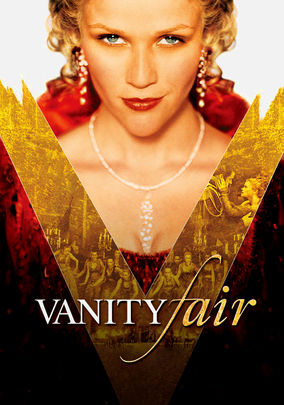
Vanity Fair-2004

Vanity Fair-2004

Director Mira Nair

Starring Reese Witherspoon, James Purefoy

Scott’s Review #772

Reviewed June 12, 2018

Grade: B

An adaptation of the classic 1848 novel written by William Makepeace Thackeray, Vanity Fair (2004) softens the traditionally unlikable and roguish character of Becky Thatcher quite a bit.

This proves not to be the smartest move as the character, now more of a heroine is watered down and forever changed, as is this film adaptation.

Reese Witherspoon (Becky) drew harsh criticism for her starring turn, but I do not think she is so bad, and the costumes and set designs are wonderful and quite the highlight of the resulting period piece.

In 1802 England, we meet Becky Sharp, a young woman who has just graduated from a School for Girls and been sent to work as a governess. Because her father, a talented painter, is impoverished, Becky is cast aside as lower class and deemed undesirable to anybody upper class- the men she is most interested in.

Despite her reputation as a tart, Becky aspires to marry rich and frequently gets into trouble with her shenanigans and smart tongue while romance blooms with the handsome Rawdon Crawley (Purefoy).

The story is supposed to encompass Becky’s life from approximately age eighteen through her mid-thirties (though Witherspoon never appears to age) and displays her trials and tribulations, her loves and losses through the years.

We follow her from rural England to London and Belgium, eventually residing in Germany, reduced to working in a casino, where the film concludes.

The film is a treat as the various countries as they appeared in the nineteenth century, and the wars and battles occurring during this period are featured making for an interesting history lesson.

The main appeal should be Becky Thatcher since the film revolves around her, and numerous criticisms were thrown around accusing the film of casting Reese Witherspoon in the important and demanding role based on her star power at the time.

In 2004 Witherspoon was experiencing enormous film success after 2001’s Legally Blonde and 2002’s Sweet Home Alabama- admittedly fluff films- but securing her box office power nonetheless. These films undoubtedly led to her being cast in the pivotal role, but I thought the star was perfectly adequate and gave Becky appropriate humor and zest.

Based on Witherspoon’s “girl next door” persona and the fact that she just looks like a good character- perplexing the decision to cast her if filmmakers wanted to be true to the character.

Witherspoon was delicious in 1999’s Election as villainous Tracy Flick, a role of a lifetime. But that is the exception and not the standard.

But I digress- the bottom line is that while she is a capable actress, she does not give the gritty performance that many were expecting to be true to the character in the novel.

The rest of Vanity Fair is just mediocre as far as the story goes.

While the antics of Becky are both humorous and dramatic, her rooting value in the romance department does not come across in the 2004 film offers- not enough chemistry exists between the leads to warrant much support.

Opinions abound that other incarnations of Vanity Fair are far more superior and compelling than this film is, but I have yet to see any.

Compliments must be reaped on the costume department and the art direction- both are superior. Such threats are the lavish and colorful costumes and gowns that mark the time. From the classic style hats and highfalutin dresses featured in ball after ball, this aspect is nearly enough to recommend a watch over the dull story and immeasurably the highlight of the entire film.

Vanity Fair (2004) is considered a messy travesty to those well-read enough to have turned the pages of the classic novel. Since I have not yet read the book, perhaps I enjoyed the film slightly more than I should have, but alas, I did not find the casting of Witherspoon as Becky nor the overall product to be drivel as many did.

I recommend the film for the gorgeous visual treats if nothing else.

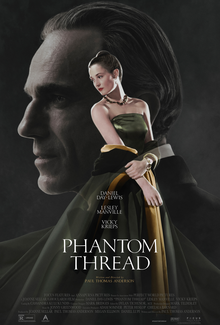
Phantom Thread-2017

Phantom Thread-2017

Director Paul Thomas Anderson

Starring Daniel Day-Lewis, Vicky Krieps, Lesley Manville

Scott’s Review #722

Reviewed January 31, 2018

Grade: A

Phantom Thread is a 2017 gem that should ideally be studied in film schools and remembered for decades to come, or at the very least discussed and dissected among those fortunate enough to see it currently.

Set in England during the 1950s and centering on the dress-making industry, the film mixes romance with a bizarre psychological element that leaves the viewer breathless as the final act comes to a dramatic and startling conclusion.

Daniel Day-Lewis brilliantly portrays Reynolds Woodcock, an esteemed and famous dressmaker who lived and worked in London in the 1950s.

He creates lavish dresses for the members of high society, including the wedding gown for the famous Belgian princess. Masterful at his work, he is also controlling and demanding, requiring plenty of support and attention from his equally controlling sister, Cyril (Lesley Manville).

When he meets Alma Elson, a waitress from a countryside resort, the pair fall into a relationship. She acts as his assistant, muse, and lover. Complexities develop between Reynolds, Alma, and Cyril as the plot progresses in cerebral and nail-biting fashion.

The film is ravishing and a feast for the eyes if only for the classic costumes alone.  Each dress that Reynolds creates is exceptional and at the height of glamour. His domineering nature only makes this realistic as perfection is his modus operandi and his dresses are evidence of this.

In one particularly fantastic sequence, Reynolds begrudgingly creates a dress for the boozy Barbara Rose, a rich and mature woman who promptly falls asleep drunk at her wedding and soils the garment.

A livid Reynolds, along with Alma, strips Barbara of the dress, rather than see her sleep in and tarnish it.

However, the main draw to the film is the excellent, intricate main plot involving Reynolds, Cyril, and Alma.

This weaving of personalities and their nuances must be attributed to the fabulous direction of Paul Thomas Anderson,  known for edgy, dark films such as 1997’s Boogie Nights and 1999’s Magnolia.

He comes up with a masterpiece in Phantom Thread.

The three principal characters are pretty unlikeable and the viewer’s allegiances may change throughout the tale. Appearing to be the innocent, debutante character of the film, the character of Alma will be surprised, especially in the film’s final act.

A successful nuance is the scenes involving characters breaking bread with others as events unfold over Danishes, omelets, and crisp asparagus. Sometimes the banter involves discussions and debates about the preparation of the food.

This characteristic is a dream for any foodie and the meals aid in the progression of the plot.

Earlier in the film, Alma is scolded by a maid for nearly picking poisonous mushrooms, which later becomes a major clue and part of the film’s conclusion.

During a pivotal scene between Reynolds and Alma, she prepares a delicious mushroom omelet for her love as motivations, secrets, and desires surface.

The grand twist that Anderson reveals at the end of the film will only leave the viewer open-mouthed and quickly reviewing the events and circumstances of the entire movie.

Anderson’s close-up scenes are magical, and each actor is allowed to be very expressive. The camerawork in several breakfast scenes—Alma and Cyril gazing at each other, revealing emotions that border between hatred and mutual respect—is effectively done.

Manville, in particular, does so much with her blue eyes as she sips coffee and peers over her cup with venomous indignation at her foe.

How splendid is the comparison of Cyril to the famous Hitchcock villainous Mrs. Danvers from the classic 1940 film in her cold and creepy mannerisms?

I hope that Phantom Thread will eventually be appreciated and analyzed as a cinematic work of art.

Deservedly honored with a 2017 Best Picture, Best Actor, Best Supporting Actress, Best Director, and Best Costume Academy Award nomination, the film is a lesson in excellent writing, bizarre angles, and essential effects.

Let’s hope that this film will be recognized as the great work it is.

Oscar Nominations: 1 win-Best Picture, Best Director-Paul Thomas Anderson, Best Actor-Daniel Day-Lewis, Best Supporting Actress-Lesley Manville, Best Original Score, Best Costume Design (won)