Tag Archives: John Hughes

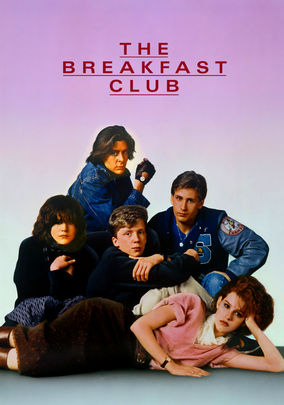
The Breakfast Club-1985

The Breakfast Club-1985

Director John Hughes

Starring Judd Nelson, Molly Ringwald, Emilio Estevez

Top 250 Films #131

Scott’s Review #755
Reviewed May 8, 2018

Grade: A

The Breakfast Club (1985) is one of the most beloved films of the 1980s and perfectly captures what it was like to be a teenager at the time.

Containing both innocence and authenticity rarely found in films targeted at younger audiences (and there were plenty in the 1980s), the film is timeless and holds up exceptionally well, still feeling fresh.

Director John Hughes avoids cliches and creates genuine truth in cinema. The theme song, “(Don’t You) Forget About Me,” is nearly impossible to hear without associating it with this film.

The storyline is uncomplicated: five high school students (Bender, Claire, Andy, Brian, and Allison) from different social classes gather one Saturday morning in the high school library for a day of detention.

Each student appears to know the others, but only peripherally, having little in common.

Assistant Principal Vernon (Paul Gleason) assigns them to complete a thousand-word essay by the end of the day. The group engages in mischievous antics, squabbles, and discusses their respective roles and troubles in life throughout the day.

The film looks and feels like a small, independent feature rather than a big-budget offering, which is a great compliment. The cast is very small- only the aforementioned six principles and two minor characters.

The setting is almost entirely inside the walls of a suburban high school, with only a few exterior shots. Mainly, what succeeds is the characters’ interactions, rich dialogue, and good texture, along with underlying insecurities that make the screenplay bristle with genuine angst.

It is tough to pinpoint who the lead characters would be, but arguably Claire and Bender (Molly Ringwald and Judd Nelson) are the pair expected to unite as a couple, as they do in the conclusion- this is predictable yet sweet.

Unexpectedly, however, the film pairs Andy and Allison (Emilio Estevez and Allie Sheedy).

Both couples are complete opposites; Claire and Bender even despise each other for most of the film, yet they realize their mutual attraction.

Careful not to weigh down the film with too much heavy drama, Hughes, who also wrote and produced the work, peppers in some comedic moments.

Gleason is the easy foil as the sole authority figure, a bit too dedicated to his job of humiliating and disciplining the students, but he does get his due humorously.

Either on-screen or off-screen, no adult figures are written in a positive light, giving The Breakfast Club a complete teenage perspective.

But the main appeal lies with teenagers and the message that Hughes successfully relays: that of the misunderstood young adult.

Each character is unhappy in some way and feels placed into a category or defined by the cliques they belong to, whether they want to or not.

Hughes makes the film a treasure in terms of relating to the characters- everyone remembers high school and the insecurities wrestled with while attempting to get good grades and obtain acceptance.

Hughes brings these aspects to life with his slice-of-life tale.

Even if not every character is immediately recognized by the viewers, each is empathetic nonetheless.

When Andy reveals his father’s criticisms, or Bender painfully recounts his father’s physical abuse, we feel for them, suddenly seeing the strong athlete or the burnout from our high school days in an entirely new way.

Mousy Allison gets a makeover from Claire and suddenly shines like a new dime- finally not being ignored. Brian’s overbearing parents’ pressures are almost too much for him to bear.

After the film, we are left to wonder what will happen on Monday morning during homeroom. Will the group continue their new friendships (or more) or return to the normalcy of their respective peer groups?

Hughes wisely does not satisfy our piqued curiosity but rather leaves it to our imagination.

The Breakfast Club (1985) holds appeal for the masses without feeling cliched or put upon- only feeling insightful and inspired to accept others we may have preconceived notions about.
Ferris Bueller’s Day Off-1986

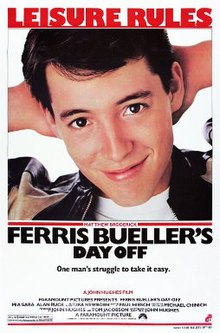
Ferris Bueller’s Day Off-1986

Director John Hughes

Starring Matthew Broderick, Alan Ruck

Scott’s Review #1,396

Reviewed September 7, 2023

Grade: B

Ferris Bueller’s Day Off (1986) is one of the best-known films in John Hughes’s collection of 1980s teen coming-of-age comedies.

On par with The Breakfast Club (1985) and Pretty in Pink (1986) in name recognition memory banks, especially for teenagers growing up in this decade.

Iconic moments like Ben Stein’s teacher’s monotone attendance roll call, the repeated phrase ‘Bueller’, and the term ‘Save Ferris’, which became the name of an alternative rock band, are legendary.

The film has its moments of creativity, and Matthew Broderick’s portrayal of the title character was charming and star-making.

Watching the film, though, decades later, the slapstick feels overwhelming to the drama, and there isn’t much angst like in other Hughes films.

There isn’t much deeper meaning beyond one day to skip school and go on an adventure.

This makes Ferris Bueller’s Day Off fun and lighthearted, but silly compared to more mature Hughes efforts. The film is about being young, free, and having fun, but not much more, and the hijinks between the students and the authority figures sometimes feel tired.

Ferris Bueller (Broderick) is brilliant at skipping school and getting away with it despite being an intelligent student. He causes the high school principal, Rooney (Jeffrey Jones), much irritation and ultimately pursues him to catch Ferris in the act.

The young man plans one final outing before graduation with his best pal Cameron (Alan Ruck) and his girlfriend Sloane (Mia Sara).  They ‘borrow’ Cam’s father’s expensive Ferrari and journey through the streets of Chicago.

Ferris’s sister, Jeanie (Jennifer Grey), seethes with rage at her brother’s antics while their successful but dimwitted parents, Katie (Cindy Pickett) and Tom (Lyman Ward), remain clueless.

The film’s strengths are the frequent shots of Chicago and of Broderick himself, which elevate it above mediocrity decades after its initial release.

Broderick followed in the footsteps of contemporaries like Michael J. Fox and Emilio Estevez as the cool, likable all-American boy next door. His performance makes the film better than it might have been, and the fun is watching him outwit rivals like the principal and other villains he encounters.

Hughes creates a nice ‘day in the life’ style that follows the characters from early morning until evening, which keeps the events contained well.

A high point of the film, and where it picks up steam, comes when the gang reaches Chicago. We suspect the teenagers, while they skip school via fibs, merely have a case of ‘senioritis’ and are otherwise superior students. This is confirmed by the sophisticated and intellectually stimulating places they visit.

They have lunch at a swanky French restaurant and visit the world-renowned Art Institute of Chicago for good old-fashioned culture. Not to appear too snobby, they hobnob with blue-collar folks at an afternoon Cubs baseball game.

Where Ferris Bueller’s Day Off feels dated is with the ditziness of Ferris’s parents. The teen easily bamboozles his parents with his feigned illness, and when his father notices Ferris in a nearby taxi cab, he shrugs it off as his imagination.

The most laughable instance of the parents’ cluelessness is when mom Katie, in the passenger seat, appears not to notice her son running in front of their car when sister Jeanie slams on the brakes. She instead scolds Jeanie for driving recklessly.

These and other setups involving the over-the-top principal feel more like cliches than genuine laugh-out-loud moments. But this was common in 1980s comedies.

Ferris Bueller’s Day Off (1986) feels fresh in some parts but dated in others, making the experience humorous but hardly legendary.

Whereas The Breakfast Club holds up very well, this film doesn’t hold up as well.

Sixteen Candles-1984

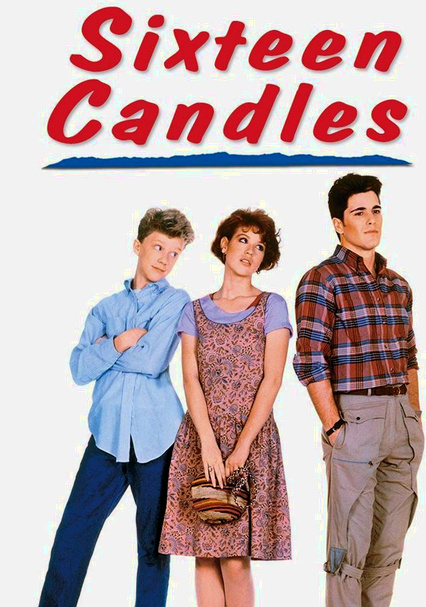
Sixteen Candles-1984

Director John Hughes

Starring Molly Ringwald, Michael Schoeffling, Anthony Michael Hall

Scott’s Review #1,389

Reviewed August 14, 2023

Grade: B

While recently re-watching a string of John Hughes-produced or directed films from the 1980s, I set upon them with fresh eyes.

Some scenes or themes that worked in the mid-1980s would be inappropriate in a more sensitive, post-Me Too! era. movement.

Hughes, of course, was the king of the teen angst, coming-of-age, romantic comedies that usually starred Molly Ringwald.

Sixteen Candles, Hughes’s first directorial effort, was released in 1984 and launched him to superstardom and immense popularity. Films like The Breakfast Club (1985) and Pretty in Pink (1986) would follow to much acclaim.

What he did so well was provide maturity and a message to the otherwise dumb and raunchy comedies that populated the decade. He brought a fresh female perspective, whereas others were typically male and hormone-driven.

Already angst-ridden Samantha (Molly Ringwald) wakes up on the morning of her sixteenth birthday to find her busy family has completely forgotten her special day.

Samantha already pines for the handsome senior Jake (Michael Schoeffling), but worries that her dorkiness and lack of sexual experience will be a turnoff for the popular boy.

Meanwhile, Samantha must constantly rebuff the affections of nerdy Ted (Anthony Michael Hall), the only boy in the school who seems interested in her.

As enjoyable as Sixteen Candles is, I’d list it as the weakest of the Hughes films. It serves as more of a blueprint for the genius he would become.

Ringwald carries the film with ease, which is all the more impressive since this was one of her first film roles. She infuses Samantha with a blend of confidence, insecurity, and worry, so that most American teenage girls could see themselves in her.

Pretty but not a pinup blonde, Samantha is intelligent and the girl next door. She lives in a suburban neighborhood, is middle-class, has loving but distracted parents, and siblings focused on their trials and tribulations.

Most can relate to that.

A wonderful and tender moment between Samantha and her father, Jim, played brilliantly by Paul Dooley, nearly moved me to tears. His wisdom and kindness, as Samantha emotionally reveals her love for Jake to her dad, are warm and solid, epitomizing what a dad should be to his daughter.

A series of tepid misunderstandings occurs between Samantha and Jake, who, ironically, has noticed her and shares her attraction. She freezes when face-to-face with him and flees, so he naturally assumes she is a bitch and has no interest in him.

It takes so long for the lovebirds to connect that many possibilities and scenes go unexplored. The film ends as soon as they reveal their feelings, leaving the audience with little to celebrate.

We also know almost nothing about Jake. He is a rich kid whose parents are vacationing in Europe, but what makes him tick? He could have any girl in high school and date the pretty blonde girl, but what makes him so drawn to Samantha?

The casting of the four grandparents serves no purpose other than to provide comic relief and to convey an inaccurate message about how bumbling older people are.

One refers to Samantha’s ‘boobies’ while another stinks up the bathroom.

Worse yet, the inclusion of a foreign exchange Asian student named Long Duk Dong (Gedde Watanabe) is riddled with cliches and stereotypes only played for laughs.

These characters are caricatures.

Finally, the groping and taking advantage of drunk female characters now feels dated if not flat-out inappropriate. In 1984, the scenes are meant to be funny.

Still, Sixteen Candles (1984) accurately depicts the loneliness and problems that nearly every teenager has faced throughout history. With a warm message of belonging and a sweet subtext, the film is a recommended watch, but be wary of its stereotypes.

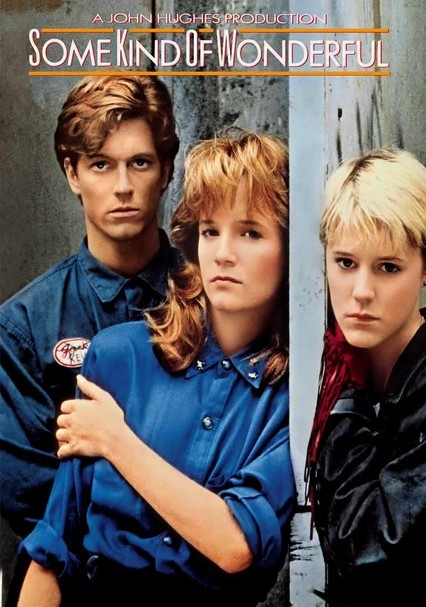
Some Kind of Wonderful-1987

Some Kind of Wonderful-1987

Director Howard Deutch

Starring Eric Stolz, Mary Stuart Masterson, Lea Thompson

Scott’s Review #1,386

Review August 4, 2023

Grade: B+

Some Kind of Wonderful (1987) is one of many John Hughes-written teenage romantic dramas to emerge in the 1980s.

It’s familiar territory in terms of storytelling and quite similar to the 1986 hit Pretty in Pink.

I’ll call it what it is: essentially a remake of Pretty in Pink.

Hughes attempts to ‘right the wrong’ of the ending of Pretty in Pink, which he was forced to rewrite because of pesky test audiences. Truth be told, I was happy with who wound up with whom in the film, but I guess I’m in the minority.

A romantic quadrangle is front and center, with differing social classes explored amidst the already tricky teenage years. Characters battle for status as they deal with powerful feelings and angst with their parents and friends.

A fun fact about Some Kind of Wonderful is that Hughes assumed his muse, Molly Ringwald, would star in the film. When she turned him down for more adult roles, he never forgave her, which led to the dissolution of their film collaboration.

But the show must go on.

Keith Nelson (Eric Stoltz) is an artistic high school outcast who bravely tries to land a date with the most popular girl in school, Amanda Jones (Lea Thompson).

His tomboy best friend, Watts (Mary Stuart Masterson) is secretly in love with him while Amanda’s rich on-again-off-again boyfriend, Hardy Jenns (Craig Sheffer), vows revenge on Keith.

Watts tries to convince Keith to stop pursuing Amanda, while his father (John Ashton) is dead set on Keith attending business rather than art school.

Before you start thinking this sounds like a corny story arc from the afternoon soap opera Days of Our Lives, it’s a pretty well-written story with many ups and downs and good, sincere acting.

Stolz is compelling as the boy-next-door/leading man. He is relatable and, therefore, easy to root for to get the girl.

The main attraction and best part of the film is the triangle between Keith, Watts, and Amanda. Hardy is merely along for the ride, serving as both a foil and necessary eye candy. Every girl wants him, so why would Amanda want Keith and not him?

When Hardy refers to Amanda as his ‘property,’ it makes him unforgivable to audiences. It might have been interesting if Hughes had made the character a viable romantic option for Amanda or Watts by softening him.

There are arguments for Keith winding up with either Amanda or Watts, and a tantalizing mention is that Watts could be gay, but this story goes nowhere.

1987 would have been too early for this quality to be featured much in mainstream film, but at least the thought is there.

Despite being popular, Amanda is not a bitch. Her best friend, Shayne (Molly Hagan), is though.

In a bit of irony, the character Keith, at the end of the film, feels rushed, jagged, and like an added-on scene. The similarities to the reshoot they did with the ending of Pretty in Pink are uncanny.

Other characters are added purely for comic relief and to offset the romantic-heavy drama. Keith’s tough guy friend Duncan (Elias Koteas) and Keith’s younger sister Laura (Maddie Corman) provide the film with some cute moments.

Teenagers, whether in 1987 or today, can relate to the well-meaning pressure Keith’s father puts on him, so the message is universally appreciated.

Nothing will surpass my top ranking of The Breakfast Club (1985) as my favorite John Hughes film, but Some Kind of Wonderful (1987) does a good job of capturing a slice of teenage angst we can all relate to.

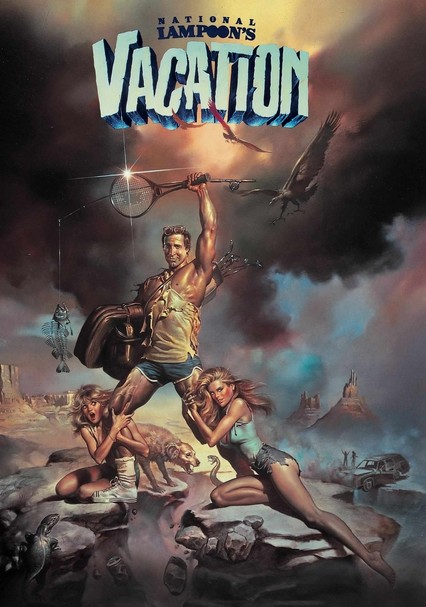
National Lampoon’s Vacation-1983

National Lampoon’s Vacation-1983

Director Harold Ramis

Starring Chevy Chase, Beverly D’Angelo

Scott’s Review #1,300

Reviewed September 19, 2022

Grade: A-

The film that spawned a slew of sequels, remakes, spoofs, and other things, National Lampoon’s Vacation (1983), had more influence on 1980s movies than it probably should have.

The slapstick road trip became overused, familiar territory, a situation comedy rife with silly scenarios and possibilities.

Despite having started it all, my favorite National Lampoon film will always be the 1989 Christmas Vacation installment, but for some snickers, hoots, and belly laughs, Vacation is fresh and authentic. holding up well in the nostalgia category.

So what if Chevy Chase was a douchebag in real life? His portrayal of Clark Griswold is his finest achievement and is firmly placed in the annals of slapstick comedy’s greatest characters. Endless quotes and impersonations of the bumbling dad have emerged over the years.

Great fun is looking for other comedy actors like Eugene Levy and John Candy, who would later forge their paths into comedy legend.

Accompanied by their children, Audrey and Rusty, played by Dana Barron and Anthony Michael Hall, Clark Griswold (Chase) and his wife, Ellen (Beverly D’Angelo), decide to drive instead of flying from Illinois to a California amusement park named Wally World to enjoy a much-needed summer break.

Clark is convinced that some togetherness is just what the family needs.

As Clark increasingly fixates on a mysterious, sexy woman (the acting debut of Christie Brinkley) driving a red sports car, the Griswolds deal with car problems and the death of a family member, Aunt Edna (Imogene Coca), as they face hi-jinks on the way to their vacation.

Exhausted, they finally reach Los Angeles, but when Clark worries that the trip is being derailed again, he acts impulsively to get his family to the park.

National Lampoon’s Vacation is a rarity in screwball comedy, where almost all of the setups and gimmicks work. Typically, the situations feel stale and tried-and-true, but there is an authenticity brimming over the top, and that’s largely thanks to Chase.

Don’t get me wrong. The film is hardly worthy of study in film school, and the script is polished and patterned out, but like other screwball comedies I love, like Caddyshack (1980) and Clue (1985), it’s got something solid.

I think it’s because the characters are very relatable. Who doesn’t have a wacky Aunt Edna or a Cousin Eddie (Randy Quaid) somewhere in their family tree?

Long-suffering, suburban housewife Mom Ellen has a heart of gold and represents the classic 1970s or 1980s homemaker with a glimmer of progressiveness.

She dutifully scrambles eggs for breakfast and shops for cereal and dog food, but also keeps Clark at bay before he does something ridiculous.

Chase and D’Angelo have tremendous chemistry, bouncing one-liners off each other as naturally as a real-life conversation, so that we buy them as husband and wife.

What kid who grew up in this period can’t relate to the horrid paneled oversized station wagon that ran rampant in suburbia? I sure remember those gas guzzlers being eventually replaced by minivans.

It’s perfection to see that style of car represented in this film, as it adds to the hilarity and is a character in itself.

The fun continues because the Griswolds embark on a trip across the United States. So, the film provides a slice of Americana and harkens back to a time when, if you were an American, you were united and bonded even if you had differences.

What National Lampoon’s Vacation (1983) does so well, watching in modern times, is remind us what that felt like. An adventure across the good ‘ole USA was not such a bad thing, and the folks you met along the way were friendly and warm without suspicion.

The film is like a dear old friend who has emerged from the woodwork, dusty, but still full of life.

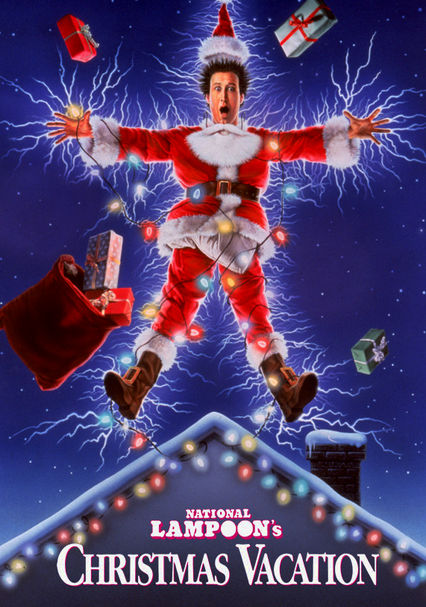
National Lampoon’s Christmas Vacation-1989

National Lampoon’s Christmas Vacation-1989

Director Jeremiah S. Chechik

Starring Chevy Chase, Beverly D’Angelo

Scott’s Review #1,248

Reviewed April 23, 2022

Grade: A-

Made several years after the first in the National Lampoon’s Vacation series (1983-2015), the inevitable production of National Lampoon’s Christmas Vacation (1989) is my personal favorite of the bunch and the most laugh-out-loud.

Silly personified, but the jokes work, and the enjoyment carries throughout the entire running time.

In retrospect, you knew they were going to do it. What better fodder for the bumbling Griswold family than to have them reunite with extended family on such a seasonal holiday?

The gags and awkward situations are ripe for the picking, as situation after setup is done exceptionally well and with grand humor.

The silliness works, and the film is a recommended watch with the family gathered around the holidays.

Viewers can either relate directly to the film or inevitably know families that resemble the incompetent yet lovable Griswolds.

As the holidays approach, Clark Griswold (Chevy Chase) is determined to have a perfect family Christmas. He motivates his wife, Ellen (Beverly D’Angelo), and their children to ensure everything is in order, including the tree and house decorations.

Naturally, things quickly go awry in the greatest of humor.

His hick cousin, Eddie (Randy Quaid), and his family show up unplanned and start living in their camper on the Griswold property.

Even worse, Clark’s employers renege on the holiday bonus he needs, causing a great deal of stress for the family patriarch.

For starters, the film has a cool holiday vibe. The setting is wisely the Midwest United States, somewhere outside of Chicago, Illinois. Snow is to be found everywhere, and Christmas decorations and lights are lit all over the place throughout the film.

This creates a suburban, homey atmosphere that is warm and friendly.

Most viewers can snuggle up by a warm fireplace with delicious hot cocoa and enjoy the film. The environment is one of the finest achievements in National Lampoon’s Christmas Vacation.

A classic moment and the film’s funniest scene occurs when Clark excitedly decorates the inside and outside of the house to the nth degree and blows the town’s electric circuit as a result, leading to uproar among his neighbors.

Proud Clark’s ego is suddenly deflated, and the man must rise above it all to somehow enjoy his family Christmas.

Watching the film decades after its release is still great fun as a nostalgia offering. The tacky Griswold Ford LTD station wagon with paneled siding is garish and unsightly (then and now), and anyone growing up in the 1980s can easily recall suburban families piling into this gas-guzzling car.

Not every aspect works perfectly in National Lampoon’s Christmas Vacation, like the unappealing yuppie neighbors Todd and Margo (played by Nicholas Guest and Julia Louis-Dreyfus) or Eddie and his redneck family.

These roles are a bit too over-the-top and secondary inclusions to be the major win the film is.

The real wins from the supporting cast are Clark’s immediate family. His parents and Ellen’s parents are perfectly cast and provide excellent comic timing and seasoned wit.

Special notice goes to John Randolph, Diane Ladd, and Doris Roberts.

And who won’t fall in love with Clark’s senile Aunt Bethany, played with hilarity by Mae Questel (the voice of animated Betty Boop and Olive Oyl)?

Predictably, and well-intentioned, all the Griswold problems quickly fade away when Clark receives his annual Christmas bonus after all, and all characters have a lovely send-off while singing ‘The Star-Spangled Banner’ just in the odd way that the Griswolds would do.

National Lampoon’s Christmas Vacation (1989) used to be a traditional Christmas viewing for me, but it has shamefully fallen out of favor over the years.

It might be time to dust off this forever gem that provides laugh after laugh, fun, and togetherness for the whole family.