Tag Archives: Stephen Graham

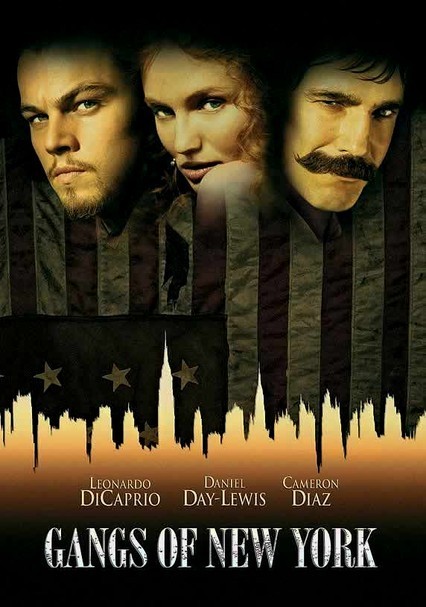
Gangs of New York-2002

Gangs of New York-2002

Director Martin Scorsese

Starring Leonardo Dicaprio, Daniel Day-Lewis, Cameron Diaz

Scott’s Review #1,327
Reviewed December 26, 2022

Grade: A-

Gangs of New York (2002) is an extremely violent and bloody epic by director Martin Scorsese that is an exquisite piece of filmmaking nearly flawless in every way except maybe its length and story.

On the one hand, it’s a beautifully choreographed and filmed crime drama with perfect costumes, art direction, and cinematography. Still, on the other, it’s tedious and lengthy, especially during the final hour, with choppy storytelling and seemingly one long continuous battle.

Scorsese being Scorsese and knowing his way around crafting an excellent film or two left me ruminating over the cinema and pondering whether I’d ever need to see it again.

Usually, I’m all in when it comes to repeated viewings of his films,  especially Raging Bull (1980) or Goodfellas (1990) but with Gangs of New York, the sobering almost three hours running time and the non-stop bloodshed gives me pause.

It’s not a mafia film but it is an Irish-centered crime drama harkening back to the mid-1800s so there are historical lessons to be exposed to. Familiar with most of his films there are good guys, bad guys, and a criminal, feuding overtone, and lots of grit and grime to plow through.

I can’t say it’s one of Scorsese’s top 10 but it’s a grandiose, epic-length behemoth that features a host of top-name talent but there are nonetheless aspects that leave it slightly beneath his most famous works.

But that’s nearly akin to comparing the works of Beethoven, Rembrandt, or other geniuses of one art form or another. Anyone respecting Scorsese or appreciating good cinema should see Gangs of New York.

Amsterdam Vallon (Leonardo DiCaprio) is a young Irish immigrant released from prison. He returns to the Five Points seeking revenge against his father’s killer, William Cutting (Daniel Day-Lewis) also known as ‘The Butcher’, a brutal and powerful anti-immigrant gang leader.

He knows that revenge can only be attained by infiltrating Cutting’s inner circle. Amsterdam’s journey became a fight for personal survival and to find a place for the Irish people in 1860’s New York.

The most delicious part of the film is the rivalry between Amsterdam and ‘The Butcher’. DiCaprio and Day-Lewis make powerful sparring partners and as much as Amsterdam’s motivations are admirable it’s Day-Lewis who has the more interesting character.

To no one’s surprise, the actor channels his inner dictator as he method acts throughout the film. To no one’s additional surprise, he steals the show away from other tremendous actors like DiCaprio, Jim Broadbent, and John C. Reilly in supporting roles.

However, I need to ask why Day-Lewis was selected for the Lead Actor Oscar category when he is a supporting one.

Worthy of mention is Cameron Diaz who, for once, plays the dramatic role of a pickpocket. Typically cast in comedic roles she shows she has acting chops.

The story gets a bit wayward about halfway through and I stopped giving the story much credence about three-quarters of the way through. It’s as if Scorsese had frenetic schizophrenia moments with tons of good ideas but none of them formulating a cohesive plot.

The New York City setting is a favorite of mine especially pre-civil war and well before the NYC of modern times even existed. The prevalence of Canal Street and various others make this northeasterner heavily invested in geography.

Finally, to bring it all full circle, Gangs of New York powerfully reminds the audience of the age-old topic of immigration and how those who have citizenship too often oppose those who desire to enter a country they once also did.

‘The Butcher’s’ brutal opposition is a sad reminder of how the United States of America was never united and the senseless violence towards immigrants is never-ending.

Gangs of New York (2002) may not be Scorsese’s best work but even on his worst day, he creates a film worth watching. Mixing toxic masculinity, and revenge with a crazy story he succeeds where other directors might fail by providing compelling filmmaking with all the fixings.

Just don’t get too hung up on the story points.

Oscar Nominations: Best Picture, Best Director-Martin Scorsese, Best Actor-Daniel Day-Lewis, Best Original Screenplay, Best Art Direction, Best Cinematography, Best Costume Design, Best Film Editing, Best Original Song-“The Hands That Built America”, Best Sound
The Irishman-2019

The Irishman-2019

Director Martin Scorsese

Starring Robert De Niro, Al Pacino, Joe Pesci

Scott’s Review #960

Reviewed November 20, 2019

Grade: A

Any film created by legendary director Martin Scorsese is sure to impress legions of adoring followers and most critics.

Every project he touches results in something fantastic, and it’s easy to revel in, with good analysis and discussion about the movie moments after the closing credits have rolled.

The Irishman (2019) is a film that demands repeated viewings and thoughtful consideration to appreciate the rich and diverse cast of characters fully.

The picture may not be on the same level as Goodfellas (1990) or The Godfather (1972), which it seems patterned after, but the work is awe-inspiring and should stand the test of time, resulting in a fine wine analogy.

The years will likely be kind to the film and enrich the experience- it’s that kind of film.

With stars like Robert De Niro, Al Pacino, Joe Pesci, and Harvey Keitel on board, the viewer expects a plethora of riches, and that is precisely what is delivered.

The film spans the period from the 1950s to the 1970s.

It follows the life of Frank Sheeran (De Niro), a truck driver who becomes a hitman and becomes involved with mobster Russell Bufalino (Pesci) and his crime family, including his time working for the powerful Teamster Jimmy Hoffa (Pacino). Sheeran is dubbed “the Irishman”.

He narrates much of the story, now quite elderly and residing in a nursing home, of his time in the mafia and the mystery surrounding the death of Hoffa.

The only negatives to the film are the suspension of disbelief that De Niro is Irish – was there ever a more quintessential Italian New Yorker? However, this film is directed by Scorsese and produced by De Niro, so they could tell me the sky is green, and I would readily nod in agreement.

At three hours and twenty-nine minutes, the film is a long haul, and towards the middle, the film meanders a bit. Perhaps twenty or thirty minutes could have been sliced to the cutting room floor.

The rest of the experience The Irishman serves up is brilliance, with rich characters and a fantastic atmosphere. Have I mentioned that Scorsese directed this film? The cast of characters is endless and drips with zest, speaking volumes for what The Godfather did with casting.

Many recognizable actors appear in minor roles, like Ray Romano as attorney Bill Bufalino, Bobby Cannavale as “Skinny Razor”, and Anna Paquin as Frank’s estranged daughter, Peggy.

An endless supply of character actors fleshes out the remaining cast.

Excellent is the plethora of food references that would impress notable food director Alfred Hitchcock, known for incorporating meals into many of his scenes. The delectable early scenes, when Frank delivers meat to grocers and gets into a discussion with a gangster over a good steak, will leave viewers mouth-watering for a tender sirloin.

The conversations between characters are interesting, slowly building and adding robust grit to a packed film. They engage in good, thoughtful dialogue exchanges and discuss life and experiences matter-of-factly.

Characters are given a chance to develop and grow, and even minor characters, such as a nurse or a wife, add a comforting aura. It is evident what treasured films look like when a director can create and develop without outside interference.

The standouts in the acting department are Pacino and De Niro, the former of whom I’m crossing my fingers will receive an Oscar nomination.

The pairing is flawless, and eagle-eyed fans will recall that both actors appeared together in The Godfather Part II (1974) yet never shared a scene.

In The Irishman, they appear together in pivotal scenes. Pacino infuses Hoffa with humor and poise, as only Pacino can, in a character. He is my favorite character and is tough to look away from.

Both actors, along with Pesci, are treated to a recent marvel in cinema —the de-aging process. Each actor, well into his seventies, is transformed to appear in his mid-forties in many scenes and then aged to appear elderly later in life.

While each has a strange, unnatural look as a younger man, the process is impressive and an innovative technique that will surely become more common in film, subsequently offering limitless possibilities.

The Irishman (2019) is a cinematic gem by a storied director advancing in years, but still offering grandiose films. With stalwarts like De Niro, Pesci, and Pacino, the players are well cast, and nuanced touches add dimensions to the finished product.

Offering a gangster film with grace and style, the story is poignant and crisp, and a thoughtful approach to one of the legendary mysteries- what happened to Jimmy Hoffa?

Oscar Nominations: Best Picture, Best Director-Martin Scorsese, Best Supporting Actor-Al Pacino, Joe Pesci, Best Adapted Screenplay, Best Production Design, Best Cinematography, Best Costume Design, Best Film Editing, Best Visual Effects

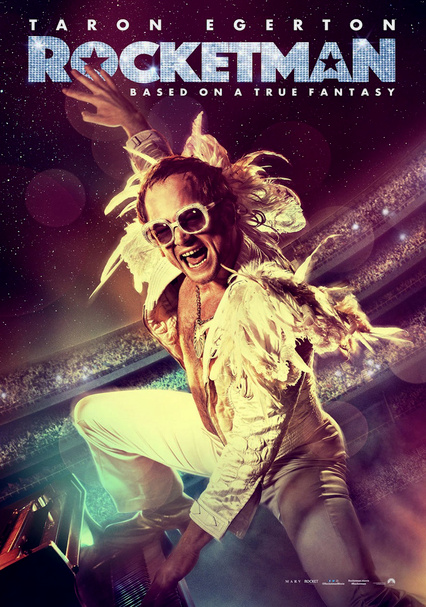
Rocketman-2019

Rocketman-2019

Director Dexter Fletcher

Starring Taron Egerton, Jamie Bell

Scott’s Review #906

Reviewed June 5, 2019

Grade: A

Following the unexpected success of 2018’s rock biography Bohemian Rhapsody comes the similarly themed Rocketman (2019).

This time, the subject at hand is Elton John, rather than Freddie Mercury, but both storied figures share unquestionable comparisons, as their successes, failures, and struggles are well-documented.

Both films take their names from popular title songs, and both feature the same director, Dexter Fletcher.

Freddie Mercury and Elton John are both larger-than-life onstage personas, yet both reportedly suffered from shyness, creating characters to portray that helped ease their difficulties.

Rocketman gets the slight edge over Bohemian Rhapsody when comparing the two, with experimental and psychedelic sequences making the experience more left of center than the latter and lacking a hefty feel-good component.

I would venture to assess that Rocketman has darker overtones.

The film opens impressively as an adult, successful Elton John (Taron Egerton) attends a support group therapy session in rehab, begrudgingly. This scene will recur throughout the film as John slowly reveals more to the group about his childhood, rise to fame, and struggles with numerous demons.

This is key to the enjoyment of the film, as it frequently backtracks in time, allowing us to see John’s development both as a musician and on a personal level.

Many scenes unfold like a Broadway play, which is an ingenious approach, not only a treat for fans of John’s vast catalog of songs but also immensely creative from a cinematic perspective.

At the film’s high point, the scenes are not only showy but also propel the direction of the film, rather than slowing down the events.

Fantastic are the offerings of hit songs like “Tiny Dancer”, as shown during John’s first trip to Los Angeles, where he is forced to witness the then-crush, Bernie Taupin (Jamie Bell), take up with a supermodel at an LSD-infused Hollywood party.

The musical numbers offer glimpses into the mind and heart of Elton and other characters through song. A teary number occurs early on when a pained, boyish Elton is learning to play the piano, facing struggles at home.

When the song begins, it is Elton’s tune to carry, but then his father sings a few lines, followed by his mother and then his grandmother. Each person offers their perspective based on the lyrics they are singing.

The beauty of this scene is powerful and sets the tone for the scenes to follow.

Rocketman is an emotionally charged film, evoking laughter and tears throughout its duration. Thanks to Egerton, who carries the film, the audience cares for him as a human being instead of a larger-than-life rock star.

We feel his pain, cry his tears, and smile during rare moments when he is content. He faces insecurity, sex addiction, drug and alcohol addiction, and an eating disorder. Through Egerton, we face the battles alongside him.

Elton John serves as Executive Producer of the film, providing a measure of truth and honesty in storytelling, something Bohemian Rhapsody was accused of not containing. John’s parents are portrayed accurately and decidedly, and both mother and father are dastardly, nearly ruining Elton’s self-esteem for life.

Dallas Bryce-Howard, as his mother, is happy to capitalize financially on his fame, but sticks a dagger in his heart when she professes he will never be loved since he is a gay man.

His father is nearly as bad. Abandoning his loveless marriage to Elton’s mother, he eventually finds happiness with another woman and produces two boys. He can never love his eldest son, despite Elton’s efforts to reconnect.

To add insult to injury, his father asks him to cross out the words “to Dad” on an album autograph, instead requesting that it be given to a colleague. Elton is devastated.

Events are not all dire and dreary, as with his parents and a major suicide attempt. Happier times are shown, and his grandmother (wonderfully played by Gemma Jones) remains an ardent supporter.

His relationship with Taupin is one of the most benevolent and life-long causes of trust and respect, and once his act is cleaned up, Elton can appreciate the finer things in life more completely.

Egerton performs beautifully in both acting and singing capabilities, but lacks the singing chops that Elton John has. The decision was made not to have Egerton lip-sync, which deserves its measure of praise.

It’s interesting to wonder what the opposite choice would have resulted in. Like with Bohemian Rhapsody, we are left with a brilliant portrayal of John by Egerton.

Watched in tandem with Bohemian Rhapsody, a great idea given the back-to-back releases, is one recommendation for comparison’s sake.

Offering a more creative experience, again, the musical numbers are superb. Both switching through the back and forth timelines, Rocketman (2019) squeaks out the victory for me, and doesn’t the victor get the spoils?

If Rami Malek won the coveted Best Actor Oscar statuette, what would that mean for the tremendous turn that Egerton gives?

Oscar Nominations: 1 win-Best Original Song-“(I’m Gonna) Love Me Again (won)

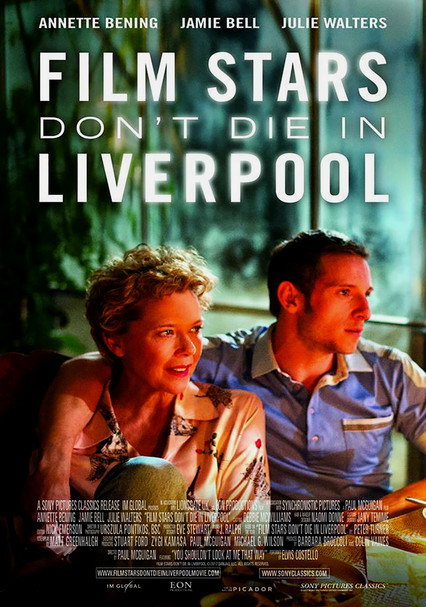
Film Stars Don’t Die in Liverpool-2017

Film Stars Don’t Die in Liverpool-2017

Director Paul McGuigan

Starring Annette Bening, Jamie Bell

Scott’s Review #840

Reviewed December 11, 2018

Grade: B+

Film Stars Don’t Die in Liverpool (2017) showcases a compelling performance by stalwart actress Annette Bening as she plays faded, insecure Hollywood glamour girl Gloria Grahame.

The film focuses only on Grahame’s final two years of life as she battles breast cancer and begins a relationship with a much younger man, Peter Turner (Jamie Bell).

The film is a sad yet poignant dedication to the star, featuring enough performance gusto from its actors to compensate for a limited period. However, there is too much back-and-forth within the timeline, which complicates the film too much.

As a result, Film Stars Don’t Die in Liverpool is endearing but does not hit it out of the park.

The entire film takes place between 1979 and 1981. In 1979, actress Gloria Grahame, with her best days behind her, resides in a rented Liverpool room. She finds some success in local theater and befriends her much younger male neighbor.

The pair become romantic partners and experience trials and tribulations as the film teeters back and forth between Grahame’s ailing final days in 1981 to happier times in Los Angeles and New York. Gloria also befriends and finally lives with Peter’s parents, who care for her unflinchingly.

The story is enveloped in sadness but is not a downer either.

The film begins towards the end of Gloria’s illness, though the audience is not yet aware of her disease’s seriousness. Insisting she has painful gas, the tender relationship between the actress and Peter is explored.

The story begins in 1979 when Peter and Gloria first met. He is an aspiring actor who is unaware of who she is until a bartender makes the connection.

In this way, the film makes it clear that this is not a story about a young man seeking the fortunes of a presumably wealthy woman. I like this point, as the story is about romance, not money-grubbing.

Film Stars Don’t Die in Liverpool belongs to Bening.

The supporting roles are well cast, and they do not diminish Bell’s performance or Julie Walters’s nice turn as Peter’s mum.

However, Bening does wonders emulating Grahame’s mannerisms with an innocent, damsel-in-distress nature (mirroring the roles she made famously).

Bening was amazing at revealing the actress’s insecurities, fear of aging, and older appearance. During a fight, Peter cruelly refers to her as an “old lady,” and we see the comment strike a deadly blow as if she had been physically slapped.

Bening is so good at portraying a myriad of emotions throughout the film.

Another high point comes towards the end of the film. I love how the film connects Gloria and Peter’s earlier argument (and breakup) with a later sequence.

Peter assumes she is carrying on with another man when he learns she has lied about her whereabouts. The haunting reality is later revealed, changing the audience’s perception of the events.

This is good writing by the screenwriters.

To counter the above point, the constant back and forth from 1981 to 1979 and everywhere in between detracts from my enjoyment of the overall film.

Although the film spans only two years, it spends way too much time in multiple locations without enough explanation. Suddenly, G, Loria, and Peter are in Los Angeles having dinner at Gloria’s modest house, and they are in New York City in her lavish Park Avenue apartment.

The film would have been better suited with a straightforward approach chronicling events from 1979 to 1981 in sequence.

Another negative is the omission of any scenes before 1979.

The actress’s career thrived during the 1940s and 1950s, so capturing those earlier days would have been interesting. If the fear was that Bening was too old to pass for a younger Grahame, another actress could have been used for those scenes.

While a clip of the real Grahame winning the Oscar and a few clips of her starring in films are nice, way more time could have been spent on more stories.

Thanks to a brilliant performance by Bening and an emotional story that in large part succeeds, Film Stars Don’t Die in Liverpool (2017) is a win.

The film was not recognized during awards season as initially anticipated. This could have been due to the overly complex timeline, which produced a limiting feeling. The production and writing are excellent but lack greatness.