Tag Archives: Peter Dinklage

Wicked: Part I-2024

Wicked: Part I-2024

Director Jon M. Chu

Starring Cynthia Erivo, Ariana Grande-Butera, Jonathan Bailey

Scott’s Review #1,453

Reviewed December 1, 2024

Grade: A

The extravagant Broadway musical Wicked (2024) is brought to the silver screen with beautiful results. It overtook the nation in hefty box office returns, and many donned witch hats for the event. The production has enough substance to justify the craze.

It is the first of a two-part film adaptation of the stage musical of the same name. The film is loosely based on Gregory Maguire’s 1995 novel, which is based on L. Frank Baum’s 1900 novel The Wonderful Wizard of Oz, its sequels, and its 1939 film adaptation.

Part II will emerge in late 2025.

Powerhouse Cynthia Erivo leads the charge as Elphaba, a young woman misunderstood because of her unusual green skin who has yet to discover her true power. When conceived, Elphaba’s mother and her secret beau drank a mysterious potion assumed responsible for her nature.

Elphaba is noticed by Madame Morrible (Michelle Yeoh), the Dean of Sorcerer Studies, and welcomed at Shiz University. Her disabled younger sister Nessarose (Marissa Bode) is a new student there.

Ariana Grande plays Glinda, a privileged and ambitious young woman who is jealous of yet enamored with Elphaba and yearns to discover her talent and powers.

Elphaba and Glinda forge an unlikely but powerful friendship. After encountering The Wonderful Wizard of Oz, their friendship reaches a crossroads, and their lives take very different paths.

The film begins with Glinda (the Good Witch of the North) recounting their relationship as Elphaba (or The Wicked Witch of the West) has just died to much celebration.

Whether viewers are familiar with the novels, the 1939 film, or the stage version, the rich history is well-combined.

The colorful sets and visuals are marvelous, with luminous greens encompassing the shimmering Emerald City. The Shiz University is more pastel with muted blue and pink colors.

Aside from the story, there is so much to look at visually. Be sure to glimpse background activity during dancing or celebration scenes to notice even more particulars.

Hints of what’s to come (the Cowardly Lion, a broomstick) also can be noticed.

The second half is the better portion when the action takes off and gets to a darker place. The colors are also darker than in the first half.

Watching the monkeys start to transition and grow wings painfully is a bit scary, especially for younger children.

The side story of animals losing their rights and being caged in the beginning, when they speak and even teach at a university, is complex to watch and represents the current state of the United States.

Director Jon M. Chu and screenwriters Winnie Holzman and Dana Fox wisely replace humans with animals as they remind audiences of groups of people (immigrants, the LGBTQ+ community) targeted by hate.

Sadly, as the Wizard of Oz and Madame Morrible remind Elphaba, the world needs another. ‘ The parallels between animals and humans are readily apparent.

Perhaps to combat the hate, Chu includes gay actors Jonathan Bailey and Bowen Yang in prominent roles.

Chu, most notable for Crazy Rich Asians (2018), delivers a stunning product filled with glamour, bravura, and necessary female empowerment.

The dynamic between Erivo and Grande-Butera is strong, making their rivalry/friendship believable and layered. Erivo gets the showier, albeit in a less attractive role, but she powerfully uses her voice to her advantage.

‘I’m Not That Girl’ and ‘Defying Gravity’ have quickly become favorites.

Wicked: Part I (2024) is an intriguing and spectacular production that raises critical societal questions. Whether you marvel at the visuals or explore gender and repression more deeply, the film has something for everyone.

Oscar Nominations: 2 wins-Best Picture, Best Actress-Cynthia Erivo, Best Supporting Actress-Ariana Grande, Best Film Editing, Best Production Design (won), Best Costume Design (won), Best Original Score, Best Sound, Best Makeup and Hairstyling, Best Visual Effects
Elf-2003

Elf-2003

Director Jon Favreau

Starring Will Ferrell, James Caan

Scott’s Review #846

Reviewed December 20, 2018

Grade: B-

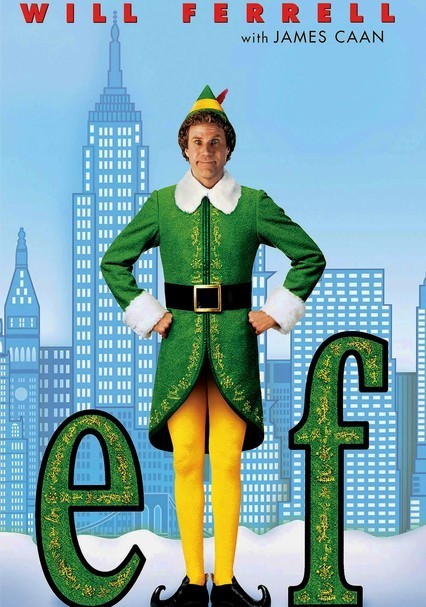
Elf (2003) is one of the few lasting Christmas hits of recent memory or at least one that many fans make a regular viewing experience each holiday season.

The film is light and unarguably a safe, feel-good experience mixing a hopeful Christmas message with comic gags and romance. The key to its success is Will Ferrell who possesses wonderful comic timing.

More wholesome than my tastes and lacking plausibility the film does succeed as a family-friendly, ready-made, fun experience.

The story revolves around one of Santa’s elves (Ferrell) named Buddy who learns he is human and was orphaned as an infant. Revealed that his biological father Walter (James Caan) resides in New York City, Buddy embarks on a trip to find the man and spread Christmas cheer in a world filled with grizzled and cynical human beings.

In predictable comic form, Buddy has trouble adjusting to the human world and the fast-paced lifestyle with misunderstandings arising repeatedly. Buddy eventually wins over his father and family finding love with downtrodden Jovie (Zooey Deschanel).

Hot on the heels of his Saturday Night Live stint ending in 2002, Ferrell was primed to embark on a successful film career. Elf is a great role for him as it capitalizes on his comic timing and energy and the setup works.

At 6’3″ who better to play an elf for laughs than a hulking middle-aged man?

Due to his talents, Ferrell makes the role of Buddy fun, appealing, and the highlight of the film. With a lesser talent, the character would have been too annoying (as it is there are too many hug jokes) and the overall film would have suffered.

Other than Ferrell the supporting roles are nothing memorable other than Caan’s part. The once dashing star of films such as The Godfather (1972) Caan still has the charm and charisma to appeal, though the balding and dyed head of hair does nothing for him.

A small role by television star Bob Newhart as Papa Elf is fine, but Deschanel’s role and Mary Steenburgen’s role as Emily, Walter’s wife, could have been played by many actresses and nothing is distinguishable about either part.

Lesser roles like Walter’s secretary, Walter’s boss, and Gimble’s store manager are stock parts with no character development.

A major high-point is the New York City setting and the exterior scenes are aplenty. Filmed in 2002 and released in 2003, the location shots were completed not long after 9/11, and showcasing a city with such recent decimation adds to the film’s appeal.

Scenes in Rockefeller Center, Central Park, and the Empire State Building are prominently featured making the film festive and merry.

What greater city is there at Christmastime than New York?

Elf remains an entertaining experience with enough shiny ornaments and fun moments in the department store and Walter’s office to hold interest. The luster wears thin at the conclusion as all the traditional elements come together.

Jovie leads a chorus of strangers in “Santa Claus Is Coming to Town”, Walter quits his job without concern for paying bills, and everyone happily rides off into a sparkling winter wonderland.

This may satisfy some, but I wanted more conflict than a troupe of Central Park Rangers chasing Santa through the park.

A film that might be paired nicely with holiday favorites of similar ilk such as National Lampoon’s Christmas Vacation (1989) or Christmas with the Kranks (2004), Elf is an energetic affair with a charismatic lead actor.

Containing silly moments, but a spirited and worthwhile message nestled nicely within, the film is worth a watch if in the mood for slapstick.

More thought-provoking holiday films with deeper merriment and stronger flair exist, but for a chuckle or two Elf (2003) works well.

Three Billboards Outside Ebbing, Missouri-2017

Three Billboards Outside Ebbing, Missouri-2017

Director Martin McDonagh

Starring Frances McDormand, Woody Harrelson, Sam Rockwell

Scott’s Review #703

Reviewed December 4, 2017

Grade: A

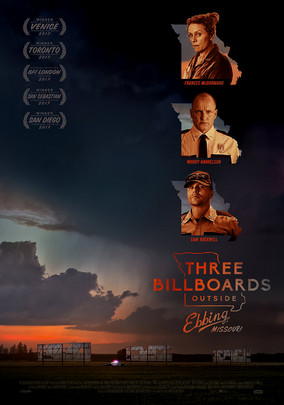
Frances McDormand takes control of Three Billboards Outside Ebbing, Missouri, and never lets go. In the Martin McDonagh-directed 2017 vehicle, she rivetingly portrays an angry Midwestern woman seeking justice.

The up-and-coming director has also created such films as  2008’s In Bruges and 2012’s Seven Psychopaths.

Similar to these films, Three Billboards Outside Ebbing, Missouri, is peppered with dark comedic moments and vile, bitter characters. The film is a measured success because it is not your standard Hollywood production and is quite left-of-center.

The action begins as we meet McDormand’s Mildred Hayes, sitting alone in her beat-up station wagon, brooding by the side of the road, gazing at three tattered billboards.

She is both pissed off and thoughtful as she formulates a plan to purchase a year’s worth of billboards, questioning the local police’s ineptitude in finding her daughter’s rapist and killer.

Woody Harrelson portrays the Ebbing police chief, Sheriff Bill Willoughby, and Sam Rockwell plays the racist and dim-whited officer Jason Dixon, both displeased with Mildred’s activities.

Other casting decisions in small yet essential roles are Lucas Hedges as Mildred’s adolescent and depressed son, Robbie, and John Hawke as her ex-husband, Charlie, who is dating an eighteen-year-old ditz.

Peter Dinklage is well-cast as James, a local car salesman who is an earnest dwarf with a crush on Mildred.

Supporting roles are prevalent throughout the film, and small-town locales like Jason’s mother and Red, the owner of the advertising agency who rents the billboards to Mildred, shape the experience.

The casting in Three Billboards Outside of Ebbing, Missouri, is a strong point of the film.

The town of Ebbing is portrayed as dreary, blue-collar, and racist, which is just perfect for setting the tone of the film.

I suspect residents of the Midwest or the southern United States of America may have some issues with character representations. Jason is written as both racist and not too smart, and he encompasses numerous characters in the film.

Enough cannot be said for Rockwell’s performance, transforming from a hated character during the film’s first two-thirds to suddenly almost becoming the hero towards the end.

Props are also deserved by Harrelson’s Chief Willoughby- bordering on hick and racist, he also has a heart and cares about Mildred’s predicament- when a shocking event occurs, he becomes an even richer character.

It is worth pointing out and impressive to me as a viewer that the three prominent black characters—Willoughby’s replacement, Abercrombie, Mildred’s best friend and co-worker, Denise, and a kindly billboard painter—are each written as intelligent and sensitive, a fact I found to perfectly balance the other less sympathetic characters.

In this way, a nasty film becomes more satisfying.

Three Billboards Outside of Ebbing, Missouri, though, belongs to McDormand. She is successful at portraying a myriad of different emotions. From her sly eye-winking as she crafts a good verbal assault on whoever crosses her path, to an emotional breakdown scene towards the end of the film, McDormand embodies the character with depth.

In a gorgeous scene, she has a sweet conversation with a peaceful deer grazing nearby, and for a second, she imagines it could be her dead daughter reincarnated. The scene richly counterbalances other violent and brutal scenes.

McDormand manages to look downright homely in some scenes and beautiful in others.

A film will indeed divide viewers. Some will champion the film’s crisp writing and witty dialogue. Still, others will undoubtedly be turned off by some of the character’s foul language and nasty nature.

I found Three Billboards Outside Ebbing, Missouri (2017), sarcastic, gritty, and well-told. It is a versatile affair rich with layers and brimming with enjoyment.

Oscar Nominations: 2 wins-Best Picture, Best Actress-Frances McDormand (won), Best Supporting Actor-Sam Rockwell (won), Woody Harrelson, Best Original Screenplay, Best Original Score, Best Film Editing

Independent Spirit Award Nominations: 2 wins-Best Female Lead-Frances McDormand (won), Best Supporting Make-Sam Rockwell (won), Best Screenplay