Tag Archives: Stockard Channing

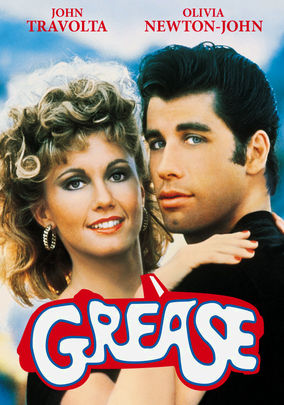
Grease-1978

Grease-1978

Director Randal Kleiser

Starring John Travolta, Olivia Newton-John

Top 250 Films #69

Scott’s Review #354
60000577

Reviewed January 9, 2016

Grade: A

Grease (1978) is the ultimate musical fantasy that comes to life and can be appreciated by anyone looking to re-live their high school days through song, or merely escape life’s stresses with a fun, bright, musical, that is very well made.

Is it realistic? Not, but sometimes escapism is just what the doctor ordered, and Grease is one of my favorite films that meet that criteria.

It is light-hearted and sweet, and above all contains wonderful legendary musical numbers.

The time is the 1950s, and we meet Danny and Sandy on a windswept beach with cascading waves and bright sunshine. It is summer break for the two high school students, who meet in California, she vacationing from Australia, and he is a local boy.

They say their goodbyes and return to normal lives, but cannot forget about each other.

Suddenly, Sandy arrives at Rydell High in Los Angeles, coincidentally where Danny goes to school. Her parents (whom we never see) decided to stay in California.

Danny is a “tough guy” in high school, much different from who he was on the beach with Sandy. He is the leader of the infamous T-birds, a group of boys who love their black leather jackets and cars.

Torn, he continues his tough image and he and Sandy find their way back to each other through classmates, songs, and dancing, intermingling fun supporting characters who encourage each of them to find true love.

Travolta and Newton-John have magical chemistry, which allows this film to work.

Grease has appeared on stage numerous times, but these actors are fine together. I bought them as teenagers in love, although both were well beyond their teen years.

The supporting cast is excellent- specifically Stockard Channing as the lead Pink Lady, Rizzo, and Sandy’s kind-hearted friend Frenchy.

Interestingly, no parents ever appear in the film as it is not about the adults.

However, Rydell’s female principal, Mrs. McGee (played by Eve Arden), and her dotty Vice Principal, Blanche (Dody Goodman), are simply marvelous as comic relief.

Rizzo is an interesting character and can be argued is the only one who threatens to steal the thunder from Danny and Sandy. Containing a tough exterior, she is also vulnerable as she fears she has become pregnant mid-way through the film.

Unwed and pregnant in the 1950s was quite the scandal and Channing gives layers of emotion during her solo number, “There Are Worse Things I Could Do”.

The wonderful high school dance scene is choreographed amazingly well. The excitement of the student body at being filmed for a special television show is apparent as dance numbers and dance contests, some raunchy, follow.

The musical numbers are intrinsically memorable from “Grease”, “Greased Lightning”, “Hopelessly Devoted To You”, and “Beauty School Dropout”, all of which are personal favorites of mine.

Grease (1978) is a film that is not meant to be analyzed but rather enjoyed for the fantastic chemistry and energy in which it has.

Sometimes in a film, all of the elements simply come together perfectly and Grease is an excellent example of this.

Oscar Nominations: Best Song-“Hopelessly Devoted to You”

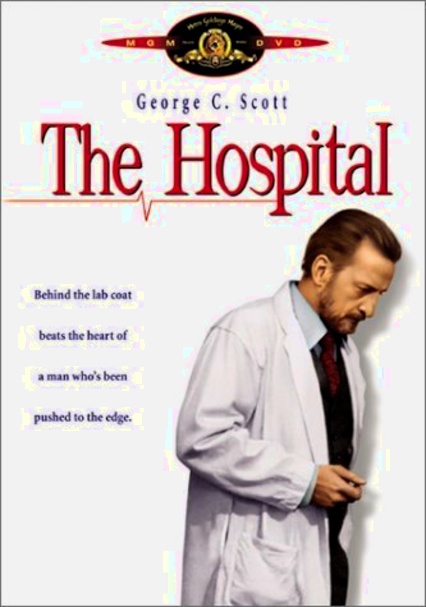
The Hospital-1971

The Hospital-1971

Director Arthur Hiller

Starring George C. Scott, Diana Rigg

Scott’s Review #1,369

Reviewed June 11, 2023

Grade: A

An example of the freedom to craft one’s vision in cinematic works during the first half of the 1970s, The Hospital (1971) is a testament to creativity and exceptional writing, and to what can happen when studios and producers leave the creatives alone to make the film they want to make.

One can dismiss any preconceived notions of the classic medical dramas that flooded television networks during the 1970s and 1980s. The Hospital is not formulaic or contrived.

No, The Hospital is a dark work drooling with satirical examples of the politics and shenanigans within the medical community. Oftentimes, secondary activities come at the cost of reasonable care and quality medicines.

Before you imagine a doctor and nurse cavorting in a janitor’s closet, it’s a deeper film than it appears on the surface, despite the inclusion of witty comedy.

Lax patient care, staff deaths, and the dismissal of nearby residents because of a new drug rehabilitation project are explored in this fascinating film.

At a rundown Manhattan teaching hospital, chief of staff Herb Bock (George C. Scott) is riddled with multiple personal and professional problems after two doctors and one nurse are found dead almost simultaneously.

He assumes the rash of deaths is due to dimwitted staff who are overworked amid the chaos.

Suicidal, he meets the intelligent daughter of a patient who knocks him off his feet with her studious personality and reflections on the world. Diana Rigg plays Barbara Drummond.

The immediately noticeable, clever, well-paced screenplay is by Paddy Chayefsky, who won the Oscar for writing the film. Immediately, the chaos of a city hospital is exposed, but not in a cliched way like a series like ER or Grey’s Anatomy might show.

Nobody is going into cardiac arrest on the operating table or having convulsions in the waiting room amid lame dramatic music.

The Hospital is more cerebral than that.

Unknown patients and little-known hospital staff go about their everyday business like clockwork until confusion with daily tasks causes events to go awry.

Like real-life.

The brilliance is how director Arthur Hiller casts regular-looking actors in almost all the roles. They look and act like everyday hospital staff to set the proper tone. This is even before we meet and get to know Herb and Barbara. They answer phones, walk around with charts, and hustle after emergencies.

Chayefsky and Hiller mirror director Robert Altman in many ways, mostly in their dialogue and in how seemingly unimportant scenes can mean a whole lot.

In robust soliloquy-style scenes between Herb and Barbara, the audience ‘gets them’. They are both desperate, wounded, and unhappy yet possess the sophistication and awareness to realize how similar they are.

They immediately connect, fall in love, and nearly run off together. It’s that simple. They are willing to flee their lives after meeting for five minutes. But will they ultimately take that plunge?

A key character is revealed to be Barbara’s father, and a whodunit begins after it comes to light that the deaths are not accidents. Who is responsible and what their motivation is is the key to the story.

Scott does terrific work with his character, rivaling his excellent performance a year earlier in Patton (1970). Herb is more introspective with the world on his shoulders.

The Hospital has more than one daring scene. Herb, though impotent, basically throws Barbara down on the table and rapes her. The shocker is that she makes light of it the next day and almost seems to have enjoyed it.

Barbara and Herb are both complex characters that the audience needs to ruminate over.

My favorite part of The Hospital (1971) is the setting. That Hiller puts you inside what a real urban hospital was like in 1971 is brilliance. The satire comes into play with the writing, which questions decision-making and incompetence within the hospital walls.

The result is a scathing look at hospital practices that will resonate with anyone terrified of entering a hospital, only never to come out again.

Oscar Nominations: 1 win-Best Actor-George C. Scott, Best Original Screenplay (won)

Up the Sandbox-1972

Up the Sandbox-1972

Director Irvin Kershner

Starring Barbra Streisand, David Selby

Scott’s Review #1,308

Reviewed October 18, 2022

Grade: B

Up the Sandbox (1972) is likely the least successful film in the Barbra Streisand collection and more obscure than likely desired. The star performs no songs, and the film is experimental, but it’s unclear whether it was intended to be.

Streisand takes a break from comedies and musicals to venture into unknown territory, risking a payoff that doesn’t always come through.

On the flip side, she never looked more beautiful in a film.

The film has its moments. It’s shrouded in early progressive feminism, which provides intrigue, and it’s tough to go wrong with a bankable star like Streisand in a lead role.

Still, the fantasy sequences get too weird and sometimes unnecessary, and the film doesn’t always make a lot of sense.

The film gets taken down at least a notch for two anti-gay slurs that are shamefully unnecessary to any plot direction.

I award Up the Sandbox credit for thinking outside the box and being unconventional. Still, the parts don’t come together into a cohesive unit, leaving me unfulfilled while recognizing the superior qualities.

The cover art (see above) is wacky and thought-provoking.

Margaret (Streisand) is a young wife and mother who is bored with her day-to-day life in New York City, playing second fiddle to her successful and too-busy husband, Paul (David Selby).

He is a professor at Columbia University, and they reside in a cramped yet fairly sophisticated apartment.

To combat boredom, she regularly escapes into increasingly outrageous fantasies: her mother breaking into the apartment, an explorer’s demonstration of tribal fertility music at a party causing strange transformations, and somehow joining terrorists to plant explosives in the Statue of Liberty.

Streisand is well cast, and while other actresses could have given a fine performance, she plays New York Jewish better than anyone. Her struggle to break out of her life of doldrums is perfectly conveyed as she yearns to achieve a balance between men and women.

She resents going down the path of a housewife, just like her mother did, and vows to be nothing like her, as the women bicker and feud throughout the film.

The sequences involving her mother are the best in the film. Played by Jane Hoffman, Margaret’s mother provides all of the expected Jewish mother stereotypes, like nagging and judging, hilariously.

The funniest mother/daughter sequence sees Margaret smash her mother’s head into a giant birthday cake. Naturally, it’s just her fantasy.

Up the Sandbox wins big for the large number of location sequences set in early 1970s New York City, which is absolutely fascinating to watch. One with an appreciation for Manhattan can be assured of a pleasant viewing experience.

The most heartfelt and sentimental moments occur during a long shot of the still-under-construction World Trade Center. Seeing the Twin Towers still being erected brings back teary memories of 9/11.

Lavish sequences are set in and around Columbia University in upper Manhattan, and the campus is frequently seen as Margaret and her friends trudge their baby strollers through the campus and surrounding areas.

Where the film fails is when it teeters too far out in fantasy land. It makes little sense why Margaret would join terrorists intent on blowing up Lady Liberty, or what the group’s intentions are.

Perhaps it is a metaphor for something that went over my head.

Even when the screenplay is a dud, Ms. Streisand holds her head high and plays the comedy or drama with sincerity and professionalism. With her well-known perfectionism, she would have been aware when things were not working.

A film not remembered well, Up the Sandbox (1972) scores some points with its locales, progressivism, and star power, but stumbles off course too many times to recommend.

If only Streisand had belted out a number or two amid her scripted fantasies, the film might have worked better.